Article Contents:
- What are moldings and trim: terminology for informed purchase
- Why moldings have become the main tool for wall decoration
- Types of wall moldings and trim: how to choose a profile
- Decorative overlays: which elements complement moldings
- Compositional techniques: how to create beautiful wall trim
- How to properly buy molding trim: step-by-step algorithm
- Combining different molding profiles: composition rules
- Color and finish: how to paint moldings and overlays
- Installation of moldings and overlays: technology for creating beautiful trim
- Common mistakes when creating wall trim
- Modern trends in using wall moldings
- STAVROS: everything needed to create beautiful wall trim
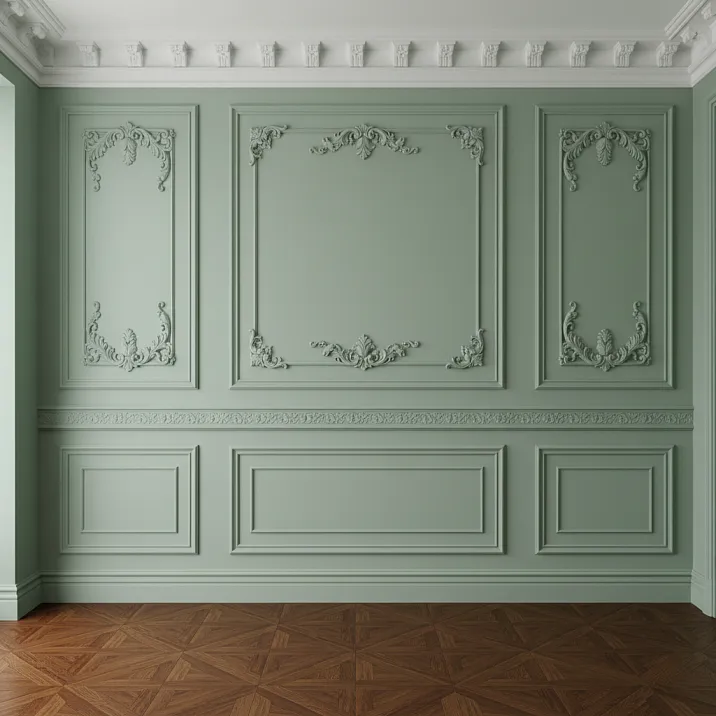
A wall is not just a vertical plane. It is a canvas on which an architect writes the story of a space. And the main tools of this writing are moldings and decorative overlays—those very elements that transform a featureless surface into an expressive composition with depth, rhythm, and character. When an interior owner or designer considers buying moldings and trim for walls, behind this lies a desire to create not just beautiful decoration, but a cohesive architectural environment where every detail contributes to the overall image.
The question is how exactly to combine trim profiles and overlay elements to achieve beautiful wall trim that looks not accidental but deliberate, not overloaded but harmonious. When search queries like 'molding trim buy' or 'buy decorative trim for walls' appear, the person is looking not only for materials but also for understanding: what goes with what, which profiles work together, how to avoid visual chaos and create a composition that will delight for years.
This article is a detailed breakdown of how to properly buy moldings and trim, how to combine trim profiles and decorative overlays, which compositional techniques create beautiful wall trim, why it's important to think in terms of systems rather than individual elements, and how to find a partner who will help turn an idea into a real, functional interior.


What are moldings and trim: terminology for informed purchase
Before buying molding trim for walls, it's important to understand the terminology. Different names are used in the architectural decor market, and confusion in definitions often leads to incorrect choices.
Molding is a decorative strip with a profiled cross-section used for decorating walls, ceilings, doors, windows, and furniture. Molding always has a specific profile: flat, convex, concave, or with complex relief. It is sold by linear meters and installed linearly, creating continuous lines on the surface.
Trim is the general name for all linear products: moldings, cornices, baseboards, casings. Essentially, when people say 'buy trim,' they mean any profiled strips that are measured and sold by the meter, not by the piece.
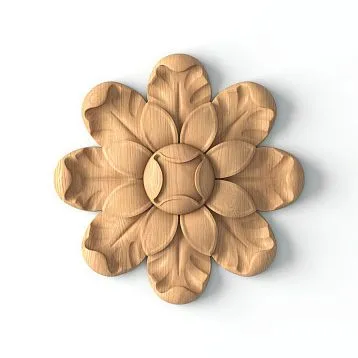
Decorative overlays are elements that are not sold by linear meters but are sold individually: rosettes, corner ornaments, cartouches, patterns, decorative inserts. They complement the trim, creating accents, emphasizing corners, and enhancing the composition.
When you plan to buy decorative trim for walls, the correct approach is to combine trim and overlays as a unified system. Moldings provide structure, lines, and rhythm. Overlays add accents, complete the composition, and create visual centers.




Why moldings have become the main tool for wall decoration
Moldings have been used in architecture for centuries, but today they are experiencing a new wave of popularity. There are several reasons for this.
First—versatility. Moldings work in any style: from strict classicism to modern minimalism. Only the profile and application method change, but the tool itself remains relevant.
Second—accessibility. Modern materials, especially polyurethane, have made moldings accessible to the mass buyer. What was once a privilege of palaces can now be afforded by the owner of an ordinary apartment.
Third—technological ease.Polyurethane moldingsThey are easy to install, do not require complex tools, paint well, and do not deform over time. Working with them is simple and predictable.
Fourth—visual power. Properly placed moldings change the perception of space: they make a room appear taller or wider, create rhythm, structure planes, and add architectural character.
Fifth — the possibility of transformation. Moldings allow you to update the interior without major renovation. It's enough to add frame compositions on the walls, ceiling cornice, baseboard — and the space looks completely different.
That's why, when people search for where to buy molding trim to create beautiful wall moldings, they are essentially looking for a tool to transform the space, a way to make a standard interior individual.
Our factory also produces:


Types of wall moldings and trim: how to choose a profile
Moldings differ in width, height, profile, and relief. Choosing the right profile is the key to a successful composition.
Flat moldings are strips with minimal relief, most often rectangular or slightly rounded in cross-section. They are ideal for modern interiors where conciseness and graphic quality are important. Such moldings create clear lines, geometric compositions, and work as structure rather than decoration.
Profiled moldings are strips with complex cross-sections: convexities, concavities, steps, roundings. They create a play of light and shadow, add volume, and work in classical and neoclassical interiors. The more complex the profile, the richer the wall looks, but the more important it is not to overload the composition.
Ornamented moldings are strips with decorative relief: floral patterns, geometric repeats, classical ornaments. They create maximum decorativeness and are suitable for historical interiors, classic, baroque. In modern spaces, they are used in measured doses, as accents.
Wide moldings — profiles with a width from eight to twenty centimeters. They create powerful horizontal lines, divide the wall into levels, and work in large rooms with high ceilings.
Narrow moldings — profiles with a width from two to five centimeters. They create delicate frames, thin lines, and work in small rooms where lightness and unobtrusiveness are important.
When you choose which moldings to buy for beautiful wall moldings, focus on the scale of the room, the interior style, and the desired degree of decorativeness.Polyurethane moldingsare represented by dozens of profiles, allowing you to select a solution for any task.
Get Consultation
Decorative overlays: which elements complement moldings
Moldings create structure, but without additional elements, the composition often looks incomplete. This is where decorative overlays come into play.
Corner elements are decorative ornaments placed in the corners of molding frames. They can be simple (geometric shapes) or complex (floral patterns, rosettes, cartouches). Corner elements complete the composition, make corners expressive, and add visual richness.
Central overlays — elements placed in the center of a frame or panel. These can be rosettes, medallions, ornaments. They create a visual center of the composition, draw attention, and work as an accent.
Vertical overlays — elements imitating pilasters, columns, vertical panels. They create the illusion of architectural elements, make the wall more slender, and stretch the space upward.
Horizontal overlays — decorative inserts placed on horizontal moldings, emphasizing the line and creating a rhythm of repetitions.
Figurative overlays — elements of complex shape: scrolls, leaves, flowers, geometric shapes. They add individuality and make the composition unique.
When you decide to buy decorative wall moldings, it's important to immediately see how the trim and overlays will work together. Moldings without overlays can look dry, overlays without moldings — chaotic. Together they create a cohesive story.
Compositional techniques: how to create beautiful wall moldings
Beautiful wall moldings are not a random set of elements, but a thoughtful composition built according to the laws of architecture and visual perception.
Frame compositions — a classic technique where moldings form rectangular or square frames on the wall. Inside the frames, there can be contrasting paint, patterned wallpaper, decorative panels, works of art. Frames set the rhythm, structure the space, and create a sense of order and thoughtfulness. The corners of frames can be complemented with decorative overlays, enhancing the composition.
Horizontal division of the wall — molding is placed at one-third or two-thirds of the wall height, dividing it into levels. The lower part can be darker, the upper part lighter, or vice versa. This visually changes the proportions of the room: a high molding raises the ceiling, a low one makes the room more intimate.
Vertical lines — moldings are placed vertically, imitating pilasters or columns. This stretches the space upward and makes the wall more slender. Between vertical moldings, you can create panels, filling them with a contrasting color or wallpaper.
Geometric compositions — complex systems of intersecting moldings creating geometric patterns: diamonds, hexagons, complex polygons. This is a modern interpretation of classical techniques, working in neoclassical and contemporary interiors.
Accent panels — one wall (or part of it) is decorated with moldings and overlays, creating a visual center of the room. The other walls remain simple. This allows you to concentrate attention without overloading the space.
Symmetrical compositions — moldings and overlays are placed symmetrically relative to the center of the wall or door. This creates a sense of order, solemnity, and classical harmony.
Asymmetrical compositions — elements are placed asymmetrically, creating dynamism, modernity, and individuality. This is a more complex technique requiring good visual sense.
How to correctly buy molding trim: a step-by-step algorithm
When you plan to buy molding trim to create beautiful wall moldings, it's important to act systematically.
Step one — define the concept. What do you want to achieve: classic panels, modern geometry, horizontal division, vertical accents? Draw a diagram on paper or in a graphic editor. This will help visualize the idea and calculate the amount of material.
Step two — select molding profiles. Consider the scale of the room and the interior style. Wide profiles suit large rooms, narrow ones suit small rooms. For classic styles — profiled and ornamented; for contemporary styles — flat and minimalist.
Step three — choose decorative overlays. They should match the style of the moldings: classic overlays with classic profiles, geometric with contemporary ones. Don't overload the composition: sometimes corner elements are enough, sometimes central accents are needed.
Step four — calculate the quantity. Measure the length of all molding lines on the diagram, add fifteen percent for corners, joints, and trimming. Count overlays individually. It's better to have a surplus than to halt installation due to a shortage of profile length.
Step five — choose accompanying materials. You'll need polyurethane adhesive, acrylic putty for joints, primer, and paint. A good supplier will offer everything you need as a package.
Step six — find a reliable supplier. Buy moldings and decorative elements from a specialized store or a trusted manufacturer that offers a wide range, consultation, assistance with calculations, and quality guarantees.
Combining different molding profiles: composition rules
Sometimes, to create beautiful wall moldings, not one but a combination of several profiles is used. This allows for more complex and expressive compositions but requires an understanding of combination rules.
Rule one — style unity. All profiles should belong to the same stylistic family: either all classic or all contemporary. Mixing a baroque ornamented molding with a minimalist flat strip creates visual dissonance.
Rule two — width contrast. If using two profiles in one composition, they should differ in width: wide for main lines, narrow for inner details. This creates hierarchy and makes the composition legible.
Rule three — motif repetition. If one profile has a specific relief or ornament, the second profile should contain similar elements. This creates a visual connection.
Rule four — no more than three profiles. Using more than three different profiles in one composition usually creates overload. It's better to limit yourself to two or three and create a clear, legible structure.
Rule five — complexity balance. If one profile is complex and ornamented, the second should be simpler. Two complex profiles next to each other compete and create visual noise.
Color and finishing: how to paint moldings and overlays
Proper painting is the final touch that makes beautiful wall moldings truly beautiful.
Tone-on-tone — moldings and overlays are painted the same color as the wall. This creates a subtle relief, a delicate effect, suitable for interiors where restraint is important. The play of light and shadow on the relief becomes the main visual effect.
Contrast — moldings are painted in a color contrasting with the wall: white moldings on a dark wall or dark on light. This creates graphic quality, makes the composition more expressive, and emphasizes lines.
Half-tone — moldings are painted in a color slightly lighter or darker than the wall. This is a soft compromise between tone-on-tone and contrast, creating depth without excessive sharpness.
Accent painting — moldings are painted in a bright color, creating a color accent in the interior. This is a bold solution that works in modern, eclectic, and custom-designed interiors.
Patina and gilding effects — moldings are painted with imitation aging, gilding, or silvering. This suits classic interiors, creating a sense of historical value.
Painting technique: first, moldings are primed, then painted in two to three coats. Use water-based paints compatible with polyurethane. Apply paint with a brush for thorough coverage of the relief.
Installation of moldings and overlays: technology for creating beautiful moldings
Once you've purchased moldings and decorative overlays, the question of installation arises. The process is not complicated but requires care and adherence to technique.
Wall preparation. The surface must be level, clean, dry, and primed. It's better to fill uneven spots and holes with putty in advance — moldings will highlight all base imperfections.
Marking. Transfer the composition diagram to the wall using a level, tape measure, and pencil. Use painter's tape to mark lines — this helps visually assess the composition before installation and make adjustments.
Angle cutting. Moldings in corners are cut at a forty-five-degree angle using a miter saw or miter box. This is the most critical moment: precise cutting gives neat joints, imprecise cutting results in gaps.
Gluing moldings. Apply polymer adhesive in a thin strip to the back of the molding, press it against the wall along the markings, and hold it in place for a few minutes. Remove excess adhesive immediately with a damp cloth.
Gluing overlays. Decorative overlays are glued after the moldings. Mark their position, apply adhesive, press, and hold. Overlays are usually lighter than moldings and adhere quickly.
Joint treatment. After the adhesive dries, fill the joints between elements, corners, and areas where they meet the walls with acrylic putty. Once dry, sand with fine-grit sandpaper.
Priming and painting. Prime the moldings and overlays with a water-based primer. After drying, paint in two to three coats with the chosen color. Thoroughly paint all recesses of the relief.
Common Mistakes When Creating Wall Molding
Even experienced craftsmen sometimes make mistakes when working with moldings and decorative trim. Knowing these mistakes helps avoid them.
First mistake — lack of a plan. Many start gluing moldings "by eye," without preliminary marking. As a result, lines are crooked, frames are asymmetrical, and the composition looks random.
Second mistake — scale mismatch. Too large moldings in a small room feel oppressive, too small ones in a large room get lost. The profile should match the scale of the space.
Third mistake — overloading with decor. The desire to use the maximum number of moldings and overlays leads to visual chaos. The composition should have a balance between filled and empty planes.
Fourth mistake — poor corner cutting. Gaps in corners ruin the entire effect, even if the moldings themselves are high-quality. Invest in a good miter box or miter saw.
Fifth mistake — careless joint puttying. Visible joints between elements create a sense of incompleteness. Putty carefully, sand smoothly.
Sixth mistake — using cheap materials. Low-quality moldings have blurred relief, crooked geometry, and quickly yellow. Saving on material leads to disappointment in the result.
Modern Trends in Using Wall Moldings
Moldings are actively used not only in classical but also in contemporary interiors. Trends change, and today several relevant directions can be highlighted.
Minimalism with architecture. In contemporary interiors, moldings are used concisely: simple geometric frames, clear lines, no ornaments. The decor works through structure, not through an abundance of details.
Monochromatic solutions. Moldings are painted the same color as the walls, creating a barely noticeable relief. This works in Scandinavian, minimalist, contemporary interiors where subtlety is important.
Contrast graphics. Dark moldings on light walls or vice versa. A clear graphic composition is created, becoming the main visual accent of the room.
Large formats. Wide moldings creating large-scale panels. This works in large spaces, lofts, studios where volume needs structuring.
Asymmetric compositions. Moldings are placed asymmetrically, creating dynamism, modernity, individuality. This is a bolder approach, but with proper implementation gives a bright result.
STAVROS: Everything Needed to Create Beautiful Wall Molding
When it comes to where to buy moldings, trim, and decorative overlays to create beautiful wall molding, not only the product matters but also a partner who understands the task as a whole. STAVROS is a company with years of experience in architectural decor, offering a full range of solutions for interiors.
STAVROS catalog featuresPolyurethane ItemsFor walls: moldings of different profiles — from minimalist to classic ornamented, decorative overlays — corner elements, rosettes, cartouches, ornaments.Linear profilesInclude dozens of options, allowing the creation of compositions of any complexity.
STAVROS works with verified manufacturers, controls product quality, provides guarantees. When you decide to buy decorative molding through STAVROS, you get not just material, but confidence in the result.
Company consultants help select moldings and overlays for a specific project, calculate quantities, create a composition plan, advise which profiles combine best, which related materials will be needed. This is not selling for the sake of selling, but partnership for the sake of results.
Delivery operates in Moscow, Moscow Region, St. Petersburg, and Leningrad Region — materials are delivered directly to the site at a convenient time. If needed, pickup from the warehouse can be arranged.
STAVROS understands that architectural decor is not just details, but tools for creating a space where people want to live. Therefore, the company offers not individual elements, but systemic solutions where each profile, each overlay is connected by common logic, style, quality.
Choosing STAVROS means choosing a partner who shares your commitment to beauty, quality, durability. An interior where beautiful wall molding is created professionally, with an understanding of composition and architecture, where every detail is in its place — this is the result of the right choice. Choose STAVROS — choose confidence in every element of your interior.