Article Contents:
- Moldings for Panels: What They Are and Why Buy Them
- How Molding for Panels Differs from Regular Profile
- Where Molding for Panels Is Used
- What Tasks Moldings Solve in Boiserie and Panel Compositions
- When Molding for Panels Is Architecture, Not Decoration
- Which Moldings for Panels to Buy for Your Task
- For Classic Panels and Boiserie
- For Modern Panels and Wall Frames
- For an accent wall
- For TV area with panels
- For panels in the hallway
- For panels in the bedroom
- Wooden or polyurethane moldings for panels: what to choose
- When to Choose Wood
- When polyurethane is more convenient
- What is better for painting
- Where texture matters more, and where installation does
- How to choose a profile for panels: narrow, wide, smooth, or carved
- Narrow moldings for panels: 15–35 mm
- Wide moldings for panels: 50–100+ mm
- Smooth profiles: versatility and strictness
- Carved Profiles: Ornament as a Stylistic Argument
- Corner and Finishing Elements
- Moldings for Wainscoting and Wall Panels: How to Create the Right Rhythm
- What is a Molding Map
- Calculating Frame Spacing: From Wall to Map
- Symmetry and Centering
- Panel Proportions Relative to the Wall
- When to Use Finishing, Edging, and Corner Moldings
- Final Completion of the Panel Zone
- Transition to a Smooth Wall
- External and Internal Corners
- How to achieve a clean joint
- What determines the price of panel moldings
- Material
- Profile and Width
- Standard or custom order
- Where to buy panel moldings without mistakes
- Step 1: determine the type of panel system
- Step 2: create a molding map
- Step 3: Choose the Material
- Step 4: check if a custom order is needed
- Step 5: go to the correct catalog section
- About the Company STAVROS
- FAQ: popular questions about panel moldings
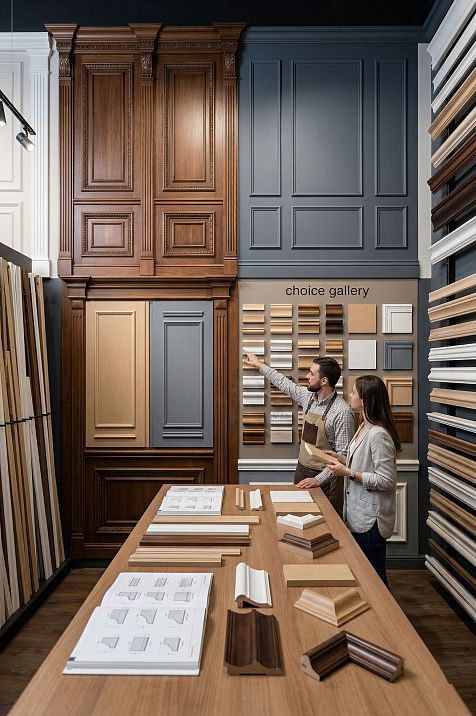
There are things in an interior that make a space come alive. Not just finished, not just beautiful—but architecturally meaningful. When a wall ceases to be just a background and becomes part of the architectural concept, when rhythm, proportion, and depth appear between the floor and ceiling—that is the work of moldings. Or more precisely—properly selected panel moldings.
moldings for wall panels— this is not an ordinary wall profile 'for beauty.' It is a structural element of a panel system that creates a frame, forms rhythm, conceals joints, and transforms a flat wall surface into a three-dimensional architectural composition. Boiserie, framed panels, classic portal sections, accent walls—all of these are built precisely through molding profiles.
The question facing most buyers and designers: which panel moldings to buy so they work specifically for your task? Wood or polyurethane? Smooth or carved? Narrow or wide? Standard assortment or custom order from a drawing? This article is a practical guide without unnecessary words, with specific answers to each of these questions.


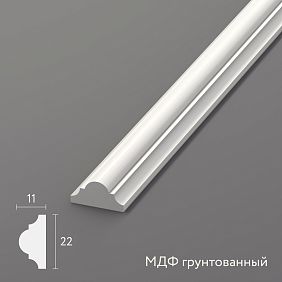


Panel Moldings: What They Are and Why Buy Them
Let's start with what fundamentally distinguishes panel molding from any other wall profile. Because the difference is not in form, but in the logic of application.




How Panel Molding Differs from an Ordinary Profile
Обычный настенный молдинг — это горизонтальный или вертикальный пояс: пустая линия на стене, которая разделяет плоскости или создаёт декоративный акцент. Это самостоятельный элемент.
Panel molding is a system element. It works in conjunction: it forms a frame that limits the panel field, creates an internal frame grid, conceals joints between panel sections, or creates a transition between the panel zone and a smooth wall. Its meaning lies not in itself, but in the space it organizes.
That is precisely why when choosing moldings for boiserie or a panel system, you cannot look only at the profile. You need to look at the entire composition: how the molding interacts with the panel field, with the baseboard below, with the horizontal belt above, with corners and transitions.
Our factory also produces:
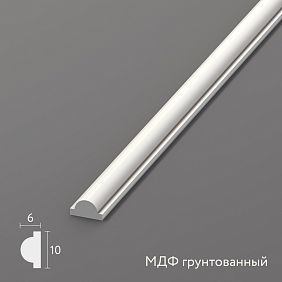


Where Panel Molding Is Used
Application scenarios—specific and varied:
-
Boiserie is a classic French system of wall panels with molding frames. The panel field is made of wood or MDF, bordered by molding frames, with a horizontal belt at approximately 2/3 of the wall height.
-
Frame panels on the wall — moldings form rectangular frames on the wall surface. Inside the frame is a smooth wall, a different color, or texture. This is an imitation of volumetric panels, achieved only through molding profiles.
-
Wall articulation — horizontal and vertical molding belts divide the wall into sections: lower belt, middle belt, frieze. This is an architectural layout of the vertical plane.
-
Framing functional zones — TV area, headboard area, fireplace wall, accent wall in the hallway — all are decorated with molding, which creates a 'boundary' of the decorative field.
-
Transition between panel and smooth wall — a finishing profile that covers the panel edge and creates a clean border between two surfaces.
A comprehensive look at decorative elements for wall finishing — in the materialdecorative elements for wall finishing: moldings, panels, and overlays.
Get Consultation
What tasks do moldings solve in boiserie and panel compositions
Specifically — four tasks:
-
Rhythm. Moldings make the wall rhythmic: the alternation of frames and fields creates a 'breathing' surface, perceived as architectural order.
-
Scale. Properly selected frame spacing and molding width align the size of the decorative field with the room height and wall length.
-
Depth. A molding profile with a wall offset creates a shadow—thereby adding volume to a flat surface.
-
Completeness. Molding covers joints, edges, transitions between materials—and makes the assembled system a unified whole.
When panel molding is architecture, not decoration
The difference between a 'beautiful wall' and a 'wall with architectural character' lies precisely in systematicity. Randomly placed moldings yield decoration. Moldings laid out according to a map with calculated spacing, proportions, and hierarchy—yield architecture.
Boiserie in the STAVROS version is not just a set of profiles for purchase, but a full-fledged project solution: measurement,custom boiserie development, visualization, manufacturing, installation. This is how a wall transforms from a surface into an architectural object.
Which panel moldings to buy for your task
The task is primary. Let's examine specific scenarios—from classic to TV zone.
For classic panels and boiserie
Classical boiserie is a system with a clear hierarchy: baseboard, lower molding belt with frames, horizontal dividing belt, upper zone. The molding frames inside are rectangular, symmetrical, with precise proportions.
Profile for classical panels: shaped, with historical cross-section — ogee, ovolo, torus. Molding width for frames — 25–50 mm. Material: oak, beech, or paintable polyurethane. Toning: warm shades or classic white with subtle shadow relief.
For modern wall panels and frames
Modern interior — strict geometry, smooth profiles, no ornamentation. Molding for modern panels: smooth rectangular, 15–30 mm, matching wall color or with minimal contrast. Frames — large, clear, empty inside. The shadow from the molding creates the entire effect.
For Scandinavian or Japanese minimalism: profile 10–15 mm, almost invisible — just a shadow line. This is a radical architectural technique, and it works flawlessly.
For an accent wall
Accent wall — a single plane that differs from the others: different color, different texture, different level of decorative saturation. Molding frames on an accent wall create a structure that keeps this 'otherness' within architectural logic.
For accent walls, wide moldings (40–70 mm) with pronounced relief work well: they read brightly, create deep shadow. The material can be contrasting — dark oak on a light wall or white polyurethane on a dark background.
For TV zone with panels
TV zone — the functional center of the living room, which should look stately but not overload the space. Molding frames create a 'portal' around the screen — symmetrical vertical and horizontal divisions that give the zone architectural scale.
For TV zone: combination of vertical panel posts with molding frames. Slatted panels + molding trim — a modern way to design a TV zone. More about combining slatted panels and moldings — in the article Slatted panels for walls and wood moldings.
For panels in the hallway
The hallway is the most 'high-traffic' room. Walls here are subjected to impacts, dirt, and mechanical contact. The lower panel belt serves as both protection and decor. Molding trim for the lower panel belt: a horizontal molding belt at a height of 80–100 cm, a baseboard at the bottom, and side vertical posts.
For the hallway: durable material — oak or paintable MDF. The profile should not have sharp relief protrusions that will trap dust. A smooth or semi-smooth figured profile.
For panels in the bedroom
The bedroom requires a special sense of intimacy. The headboard area, decorated with molding frames, is the most popular decorative technique in bedrooms. Moldings create a 'portal' above the bed, establishing the visual center of the space.
For the bedroom: a restrained profile, 20–40 mm, matching the finish. Narrow moldings with soft relief. No large carved ornaments in the bedroom — they create visual tension incompatible with an intimate atmosphere.
Wooden or polyurethane moldings for panels: what to choose
This is the most common question — and it deserves an honest breakdown without marketing bias in any direction.
When to choose wood
Wood is the choice for situations where the natural texture is valuable in itself.
Classic and historical interior. Oak boiserie in the living room is not an imitation of a historical style; it is its authentic embodiment. The living texture of oak, the warm shade of the tint, the feeling of density and weight of the material — this is something no synthetic substitute can reproduce.
Wooden house. If walls, beams, doors, and floors are made of natural wood, then moldings should also be wooden. Material integrity of the space is a fundamental design principle.
High budget, long-term horizon. Oak or beech wooden molding is a product for decades. With proper use and minimal care, oak profile retains its appearance for 50+ years. When calculated over the period of use — not the most expensive solution.
Wide assortmentof wooden moldingsmade of oak, beech, and MDF — in the STAVROS catalog.
When polyurethane is more convenient
Polyurethane is not a 'cheap substitute for wood'. It is an independent material with its own advantages, which in a number of situations make it the best choice.
Complex geometry. Polyurethane bends easily — flexible moldings for arched openings, radius walls, curved sections. Wood in such a task requires complex bending technology or assembly from many elements.
Uniform painting. Polyurethane has no pores or texture — paint lays evenly, without the effect of 'fiber showing through'. For pure white or saturated color — polyurethane is preferable.
Wet areas. For bathrooms, toilets, kitchen areas — polyurethane is resistant to humidity, does not warp, does not swell.
Quick installation. Polyurethane molding is lighter and easier to handle: cuts with a regular saw, glues with mounting adhesive without special tools.
About the logic of building panels from polyurethane moldings — in the article Creating panels and rhythm from polyurethane moldings.
What is better for painting
Clear: polyurethane and MDF — for painting. Natural oak or beech — for tinting. Painting an oak molding with opaque enamel means losing the main thing: the living texture, which is what you pay for.
For painting in white or a rich color: polyurethane molding — primed, with a smooth surface, ready for paint application without additional preparation. MDF is also a good option: dense, with an impeccably smooth cut, allows painting with acrylic paints with minimal priming.
Where texture matters more, and where installation matters
| Criterion | Wood (oak/beech) | Polyurethane |
|---|---|---|
| Natural texture | ✓✓✓ | — |
| For painting | MDF | ✓✓✓ |
| Flexibility (radii) | — | ✓✓✓ |
| Durability | ✓✓✓ | ✓✓ |
| Ease of installation | ✓✓ | ✓✓✓ |
| Status and feeling | ✓✓✓ | ✓✓ |
| Moisture resistance | ✓ (impregnation) | ✓✓✓ |
| Custom profile | ✓✓✓ | ✓✓ |
How to choose a profile for panels: narrow, wide, smooth, or carved
There is one rule here, and it is simple: the profile should be proportionate to the field it frames.
Narrow moldings for panels: 15–35 mm
A narrow molding creates a light, almost weightless frame. Its shadow is small, the relief is restrained. This solution is for:
-
of modern minimalism, where the frame should be barely noticeable;
-
small spaces, where a wide profile would 'eat up' the space;
-
сложных сеток с мелкими рамками (частая сетка — мелкие рамки — узкий молдинг).
Wide molding on a small frame = a mess. Rule: the width of the molding should be 8–15% of the width of the frame field.
Wide moldings for panels: 50–100+ mm
Wide molding is a statement. It creates a powerful shadow, is readable from a distance, sets the scale for the entire system. Appropriate for:
-
high ceilings (3+ m), where a small profile would 'get lost';
-
large panel fields (frame wider than 50 cm);
-
classical or baroque style, where scale is an element of style.
Smooth profiles: versatility and strictness
A smooth profile—a rectangular section without ornamentation—works everywhere. Its strength lies in its purity: only line and shadow. For a modern interior, smooth molding is practically the only correct choice.
For classic interiors, a smooth profile is also acceptable if it has a minimal shaped section (bevel, quarter-round). A completely smooth rectangle looks unimpressive in classic settings.
Carved profiles: ornamentation as a stylistic argument
Carved molding for panels is the level of 'status interior'. Floral borders, geometric braids, classic egg-and-dart patterns, and ornamental bands—all these are tools for interiors where decorative richness is the goal.
Carved molding requires an appropriate context: high ceilings, expensive finishes, stylistic integrity. In a modern minimalist interior, carved molding will look like a foreign element.
Corner and finishing elements
A separate and important category. A panel molding system only works with properly finished corners and edges.
External corners—the junction of two panel planes at a right (or other) angle. Corner molding covers the edge and creates a clean transition without a visible seam.
Internal corners—the abutment of a panel to an adjacent wall. Also requires a special corner solution.
Finishing profiles—end strips on the top edge of the panel field, creating a clean horizontal finishing line.
Proper connection of slatted panels and the work of moldings at joints — in the materialHow to connect slatted panels and use moldings for walls.
Moldings for boiserie and wall panels: how to assemble the correct rhythm
This is the most informative and important section for those designing a panel system from scratch, not just sticking molding 'wherever they like'.
What is a molding map
A molding map is a layout diagram of frames on a wall. Before buying the profile length, you need to create a map: measure the wall, mark the frames, calculate the spacing, check the symmetry.
The map answers the questions:
-
How many frames horizontally?
-
What is the spacing between frames?
-
What is the height of the frames relative to the room height?
-
How are the frames positioned relative to furniture (sofa, bed, door)?
-
How does the system connect with corners?
Without a map — chaos. With a map — architecture.
Calculating frame spacing: from wall to map
Spacing between frames (distance from the edge of one frame's molding to the edge of the neighboring frame's molding): 5–15 cm for a dense 'carpet' system, 15–30 cm for an 'airy' classic system.
Frame field width (inner space): 30–60 cm for vertical frames, 40–80 cm for horizontal. Frame width-to-height ratio: for classic boiserie — 1:1.5 or 1:2 (vertical rectangle).
Height for placing the bottom row of frames: 10–15 cm from the top of the baseboard. Frames should not 'start' directly from the baseboard — an offset is needed to create a 'floating' system feel.
Symmetry and centering
Main layout rule: the system must be symmetrical relative to the center of the wall or relative to the main visual element (door, window, fireplace, TV).
If the wall is asymmetrical — center the frames relative to its visual center, not the geometric one. The eye notices visual imbalance, not geometric.
Panel proportions relative to the wall
Panel zone height: in classic boiserie — up to 2/3–3/4 of the wall height. The lower zone is denser (frames), the upper zone is a smooth wall for painting or fabric. In modern interiors, the panel system can occupy the entire wall height — from baseboard to ceiling.
The higher the ceiling, the proportionally higher the panel zone should be. For a 2.4 m ceiling — a belt up to 160–170 cm is sufficient. For 3 m — 200–220 cm. For 3.5+ m — 240–260 cm.
Complete wall finishing system — in the materialInterior Wall Finish in 2026: Wall Panels, Moldings and Baseboards as a Unified Architectural System.
When finishing, edging, and corner moldings are needed
Systematicity is the key word in wall molding decor. And finishing solutions are what the system either holds together or falls apart on.
Finishing completion of the panel zone
Finishing profile — a horizontal plank that covers the top end of the panel zone. Without it, the system looks 'unfinished': panel ends are exposed, the transition to the smooth wall is sharp and sloppy.
Finishing molding options:
-
smooth horizontal profile 20–40 mm;
-
A shaped belt with a heel or twist — a more decorative option;
-
A cornice profile with a pronounced overhang — creates a 'capital' between the panel zone and the upper part of the wall.
Transition to a smooth wall
When the panel system does not cover the entire wall, but only a part of it — a transition profile is needed. It covers the end of the panel and creates a clean vertical line separating the panel zone from the smooth surface.
Without a transition: the panel end is visible as an unfinished cut. With a transition: a clean architectural dividing line.
External and Internal Corners
External corner — where two decorated walls meet at a right angle on the outside (e.g., a protrusion in a room). A corner molding is needed — either a ready-made corner element or a composite one made from two 45° miter cuts.
Internal corner — the junction with an adjacent wall (a standard room corner). It is joined either by miter-cutting moldings at 45° with gluing, or via a special corner element.
How to achieve a clean joint
Three conditions for a flawless joint:
-
Precise 45° miter cut (for corner joints) — only on a miter saw with a stop, not by hand.
-
The right adhesive is construction adhesive or special for wood/polyurethane. No silicone.
-
A flat wall — molding does not compensate for unevenness. Before installation, the wall is plastered and checked with a level.
What determines the price of panel moldings
Pricing is transparent if you understand the factors.
Material
| Material | Price (approx.) | Application |
|---|---|---|
| Polyurethane | from 150–400 rub./m | For painting, flexible, corner |
| MDF | from 200–500 rub./m | For painting, clear geometry |
| Beech | from 400–900 RUB/m | Tinting, classic, moderate budget |
| Oak | from 700–2,500 rub./m | Status, tinting, boiserie |
| Carved oak | from 2,000–10,000+ rub./m | Project order, highest level |
Profile and width
Molding width is the main pricing factor after material. 60 mm molding typically costs twice as much as 30 mm molding with the same material and profile. A carved profile adds from 50% to several hundred percent to the base cost — depending on the complexity of the ornament.
Standard or custom order
Standard profile from catalog — the most affordable option. Ready for shipment, minimal price.
Custom profile according to drawing: surcharge of 30–100% to the cost of a serial product. Production time — from 3–4 weeks with sufficient batch size. Justified for design projects where exact matching with existing profiles or non-standard cross-section is required.
Where to buy panel moldings without mistakes
Step-by-step route from task to correct purchase.
Step 1: determine the type of panel system
-
Classical boiserie with frames → figured profile, oak/beech or paintable polyurethane, width 30–60 mm.
-
Modern frame panels → smooth profile, 15–35 mm, paintable MDF or beech.
-
Batten panels with molding framing → finishing profiles, corner elements, transition strips.
Step 2: create a molding map
Before purchase — mark up the wall. Calculate the footage for each position: horizontals, verticals, corner elements, finishing belts.
Step 3: Choose the material
Natural interior / high budget → oak or beech. For painting → polyurethane or MDF. Wet room → polyurethane. Complex geometry → flexible polyurethane.
Step 4: check if a custom order is needed
If you have a non-standard profile, a complex object, or a requirement for an exact match with existing elements — consider a project format. STAVROS offers custom profile manufacturing for economically justified quantities.
Step 5: go to the correct catalog section
Wooden moldings for panels:
→ Solid wood moldings
Batten panels for walls:
→ planks made of wood
Project solution: custom boiserie:
→ Custom wall panels and boiserie
Article about moldings and wall panels:
→ Wooden furniture molding and wall panels
Panel construction and rhythm:
→ Polyurethane wall moldings: panel construction and rhythm
About the company STAVROS
STAVROS is a Russian manufacturer of architectural wood decor since 2002. Production facility in St. Petersburg, full cycle: solid wood drying, milling, surface treatment, packaging and delivery.
STAVROS produces moldings for wall panels made of oak, beech and MDF — over 50 profiles in the standard range. The polyurethane range is a separate branch: smooth, shaped, corner and flexible profiles for all panel decor tasks.
STAVROS's flagship service for the B2B segment is the development and production of custom boiserie: from measurement and design to manufacturing panels, moldings and on-site installation. This is a working format for designers, architects and developers who need not a catalog profile, but a ready-made interior solution with project support.
Among STAVROS's projects are premium residential complexes, private residences, office spaces, cultural facilities and government buildings across Russia.
FAQ: popular questions about panel moldings
Which moldings are best for wall panels?
Depends on style and task. For classic boiserie — figured profile from oak or beech, 30–55 mm. For modern frames — smooth profile from MDF or polyurethane for painting, 15–35 mm. For slatted panels — finishing and corner profiles in the material of the panels themselves.
Wood or polyurethane for panels: what to choose?
Wood — if natural texture, tinting, and high material status are needed. Polyurethane — if painting, moisture resistance, flexible solutions, or quick installation are needed. Both options are professional; there is no 'worse' or 'better', there is 'for the task'.
How to calculate the spacing of frames from moldings?
Molding width: 8–15% of the frame field width. Spacing between frames: 5–15 cm (dense grid) or 15–30 cm (airy). Frame height relative to width: 1:1.5–1:2 for a vertical rectangle. Be sure to create a map on paper or in a program before purchase.
When are corner elements needed?
Always when a panel system goes into a room corner or meets an external corner. Without corner elements, the panel ends are visible as an unfinished cut. A corner molding covers the end and creates a clean transition line.
Which moldings are better for boiserie?
For boiserie in classic style: figured profile with historical section (ogee, ovolo, torus), from oak or beech, 35–60 mm. For boiserie for painting in a modern interior: polyurethane or MDF, smooth or semi-smooth profile. STAVROS offers a project solution — custom boiserie with full support.
Can I order molding for panels according to a drawing?
Yes. STAVROS accepts orders for manufacturing moldings according to an individual profile — by drawing, template, or sample — with an economically justified batch. This is relevant for design projects with non-standard profiles or requirements for exact matching with existing elements.
Is primer needed before painting molding?
For polyurethane moldings, primer is already applied at the factory; a final coat of paint is sufficient. For MDF, priming is mandatory (1–2 coats of acrylic primer). For wood, primer is not needed if tinting is planned; it is needed if opaque painting is planned.