Article Contents:
- Moldings for Finishing: What They Are and Why Buy Them
- How Molding Differs from a Regular Decorative Strip
- What Tasks Does Molding Solve in Finishing
- Where Molding Works Best
- Which Moldings for Finishing to Buy for Your Task
- For Wall Finishing: Three Strong Techniques
- For Ceiling Finishing: Three Levels of Tasks
- For Decorative Panels
- For frames and trims
- For accent zones
- For classic and modern interiors
- Wood, MDF, or polyurethane moldings: what to choose
- When to Choose Wood
- When MDF is more convenient
- When polyurethane is more cost-effective
- What is better for painting
- Comparison by tasks
- Wall trim moldings: panels, frames, and accent compositions
- Wall frames: construction logic
- Accent Wall with Moldings
- Panel compositions: classic and modern
- Wall zoning with moldings
- Framing mirrors and decorative panels
- Ceiling Molding: When Is It Appropriate
- Cornice Molding: The Base Level
- Ceiling Belts: Zoning Without Walls
- Working with Room Height
- Combining with Cornices and Baseboards
- How to Choose Molding Width and Relief
- Narrow Profiles 15–35 mm
- Medium Profiles 35–60 mm
- Wide Profiles 60–110 mm
- Smooth vs Carved: Profile Intonation
- How to combine moldings with baseboards, corners, and decorative elements
- When baseboards in the same style are needed
- When corners are needed
- How to use decorative elements
- How to avoid visual chaos
- What determines the price of finishing moldings
- Material: the first and main factor
- Width: direct dependence
- Relief: difference up to 10 times
- Add-ons and decorative elements
- Standard or custom profile
- Where to buy trim moldings without mistakes
- Step 1: define the task and material
- Step 2: check the assortment by formats
- Step 3: select complementary elements
- Step 4: request samples if necessary
- Step 5: proceed to the correct section
- About the Company STAVROS
- FAQ: popular questions about trim moldings

When renovation begins, the first conversation is about tiles, paint, flooring. Moldings make it onto this list last, and often not at all. And that's exactly when the finished interior looks incomplete: walls are smooth, floors are beautiful, but something is missing. That very thing that turns a 'simply renovated space' into a space with character.
Trim moldings are not just a final touch 'for beauty'. They are an architectural layer that sets rhythm to surfaces, divides planes, creates depth where there is none structurally. A wall without molding is a flat surface. A wall with a properly selected profile is an architectural statement.
If you're looking for what to moldings for finishing buy, what to choose — wood, MDF, or polyurethane — and how to assemble the right set, this article will answer each of these questions. Without generalities, with specifics.


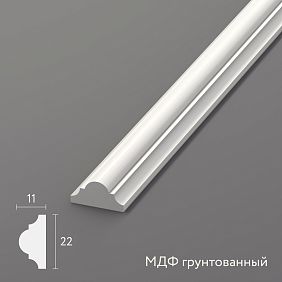


Trim Molding: What It Is and Why Buy It
Let's start with a fundamental distinction that will put everything in its place.




How Molding Differs from a Regular Decorative Strip
A regular decorative strip is a standalone element without a systemic function. Its task is to 'decorate'. Molding is both functional and decorative. Its task is to structure.
The difference in this one word is huge. A strip can be glued anywhere to get 'prettier'. Molding only works when integrated into a system: it is responsible for rhythm, proportion, transitions between materials, hiding seams, and zoning.
Trim Molding — these are tools for the architectural treatment of surfaces. A horizontal belt on a wall dividing lower and upper zones. A decorative frame turning a smooth plane into a structured panel system. A cornice covering the transition from wall to ceiling. Ceiling molding creating zoning of the light field. All of them solve specific tasks — while creating a decorative effect.
Our factory also produces:
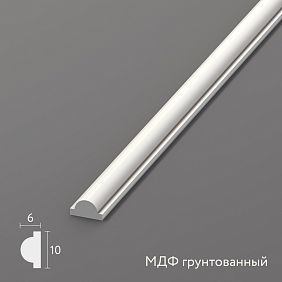


What Tasks Does Molding Solve in Finishing
Five key tasks without which it is impossible to understand the logic of moldings:
1. Concealing technical joints. Where two materials meet—wallpaper and tile, plaster and wood paneling, floor covering and wall—the molding covers the joint and makes it part of the decorative system, not a technical problem.
2. Dividing surfaces into zones. A horizontal molding belt on a wall divides the vertical plane into lower and upper parts. Ceiling molding delineates the perimeter and center. This is architectural articulation of space without re-planning.
3. Creating frames and borders. Decorative frames made of moldings on walls, mirror surrounds, frames for decorative panels—the profile creates a 'boundary' that turns an arbitrary fragment of a surface into a meaningful object.
4. Accentuating functional zones. TV wall, headboard area, fireplace, work zone in a study—molding frames and belts create a 'portal' around the functional center and highlight it architecturally.
5. Forming spatial rhythm. Rhythm—the repetition of elements at a certain interval—makes a space orderly and comfortable to perceive. Moldings create rhythm where there was none.
Get Consultation
Where molding works best
-
Walls—framed panels, horizontal belts, accent zones, boiserie.
-
Ceilings—cornice moldings, ceiling belts, frames for zoning.
-
Furniture—front moldings, borders, decoration of furniture planes.
-
Framing — mirrors, paintings, niches, arches, fireplaces.
-
Transitions — joints between materials, planes, zones.
Which moldings to buy for your finishing task
Six scenarios — six different approaches to profile selection.
For wall finishing: three strong techniques
Moldings for wallsare used in three basic formats.
Horizontal belt. A molding strip at a specific height — 80–120 cm from the floor for a panel belt or 200–220 cm for a frieze belt under the ceiling. Divides the wall into architecturally meaningful zones. Profile: 30–70 mm, smooth or figured.
Frame grid. Rectangular frames made of molding, placed on the wall with calculated spacing and symmetry. Create depth, structure, a sense of a well-thought-out interior. Profile: 25–55 mm, smooth or figured — depending on the style.
Panel system. Moldings form a horizontal upper belt, vertical posts, a baseboard at the bottom — and within this contour, a decorative panel is mounted or an area is painted in an accent color. For such tasks, systematicity is especially important: all profiles are of the same material and series.
For ceiling finishing: three levels of tasks
Ceiling molding installation follows its own logic. There are three levels of tasks here:
Cornice molding — the transition from wall to ceiling. This is a basic solution that covers the technical joint and adds a decorative outline around the perimeter of the room. The width selection depends on the ceiling height: 2.4–2.7 m → 50–70 mm profile; 3+ m → 80–120 mm.
Ceiling band — a decorative frame or line along the ceiling perimeter, set back 30–60 cm from the cornice. Creates a 'coffered' effect — the ceiling visually gains a zoned structure.
Ceiling moldings for zoning — profiles that mark the ceiling according to the functions of the space: dining area, living area, work area. Especially effective in open floor plans.
For decorative panels
Decorative wall panels are one of the most requested finishing tasks. Moldings create panel frames or serve as framing for volumetric MDF or wood panels.
For panel systems, one thing is critical: the profile must be uniform for all elements — frames, bands, uprights. Mixing materials and formats ruins the systemic effect.
For frames and trims
A separate task: moldings as frames for mirrors, paintings, decorative panels, niches. Here, the profile is selected not by the room's style, but by the scale of the object being framed.
Mirror 80×120 cm → 35–55 mm molding with sufficient projection, figured or smooth. Decorative panel 40×60 cm → 20–35 mm molding. Niche 60×90 cm → 40–60 mm molding, preferably with corner decorative blocks.
For accent zones
TV wall, headboard area, fireplace — each of these zones benefits from molding framing. The profile for the accent zone should be more noticeable than the background moldings in the same space: 10–15 mm wider or with a more pronounced relief.
For classic and contemporary interiors
Interior style determines the type of profile. For classic — shaped molding with a historical cross-section (ogee, scotia, torus), 40–80 mm, oak or paintable polyurethane. For modern interiors — smooth rectangular profile 15–40 mm, MDF or enamel-grade polyurethane.
Wooden, MDF, or polyurethane moldings: what to choose
Three materials — three philosophies of finishing. None is 'better' than the others: each is appropriate in its own context.
When to choose wood
Wooden moldingsmade of oak and beech — this is the choice for interiors where natural material is part of the concept.
Natural interior. Oak parquet, wooden doors, wooden furniture — moldings must be wooden. Polyurethane next to live oak is always a noticeable dissonance for an attentive eye.
Toning and transparent coatings. Oak in clear varnish or oil — living texture with a pronounced character. Each piece is unique. This is something that cannot be reproduced in either MDF or polyurethane.
Furniture finishing. For furniture fronts, decorative overlays, framings — wood is preferable: it withstands contact load, does not dent or crumble upon impact.
Long-term horizon. Oak molding with minimal care lasts 50+ years. It does not fade, does not age 'negatively' — on the contrary, it patinates nobly. The cost over the entire period of use is lower than it seems.
When MDF is more convenient
MDF moldings (primed profiles made of dense wood fiber) are a universal solution for painting.
A uniform surface for enamel. MDF has no pores or fibers—paint applies smoothly. For white moldings, saturated colors, monochrome systems—MDF is better than natural wood.
Clean cut. MDF cuts easily with a saw and mills—the cut comes out perfectly smooth without tear-outs. 45° joints are precise.
Cost-effectiveness. In terms of quality-to-price ratio, MDF is one of the best options for large-scale finishing tasks under paint.
When polyurethane is more advantageous
Decorative polyurethane profile—lightweight, factory-primed, ready for immediate painting.
Flexible forms. Polyurethane is the only option for arched and radius surfaces. Flexible molding wraps around curves without heating or special equipment.
Humid areas. Bathroom, kitchen, balcony — polyurethane does not swell, warp, or crack due to humidity fluctuations.
Easy installation. Minimal weight—installation without clamping devices. Bonds with special glue or acrylic mounting compound in 20–30 minutes.
Ceiling tasks. For ceilings, the weight of molding is critical: a 100 mm polyurethane cornice weighs 40–70% less than a wooden counterpart. The risk of peeling with proper installation is minimal.
What is better for painting
Clear recommendation: polyurethane (primed) and MDF (primed) are the best choice for opaque painting. Natural oak or beech are only for tinting or clear varnish. Painting oak with white enamel means losing what you pay for.
Comparison by tasks
| Criterion | Wood (oak/beech) | MDF | Polyurethane |
|---|---|---|---|
| Natural texture | ✓✓✓ | — | — |
| For painting | Only with full priming | ✓✓✓ | ✓✓✓ |
| Flexibility (radii) | — | — | ✓✓✓ |
| Moisture resistance | ✓ (impregnation) | ✓ (impregnation) | ✓✓✓ |
| Furniture tasks | ✓✓✓ | ✓✓ | ✓ |
| Ceiling tasks | ✓✓ | ✓✓ | ✓✓✓ |
| Durability | ✓✓✓ | ✓✓ | ✓✓ |
| Ease of installation | ✓✓ | ✓✓ | ✓✓✓ |
Moldings for wall finishing: panels, frames, and accent compositions
Wall finishing with moldings— a topic deserving detailed analysis. Because this is where most mistakes are made when purchasing.
Frames on the wall: the logic of arrangement
A frame system made of moldings is not randomly placed rectangles, but a thoughtful grid with internal logic. Before purchasing the profile, you need to:
-
Measure the wall and determine the number of frames.
-
Calculate the size of each frame and the spacing between them.
-
Check symmetry relative to the center of the wall or the main object (sofa, bed, TV).
-
Determine the height of the lower edge of the frames: 10–15 cm from the top of the baseboard.
Only after that — calculate the footage and choose the profile. The width of the molding for the frame: 8–15% of the width of the inner field of the frame.
Accent wall with moldings
An accent wall is one plane highlighted by color, material, or texture. Molding frames on an accent wall create architectural order: the accent gains internal structure and does not look like a random spot.
For an accent wall: wide molding 45–80 mm with pronounced relief — frames are clearly visible and create strong shadows. A contrasting scheme (frames in a different color) enhances the visual effect.
Panel compositions: classic and contemporary
Classic panel system (boiserie): horizontal molding belt at 2/3 of the wall height + vertical sections with frames + baseboard at the bottom. This is an architectural system, not a set of 'beautiful profiles'.
Contemporary panel system: moldings create only a horizontal belt or vertical 'columns' on the wall, with a solid color paint inside the fields. Minimum details, maximum architectural purity.
Wall zoning with moldings
A molding belt at a height of 80–100 cm from the floor divides the wall into a 'lower' (more protected, often dark-colored) and an 'upper' (light zone with wallpaper or paint). This is a classic architectural solution that works in any style, from classic to Scandinavian minimalism.
Framing mirrors and decorative panels
A mirror without a frame is just glass in a wall. A mirror in a molding frame is an interior object. Molding for framing a mirror: 30–55 mm, made of wood or polyurethane, shaped or smooth — depending on the style.
Key condition: the width of the molding must be proportionate to the size of the mirror. A mirror 100×150 cm — molding from 40 mm. A small mirror 50×70 cm — molding 25–35 mm.
Moldings for ceiling finishing: when they are appropriate
The ceiling is the most neglected surface in an interior. And that is precisely why molding finishing of the ceiling gives such a tangible effect: attention to this surface alone makes the space richer.
Cornice molding: basic level
Cornice molding — the transition from wall to ceiling — is the minimal level of ceiling finishing with moldings. Technically, it covers the joint of two planes. Visually, it creates a 'frame' for the entire room.
Choosing the width of the cornice molding is the main parameter. Rule: cornice width = 3–5% of the room height. For a 2.6 m ceiling → cornice 75–130 mm. For a 3.2 m ceiling → cornice 95–160 mm.
A too narrow cornice on a high ceiling 'gets lost'. A too wide one on a low ceiling 'feels oppressive'.
Ceiling belts: zoning without walls
A ceiling belt is a decorative molding placed 30–60 cm away from the cornice. It creates a visual 'buffer' between the perimeter and the center of the ceiling, giving it a coffered character without actual coffers.
For a classic interior with high ceilings: two ceiling belts — at distances of 40 and 80 cm from the cornice — create a historically accurate three-level ceiling system.
Working with room height
Moldings on the ceiling can both raise and lower the visual height — depending on the technique.
Visually raise the ceiling: vertical moldings on walls leading upward; cornice molding of minimal width; ceiling without horizontal divisions.
Visually lower the ceiling (for very high rooms): wide cornice molding with a dark ceiling; a horizontal frieze belt at a height of 2.4–2.5 m; a two-color scheme for the upper part of the wall.
Combination with cornices and baseboards
Ceiling molding trim works as a system: cornice + baseboard must be stylistically coordinated. Smooth cornice + patterned baseboard = inconsistency. Patterned cornice with ogee + baseboard with torus = unified architectural grammar.
Detailed information on coordinating moldings and baseboards — in the article Solid Wood Baseboards and Moldings: Architectural Foundation of Classic Interior.
How to choose molding width and relief
Width and relief are two independent parameters, each affecting the final result.
Narrow profiles 15–35 mm
Narrow molding for trim is a delicate architectural line. Shadow is minimal, relief is almost invisible. Appropriate for:
-
Scandinavian and Japanese style;
-
small spaces with low ceilings;
-
complex frame grids with frequent spacing;
-
in monochrome interiors where relief would be overloading.
Narrow molding requires perfect layout: the slightest error in level or spacing is more noticeable than with a wide profile.
Medium profiles 35–60 mm
Medium molding is the working format for most tasks. Creates sufficient relief and shadow. Readable from a distance of 2–3 meters. Does not overload the space.
Suitable for:
-
standard residential spaces with ceilings 2.6–3.0 m;
-
modern classic and neoclassical;
-
frame panels in the living room, bedroom, hallway.
Wide profiles 60–110 mm
Wide molding is large-scale, status-oriented, demanding. Powerful shadow, pronounced volume, decorative strength. Appropriate for:
-
ceilings 3.0+ m;
-
on large panel fields;
-
in classical, baroque, empire style;
-
on accent objects (fireplace, portal, central wall).
Smooth vs carved: profile intonation
Smooth profile — architectural rigor. Only geometry, only shadow. Works in any style where restraint is appropriate — from minimalism to modern classicism.
Carved profile — decorative program. Ornament, plant motifs, geometric weaves. The language of historical interior. Requires a stylistic environment: classicism, neoclassicism, empire. In a modern loft or Scandinavian home — dissonance.
How to combine moldings with baseboards, corner pieces and decorative elements
Molding trim is a system. And as a system, it has completeness: each element is connected to the others.
When a baseboard in the same style is needed
Molding and baseboard — the 'bottom' and 'top' of one decorative program. If the moldings are classical, the baseboard is also classical: figured, with a heel or goose, made of the same material.
If the moldings are smooth and modern — the baseboard is straight, flat, and made of the same material. A mismatch in style between the molding and baseboard is perceived as incompleteness, even if each element is good on its own.
Woodenmoldings and cornersandmoldings and baseboards— in the joint catalog sections, which simplifies kit selection.
When corners are needed
Corner molding — a separate element for finishing internal and external corners. Needed in two situations:
-
External corner — where two molding systems meet at a protrusion. Without a corner element — an open end. With a corner element — a clean architectural line.
-
Frames in a classic style — instead of a 45° joint, a decorative corner block is installed. Simplifies installation and adds a decorative accent.
How to use decorative elements
Corners and decorative ornaments for moldings— central overlays, medallions, cartouches — turn a basic framing system into an artistic decorative program.
Usage rule: decorative elements must be proportionate to the profile. A 30 mm high overlay on a 20 mm wide profile — doesn't work. A 25 mm high overlay on a 45 mm profile — organically.
How to avoid visual chaos
Three signs of chaos in molding finishing:
-
Moldings of different styles on one wall.
-
Too frequent frames without a maintained step.
-
Decorative elements without system and repetition.
Solution: one style, one material, one rhythm. Decor — repeating, not random.
What determines the price of moldings for finishing
Transparent breakdown of pricing — without hidden factors.
Material: the first and main factor
| Material | Orientation price | Scope of application |
|---|---|---|
| Polyurethane | from 120–350 rub./m | Ceiling, walls, for painting |
| MDF | from 180–450 rub./m | Walls, furniture, for painting |
| Beech | from 380–700 rub./m | Walls, furniture, tinting |
| Oak | from 650–2,000 rub./m | Any tasks, highest class |
| Carved oak | from 2,000–12,000+ RUB/m | Project tasks, classic |
Width: direct dependency
A 70 mm molding consumes twice as much material as a 35 mm one. The price increases proportionally — sometimes even faster if narrow formats are produced in large volumes and benefit from economies of scale.
Relief: difference up to 10 times
Smooth profile — 1–2 passes of the milling machine. Shaped with historical cross-section — 3–5 passes. Carved ornament — 3D milling plus manual finishing. The cost of a smooth and carved profile in the same material and width can differ by 3–10 times.
Extensions and decorative elements
Corner blocks: from 200 to 3,000 rubles/piece. Central overlays: from 350 to 5,000 rubles/piece. Specialized corner pieces: from 150 rubles/piece. Consider these costs when planning your budget, especially in classic systems.
Standard or project profile
Standard catalog profile: minimum price, ready for shipment. Project (custom drawing): +30–100% to cost, lead time — from 2–4 weeks. Justified for design objects with non-standard requirements.
Where to buy moldings for finishing without mistakes
Step-by-step guide — from need to correct purchase.
Step 1: define the task and material
-
Walls, for painting → MDF or polyurethane.
-
Walls, natural finish → oak or beech.
-
Ceiling → polyurethane (lightweight, moisture-resistant).
-
Furniture → wood.
-
Curved surfaces → flexible polyurethane.
Step 2: check the assortment by formats
Need a width of 30–50 mm? Check that the catalog has the required material and profile in this range. Need corner blocks — make sure they are from the same series.
Step 3: select complementary elements
Moldings + baseboards: unified style and material. Moldings + corner elements: unified series. Moldings + decorative overlays: proportionate scale.
Step 4: request samples if necessary
It makes sense to see wooden moldings 'in person' — to assess the actual width, tint, and surface quality. STAVROS offers sample sets for wooden profiles.
Step 5: proceed to the correct section
Interior moldings and profiles for walls and ceilings:
→ Moldings for finishing: interior profiles
Wall finishing with moldings:
→ Wall Finishing with Moldings: Classic in Modern Interior
Solid wood moldings:
→ Oak and beech wooden moldings
Wooden moldings and corners:
→ Solid wood moldings and corners
Solid wood moldings and skirting boards:
→ Moldings and skirting boards: solid wood set
Polyurethane decor — moldings and cornices:
→ Polyurethane moldings, cornices, and skirting boards
Wall moldings — article:
→ Wall moldings: the art of interior transformation
Skirting boards and moldings from solid wood:
→ Skirting boards and moldings from solid wood: architectural foundation
About the company STAVROS
STAVROS is a Russian manufacturer of architectural wood decor since 2002. Full production cycle in St. Petersburg: solid wood drying, milling, finishing, packaging.
STAVROS's range includes oak, beech, MDF, and polyurethane moldings for finishing: over 50 standard profiles plus custom manufacturing from individual drawings. Decorative additions — corner elements, baseboards, corners, overlays — are produced in unified stylistic series with the main profiles, allowing for system assembly without risk of mismatch.
For professional clients — designers, architects, developers — STAVROS offers project support: linear footage calculation, material and profile selection, development of molding finishing systems for specific projects. Retail from 1 linear meter, fast shipping, delivery across Russia.
FAQ: popular questions about finishing moldings
Which moldings are best for wall finishing?
Depends on the style. Modern interior → smooth profile 20–40 mm, MDF or polyurethane for painting. Classic / neoclassical → shaped profile 40–75 mm, oak or beech. For walls with paintable wallpaper → primed polyurethane.
Wood, MDF, or polyurethane: what to choose?
Wood — natural texture, tinting, durability 50+ years. MDF — for painting, clean cut, good value for money. Polyurethane — lightweight, moisture-resistant, flexible forms, quick installation. Both solutions are professional — the choice depends on the task.
Which moldings are suitable for ceiling finishing?
Polyurethane — preferred: lightweight, moisture-resistant, primed. Wooden — for high ceilings in classic interiors. Cornice molding width: 3–5% of the room height.
Are corner pieces and decorative elements needed?
In a modern minimalist interior — only a 45° miter joint, no overlays. In a classic interior — corner blocks are appropriate and simplify installation. Center overlays are optional, to enrich the decorative program.
How to match moldings to baseboards?
A unified style and unified material. Classic shaped molding + classic shaped baseboard from the same wood. Smooth modern molding + straight flat baseboard. Mixing styles is a mistake that is immediately noticeable.
How to calculate the quantity of moldings for finishing?
For frames: sum the perimeters of all frames, add 10–15% for offcuts. For horizontal belts: wall length × number of belts + 10%. Corner blocks: 4 pcs. for each frame. Corner pieces: one for each internal and external corner.