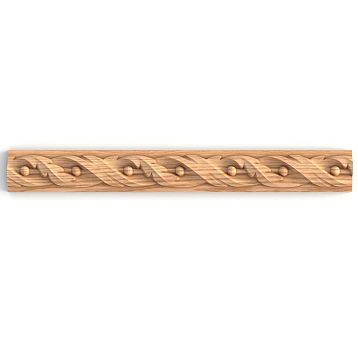
Article Contents:
- What is Cornice Molding
- Where is Cornice Profile Used
- Which Moldings are Suitable for Cornices
- Wooden Cornice Moldings
- MDF Cornice Profiles
- Smooth Cornice Profiles
- Relief Cornice Profiles
- Trims for Cornice Lines
- What to choose: molding, cornice, or baguette
- When a cornice is specifically needed
- When molding is suitable
- When it's better to choose baguette
- How not to confuse decorative profiles
- How to choose moldings for cornice by style
- Classic Interior
- Neoclassicism: restrained architectural quality
- Modern Interior
- Wooden relief cornice: natural expressiveness
- Calm profile without overload
- How to choose moldings for cornice by material
- Wood: array
- MDF: affordability and stability
- Molding for painting
- Ready-made solutions and blanks
- What elements to buy together with cornice molding
- Capital
- Door trims
- Wooden molding: full set
- Wooden baguette
- Decorative elements
- Where cornice moldings are used
- Top line of the wall
- Furniture sets
- Doors and Portals
- Classical Interior: Order System
- Mistakes When Choosing Cornice Molding
- Mixing Cornice and Baseboard
- Too Heavy Profile
- Weak Stylistic Connection with Other Elements
- Incorrect Material Choice for Operating Conditions
- Lack of Logic in Proportions
- Where to Buy Cornice Moldings: A Practical Guide
- How to Choose a Category
- When to go to cornices
- When to go to molding
- How to select compatible elements
- FAQ: Answers to popular questions about cornice moldings
- What is a cornice molding?
- How does molding differ from cornice?
- Which cornice profile is better to choose?
- What is better: wooden cornice or MDF?
- Can molding be used as a cornice?
- What to buy together with cornice profile?
- How to attach cornice molding?
- How to calculate the amount of cornice profile?
- Should a wooden cornice be primed before painting?
- How to choose cornice width for 2.7 m ceilings?
- Can wooden cornice be combined with MDF moldings?
- Where to view wooden products as sets?
- About the Company STAVROS

There is a line in the interior that is rarely noticed—but without which the entire space looks unfinished. This is the upper horizontal belt of the wall: where the wall meets the ceiling, where the decorative vertical of the room reaches its highest point. This is whereWooden cornice—and this is where the question most often arises: which profile to choose?
The query 'moldings for cornice' is not a question about decoration in a general sense. Behind it lies a specific practical solution:moldings for corniceas a profile for the top line of a room, a furniture set, a portal above a door, or architectural framing for a classic interior. A person is looking forMDF Crownor wooden, correct in style, cross-section, proportions — and doesn't want to make a mistake in the choice.
Wooden moldingand cornice are related but not identical concepts.Wooden trimincludes both types, but their purposes are different. The article provides a precise professional answer: what to choose, when, why — and where to find a quality solution in one catalog.



What are cornice moldings
Let's start with a fundamental distinction, without which any profile selection turns into guesswork.
Molding in a broad sense is a linear decorative profile with a specific cross-section. It is mounted on surfaces — walls, ceilings, furniture — and creates a decorative horizontal or vertical line. Molding can be a baseboard, cornice, belt, cove — depending on the cross-sectional shape and application location.
Cornice is a specific type of molding intended for upper horizontal joints: the wall/ceiling transition, the top edge of a furniture facade, a horizontal projection above a door or window. A characteristic feature of a cornice: its cross-section has a pronounced 'overhang' — the profile projects forward relative to the supporting plane, creating a horizontal ledge. It is this overhang that provides a distinct horizontal shadow and 'weightiness' to the top line of the interior.
Molding for a cornice is either the cornice profile itself or an additional molding that forms the cornice assembly together with other elements. In classic three-part cornices, several profiles are used: a lower band, a central shelf element, an upper frieze. Each of these is a separate molding; together they form a full architectural cornice.




Where is cornice profile used
Application Areascornice moldingsin interiors are broader than they might seem at first glance:
-
Wall-to-ceiling transition — the most classic application. The cornice covers the corner, creates a horizontal accent along the ceiling perimeter, and 'completes' the wall's decorative system from above;
-
Upper tier of built-in furniture — cabinets, case sets, kitchen upper modules. A cornice molding along the top of the furniture creates a 'ceiling' illusion — the furniture appears to extend to the ceiling, even if there is a gap between it and the ceiling;
-
Door portals and arches — a cornice as a horizontal projection above a doorway in classic interiors;
-
Decorative wall sections — a horizontal cornice profile divides the wall into visual zones;
-
Fireplaces and decorative panels — a cornice as a horizontal frame for a mantelpiece or decorative panel.
Our factory also produces:



Which moldings are suitable for a cornice
Let's break it down by profile types — from simple to complex.
Get Consultation
Wooden cornice moldings
Wooden cornice— is a profile made from solid or glued wood board. Wooden cornice molding is historically the first and still the most 'authoritative' material for architectural cornice lines.
Advantages of wooden profile:
-
Natural density — wood holds its shape well, resistant to mechanical impacts;
-
Workability — can be milled into any profile with high precision;
-
Tactility — the characteristic 'substantiality' of solid wood felt upon touch;
-
Paintability — accepts any paint, tint, varnish, wax;
-
Durability — a quality wooden cornice lasts for decades.
Materials for wooden cornice: beech — for profiles intended for painting, oak — for tinting and varnish, pine — a budget option for cornices that won't be subjected to mechanical loads. Width of wooden cornice profiles — from 30 to 120 mm, projection from the wall (or furniture surface) — from 15 to 50 mm.
MDF cornice profiles
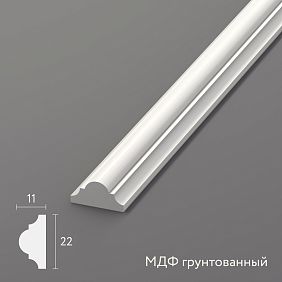
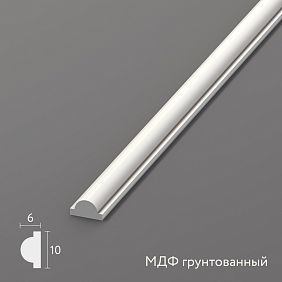
MDF Crown— a pressed medium-density fiberboard profile. In the category of furniture cornices, MDF holds a dominant position: it is technologically advanced, reproduces any profile, and takes paint well.
Characteristics of MDF cornice:
-
Dimensional stability — does not 'wander' with normal humidity fluctuations;
-
Smooth surface — free of knots, cracks, and veins, ideal for painting;
-
Affordable price — typically cheaper than solid wood counterparts with comparable appearance;
-
Humidity limitation — deforms in rooms with consistently high humidity.
MDF is the optimal choice for cornices on case furniture, kitchen fronts, and built-in units. For architectural cornices on walls and ceilings in formal interiors, solid wood is preferable.
Smooth cornice profiles
A smooth cornice is a rectangular or slightly stepped cross-section without ornamentation. Clean geometry, sharp edges, distinct horizontal shadow. This type works in modern interiors, neoclassical, and neutral spaces — where the decorative goal is to create an architectural horizontal line without historical references.
Buy wooden corniceA smooth profile is the right choice for projects in the style of 'modern classic', Scandinavian neutral interior, neo-minimalism. After monochrome painting, such a cornice 'dissolves' into the plane, remaining active through line and shadow.
Relief cornice profiles
The classic architectural section of a cornice is not just a 'shelf'. It is a system of layered transitions: a straight cornice (shelf element), a cavetto or ovolo underneath, a scotia or cyma reversa at the base. With side lighting, each change in height casts its own shadow, and the cornice 'lives' on the wall, changing with every movement of the light source.
Buy wooden corniceWith a relief historical profile — this is the choice for living rooms in classic or neoclassical style, studies, formal dining rooms, grand hallways. A relief wooden cornice requires consistency with the rest of the decor: furniture, doors, wall moldings.
Molding for the cornice line
Wooden trim— is the entire set of linear profiles made from solid wood, including cornices, moldings, baseboards, casings, coves. When selecting a cornice profile, it is important to consider it not in isolation, but as part of a unified molding set for the room: cornice + door casings + baseboard + wall molding should belong to the same stylistic program and, preferably, the same series.
What is better to choose: molding, cornice, or picture rail
Three words — three different tools. They are often confused, which leads to ordering the wrong product.
When you specifically need a cornice
A cornice is always needed when the task is to create a protruding horizontal line with an active shadow. The cornice visually 'overhangs' the lower plane—a wall, furniture facade, or doorway. It is precisely this 'overhang' that creates the effect of architectural completion.
Buy MDF corniceor wooden—is the right solution for: the top line of built-in furniture, a horizontal belt in the upper wall zone, framing a door portal from above, a decorative accent above a fireplace.
When molding is suitable
Wooden molding—a more universal profile without a pronounced 'cornice overhang.' It creates lines and frames but not a horizontal architectural projection. Molding is used for: wall frames and panels, horizontal belts on walls, framing mirrors and panels, additional horizontal accents below the cornice.
In the classic three-zone wall decoration system, both moldings and cornices are present simultaneously: molding forms the framing program on the wall, cornice—the top architectural completion.
When it's better to choose a picture frame molding
A picture frame molding is a molding with a special cross-section, historically intended for framing paintings and mirrors. Its profile has a characteristic slanted 'shelf' element that creates a framing effect.Buy wooden moldingis appropriate when the task is to create a rectangular frame for a decorative object or mirror.
Picture frame molding is not used for cornice applications: it lacks the necessary 'cornice' profile with a horizontal overhang. This is an important terminological boundary that is often forgotten.
How not to confuse decorative profiles
Practical way to distinguish:
| Profile | Characteristic feature | Application |
|---|---|---|
| Cornice | Horizontal overhang ('visor') | Top line of wall/furniture |
| Molding | No overhang, flat back part | Wall frames, belts |
| Molding | Inclined shelf element | Framing of pictures, mirrors |
| Baseboard | Horizontal lower plane | Lower wall/floor zone |
| Cove molding | Concave corner transition | Wall/ceiling corner |
How to choose cornice moldings by style
Interior style is not an abstraction. It is a specific set of requirements for the profile shape, width, relief, and material of the cornice.
Classic interior
Classicism requires monumentality and historical accuracy.moldings for corniceIn classical style, these are wide profiles (80–150 mm) with multi-level relief sections. The cornice "works" as an architectural entablature: below it is the frieze band, and below that is the wall with frame moldings. Three levels of horizontal division represent the classical order system in interior design.
Material for classical cornice — solid beech or oak. Beech — for painting in white or cream. Oak — for staining, giving a noble dark tone. WoodenWooden moldingsFor a classic interior, they must be coordinated in profile: cornice and wall moldings from the same series are a guarantee of decorative unity.
Neoclassicism: restrained architecturality
Modern neoclassicism differs from historical primarily in its restraint: a wide but smooth cornice (55–80 mm) without ornamentation. No beads or acanthus leaves—only clean horizontal planes and sharp edges. A cornice in a neoclassical interior is an architectural element, not a decorative one. It is noticed through its form, not through ornament.
Buy wooden corniceof a smooth wide profile made of beech for white or light gray painting is the precise choice for a neoclassical living room or bedroom.
Modern interior
In a modern neutral interior, the cornice is used delicately: a narrow profile (30–50 mm) with minimal projection, monochrome painting. The goal is to create a soft horizontal line, to mark the wall/ceiling transition without drawing unnecessary attention to the cornice.
MDF Crownof a smooth profile is the optimal choice for a modern neutral interior: affordable, paints well, reproduces the required geometry.
Wooden relief cornice: natural expressiveness
A separate aesthetic program is a relief wooden cornice without painting, finished with oil or wax. The texture of oak or ash with deep relief, treated with dark oil—this is a natural ornament where light plays through the annual rings and milled transitions.
Such a cornice is appropriate in interiors of 'organic classicism'—where wood is not just a material but a declaration of values. Light walls + dark oak cornice = natural architectural severity that does not go out of style.
Calm profile without overload
In small rooms with 2.5 m ceilings, the rule is one: the quieter the cornice, the better. Narrow profile (30–40 mm), minimal projection, painted to match the ceiling. Here, the cornice is not an architectural accent, but a technical finishing line. It creates order without claiming a leading role.
How to choose cornice moldings by material
Each material has its niche—and attempting to 'stretch' it beyond that niche always ends the same way.
Wood: solid wood
Solid wood is the historical and technically most complete material for cornice profiles. A solid wood cornice:
-
withstands load on the projection (the horizontal 'visor' does not sag);
-
accepts any finish (paint, oil, varnish, wax, patina);
-
is repairable (sanding + repainting);
-
maintains shape under normal room temperature fluctuations;
-
creates a tactile and visual effect of natural wood that is not replicated by substitutes.
Standard lengths for solid wood molding profiles are 2400 and 3000 mm. A calculation with a 10–15% margin is mandatory.
MDF: affordability and stability
MDF Crown— an optimal solution for furniture sets and cornices in dry rooms. MDF is dimensionally stable, takes paint and milling well, and can reproduce any profile. It deforms when humidity exceeds the norm — this is its fundamental limitation.
MDF cornice is the right choice for: built-in cabinets and wardrobes, kitchen upper tiers (provided there is normal ventilation), office furniture sets, commercial interiors.
Molding for painting
A profile for painting is not a separate material, but a method of final preparation. A beech wood cornice + sanding + primer = a profile perfectly ready for painting with acrylic enamel. An MDF cornice + sanding without priming — the surface also accepts paint, but requires control over the number of coats (MDF 'drinks' paint more intensively).
Professional technology for painting a cornice: applying primer → sanding with 400-grit sandpaper → first coat of paint → sanding → second coat. Only this way does the surface achieve an even, 'deep' coating without craters or drips.
Ready-made solutions and blanks
For professional projects — hotels, restaurants, private houses —Wooden trimis supplied sanded, ready for priming and painting. This saves time on-site and guarantees a surface quality unattainable with manual sanding.
Which elements to buy together with cornice molding
A cornice is not a standalone element but part of a decorative system. A professional result is always a complete set.
Capital
buy a capital— is to add a decorative finish to a column or pilaster as part of the cornice program. If the interior has columns or decorative pilasters, the cornice completes the walls → the capital completes the columns → together they create the order system of a classical interior. For the logic of combining capitals and overlays in an architectural decorative program, see the article oncapitals and overlays.
Door casings
A door casing and the cornice above the door are interconnected elements of a unified door frame.Wooden casingshould belong to the same stylistic series as the cornice: identical relief, identical proportions, identical material. Only then does a doorway with a cornice portal appear as a complete architectural unit, not a random assortment of profiles.
Wooden millwork: full set
A full set of wooden millwork for a classical room:
-
cornice along the ceiling perimeter;
-
wall molding for a wall paneling program;
-
Floor skirting board matching the height of the cornice;
-
Door architraves;
-
Corner blocks for door architraves.
The entire set from wooden trim one manufacturer guarantees stylistic compatibility and uniform surface behavior when applying the final finish.
Wooden picture frame molding
Buy wooden molding makes sense if the interior includes paintings, mirrors, or decorative panels that need framing. Picture frame molding and cornices are complementary purchases: an interior with a wooden cornice logically suggests wooden frames for paintings or mirrors.
Decorative elements
The cornice program is supplemented by: decorative corner blocks (rosettes) at the cornice corners, key blocks above doorways, decorative console brackets under the cornice in classic interiors. All Wooden items are selected by series and material.
Where cornice moldings are used
Listing application areas without specifics is useless information. Let's provide concrete scenarios.
Upper wall line
Perimeter cornice along the ceiling line is a classic. The width of the cornice here is chosen based on the ratio of the room's height and the desired 'weight' of the upper line. Rule: the cornice must be proportionate to the decor of the rest of the wall. A wide, relief cornice with a narrow baseboard is a mismatch. A wide cornice with a wide baseboard and rich wall molding is harmony.
Furniture sets
Buy molding for cornicefor a built-in wardrobe means visually 'extending' the furniture to the ceiling. A cornice along the top of a sliding wardrobe or walk-in closet system creates an illusion of built-in furniture: the furniture looks like part of the architecture, not a placed object. This is one of the most effective 'life hacks' for cabinet furniture—and one of the most accessible.
Doors and portals
A cornice profile above a door is a 'portal' technique. The horizontal projection of the cornice above the opening gives the door monumentality and architectural status. In classic interiors, this is a mandatory element: a door without a cornice portal is an 'unfinished' door.
The portal is built as follows: casings on the sides of the opening → a horizontal 'transom' made of molding above the casings → a cornice along the top of the transom. Three elements, one architectural result.
Classic interior: order system
In a space where a classical order program is implemented,buying cornice moldings— means buying the top completion of the entire decorative system. The cornice here is the 'entablature,' closing the vertical order scale: baseboard (plinth) → wall with moldings (pylon) → cornice (entablature). Without the cornice, the system is incomplete. It is precisely what creates the feeling of a 'palatial' space—through logic, not through gold.
Mistakes when choosing cornice molding
Mistakes in this category are costly. The profile is installed, painted, and only then does it become obvious that something is wrong. To prevent this—let's examine typical miscalculations.
Mixing cornice and baseboard
Cornice and baseboard have different geometries and applications. Confusing them when ordering is still easy, especially when buying online without checking the cross-section. A baseboard with a horizontal lower plane, used as a ceiling cornice—does not create the desired 'cornice' effect. Always check the profile cross-section before ordering.
Too heavy a profile
A wide, monumental cornice in a small room with a 2.5 m ceiling is decorative suffocation. A cornice 120 mm wide 'eats up' 5–8% of the ceiling height visually. In small rooms, only narrow, delicate profiles work: 30–50 mm maximum.
Weak stylistic connection with other elements
Wooden corniceA relief in classic style + smooth minimalist architraves + plastic skirting board — three different decorative languages in one room. The result: an interior without a single stylistic key that 'doesn't read' as a whole. A cornice is always chosen as part of a system, not in isolation.
Incorrect material selection for operating conditions
MDF cornice in a kitchen above an open work area (steam, grease, moisture) — deformation is inevitable. Wooden cornice in a room with constantly high humidity without protective coating — swelling, cracks. Operating conditions are the first question before choosing a material.
Lack of logic in proportions
An 80 mm wide cornice with a 30 mm skirting board and narrow wall moldings — decorative mismatch. The proportion principle: the width of the cornice should correspond to the width of the skirting board (acceptable ratio: cornice no more than 2 times wider than the skirting board). Violating this ratio creates a feeling of a 'heavy lid' on 'thin walls' — a visually unstable result.
Where to buy moldings for cornices: a practical guide
How to choose a category
Step one — determine the application:
-
Wall/ceiling transition in a living space → solid wood cornice;
-
Upper tier of built-in furniture → MDF cornice or paintable wood cornice;
-
Door portal → wooden cornice, coordinated with architraves;
-
Classical interior with an order program → wide relief wooden cornice.
When to go to cornices
To the cornices section — when a profile with a pronounced horizontal overhang is needed for upper nodes.Buy moldings for cornice— solid wood cornices section, where all cornice-type profiles are concentrated.
When to trim
To the sectionwooden trim— when a set is needed: cornice + molding + baseboard + architraves from one series. This is where it is convenient to form a complete trim set for a room.
How to select compatible elements
Compatibility rule: one material + one series.Wooden moldingsfor walls + cornice from the same series + baseboard from the same wood = guaranteed unified result. Mixing series from different manufacturers is only permissible if the finish is identical (painted in a unified color) and the profile proportions are similar.
FAQ: Answers to popular questions about cornice moldings
What is a cornice molding?
A cornice molding is a cornice profile (a linear decorative element with a horizontal projection) for upper interior junctions: wall/ceiling transition, upper tier of furniture, door portal. These can be either ready-made cornices made of solid wood or MDF, or linear profiles for assembling a multi-level cornice unit.
What is the difference between a molding and a cornice?
Molding is a general term for a linear decorative profile. Cornice is a specific type of molding with a pronounced horizontal projection that creates a 'visor' over the lower plane. Without this projection, it's a molding. With the projection, it's a cornice.
Which cornice profile is better to choose?
Depends on the style and size of the room. For classic interiors with high ceilings (from 3 m) — a wide, relief wooden cornice 80–120 mm. For neoclassical — a smooth wooden one 55–75 mm. For a modern neutral interior — a smooth MDF or wooden one 30–50 mm.
What is better: a wooden cornice or MDF?
Wooden cornicefrom the array — the best choice for architectural applications (walls, ceilings, portals) and rooms with possible humidity fluctuations.MDF Crown— for furniture sets in dry rooms: technologically advanced, affordable, paints well.
Can molding be used as a cornice?
Yes, if the molding has the required cross-section with a horizontal overhang. A narrow wall molding without an overhang does not provide a cornice effect. For cornice applications, profiles with a projection from the wall of at least 20 mm are suitable.
What to buy together with the cornice profile?
Minimum set: cornice + baseboard + trims from the same series. Extended set for a classic interior: + wall molding +Capital(if there are columns) + corner decorative blocks.
How to attach cornice molding?
To brick and concrete walls — dowel-nails with a spacing of 400–500 mm + adhesive (liquid nails). To drywall — finishing nails with adhesive. To furniture cases — finishing nails + PVA or "Moment Stolyar" adhesive. Profile joints — cutting at 45° with filling with acrylic sealant.
How to calculate the amount of cornice profile?
Room perimeter (or application area) + 15% for cutting and waste. For example: a room 4×5 m, perimeter 18 lm → order 18 × 1.15 = 20.7 lm. Round up to the nearest multiple of one profile length (usually 2.4 or 3.0 m).
Is it necessary to prime a wooden cornice before painting?
Absolutely. Unprimed wood 'drinks' paint unevenly: porous areas create darker spots, resin pockets 'repel' paint. Primer creates a barrier and ensures even application. For beech — acrylic primer. For oak and pine (if resin is present) — shellac sealer before acrylic primer.
How to choose cornice width for 2.7 m ceilings?
Optimal width for 2.6–2.8 m ceilings: 45–65 mm. This corresponds to standard residential room height and does not 'eat up' visual volume. For ceilings 3.0 m and higher — you can move to 70–90 mm.
Can a wooden cornice be combined with MDF moldings?
Yes, provided there is a unified final painting in one color. Different materials under one color look monolithic. If there is no painting (wood under oil/varnish), mixing materials is inappropriate — they will give different tactile and visual effects.
Where to view wooden products as a set?
In the sectionwooden products— there, all categories of solid wood trim are concentrated: cornices, moldings, baseboards, casings, capitals, trim. It's convenient to select a complete set for a room in one place.
About the company STAVROS
Professional cornice profile is not a product you choose blindly. It's a choice that requires assortment depth, precise style matching, and the ability to outfit an entire interior from a single source.
moldings for cornice, Wooden cornicesolid wood,MDF Crown, full Wooden trim for classic and modern interiors — all this is in the catalog of the company STAVROS.
STAVROS is a manufacturer and supplier of wooden architectural elements and interior trim. The assortment includes cornices, moldings, baseboards, architraves, Capitals and the full range of wooden products for classic and modern interiors. All profiles are made from quality solid wood — beech, oak, birch, pine — and are supplied sanded for painting or the customer's final finishing.
STAVROS works with private customers, architectural bureaus, design studios, and construction companies. Consultation on selecting a cornice profile for a specific style, quantity calculation, assistance in forming a trim set — this is the company's standard service. Because the right cornice is not just a 'strip under the ceiling'. It is an architectural point where the interior achieves completeness. And STAVROS helps to find exactly that.