Article Contents:
- What makes polystyrene impact-resistant: the chemistry and physics of strength
- Physical characteristics: numbers that matter
- Comparison with Other Materials
- Why corridors are a risk zone for ordinary decor
- Typical threats to corridor walls
- Protective function of moldings
- Visual expansion of narrow spaces
- Children's room: where durability is more important than aesthetics
- Risk zones in a children's room
- Material safety for children's rooms
- Practical height of skirting boards
- Profile selection: from minimalism to classic
- Simple Geometric Profiles
- Single-bead profiles
- Multi-profile complex moldings
- Ceiling skirting: completing the composition
- Functions of ceiling skirting
- Choosing cornice size
- Combining wall moldings and ceiling cornice
- Installing impact-resistant moldings: easier than it seems
- Surface Preparation
- Marking and Planning
- Cutting and joining
- Adhesive Application
- Finishing
- Care and durability: what to expect after years
- Current Maintenance
- Repair of damage
- Durability in numbers
- Design solutions: from protection to decoration
- Classic three-line scheme for corridors
- Two-color scheme for children's rooms
- Minimalist scheme with emphasis on material
- Combinations with other materials
- Moldings plus decorative panels
- Moldings plus wallpaper
- Moldings plus decorative plaster
- Cost and Economic Viability
- Calculation for a typical corridor
- Invisible Savings
- FAQ: answers to common questions
- Conclusion: Protection as a Philosophy of Comfort

Do you know what a narrow hallway and a child's room have in common? In both cases, the walls are subjected to real endurance tests. Suitcases and bags in the hallway, bicycles and sleds in the corridor, toy cars and balls in the nursery — all of this creates a constant threat to any, even the most beautiful decor. And here's the paradox: it's precisely in these rooms that you want to create a cozy, stylish atmosphere, but the fear of inevitable damage holds you back.
A solution exists, and it's called Impact-resistant wall molding and impact-resistant polystyrene ceiling skirting. These are not ordinary decorative elements that crack at the first touch. These are technological materials created specifically for high-traffic areas where beauty must be combined with practical indestructibility.
Let's figure out what impact-resistant polystyrene is, how it differs from ordinary polystyrene, why these elements are ideal for hallways and children's rooms, and how to choose and install them correctly. No general phrases — only specific technical characteristics, real experience, and honest recommendations.
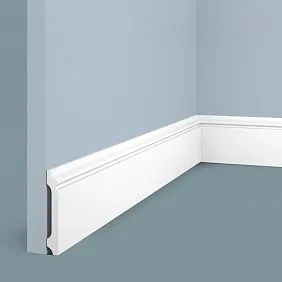
What Makes Polystyrene Impact-Resistant: The Chemistry and Physics of Strength
Polystyrene is familiar to everyone: it's the very material used to make disposable tableware, packaging for electronics, and foam boards for insulation. Lightweight, inexpensive, easy to process — but brittle. Ordinary polystyrene cracks from impact, breaks when bent, and cannot withstand point loads.
Impact-resistant polystyrene (IPS) is a completely different story. Special modifying additives — most often polybutadiene, a rubber elastomer — are introduced into its structure during the polymerization stage. These additives create microscopic elastic inclusions within the rigid polystyrene matrix, which act as shock absorbers.




Physical Characteristics: Numbers That Matter
Impact-resistant polystyrene molding has specific, measurable advantages. Impact strength — the material's ability to absorb impact energy without breaking — is 8-10 times higher for IPS than for ordinary polystyrene. This means that when hit by a suitcase, bicycle handlebar, or toy, the molding will not crack or shatter.
Tensile strength is 30-35 MPa. This is slightly less than that of standard polystyrene (40-50 MPa), but this is not a drawback — it's an intentional compromise in favor of plasticity. The material does not break but bends, absorbing the impact and returning to its original shape.
The density of IPS is 1040-1050 kg/m³, which is only 5% greater than that of ordinary polystyrene. The molding remains lightweight for installation (a 2-meter strip weighs 400-600 grams) but gains the necessary massiveness and strength. The coefficient of linear expansion is 7×10⁻⁵ per degree — this means minimal thermal deformation.
Temperature resistance: from -40°C to +70°C without loss of properties. IPS does not become brittle in the cold and does not soften in the heat. Water absorption is less than 0.1% — the material is absolutely not afraid of water, does not swell, and does not deform in damp rooms.
Our factory also produces:


Comparison with Other Materials
Why exactly impact-resistant polystyrene, and not polyurethane, MDF, or wood? Each material has its own advantages and disadvantages.
Polyurethane is strong, holds fine relief details well, and is moisture-resistant. But it is 2-3 times more expensive than polystyrene, heavier (density 250-300 kg/m³), and not as resistant to point impacts. A polyurethane molding can chip a piece of ornament upon a strong impact, whereas IPS will simply bend and return to shape.
MDF skirting boards look solid, imitate wood, but are afraid of moisture (they swell when wet), 4-5 times heavier than polystyrene, more difficult to install, and crack or break upon impact. For hallways where wet shoes or umbrellas are occasionally brought in, MDF is not the best choice.
Wooden moldings — this is classic, noble, eco-friendly. But wood is expensive, requires professional installation, is afraid of moisture and temperature fluctuations, and upon impact can split or leave a dent that is difficult to repair.
Impact-resistant polystyrene is at the ideal point of price/quality/practicality ratio for high-traffic areas.
Get Consultation
Why Hallways Are a Risk Zone for Ordinary Decor
The hallway is a transit space through which all flows pass: people, things, furniture during rearrangement, large purchases, sports equipment. In a typical apartment, the hallway width is 90-120 cm. This is enough for passage but insufficient for maneuvering with large objects.
Typical Threats to Hallway Walls
What happens in practice? The corner of a suitcase hits the wall at a height of 40-60 cm when being carried into a room. A bicycle handlebar scratches the wall at a height of 80-100 cm. A shoulder bag hits the corner when turning. Children, while running, lean on the walls with their hands. When moving furniture, a chair leg or table edge leaves a deep scratch or dent.
Ordinary paint in these areas wears off quickly, wallpaper tears, decorative plaster chips. Standard plastic or foam moldings crack at the first serious impact. After a year or two, the hallway looks worn and requires repair.
The Protective Function of Moldings
Wall molding made of impact-resistant polystyrene solves the problem on two levels. First, it itself withstands impacts without damage. Second, it protects the wall behind it from contact with hard objects.
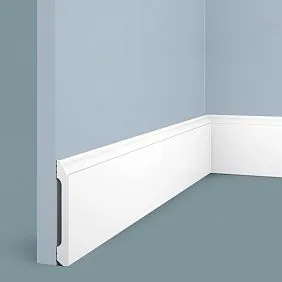
The optimal hallway protection scheme: a horizontal molding at a height of 80-100 cm along the entire length of the walls. This is the maximum risk zone — the height at which suitcase handles, bicycle handlebars, and bag corners are located. A molding with a profile of 40-60 mm protrudes 15-25 mm from the wall, creating a protective buffer.
An additional line of molding at a height of 40-50 cm will protect against children's toys, shoes, and low-carried items. A third line at a height of 150-160 cm (if ceilings allow) creates compositional completeness and protects against tall objects.
Visual expansion of narrow spaces
A narrow corridor is not only a functional but also a psychological problem. A feeling of tightness, pressure from the walls, lack of air.corridor decorative finishwith horizontal moldings visually expands the space.
Three or four parallel moldings create a horizontal rhythm that is perceived as length, not height. The eye slides along the lines, and the corridor appears wider. If the moldings are painted a light color and the walls between them are slightly darker, the expansion effect is enhanced.
Important nuance: in very narrow corridors (less than 90 cm), avoid massive profiles. A molding wider than 50 mm will visually consume space. Choose profiles 30-40 mm wide — they will provide protection and a decorative effect without compromising the feeling of spaciousness.
Children's room: where durability is more important than aesthetics
A child's room is a territory of activity, creativity, and, frankly, destruction. Children don't walk — they run, jump, tumble. They don't sit still — they build pillow forts, kick balls, ride bicycles. And all of this happens within the confined space of the room.
Risk zones in a child's room
Walls in a child's room suffer on several levels. The lower zone (from the floor to a height of 80-100 cm) is the play territory. Cars, building blocks, balls regularly crash into the walls. Children like to lean on walls with their hands, kick them with their feet, throw toys.
The middle zone (80-150 cm) suffers from furniture: the bed headboard scrapes the wall when changing sheets, the chair scratches the wallpaper when getting up, the desk leaves marks when moved.
The upper zone (above 150 cm) seems safe, but it is not immune either: a tossed ball, a launched toy, careless handling of tall objects — all of this can damage the decor.
Safety of materials for a child's room
For a child's room, not only durability but also the environmental friendliness of materials is critically important. Impact-resistant polystyrene is an inert material that does not emit volatile substances. It is odorless, does not cause allergies, and is safe for skin contact.
Important: choose polystyrene with a safety certificate for residential premises. High-quality EPS from trusted manufacturers undergoes sanitary-epidemiological examination confirming the absence of harmful emissions. Cheap, no-name polystyrene may contain residual styrene monomers, which have a characteristic chemical odor.
Baseboards and cornices for a child's roomshould have rounded profiles without sharp corners or protruding elements. This reduces the risk of injury from falls or collisions. Deep relief ornamentation, beautiful in a living room, is a potential hazard in a child's room: small elements can chip off and be swallowed by a small child.
Practical baseboard height
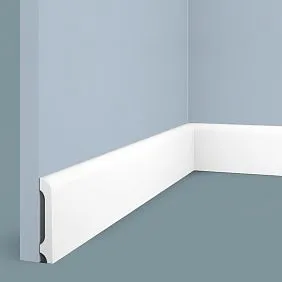
For a child's room, it is recommended to usefloor skirting boardswith a height of 80-120 mm — higher than standard. Why? A tall baseboard creates an additional protective zone for the lower part of the walls, which takes the brunt of impacts from toys and furniture.
A 100 mm high baseboard covers the wall from the floor to the level where most child activities with floor toys end. If complemented with a horizontal wall molding at a height of 80-90 cm, it creates a reliable protective system.
Color scheme: for a child's room, you can deviate from traditional white. Baseboards and moldings painted in bright colors or to match the walls create a playful atmosphere. The main thing is to use water-based paints that are odorless, free of harmful substances, fast-drying, and safe.
Profile selection: from minimalism to classic
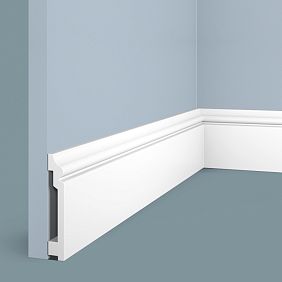
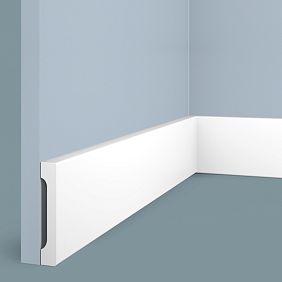
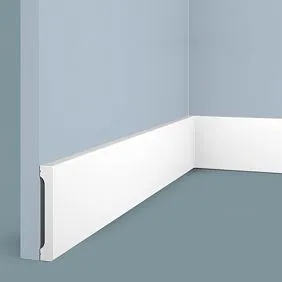
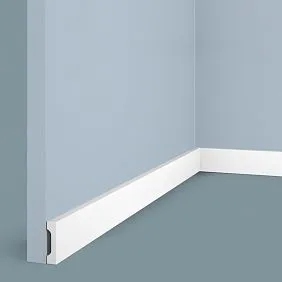
polystyrene moldingsare available in dozens of profiles — from simple rectangular strips to complex ornamented profiles with multiple beads and grooves. How to choose the right one?
Simple geometric profiles
A rectangular strip 30-50 mm wide, 10-20 mm high — this is a minimalist solution suitable for modern interiors. Such a molding does not claim a decorative role; it is purely functional: wall protection and visual structuring of space.
Advantages of a simple profile: versatility (suits any style), ease of installation (cuts with a regular knife, joins without complex fitting), minimal price. Disadvantages: visual plainness, lack of play of light and shadow.
Where to use: modern interiors in minimalist, Scandinavian, loft, high-tech styles. Children's rooms, where safety and ease of care are important. Utility rooms, where decor is secondary.
Profiles with a single bead
A molding with a convex bead in the center or at the edge — this is a step towards decorativeness while maintaining conciseness. The bead creates a subtle play of light and shadow, makes the profile more voluminous and interesting without overloading it with details.
Such profiles 40-60 mm wide are ideal for transitional interiors — not strictly classical, but not ultra-modern either. They are suitable for neoclassical, modern classic, eclectic styles. They work excellently in corridors and children's rooms: expressive enough, but not excessive.
Multi-profile complex moldings
Profiles with multiple beads, grooves, ornamental inserts — this is the territory of classic interiors. The width of such moldings reaches 60-80 mm, the relief is deep (5-10 mm), the visual effect is maximal.
In hallways and children's rooms, such profiles should be used with caution. On one hand, deep relief better withstands impacts (energy is distributed throughout the volume). On the other hand, intricate patterns are harder to clean from dust and dirt, and in a child's room, small elements may chip off.
Recommendation: if you want a classic style in a hallway or children's room, choose moldings with rounded, not sharp, relief elements. They are safer and more practical.
Ceiling skirting board: finishing the composition
A ceiling skirting board (cornice, cove) visually separates the wall from the ceiling, creating architectural completeness of the space. In hallways and children's rooms, it performs several functions.
Functions of a ceiling skirting board
Firstly, visual structuring. Without a cornice, the boundary between the wall and ceiling is blurred, especially if they are painted in similar tones. A cornice creates a clear line, making the composition orderly.
Secondly, masking defects. The joint between the wall and ceiling is rarely perfectly even, especially in old houses. A cornice covers unevenness, cracks, and gaps in stretch ceilings.
Thirdly, the possibility of hidden lighting. Behind a wide cornice (60-100 mm), you can place an LED strip, creating soft diffused light that visually increases the height of the room. For narrow hallways and children's rooms with low ceilings, this is a real lifesaver.
Choosing the size of the cornice
The size of the cornice should correspond to the ceiling height and room area. For standard ceilings of 2.5-2.7 meters, cornices 50-80 mm wide are optimal. Narrower ones will get lost, wider ones will visually lower the ceiling.
For low ceilings (2.3-2.4 meters), choose cornices 40-60 mm with a simple profile. They will create structure without visual pressure. Color - white or matching the ceiling tone, so as not to draw attention to the height.
For high ceilings (2.8-3.0 meters and above), you can afford cornices 80-120 mm, possibly with an ornament. They will fill the space, making it more intimate and cozy.
Combining wall moldings and ceiling cornices
Wall moldings and ceiling cornices should be stylistically coordinated. If the moldings are simple geometric, the cornice should also be laconic. If the moldings have a classic ornament, the cornice should be corresponding.
An interesting technique: use the same profile for wall moldings and ceiling cornices. This creates unity of composition, rhythmic coherence. The room is perceived as an architectural whole, not a set of random elements.
Color solution: classic - white moldings and cornices against colored walls. Modern approach - paint everything to match the walls, creating a relief monochrome composition. Contrast option - dark moldings on light walls (but in narrow hallways this can visually narrow the space).
Installing impact-resistant moldings: easier than it seems
Installing moldings made of impact-resistant polystyrene does not require professional skills. The material is lightweight, cuts with a regular knife or saw, and adheres with simple compounds. But there are nuances, knowledge of which will prevent mistakes.
Surface preparation
The wall must be clean, dry, and dust-free. Old wallpaper, peeling paint, loose plaster - all this must be removed. The molding is glued to a hard, stable surface, not to the finish coating.
Ideal: primed and leveled wall. Good: painted wall or high-quality non-woven wallpaper on a solid base. Bad: paper wallpaper, whitewash, unstable plaster.
If the wall is uneven (variations of more than 3-5 mm per meter), the molding will not adhere tightly, and voids will form underneath. For uneven walls, use flexible polyurethane moldings that can follow surface curves. Or level the wall before installation.
Marking and Planning
Before installation, draw a plan for the placement of moldings. Determine the height of the lines, distances between them, start and end points. Mark horizontal lines on the wall using a laser level or water level and a chalk line.
Important: all horizontal lines must be strictly parallel to the floor and ceiling. Even a deviation of 1-2 degrees will be noticeable to the eye and create a sense of crookedness.
Calculate the amount of material: measure the length of all lines, add 10% for trimmings and reserve. Moldings are sold in 2-meter strips. For a hallway 6 meters long, you will need 3 strips for one line plus one strip for cutting corners - total 4 strips, or 8 meters.
Cutting and joining
Polystyrene is cut with a sharp knife (for profiles up to 30 mm) or a fine-toothed saw (for thicker ones). The cut must be clean, without torn edges. Use a miter box for cutting corners at 45° - this will ensure a tight fit in the corners.
Straight joints (when one strip is not long enough) are made at a 90° angle. The ends are trimmed with a sharp knife for a tight fit. A gap of more than 0.5 mm is unacceptable - it will be visible after painting.
For internal room corners, moldings are cut at 45° with an inward slope. For external corners - with an outward slope. If the angle is not exactly 90° (which is common in old houses), adjust the cuts experimentally, trimming little by little until a tight joint is achieved.
Adhesion
Apply adhesive to the back of the molding with a notched trowel (3-4 mm teeth) or a 'sausage' along the center. Use special adhesive for polystyrene or universal mounting adhesive (liquid nails). Regular PVA is not suitable - it does not provide the necessary bonding strength.
The molding is applied to the wall, aligned with the markings, and pressed along its entire length. Excess adhesive that squeezes out along the edges is immediately removed with a damp sponge. After 5-10 minutes, the adhesive will set, and the molding can be released.
The full drying time for the adhesive is 12-24 hours. During this period, the molding must not be loaded, moved, or its position adjusted.
Final finishing
After the glue dries, the joints between the planks and the gaps between the molding and the wall are sealed with acrylic sealant or putty. Use white acrylic sealant—it is elastic, does not crack, and is easy to paint.
Apply the sealant in a thin strip, smooth it with a wet finger or a spatula. Remove any excess immediately. After drying (2-4 hours), you can proceed to painting.
For painting, use water-based or acrylic paint. Apply 2-3 thin coats with a brush or roller. Do not use solvent-based paints (nitro-enamel, alkyd)—they can dissolve polystyrene.
Care and Durability: What to Expect Over the Years
One of the main advantagesmoldings for wallsMade of impact-resistant polystyrene—minimal care requirements. The material does not require special treatment, does not need restoration, and lasts for decades without losing its properties.
Current Care
Every few months, wipe the moldings with a dry cloth or vacuum with a soft attachment to remove dust. In hallways and children's rooms, where soiling is more intense, you can wipe with a damp sponge and mild detergent.
Polystyrene is not afraid of water and does not absorb dirt. Any stains—from children's fingers, splashes of dirt—wash off easily. Do not use abrasive cleaners or stiff brushes—they can damage the paint, but not the material itself.
If the paint has worn off or faded (usually in areas of frequent contact—corners, near doors), simply touch up these areas. Polystyrene can be painted multiple times without limitations.
Repair of damage
What to do if damage does occur? If it's a dent or deformation—nothing. Impact-resistant polystyrene is elastic; most dents will correct themselves over time. You can speed up the process by heating the deformed area with a hairdryer—the material will soften and return to shape.
If it's a crack (which is unlikely for HIPS but possible under extreme impact)—fill it with acrylic sealant, smooth it, let it dry, and touch up. The repair spot will be unnoticeable.
If an element is broken (a piece of the profile has broken off)—simply replace the damaged plank. Thanks to the standardization of profiles, you can always buy the exact same molding, cut out the damaged section, and glue in a new one.
Durability in Numbers
The service life of impact-resistant polystyrene is over 50 years in interior conditions. The material does not age, does not yellow, and does not lose strength. The only thing that may be needed is repainting to refresh the appearance, but this is an aesthetic, not a structural, issue.
HIPS is not susceptible to biological degradation—mold and fungus do not grow on it, and it is not eaten by insects or rodents. This is especially important for private homes, where wooden elements can be damaged by wood-boring beetles.
The material does not emit harmful substances throughout its entire service life. Even when heated (which can happen in summer heat under a roof), HIPS remains inert and safe.
Design Solutions: From Protection to Decoration
Moldings are not just protection but also a powerful tool for visual transformation. Let's look at specific design schemes for hallways and children's rooms.
Classic Three-Line Scheme for a Hallway
The lower molding line at a height of 40-50 cm from the floor (30-40 mm profile). The middle line at a height of 90-100 cm (40-60 mm profile, the most massive). The upper line at a height of 160-170 cm (30-40 mm profile). Plus a ceiling cornice of 60-80 mm.
The wall is divided by moldings into four horizontal zones. The lower zone (from the floor to the first molding) can be painted a darker color or covered with washable wallpaper—this is a practical protective panel. The middle and upper zones—in the main wall color. The zone between the upper molding and the cornice—in the ceiling color or an intermediate shade.
This scheme creates visual complexity, breaking the monotony of a long hallway wall. Horizontal lines expand the space. Different coloring of the zones adds depth.
Two-Color Scheme for a Children's Room
The lower part of the walls (from the floor to a height of 100-120 cm) is painted a bright, cheerful color. At the color boundary, a horizontal molding with a 50-60 mm profile is installed, painted white or a contrasting color. The upper part of the walls is light (white, cream, light blue). Ceiling cornice 60 mm.
This scheme solves several tasks. The bright lower zone creates a playful atmosphere suitable for a children's room. The light upper zone visually raises the ceiling, making the room feel more spacious. The molding at the boundary protects against damage and clearly separates the color zones.
For very young children (up to 3 years), the lower zone can be painted with washable paint containing antibacterial additives—it can be drawn on with chalk or markers that wash off easily.
Minimalist Scheme with Emphasis on Material
One line of wide molding (60-80 mm) at a height of 90-100 cm around the entire perimeter. Ceiling cornice of the same profile. Everything is painted the same color as the walls—creating a relief monochrome composition.
This scheme works on contrasts of textures: smooth painted walls and relief moldings. With proper lighting (fixtures creating side light), the moldings cast shadows, creating an architectural play.
The minimalist scheme is ideal for modern interiors where restraint and conciseness are important. It is practical (one molding protects the most vulnerable zone), economical (minimum materials), and visually light (does not overload the space).
Combinations with Other Materials
decorative polyurethane elementsImpact-resistant polystyrene can be combined with other finishing materials to create complex multi-level compositions.
Moldings plus decorative panels
The lower part of the wall (up to a height of 100-120 cm) is covered with MDF panels that imitate wood. A wide UPS molding (50-70 mm) is installed at the upper border of the panels, which simultaneously serves as the completion of the panel zone and the beginning of the painted upper part of the wall.
This solution combines the nobility of wood (visually) with the practicality of plastic. MDF panels protect the lower zone from strong impacts, UPS molding protects the middle and upper zones. The combination provides maximum protection with an attractive appearance.
Moldings plus wallpaper
A horizontal molding divides the wall into upper and lower zones with different wallpapers. The lower zone is washable vinyl wallpaper with a relief texture, resistant to damage. The upper zone is decorative wallpaper with a pattern or texture.
The molding hides the wallpaper joint, turning a technical element into a decorative one. An additional plus: if the lower zone is damaged, it can be re-pasted without touching the upper one — the molding creates a clear boundary.
Moldings plus decorative plaster
The upper part of the wall is covered with textured decorative plaster (Venetian, bark beetle, travertine). The lower part is smoothly painted. At the border — UPS molding.
The contrast of textures creates visual interest. The smooth lower zone is practical (easy to clean, dirt does not linger on it). The textured upper zone is decorative and inaccessible to damage.
Cost and Economic Justification
Let's be honest: impact-resistant polystyrene is 30-50% more expensive than regular polystyrene. UPS molding costs 150-300 rubles per 2-meter strip versus 80-150 rubles for a standard one. Is the overpayment worth it?
Calculation for a typical corridor
Corridor length 6 meters, two walls 6 meters each. We install three lines of moldings. Perimeter: 12 meters per line, total 36 meters. Need 18 strips of 2 meters. Plus ceiling cornice: 12 meters, 6 strips.
Regular polystyrene: 24 strips at 100 rubles = 2400 rubles. Impact-resistant: 24 strips at 200 rubles = 4800 rubles. Difference: 2400 rubles.
Glue, sealant, paint: another 1500-2000 rubles in both cases. Total: regular option — 4000 rubles, impact-resistant — 6500 rubles.
Now the long-term perspective. Regular molding in a corridor will start cracking in 1-2 years. In 3-4 years it will require replacement. Replacement: remove the old one (2-3 hours of work), prepare the wall, install a new one, paint. Plus material costs. Total: another 4000-5000 rubles in a few years.
Impact-resistant molding will last 15-20 years without replacement. During this period, you will save at least 10000-12000 rubles on the absence of repairs. The overpayment of 2400 rubles pays off many times over.
Invisible savings
There is another aspect — saving time and nerves. A corridor and a children's room, where you constantly need to touch up cracks, glue back fallen pieces, mask damage — this is a source of constant irritation. The feeling of an unfinished renovation, shame in front of guests, the need to spend weekends on minor repairs.
Impact-resistant moldings free you from this. Install — and forget for decades. Psychological comfort, peace of mind, confidence that the house is in order — this is also a value that is difficult to measure in money.
FAQ: answers to frequently asked questions
Can impact-resistant moldings be installed on wallpaper?
Yes, if the wallpaper is firmly glued to the wall. Non-woven wallpaper with deep penetration adhesive works best. Paper wallpaper is risky — under the weight of the molding, they may peel off along with it. Vinyl wallpaper on a foamed base is also not ideal — the soft base does not provide rigid contact.
What glue is best for installation?
Special glue for polystyrene or universal mounting adhesive (liquid nails) without solvents. Check the packaging: it should say 'for expanded polystyrene' or 'for plastics'. Solvent-based adhesives (like 'Moment') dissolve polystyrene.
Can moldings be painted in dark colors?
Yes, polystyrene can be painted in any colors. Use water-based or acrylic paint. For dark saturated colors, 3-4 coats may be required for even coverage. Dark moldings look impressive on light walls.
How do moldings behave with temperature fluctuations?
Excellent. The coefficient of linear expansion of UPS is low, thermal deformations are minimal. When heated to +40°C, a 2-meter strip lengthens by only 0.6 mm — this is unnoticeable and does not create stress.
Can moldings be washed with aggressive cleaning agents?
Polystyrene itself is resistant to most household chemicals (soap solutions, ammonia, weak acids). But aggressive solvents (acetone, white spirit) can damage it. Test on an inconspicuous area. The paint may be more sensitive than the material — depends on the type of paint.
How long does installation take?
For a standard 6-meter corridor with three molding lines — 4-6 hours of work for one person, including marking, cutting, and gluing. Plus glue drying time (12-24 hours), joint sealing (1-2 hours), painting (2-3 hours in two coats). Total: two days including technological breaks.
Are special tools needed?
Minimum: knife or saw, tape measure, pencil, level (preferably laser), miter box for cutting corners, glue spatula, paint brush. All of this is in a typical DIYer's toolkit. Specialized tools are not required.
How do moldings behave during house settlement?
Better than rigid materials. Wood and MDF crack during settlement. Plaster crumbles. Polystyrene is elastic enough to compensate for minor deformations (up to 2-3 mm per meter) without damage. In new houses where settlement is inevitable, this is an important advantage.
Conclusion: Protection as a Philosophy of Comfort
Corridors and children's rooms are spaces where life is in full swing. That's where activity concentrates, where those little disasters happen that turn a fresh renovation into a worn-out interior. And that's precisely where you need not just beauty, but resilient, unyielding beauty, ready for challenges.
Impact-resistant wall moldingand impact-resistant polystyrene ceiling skirting — this is not a compromise between aesthetics and practicality. It is their harmonious combination, where one enhances the other. Protection becomes decoration, and decor becomes protection.
You are not just choosing finishing materials. You are choosing peace of mind, confidence in durability, freedom from constant minor repairs. You are creating an interior that will delight for decades, without requiring constant attention and restoration.
To realize your plans, you need quality materials from trusted suppliers. The company STAVROS together with the manufacturer Hi Wood offersimpact-resistant polystyrene profilesEuropean quality at reasonable prices.
The STAVROS catalog features over 50 profiles of moldings and cornices made of impact-resistant polystyrene — from minimalist strips to classic ornamental profiles. Width from 20 mm to 120 mm, relief height from 5 mm to 30 mm. Each profile is created considering technological requirements and aesthetic standards.
Hi Wood material is a high-density polystyrene (1045 kg/m³) with increased impact toughness, modified with elastomeric additives for maximum resistance to mechanical damage. All products undergo quality control, have safety certificates for residential premises, including children's rooms.
STAVROS professional consultants will help select profiles considering the specifics of your rooms, calculate the required amount of materials, and provide recommendations for installation and finishing. Own warehouses in Moscow and St. Petersburg ensure availability of popular items and fast shipping. Delivery is carried out throughout Russia with a guarantee of product integrity.
Visit the STAVROS showrooms to see the profiles in person, assess the material quality, and get samples for fitting. Or explore thecatalog of moldings, cornices, and skirting boardson the website — detailed photos, precise dimensions, and application descriptions will help you make the right choice.
Create interiors that last long. Protect walls beautifully. Live peacefully, knowing your home is ready for any challenges. With STAVROS impact-resistant moldings and skirting boards, this is not a dream — it's a reality accessible to everyone.
Your durable and beautiful interior starts here. Take the first step today.