








































Article Contents:
- Ceiling Molding: What It Is and Why Buy It
- How Ceiling Molding Differs from a Cornice
- Where Ceiling Molding Is Used
- How Molding Changes the Perception of a Ceiling
- When It's an Architectural Tool, Not Just Decor
- Which Ceiling Moldings to Buy for Your Task
- For Low Ceilings: Narrow Profile, No Relief
- For High Ceilings: Width as an Argument
- For classic interiors: historical profile
- For modern interiors: thin line
- For ceilings with lighting: molding as a 'shelf' for LED
- For ceilings with a rosette: ceiling decor system
- Wooden or polyurethane molding: what to choose
- When to choose wooden ceiling molding
- When polyurethane molding for ceilings is more convenient
- What is better for painting
- What is better for complex geometry
- Where texture matters more, and where installation does
- Ceiling moldings for painting: when this is the best option
- White profiles: universal start
- Primed Profiles: Ready for Any Color
- Painting to Match the Ceiling Color: Invisible Molding
- Contrasting Ceiling Decor: Molding as an Accent
- How to Choose the Width and Profile of Ceiling Molding
- Rule of Matching Ceiling Height
- Narrow Profiles (10–30 mm): Modern Minimalism
- Medium Profiles (30–60 mm): Universal Range
- Wide Profiles (60–120 mm): Scale and Prestige
- Smooth Profiles: Neutral Strength
- Carved Profiles: Decor with History
- Flexible profiles: for non-standard geometry
- How to combine ceiling molding with cornice, rosette, and baseboard
- Cornice + molding: hierarchy by width
- Molding + ceiling rosette: center and frame
- Molding + floor baseboard: vertical ensemble
- Unified profile: the main rule of the system
- Rule of proportions: three lines of one language
- What determines the price of ceiling molding
- Material: the main pricing factor
- Width: direct dependence
- Relief: non-linear jump
- Length and shape of the strip
- Flexible profile: specialization surcharge
- Completeness
- Where to buy ceiling molding without mistakes
- How to choose material: three questions
- How to understand the right profile
- When to choose wood
- When to choose polyurethane
- Which catalog sections to view
- About the Company STAVROS
- FAQ: answers to popular questions about ceiling molding

The ceiling is the only plane in a room that is not occupied by furniture, objects, or people. It is always fully visible, and it is what sets the scale for the entire space. However, most ceilings in Russian apartments and houses remain simply whitewashed or stretch rectangles—without architectural character, without completeness, without a sense of being 'finished'.
One element can change this instantly.Ceiling molding— a profile at the ceiling-wall boundary — covers the sharpest angle in the room, creates a smooth transition between planes, and gives the space architectural completeness. It's not decoration for decoration's sake. It's a functional tool.
If you're looking for which ceiling moldings to buy, what to choose — wood or polyurethane, what width suits your ceiling height, and how to combine molding with cornice, baseboard, and rosette — this article provides a complete practical answer. No fluff, no 'captivating' epithets. Only what you really need to know to make the right choice.


Ceiling molding: what it is and why buy it
Before discussing specific profiles, it's important to clarify the terms. The market simultaneously features ceiling molding, ceiling cornice, ceiling baseboard, and ceiling cove. These are not synonyms, though they are often used interchangeably.




How ceiling molding differs from cornice
A ceiling cornice is, strictly speaking, a wider and more voluminous profile that is mounted horizontally and often serves additional functions: it conceals a curtain rod, LED strip, or cables. The cornice is an 'active' architectural element.
Ceiling molding is a more concise profile whose task is to complete the ceiling-wall transition line. It carries no functional load but creates visual precision, which a cornice might overwhelm in a small space.
The difference lies in scale and purpose: cornice is the main architectural element, molding is a precise finishing detail. In classical interiors, they work together: cornice + molding below it + baseboard at the bottom. In modern interiors, molding often replaces the cornice, maintaining a clean transition without decorative bulkiness.
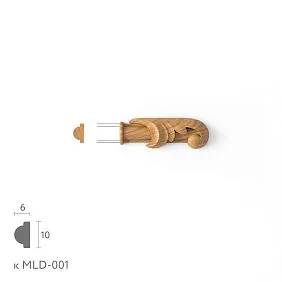
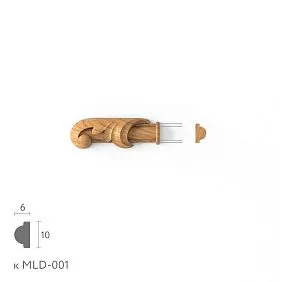
Our factory also produces:
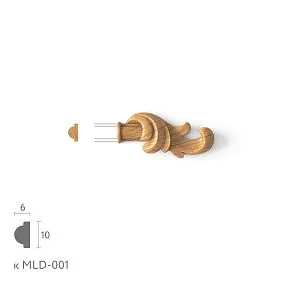
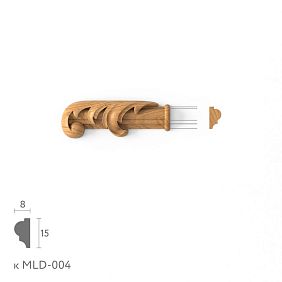
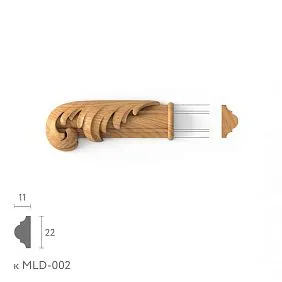
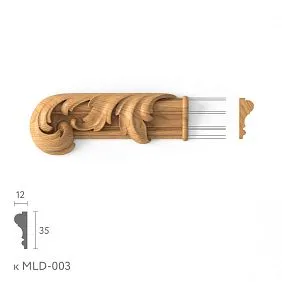
Where is ceiling molding used
Application is wide — from a small kitchen to a formal living room:
-
Classic perimeter — molding along all four walls at the line where the ceiling meets. Covers the gap, creates a frame for the ceiling field.
-
Ceiling rosette + molding — rosette in the center, molding around the perimeter. This is a complete ceiling program for a classic or neoclassical interior.
-
Floating ceiling — molding with lighting or a molding-«shelf» for LED strip creates the effect of the ceiling plane detaching from the walls.
-
Zoning — molding not only around the perimeter but also across the ceiling, dividing it into sections. Relevant for studios and large spaces.
-
Transition between heights — when the ceiling has a level change, molding covers and finishes the step.
Get Consultation
How molding changes the perception of the ceiling
This is not a metaphor — it's optics. Molding creates a horizontal line at a certain height, and the eye, following it, perceives the room as wider. The sharp angle of ceiling/wall without molding is a visual «trap»: the eye abruptly stops and the room seems smaller.
A wide profile with a pronounced horizontal line additionally visually lowers a «heavy» high ceiling, making the room more intimate. A narrow profile — on the contrary, leads the eye upward, visually raising the walls.
When it's an architectural tool, not just decor
Professional designers rarely think of molding as 'decoration.' It's an element of architectural marking for the ceiling field: molding sets the horizon from which everything else is built—the height for hanging pictures, the level of mirrors, the proportions of framing systems on walls. In a properly designed interior, molding is the anchor line for all vertical organization of space.
Which ceiling moldings to buy for your task
The task is more important than the material. First—what needs to be done. Then—from what and with what profile.
For low ceilings: narrow profile, no relief
A ceiling of 2.4–2.5 m is the boundary where every centimeter counts. Wide molding 'lowers' the ceiling even further. Rule: profile width no more than 30–40 mm, smooth or minimally relief section, installation as close to the ceiling as possible.
Visual technique: molding and ceiling—one color. The lower plane of the molding transitions to a wall of a different color. The transition boundary—a thin horizontal line—creates a sense of a frame for the ceiling field without lowering it.
Detailed scenarios for different heights—in the articleceiling molding and floor skirting: scenarios for low and high ceilings.
For high ceilings: width as an argument
Ceilings 3 m and higher are a fundamentally different situation. Here, a narrow molding 'gets lost' and looks random. Scale is needed: a profile of 55–100 mm or more. In a classic interior with a 3.2 m ceiling — a 100–120 mm cornice plus a 50–60 mm molding underneath it. This two-element system creates a substantial horizontal line, proportionate to the room's height.
A carved or figured profile works organically in a high-ceilinged room: the scale of the walls and ceiling 'holds' the ornament, preventing it from looking overloaded.
For a classic interior: a historical profile
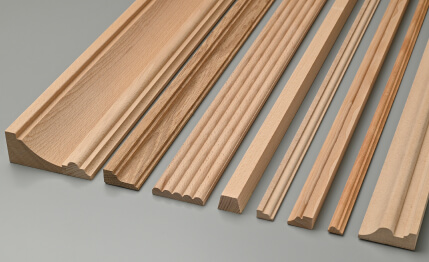
Classic requires classic. Ogee, scotia, ovolo, torus — these are historical cross-sections, tested by centuries and working flawlessly in the appropriate context. A profile made of oak or beech with a walnut or oak stain — this is the language of classic interior design, which never goes out of style.
For a formal living room with a 3+ m ceiling — a two-element system: first a cornice with pronounced relief, then a molding with a 'smooth' horizontal line underneath it. This is a 'stepped' ceiling frame — an architectural technique with a history of several centuries.
For a modern interior: a thin line
A modern interior does not tolerate ornamental 'theatricality'. Here, a smooth profile of 15–30 mm is needed, installed in the color of the ceiling, with minimal relief. Sometimes — a 'quarter-round' profile with a right angle, which creates a shadow line without any decoration. This is a radical and elegant solution: a boundary exists, but it is almost invisible.
For a modern interior with a white ceiling — a white polyurethane molding for painting, painted along with the ceiling. The difference is only in the shadow.
For a ceiling with lighting: molding as a 'shelf' for LED
A molding with a niche or a 'step' profile on the ceiling creates a hidden space for an LED strip. The LED strip is mounted behind the molding's 'visor' — and the light falls on the ceiling from below, creating a glowing effect. This is one of the most popular techniques in modern interiors.
For backlighting, a profile with a horizontal "shelf" depth of at least 30 mm is required. The material should be polyurethane or MDF, as they allow for precise milling of niche geometry.
For a ceiling with a rosette: a ceiling decor system
A ceiling rosette + ceiling molding constitutes a complete ceiling program, transforming a plain "ceiling" into a decorative field with a center and a frame. The rosette defines the center, the molding defines the perimeter. Everything else—size, relief, the stylistic language of the profile—must be coordinated.
Read about the ceiling decor system in detail in the article Ceiling rosettes and moldings: unity of polyurethane and wood.
Wooden or polyurethane molding: which to choose
This is not a question of "better or worse." It's a question of purpose. Both materials are correct—in their respective scenarios.
When to choose wooden ceiling molding
Wood is a material with physical character. Tactile density, living texture, warm tones that change depending on the lighting angle—all of this cannot be reproduced synthetically. Therefore, wooden Ceiling molding—is the only correct choice where the natural material is visible and significant.
Choose wood if:
-
finish treatment—staining, oil, wax, clear varnish with texture preservation;
-
The interior already features natural parquet flooring, wooden doors, and solid wood furniture;
-
Style — classic, neoclassical, English, rustic with natural materials;
-
Durability of 50+ years without replacement or maintenance is important;
-
The room is "dry" — living room, bedroom, study, library.
Oak ceiling molding is an investment with increasing value. Over time, it develops a patina, darkens, and acquires an even more affluent appearance. This happens naturally — without any effort from the owner.
When polyurethane ceiling molding is more convenient
Polyurethane moldings for ceilings— is a fundamentally different material. The weight of a polyurethane profile is 5–7 times less than that of a wooden one. It is not afraid of moisture, does not deform with temperature fluctuations, and does not require sanding or additional priming — the surface is already primed at the factory.
All this makes it indispensable in scenarios where wood creates difficulties:
Choose polyurethane if:
-
finish — painting in any color (white, shades, accent);
-
room with high humidity — bathroom, kitchen, toilet, hallway in a climatically unstable zone;
-
Flexible profile needed for arches, vaults, rounded surfaces;
-
Speed is important: installation of polyurethane molding takes 30–40 minutes for a standard room;
-
Large volume on a limited budget — the price difference is significant.
Detailed breakdown of types, formats, and installation — in the articlePolyurethane moldings for walls and ceilings: types and installation.
What is better for painting
No compromises: for opaque painting — polyurethane or beech, but not oak. Oak under white enamel loses the only thing it's bought for — its lively texture. Paying for oak only to paint over it later is impractical.
Polyurethane for painting — factory primer, white surface, two coats of acrylic enamel — and it's done. Predictable result without sanding and additional primer expenses.
About the specifics of working with profiles for painting — in the materialceiling moldings for painting.
What's better for complex geometry
Only polyurethane. Flexible ceiling molding made of polyurethane bends to radius — indispensable for arches, vaulted ceilings, bay windows, columns. Wooden molding breaks when bent. This cannot be overcome by any steaming or scoring — wood does not bend like polyurethane.
Minimum bending radius of flexible polyurethane molding: 20–40 cm for narrow profiles (up to 40 mm), 80–100 cm — for wide ones (from 60 mm).
Where texture matters more, and where installation matters
If the interior is designed for 20–30 years and features natural materials — texture is the priority. Choose wood and don't skimp.
If it's a turnkey apartment, a rental renovation, a commercial property, or a project with tight deadlines — installation is the priority. Choose polyurethane.
| Criterion | Wood (oak/beech) | Polyurethane |
|---|---|---|
| Natural texture | Yes | No |
| For painting | Not advisable (oak) | Optimal |
| Moisture resistance | Medium | High |
| Weight | 600–750 kg/m³ | 80–120 kg/m³ |
| Flexible profiles | No | Present |
| Installation | Nails + glue | Glue |
| Service life | More than 50 years | 15–30 years |
| Price (with equal relief) | 3–5 times higher | Basic |
Ceiling Molding for Painting: When It's the Best Option
Ceiling molding for painting is a separate story, often unfairly considered a 'budget compromise.' In fact, it is precisely painted molding in the color of the ceiling that creates the most 'architectural' result: a detail without a color accent, working solely through form and shadow.
White Profiles: A Universal Start
White molding on a white ceiling is a monochrome system where the profile's relief is perceived only through light and shadow. This is a solution that doesn't 'make a statement' but simply completes the space. It works in any style, from classic to contemporary.
For a standard apartment, a white profile is the safest and quickest choice. There's no need to worry about compatibility with finishes, tinting, or wall color. Just white molding under a white ceiling—and the room becomes architecturally complete.
Primed Profiles: Ready for Any Color
Polyurethane molding with factory primer is a blank canvas. The white base layer accepts any paint: classic white, ivory, gray, anthracite, dark green, gold. The possibilities are unlimited.
Important: a primed profile is painted after installation, simultaneously with painting the ceiling. This ensures an exact color match without the discrepancies inevitable when painting 'on the ground' and then installing.
Painting to Match the Ceiling Color: The Invisible Molding
Molding painted the same color as the ceiling visually 'disappears'—only its shadow remains. This is the most refined application: the structure exists, but it is almost indistinguishable to the eye. This is precisely why this technique is used in the most expensive modern interiors—where 'less' means 'more'.
Contrast ceiling decor: molding as an accent
Molding painted in a color contrasting with the ceiling and walls is an architectural accent. White ceiling, cream walls, molding in deep gray-blue. Or dark walls, white ceiling, gold molding. Contrast ceiling molding is the designer's 'signature' on the interior.
How to choose the width and profile of ceiling molding
The width of the molding is the most important decision when purchasing. A mistake here can only be corrected by complete replacement.
Rule of matching ceiling height
Basic rule: width of ceiling molding in centimeters = ceiling height in meters × coefficient 1.5–2.5.
Examples:
-
Ceiling 2.5 m → molding 3.5–6 cm (35–60 mm)
-
Ceiling 2.7 m → molding 4–7 cm (40–70 mm)
-
Ceiling 3.0 m → molding 4.5–7.5 cm (45–75 mm)
-
Ceiling 3.5 m → molding 5–9 cm (50–90 mm)
This is a recommendation, not a rule. In classic interiors, the coefficient shifts to the upper range (wide molding = formality), in modern ones — to the lower (narrow molding = conciseness).
Narrow profiles (10–30 mm): modern minimalism
Narrow molding — for modern interiors, small spaces, cases where a 'line' is needed, not decoration. Works in monochrome systems: molding the color of the ceiling, without relief or with minimal.
Requires perfectly smooth surfaces: irregularities in walls and ceilings are especially noticeable on a narrow profile.
Medium profiles (30–60 mm): universal range
This is the most in-demand range — works in rooms with ceilings 2.5–3 m high, in any style. Noticeable enough to work decoratively; not wide enough to create 'ceiling heaviness' in a standard room.
Buy ceiling moldingin the medium range made of wood or polyurethane — the safest choice for any doubts about width.
Wide profiles (60–120 mm): scale and representativeness
Wide profile — for large spaces, ceilings from 2.8 m, formal interiors. In the right context, gives an impeccable result. In the wrong one — 'presses down' the ceiling and creates a feeling of a low and cramped room.
A wide oak ceiling molding with a figured profile in a classic living room with a 3.2 m ceiling is the 'crown' of the interior program. A wide polyurethane profile for painting in the same living room is a practical alternative with a different character.
Smooth profiles: neutral strength
A smooth rectangle or minimal bevel is a neutral choice that doesn't 'argue' with any style. For those who are unsure about their interior's style or want the molding to 'not speak out'.
Carved profiles: decor with history
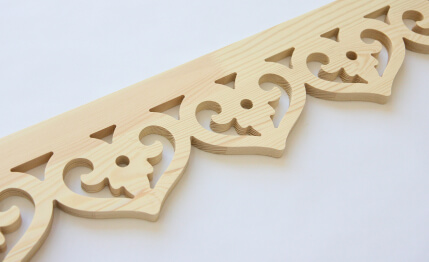
Carved ceiling molding is historical architectural decor. Acanthus ornament, meander, pearl molding, egg-and-dart molding, laurel wreath — each of these reliefs carries the cultural 'memory' of a specific era. Suitable in high-ceilinged rooms with a corresponding stylistic context. In a small room or modern minimalist interior — it's overkill.
Flexible profiles: for non-standard geometry
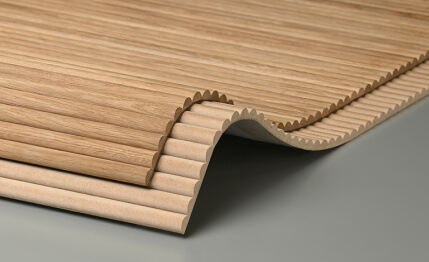
Flexible polyurethane ceiling molding is installed along curves, arches, and vaults. The material bends during installation and retains its set shape after being fixed with adhesive. Indispensable in rooms with non-standard layouts — arched niches, vaulted corridors, bay windows.
Full range — in the catalogof oak, beech, and MDF moldings(wooden solutions) and in the sectionpolyurethane moldings and cornices.
How to combine ceiling molding with cornice, rosette, and baseboard
Ceiling molding is not a standalone element. It is part of an architectural system: cornice at the top, molding in the middle transition zone, baseboard at the bottom. This trio forms the 'framework' of the entire interior space. If all three are coordinated, the room reads as cohesive and designed. If not, an inexplicable sense of incompleteness arises.
Cornice + molding: hierarchy by width
Ceiling cornice is always wider than wall molding. The cornice is the 'senior' element; it sets the scale. Molding is the 'junior' element; it refines and complements.
Working ratio: cornice is 1.5–2 times wider than molding. Cornice 80 mm + molding 40 mm is an organic pair. Cornice 80 mm + molding 75 mm is competition instead of coordination.
In a modern interior without a cornice: a single ceiling molding takes its place. One horizontal line—without a second element. This is called 'reduction': we remove everything unnecessary, leaving only what is essential.
About combining cornices and moldings—in the articleModern Interior with Classic Decor: Polyurethane Cornices and Moldings Plus Wooden Baseboards.
Molding + ceiling rosette: center and frame
Rosette in the center of the ceiling + molding around the perimeter—this is the classic two-point program of ceiling decor. Stylistic unity is essential: the rosette and molding must belong to the same stylistic range (classic + classic, baroque + baroque, geometric modern + geometric molding).
Scale rule: rosette diameter = 1/7–1/10 of the smaller room dimension. For a 4×5 m room — rosette diameter 40–57 cm. Perimeter molding — in the same 'weight class' in terms of relief.
Molding + baseboard: vertical ensemble
Ceiling molding and floor baseboard are the upper and lower 'frames' of the wall's vertical space. They should be coordinated in style and proportionate — but not identical in width. Standard recommendation: baseboard 1.2–1.5 times wider than ceiling molding. Ceiling molding 45 mm + baseboard 60–70 mm — a working pair.
What is unacceptable: stained wooden baseboard + white polyurethane ceiling molding in one room without a stylistic 'rhyme'. This is not contrast — this is inconsistency. Either one material, or one color — something must connect them.
Unified profile: the main rule of the system
The most important rule when assembling 'cornice + molding + baseboard': all three elements must contain at least one common motif in their cross-section. If the cornice contains a 'cavetto' (concave quarter-circle) — the molding and baseboard must also contain a cavetto, even if on a smaller scale. This is a profile 'rhyme' that makes the system readable as a unified whole.
Proportion rule: three lines of one language
Final formula: cornice (widest) — molding (medium) — baseboard (second widest). From one stylistic family, one material or one color. This rule, which professional architects have used for the last 400 years — and it hasn't become outdated.
What determines the price of ceiling molding
The price of ceiling molding is transparent if you understand what exactly influences it.
Material: the main price factor
Polyurethane is the most affordable category. MDF is slightly more expensive. Beech is even higher. Oak is 3–5 times more expensive than polyurethane for the same cross-section. The difference is justified: oak lasts 50+ years without replacement, has a living texture, and status.
Width: direct dependency
The wider the profile, the more material is used — the higher the price. Linear dependence within the same material.
Relief: a non-linear jump
Smooth profile — one processing operation. Figured profile with two levels — 3–4 operations. Carved — 3D milling, manual finishing, several hours of work. The price difference between a smooth and carved profile of the same width ranges from 5 to 20 times. This is real labor and complex equipment — not a markup.
Length and shape of the strip
Standard length of wooden molding: 2.0–2.5 m. Longer strips are rare and cost more. Non-standard lengths are custom-made.
Flexible profile: premium for specialization
Flexible polyurethane molding is 30–60% more expensive than standard: different material composition, different production line.
Completeness
Molding separately — one price. Molding + ceiling rosette + corner overlays — a set. Set orders are usually more affordable when purchased from a single manufacturer.
| Profile type | Material | Width | Orientation price |
|---|---|---|---|
| Smooth ceiling | Polyurethane | 20–40 mm | from 70–180 rub./m |
| Smooth ceiling | Beech | 25–45 mm | from 200–400 rub./m |
| Classical figured | Oak | 35–65 mm | from 550–1,400 rub./m |
| Carved ornament | Oak | 45–80 mm | from 2,500–8,000 rub./m |
| Flexible ceiling | Polyurethane | 25–55 mm | from 120–320 RUB/m |
| Wide decorative | Polyurethane | 60–100 mm | from 200–550 RUB/m |
Where to buy ceiling molding without mistakes
Practical route — from question to correct choice.
How to choose material: three questions
Question 1: What is the finish?
-
Toning, oil, varnish → wood (oak or beech)
-
Painting → polyurethane or beech
Question 2: Which room?
-
Dry (living room, bedroom) → wood or polyurethane
-
Wet (bathroom, kitchen) → polyurethane only
Question 3: What volume and budget?
-
Large volume, limited budget → polyurethane
-
Small volume, durability important → wood
How to determine the right profile
-
Measure the ceiling height.
-
Apply the formula: height (m) × 1.5–2.5 = molding width (cm).
-
Determine the style: classic → figured profile; modern → smooth; neoclassical → moderate relief.
-
Check compatibility with existing cornices and baseboards
When to choose wood
Choose wood when buying once for 30–50 years. When the interior already has natural wood elements. When the molding will be visible in detail up close.
When to choose polyurethane
Choose polyurethane when painting is needed, for large volumes, wet rooms, complex geometry, or quick installation.
Which catalog sections to view
Wooden ceiling moldings:
→ Wooden moldings for ceilings, walls, and furniture
→ Oak, beech, and MDF trim: cornices, moldings, baseboards
Polyurethane ceiling moldings:
→ Polyurethane moldings, cornices, and skirting boards
Complete ceiling decor set:
→ Ceiling rosettes and moldings: unity of polyurethane and wood
→ Ceiling moldings for painting
→ ceiling molding and floor skirting: scenarios for low and high ceilings
About the company STAVROS
STAVROS is a Russian manufacturer of architectural decor and profile products from natural and modern materials. The range includes: wooden moldings from oak, beech, and MDF, polyurethane moldings, cornices and baseboards, ceiling rosettes, decorative elements for molding systems, furniture trim.
The production facility has been operating in Saint Petersburg since 2002. STAVROS is one of the few domestic manufacturers that simultaneously carries out the full cycle of work with wood (chamber drying, four-sided planing, milling, manual finishing) and with polyurethane (casting, priming, geometry control).
Among the completed projects are state residences, historical buildings, and high-end private projects. STAVROS operates in retail—starting from 1 linear meter—and supplies serial and custom batches to design studios, furniture manufacturers, and construction organizations. Delivery across Russia and the CIS.
FAQ: answers to popular questions about ceiling molding
Which molding is best for the ceiling?
It depends on the task. For a classic interior with tinting—wooden oak molding. For painting in any color—primed polyurethane molding. For a limited budget and large volume—polyurethane. For arches and non-standard surfaces—flexible polyurethane.
Wood or polyurethane for ceiling molding?
Wood—if the finish is natural (tinting, oil), the interior is classic, and the budget allows. Polyurethane—if painting, a humid environment, large volume, or complex geometry is involved.
What to choose for a low ceiling?
A narrow profile 25–40 mm, smooth, in the color of the ceiling. Avoid wide, relief molding—it visually lowers the ceiling even more.
Can ceiling molding be painted?
Yes. Polyurethane — ready to paint straight out of the package (factory primer). Wooden beech — paint after sanding and priming. Wooden oak — better not to paint, it loses its main value.
How to match molding to baseboard?
The baseboard should be 1.2–1.5 times wider than the ceiling molding. Same style of profile (both smooth or both patterned in the same historical key). One material or the same paint color — something should connect them.
When is a ceiling rosette needed?
A ceiling rosette is appropriate in a classic or neoclassical interior with a ceiling from 2.8 m, if there is a central chandelier. Rosette diameter: 1/7–1/10 of the smaller room dimension. In small rooms and modern interiors — a rosette overloads the ceiling, it's better to use only perimeter molding.
How to glue ceiling molding?
Polyurethane: acrylic glue or liquid nails, apply in a zigzag, press for 5–10 minutes, secure with painter's tape until completely dry. Wooden: liquid nails + finish nails or brads, sink the heads and fill with putty.
Which molding is suitable for a bathroom?
Only moisture-resistant polyurethane. Installation — in areas without direct contact with water: upper part of walls, ceiling perimeter. Finish painting — with moisture-resistant acrylic enamel. No wooden moldings without special multi-layer waterproof coating.