








































































Article Contents:
- Window Molding: What It Is and When You Need It
- How Molding Differs from Casing
- Where Molding Is Appropriate in Window Framing
- When It's Better to Frame a Window with Casing
- How to Assemble a Combined Solution
- What to Buy for a Window: Molding or Casing
- If You Need a Strict Modern Look
- If You Need Classic Decoration
- If a carved accent is needed
- If joint protection and opening completeness are important
- Which moldings and trims to buy for your window task
- For a classic window
- For a modern window
- For a wooden house
- For an interior window
- For facade design
- For a non-standard window
- Wooden window molding: when it's most appropriate
- Natural texture: the main argument
- Combination with furniture, doors, and wall decor
- Windows in Wooden Interiors
- Classical Architectural Solutions
- Window Casings: Smooth, Shaped, or Carved
- Smooth Profile: Strictness and Versatility
- Shaped Profile: Classic Without Ornament
- Carved Casing: Ornament as a Statement
- How to Choose the Width and Projection of a Casing
- How Not to Overload a Window with Decor
- How to Select Window Framing to Match the Interior or Facade Style
- Classic and neoclassic
- Russian style
- Modern minimalism
- Wooden House
- Combining windows with doors and walls
- What determines the price of window molding or trim
- Material
- Profile width
- Relief: from simple to complex
- Size: standard or custom
- Standard or custom order
- Where to buy window molding without mistakes
- How to choose the right profile type
- When to switch to trim
- How to understand the required dimensions
- When an individual order is needed
- Which sections of the STAVROS catalog to view
- About the Company STAVROS
- FAQ: Popular Questions About Window Molding and Casing
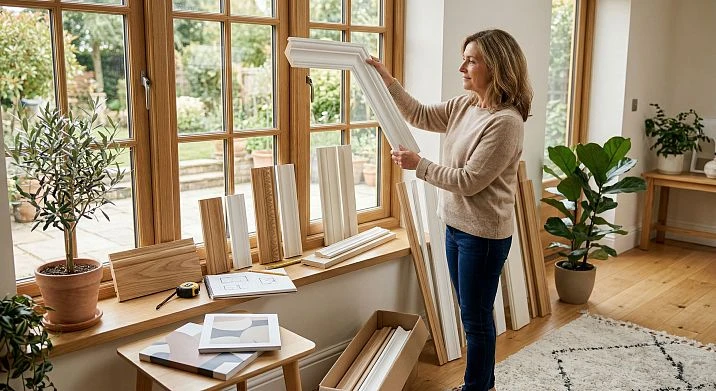
A window is not just a hole in the wall. It is a focal point around which the perception of the exterior facade and the interior is built. And it is here, at the boundary between the opening and the wall, that architecture either makes a statement—with a crisp casing, precise molding, thoughtful framing—or dissolves into a bland smoothness without character or completion.
Window Molding— is a decorative profile that frames a window opening: it covers the joint between the frame and the wall, creates a visual frame around the window, and sets the stylistic tone for the entire space—whether it's a formal living room, an intimate bedroom, or the facade of a country house.
This article is not about 'what molding is.' It's about what exactly to choose for your window, how molding differs from casing, when carved decor is needed and when a strict profile is appropriate, and how to correctly assemble window framing for any style and budget.
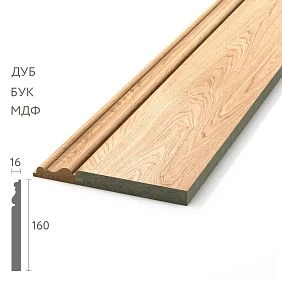
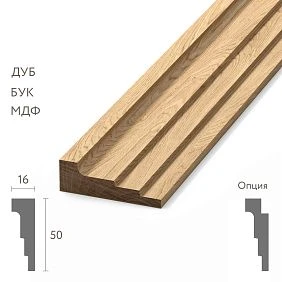
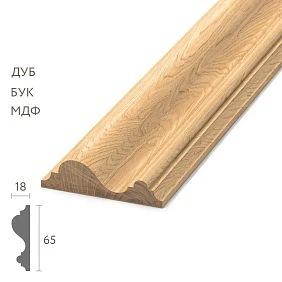
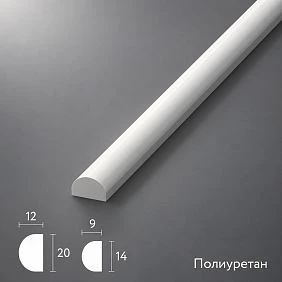
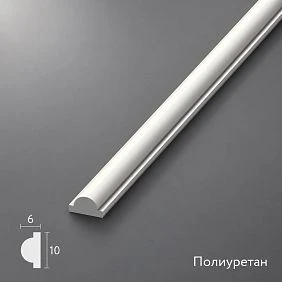
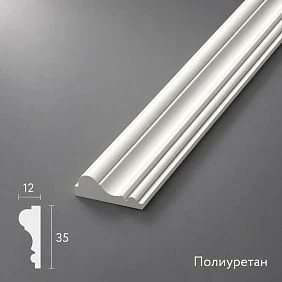
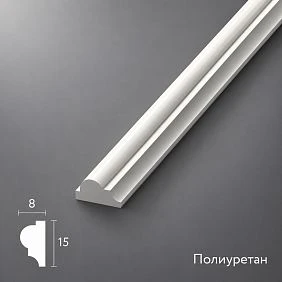
Window Molding: What It Is and When It's Needed
First and foremost—an important distinction that will save you both time and money when purchasing.




How Molding Differs from Casing
Molding is a universal decorative profile. It is used on walls, ceilings, furniture, doors, and windows. It creates lines, frames, belts, and trims. Molding is a tool that works in any context.
Casing is a specialized profile specifically for window and door openings. It is structurally adapted for the task: it covers the gap between the frame and the wall, has a specific geometry for projection and fit, and is often produced in three-element kits (two vertical jambs + a horizontal head). Casing is a specialist where molding is a generalist.
This doesn't mean one is 'better' than the other. It means that each has its own role in window framing.
Our factory also produces:
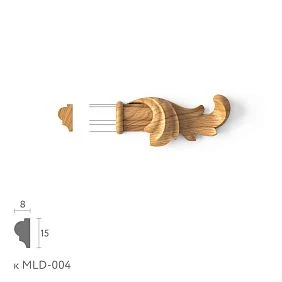
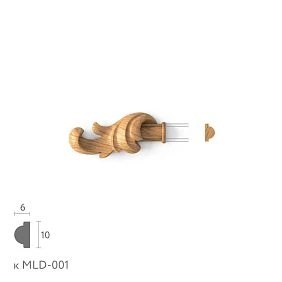
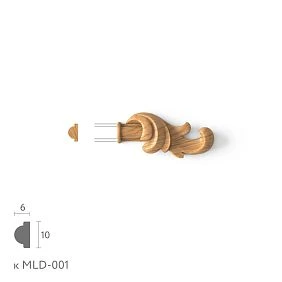
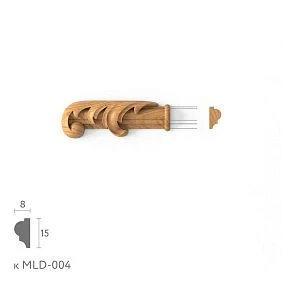
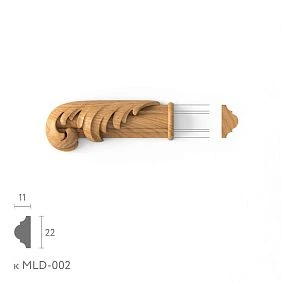
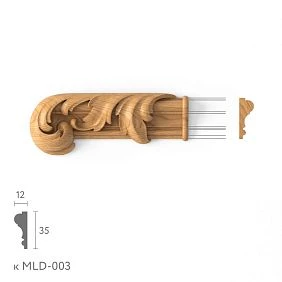
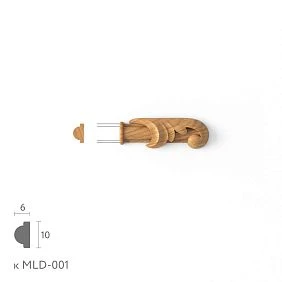
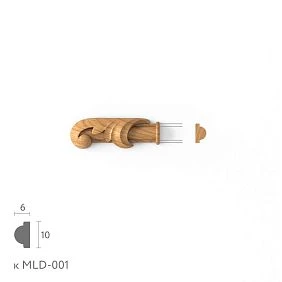
Where molding is appropriate in window framing
Molding works on a window in several scenarios:
Interior decorative framing — a molding frame around the perimeter of the window opening inside the room. It covers the reveals, creates a visual 'picture' around the window, and integrates the window with the wall decorative system. Especially effective when walls are finished with molding panels and frames — the window framing becomes part of the overall system.
Horizontal supra-window line — a single horizontal molding above the window, at the level of the top edge of the frame. This is the simplest and very effective technique: one profile along the entire length of the wall at window height creates a unified horizontal axis throughout the entire room.
Part of a composite casing — molding as one of the elements in an assembled system: casing on the sides and bottom + horizontal molding or pediment above. This is already a complete architectural program for window framing.
Get Consultation
When it's better to frame a window with casing
Casing for a window— is the correct choice when framing the opening is an independent architectural task, not part of a general molding system on the walls.
For a wooden house, a classic facade, an interior in Russian style or neoclassicism — casing is indispensable. It has the correct constructive geometry for closing the construction gap, traditional proportions, and a rich choice of profiles — from a strict rectangle to carved floral ornament.
Detailed information about the architectural proportions of the casing is in the article.Window architecture: from proportions to the play of light and shadow..
How to assemble a combined solution.
The best window framing is often not just molding or casing, but their combination. The classic scheme:
-
Side posts and the lower crossbar are casing with a suitable profile;
-
The upper element is a horizontal molding or a pediment (over-window cornice);
-
Additionally, a molding frame inside the reveal.
Such a set creates a complete window 'portal' framing—visually transforming an ordinary window opening into an architectural object.
What to buy for a window: molding or casing.
A direct answer to the most frequently asked question.
If you need a strict modern look
Strict modern window decor features a thin, smooth profile, 25–40 mm, matching the wall color or with a single-tone contrast. Molding or casing — no ornament, no relief, with right angles or minimal bevel.
Here, molding and casing work equally. The choice depends on the structural task: if you need to cover the technical gap between the frame and wall finish — choose casing. If you need a decorative frame over an already closed slope — molding.
If you need classic decor
Classic requires a shaped profile: ogee, torus, scotia, bead. Minimum width for classic window framing — 45–60 mm. Casing with a classic profile + horizontal molding or cornice — this is a 'portal' around the window, perceived as a single architectural element.
For a classic interior, the material is oak or beech. Finish — tinting in warm shades or clear varnish. No white opaque enamel on oak casing: the main thing is lost — the living texture of natural wood.
If a carved accent is needed
Carvedwindow casing— is a statement. Floral ornament, geometric braids, solar signs — carving turns window framing into a decorative object visible both outside and inside. This is a traditional Russian architectural technique, relevant for wooden houses, country residences in Russian style, and interiors where natural material plays the main role.
Carved casing is a product made with higher precision and complexity than a standard profile. The price is correspondingly higher, but the result is incomparable to any other solution.
If protecting joints and finishing the opening is important
The structural task is to close the gap between the window frame and the reveal, protecting it from drafts and moisture—this is the task of the casing. This is precisely what it is structurally designed for: it has a precisely calculated profile overhang and a specific geometry for fitting.
A molding in this role works only on top of an already closed and prepared reveal. Closing a construction gap with a molding profile on its own is only possible for decorative purposes, after the technical gap has already been sealed.
Which moldings and casings to buy for your window task
Let's examine specific scenarios—each with a clear recommendation.
For a classic window
A classic window in an apartment or house with an opening height of 1.5–2.0 m, width of 1.0–1.5 m. Style—classic or neoclassical.
Recommendation:wooden casingMade of oak or beech, width 55–80 mm, profile with a roundover or a fillet. The top horizontal element—a straight casing or a horizontal molding with a wider profile (60–90 mm), creating an 'architrave'—a window head band. Toning in warm shades.
Four corners—a 45° miter cut or corner joining blocks. 45° angles are more precise and elegant; blocks are simpler to install.
For a modern window
Modern interior with white window reveals, white frames, neutral walls. Style — minimalism, Scandinavian, modern classic.
Recommendation: smooth architrave or molding 30–50 mm, white or wall-colored. Material — MDF or beech for painting. Profile — rectangular with or without a bevel. No ornament. Joints — at 45°, perfectly even.
Alternative: very thin molding 15–25 mm in wall color — creates an almost imperceptible shadow-frame around the window. A modern architectural technique that is especially effective in monochrome interiors.
For a wooden house
Wooden house — a special context. Here, window framing should 'speak' the same language as the walls, doors, beams. Synthetic materials are out of context.
Recommendation: wooden architrave made of pine, spruce, oak, or beech — depending on the main wood species of the house. For a traditional Russian house — carved architrave with geometric or floral ornament. For a Scandinavian wooden house — strict smooth architrave under light tinting or oil.
Width for a wooden house — at least 60–80 mm: a wider profile is proportionate to the massiveness of the wooden structure.
For an interior window
Interior window — framed by the wall molding system, as part of the overall decorative program of the room. Molding frames on walls, horizontal belts, panel system.
Recommendation: window framing should be from the same profile as the entire wall molding system. The same profile — for frames on the wall and for framing the window. A unified system, a unified language. It is for this approach that the combinationMoldings and door/window casings from a single manufacturer is indispensable — a guarantee of profile compatibility.
For facade design
The facade is the 'face' of a building, and this is where window decor works at a distance. From 5–10 meters, the details of the carving are hard to read, but the silhouette is clear. Therefore, for the facade, the clear silhouette of the casing, its width, and projection are more important than the fineness of the ornament.
Recommendation for the facade: a casing 80–120 mm wide with a pronounced projection (15–25 mm from the wall plane). Profile — figured, with a readable silhouette. For historical and classical facades — a pediment above the window (a horizontal cornice-like element).
For a non-standard window
Arched window, non-standard opening size, complex shape — all of this requires an individual solution. For arches — a flexible profile or casing manufactured to the radius. For non-standard sizes — custom order based on a drawing.
STAVROS offers custom casing orders to individual sizes and profiles — this is an important competitive advantage for design and architectural projects.
Wooden window molding: when it is most appropriate
Wood in window decor is not just a material. It is a statement. A statement in favor of naturalness, durability, and aesthetic persuasiveness.
Natural texture: the main argument
WoodenWindow MoldingOak looks precisely like oak — with characteristic pores, grain pattern, warm hue that cannot be reproduced synthetically. Under clear varnish or tinting, an oak casing is a living decorative object, not an 'imitation of wood'.
Oak pores give a slight roughness to the surface, which softly diffuses light — and this is exactly the effect designers value: a warm, rich, 'living' presence. Compare this to smooth polyurethane under tinting — the difference is instantly perceived.
Combination with furniture, doors, and wall decor
The main rule of coordination: wooden molding for window framing should be made from the same wood species and have the same finish as other wooden elements in the room.
Oak window casings + oak parquet + oak doors in the same finish — this is a system that 'holds' the interior together as a unified whole. Attempting to save on one element (for example, installing cheap MDF for painting on windows with oak doors) — immediately 'breaks' this system.
Windows in wooden interiors
In interiors where wood is the main theme (country house, Scandinavian style, shift design with exposed beams), window decor made from natural wood is the only correct choice. Synthetic materials in such a context look like a foreign element, disrupting the material integrity of the space.
Wood species for 'wooden' interiors: oak — the most prestigious, beech — warm and slightly lighter, pine — for Scandinavian and rustic interiors, ash — for modern classics with light shades.
Classical architectural solutions
Historical architecture — classicism, empire, neo-Renaissance — used exclusively natural wood for window and door trim. This is not accidental: wood 'holds' complex profiles better than any other material. Fine carving, precise corner joints, complex cross-sections — all of this requires density and stability that only solid natural wood possesses.
Learn more about wooden window and door framing in the article Wooden Architrave: Framing Doors and Windows in Classic and Modern Style.
Window casings: smooth, shaped, or carved
Casings are the main window product in wooden framing. Let's examine three main profile types.
Smooth profile: strictness and versatility
A smooth rectangular casing is a straight profile without relief or with minimal chamfering. This is the most neutral and most universal option.
Works in any style: in modern minimalism — matching the wall color; in modern classic — with a slight projection and painted white; in Scandinavian — under light oil. A smooth casing does not 'clash' with any other interior element. This is a conscious choice of 'nothing extra'.
Width of smooth casing: 30–60 mm for interior use, 60–100 mm for the facade.
Shaped profile: classic without ornament
A shaped casing has a pronounced cross-section — an ogee, ovolo, cyma, quarter-round — but without carved ornamentation. This is an intermediate option between smooth and carved: more decorative than the former, but more restrained than the latter.
The shaped profile is the main choice for classic and neoclassical interiors. It carries the architectural language of historical styles without the 'folkloric' excess of carving. This is precisely the type of casing installed in St. Petersburg apartments, Moscow classic houses, and country residences in European style.
Width of shaped casing: 45–80 mm. Material — oak or beech. Toning is mandatory.
Carved casing: ornament as a statement
Carved window casing— is decor with history. Traditional Russian wood carving — geometric braids, rhombic and star-shaped ornaments, solar signs, leaves and berries — has a centuries-old history and a recognizable visual language that works instantly.
A carved casing for a wooden house is the master's signature. It transforms a functional framing element into a work of decorative art. It is visible from the street, it creates the character of the facade, sets the 'face' for the entire house.
For interiors: a carved casing in Russian, classical, or Baroque style on an interior window opening. Appropriate with ceilings 3+ m and a corresponding stylistic context.
How to choose the width and projection of the casing
Width: the basic rule — the width of the casing is 8–12% of the window opening height. Opening 1.6 m → casing 13–19 cm. Opening 1.2 m → casing 10–14 cm. For the facade — a higher coefficient: 10–15%.
Projection (how far the casing protrudes from the wall plane): 10–20 mm for interiors, 15–30 mm for the facade. Greater projection = more pronounced shadow = a more readable silhouette from a distance.
How not to overload a window with decor
The main rule: decor works on one level of intensity. If the casing is carved — the top horizontal element should be more restrained, otherwise competition arises that destroys the composition. If the facade is richly decorated — the window casing can be restrained, because it is already integrated into a rich context.
Excessive decor is worse than minimal. One strong element — a carved casing or an expressive pediment — is always more convincing than three average decorative solutions layered on top of each other.
How to choose window framing to match the interior or facade style
Style is not just about 'like/dislike'. It is a system of rules that makes a space readable and cohesive.
Classicism and neoclassicism
Profile — shaped, cross-section with historical motifs (ogee, torus, scotia). Width — 55–80 mm. Material — oak or beech. Finish — stained to resemble walnut, oak, or light ash. Top element — horizontal 'architrave' molding or a pediment.
Matching other wooden elements in the room is mandatory. Oak window trims + oak door trims + oak baseboard — a system that allows no compromises.
Russian Style
Carved trim — the main feature. For a wooden house in Russian style — trim width 80–120 mm with traditional patterns. Border top panels, vertical posts with floral motifs — the classic three-part scheme of Russian trim.
A special element — the 'ochelie': an expanded upper block of the trim with a richer ornament than on the side posts. It is the ochelie that is the main decorative accent of a traditional Russian window.
Modern minimalism
Smooth profile 20–40 mm. White or matching the wall color. No ornament, no relief, or with a minimal bevel. Corner joints — exclusively at 45°, perfectly straight.
For a modern minimalist interior, molding or trim matching the wall color creates an 'invisible' frame — the structure is there, but it doesn't stand out. This is a sophisticated and expensive-looking solution.
Wooden house
One rule: natural wood. The species — the same as in the main structure or in the closest possible tone. Finish — oil, wax, stain. No white opaque enamel on a wooden house — it 'kills' the material visually.
Width for a wooden house — minimum 60 mm, better 80–100 mm: the solid walls require proportionate framing.
Combining windows with doors and walls
Window trim and door trim in the same room — from the same profile and material. Violating this rule immediately catches the eye: walls 'fall apart' into uncoordinated elements.
Ideally — one supplier for all trims and moldings in the room. This guarantees profile compatibility and identical tinting.
What determines the price of molding or trim for a window
Pricing for window decor is transparent if you understand the factors.
Material
Polyurethane — base price. MDF for painting — slightly higher. Beech — 1.5–2× more expensive than polyurethane. Oak — 3–5 times more expensive than polyurethane for the same profile. Oak with carving — 5–15× more expensive than smooth polyurethane.
The difference is justified. Oak — 50+ years without replacement, living texture, status. Polyurethane — 15–25 years, painting, availability.
Profile width
Linear dependence: trim 80 mm wide uses twice as much material as 40 mm. With equal relief and material — width directly determines the price.
Relief: from simple to complex
Smooth profile — one operation. Shaped profile with a bead — 2–3 milling operations. Carved ornament — 3D CNC milling, manual finishing, from several hours to several days of a craftsman's work.
The price difference between a smooth and a carved casing of the same width — from 5 to 20 times. This is not a markup, but the actual labor costs.
Size: standard or custom
Standard length of wooden casing: 2.0–2.5 m. For tall openings (above 2.5 m) — non-standard lengths or joining. Custom order by size — surcharge of 20–40% from standard.
Standard or custom order
Series casing — ready for shipment. Custom — according to drawing, to customer's dimensions, profile modification possible. Production time — from 2–4 weeks. Price — 30–60% higher than series.
| Type of casing/molding | Material | Width | Orientation price |
|---|---|---|---|
| smooth | MDF | 40–60 mm | from 120–280 RUB/m |
| smooth | Beech | 40–60 mm | from 280–550 rub./m |
| Decorative | Oak | 50–80 mm | from 650–1,800 rub./m |
| Simple carved | Oak | 60–100 mm | from 2,500–7,000 RUB/m |
| Carved complex (lintel) | Oak | 80–150 mm | from 6,000–25,000 RUB/pc |
| Smooth for facade | Pine/spruce | 60–100 mm | from 180–450 rub./m |
Where to buy window molding without mistakes
Practical route from question to correct purchase.
How to choose the right profile type
Step 1. Determine style and task:
-
Modern interior → smooth profile, 25–45 mm, for painting.
-
Classic → shaped profile, 50–80 mm, oak/beech tint.
-
Wooden house → natural wood, 60–100 mm, carved or shaped.
When to switch to architraves
Step 2. If the task is to close the construction gap and frame the opening — that's an architrave. If the task is to add a decorative frame over a finished slope in a wall molding decor system — that's a molding.
How to determine the required dimensions
Step 3. Measure the height and width of the window opening. Architrave width: 8–12% of the opening height (interior), 10–15% (exterior). Stile length: opening height + 5–10 mm. Top crosspiece length: opening width + 2 × architrave width.
When an individual order is needed
Step 4. A custom order is required for:
-
non-standard opening dimensions (height > 2.5 m or width > 2.0 m);
-
arched or round openings;
-
requirement for exact profile matching with already installed elements;
-
design project with a developed drawing.
Which sections of the STAVROS catalog to view
Moldings and window casings — a single section:
→ Moldings and casings for windows and doors
Casings — specialized filtering:
→ Wooden window casings — catalog with filter
Wooden moldings:
→ Catalog of wooden moldings
Article about carved casings:
→ Window casing in Russian style: the art of carved decor
Architecture and proportions of window framing:
→ Window trims: window architecture — from proportions to the play of light and shadow
Interior wooden decor: moldings and trims together:
→ Interior wall decor made of wood: moldings and trims
About the company STAVROS
STAVROS is a Russian manufacturer of architectural wooden decor: moldings, trims, baseboards, cornices, wooden millwork made of oak, beech, MDF, and polyurethane. Production since 2002 in St. Petersburg.
STAVROS produces a full range of window decor: from smooth trims for modern interiors to carved trims in Russian and classical styles. Trims for windows and doors are produced according to standard and custom profiles — based on the customer's or designer's drawings. Chamber drying of wood to 8–12% moisture content, four-sided planing with a tolerance of ±0.1 mm, 3D milling on CNC equipment, manual finishing of carved elements.
Among STAVROS projects are state residences, historical buildings, private country houses, and premium urban apartments across Russia. Retail sales from 1 linear meter; project-based and bulk supplies for designers, architects, and construction organizations.
FAQ: popular questions about molding and trim for windows
What is better for a window: molding or trim?
It depends on the task. Trim is a specialized product for framing window and door openings: structurally adapted to cover the construction gap, has correct geometry for fitting and projection. Molding is a universal decorative profile that can be used as an element of a window frame within a system of general wall decor or as a window header. The best solution is their combination in a composite framing.
Can molding be used instead of trim for framing a window?
Yes, with a caveat. Molding works as a decorative frame over an already prepared and finished slope. It is not intended for closing the construction gap where the frame directly meets the wall — for that, you need a casing with the correct geometry for fitting.
What types of casings are suitable for a wooden house?
Natural wood. The species should be the same as in the main structure of the house, or as close as possible in tone. Smooth casing — for a Scandinavian or minimalist wooden house. Carved casing — for a traditional Russian house. Width — at least 60–80 mm.
When is a carved casing needed?
A carved casing is appropriate in three scenarios: a traditional wooden house in Russian style — on the facade; a classic or neo-baroque interior with a corresponding context (ceiling 3+ m, stylistically appropriate furniture, historical decor); a high-status designer project where window decoration is part of an individual concept.
How to choose the width of a window casing?
Casing width = 8–12% of the window opening height for interior use, 10–15% for the facade. An opening 1.6 m high → casing 13–19 cm. An opening 1.2 m high → casing 10–14 cm. For a wooden house, the coefficient shifts toward the upper value.
Can I order a casing to custom sizes?
Yes. STAVROS accepts orders for custom sizes and profiles — based on a drawing or template. This is necessary for non-standard openings, arched windows, requirements for an exact match with already installed elements, or when working according to a designer's project.
What is the difference between a window casing and a door casing?
Structurally, they are practically identical. The difference lies in dimensions (doorways are taller and wider) and often in the profile: wider and more robust casings are chosen for entrance doors, while more refined ones are used for interior doors and windows. For stylistic consistency in the interior, window and door casings should be made from the same profile and material.