








































Article Contents:
- What is furniture molding and where is it used
- Cabinet Fronts: Frame as a Form
- Kitchen: Molding as a Language of Style
- Chests of Drawers and Cabinets: Details Make All the Difference
- Display Cases and Buffets: Molding as an Architectural Element
- Case Furniture: From Office to Library
- Which Furniture Moldings to Buy for Your Task
- For Furniture Fronts: Frame Profile
- For Cabinets: Swinging and Built-in
- For Kitchen: Fronts, Cornice, Plinth
- For chest of drawers: single frames for each facade
- For cabinets and small items
- For custom furniture: serial and individual profiles
- Wooden molding or MDF: which is better for furniture
- Solid oak: character that cannot be faked
- Solid beech: ideal for painting
- MDF: precise relief at an affordable price
- For painting: primed profile
- For enamel: white furniture, monochrome interior
- For natural finish: only solid wood
- Carved or smooth molding: how to choose a profile
- For classic furniture: historical relief
- For neoclassical: strict transitions without ornament
- For modern furniture: geometry without history
- For laconic facades: neutral choice
- For accent decor: carved profile as the center
- Moldings for furniture facades: how to choose size and proportions
- Narrow profiles (8–18 mm): delicacy and modernity
- Medium profiles (18–35 mm): universal range
- Wide profiles (35–60 mm and more): scale and weight
- How not to overload a facade
- How to combine molding with overlays
- How to combine moldings with overlays, cornices, and furniture decor
- Overlays: volume where a 'point' is needed
- Cornices: the crown of a furniture piece
- Profile repetition: rhythm as a system
- Unified ornament across a series
- Scale Coordination
- When a custom profile molding is needed
- Non-standard facade
- Furniture series
- Historical and classical projects
- Custom furniture from drawings
- When a Custom Knife is Justified
- What Determines the Price of Furniture Molding
- Material
- Profile width
- Complexity of relief
- Order length
- Standard Profile or Custom
- Where to Buy Furniture Molding Without Mistakes
- Step 1. Define the task
- Step 2. Choose the material
- Step 3. Assess Compatibility with the Front
- Step 4. Decide on the Decor
- Step 5. Calculate the Footage
- About the Company STAVROS
- FAQ: Popular Questions About Furniture Molding
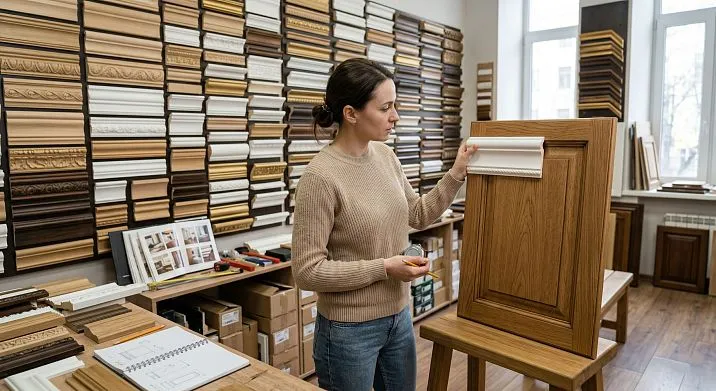
Take two wardrobes. One—without decor: smooth fronts, laconic handles, correct proportions. The second—with molding trim around the perimeter of each door: a 25 mm profile frame made of beech under white enamel, corner overlays. The material is the same. The construction is the same. But the second wardrobe is called 'expensive'—by everyone who sees it. Without exception.
That's whyMolding for furniture—is not an optional decoration. It is an architectural detail that elevates furniture from the category of 'cabinet' to 'author's'. And this works regardless of style: be it classic, neoclassical, or strict minimalism with a thin frame trim.
This article is a commercial guide to selection. Which profile for which furniture, wood or MDF, carved or smooth, how to calculate square footage and where to go in the catalog. We'll break it down for real: without generalities, with specific parameters and working examples.


What is furniture molding and where is it used
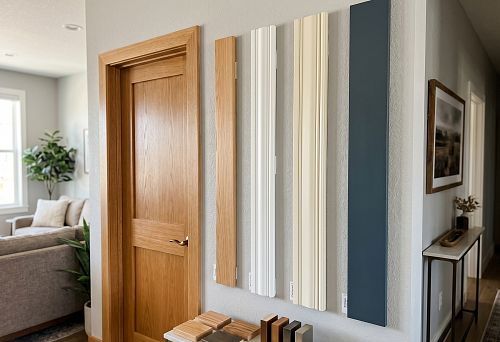
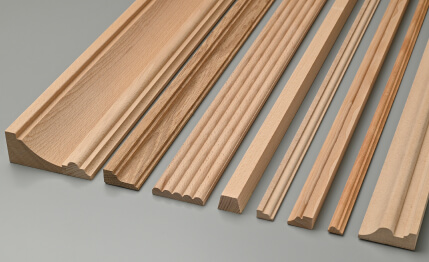
Furniture molding is a profile strip made of wood or MDF that is mounted on the surface of a facade, around the perimeter of a door, along a shelf, or along the contour of a cabinet. Its task is to create a frame structure on the facade, add relief, and define the architectural character of the piece.
It's important to understand from the very beginning: furniture molding is not the same as wall molding. It has different proportions (narrower and thinner), different installation methods (adhesive, not nails into the wall), and different geometric tolerances (0.1–0.2 mm instead of 0.5–1 mm for wall molding). Confusing them means getting the wrong result.




Cabinet facades: frame as form
A cabinet with a molding frame around the perimeter of each facade is classic English furniture, Italian neoclassicism, French Louis style. But the same technique works in modern built-in furniture: a thin 15–20 mm frame matching the facade color creates a barely perceptible 'recessed' field that gives the furniture an expensive feel.
For a sliding door wardrobe, molding is not used on the sliding facade, but is appropriate on the sides, pantographs, and lower plinth. For a hinged door wardrobe — a full frame around the perimeter of each door.
Our factory also produces:


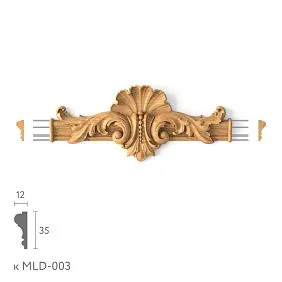
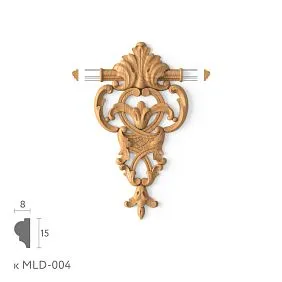
Kitchen: molding as the language of style
A kitchen set in classic, neoclassical, or 'Provence' style almost always has molding trim on the facades. It is precisely this thatFurniture moldingdetermines whether the kitchen reads as 'factory-made' or 'custom-made'.
In the kitchen, molding works in several zones:
-
along the perimeter of the upper cabinet fronts;
-
along the perimeter of the lower cabinet fronts;
-
along the cornice above the upper cabinets;
-
along the lower edge of the plinth.
Each of these zones requires its own profile — in terms of width, relief, and proportion.
Get Consultation
Chests of drawers and cabinets: details make all the difference
A chest of drawers without molding is just a case with drawers. A chest of drawers with a molding frame on each front is a piece of collectible furniture. This is especially evident on wide chests with 5–7 drawers: vertical and horizontal molding frames transform a flat front into a multi-part 'canvas'.
For a bedside cabinet — molding of a smaller cross-section (10–20 mm), laconic, matching the furniture tone. For an entryway cabinet — medium molding (20–35 mm), slightly more pronounced.
Display cabinets and buffets: molding as an architectural element
A display cabinet with glazed doors and molding framing the glass is no longer just a display cabinet, but a furniture object with architectural character. Here, the molding frames the glass, creates a layout (simulating muntins), and gives the piece historical recognizability.
A buffet — a two-tiered piece of furniture with an open top and a closed bottom — traditionally uses molding framing to separate the tiers and to decorate the cornice.
Case furniture: from office to library
Case furniture for a library, study, meeting room, or executive office — all these pieces acquire a fundamentally different status with molding trim. A shelving unit with molding around the perimeter of the sections and a cornice along the top is already a 'library,' not just shelves.
Which furniture moldings to buy for your task
The right question is not 'which one is more beautiful,' but 'for which facade, what width, and in what style.' Let's break it down by scenarios.
For furniture facades: frame profile
A frame profile for facades is a narrow or medium molding (10–35 mm), mounted around the perimeter of the door. It creates a frame structure that visually 'divides' the facade into a central field and a surrounding frame.
The width of the profile is determined by the scale of the facade. A small facade 40×60 cm — molding 10–18 mm. A medium facade 60×90 cm — 18–28 mm. A large facade 80×120 cm and larger — 25–40 mm. Violating this proportion — too thick a frame on a small facade — creates an effect of 'decoration for decoration's sake.'
More about the application of moldings specifically on furniture facades — in the STAVROS solutions section.
For wardrobes: hinged and built-in
A hinged wardrobe with a profile frame is a direct request for classic style. The profile is 18–30 mm, geometric or with a slight relief, running along the entire perimeter of each door. Corner overlays are for a classic wardrobe; a 45° cut without overlays is for a modern version.
A built-in wardrobe with a cornice framed by molding at the top (profile 45–70 mm) is a way to 'integrate' the wardrobe into the room's architecture. The cornice at ceiling level creates the impression that the wardrobe is part of the wall, not a freestanding piece.
For the kitchen: fronts, cornice, plinth
Kitchen molding — three zones:
Front (10–25 mm) — along the perimeter of each front. The thinnest and most 'working' element: it determines whether the kitchen reads as classic.
Cornice (40–80 mm) — along the top of the upper cabinets, under the ceiling. This is the crown of the set. With a 2.7 m ceiling, a 60 mm cornice is the ideal proportion.
Plinth (20–40 mm) — along the lower edge of the plinth. Creates a base, completes the lower line of the set.
All three zones — from the same series. This is the only correct approach to kitchen molding.
For a chest of drawers: individual frames on each front
A chest of 5 drawers × a molding frame for each = 5 frames from 8 segments. Profile 15–25 mm, smooth or with one transition. If the drawers are narrow (height 12–15 cm), the molding should not be wider than 15 mm — otherwise it will 'eat up' the entire front panel field.
For cabinets and small items
Cabinet — small scale. Molding here is a delicate detail, 10–18 mm. No carved ornament: in a small scale, any ornament will look overloaded.
For project furniture: serial and custom profiles
Furniture production or a carpentry workshop working with author's pieces often needs a non-standard profile — not from a catalog, but according to its own drawing. STAVROS manufactures moldings according to custom profiles for serial furniture, author's collections, and restoration projects.
Buy furniture moldingsretail from 1 linear meter or order a series according to a drawing — both options are available in the STAVROS catalog.
Wooden molding or MDF: which is better for furniture
This is the question asked most often. And the honest answer is: it depends on the task. There is no absolutely right or wrong choice — there is a suitable one for a specific project.
Solid oak: a character that cannot be faked
Oak — density 700–750 kg/m³, Brinell hardness about 3.7 kN/mm², resistance to abrasion and mechanical impacts. For furniture molding, this means: does not deform with humidity fluctuations, does not dent upon contact, does not lose relief from light impacts.
A pronounced texture with large pores—under tinting, this transforms into a living pattern that makes each piece unique. This is why premium custom furniture is almost always oak. Not because 'it's the norm,' but because oak's texture under tint or oil-wax is an aesthetic value in itself.
For oak furniture molding, it's characteristic: a thin profile retains strength even at 12–15 mm width; the relief holds its shape precisely for decades; for restoration, oak molding is easy to sand and repaint.
Solid beech: the ideal for painting
Beech is fine-pored, without a pronounced pattern, uniform. It processes cleaner than oak, accepts enamel without spotting. For white enamel furniture—beech is preferable to oak: the surface becomes smoother, the paint holds more reliably.
Beech price is 15–25% lower than oak. If the finish is opaque enamel (white, cream, colored), and the natural texture is hidden—beech offers the same quality for less money.
MDF: precise relief at an affordable price
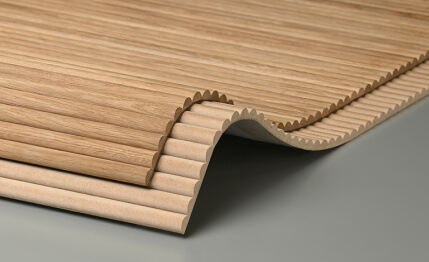
MDF Furniture Molding—a separate big topic. High-density MDF (800–900 kg/m³) allows milling complex relief without risk of chipping. This is especially important for furniture moldings: a thin 12–15 mm profile with two-three levels of relief in wood is a technically complex task. In MDF—it's a standard operation.
The main advantage: a classic furniture profile in MDF costs 2–4 times less than a similar one in oak. For serial furniture production or large volumes—this is a fundamental argument.
MDF limitation: not suitable for natural finishes (oil, wax, tinting with texture preservation). Only for paint or PVC film.
For painting: primed profile
Primed molding in MDF or beech—supplied with factory primer, ready for finish painting. Saves time: no additional surface preparation needed. Apply 2 coats of acrylic enamel—and achieve professional-quality results.
Under enamel: white furniture, monochrome interior
White enamel on furniture molding is a modern classic. White fronts with white beech or MDF molding create a monochrome surface where the relief is read through a barely perceptible shadow. Sophisticated, restrained, impeccable.
For natural finish: only solid wood
Toning, patina, oil wax, clear varnish with texture preservation — exclusively on natural wood. MDF has no pores and does not absorb oils. If you want 'living' wood on a furniture front — only oak or beech.
The entire range of wooden and MDF profiles — in the sectionOak, beech, and MDF moldings.
Carved or smooth molding: how to choose a profile
The molding profile is not just a 'decoration'. It is a statement about the architectural language of furniture. The wrong choice — and even a quality molding makes the furniture inappropriate.
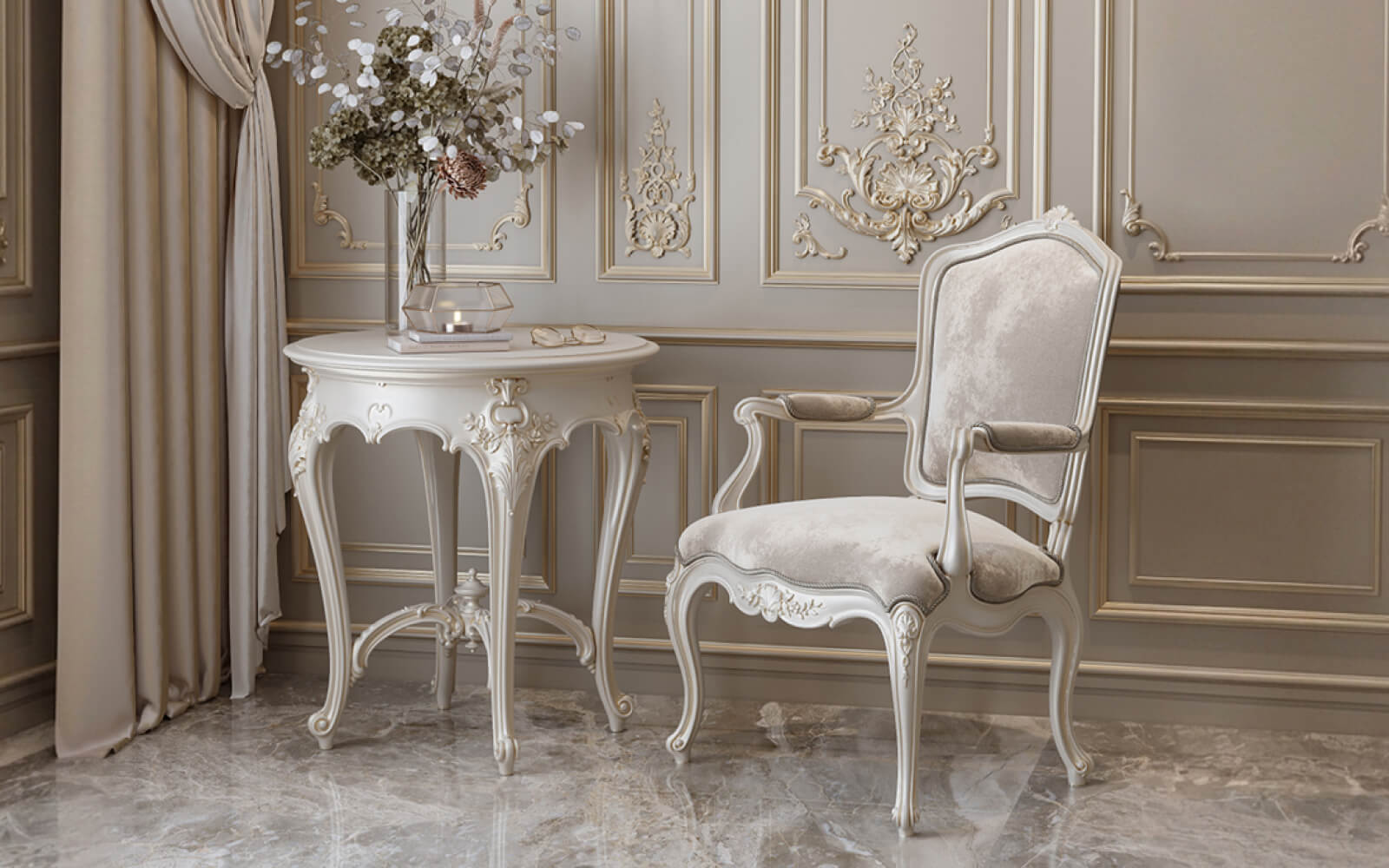
For classic furniture: historical relief
Classic furniture is a system of historical profiles. Each has a name and origin in architectural tradition: ogee, torus, ovolo, pearl, astragal. In the right combination, they form a profile that reads as 'classic' without additional explanation.
For classic furniture: profile width 20–40 mm, relief with two or three transitions (concave + convex + shelf), material — oak for toning or beech for white enamel. Recognizability is key: the guest should read 'classic' immediately, at first glance.
Molding, cornices, and overlays for classic furniture — details in the articleMoldings and cornices for furniture.
For neoclassicism: strict transitions without ornament
Neoclassical furniture uses historical proportions but removes floral and ornamental motifs. The profile is geometrically precise, 25–50 mm, with one or two strict transitions. No flowers, no pearl beading, no ornamental frieze.
Material for neoclassicism — oak with cold grey or warm oak tint; or beech under white matte enamel. Corner overlays — if present — are geometric blocks, not carved.
For modern furniture: geometry without history
Modern furniture does not appeal to historical forms. Molding here is a pure line: a smooth rectangle or beveled profile, 12–25 mm, matching the facade color. No relief, no transitions.
The best material for modern furniture molding is MDF for painting or beech under white enamel. Monochrome furniture with a barely noticeable molding frame is one of the most enduring visual trends in residential design.
For laconic facades: a neutral choice
A smooth profile of rectangular cross-section, 15–30 mm — a neutral solution for furniture without a pronounced style. It doesn't look classical, doesn't claim modernity — simply adds a frame structure to the facade. Works as insurance against style mistakes.
For accent decor: carved profile as the centerpiece
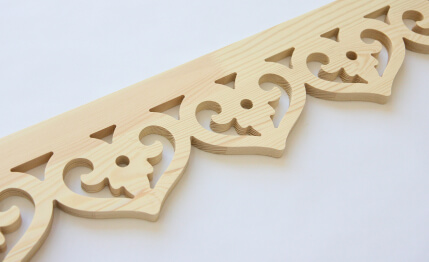
Carved furniture molding—acanthus ornament, meander, fleuron—is the language of high classicism. It is suitable for representative furniture: library cabinets, buffets, bureaus, formal pedestals. On small household items—it becomes overloaded.
If you want a decorative accent without ornamental overload—use carved appliqués selectively (corner elements in frames, a central medallion on a large facade), keeping the frame profile itself smooth. This is exactly what this article is about.Wood moldings and furniture overlays.
Moldings for furniture facades: how to choose size and proportions
This is the most technical section—and the most important. An error in molding proportion—and the facade is either 'empty' or 'overloaded.' Neither is the goal.
Narrow profiles (8–18 mm): delicacy and modernity
Narrow profiles are for small facades and modern interiors. A facade 60 cm high with a molding frame made from a 12 mm profile is a subtle, almost graphic detail. This is exactly the type of molding used on kitchen drawers, small cabinets, compact cupboards.
Rule: the profile should not occupy more than 15–20% of the width of the short side of the facade. If the short side of the facade is 30 cm—the molding should not be wider than 45–60 mm total (i.e., a profile of 20–25 mm on each side).
Medium profiles (18–35 mm): universal range
Medium profiles are the most universal. They work on facades of any scale: from kitchen drawers to hinged wardrobes. The relief can be smooth or moderately figured. The scale is suitable for both classic and modern design.
This is the most in-demand range forwooden moldings for furnitureIn the STAVROS catalog. This is where you'll find the widest selection of profiles.
Wide profiles (35–60 mm and more): scale and weight
A wide profile is for large furniture and executive pieces. A library cabinet with 100×200 cm fronts, a 200 cm wide sideboard, a walk-in closet with full-height hinged doors — here, a 40–55 mm molding works organically. It 'holds' the scale of a large front.
On small items, a wide profile is a mistake: the frame takes up too much of the field and turns the front into a 'frame with a small window.'
How not to overload the facade
Three rules:
-
One level of decoration. Either a molding frame or a carved overlay on the center. Not both on the same front at once.
-
Proportion of frame to field. The field (the uncovered part of the front inside the molding) should make up at least 40% of the front's area.
-
A uniform profile on all fronts in the series. You cannot use different profiles on cabinets of the same set — it breaks the system.
How to combine molding with overlays
A furniture overlay is a three-dimensional part glued onto the front or molding. An overlay at the corner intersection of moldings is a corner decorative block. An overlay in the center of the front's field is a medallion or floron.
Coordination rule: the ornament of the overlay and the profile of the molding should belong to the same style and scale. A thin, smooth molding with a powerful carved medallion is dissonant. A wide, figured molding with a geometric overlay is also incompatible.
How to combine moldings with overlays, cornices, and furniture decor
A single molding is a detail. A system of moldings + overlays + cornice is the character of the furniture. Let's break down how to build this system correctly.
Overlays: volume where a 'point' is needed
Furniture overlays are mounted at points where the eye stops: the center of the facade, corner points of the molding frame, the junction point of two profiles. Carved overlays on oak are for classic and baroque styles. Geometric MDF overlays are for neoclassical and art deco.
Principle: an overlay is always smaller than the facade field. A 15×15 cm medallion on an 80×120 cm facade is a delicate detail. The same medallion on a 40×60 cm facade is overload.
About howWood moldings and furniture overlayscreate unified visual rhymes in the interior — detailed material on the STAVROS website. Be sure to read it if you are planning a system.
Cornices: the crown of a furniture piece
A cornice is a molding along the top edge of furniture. Its task is to visually 'close' the furniture from above, creating a transition from the top horizontal plane to the vertical facade. Without a cornice, a cabinet 'breaks off' at the ceiling; with a cornice, it is completed.
Cornice width: for a standard cabinet 2.2–2.4 m high — a cornice of 45–80 mm. For a full-height cabinet 2.7–3 m — a cornice of 70–120 mm. The cornice profile should 'rhyme' with the facade molding profile: share common cross-sectional elements with it.
Details on the rules of application in the article Moldings and cornices for furniture.
Profile repetition: rhythm as a system
The main principle of system furniture: molding on the facade, cornice molding, and plinth molding are from the same profile series. Not necessarily the same cross-section, but with repeating elements. This creates a profile rhythm—the internal logic of furniture that everyone feels but not everyone can explain.
Unified ornament for the series
For a furniture series (kitchen, living room, study)—a unified molding profile on all products in the series. This doesn't mean everything looks the same—each product is of a different scale, each has its own facades. But a unified molding language connects them into a system.
Coordinating scale
Furniture of different scales requires moldings of different widths, but from the same profile 'language'. A 50×50 cm bedside table—12–15 mm molding. A 200×220 cm wardrobe—25–35 mm molding from the same series, but with a larger cross-section. The proportion is preserved, the series is preserved—the system works.
About howMoldings and furniture decorcontinue the lines of the walls in the furniture—another key STAVROS material worth studying before starting a project.
When a custom profile molding is needed
The standard catalog covers 90% of needs. But there are cases when something not in the catalog is required.
Non-standard facade
If a facade has non-standard proportions—very wide, very tall, non-standard shape—a standard molding may not look organic. For such a facade, an individual profile is developed, proportional to the specific product.
Furniture series
For furniture manufacturers producing a series with a proprietary profile, custom molding is a way to create a unique collection. A profile developed for a specific series cannot be replicated by competitors—this is a competitive advantage.
Historical and classical projects
Restoring antique furniture or recreating a historical interior often requires precise reproduction of a specific historical profile. A catalog equivalent may be close, but not exact. For such projects—only a custom profile based on a historical sample.
Custom furniture from drawings
Custom designer furniture from drawings is a project where every detail, including molding, is specially developed. STAVROS manufactures furniture moldings from provided drawings with a tolerance of ±0.1 mm.
When a custom cutter is justified
A custom cutter (router bit for a specific profile) has a manufacturing cost. This investment is justified for orders of 50–100 linear meters. For smaller volumes—it's better to select the closest catalog profile.
What determines the price of furniture molding
An honest breakdown of pricing—without rounding.
Material
MDF < beech < oak. With the same profile, MDF is 35–50% cheaper than beech; beech is 15–25% cheaper than oak. Carved oak is in a special price category.
Profile width
Direct correlation: the wider, the more material. A 15 mm profile and a 50 mm profile have a 3.3x difference in material volume, with a comparable price difference.
Complexity of relief
Smooth — one operation. Shaped with two levels — 3–4 milling passes. Carved with ornament — 3D milling plus manual finishing. Price difference between smooth and carved of the same width — from 5 to 15 times.
Order length
Retail from 1 m — maximum price. Batch 20–50 m — wholesale terms. Serial order from 100 m — project prices.
Standard profile or custom
Catalog profile — fast and cheap. Custom profile — cutter production + minimum run + production time.
| Profile type | Material | Width | Approximate price |
|---|---|---|---|
| Smooth furniture | MDF | 12–20 mm | from 90–200 rub./m |
| Smooth furniture | Beech | 15–25 mm | from 220–420 rub./m |
| Geometric | Oak/beech | 20–35 mm | from 400–900 RUB/m |
| Classical figured | Oak | 25–45 mm | from 900–2,500 rub./m |
| Carved | Oak | 35–60 mm | from 2,500–8,000 rub./m |
| Furniture cornice | Oak | 45–80 mm | from 1,500–5,000 RUB/m |
Where to buy furniture molding without mistakes
Five practical steps.
Step 1. Define the task
Cabinet fronts → frame profile 15–30 mm. Kitchen cornice → 45–70 mm. Furniture plinth → 20–35 mm. Dresser → 12–20 mm. Executive furniture → 30–50 mm with relief.
Step 2. Choose the material
For white enamel → MDF or beech. For tinting or oil-wax → oak. For serial production → MDF. For designer furniture → oak.
Step 3. Assess compatibility with the front
Check the proportion: molding should not occupy more than 20% of the width of the short side of the front. If the front is small — the profile is narrow. If the front is large — the profile can be wider.
Step 4. Decide on decoration
Modern furniture → no decoration, cut at 45°. Neoclassicism → geometric corner blocks. Classic → carved corner overlays + central medallions on large fronts.
Step 5. Calculate the footage
For each front: (height + width) × 2 + 20% margin. For all fronts in the series: sum of perimeters × margin coefficient 1.2.
Where to go:
About the company STAVROS
STAVROS — a Russian manufacturer of solid wood and MDF products: furniture moldings, trim, cornices, overlays, furniture, and interior items. Founded in 2002 in St. Petersburg. Among completed projects are the State Hermitage Museum, Konstantinovsky and Alexandrovsky Palaces, dozens of private residences and commercial spaces.
STAVROS production cycle: chamber drying of wood to 8–12% moisture, four-sided planing with a tolerance of ±0.1 mm, 3D milling, manual finishing of carved profiles. Production of furniture moldings according to individual drawings. Over 50 profile series in the catalog — from minimalist to historically accurate classical.
Working with private buyers from 1 linear meter; with furniture manufacturers and designers — within project and serial deliveries. Delivery across Russia and CIS.
FAQ: popular questions about furniture moldings
Which molding is best for furniture?
Depends on style and scale. For classic furniture — figured profile 20–40 mm from oak. For modern — smooth 12–25 mm from MDF or beech for painting. For neoclassical — geometric 25–40 mm from oak with tinting or beech for enamel.
What is better for facades: solid wood or MDF?
For painting — MDF or beech: smoother, cheaper, more precise relief. For natural finish (oil, tinting, wax) — only solid wood. For serial production — MDF. For premium author furniture — oak.
How to choose molding for a wardrobe?
Measure the short side of the door. Molding — no wider than 15–20% of this side. For a 60 cm door — molding 12–20 mm. For a 90 cm door — 18–28 mm. Profile — from the same series as the wardrobe cornice.
What moldings are suitable for a kitchen?
Three zones: facade (10–25 mm) around the perimeter of each facade, cornice (45–80 mm) along the top of upper cabinets, plinth (20–35 mm) along the lower edge. All three — from one series. Material — MDF for painting or oak for tinting depending on style.
When is a carved profile needed?
Carved profile is appropriate on large representative furniture with ceilings 2.8 m and higher. On small household items — use carved corner overlays selectively, keeping the frame profile itself smooth.
Can molding be ordered according to a drawing?
Yes. STAVROS manufactures furniture moldings according to individual profiles. Minimum order for a custom knife — specify when ordering. Production time depends on profile complexity.
How to combine molding with overlays?
Overlay at the corner intersections of the molding frame — corner decorative block. Overlay in the center of the facade field — medallion. Principle: the overlay ornament and the molding profile are from the same style and scale. One decorative element per one facade — do not overload.
How much molding is needed for one facade?
Formula: (facade height + facade width) × 2 + 20% reserve. Example: facade 70×100 cm → (70 + 100) × 2 = 340 cm = 3.4 m + 20% = 4.1 m per one facade. Calculate each facade separately, then sum up.