Article Contents:
- Molding for decoration: what it is and when to buy it
- How decorative molding differs from regular profile
- Where decorative moldings are used
- When you need only molding, and when you need a whole set
- Which decorative moldings to buy for your task
- For wall decoration: frames, belts, accent zones
- For furniture decoration
- For frames and trims
- For panel systems
- For Accent Decorative Compositions
- Wooden or Polyurethane Moldings: What to Choose
- When to Choose Wood
- When is polyurethane best
- What is More Convenient for Painting
- Where Natural Texture is More Important
- Comparison table
- When Decorative Molding is Needed
- Corner Elements: When a Joint Becomes a Decoration
- Central Overlays: Accent on the Field
- Connecting Parts
- Polyurethane Decor: Compatibility and Unified Style
- How to Choose a Profile: Narrow, Wide, Smooth, or Carved
- Narrow Moldings 15–30 mm: Delicacy as a Principle
- Medium Moldings 30–60 mm: Universal Working Format
- Wide moldings 60–100+ mm: scale and status
- Smooth profiles: architectural rigor
- Carved moldings: ornament as a style argument
- Molding for decoration: what it is and when to buy it
- How decorative molding differs from regular profile
- Where decorative moldings are used
- When you need only molding, and when you need a whole set
- Which decorative moldings to buy for your task
- For wall decoration: frames, belts, accent zones
- For furniture decoration
- For frames and trims
- For panel systems
- For Accent Decorative Compositions
- Wooden or Polyurethane Moldings: What to Choose
- When to Choose Wood
- When is polyurethane best
- What is More Convenient for Painting
- Where Natural Texture is More Important
- Comparison table
- When Decorative Molding is Needed
- Corner Elements: When a Joint Becomes a Decoration
- Central Overlays: Accent on the Field
- Connecting Parts
- Polyurethane Decor: Compatibility and Unified Style
- How to Choose a Profile: Narrow, Wide, Smooth, or Carved
- Narrow Moldings 15–30 mm: Delicacy as a Principle
- Medium Moldings 30–60 mm: Universal Working Format
- Wide moldings 60–100+ mm: scale and status
- Smooth profiles: architectural rigor
- Carved moldings: ornament as a style argument
- How to combine moldings and decorative elements
- Unified style is a mandatory requirement
- Rhythm repetition: how to create a system
- Central and corner accents: hierarchy matters
- How not to overload the interior with molding decor
- What determines the price of moldings for decoration
- Material
- Profile and Width
- Relief
- Decorative elements for molding
- Standard or custom profile
- Where to buy decorative molding without mistakes
- Step 1: determine the style and purpose
- Step 2: determine if molding decoration is needed
- Step 3: check element compatibility
- Step 4: request samples if necessary
- Step 5: proceed to the correct section
- About the Company STAVROS
- FAQ: popular questions about decorative molding

There's a paradox in interior design: a wall can be perfectly smooth, a ceiling flawlessly white, furniture expensive and well-thought-out. Yet the space will still seem unfinished. Something is missing. Not volume, not color, not furniture—but architectural rhythm. That very line that brings everything together and says: details were considered here.
This is precisely the role performed bydecorative molding. Not just a wood or polyurethane profile glued to a wall. It's a tool of interior architecture—subtle, precise, with clearly defined purposes.
If you're looking for what decorative moldings to buy, how wood differs from polyurethane, when only a profile is needed, and when a whole set with corner elements and overlays is required, you've come to the right place. This article is written not as a theoretical overview, but as a practical guide for those who want to achieve a specific result.


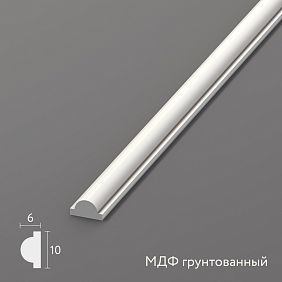
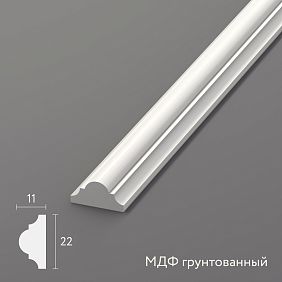


Decorative Molding: What It Is and When to Buy It
Let's start with an honest distinction. Because the market sells completely different things under the phrase 'decorative molding': from self-adhesive strips in mass-market stores to professional architectural profiles made of solid oak. And the difference between them is not just in price.




How Decorative Molding Differs from a Regular Profile
A regular profile is functional. A baseboard covers the joint between the floor and the wall. A door casing covers the joint between the door and the wall. A cornice covers the joint between the wall and the ceiling. These are technical solutions with a decorative component.
decorative moldingDecorative molding is a fundamentally different object. It does not cover a technical joint, but creates a decorative structure where there is none structurally. Wall frames, surface articulation, framing of a decorative field, architectural belt—all of these appear not out of necessity, but from a deliberate design decision.
It's important to understand this before buying: decorative molding is not a 'pretty strip' that can be attached anywhere to get a result. It is an element of a system that only works in the right context—with the correct choice of profile, size, material, and placement.
Our factory also produces:


Where Decorative Moldings Are Used
The scope of application is broader than it seems at first glance:
-
Walls—framed compositions, panel systems, wainscoting, horizontal belts, accent zones, TV walls, headboard zones.
-
Furniture—cabinet fronts, dresser fronts, decorative overlays on furniture surfaces, door decoration.
-
Ceiling — decorative ceiling cornices, framing for built-in lighting, cornice frames.
-
Framing — fireplace portals, mirror frames, decorative niches, arch decoration.
-
Architectural details — pilasters, columns, decorative capitals, corner framing.
Get Consultation
When only molding is needed, and when — a whole set
Only molding is sufficient when the task is to create simple rectangular frames with straight 45-degree joints. Modern minimalist interior, clean geometry, no additional decor.
A set is needed when: the interior style is classic or neoclassical; frames have corner blocks instead of 45° joints; the central fields of frames are complemented by overlays or medallions; the system includes several types of elements — profile, corners, central inserts, connecting parts.
How to correctly combine moldings, corners, and decorative ornaments is described in the article the art of framing: moldings, corners, and decorative ornaments.
Which moldings for decor to buy for your task
Five scenarios — five types of tasks. Each requires its own approach to profile selection.
For wall decor: frames, cornices, accent zones
Wall decorative molding is the most common scenario. Here, three basic techniques are used:
Frame compositions — rectangular frames made of molding, arranged on the wall in a rhythmic system. They create depth, structure, and a sense of architectural interior. For frames: smooth or figured profile 25–55 mm.
Horizontal belt — a molding line at a certain height, dividing the wall into lower and upper zones. A powerful technique for creating two-tone walls or highlighting a panel zone. Profile: 30–70 mm, figured or smooth.
Accent zone — a molding frame around a specific section of the wall: TV zone, area above the fireplace, gallery wall. The profile can be wider and more decorative — this is a 'portal,' not a background detail.
About decorative moldings for walls — in the articleWall moldings: the art of interior transformation.
For furniture decor
Furniture molding is a separate big topic. The profile for facades should be proportionate to the furniture plane: small width (20–45 mm), with a neat figured cross-section.
On a furniture facade, molding does not create a shadow — it creates relief on the scale of the object. Rule: the width of molding for furniture should be two to three times less than for a wall. What looks like a thin line on a wall will be quite an expressive frame on a furniture facade.
Material for furniture moldings: wood (oak, beech, MDF) — preferable to polyurethane, which behaves worse under furniture impacts.
For frames and trims
Frames are the main decorative technique both on walls and in individual objects: mirrors, paintings, decorative panels, niches. Molding for frames and framing requires special attention to corners: they should be either perfectly precise (45° joint) or decorated with corner blocks.
For mirrors and paintings: profile 30–60 mm, shaped, with sufficient projection to create frame depth. Material — oak or polyurethane depending on style.
For panel systems
Decorative molding for panels is a system task, not a separate profile. A panel system includes: vertical posts, horizontal crossbars, corner connections, a top finishing belt, and a bottom baseboard.
Profile for panels: smooth or shaped 30–60 mm, uniform for all system elements. Material — homogeneous: either all wood or all polyurethane. Mixing materials in one panel system disrupts integrity.
For accent decorative compositions
Accent decorative composition — this is when molding goes beyond 'just a frame' and becomes a wall art object. Several frames of different sizes, complex hierarchy of horizontal belts, decorative central inserts, ornamental belts.
For such tasks: shaped profile with pronounced relief, wide (55–90 mm), with decorative overlays and corner blocks. This is the highest level of molding decor, which requires design, not improvisation.
Wooden or polyurethane moldings: what to choose
This question is not about 'better' and 'worse'. It's a question about the task, context, and expectations.
When to choose wood
Wooden moldings— is the choice for situations where natural material is a fundamental value.
Natural interior. If the room has oak parquet, wooden furniture, wooden doors — the moldings should be wooden. Material unity of space is a fundamental principle. Polyurethane next to oak parquet: technically possible, aesthetically — a compromise.
Tinting and transparent coatings. The living texture of wood — something impossible to imitate. Oak molding in a natural shade with clear varnish or wax impregnation — this is an object with character that polyurethane cannot reproduce.
Long-term horizon. Wooden molding made from hardwoods — a product for 50+ years. With proper care, it only develops patina. Polyurethane is also durable, but differently: it does not age 'nobly'.
Prestigious objects. Private residences, Class A offices, historical buildings preserving the interior spirit — everywhere where natural material is part of the concept.
Wide assortmentsolid wood moldings and cornicesis presented in the corresponding section of the catalog.
When polyurethane is better
polyurethane decor for interiors— not a substitute for wood, but an independent material with specific advantages.
Complex geometry. Flexible polyurethane profiles wrap around arches, radius niches, curved sections without any special technologies. Wood for such tasks requires complex bending work or assembly from multiple elements.
Uniform painting. Polyurethane has no pores — paint lays evenly, without revealing grain. For white frames, monochrome interiors, painting in bright colors — polyurethane is preferable.
Wet areas. Bathrooms, toilets, kitchen zones with high humidity — polyurethane does not warp, crack, or lose shape.
Quick installation. Light weight, easy to process with hand tools, adheres without clamping devices.
What is more convenient for painting
Clear answer: polyurethane and MDF — for painting. Natural oak or beech — for tinting.
If the goal is white moldings in a classic living room: primed polyurethane (factory-ready for acrylic paint application). MDF — will require priming. Oak under white enamel — loses its main feature: the texture, for which it is chosen.
Where natural texture is more important
Natural texture is critically important where the material "works" up close — it is examined, touched. Furniture moldings, frames in the living room, paneling system in the study — these details are visible from a distance of 50–150 cm. Here, texture plays a role.
Ceiling cornices, moldings at a height of 2.5–3 m — here the texture is not visible. Polyurethane is entirely appropriate.
Comparison table
| Criterion | Wood (oak/beech) | MDF | Polyurethane |
|---|---|---|---|
| Natural texture | ✓✓✓ | — | — |
| For painting | — | ✓✓✓ | ✓✓✓ |
| Flexible forms | — | — | ✓✓✓ |
| Durability | ✓✓✓ | ✓✓ | ✓✓ |
| Ease of installation | ✓✓ | ✓✓ | ✓✓✓ |
| Moisture resistance | ✓ (impregnation) | ✓ (impregnation) | ✓✓✓ |
| Furniture tasks | ✓✓✓ | ✓✓ | ✓ |
| Wall tasks | ✓✓✓ | ✓✓✓ | ✓✓✓ |
When molding decor is needed
This is a topic often overlooked during the first purchase — and later regretted. Decor for moldings — corner elements, overlays, central inserts — these are not optional "decorations". In classic and neoclassical interiors, they are functional.
Corner elements: when a joint becomes decor
The standard way to join moldings at a frame corner is a 45-degree miter joint on a miter saw. This is technically correct but requires precise equipment and experience. Any error is visible.
Corner decorative blocks — square or rectangular elements installed in each corner of the frame instead of a miter joint — solve two problems at once:
-
Simplify installation: horizontal and vertical frame elements are cut strictly at 90°, without 45-degree mitering.
-
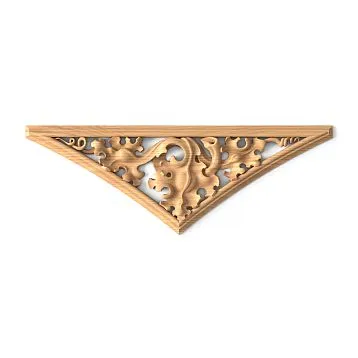
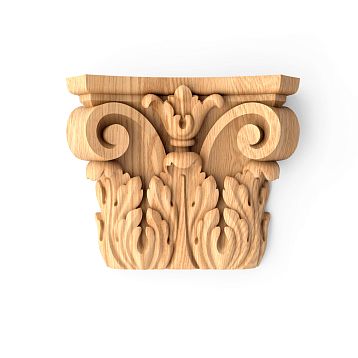
Create a decorative accent: a corner block is a separate element with an ornament, rosette, or geometric relief.
Wood molding decor— corner elements, overlays, and carved details — are presented in the catalog as a separate category.
Center overlays: accent on the field
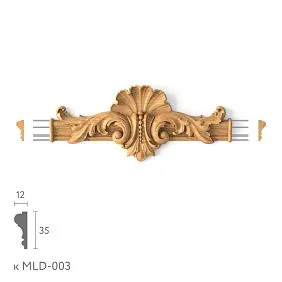
A central decorative overlay is placed in the center of a long horizontal or vertical molding band. This is a small relief element — a cartouche, medallion, rosette, heraldic motif — that 'enlivens' a long, straight line and sets a rhythm.
In a system of multiple horizontal bands, center overlays create a repeating ornamental rhythm — and the wall begins to look like a professionally designed architectural surface.
Connector elements
In long molding frames, where the profile is joined along its length, connector decorative elements cover the joint and turn it into an architectural accent. Without them, the joint is visible as an error. With them — as a designed detail.
Polyurethane decor: compatibility and unified style
Decor for polyurethane moldings— a separate category with corner blocks, center inserts, and overlays designed for specific profile series.
Key principle: corner blocks, center overlays, and the main profile should be from the same series and preferably from the same manufacturer. Different series = mismatch in scale and relief, visible even to an untrained eye.
How to choose a profile: narrow, wide, smooth, or carved
Choosing the profile format is choosing the scale and tone of the entire decorative system.
Narrow moldings 15–30 mm: delicacy as a principle
Narrow profile is the most modern and restrained. It creates a line, not volume. Shadow is minimal, relief is graphic.
Appropriate in:
-
in Scandinavian and Japanese minimalism;
-
in modern apartments with small areas;
-
in complex frame grids, where line is more important than volume;
-
in monochrome interiors, where a single profile carries the entire decorative load.
Important: narrow molding requires perfect installation. Minor imperfections are more noticeable with a thin profile than with a wide one.
Medium moldings 30–60 mm: a versatile working format
Medium molding is the most popular choice for walls and furniture fronts. It creates sufficient relief and shadow for a visual effect, without overwhelming the space.
Works in any style: from Scandinavian to neoclassical. With a smooth profile — modern classic. With a shaped cross-section — historical references.
Wide moldings 60–100+ mm: scale and status
A wide profile is a decorative statement. Powerful shadow, pronounced relief, readable from a distance. Demanding of context:
-
high ceiling (3+ m);
-
large panel field (frame wider than 50–60 cm);
-
classical, baroque, empire style.
A wide molding on a small wall of a small frame is visual overload. Always check the proportion: the width of the molding should be 8–15% of the width of the frame's field.
Smooth profiles: architectural rigor
A smooth rectangular molding—without ornament, with minimal cross-section—is the principle of architectural purity. Only line and shadow, no historical references.
The most versatile type. Works in any style where restraint is appropriate. For solid-color walls under paint + smooth molding = the most 'designer' result with minimal effort.
Carved moldings: ornament as a style argument
A carved decorative profile is the language of classical and historical interiors. Floral ornaments, geometric braids, egg-and-dart, acanthus leaves—each motif has stylistic belonging.
Carved molding requires appropriate surroundings: historical style, expensive finishes, stylistic integrity. In a modern loft or Scandinavian interior, carved ornament is dissonance.
Molding for decoration: how to choose and buy decorative moldings for interior
There's a paradox in interior design: a wall can be perfectly smooth, a ceiling flawlessly white, furniture expensive and well-thought-out. Yet the space will still seem unfinished. Something is missing. Not volume, not color, not furniture—but architectural rhythm. That very line that brings everything together and says: details were considered here.
This is precisely the role performed bydecorative molding. Not just a wood or polyurethane profile glued to a wall. It's a tool of interior architecture—subtle, precise, with clearly defined purposes.
If you're looking for what decorative moldings to buy, how wood differs from polyurethane, when only a profile is needed, and when a whole set with corner elements and overlays is required, you've come to the right place. This article is written not as a theoretical overview, but as a practical guide for those who want to achieve a specific result.
Decorative Molding: What It Is and When to Buy It
Let's start with an honest distinction. Because the market sells completely different things under the phrase 'decorative molding': from self-adhesive strips in mass-market stores to professional architectural profiles made of solid oak. And the difference between them is not just in price.
How Decorative Molding Differs from a Regular Profile
A regular profile is functional. A baseboard covers the joint between the floor and the wall. A door casing covers the joint between the door and the wall. A cornice covers the joint between the wall and the ceiling. These are technical solutions with a decorative component.
decorative moldingDecorative molding is a fundamentally different object. It does not cover a technical joint, but creates a decorative structure where there is none structurally. Wall frames, surface articulation, framing of a decorative field, architectural belt—all of these appear not out of necessity, but from a deliberate design decision.
It's important to understand this before buying: decorative molding is not a 'pretty strip' that can be attached anywhere to get a result. It is an element of a system that only works in the right context—with the correct choice of profile, size, material, and placement.
Our factory also produces:
Where Decorative Moldings Are Used
The scope of application is broader than it seems at first glance:
-
Walls—framed compositions, panel systems, wainscoting, horizontal belts, accent zones, TV walls, headboard zones.
-
Furniture—cabinet fronts, dresser fronts, decorative overlays on furniture surfaces, door decoration.
-
Ceiling — decorative ceiling cornices, framing for built-in lighting, cornice frames.
-
Framing — fireplace portals, mirror frames, decorative niches, arch decoration.
-
Architectural details — pilasters, columns, decorative capitals, corner framing.
Get Consultation
When only molding is needed, and when — a whole set
Only molding is sufficient when the task is to create simple rectangular frames with straight 45-degree joints. Modern minimalist interior, clean geometry, no additional decor.
A set is needed when: the interior style is classic or neoclassical; frames have corner blocks instead of 45° joints; the central fields of frames are complemented by overlays or medallions; the system includes several types of elements — profile, corners, central inserts, connecting parts.
How to correctly combine moldings, corners, and decorative ornaments is described in the article the art of framing: moldings, corners, and decorative ornaments.
Which moldings for decor to buy for your task
Five scenarios — five types of tasks. Each requires its own approach to profile selection.
For wall decor: frames, cornices, accent zones
Wall decorative molding is the most common scenario. Here, three basic techniques are used:
Frame compositions — rectangular frames made of molding, arranged on the wall in a rhythmic system. They create depth, structure, and a sense of architectural interior. For frames: smooth or figured profile 25–55 mm.
Horizontal belt — a molding line at a certain height, dividing the wall into lower and upper zones. A powerful technique for creating two-tone walls or highlighting a panel zone. Profile: 30–70 mm, figured or smooth.
Accent zone — a molding frame around a specific section of the wall: TV zone, area above the fireplace, gallery wall. The profile can be wider and more decorative — this is a 'portal,' not a background detail.
About decorative moldings for walls — in the articleWall moldings: the art of interior transformation.
For furniture decor
Furniture molding is a separate big topic. The profile for facades should be proportionate to the furniture plane: small width (20–45 mm), with a neat figured cross-section.
On a furniture facade, molding does not create a shadow — it creates relief on the scale of the object. Rule: the width of molding for furniture should be two to three times less than for a wall. What looks like a thin line on a wall will be quite an expressive frame on a furniture facade.
Material for furniture moldings: wood (oak, beech, MDF) — preferable to polyurethane, which behaves worse under furniture impacts.
For frames and trims
Frames are the main decorative technique both on walls and in individual objects: mirrors, paintings, decorative panels, niches. Molding for frames and framing requires special attention to corners: they should be either perfectly precise (45° joint) or decorated with corner blocks.
For mirrors and paintings: profile 30–60 mm, shaped, with sufficient projection to create frame depth. Material — oak or polyurethane depending on style.
For panel systems
Decorative molding for panels is a system task, not a separate profile. A panel system includes: vertical posts, horizontal crossbars, corner connections, a top finishing belt, and a bottom baseboard.
Profile for panels: smooth or shaped 30–60 mm, uniform for all system elements. Material — homogeneous: either all wood or all polyurethane. Mixing materials in one panel system disrupts integrity.
For accent decorative compositions
Accent decorative composition — this is when molding goes beyond 'just a frame' and becomes a wall art object. Several frames of different sizes, complex hierarchy of horizontal belts, decorative central inserts, ornamental belts.
For such tasks: shaped profile with pronounced relief, wide (55–90 mm), with decorative overlays and corner blocks. This is the highest level of molding decor, which requires design, not improvisation.
Wooden or polyurethane moldings: what to choose
This question is not about 'better' and 'worse'. It's a question about the task, context, and expectations.
When to choose wood
Wooden moldings— is the choice for situations where natural material is a fundamental value.
Natural interior. If the room has oak parquet, wooden furniture, wooden doors — the moldings should be wooden. Material unity of space is a fundamental principle. Polyurethane next to oak parquet: technically possible, aesthetically — a compromise.
Tinting and transparent coatings. The living texture of wood — something impossible to imitate. Oak molding in a natural shade with clear varnish or wax impregnation — this is an object with character that polyurethane cannot reproduce.
Long-term horizon. Wooden molding made from hardwoods — a product for 50+ years. With proper care, it only develops patina. Polyurethane is also durable, but differently: it does not age 'nobly'.
Prestigious objects. Private residences, Class A offices, historical buildings preserving the interior spirit — everywhere where natural material is part of the concept.
Wide assortmentsolid wood moldings and cornicesis presented in the corresponding section of the catalog.
When polyurethane is better
polyurethane decor for interiors— not a substitute for wood, but an independent material with specific advantages.
Complex geometry. Flexible polyurethane profiles wrap around arches, radius niches, curved sections without any special technologies. Wood for such tasks requires complex bending work or assembly from multiple elements.
Uniform painting. Polyurethane has no pores — paint lays evenly, without revealing grain. For white frames, monochrome interiors, painting in bright colors — polyurethane is preferable.
Wet areas. Bathrooms, toilets, kitchen zones with high humidity — polyurethane does not warp, crack, or lose shape.
Quick installation. Light weight, easy to process with hand tools, adheres without clamping devices.
What is more convenient for painting
Clear answer: polyurethane and MDF — for painting. Natural oak or beech — for tinting.
If the goal is white moldings in a classic living room: primed polyurethane (factory-ready for acrylic paint application). MDF — will require priming. Oak under white enamel — loses its main feature: the texture, for which it is chosen.
Where natural texture is more important
Natural texture is critically important where the material "works" up close — it is examined, touched. Furniture moldings, frames in the living room, paneling system in the study — these details are visible from a distance of 50–150 cm. Here, texture plays a role.
Ceiling cornices, moldings at a height of 2.5–3 m — here the texture is not visible. Polyurethane is entirely appropriate.
Comparison table
| Criterion | Wood (oak/beech) | MDF | Polyurethane |
|---|---|---|---|
| Natural texture | ✓✓✓ | — | — |
| For painting | — | ✓✓✓ | ✓✓✓ |
| Flexible forms | — | — | ✓✓✓ |
| Durability | ✓✓✓ | ✓✓ | ✓✓ |
| Ease of installation | ✓✓ | ✓✓ | ✓✓✓ |
| Moisture resistance | ✓ (impregnation) | ✓ (impregnation) | ✓✓✓ |
| Furniture tasks | ✓✓✓ | ✓✓ | ✓ |
| Wall tasks | ✓✓✓ | ✓✓✓ | ✓✓✓ |
When molding decor is needed
This is a topic often overlooked during the first purchase — and later regretted. Decor for moldings — corner elements, overlays, central inserts — these are not optional "decorations". In classic and neoclassical interiors, they are functional.
Corner elements: when a joint becomes decor
The standard way to join moldings at a frame corner is a 45-degree miter joint on a miter saw. This is technically correct but requires precise equipment and experience. Any error is visible.
Corner decorative blocks — square or rectangular elements installed in each corner of the frame instead of a miter joint — solve two problems at once:
-
Simplify installation: horizontal and vertical frame elements are cut strictly at 90°, without 45-degree mitering.
-
Create a decorative accent: a corner block is a separate element with an ornament, rosette, or geometric relief.
Wood molding decor— corner elements, overlays, and carved details — are presented in the catalog as a separate category.
Center overlays: accent on the field
A central decorative overlay is placed in the center of a long horizontal or vertical molding band. This is a small relief element — a cartouche, medallion, rosette, heraldic motif — that 'enlivens' a long, straight line and sets a rhythm.
In a system of multiple horizontal bands, center overlays create a repeating ornamental rhythm — and the wall begins to look like a professionally designed architectural surface.
Connector elements
In long molding frames, where the profile is joined along its length, connector decorative elements cover the joint and turn it into an architectural accent. Without them, the joint is visible as an error. With them — as a designed detail.
Polyurethane decor: compatibility and unified style
Decor for polyurethane moldings— a separate category with corner blocks, center inserts, and overlays designed for specific profile series.
Key principle: corner blocks, center overlays, and the main profile should be from the same series and preferably from the same manufacturer. Different series = mismatch in scale and relief, visible even to an untrained eye.
How to choose a profile: narrow, wide, smooth, or carved
Choosing the profile format is choosing the scale and tone of the entire decorative system.
Narrow moldings 15–30 mm: delicacy as a principle
Narrow profile is the most modern and restrained. It creates a line, not volume. Shadow is minimal, relief is graphic.
Appropriate in:
-
in Scandinavian and Japanese minimalism;
-
in modern apartments with small areas;
-
in complex frame grids, where line is more important than volume;
-
in monochrome interiors, where a single profile carries the entire decorative load.
Important: narrow molding requires perfect installation. Minor imperfections are more noticeable with a thin profile than with a wide one.
Medium moldings 30–60 mm: a versatile working format
Medium molding is the most popular choice for walls and furniture fronts. It creates sufficient relief and shadow for a visual effect, without overwhelming the space.
Works in any style: from Scandinavian to neoclassical. With a smooth profile — modern classic. With a shaped cross-section — historical references.
Wide moldings 60–100+ mm: scale and status
A wide profile is a decorative statement. Powerful shadow, pronounced relief, readable from a distance. Demanding of context:
-
high ceiling (3+ m);
-
large panel field (frame wider than 50–60 cm);
-
classical, baroque, empire style.
A wide molding on a small wall of a small frame is visual overload. Always check the proportion: the width of the molding should be 8–15% of the width of the frame's field.
Smooth profiles: architectural rigor
A smooth rectangular molding—without ornament, with minimal cross-section—is the principle of architectural purity. Only line and shadow, no historical references.
The most versatile type. Works in any style where restraint is appropriate. For solid-color walls under paint + smooth molding = the most 'designer' result with minimal effort.
Carved moldings: ornament as a style argument
A carved decorative profile is the language of classical and historical interiors. Floral ornaments, geometric braids, egg-and-dart, acanthus leaves—each motif has stylistic belonging.
Carved molding requires appropriate surroundings: historical style, expensive finishes, stylistic integrity. In a modern loft or Scandinavian interior, carved ornament is dissonance.
How to combine moldings and decorative elements
Molding decor is a system. And like any system, it only works when internal logic is followed.
A unified style is a mandatory condition
The first and main rule: all elements of the molding system—profile, corner blocks, center overlays—must be of the same style. Smooth profile + carved corner blocks = conflict. Ornate classic profile + minimalist square blocks = violation of stylistic logic.
One style, one series, one material temperature—that's the formula for a cohesive result.
Rhythm repetition: how to create a system
A decorative system works through rhythm. If frames of the same size are placed at equal intervals—that's rhythm. If the profile repeats at regular intervals—that's rhythm. If center overlays are placed in every second frame—that's rhythm.
Breaking the rhythm—adding elements 'on inspiration'—destroys the system. The eye seeks a pattern, and if there isn't one, the interior is perceived as chaotic.
Center and corner accents: hierarchy matters
In a classic system, there is a hierarchy: the main profile is the base element. Corner blocks are the second level. Center overlays are the third level, the accent. All three levels must be proportionate to each other: the center overlay should not be larger than the corner blocks.
If corner blocks are 60×60 mm, the center overlay should be no more than 80×40 mm. If the profile is narrow (25 mm), corner blocks should be no more than 40×40 mm.
How to avoid overloading the interior with molding decor
Three signs of overload:
-
Moldings on all walls of the room — no accent, there is an identical background.
-
Too frequent spacing of frames — the wall looks 'checkered', not architectural.
-
Mixing several profile styles in one space — chaos.
Principle: accent wall with a full molding system + neutral adjacent walls without moldings or with a minimal horizontal belt. One focal point, the rest is context.
What determines the price of moldings for decor
Transparent pricing — without marketing fog.
Material
| Material | Orientation price | Application |
|---|---|---|
| Polyurethane (standard) | from 120–350 rub./m | Walls, frames, for painting |
| MDF | from 180–450 rub./m | Walls, furniture, for painting |
| Beech | from 380–700 rub./m | Walls, furniture, for tinting |
| Oak | from 650–2,000 rub./m | Walls, furniture, status objects |
| Carved oak | from 2,000–12,000+ RUB/m | Project objects, premium class |
Profile and width
Molding width is a direct pricing factor. A 70 mm molding requires twice as much material as a 35 mm one. All else being equal, the cost relationship is proportional: 1.5–2 times more expensive.
Relief
Smooth profile — minimal milling costs. Figurative (gooseneck, ogee, torus) — 2–3 passes on a milling machine. Carved ornament — 3D milling plus manual finishing. Price difference: smooth vs. carved — from 3 to 50 times depending on the complexity of the ornament.
Decorative elements for molding
Corner blocks: from 200 to 3,000 rubles/piece depending on material and complexity.
Central overlays: from 350 to 5,000+ rubles/piece.
Kit for one classic frame (4 corners + central overlay): from 1,500 to 20,000 rubles.
Decorative elements significantly affect the final cost of the system — this should be considered when planning the budget.
Standard or custom profile
Standard from catalog — ready for shipment, minimum price. Custom from drawing: +30–100% to base cost, production time from 2–4 weeks. Relevant for design projects and objects with non-standard profile cross-section requirements.
Where to buy molding for decoration without mistakes
Step-by-step route from task to correct choice.
Step 1: determine style and task
-
Modern minimalism → smooth profile 15–35 mm, polyurethane or MDF.
-
Classic / neoclassical → shaped profile 40–75 mm, wood or polyurethane, corner blocks.
-
Furniture decor → wood 20–45 mm, shaped.
-
Frames for painting → primed polyurethane or MDF.
Step 2: determine if decor for moldings is needed
Modern frames — only profile with 45° miter joint. Classic frames — profile + corner blocks + (optional) center overlay. Decorative panel belts — profile + connecting parts.
Step 3: Check element compatibility
Corner blocks and center overlays must be from the same series as the main profile. Different relief heights = mismatch that becomes noticeable after installation.
Step 4: request samples if necessary
STAVROS offers molding samples in their wooden line — an opportunity to evaluate actual dimensions, tinting, and surface quality before purchase.
Step 5: proceed to the correct section
Decorative moldings — hub article:
→ Decorative moldings: The art of interior design
Solid wood moldings:
→ solid oak and beech wooden moldings
Decor for wooden moldings:
→ Wood molding decor
Decor for polyurethane moldings:
→ Decor for polyurethane moldings
Polyurethane moldings and cornices:
→ Polyurethane decor: moldings, cornices, baseboards
Decorative wall moldings:
→ decorative wall moldings
Solid wood moldings and skirting boards:
→ Solid wood moldings, cornices, and baseboards
About the company STAVROS
STAVROS is a Russian manufacturer of architectural wood decor since 2002. Full production cycle at its own facility in St. Petersburg: from solid wood drying to finishing and packaging.
STAVROS produces decorative moldings from oak, beech, MDF, and polyurethane — over 50 standard profiles plus custom manufacturing from individual drawings. Separate product categories for molding decor — corner elements, center overlays, connecting parts — are produced in both wood and polyurethane, in unified stylistic series with the main profiles.
For B2B partners — designers, architects, construction companies — STAVROS offers project support: profile selection, development of decorative systems, custom manufacturing for specific projects. Retail from 1 linear meter. Fast shipping from warehouse across Russia.
FAQ: popular questions about decorative molding
Which molding is best for interior decor?
Depends on the style. Modern interior → smooth profile 15–35 mm, polyurethane or MDF. Classic / neoclassical → figured profile 40–75 mm from oak or beech. Furniture → wood molding 20–45 mm with figured cross-section. For painting → primed polyurethane.
Wood or polyurethane: which is better for moldings?
Wood — if natural texture, tinting, and decades-long durability are important. Polyurethane — if painting, flexibility, moisture resistance, or quick installation is needed. Both materials are professional — the choice depends on the task.
When are corner elements needed for moldings?
In classic and neoclassical style — almost always. They simplify installation (no need for 45° cutting) and create an additional decorative accent. In modern minimalism — only a 45° joint, no overlays.
Can decorative moldings be painted?
Yes. Polyurethane (primed) moldings are ready for painting with acrylic enamel without additional preparation. MDF requires primer. Wooden moldings require full priming for opaque enamel; for tinting, no primer is needed, apply directly to the wood.
How to match decor to molding?
Corner blocks and overlays should be from the same series and manufacturer as the main profile. The relief height of corner blocks should be comparable to the relief height of the profile. The central overlay should not be larger than the corner blocks.
What to buy first: molding or decorative elements?
First, choose the main profile—it determines everything else. For the selected profile, select compatible corner blocks and overlays from the same series. Never the other way around: decor should match the molding, not molding to match the decor.
How to calculate the amount of molding for wall decor?
Create a frame map: determine the number of frames, their size, and arrangement. Sum the perimeter of all frames—this is the linear footage of the profile. Add 10–15% for cuts and errors. Corner blocks: 4 pieces per frame. Central overlays—as per design.