












































































Article Contents:
- Philosophy of minimalism in details
- From ornament to line
- Thin baseboard: unobtrusiveness as a principle
- Functions of baseboard in minimalism
- Profiles and materials
- Mirror: geometry of reflection
- Round mirror: purity of form
- Mirror placement in space
- Color matching walls: dissolving boundaries
- White, gray, beige: minimalist palette
- Natural wood or white enamel: finish choice
- Matte vs glossy surface
- Simple profiles without threading: geometry as decor
- Thickness, width, proportions
- Light and space: how minimalism expands boundaries
- Artificial lighting in minimalism
- Materials: quality above all
- Ecological Safety
- Minimalism in different rooms
- Living Room
- Bedroom
- Entry Hall
- Bathroom
- Mistakes when creating a minimalist interior
- Technical side: baseboard and mirror installation
- Thin baseboard installation
- Mirror installation
- Frequently Asked Questions
- Conclusion: trust the details to professionals

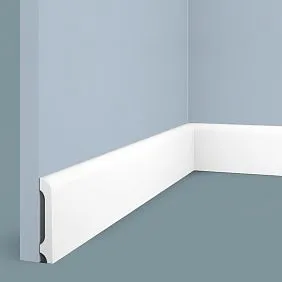
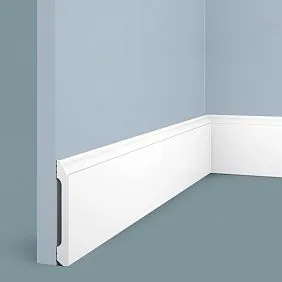
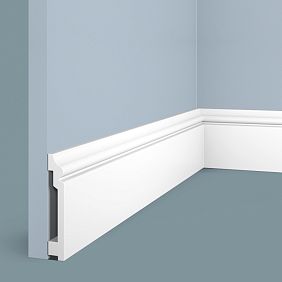
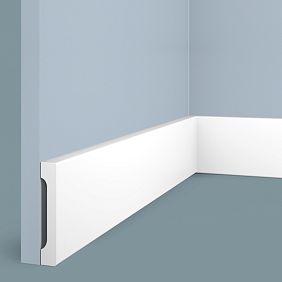
Less is more. This formula has transformed from an architectural avant-garde slogan into the reality of modern interiors, where every detail carries weight, every line has meaning, every surface has significance. A minimalist interior is not emptiness or a rejection of beauty. It's the concentration of aesthetics in simplicity of forms, purity of geometry, and nobility of materials. ThinWooden baseboard60 mm high baseboard, a round mirror in a barely noticeable frame or without one at all, straight profiles without threading or curls—these are the tools for creating a space where calm, order, and harmony reign.


Philosophy of minimalism in details
What is minimalism if you look not at pictures in glossy magazines, but at its very essence? It's the ability to discard the unnecessary so that the essential emerges. It's the capacity to see beauty in simplicity, rhythm in repetition, expressiveness in pause. In music, minimalism is long notes and the space between them. In painting—pure colors and clear boundaries. In interior architecture—concise forms, natural materials, absence of decorative excess.
But minimalism is not asceticism. It's not a rejection of comfort for the sake of an idea. On the contrary, minimalist space is created for living, for convenience, so that a person feels free, so that nothing presses, distracts, or overloads perception. Every thing in its place. Every surface clean. Every line precise.
And it's precisely the details—baseboard, mirror, trim, molding—that determine whether an interior will be truly minimalist or remain just an empty room lacking furniture. High-quality, carefully selected elements made of natural wood create that very atmosphere of restrained elegance that distinguishes genuine minimalism from cheap imitation.




From ornament to line
Classical interiors are built on ornamentation. Carving, molding, rosettes, cartouches, volutes—all of these create a richness of visual language, demonstrating craftsmanship, status, and taste. Baroque and Rococo push this logic to the limit, filling every centimeter of surface with decoration.
Minimalism takes the opposite approach. By removing ornamentation, it reveals the structure. Without curls and acanthus leaves, pure geometry remains—line, plane, volume. Here, proportions, ratios, and rhythms come to the forefront. What is hidden under layers of decoration in classical style is visible to the naked eye in minimalism. That is why precision in execution is so crucial in a minimalist interior. The slightest curvature, unevenness, or misalignment immediately catches the eye, ruining the impression.
Thin 60 mm high skirting boards are not just narrow strips along the wall. They are neat boundaries between the floor and the vertical plane, lines that emphasize horizontality, set the rhythm of the room's perimeter, and create a sense of completeness without heaviness. When the skirting board is painted to match the walls, it almost dissolves, leaving only a thin shadow, a barely noticeable relief. This is the art of details in minimalism.
Our factory also produces:


Thin skirting board: unobtrusiveness as a principle
In a classical interior, skirting board height can reach 120-150 mm. Wide, massive, with a rich profile—such a skirting board creates a sense of solidity, monumentality, and status. But in a minimalist space, this is inappropriate. Here, the main focus is on air, lightness, and freedom. A wide skirting board would visually weigh down the interior, attract too much attention, and disrupt the purity of lines.
A thin skirting board 60-70 mm high is the optimal solution for modern interiors with ceiling heights of 2.5-2.7 meters. It is noticeable enough to perform its functions but not so much as to dominate. This is the perfect balance between presence and unobtrusiveness.
Get Consultation
Functions of skirting boards in minimalism
It might seem, why even need a skirting board in a minimalist interior? Perhaps it's easier to do without it, leaving the wall and floor without a transitional element? In practice, this is impossible. Even with perfectly even walls and floors, a gap forms at their junction, which collects dust, looks untidy, and spoils the impression. A skirting board covers this gap in a technically clean way.
Second: the skirting board protects the lower part of the wall from damage during cleaning, moving furniture, or accidental kicks. This is especially important for walls painted with light paint or covered with wallpaper. Without a skirting board, after six months of use, the lower part of the wall will be covered with scuffs and scratches.
Third: the skirting board creates a visual boundary that the eye needs for comfortable perception of space. Even if the skirting board is painted to match the wall and hardly stands out, it forms a thin line that structures the space and gives it a finished look. Without this line, the interior looks incomplete, as if something is missing.
Profiles and materials
The shape of a thin skirting board for a minimalist interior should be extremely simple. No carving, beads, or complex transitions. The ideal profile is a rectangular cross-section with a slight rounding of the top edge with a radius of 2-3 mm. This removes the sharp angle, makes the profile softer to perceive, but retains the laconic form.
A minimal recess at the base (a technical groove) is possible so that the skirting board fits tightly against the wall even with minor floor irregularities. This groove is not visible to the eye but ensures quality installation.
The material for skirting boards in a minimalist interior is solid wood or MDF. Plastic is excluded: it looks cheap, lacks texture, yellows over time, and scratches easily. Solid oak, ash, or beech provides a natural texture that is subconsciously perceived and creates a sense of quality even when painted. MDF for painting is a more affordable alternative that, with proper finishing, is not inferior to solid wood in appearance.
The color of skirting boards in minimalism is a separate topic. The classic solution is to paint the skirting board the same color as the walls. White walls—white skirting board. Gray walls—gray skirting board. This creates an effect of dissolving boundaries, visually increasing the height of the walls. The skirting board remains a functional element but does not attract attention.
An alternative option is a skirting board in a contrasting color. For example, a dark skirting board on light walls or vice versa. This creates a clear, graphic line along the room's perimeter, emphasizes the geometry of the space, and adds dynamism. But moderation is key here: the contrast should not be too sharp, otherwise it will disrupt the minimalist harmony.
A third option is a skirting board made of natural wood without painting, covered with clear oil or varnish. The texture of the wood, its natural pattern, becomes an accent in a monochrome interior. This works especially well in Scandinavian minimalism, where the combination of white walls and light wood is valued.
Mirror: geometry of reflection
A mirror in a minimalist interior is not a decorative accessory but a functional element that expands space, increases the amount of light, and creates depth. At the same time, the mirror itself should be as laconic as possible: without ornate frames, ornaments, or gilding.
framed mirrorA frame of minimal thickness, 2-3 cm, made of light wood or painted in a neutral color, is the ideal choice. Here, the frame performs a technical function: it covers the mirror's edge, creates a mounting base, and adds structural strength. But visually, it is almost unnoticeable.
An even more radical option is a mirror without a frame at all, with beveled edges. The bevel creates a subtle play of light along the perimeter of the mirror surface, adding elegance without overloading. Such a mirror seems to float on the wall, creating a sense of lightness and airiness.
Round mirror: purity of form
Why a circle? Because a circle is the most perfect geometric shape, a symbol of completeness, harmony, and infinity. In an interior built on straight lines and rectangular forms,round mirror in a frameit creates contrast, but a soft, organic, non-aggressive contrast.
A round mirror with a diameter of 60-80 cm is the optimal size for living spaces. It is large enough to be functional and visually significant but not so large as to overwhelm the space. Placed above a console in the hallway, above a dresser in the bedroom, or on an accent wall in the living room, a round mirror becomes a focal point that attracts the eye without overloading the interior.
The frame for a round mirror in a minimalist interior should be as thin and simple as possible. No carving, no decorative elements. Just a smooth circle of light wood—oak, ash, beech—20-30 mm thick. The wood can be covered with natural oil that emphasizes the texture or painted with matte paint in white, gray, or black.
wall mirror in a frameIt is mounted in a hidden way, without visible hinges or hooks. This creates an effect of lightness, as if the mirror is magically attached to the wall. Clean installation is an important detail of minimalist aesthetics.
Placement of mirrors in space
Where to hang a mirror in a minimalist interior? The classic solution is above low furniture: a console, dresser, or cabinet. The mirror is placed in the center of the furniture, 30-50 cm above its top surface. This creates a visual connection between the furniture and the mirror, forming a composition.
If there is no furniture, the mirror can be placed on a clean wall, at a height of 140-160 cm from the floor level (center of the mirror). This is the optimal height for functional use: the mirror reflects a person's figure at head and shoulder level.
In the hallway, a mirror is placed opposite or to the side of the entrance door to allow one to assess their appearance before leaving. In the bedroom — above a dresser or on the wall opposite the window to reflect daylight and visually increase the brightness of the room. In the living room — on an accent wall, creating a focal point.
It is important not to place a mirror opposite another mirror — this creates an infinite reflection effect that can be uncomfortable. Also, avoid hanging a mirror opposite a window if the view outside is unattractive — the mirror will double it.
Color matching the walls: dissolving boundaries
One of the key techniques in minimalist interior design is painting all architectural elements (baseboards, door/window casings, moldings) the same color as the walls. This creates a monolithic, cohesive space, erasing boundaries between individual elements.
Imagine a room with white walls. If the baseboard is also white, it almost dissolves, leaving only a thin shadow line at the junction of the wall and floor. This visually increases the height of the walls, making the room lighter and more airy. The gaze glides from top to bottom along the wall without obstacles, not catching on contrasting elements.
The same applies to door and window casings. If they are painted to match the walls, door and window openings are perceived as parts of the wall, not as separate objects. This simplifies the visual structure of the room, making it clearer and calmer.
White, gray, beige: the minimalist palette
The classic color palette of a minimalist interior consists of shades of white, gray, and beige. White is the most popular: it reflects maximum light, creates a sense of cleanliness, freshness, and spaciousness. White walls, white baseboards, white casings, light wood flooring — the classic Scandinavian minimalism.
Gray is a more complex and deep color. It creates calmness, neutrality, and serves as an ideal backdrop for furniture and accessories. Light gray walls with gray baseboards, gray casings, and gray furniture — this is minimalism in the Japanese spirit, which values restraint and the absence of bright accents.
Beige is a warm neutral shade that creates coziness without color overload. Beige walls with wooden elements in natural tones — this is minimalism that doesn't repel with coldness but envelops with the warmth of natural materials.
In addition to basic neutral colors, accent shades can be used in a minimalist interior: deep blue, terracotta, olive, graphite. But such colors are applied in doses — one accent wall, one piece of furniture, a few accessories. The rest of the interior remains neutral.
Natural wood or white enamel: choosing the finish
One of the main questions when creating a minimalist interior: leave the wood natural or paint it? Both options are valid, and the choice depends on the overall concept.
Natural wood — it's texture, warmth, the liveliness of the material. Solid oak, ash, or beech, coated with clear oil or matte varnish, preserves the natural grain pattern, color, and tactile qualities. Wood in the interior creates a connection with nature, gives a sense of eco-friendliness and solidity. This is the choice for those who value naturalness and don't want to hide the material under a layer of paint.
White enamel — it's purity, graphic quality, maximum conciseness. A baseboard, casing, or mirror frame painted with white matte enamel becomes absolutely neutral elements that don't attract attention but perform their functions. White enamel reflects light, makes the interior brighter, and creates a sense of sterile cleanliness (in a good way).
A compromise option — whitewashed wood. The wood is treated with a special compound (white stain, oil with white pigment) that lightens the color but preserves the visible grain. The result is light, almost white wood, but with a natural pattern. This is a popular solution for Scandinavian minimalism.
Matte vs. glossy surface
In a minimalist interior, preference is given to matte surfaces. Matte paint, matte varnish, matte oil — all of these create a calm, non-reflective surface that doesn't produce glare or attract unnecessary attention. A matte surface is perceived as more noble, expensive, and high-quality.
Glossy surfaces are rarely used in minimalism and only in very measured doses. Gloss attracts attention, creates glare, and adds dynamism. This can be appropriate for small accents — for example, a glossy countertop or kitchen cabinet fronts. But baseboards, casings, frames — these elements should be matte.
The exception is the mirrored surface of the mirror itself. It is by definition glossy and reflective. But this is a functional gloss, not a decorative one.
Simple profiles without carving: geometry as decor
What happens when you remove carving, ornaments, and complex profiles? Pure geometry remains. And it turns out that geometry itself is decorative. A straight line, a right angle, a flat surface — this is not boring or primitive. It's honest, clear, expressive.
A simple rectangular baseboard — it's a horizontal line that runs around the perimeter of the room, creating rhythm. This line can be thin (60 mm) or more pronounced (80-100 mm), but it always works for the structure of the space, emphasizing its geometry.
A simple rectangular mirror frame — it's a contour that highlights the mirrored surface, creating a clear boundary between the reflection and the wall. The frame can be thin (20 mm) or slightly wider (30-40 mm), but the main thing is its form is clean, without embellishments.
A simple flat door or window casing — it's a framing of the opening that creates a transition between the wall and the door/window frame. The casing can have a slight bevel (chamfer) along the edge for softness of perception, but overall its form is maximally laconic.
Thickness, width, proportions
In minimalist design, proportions are critically important. The thickness of the baseboard should relate to its height. For a baseboard with a height of 60 mm, the optimal thickness is 12-16 mm. A baseboard that is too thin will look flimsy, too thick — crude.
The width of the casing should relate to the size of the door opening. For a standard door 80 cm wide, a casing 60-70 mm wide is suitable. For wide sliding doors or openings, a casing 80-100 mm wide can be used.
The thickness of the mirror frame should relate to the diameter or size of the mirror. For a mirror with a diameter of 60 cm, a frame thickness of 20-25 mm is sufficient. For a mirror with a diameter of 80-100 cm, the frame thickness can be increased to 30-35 mm.
All these proportions are not accidental. They are developed through practice, based on visual perception, and create balance and harmony. Violating proportions is immediately perceived by the eye and creates discomfort.
Light and Space: How Minimalism Expands Boundaries
A minimalist interior always appears more spacious than one with abundant decor, even if the actual square footage is the same. Why? Because minimalism has no visual noise, no elements that fragment the space, compete for attention, or create chaos.
Slim baseboards, laconic trim, mirrors without bulky frames—all of these contribute to the visual expansion of space. The fewer boundaries and softer the transitions, the larger the room appears.
Mirrors play a special role. Placed on the right wall, a mirror doubles the perceived depth of a room. Reflecting a window, it doubles the amount of light. Reflecting an empty wall, it creates the illusion of additional volume.
Light-colored walls and ceilings, light wood flooring, white or light gray baseboards and trim—all of this reflects light, making the room brighter. Such an interior is comfortable even with a lack of natural light.
Artificial Lighting in Minimalism
Lighting in a minimalist interior should be functional and unobtrusive. No bulky chandeliers with crystal pendants, no gilded Baroque-style sconces. Only modern fixtures with simple shapes: recessed spotlights, linear lights, laconic pendant lights.
It's ideal when light sources are not visible or almost invisible. Recessed ceiling spotlights create uniform lighting without accents. An LED strip hidden behind a cornice or inside a niche provides soft, diffused light that highlights the architecture without being harsh on the eyes.
Floor and table lamps in a minimalist interior have simple geometric shapes: cylinder, cube, sphere. Materials—metal, glass, plastic, wood. Colors—white, black, gray, natural tones.
Materials: Quality Above All
In a minimalist interior, where there is little decor and every detail is visible, the quality of materials is critically important. It's impossible to create convincing minimalism from cheap materials. A plastic baseboard, MDF with poor paintwork, a mirror in a crooked frame—all of this will instantly ruin the impression.
Quality materials are solid wood (oak, ash, beech), high-density MDF for painting, natural stone, porcelain stoneware, quality paints and varnishes. These materials have texture, weight, tactile qualities. They are pleasant to the touch, durable, and do not lose their appearance over time.
Wooden moldingsBaseboards and trim made of solid oak or beech are an investment in long-term aesthetics. Oak is strong, stable, and has an expressive texture. Beech is lighter, with a more uniform structure, ideal for painting. Both materials, when properly treated, last for decades.
High-density MDF is an alternative to solid wood if the budget is limited. Quality MDF has a smooth surface, does not absorb moisture, and holds paint well. After painting in several coats with intermediate sanding, an MDF baseboard is visually indistinguishable from solid wood.
Oak skirting boards are an indispensable element of classic interior styles. In the English style, oak skirting boards with rich carving emphasize the aristocracy and solidity of the space. Dark wood tones harmonize beautifully with traditional materials — natural stone, leather, bronze.
Minimalism is often associated with eco-friendliness. And this is no coincidence. The use of natural materials—wood, stone, glass—makes an interior not only beautiful but also safe for health.
Solid wood does not emit harmful substances, regulates air humidity, and creates a comfortable microclimate. MDF of class E1 or E0 has minimal formaldehyde content and is safe for living spaces.
Water-based paints and varnishes without solvents and toxic components are the standard for minimalist interiors. They have no strong odor, dry quickly, and are safe for children and allergy sufferers.
Eco-friendliness is not just a fashionable trend, but a conscious choice in favor of health, comfort, and responsibility towards nature.
Minimalism in Different Rooms
The principles of minimalism are universal, but their application has nuances depending on the type of room.
Living Room
In the living room, minimalism creates space for communication, relaxation, and contemplation. Minimal furniture: a sofa, a coffee table, perhaps a couple of armchairs. No heavy cabinets, display cases with dishes, or massive wall units. Storage systems are hidden or built-in.
A slim baseboard around the perimeter, simple door and window trim, a large mirror on one of the walls—these elements create structure without overloading. The color palette is neutral: white, gray, beige. Accents—textiles (pillows, a throw), a few books, a living plant in a simple planter.
Bedroom
A bedroom in minimalist style is a temple of tranquility. A bed, two nightstands, a built-in wardrobe—nothing more is needed. Light-colored walls, a floor of natural wood, a slim baseboard matching the walls or floor.
A mirror is placed above a dresser or on the inside of a wardrobe door. Lighting is soft and diffused. No bright chandeliers, only recessed lights or small bedside lamps of simple shape.
Textiles are natural: cotton, linen. Colors are calm: white, gray, beige, pastel shades. No bright prints, complex patterns, or excessive decorative pillows.
Entryway
The hallway is the first thing a person sees when entering a home. A minimalist hallway has no clutter of furniture and accessories. A built-in wardrobe for outerwear, a small bench or pouf, a console with a mirror—this is enough.
A mirror in the hallway is a functional necessity.round mirror in a frameA mirror made of light wood or painted white, placed above a console, is a classic solution. It allows you to check your appearance before leaving and visually expands the narrow space of the hallway.
The baseboard in the hallway should be especially durable and moisture-resistant, as dirt and moisture from shoes accumulate here. Solid oak or MDF with a moisture-resistant coating is the optimal choice.
Bathroom
Minimalism in the bathroom is about cleanliness, hygiene, and functionality. Porcelain stoneware that mimics stone or concrete, a frameless glass shower enclosure, wall-mounted sink and toilet, hidden storage systems.
The bathroom mirror is usually placed above the sink. This can be a large frameless mirror with beveled edges, or a mirror in a thin frame made of moisture-resistant material (coated MDF, plastic with wood imitation).
Baseboards are not always used in bathrooms, as the floor is often made of porcelain stoneware with a baseboard of the same material. But if the walls are painted and the floor is wooden (moisture-resistant board), a thin moisture-resistant baseboard is necessary.
Mistakes when creating a minimalist interior
Minimalism seems simple, but creating it correctly is a difficult task. Here are typical mistakes that ruin minimalist aesthetics.
Mistake 1: Confusing minimalism with asceticism. Minimalism is not an empty room with a single chair. It is a well-thought-out space where everything necessary is present, but nothing is superfluous. Furniture should be comfortable, functional, and of high quality.
Mistake 2: Skimping on materials. Cheap plastic baseboards, a crooked mirror in a particleboard frame, unevenly painted walls—all of these kill minimalism. The quality of materials and execution is the foundation.
Mistake 3: Ignoring details. In a minimalist interior, every detail is visible. A crookedly installed baseboard, uneven trim joints, stains on the wall—all of these stand out. Perfect precision in execution is required.
Mistake 4: Overdoing accents. One bright accent is interesting. Three or four—that's no longer minimalism, but eclecticism. If you choose a bright armchair, everything else should be neutral.
Mistake 5: Forgetting about functionality. Beautiful but uncomfortable furniture; poor lighting; lack of storage systems—all of these make a minimalist interior uninhabitable. Minimalism should serve life, not an idea.
Technical side: installing baseboards and mirrors
Proper installation is half the success of a minimalist interior.
Installing a thin baseboard
A thin baseboard is attached to the wall (not the floor) using adhesive, liquid nails, or screws. It is important that the wall is even. If there are irregularities, they must be leveled with putty before installing the baseboard.
Corner joints are made at a 45-degree angle using a miter box or miter saw. Cutting precision is critical: a gap in the joint immediately catches the eye. After installation, joints are filled with acrylic sealant matching the baseboard color, and excess is immediately removed with a damp sponge.
If the baseboard is installed before painting the walls, it must be protected with painter's tape during painting. If the baseboard is installed after painting, maximum care is needed to avoid damaging the wall.
Installing a mirror
A framed mirror is attached to the wall using special hangers or French cleats (hidden strips). It is important that the attachment points are on a load-bearing wall or a reinforced section of a drywall structure.
Before installation, the mirror's position must be precisely marked: measure the distance from the floor, from the side walls, and check the horizontal level. The slightest misalignment will be visible.
A frameless mirror (with only a bevel) is attached using special mirror adhesive or heavy-duty double-sided tape. The adhesive is applied in dots so it is not visible through the mirror. After installation, the mirror must not be moved until the adhesive has completely dried (usually 24 hours).
Frequently asked questions
Is minimalism suitable for a family with children?
Yes, if storage systems are properly organized. Children's toys, books, and clothes should not be visible. Built-in wardrobes, closed shelving, under-bed drawers—all of these help maintain order and minimalist aesthetics even in a family with children.
Will a minimalist interior be cold and unwelcoming?
It will not, if natural materials and warm tones are used. Light wood, beige walls, soft textiles create coziness without overloading with decor. Minimalism is not coldness, but tranquility.
Which baseboard to choose for a small apartment?
For small spaces, a thinbaseboard with a height of 60-70 mmis ideal. It does not overload the space and visually does not reduce the height of the walls. Painting it to match the wall color will make it even less noticeable.
Can minimalism be combined with other styles?
Yes, but carefully. Minimalism pairs well with Scandinavian style (shared values: simplicity, naturalness, functionality), Japanese style (shared: restraint, harmony, emptiness as a design element), and loft style (shared: open space, minimal partitions). But mixing minimalism with classic or baroque will create eclecticism that is difficult to balance.
Which mirror is better: round or rectangular?
Depends on the context. A round mirror creates a soft accent, adds geometric variety to an interior with straight lines. A rectangular mirror is more neutral, better suited for placement above furniture. Both options are appropriate in minimalism if the frame is simple and concise.
Should a wooden baseboard be painted or left natural?
Depends on the overall concept. For Scandinavian minimalism, light natural wood is characteristic. For stricter minimalism — baseboards painted white or gray. Both options work if the material is high-quality and the finish is impeccable.
How to care for a minimalist interior?
Regular cleaning, maintaining order, keeping unnecessary items out of sight. Wipe matte surfaces with a soft, dry cloth, or if necessary — slightly damp. Periodically (once a year) treat wood with oil or wax to maintain the protective layer. Clean mirrors with special glass cleaners.
How much does creating a minimalist interior cost?
Minimalism is not necessarily expensive, but it's not cheap either. Quality materials (solid wood, good MDF, porcelain stoneware), professional installation, precise finishing — all of this requires investment. For a 20 m² room, the budget for baseboards, trims, a mirror, and wall painting will be 50,000 — 100,000 rubles depending on materials and complexity of work.
Where to order quality baseboards and mirror frames?
From trusted manufacturers specializing in solid wood products. It's important that production is equipped with modern machinery, uses quality wood, and offers a warranty on their products.
Conclusion: entrust the details to professionals
Minimalism in details is a philosophy that requires a deep understanding of materials, proportions, and quality of execution. A thin baseboard, a simple mirror frame, a concise trim — these elements may seem insignificant, but they are precisely what create the atmosphere of a minimalist interior. An error in choosing the profile, thickness, color, or installation method will ruin the entire concept.
STAVROS is a leader in the Russian market for solid wood interior products. Since 2002, STAVROS has been producing baseboards, moldings, trims, frames for mirrors and paintings, and decorative elements from oak, beech, ash, and MDF. Production is equipped with high-precision European machinery, allowing the manufacture of products with accuracy to tenths of a millimeter — a critically important parameter for minimalist profiles.
STAVROS offers a wide selection ofthin baseboards with a height of 60-80 mmwith simple profiles — an ideal solution for minimalist interiors. Baseboards made from solid oak and beech, as well as MDF for painting, are available in various finishes: natural wood with oil, white enamel, bleached wood, painted in any RAL color.
Mirror Framesfrom STAVROS — minimalist aesthetics and impeccable quality. Round and rectangular frames made from solid wood with a thickness of 20-35 mm and simple profiles are ideal for modern interiors. Custom-sized frames and any finish are possible.
The wood used by STAVROS undergoes chamber drying to a moisture content of 8-12%, eliminating deformation and cracking of products during use. All products are coated with eco-friendly water-based compounds without toxic solvents — safety for you and your family is guaranteed.
STAVROS works with both retail customers and designers, architects, and construction companies. Custom product manufacturing is possible — unique profiles, non-standard sizes, custom solutions. The professional team at STAVROS will assist at every stage: from material and profile selection to installation consultation.
STAVROS delivers products throughout Russia and CIS countries. Reliable packaging ensures product safety during transportation. A warranty on all products confirms the manufacturer's confidence in the quality of their items.
Minimalism is not just a style, it's a way of life. It's a choice in favor of quality over quantity. In favor of mindfulness over impulsiveness. In favor of harmony over chaos. By creating a minimalist interior, you create a living space where every detail is in its place, every line has meaning, every surface is impeccable.
Entrust the details to the professionals at STAVROS — and your minimalist interior will become a model of modern aesthetics, functionality, and quality that is valued for decades.


