












































































Article Contents:
- Why MDF: exploring the advantages of the material
- Technological perfection in every item
- Ecological safety and health
- MDF detail assortment: from simple to exclusive
- Moldings: the basis of architectural expressiveness
- Baseboards: the finishing touch of perfection
- Crown mouldings and ceiling elements
- Specialized elements for professional use
- Baseboards and Doorway Frames
- Corner and decorative elements
- Decorative overlays and sockets
- Painting technology: from preparation to finish
- Preparation stage: the foundation of quality
- Selection of coatings and paints
- Installation and mounting: professional technologies
- Foundation Preparation and Layout
- Fastening systems and connection technologies
- Jointing and corner connections
- Stylistic solutions and design techniques
- Classic interiors: traditions and modernity
- Modern trends: minimalism and high-tech
- Economic aspects and material calculation
- Procurement planning and material requirement calculation
- Comparative cost of various solutions
- Quality control and material acceptance
- Criteria for assessing quality
- Storage and transportation conditions
- Frequently Asked Questions
- Conclusion: STAVROS – your reliable partner in the world of quality solutions

When it comes to creating an exclusive interior, every detail matters. The modern market offers many solutions, but professionals invariably choose quality items that combine reliability, aesthetics, and reasonable cost. That’s why more and more designers and builders are turning to MDF details buy from trusted manufacturers.
What is the secret to the popularity of MDF elements? The answer lies in the versatility of the material, which is perfectly suited for realizing the boldest design concepts. From classic interiors to ultra-modern concepts — MDF details seamlessly fit into any style, ensuring flawless results.


Why exactly MDF: exploring the advantages of the material




Technological perfection in every item
Medium Density Fiberboard (MDF) revolutionized the approach to manufacturing decorative elements. Unlike solid wood, MDF has no natural defects — knots, cracks, resin inclusions. This allows creating items with perfectly smooth structure and predictable characteristics.
The manufacturing process includes carefully grinding wood fibers into a powder, mixing with environmentally safe binders, and molding under high pressure at a temperature of 200-250°C. The result — a material with density of 600-800 kg/m³, uniform structure, ideal for precise milling and creating complex profiles.
Our factory also produces:

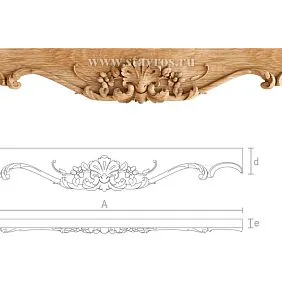


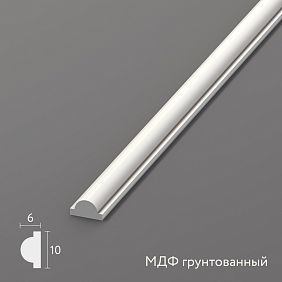
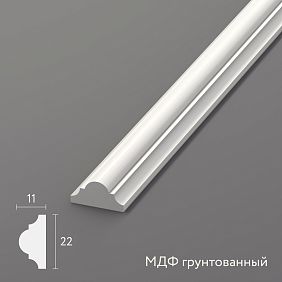
Ecological safety and health
Modern MDF panels meet the strictest ecological standards. E1 emission class guarantees formaldehyde levels safe for use in residential spaces. Additionally, applying primers and paints virtually eliminates any emissions.
It is important to note that quality details undergo a multi-stage quality control. Each batch is tested for compliance with sanitary and hygienic norms, confirmed by appropriate certificates.
Get Consultation
MDF detail assortment: from simple to exclusive
Moldings: the foundation of architectural expressiveness
Moldings for painting These linear details play multiple roles: from visually dividing planes to creating complex architectural compositions.
Moldings classified by purpose include:
● Wall profiles — for horizontal division of walls and creating panel compositions
● Ceiling cornices — for decorating the transition between wall and ceiling
● Door and window casings — for decorative framing of openings
● Furniture profiles — for edge finishing and creating relief surfaces
Profile geometry impresses with its variety. Simple rectangular cross-sections are ideal for minimalist interiors. Complex multi-step profiles with alternating convex and concave elements create rich light and shadow play characteristic of classical styles.
Baseboards: the finishing touch of perfection
— is a horizontal element that frames the room at the bottom of the walls where the wall meets the floor. Skirting boards perform several functions: they hide the technological gap between the wall and floor covering (necessary for thermal expansion), protect the lower part of the wall from mechanical damage, create visual completion, and may conceal wiring. Baseboards are not just a functional element covering the gap between floor and wall. Modern baseboards are complex architectural details capable of radically changing the perception of space.
The height of the baseboard directly affects the visual proportions of the room. Narrow profiles 40-60 mm high are suitable for compact rooms with low ceilings. Wide baseboards 100-150 mm high are appropriate for spacious rooms with high ceilings, where they emphasize the scale of the space.
Modern technologies allow creating baseboards with built-in cable channels. This feature is especially relevant in the era of smart homes, where the amount of wiring constantly increases. Concealed cable installation ensures interior aesthetics without compromising functionality.
Cornices and ceiling elements
MDF Cornices for Painting These grand elements create the solemnity of classical interiors. These large-scale details require special attention to proportions and quality of execution.
Ceiling cornices serve not only a decorative function. They visually lift the ceiling, making the room more impressive. A properly designed cornice can hide ceiling imperfections and create a perfectly straight transition line.
The complexity of the cornice profile is determined by the interior style. Baroque interiors require abundant decoration with multiple protrusions and recesses. Empire style implies strict geometric forms. Modern trends favor minimalist profiles with clearly defined geometry.
Specialized elements for professional use
Door and window casings
MDF door and window casings for painting These are high-tech items requiring precise manufacturing down to fractions of a millimeter. Minor deviations in geometry become noticeable after installation and may spoil the overall impression of the interior.
Modern moldings often have a complex variable profile, creating a perspective effect. Such items are manufactured on special CNC equipment, ensuring absolute repeatability of geometry.
The width of moldings varies from 60 to 120 mm depending on the scale of the opening and the overall interior style. Narrow moldings suit modern minimalist solutions. Wide profiles are appropriate for classic interiors, where they emphasize the prominence of openings.
Corner and decorative elements
Corner decorative elements ensure professional quality of linear elements installation. These small but critically important details conceal joints and create visual continuity of decorative compositions.
External corners experience increased mechanical loads and require particularly strong materials. High-quality corner elements are made from high-density MDF with additional reinforcement at areas of maximum load.
Internal corners are less loaded, but no less important for overall perception. They must precisely match the profile of main elements, ensuring smooth transitions and absence of visual breaks in decorative lines.
Decorative overlays and rosettes
Decorative Accents for Furniture made from MDF open up unlimited possibilities for interior customization. Modern 3D milling technologies allow creating overlays with complex spatial geometry, imitating hand-carved woodwork.
The thematic scope of decorative elements covers all historical styles and modern trends. Plant motifs in the modern style, geometric compositions of art deco, classical rosettes and garlands — everyone can find elements matching their taste and interior concept.
Relief depth varies from 5 to 25 mm depending on the size of the element and its purpose. Small details have shallow relief, which does not disrupt the overall composition. Large central elements may have significant detailing depth, creating expressive accents.
Painting technology: from preparation to finish
Preparation stage: the foundation of quality
The success of painting work is 80% determined by the quality of surface preparation. MDF for Painting requires a special approach, taking into account the material's specific characteristics.
Primary processing includes removing dust and contaminants with a dry brush or compressed air. The surface must be absolutely clean — even the tiniest particles of dust will appear under the paint layer as unevenness.
Priming is performed with specialized MDF primers. Primer performs several functions: ensures adhesion, equalizes the surface's absorbency, prevents moisture from paint penetrating the material. High-quality primer is applied in two thin layers with intermediate drying.
Selection of paint and coating materials
The modern market offers numerous painting systems for MDF. The choice of a specific type of paint depends on the operating conditions and requirements for appearance.
Acrylic water-based enamels — optimal choice for interior work. They dry quickly, have no strong odor, provide durable coating with good decorative properties. Modern acrylic systems allow achieving coatings of various gloss levels — from deep matte to high gloss.
Polyurethane enamels are used for elements subjected to intensive use. They have increased resistance to mechanical impacts, but require longer polymerization time.
Alkyd enamels provide a classic coating with deep gloss, but have long drying time and strong odor during application.
Installation and mounting: professional technologies
Foundation preparation and marking
Quality installation begins with careful surface preparation. Walls must be leveled with plaster or drywall. Permissible deviations from flatness must not exceed 2 mm per linear meter.
Marking is performed using laser or water levels. Horizontal elements are marked along a single base line, vertical elements — using a plumb bob. Special attention is paid to corner joints, which must be executed with maximum precision.
Fastening systems and connection technologies
The choice of fastening method depends on the size and weight of the elements. Lightweight profiles up to 15 mm thick can be fastened with special adhesive. Heavier elements require mechanical fastening.
Adhesive fastening is used for small decorative elements. Modern polyurethane adhesives provide strong bonding and allow compensating for minor base irregularities. Open time is 10–15 minutes, sufficient for precise positioning of elements.
Mechanical fastening is performed using self-tapping screws through previously drilled holes. Screw heads are countersunk 2–3 mm and filled with putty. After drying, fastening points are sanded to achieve a smooth surface.
Jointing and corner connections
The quality of corner connections largely determines the overall impression of the work. Several technologies exist for executing corners:
Butt joint is the most common method for profiled elements. The ends are beveled at a 45° angle using a fine-toothed circular saw. The cut quality must be perfect — even small chips will be noticeable after painting.
Connection with overlay corner elements is used for complex profiles where precise beveling is difficult. Special corner elements conceal joints and provide a professional finish.
Stylistic solutions and design techniques
Classic interiors: traditions and modernity
In classic interiors, MDF elements serve as carriers of architectural traditions. Molding and crown profiles replicate historical orders, creating the atmosphere of palace halls.
Baroque interiors require abundant decoration with rich carving and complex multi-step profiles. Crown moldings reach widths of 200–300 mm and have up to 7–9 steps of varying configurations. Decorative overlays include floral ornaments, garlands, and deeply relief rosettes.
Neoclassicism implies a more restrained approach with clear proportions and geometric forms. Profiles are based on classical models with proper alternation of architectural elements — moldings, curved elements, and baseboards.
Modern styles: minimalism and high-tech
Modern styles use MDF elements as a means to create clear architectural lines. Simple rectangular molding profiles emphasize the geometry of space without distracting from main volumes.
Minimalism requires extreme simplicity of forms. Moldings have simple geometric profiles without decorative elements. The color palette is limited to neutral tones — white, gray, black.
Scandinavian style prefers light tones and natural textures. MDF elements are painted white or coated with finishes mimicking light wood species.
Economic aspects and material calculation
Procurement planning and material requirement calculation
Professional procurement begins with accurate material requirement calculation. For linear elements, calculation is based on the room's perimeter, accounting for all openings and architectural features.
Basic calculation includes:
● Measuring the room's perimeter
● Subtracting opening sizes
● Adding 10–15% for beveling and potential defects
● Accounting for product transport length (usually 2.4–2.7 m)
Additional elements are calculated individually:
● Corner elements — by number of corners
● Decorative overlays — according to the design plan
● Fastening elements — one fastener per 40–50 cm
Comparative cost of different solutions
Using MDF elements ensures optimal price-to-quality ratio. Comparison with alternative materials shows significant advantages:
MDF vs solid wood:
● MDF cost is 3–5 times lower
● No natural defects
● Geometric dimensions stability
● Ready for painting without additional treatment
MDF vs polyurethane:
● Ability to create unique profiles
● Better repairability
● Ecological safety
● Ability for multiple repaints
Material quality control and acceptance
Criteria for quality assessment
When receiving materials, it is important to conduct a thorough inspection to identify possible defects. Quality MDF parts must meet the following requirements:
Geometric parameters:
● Deviation in length no more than ±2 mm
● Deviation in width and thickness no more than ±0.5 mm
● Curvature no more than 2 mm per meter of length
● Profile accuracy along the entire length of the item
Surface quality:
● No chips or dents
● Uniform color and texture
● Smooth surface without roughness
● Clear relief of milled elements
Storage and Transportation Conditions
Proper storage ensures material integrity until use. MDF parts require special conditions:
Temperature and humidity regime:
● Temperature 18-25°C
● Relative humidity 60-70%
● Protection from direct sunlight
● Good room ventilation
Storage conditions:
● Horizontal position on flat pallets
● Spacers between layers for ventilation
● Protection from mechanical damage
● No contact with wet surfaces
Frequently asked questions
What advantages do MDF parts have over solid wood products?
MDF provides dimensional stability, absence of natural defects, homogeneous structure for quality milling, and significantly more affordable cost with comparable operational characteristics.
Can MDF parts be used in rooms with high humidity?
Standard MDF parts are recommended for use in environments with humidity not exceeding 70%. For bathrooms and other humid areas, choose moisture-resistant MDF grades or provide additional protection with special coatings.
What paint is best for painting MDF parts?
For interior use, acrylic water-based enamels are optimal, providing durable coverage, quick drying, and health safety. For elements with higher performance requirements, polyurethane enamels are suitable.
How long does it take to manufacture custom MDF parts?
Manufacturing time depends on the profile complexity and order volume. Standard profiles are produced within 3-7 working days; complex decorative elements with custom design may require 10-14 days.
How to correctly calculate the material quantity for a project?
Calculation is based on the room’s perimeter, accounting for all openings. An additional 10-15% is added for trimming and potential damage. Additional elements (corners, overlays) are calculated individually according to the project.
Can MDF parts be reused during renovation?
With careful dismantling, MDF parts can be reused after appropriate surface preparation and, if necessary, repainting. However, potential damage from removing fasteners should be considered.
What tools are needed for self-installation?
Basic set includes: a circular saw with a fine-toothed blade, drill, screwdriver, level (preferably laser), measuring tape, marking pencil, MDF adhesive, appropriate fasteners.
How to care for MDF parts after installation?
Regular cleaning with a soft damp cloth, avoiding abrasive cleaners, controlling room humidity. Repainting may be possible without dismantling elements after appropriate surface preparation.
Conclusion: STAVROS – your reliable partner in the world of quality solutions
Choosing quality MDF parts determines the success of any interior project. In the context of increasing demands for eco-friendliness, aesthetics, and material durability, MDF products represent the optimal solution for professionals and private clients.
For many years, STAVROS has held leading positions in producing high-quality MDF parts. Our production is equipped with modern European equipment, enabling the creation of items with precision down to fractions of a millimeter. A team of experienced technicians and designers continuously works to expand the product range and improve product quality.
STAVROS offers a full service cycle – from consultation on selecting optimal solutions to technical support during installation. Our specialists will help calculate the exact amount of materials, select optimal profiles for a specific project, and advise on installation and finishing details.
Investing in STAVROS products means you receive not just quality materials, but also confidence in the longevity of the result. Our products will serve as a reliable foundation for realizing the most ambitious design projects, highlighting your professionalism and commitment to perfection in every interior detail.


