Article Contents:
- Introduction: The Importance of Decorating Wooden Walls
- 1. Main Advantages of Natural Wood for Wall Decoration
- Ecological and natural properties
- Strength and durability
- Natural Aesthetics
- Thermal and acoustic insulation
- 2.1 Wooden Panels
- 2.2 Decorative Planks
- 2.3 Decorative Molding
- 2.4 Decorative Cornices
- 2.5 Protective Skirting Boards
- 2.6 Additional Elements: Board and Angle Bracket
- Modern Wood Processing Methods
- Installation of finishing materials
- Classic style
- Modern minimalism
- Eco-Interiors
- Industrial and loft interiors
- Key Factors When Choosing Materials for Decoration
- Care Tips for Wooden Materials
- Innovative technologies
- Ecological sustainability and development
- Personalization and individual solutions
- Classic Interiors
- Modern Minimalist Solutions
- Eco-Interiors
- Loft and Industrial Styles
- Where to Buy Materials for Decorating Wooden Walls
- Selection Factors
- Maintenance and operation
- Technological Innovations
- Ecological Awareness
- Individualization and Personalization
Wooden walls are not only a foundation of traditional design, but also one of the most eco-friendly and aesthetically pleasing ways to create a cozy interior. Natural wood possesses a unique texture, warm tones, and durability, making it an indispensable material for decorating residential and commercial spaces. Modern technologies allow the use of wood in the most diverse variations — from classic cladding to innovative design solutions. In this article, we will examine materials for decorating wooden walls, their types, advantages, processing methods, care tips, and provide recommendations for choosing quality products.
For convenience of search and ordering quality materials, you can use the siteMaterials for finishing wooden walls, which offers a wide range of products, including moldings, cornices, skirting boards, and other elements.


Introduction: The Importance of Decorating Wooden Walls
Decorating wooden walls is an important stage in creating an interior, where natural wood serves not only as a decorative element but also as a functional covering that improves the microclimate in the room. Wooden walls provide excellent thermal insulation, sound insulation, and help regulate air humidity. With proper selection and treatment, wood retains its unique properties for decades.
Today, thanks to innovative processing technologies, natural wood can be used in the most diverse styles — from classic to ultra-modern minimalism. It can complement any interior, giving it a special charm, naturalness, and coziness. In this article, we will thoroughly examine what materials for decorating wooden walls exist, their features, and also tell about key products, such asWooden molding, Wooden cornice, Wooden baseboard, Wooden plank, Wooden beam andWooden corner.




1. Main Advantages of Natural Wood for Wall Decoration
Our factory also produces:


Ecological and natural properties
Natural wood is an eco-friendly material, free of synthetic components and harmful substances. It contributes to creating a healthy atmosphere in the room, as it 'breathes', regulates humidity, and improves acoustics. Using natural wood is especially relevant for residential homes, where concern for health and eco-friendliness of materials is paramount.
Get Consultation
Strength and durability
High-quality wood, properly treated and protected, can serve for decades. Strong species such as oak, beech, ash, and walnut are characterized by high density and resistance to mechanical damage. This makes wooden walls not only aesthetically appealing but also extremely reliable.
Natural aesthetics
Wooden finishing elements have unique textures and shades, giving interiors a special individuality. The natural beauty of wood does not require unnecessary artificial additions—it is itself a work of nature. Wooden finishing materials create a sense of warmth, coziness, and natural harmony.
Thermal and acoustic insulation
2. Types of materials for finishing wooden walls
2. Types of materials for finishing wooden walls
2.1 Wooden panels
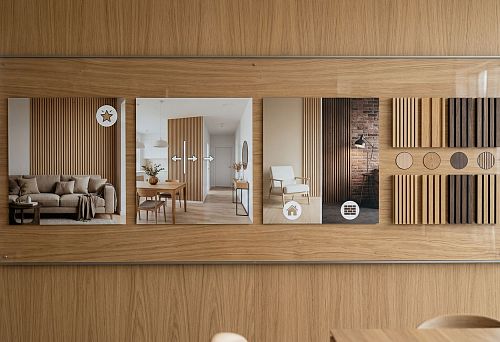
Wooden panels are one of the most popular ways to finish walls in wooden houses. They can be made from solid wood or composite materials with a natural wood imitation.
● Advantages:
○ High thermal and sound insulation.
○ Appealing appearance with natural texture and shades.
○ Possibility of creating various design compositions due to the variety of finishes and shapes.
● Application:
○ Panels can be used to decorate both interior and exterior walls. They look great in living rooms, bedrooms, offices, and other rooms where aesthetics and eco-friendliness are important.
2.2 Decorative battens
Wooden plank – a thin finishing element used to create decorative inserts and panels on walls. Battens can be smooth or have decorative relief, allowing for variation in appearance and emphasizing the interior’s individual style.
● Advantages:
○ Ease of installation.
○ High aesthetic value due to the natural wood texture.
○ Possibility of use in various design solutions—from classic to modern.
● Application:
○ Battens can be used as a standalone decorative element or in combination with other materials, creating complex compositional solutions on walls.
2.3 Decorative moldings
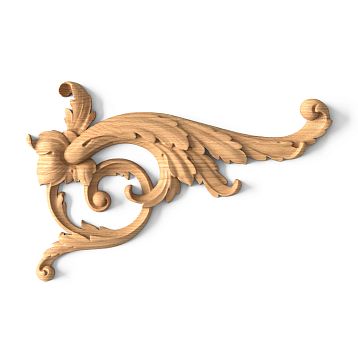
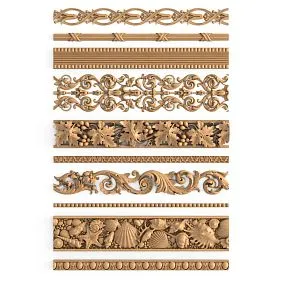
Wooden molding – a decorative element used to finish joints between surfaces, create smooth lines, and highlight architectural details. Moldings can have complex profiles, carvings, and decorative patterns, making them an important element in both classic and modern design.
● Advantages:
○ Give walls a finished and elegant look.
○ Emphasize high-quality finishing.
○ Possibility of individual customization to match a specific design.
● Application:
○ Moldings are used to create accent zones, finish transitions between walls and ceilings, and decorate furniture and doorways.
2.4 Decorative cornices
Wooden cornice – a finishing element used to decorate windows, doors, and transitional zones between different interior elements. Cornices help conceal technical seams, create visual unity in space, and can serve as supports for textile elements such as valances or curtains.
● Advantages:
○ Create an effect of smooth transition between ceiling and wall.
○ Emphasize the height of the room, visually expanding the space.
○ Give the interior a finished and neat appearance.
● Application:
○ Cornices are actively used in room finishing where harmony and strict lines are important.
2.5 Protective baseboards
Wooden baseboard – a classic finishing element used to conceal technical seams between wall and floor. Baseboards protect the lower part of walls from dirt and damage, and also give the interior a neat and finished look.
● Advantages:
○ Provide wall protection.
○ Complete the finish decoration composition.
○ Can be executed in various styles – from simple to carved.
● Application:
○ Baseboards are used in all types of interiors – from classical to modern, complementing the overall design concept.
2.6 Additional elements: block and corner piece
Wooden block and wooden corner piece – these are additional elements that play an important role in wall finishing and structural joints.
● Wooden block:
Used to create frames, decorative inserts, and frames. It emphasizes the strength of the structure and gives the interior a defined structure.
● Wooden corner piece:
Used to reinforce joints, especially at panel or board junctions. Corner pieces help prevent gaps and cracks, ensuring the longevity of the finish.
These elements complement the overall look and make wooden wall finishes stronger and more aesthetically pleasing.
3. Processing and installation technologies for finishing materials
Modern Wood Processing Methods
Modern technologies allow achieving maximum precision while preserving the natural beauty of wood. Key processing stages include:
● CNC machines:
Allow creating items with precise decorative patterns, perfectly straight edges, and complex profiles, which is especially important forwooden moldings.
● Laser cutting:
Used to create detailed elements such as decorative boards and moldings, opening up possibilities for realizing the most daring design ideas.
● Multi-stage sanding and polishing:
These processes ensure a perfectly smooth surface, allowing the natural texture and color of the wood to stand out. After sanding, protective coatings – varnishes, oils, or waxes – are applied to protect the material from moisture, UV rays, and mechanical damage.
Installation of finishing materials
Correct installation is the key to the longevity and aesthetic appeal of wooden walls. The installation process includes:
● Base preparation:
Before installation, it is necessary to ensure that the wall is flat and ready to receive finishing materials. This may include preliminary sanding and leveling the surface.
● Fastening and securing:
Each element, whether a wooden board, wooden block, wooden baseboard, wooden cornice, or wooden molding, is secured using quality fasteners, ensuring reliable adhesion and preventing displacement of the structure.
● Final finishing:
After installation, final processing is performed – application of protective coatings that give the item a shine and protect it from external influences. This is especially important for maintaining the original appearance and longevity of wooden finishing materials.
4. Application of materials for finishing wooden walls in interior design
Classic style
In classical interiors, wall finishing is often done using decorative elements such asWooden moldings, wooden baseboards and wooden cornices. These elements add elegance and luxury to the room. In classical interiors, large panels and decorative inserts are used to create a sense of richness and harmony.
Modern minimalism
Modern interiors are often characterized by simplicity, minimalism, and functionality. In minimalist design, wooden materials are used in the form of smooth surfaces and simple geometric shapes. Here, the focus is on the natural tones and textures of wood. Elements such as wooden trim and wooden corner pieces help create clear lines and a structured space that looks modern and stylish.
Eco-interiors
In eco-style interiors, harmony with nature is essential, so natural wood takes center stage. Here, eco-friendly materials and finishes are used to preserve the natural beauty of wood. Such interiors are distinguished by the use of natural tones, textures, and minimal synthetic elements.Materials for finishing wooden walls are ideal for creating an eco-interior, as they help create a healthy microclimate and highlight the natural richness of wood.
Industrial and loft interiors
In loft and industrial interior designs, wooden finishing materials are used to create contrast with cold metallic and concrete elements. Here, natural wood can serve as a warm, contrasting element that softens the industrial look. Finishing elements such as wooden baseboards and wooden cornices help create a balance between strict lines and the natural texture of wood.
5. Practical recommendations for selection and purchase
Key factors when selecting finishing materials
When selecting finishing materials for wooden walls, the following aspects must be considered:
● Raw material quality: Natural wood should be uniform, free of defects, knots, and cracks. High-quality raw material is the guarantee of durability and aesthetic appeal of the product.
● Processing technologies: Items that have undergone multi-stage sanding, polishing, and protective coating treatment possess ideal smoothness and resistance to external influences.
● Design compatibility: Choose materials that harmoniously fit into the overall interior or exterior style. Modern finishing materials offer a wide range of options — from classic carved designs to minimalist solutions.
● Supplier reliability: Pay attention to the company’s reputation, customer reviews, and presence of quality certificates. A reliable supplier, such asStavros, guarantees timely delivery and high product quality.
Care tips for wooden materials
To ensure wooden finishing materials retain their original beauty and longevity, it is recommended:
● Regular cleaning: Wipe surfaces with a soft cloth, avoiding aggressive cleaning agents.
● Periodic treatment with protective compounds: Renewing varnish, oil, or wax helps maintain color saturation and protects wood from moisture and ultraviolet rays.
● Monitoring condition: Regularly inspect items for cracks or scratches and promptly carry out repair work.
6. Modern trends and development prospects
Innovative Technologies
With the development of digital technologies and wood processing methods, the possibilities for using natural wood have significantly expanded. Modern CNC machines, laser cutting, and digital modeling allow creating items with high precision, complex decorative patterns, and perfectly smooth surfaces. This opens new horizons for designers, enabling them to bring even the boldest ideas to life.
Ecological Sustainability
Natural wood is a renewable resource, making it especially attractive in the context of modern eco-awareness. Using eco-friendly finishing materials processed with certified compounds contributes to creating a healthy and safe interior. The eco-friendliness of natural wood also helps reduce environmental impact, which is an important aspect of sustainable development.
Personalization and individual solutions
Modern designers strive to create unique interiors that reflect the owner’s individuality. Natural wood is easily customizable: choosing wood species, processing, color tones, and decorative elements allows creating items that fully meet the client’s wishes. Customized solutions help emphasize the style and character of the space, making each project exclusive.
7. Examples of successful projects
Classic interiors
In classic interiors, finishing wooden walls using natural panels, moldings, cornices, and baseboards creates an atmosphere of nobility and tradition. Carved patterns, rich textures, and warm wood tones give the space elegance and uniqueness. Such projects often include the use of high-qualitymaterials for finishing wooden walls, allowing to create a harmonious and finished look.
Modern minimalist solutions
Modern minimalist interiors are characterized by clean lines, simple forms, and functionality. In such projects, finishing wooden walls can be done using smooth panels and minimalist decorative elements. Natural wood in this case serves as a neutral background, highlighting the natural beauty of the material. Elements such asWooden plank andWooden corner, create accents and structure the space, making the interior modern and stylish.
Eco-interiors
Eco-interiors strive for the most natural and eco-friendly design. In such projects, only natural materials processed with eco-friendly compounds are used. Finishing wooden walls with natural panels, supplemented bywooden moldings andwooden trim, creates an atmosphere close to nature and contributes to creating a healthy microclimate in the home. Such interiors are distinguished by harmony with nature, warmth, and coziness, which is especially valued by modern homeowners.
Loft and industrial styles
In loft and industrial interiors, natural wood is used as a contrasting element. Wooden finishing materials, such as wooden cornices and wooden baseboards, combine beautifully with rough materials such as concrete, metal, and glass. In such projects, clarity of lines and functionality are important, and natural wood helps add warmth and coziness, softening the industrial look.
8. Practical tips for selection and purchase
Where to buy materials for finishing wooden walls
When selecting materials for finishing wooden walls, it is important to find a reliable supplier offering high-quality products. It is recommended to pay attention to specialized companies, such asStavros, which offer a wide range of products, includingmoldings, cornices, skirting boards, Wooden beam, Wooden plank andWooden cornerSuch a supplier guarantees high-quality materials, compliance with standards, and timely delivery, which is especially important when implementing large projects.
Factors for Selection
When selecting materials for finishing wooden walls, pay attention to:
● Material quality: Natural wood should be uniform, free of visible defects, knots, and cracks. This ensures the longevity and aesthetic appeal of the finish.
● Processing methods: Items that have undergone multi-stage sanding, polishing, and protective coating treatment retain their beauty and resistance to external influences.
● Design and style: Choose materials that harmoniously fit into the overall concept of your home’s interior or exterior. Modern technologies allow creating a wide range of products—from classic to ultra-modern solutions.
● Reviews and reputation: A reliable supplier with positive reviews will help avoid quality issues and ensure long-term cooperation.
Maintenance and Operation
To ensure wooden finishing materials retain their properties for many years, it is necessary to follow simple care rules:
● Regular cleaning: Use soft cloth materials to wipe surfaces, avoiding aggressive cleaning agents.
● Periodic treatment: Refreshing the protective coating (varnish, oil, or wax) will help preserve color saturation, gloss, and protective properties of the wood.
● Preventive inspection: Regularly check the condition of finishing elements, especially at joints, to promptly detect and address minor damage.
9. Development Prospects and Innovative Trends
Technological Innovations
Modern wood processing technologies continue to improve. Latest methods, such as laser cutting, digital modeling, and use of CNC machines, allow creating items with incredible precision and complexity of decorative patterns. This opens new opportunities for designers, enabling them to realize the most daring ideas in wooden wall finishing.
Environmental Awareness
With growing consumer environmental awareness, natural wood becomes especially sought-after material. Eco-friendly coatings certified according to international standards allow creating a safe and healthy interior. Using renewable resources and eco-friendly technologies contributes to sustainable development and reduces environmental impact.
Individualization and Personalization
Modern interiors strive for individuality. Personalized solutions in wooden wall finishing allow creating a unique space reflecting the owner’s taste and preferences. From selecting wood species to detailed processing of elements—every detail can be adapted to a specific project, making the interior exclusive.
10. Conclusion
Materials for finishing wooden walls are not just interior elements, but true works of art, combining centuries-old craftsmanship traditions and modern innovative technologies. Natural wood, thanks to its unique properties, creates an atmosphere of warmth, coziness, and natural harmony. Using such items asmoldings, cornices, skirting boards, Wooden beam, Wooden plank, Wooden baseboard, Wooden cornice andWooden corner, allows achieving a harmonious and functional interior that pleases the eye and serves for decades.
When selecting materials for finishing wooden walls, it is important to consider the quality of raw materials, processing technologies, and design compatibility with the interior. Modern innovative methods allow creating items that combine high functionality, aesthetic expressiveness, and ecological safety. Investing in quality finishing materials is a guarantee of your home’s longevity, ecological safety, and comfort.
Natural wood not only gives the interior a distinctive character but also symbolizes traditions, beauty, and natural harmony. Choose only proven suppliers, for example, on the siteMaterials for finishing wooden walls, which offer a wide range of products capable of meeting even the most demanding requirements. Let every element of your interior—from decorative moldings to functional skirting boards—become a reflection of your commitment to quality, durability, and the natural beauty of wood.