Article Contents:
- Philosophy of a hybrid approach: when the whole is greater than the sum of its parts
- Technical advantages of the combination: practicality and beauty
- Weight and loads
- Moisture Resistance and Stability
- Variety of forms
- Project Economics
- Zoning by materials: who is in charge where
- Vertical division: wood at the bottom, polyurethane at the top
- Functional division: wood for touch, polyurethane for contemplation
- Style division: polyurethane for ornamentation, wood for structure
- Color harmony: unity through shades
- Monochromatic white
- Contrast of Wood and White
- Uniform tinting
- Shade gradation
- Style interpretations: from classic to contemporary
- Classicism
- Provence
- Contemporary
- Eclecticism
- Installation practice: specifics of working with different materials
- Installation of Polyurethane Stucco
- Installation of wooden trim
- Coordination of work
- Furniture and accessories: continuation of the theme
- Solid wood furniture
- Staircase elements
- Decorative elements
- Economic aspects: a sensible approach
- Budget Optimization
- Long-term perspective
- Added value
- Maintenance and care
- Polyurethane moldings
- Wooden elements
- Create a harmonious interior with STAVROS
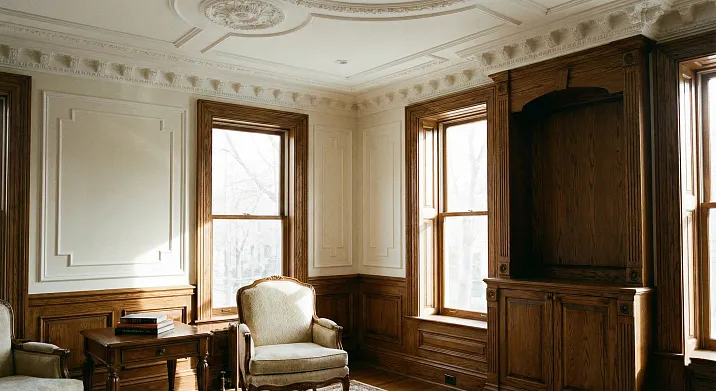
Interior design is the art of combining opposites, where different materials do not compete but complement each other, creating a multi-layered, rich composition.Combining moldings and wood— it is an alliance of two materials with different characteristics but a common aesthetic mission: to decorate space, give it architectural expressiveness, create an atmosphere of completeness and thoughtfulness.Polyurethane and solid wood in interior design— work on the principle of mutual complementation — the modern technological nature of polyurethane compensates for its synthetic origin with the naturalness of wood, while wood is enriched by the lightness and variety of forms of polyurethane moldings.
Why this combination works? Because each material occupies its own ecological niche in the interior, using its strengths.Polyurethane moldings— ideal for ceilings and upper wall zones, where lightness, complexity of forms, and moisture resistance are important.Wooden trim— indispensable in lower zones, in areas of hand contact, where tactile sensation, naturalness, and the warmth of a living material are valued.Combined finishingIt allows you to get the best of both worlds — beauty and practicality, tradition and modernity, luxury and reason.



Philosophy of the hybrid approach: when the whole is greater than the sum of its parts
Monoculture of material in interior — when everything is made from one — often looks monotonous and boring. A fully wooden interior may seem heavy and overloaded. A fully polyurethane one — cold and artificial. But when these materials meet, a dialogue is born, dynamics are created, visual interest emerges.
Combined finishingIt works on several levels of perception. Visually, it creates diversity of textures and surfaces.molded decoration made of polyurethaneIt has an ideally smooth, uniform surface that paints beautifully.Wooden elementsThey carry the texture of growth rings, the pattern of fibers, natural variations in density. This difference makes the interior alive, preventing it from becoming faceless.
Tactilely, the difference is even more pronounced. Polyurethane is cold and smooth to the touch. Wood is warm, with a pleasant roughness of structure. When a person touches thewooden handrailorskirting board, he receives a tangible confirmation of quality and naturalness. PolyurethaneCorniceon the ceiling — which no one touches — does not need this tactile quality.
PsychologicallyCombining moldings and woodit creates a balance between luxury and coziness.polyurethane moldingson the ceiling — it is grandeur, representativeness, elegance.Wooden trimon walls and floor — it is homeliness, warmth, rootedness. Together, they create a space that simultaneously impresses and embraces.




Technical advantages of the combination: practicality and beauty
Besides aesthetics,Polyurethane and solid wood in interior designThey provide tangible practical benefits, using the strengths of each material.
Our factory also produces:


Weight and loads
decorative polyurethane elementsThey weigh 5-10 times less than similar wooden or plaster ones. This is critical for ceiling structures, especially on gypsum board suspended ceilings. A heavy wooden cornice may sag over time or even detach.polyurethane moldingsThey last for decades without risk of collapse.
Wooden elements are used where weight is not an issue, and even an advantage.baseboardSolid wood is stronger and more durable than polyurethane, better withstands vacuum cleaner impacts, furniture legs, and other mechanical stresses.
Get Consultation
Moisture resistance and stability
Polyurethane is completely insensitive to humidity.Ceiling moldingIt is ideal for bathrooms, kitchens, and other humid areas. It does not swell, deform, or crack under humidity fluctuations.
Wood reacts to humidity, expanding and contracting. But with proper treatment and in areas with stable microclimate, this is not a problem.Wooden moldingsIn living rooms with normal humidity, they serve for decades without deformation.
Variety of Forms
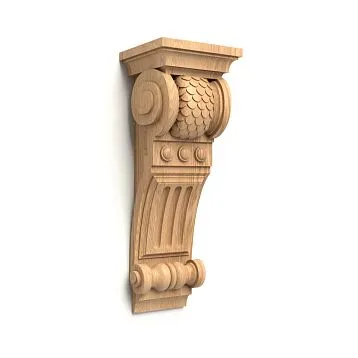
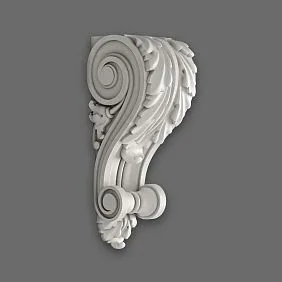
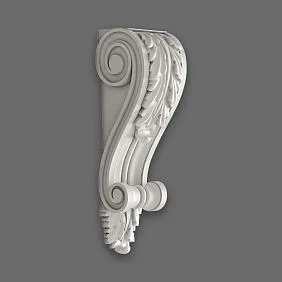
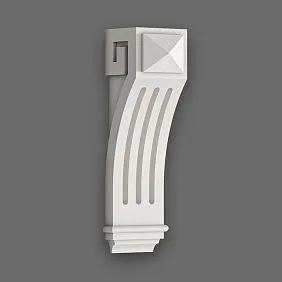
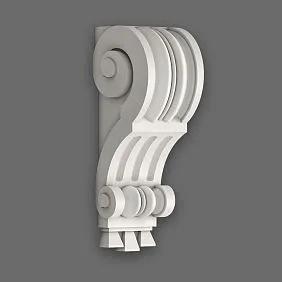
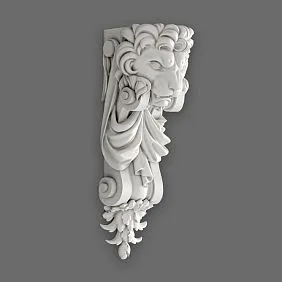
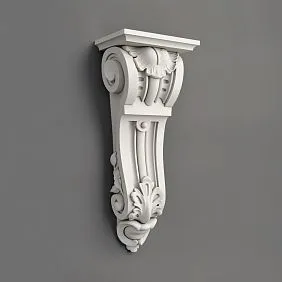
Polyurethane moldingsIt can have any desired complexity — from delicate curls to large sculptural elements. The molding technology allows creating details that are impossible or extremely expensive to carve from wood.Outlets, cartouches, Bracketswith delicate polyurethane carving are inexpensive and available in a vast variety.
Wood is limited in forms — straight profiles, precisely shaped elements, flat carving. But this limitation generates its own aesthetics — noble restraint, graphic clarity of lines, beauty of natural texture.
Project Economics
Combined finishingallows optimizing the budget. ExpensiveWooden elementsused where it is truly important — in the visual and tactile contact zones. Budget-friendlypolyurethane moldingson the ceiling creates no less decorative effect at lower costs. Proper material distribution provides maximum beauty within a reasonable budget.
Zoning by materials: who is in charge where
Key to successfulcombination of molding and wood— proper distribution of materials by room zones. Several proven schemes exist.
Vertical division: wood at the bottom, polyurethane at the top
The most logical and common scheme. The lower third of the wall — zone for wooden decor.wooden baseboardframes the floor. Above may be a zonewood panelsor simply painted wall. The boundary between lower and middle zones is marked bywooden molding.
The middle part of the wall may be neutral — just paint or wallpaper. Or decoratedpolyurethane moldingscreating classic frames. Polyurethane is suitable here — it is lighter, easier to install, and cheaper.
Upper zone — ceiling and frieze — realm ofpolyurethane molding. Ceiling cornice, light fixtures, Decorative panels— all made of lightweight polyurethane, which does not pose a risk of collapse.
Functional division: wood for contact, polyurethane for viewing
Another approach — use wood for all elements with which physical contact is possible.Wooden Skirting Boards, door casings, stair railings, wall moldingsat hand level — all solid wood.
Elements above human height, which no one touches —Ceiling moldingupper parts of wall panels, decor above doors — made of polyurethane. This saves budget without sacrificing perceptual quality.
Style-based division: polyurethane for ornaments, wood for structure
Third scheme — usepolyurethane moldingfor complex ornamental elements, and wood for simple structural ones.carved appliqués, light fixtures with scrolls, brackets with acanthus leaves— made of polyurethane, where complex shapes are achieved easily and affordably.
Straight linear elements —Baseboards, moldings-frames, simple profile cornices— made of wood, emphasizing structure and naturalness.
Color harmony: unity through shades
Successcombined finishlargely depends on the color solution. Different materials should be united by color into a harmonious composition.
Monochromatic white
The safest and most elegant solution — paint andmolding, andWooden elementsto white. The difference in materials remains noticeable through tactile sensation and slight difference in light reflection, but visually creates unity. White is universal, suitable for any style from classic to minimalism.
Contrast of wood and white
A more expressive option — preserve the natural wood color, covering it with oil or varnish, andpolyurethane moldingpaint it white.Wooden Skirting BoardsThe colors of oak or walnut create a warm contrast with whiteceiling cornice. This emphasizes the difference in materials, making it an aesthetic advantage.
Uniform tinting
You can paint both wood and polyurethane in one color — for example, gray, beige, pastel. This creates visual unity while preserving tactile differences.Wooden trimandMoldingsin one shade of gray creates an elegant, restrained interior.
Shade gradation
A complex solution for the experienced — use a shade gradation from dark to light as you move upward from floor to ceiling.Dark wooden skirting, medium-toned walls, lightceiling cornice made of polyurethane. This visually raises the ceiling, creating a sense of airiness and lightness.
Style interpretations: from classic to contemporary
Combining moldings and woodadapts to different styles, changing proportions and characteristics of elements.
Classicism
In a classic interior, both materials are used generously.polyurethane moldingsdecorates ceilings — multi-profile cornices, rosettes, coffered structures.Wooden elementsforms the architecture of walls — tall skirting, panels, molding frames, doorways. Everything is painted white or cream, creating a bright, formal interior.
Provence
Combined finishingIn Provence, it is more delicate.Simple moldingson the ceiling.Wooden panelsorBaseboardsin the lower zone, often artificially aged. Colors are pastel — whitewashed oak, soft grays, cream tones.
Contemporary
Modern style uses both materials minimally.Minimalist ceiling cornicemade of polyurethane.Wooden baseboardsimple rectangular profile. PossibleWooden plankson walls in combination withpolyurethane moldings. Colors are contrasting — dark wood and white molding.
Eclecticism
Mixing styles allows the most daring combinations.Baroque polyurethane roseon the ceiling in combination withminimalist wooden stripson walls.Classic wooden moldingswithmodern geometric polyurethane appliqués. Eclecticism requires boldness and sense of proportion, but the result can be unique.
Installation practice: features of working with different materials
Polyurethane and solid wood in interior designare mounted differently, requiring understanding of the specifics of each material.
Installation of polyurethane molding
decorative polyurethane elementsare attached with special adhesive. The surface must be clean, dry, primed. Adhesive is applied to the back of the element in strips or dots. The detail is pressed against the surface, aligned, and secured with painter's tape until the adhesive sets.
For large elements — wide cornices, heavy brackets — additional screws are used. After installation, screw heads are spackled. Joints between elements are also spackled, sanded, then painted.
Installation of wooden trim
Wooden moldings and baseboardsare mechanically fastened — with finish nails or screws. Modern method — using adhesive in combination with mechanical fastening. Adhesive ensures full-length contact, mechanical fastening secures until the adhesive dries.
Wood requires more careful angle fitting. Cuts must be perfectly precise, otherwise gaps will appear. After installation, joints are spackled with acrylic wood putty, sanded. Then everything is primed and painted or finished with oil.
Coordination of work
Whencombined finishimportant sequence. Usually, wooden elements are installed first — they are heavier and require more robust fastening. Then thepolyurethane moldings— it is lighter, installed more cleanly.
Final coating is applied simultaneously to all elements by one master using one material. This ensures color unity — even white has dozens of shades, and it is important to use one paint for all surfaces.
Furniture and accessories: continuation of the theme
Combining moldings and woodin architectural finishing sets the logic for choosing furniture and accessories.
Solid wood furniture
Classical furniture made of woodnaturally continues the theme of wooden trim.Furniture legscan repeat the profiles of baseboards and moldings.Wooden handlescorrespond withdoor appliqués.
Staircase elements
If there is a staircase in the house,Wooden balustersmust harmonize with wall decor. Their finely profiled edges can correspond with molding profiles.components for wooden staircases— balusters, handrails, treads — are painted to match the wooden trim.
Decorative elements
Carved decorative elementson furniture,shelf brackets, wooden valances for curtains— all this continues the theme of wood in the interior. Simultaneouslydecorative rose outletsor panels may have shapes that correspond withpolyurethane moldingon the ceiling.
Economic aspects: sensible approach
Combined finishingallows achieving an impressive result at reasonable costs.
Budget optimization
Wood is more expensive than polyurethane. UsingWooden trimonly where it is truly important — in contact zones and at eye level — you save up to 30-40% of the budget compared to full wooden finishing. At the same time, the perception quality is not compromised — in fact, the contrast of materials makes the interior more interesting.
Long-term perspective
You can buy ready-made stucco matching the Baroque style. Calculate the quantity: linear meters of cornices and moldings, number of rosettes, pilasters, consoles, corner elements. Add a ten to fifteen percent allowance for trimming.andWooden trim— an investment in longevity. Both materials, when properly installed and maintained, serve for decades. This is more cost-effective than cheap alternatives that need to be replaced every 5-7 years.
Added value
Qualityarchitectural finishingincreases the market value of real estate. An apartment withmoldingsandwooden decorsells for 10-15% more than a similar one without finishing. This pays for the initial investment.
Care and Maintenance
Polyurethane and solid wood in interior designrequire different care.
Polyurethane Moldings
Minimal care. Periodic wet cleaning with soft cloth.Polyurethane moldingsdoes not fear moisture, does not require special means. Every few years, you can refresh the paint if it has faded.
Wooden elements
Wooden trimunder the paint requires the same care as polyurethane. Natural wood under oil needs periodic renewal of the coating — reapplication of oil every 2-3 years. Minor damages are easily repaired locally.
Create a harmonious interior with STAVROS
Polyurethane moldings and wooden trim are not a compromise between materials, but a synthesis of their best qualities. This is the path to creating an interior that combines beauty and practicality, tradition and modernity, luxury and reason.Polyurethane moldings and wooden trim are not a compromise between materials, but a synthesis of their best qualities. This is the path to creating an interior that combines beauty and practicality, tradition and modernity, luxury and reason.
STAVROS offers everything needed to realize such projects. Our catalog contains more than 5900 itemssolid wood productsand full assortmentpolyurethane molding. Wooden trim— moldings, baseboards, cornices, door and window casings in oak, beech, ash, and pine.polyurethane moldings— cornices, moldings, rose outlets, covers, brackets of hundreds of models.
Our consultants will help select elements from different materials so that they perfectly match in style, scale, and color. We understand the logiccombined finish, know how to distribute materials for maximum aesthetic and economic effect.
We provide material samples so you can evaluate them firsthand, apply them to your walls, and understand how they will look. We calculate the required quantity, taking waste into account. We advise on installation or recommend trusted craftsmen.
Over twenty years of operation, STAVROS has realized hundreds of projects withwith the combination of moldings and wood. From modest apartments to palace interiors, from classic to modern — our experience covers the entire spectrum of solutions. We know what works and what doesn’t, and are ready to share this knowledge.
Visit our showroom in Moscow or Saint Petersburg. See ready-made compositions frompolyurethaneandwood, touch samples, feel the difference in materials. Our specialists will show you examples of completed projects, explain the nuances of combining materials, and answer all your questions.
STAVROS works only with proven manufacturerspolyurethane moldingand we ourselves produceSolid Wood Items. This guarantees stable quality, precise dimensions, and neat finishing. We deliver throughout Russia, carefully packaging each detail for safe transportation.
Your home deserves finishing that combines the best qualities of different materials.Harmony of polyurethane and solid wood— this is not just a design technique, but a philosophy of thoughtful interior approach. Beauty without sacrifice. Quality without extra cost. Tradition without conservatism.
Contact STAVROS today. Tell us about your project, your ideas, your budget. We will find the optimal solution that will turn your home into a space of harmony, where each material plays its part in the overall symphony of beauty and comfort. Begin your journey to the ideal interior with those who understand the value of proper material combination.