Article Contents:
- Organic Forms: When Architecture Grows Like Nature
- Biomorphic Moldings: Waves, Leaves, Branches
- Rosettes as Natural Mandalas
- 3D Panels with Natural Reliefs
- Columns and Pilasters with Organic Capitals
- Gradient Colors: Multi-layered Color Depth
- Vertical Gradients: From Ground to Sky
- Radial Gradients: From Center to Edges
- Ombre: Smooth Transitions on Panels
- Patina and Aging Effects with Gradient
- Sculptural Expressiveness: Moldings as Art
- Reliefs and High Reliefs: Three-dimensional Painting
- Sculptural Panels: Accents and Focal Points
- Asymmetric Compositions: Breaking the Rules
- Kinetic Effects: Illusion of Motion
- Aesthetic possibilities of modern decoration
- Lightness: Revolution in Installation
- Moisture Resistance: Decor for Any Room
- Durability: Longevity for Decades
- Easy Processing: Cuts and Adheres Easily
- Affordable Price: Luxury Without Extra Cost
- Stylistic Solutions: From Classicism to Futurism
- Classicism: Traditions in a New Material
- Neoclassicism: Simplified Elegance
- Art Deco: Geometric Luxury
- Minimalism: Concise Lines
- Futurism: Forms of the Future
- Practical Aspects: Selection, Installation, Painting
- How to Choose Quality Polyurethane
- Installation: simple technology
- Painting: limitless possibilities
- Frequently Asked Questions about Polyurethane Moldings
- Conclusion: a material that opens limitless possibilities

Polyurethane has revolutionized the world of molded decoration, freeing designers from the limitations of traditional materials and opening up limitless creative possibilities. In 2026, polyurethane molded decoration reaches new heights: organic biomorphic forms inspired by nature, complex gradient colorings that create depth and emotion, sculptural expressiveness that turns architectural elements into works of art. Polyurethane combines lightness, strength, moisture resistance, and accessibility, making it the ideal material for realizing the boldest design concepts.
Buying polyurethane molding means obtaining a material of the future, which does not fall short of traditional plaster in aesthetics but surpasses it in performance characteristics. Modern casting technologies allow relief detailing down to tenths of a millimeter, reproduce the most complex textures, and enable the creation of elements of any shape — from classical to futuristic. Polyurethane is used not only to produce traditional cornices and moldings, but also to create volumetric 3D panels, sculptural murals, architectural elements with built-in lighting, creating a new interior space aesthetic.



Organic Forms: When Architecture Grows Like Nature
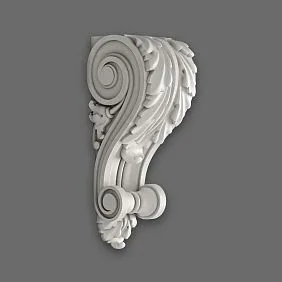
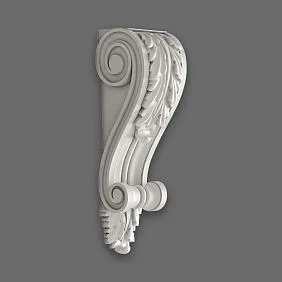
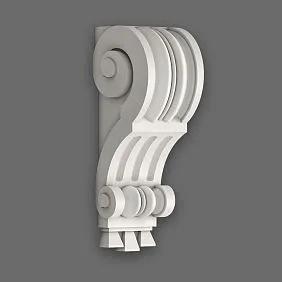
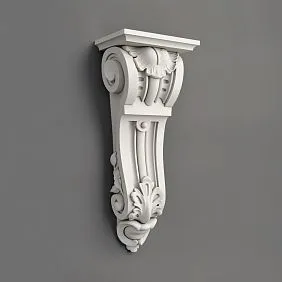
Organic design means abandoning strict geometry in favor of smooth, natural lines inspired by living nature. Polyurethane molded decoration is ideal for realizing organic forms: casting technology allows creating elements of any complexity, with flowing curves, asymmetrical contours, biomorphic outlines. Such decoration is perceived not as an artificial addition, but as a natural extension of architecture, as if grown from walls and ceilings.




Biomorphic Moldings: Waves, Leaves, Branches
Moldings no longer remain straight lines with geometric profiles. Organic moldings replicate the curves of waves, the contours of leaves, the silhouettes of branches. They can smoothly curve, creating wavy lines on walls, naturally framing arches and niches, forming asymmetrical compositions reminiscent of plant patterns. Such moldings soften space, add dynamism, and create a connection with nature.
Polyurethane allows reproducing the most complex organic profiles: a molding may have a variable cross-section, smoothly expanding and narrowing, the relief may imitate leaf veins, tree bark, or sea waves. Such detailing is impossible with hand-made plaster, but easily achievable with polyurethane casting. Polyurethane moldings appear alive, breathing, organically integrated into space.
Our factory also produces:


Rosettes as Natural Mandalas
Classic rosettes with symmetrical plant ornaments evolve into organic compositions resembling flowers, shells, snowflakes, mandalas. Molded decoration in the form of rosettes can have an asymmetrical structure, where petals of different sizes and shapes create a natural, unique composition. Such rosettes become not just a chandelier frame, but independent sculptural objects that attract attention.
Polyurethane allows creating rosettes with deep relief, multi-level structure, where each layer differs from the previous one. The center of the rosette may be convex or concave, petals may be twisted, textured, creating a complex play of light and shadow. Organic rosettes are especially effective under directional lighting, which reveals the entire depth of the relief, emphasizes the biomorphic forms.
Get Consultation
3D Panels with Natural Reliefs
Polyurethane 3D panels — a modern trend allowing to create textured walls with volumetric reliefs. Organic 3D panels imitate natural textures: tree bark, stone formations, water flows, mountain reliefs, sand dunes. Such panels cover walls completely or partially, creating accent zones that change the perception of space.
Relief can be deep — up to 5-7 centimeters — creating the effect of a real sculptural wall. Panels are installed flush, forming a seamless surface where the relief flows from one panel to another, creating an illusion of a single composition. Polyurethane panels of any size and shape are produced, allowing to create individual compositions tailored to specific spaces. The company STAVROS offers a wide selectionmoldings from polyurethane, including 3D panels with organic reliefs.
Columns and Pilasters with Organic Capitals
Classic columns and pilasters with order capitals (Doric, Ionic, Corinthian) are reinterpreted through the prism of organic design. Capitals may depict not traditional acanthus leaves, but modern plant motifs: tropical monsteras, palm branches, lotus flowers, abstract bioforms. The column shaft may have not classical fluting (vertical grooves), but organic relief imitating tree trunks, bamboo, marine algae.
Polyurethane allows creating lightweight columns and pilasters that do not impose load on the structure, yet appear massive and monumental. They may be hollow inside, further simplifying installation. Organic columns suit biophilic, eco-, and tropical interiors, where connection with nature and the feeling of being in a natural environment are important.
Gradient Colorings: Multi-layered Color Depth
The color of molded decoration is no longer flat or monochromatic. Gradient colorings — smooth transitions from one shade to another — create depth, volume, emotion. Polyurethane is ideal for gradient coloring: its smooth surface ensures even paint application, the relief emphasizes color transitions, creating additional visual complexity.
Vertical Gradients: From Ground to Sky
Vertical gradients on moldings, pilasters, panels imitate natural color transitions in nature: from dark at the base to light at the top, like a tree trunk growing toward light. Such coloring enhances the sensation of growth, verticality, and upward aspiration. Molded decoration with vertical gradient visually elongates space, making ceilings appear higher.
Gradient can be contrasting — from dark brown to beige, from graphite to white — or tonal — from rich emerald to light green, from deep blue to light blue. Transition can be sharp, with a clear boundary, or smooth, barely perceptible. Elements with pre-applied gradient are produced from polyurethane, or coloring is applied after installation, allowing to create a unique, individual solution.
Radial Gradients: From Center to Edges
Radial gradients on rosettes, murals, round 3D panels create an effect of radiation spreading from the center. The center may be dark and saturated, while the edges — light, or vice versa. Such coloring emphasizes the central composition, draws attention to the chandelier framed by the rosette, creating a focal point on the wall or ceiling.
Radial gradient can be monochromatic — shades of one color — or polychromatic — transition between different colors of the spectrum. For example, from yellow in the center through orange to red at the edges, imitating a sun disc or fire. Or from blue in the center through purple to pink, creating a cosmic effect. Buying molding with radial gradient means obtaining a unique art object that transforms space.
Ombre: smooth transitions on panels
Ombre technique — a smooth transition from one color to another across the entire surface — is especially effective on 3D panels covering large wall areas. Panels can have a gradient from floor to ceiling, from one wall edge to another, creating dynamism, movement, and visual expansion of space. Ombre can be horizontal, vertical, or diagonal.
Color combinations for ombre are chosen depending on the interior concept: natural transitions (from beige to terracotta, from olive to ochre), marine (from turquoise to blue), sunset (from yellow through pink to purple), monochromatic (from white to gray). Panels made of polyurethane are painted with ombre after installation, creating a seamless gradient surface across the entire wall.
Patina and aging effects with gradient
Patina — a technique for creating an effect of noble aging — can be combined with gradient, creating multi-layered complexity. The base layer is applied with gradient, then patina — dark paint or wax — is added, partially worn away and remaining in the recesses of the relief. This creates an effect of time and history, adding depth.
Gradient patina is especially effective on molded decoration with deep relief — rosettes, panels, capitals. Transition from light to dark with additional patina in recesses creates a three-dimensional effect, highlighting every detail of the ornament. Such coloring suits classical, vintage, and eclectic interiors, where complexity, multi-layeredness, and craftsmanship are valued.
Sculptural expressiveness: molding as art
Polyurethane molded decoration in 2026 strives for sculptural expressiveness, transforming from a decorative element into a work of art. Deep relief, complex detailing, artistic composition make each element unique, worthy of careful observation.
Bas-reliefs and high-reliefs: three-dimensional painting
Bas-reliefs — low reliefs where the image protrudes less than half its volume — and high-reliefs — high reliefs where the image protrudes more than half — are created from polyurethane with filigree precision. Narrative compositions, floral ornaments, abstract patterns, geometric patterns are reproduced with detail impossible by hand.
Bas-reliefs can cover entire walls, creating an effect of three-dimensional painting. Scenes from nature — forests, mountains, seas — are transferred to walls as relief compositions that change depending on lighting. High-reliefs become almost sculptures, protruding from the wall by 5–10 centimeters, creating a dramatic effect. Polyurethane allows creating bas-reliefs of any size and complexity, enabling custom compositions for specific projects.
Sculptural panels: accents and focal points
Sculptural panels — large decorative elements with three-dimensional relief — become the main accents of the interior. Panels can be placed above a bed headboard, above a fireplace, on the central wall of a living room, in a hallway. They are art objects telling a story, setting the mood, attracting attention. Themes can be classical — mythological scenes, ancient ornaments — or modern — abstract compositions, nature motifs, geometric patterns.
Polyurethane allows creating panels with deep relief, where every detail is meticulously crafted: flower petals, bird feathers, drapery folds, stone texture. After installation, panels are painted: they can be monochromatic, emphasizing relief through light and shadow, or polychromatic, where different elements are painted in different colors, creating a polychromatic composition. Molded decoration in the form of sculptural panels transforms the interior into an art gallery. Working withmolded panels, you can create unique accents.
Asymmetric compositions: breaking the rules
Classical symmetry gives way to asymmetry, where each element is unique, the composition is dynamic and unpredictable. Asymmetric molded decoration creates a sense of movement, growth, and organic flow. Moldings can follow irregular trajectories, rosettes can be offset from the center, panels can have different sizes and shapes.
Asymmetry does not mean chaos — it is a deliberate composition where balance is achieved not through mirror reflection, but through distribution of visual weights, color accents, and relief elements. Polyurethane elements for asymmetric compositions are created: moldings of different lengths and profiles, rosettes of different sizes, panels of unique shapes. Such decoration suits modern, avant-garde, and eclectic interiors, where individuality, boldness, and rejection of standards are valued.
Kinetic effects: illusion of movement
Relief compositions can create an illusion of movement, especially under proper lighting. Wavy moldings appear to float, spiral rosettes seem to rotate, diagonal panels appear to take off. This effect is achieved through shape, rhythm, and direction of elements, enhanced by gradient coloring, where color transition intensifies the sense of dynamism.
Kinetic compositions are especially effective under dynamic lighting, where the direction and intensity of light change. Hidden backlighting behind moldings, directional spotlights, colored LED strips create lighting scenarios in which molded decoration seems to come alive, change, and transform. Buying molding with kinetic effects means obtaining a dynamic, living space.
Technological advantages of polyurethane
Polyurethane is a material that combines the aesthetics of traditional molding with modern technological advantages.
Lightness: revolution in installation
Polyurethane molding is 5–7 times lighter than plaster. A 2-meter-long cornice made of polyurethane weighs 1–2 kilograms, while a similar one made of plaster weighs 7–15 kilograms. This radically simplifies transportation, storage, and installation. Polyurethane molding can be installed by one person without assistants, no special equipment is required, and no load is placed on ceilings and walls.
Lightness is especially important for ceiling elements — cornices, rosettes — which are mounted using adhesive without additional fasteners. Polyurethane holds firmly on adhesive, does not peel off, and does not deform over time. This allows creating complex multi-level ceiling compositions that would be impossible with heavy plaster.
Water resistance: decoration for any room
Polyurethane is absolutely water-resistant: it does not absorb water, does not swell, does not mold, does not deform. Polyurethane molding is suitable for bathrooms, kitchens, pools, saunas — rooms with high humidity, where plaster molding quickly deteriorates. Water resistance expands the possibilities of applying molded decoration, allowing to create luxurious classical or modern interiors in any area of the house.
polyurethane moldingpolyurethane moldingfor any room.
Durability: longevity for decades
High-density polyurethane (250-300 kg/m³) has high strength: does not break, does not crumble, withstands mechanical impacts. Accidental impacts, pressure during cleaning, temperature fluctuations do not damage polyurethane moldings. It retains the clarity of relief, does not wear, does not deform.
Durability is especially important for baseboards, door casings, and elements located in high-traffic zones. Polyurethane elements serve 30-50 years without losing aesthetics or functionality. This is a long-term investment in interior design, paying off over years of flawless service.
Ease of processing: cuts and adheres easily
Polyurethane cuts easily with a standard saw, circular saw, or installation knife. Angles are trimmed with a 45-degree mitre saw for neat joints. Elements are glued with special adhesive or liquid nails, joints are filled with acrylic sealant. Installation requires no professional skills — anyone can install it following instructions.
Ease of processing allows creating individual compositions: cutting elements to desired length, combining different profiles, creating unique frames and panels. Polyurethane easily enables complex corner joints, arched structures, and curved compositions. This opens up limitless creative possibilities.
Affordable price: luxury without extra cost
Polyurethane molding costs 3-5 times less than gypsum, yet matches it in aesthetics. A polyurethane cornice costs 200-500 rubles per linear meter, while gypsum costs 1000-3000 rubles. A polyurethane rosette costs 500-3000 rubles, while gypsum costs 3000-15000 rubles. This makes molding decoration accessible to a wide range of buyers, allowing creation of luxurious interiors without huge budgets.
Affordability does not mean compromise in quality. Modern high-density polyurethane reproduces details with precision down to tenths of a millimeter, has clear relief, smooth surface, and durability. Buying molding from polyurethane is the optimal solution for most projects.
Stylistic solutions: from classic to futurism
Polyurethane molding adapts to any style, from strict classicism to bold futurism.
Classic style implies using traditional elements: cornices with modillions and dentils, moldings with meanders and Ionic profiles, rosettes with acanthus leaves, pilasters with capitals. Polyurethane reproduces all classical ornaments with filigree precision, indistinguishable from gypsum or wooden analogs.
Polyurethane molding is painted in traditional colors: white, cream, with gilding or patina. It creates a classic interior — luxurious, solemn, timeless — yet it installs easily, costs affordably, and lasts long. Classicism becomes accessible thanks to polyurethane.
Polyurethane moldings are painted in traditional colors: white, cream, with gilding or patina. They create a classic interior, luxurious and solemn, timeless, yet are easy to install, affordable, and long-lasting. Classic style becomes accessible thanks to polyurethane.
Neoclassicism: simplified elegance
Neoclassicism simplifies classical forms, making them more restrained, adapting to modern proportions. Polyurethane cornices have simpler profiles, rosettes have fewer details, moldings have restrained relief. Color can be traditionally white or monochromatic — matching wall tones.
Neoclassical molding suits spacious apartments and mansions where elegance without excess, quality without ostentation is valued. Polyurethane elements look expensive and noble, yet do not overwhelm space.
Art Deco: geometric luxury
Art Deco combines geometric strictness with decorative luxury. Polyurethane molding in Art Deco style has stepped profiles, sun rays, zigzags, chevrons. Coloring is bold: gilding, silvering, black-and-white contrasts, gradients. Polyurethane creates complex multi-level cornices, large geometric rosettes, panels with Art Deco ornamentation.
Art Deco molding suits glamorous, maximalist interiors where luxury, theatricality, and sophistication are valued. Polyurethane allows realizing all Art Deco complexities without huge expenses.
Minimalism: clean lines
Minimalist polyurethane molding is extremely restrained: thin moldings, narrow cornices, geometric forms without ornamentation. Monochromatic coloring creates a bas-relief effect. Polyurethane elements are produced that do not attract attention but create architectural structure and completeness.
Minimalist molding suits modern, Scandinavian interiors where restraint, functionality, and absence of excessive decoration are valued. Polyurethane allows creating clean geometry, perfect joints, smooth surfaces.
Futurism: shapes of the future
Futuristic polyurethane molding rejects traditional forms in favor of bold, unexpected solutions. Asymmetric moldings, abstract rosettes, 3D panels with futuristic relief, elements with built-in lighting creating cosmic effects. Coloring is metallic, gradient, fluorescent.
Elements made from polyurethane appear to have come from the future: streamlined shapes, variable cross-sections, organic and geometric hybrids. Futuristic molding decoration suits avant-garde, high-tech, conceptual interiors. Working withinnovative polyurethane solutionscan create an interior of the future.
Practical Aspects: Selection, Installation, Painting
How to Choose Quality Polyurethane
The quality of polyurethane molding is determined by the material density, relief clarity, and dimensional accuracy. Density should be at least 200 kg/m³, ideally 250-300 kg/m³. The higher the density, the stronger and more durable the element, and the clearer the relief remains after multiple painting cycles.
The relief should be clear, detailed, without blurred areas or casting defects. Dimensions must be precise, without deviations; otherwise, the elements will not fit together neatly. The surface should be smooth, without bubbles or unevenness. Quality polyurethane molding is primed and ready for installation or painting.
Choose manufacturers with a good reputation, guaranteeing quality: STAVROS, Orac Decor, Decomaster, NMC. The company STAVROS offers polyurethane molding with a density of 250-300 kg/m³, featuring ideal relief detail, precise dimensions, and ready for installation.
Installation: simple technology
Preparation: surface must be flat, clean, dry, and primed. Mark installation locations with a pencil using a level.
Adhesive: use special polyurethane adhesive or universal polymer (Moment Montage, liquid nails). Apply adhesive in a thin line to the back of the element.
Installation: attach the element to the surface, press firmly, hold for 30-60 seconds. Cut corners at 45 degrees with a chisel.
Joints: fill with acrylic sealant, smooth with a damp sponge. After drying, sand with fine-grit sandpaper.
Finish: elements are ready for painting or may remain white.
Painting: endless possibilities
Polyurethane paints well with any type of paint: acrylic, latex, alkyd, oil-based. Prime the surface before painting. Apply paint with a brush or roller in 2-3 thin coats. For effects, use techniques:
Gradient: apply two to three shades of paint, blend the edge with a sponge or brush to create a smooth transition.
Patina: apply a base light layer, let dry. Apply dark patina (paint or wax), partially wipe with a cloth, leaving it in recesses.
Gilding/silvering: apply a base layer, let dry. Apply metallic paint or patina, polish with a soft cloth.
Metallic: use paints with metallic sheen — gold, silver, copper, bronze.
Painting transforms white polyurethane molding into unique decor matching the interior concept.
Frequently asked questions about polyurethane molding
Why is polyurethane better than plaster?
Polyurethane is lighter (5-7 times), stronger, moisture-resistant, and cheaper (3-5 times), easier to install. Plaster is more eco-friendly, has a natural texture, but is heavy, fragile, moisture-sensitive, and expensive.
Can polyurethane molding be used in a bathroom?
Yes, polyurethane is completely moisture-resistant and suitable for bathrooms, kitchens, pools, and saunas.
How long does polyurethane molding last?
With proper installation and maintenance — 30-50 years without loss of aesthetics or functionality.
Can it be installed by oneself?
Yes, polyurethane molding is easy to install and does not require professional skills. Following instructions, it can be installed by oneself.
Can polyurethane molding be painted?
Yes, polyurethane paints well with any paint. It can be repainted multiple times.
What density of polyurethane is best?
Optimal density of 250-300 kg/m³ ensures strength, relief clarity, and longevity.
How much does polyurethane molding cost?
Crown moldings — from 200-500 rubles/m, moldings — from 150-400 rubles/m, rosettes — from 500-3000 rubles, 3D panels — from 1000-5000 rubles/m².
Where to buy quality polyurethane molding?
From specialized manufacturers: STAVROS, Orac Decor, Decomaster, NMC. The company STAVROS guarantees quality, wide assortment, and affordable prices.
Conclusion: material opening boundless possibilities
Polyurethane molding in 2026 — this is not a compromise, but an optimal solution combining the aesthetics of traditional molding with modern technological advantages. Organic forms, gradient coloring, sculptural expressiveness transform polyurethane into a material for creating artworks that live in interiors for decades.
Molding made from polyurethane can be of any complexity, from classic cornices to futuristic 3D panels, from minimalist moldings to sculptural murals. Lightness, strength, moisture resistance, and accessibility make polyurethane a universal material for any room, style, or budget. Ease of installation allows for self-installation, and the possibility of painting enables unique color solutions.
Buying polyurethane molding means investing in durability, beauty, and functionality. This solution is for those who value quality but are not willing to overpay, who want a luxurious interior but prefer practicality, who follow trends but think about the future.
The company STAVROS — a manufacturer of decorative polyurethane elements, offering the widest assortmentmoldings from polyurethane: cornices of all sizes and profiles, moldings from classic to modern, rosettes from miniature to monumental, 3D panels with organic and geometric relief, columns, pilasters, murals, appliqués. Here you can find elements for any style, from baroque to minimalism, from art deco to futurism.
STAVROS works with high-quality polyurethane with density of 250-300 kg/m³, uses modern equipment, ensures perfect relief detail and dimensional accuracy. All elements are primed and ready for installation or painting. The assortment also includeswooden decorative elements, which can be combined with polyurethane molding to create unique multi-material compositions.
By consulting with professionals with years of experience, you receive not just a product, but a comprehensive solution, consultations on selecting elements, recommendations for installation and painting, and a quality guarantee. Polyurethane molding from STAVROS — an investment in space created with care for you, where every detail contributes to your comfort, aesthetic pleasure, and emotional well-being. Create interiors that inspire, delight, and serve for decades — interiors where you want to live.