
































































Article Contents:
- Frame as interior: why the wall behind you matters
- What the camera actually sees: optics and decor
- What the camera enhances
- What the camera does not forgive
- Wooden slats as a background: frame architecture
- Full slatted wall vs. partial
- Spacing and width of slats for video calls
- Color tinting of slats in the frame
- Slats to the side of the zone: side accent
- Moldings and stucco decor: architectural background without visual noise
- Moldings in wall color: invisible architecture
- Vertical moldings as an alternative to slats
- Horizontal molding belt
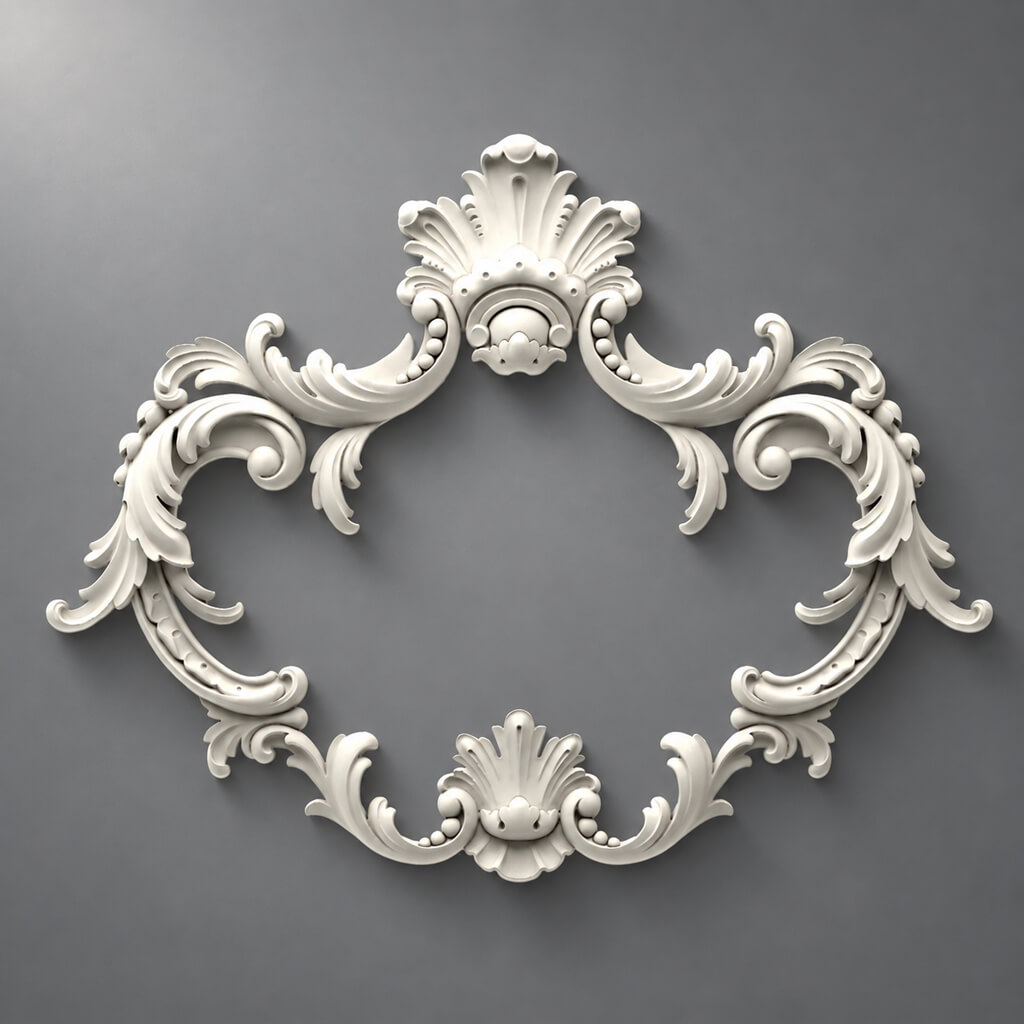
- Stucco frame around the central zone
- Combination of slats and moldings in one frame
- Baseboard in the frame: the bottom line that cannot be ignored
- MDF baseboard for the work area
- Wooden baseboard matching the slats
- Wide baseboard for an office and studio
- Baseboard in wall color: when the background should be as clean as possible
- Ceiling cornice and top frame line
- Wooden cornice matching slats
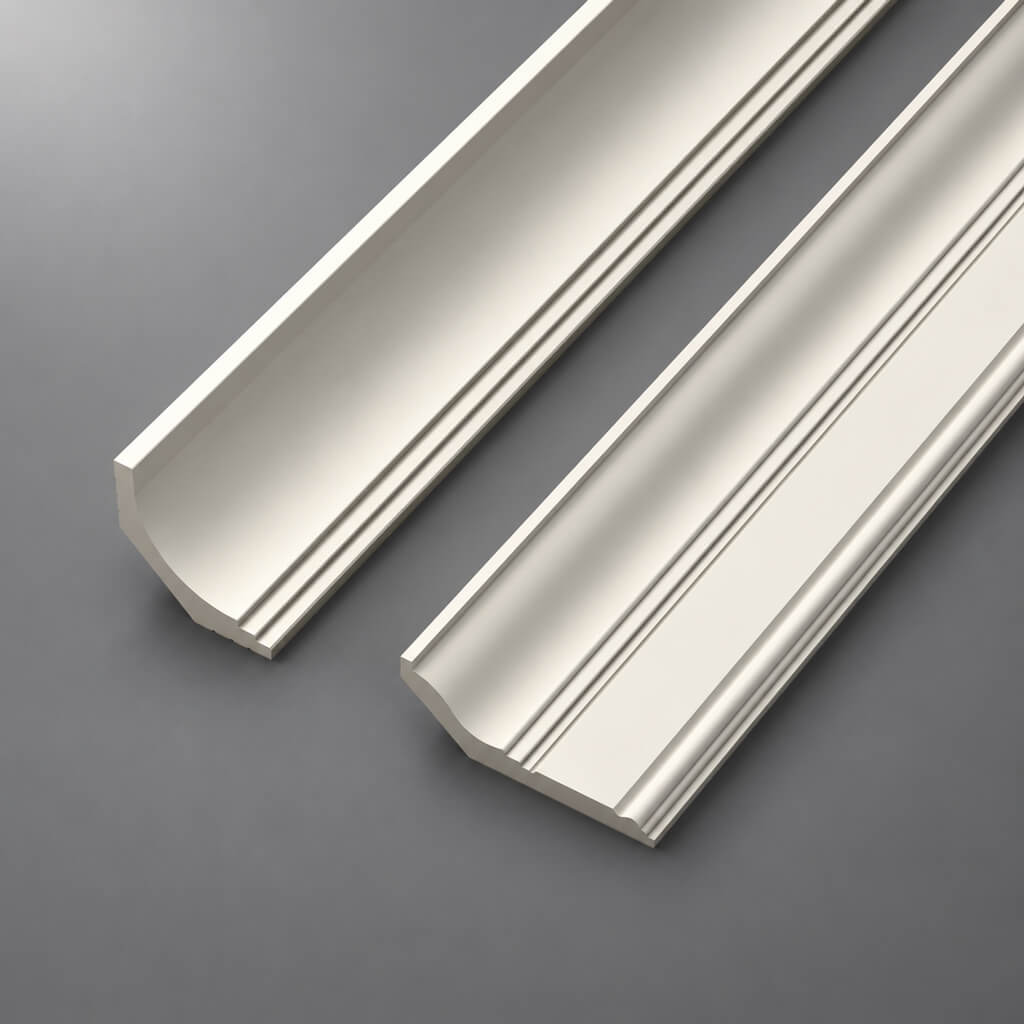
- Polyurethane cornice in ceiling color
- Light shelf or built-in LED line above the slat zone
- Linear elements, corners, and strips: details that make the frame clean
- Wooden corner for slat zone ends
- Wooden strip as a hidden base
- Wooden molding as a horizontal border
- System approach: from slat to cornice in one solution
- Lighting in the frame: how wall decor affects light
- Ready-made wall design schemes for video calls
- Scheme 1: Minimalism — white wall, moldings, MDF baseboard
- Scheme 2: Warm office — wooden slats, wooden baseboard, cornice
- Scheme 3: Expert background — slats on the side, central smooth zone
- Scheme 4: Content studio — slats with backlighting, full linear molding
- Scheme 5: Online consultations — calm wall, slats, neat baseboard
- Table: which solution for which professional image
- Mistakes when designing a wall for video: don't do this
- Practical tips: how to check the wall before shooting
- FAQ: popular questions about designing a wall for video calls
- STAVROS: system for your professional background
A video call wall is the new reality of interior design. It has always existed, but has become important precisely now, when online meetings, webinars, consultations, short video shoots, and live streams have become everyday practice. The background behind your head is part of your professional image. Andwooden slats for a video call background, moldings, stucco decor, proper baseboards, and trim are not a fashion trend. They are tools for creating a frame that works for you.

Frame as interior: why the wall behind you matters
Ask yourself an honest question: do you remember what the background looks like behind a colleague during weekly meetings? Most likely — yes. The human brain registers the background with the same intensity as the face. Especially when the face is saying something important: the brain processes the context in parallel — and the background becomes part of the impression of the person.
Psychologists have long documented this effect: a neat, calm background increases the perceived status of the speaker. Clutter reduces it. Overloaded decor distracts attention. An empty wall creates a feeling of emptiness and impersonality.
The ideal background for video calls is not a studio backdrop. It is a living interior background with rhythm, depth, and details that are perceived as status, taste, and professionalism. This is exactly the kind of background created by a wall decorated withwooden planks, moldings, and proper trim.




What the camera actually sees: optics and decor
Before choosing slats and moldings, it is important to understand how the camera perceives the wall. This is a different optics — literally. A webcam or smartphone compresses depth, distorts proportions, and conveys color and texture in its own way.
Our factory also produces:




What the camera enhances
Vertical rhythm. Vertical slats in the frame create a sense of height and structure — they work even better on camera than in real life. This is a principle understood by all experienced operators: verticals make the frame look prestigious.
Texture. Wood on camera conveys warmth — literally: the viewer feels a warm neutral background even if they don't realize they're looking at slats.Wooden planks for decorationwork as "warm light" in the frame.
Horizontal lines. The baseboard and cornice create horizontal boundaries that structure the space behind you. If they are neat, the frame looks "put together."
Get Consultation
What the camera does not forgive
Small decor and many details. The camera compresses depth — and ten small objects on a shelf turn into visual noise. The rule is simple: fewer objects, larger details.
Variegated texture. Brick, large floral wallpaper, active patterns — all of this looks restless and flickering on camera. Neutral surfaces with a rhythmic structure — wood, painted MDF, smooth walls — work perfectly.
Open ends and unfinished joints. The camera is ruthless to details. An open end of a wooden slat or a gap between the baseboard and the wall is more visible on camera than in real life.Wooden angleand neat joints are not an aesthetic whim, but a technically important element of the frame.
Wooden slats as a background: frame architecture
wooden slats behind the desk— this is perhaps the best available solution for video call backgrounds. Not because it's trendy (though it is), but because slats perfectly meet the camera's optical requirements.
They create a vertical rhythm — something the camera perceives as structure. They are textured but not active — the gaze doesn't linger on them but glides across them as a neutral background. They are warm — wood in the frame always adds humanity and coziness. And they are easily scalable: you can cover the entire wall with slats or just a part of it.
Full slat wall vs. partial
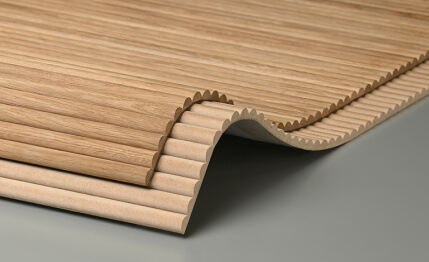
For a home studio or content zone —Rafter panelsacross the entire wall provide the cleanest and most structured background. No visual noise, no random details — only a rhythmic wooden surface.
For a specialist's office or online consultation area — a partial slat section behind the work chair works just as effectively. The slats occupy a 150–200 cm wide zone behind you, while the rest of the wall is a neutral painted surface.
The selection principle is simple: the more often you appear on camera and the more important a professional image is to you, the stronger the argument for a full slat wall.
Slat spacing and width for video calls
Here's a technically important nuance that most people miss: slats that are too close together create a flickering effect on camera. This is an effect well known to camera operators: a fine, dense grid creates a moiré pattern on the digital sensor.
Optimal parameters for video call backgrounds:
-
Slat width: 30–50 mm
-
Spacing between slats: 20–35 mm
-
Slat depth: 20–30 mm to create shadow
Wooden plankwith these parameters creates a smooth rhythmic pattern in the camera without moiré. The shadow from deep slats adds volume — this is especially valuable in a flat frame.
Color tinting of slats in the frame
Neutral and warm tints work best for video calls:
-
Light oak, ash — creates an airy, professional background
-
Mocha, tobacco — adds status and depth
-
Natural pine — warm, homely, friendly image
-
Dark tints work in good lighting, creating an intimate, status-oriented frame.
White or painted slats are a surprisingly strong solution for a minimalist background: they create structure without color, rhythm without warmth. Ideal for medical, legal, and financial consultations—where an image of cleanliness and order is important.
Slats to the side of the zone: a side accent
You don't always need to cover the entire wall behind you with slats. Sometimes a slatted section to the side of the central zone—to the right or left of the work chair—is enough. In the frame, it looks like a side architectural element that adds depth without overloading the central space.
vertical wooden slatsin the side part of the frame is a technique from the arsenal of professional studios. It creates spatial context without distracting attention from the speaker.
Moldings and stucco decor: an architectural background without visual noise
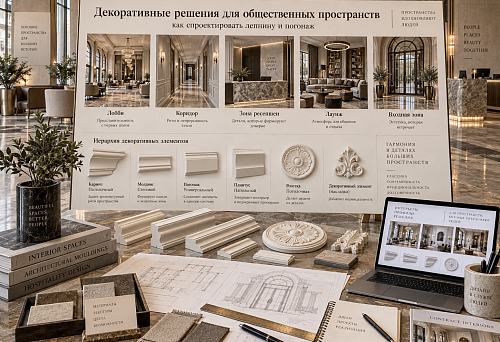
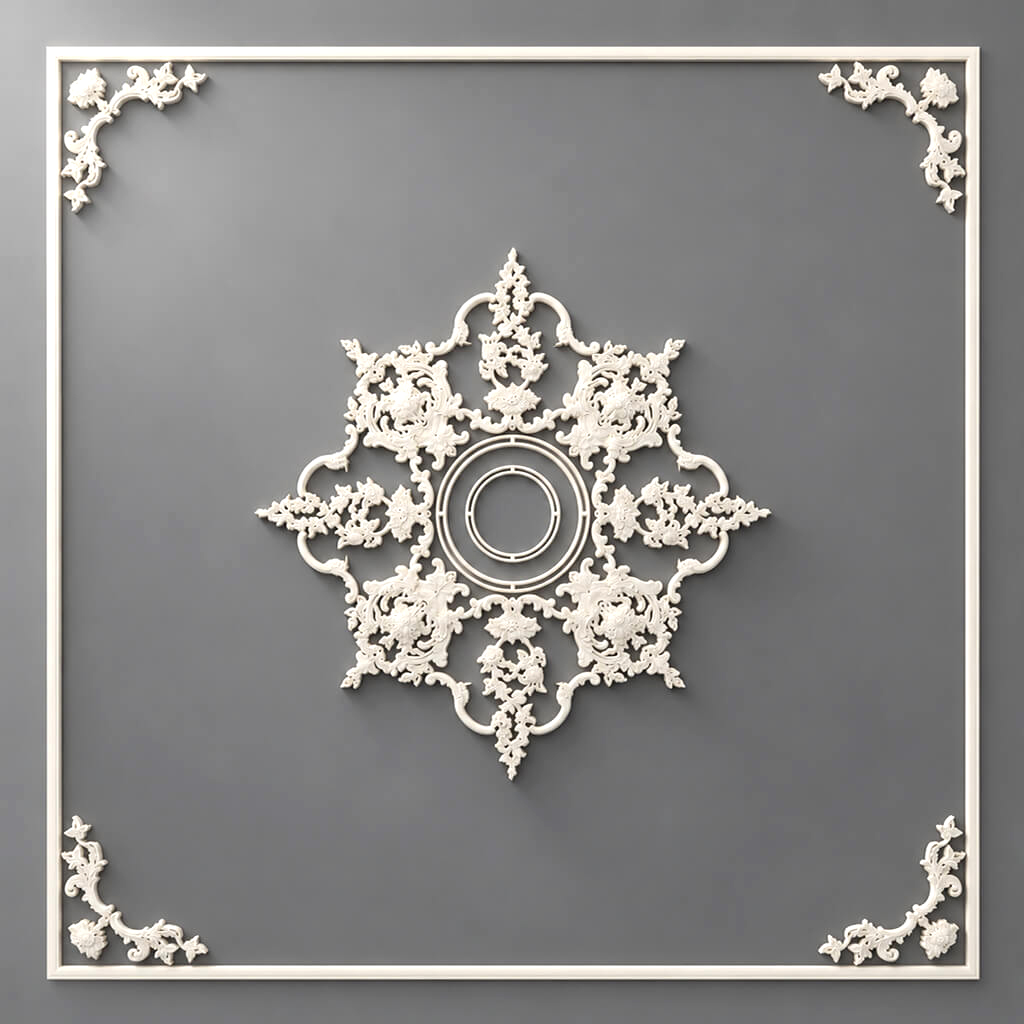
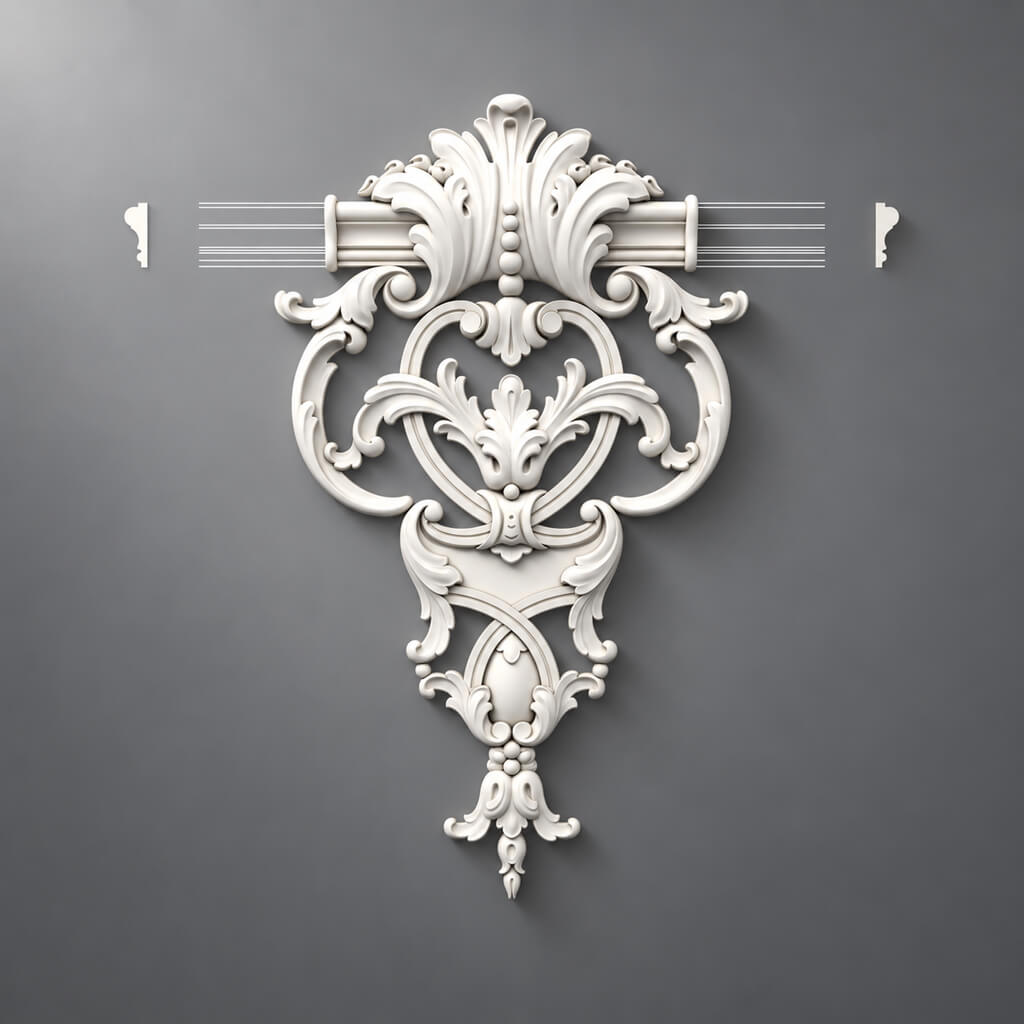
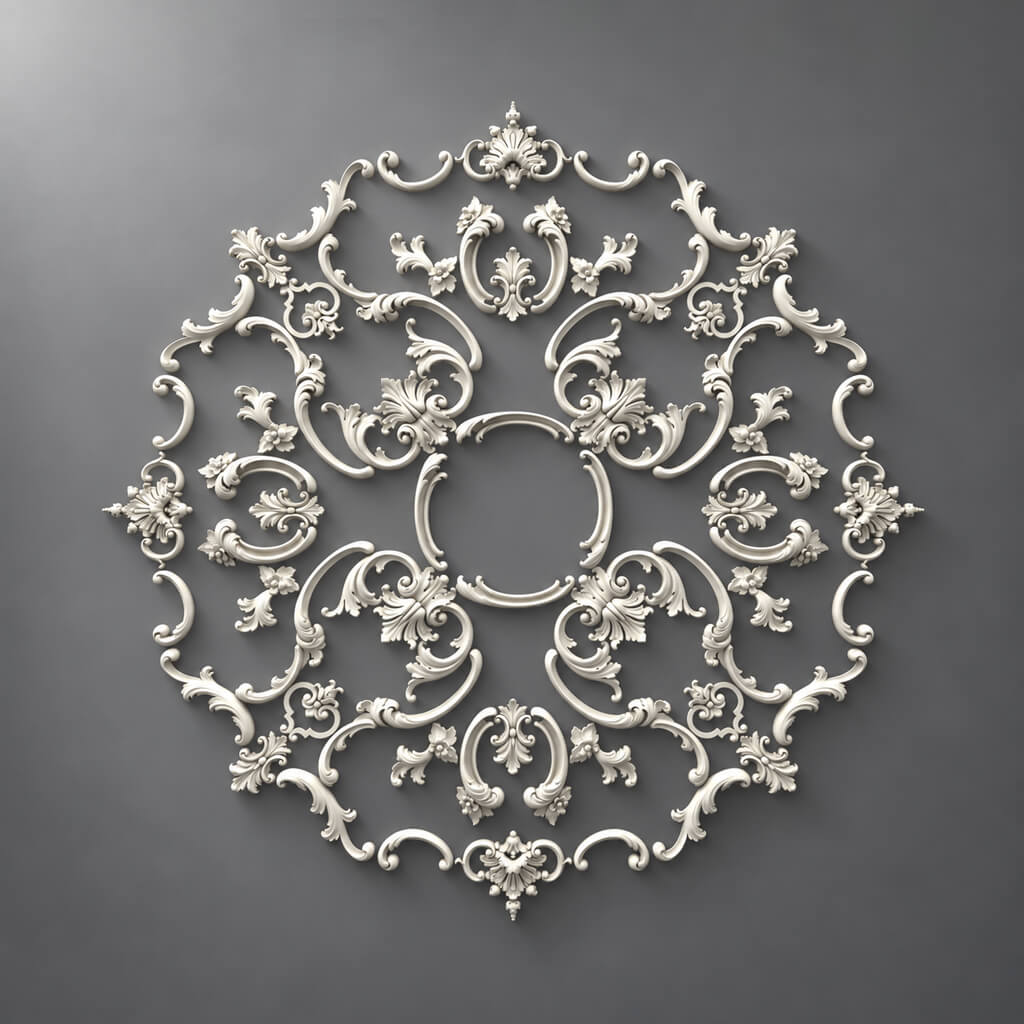
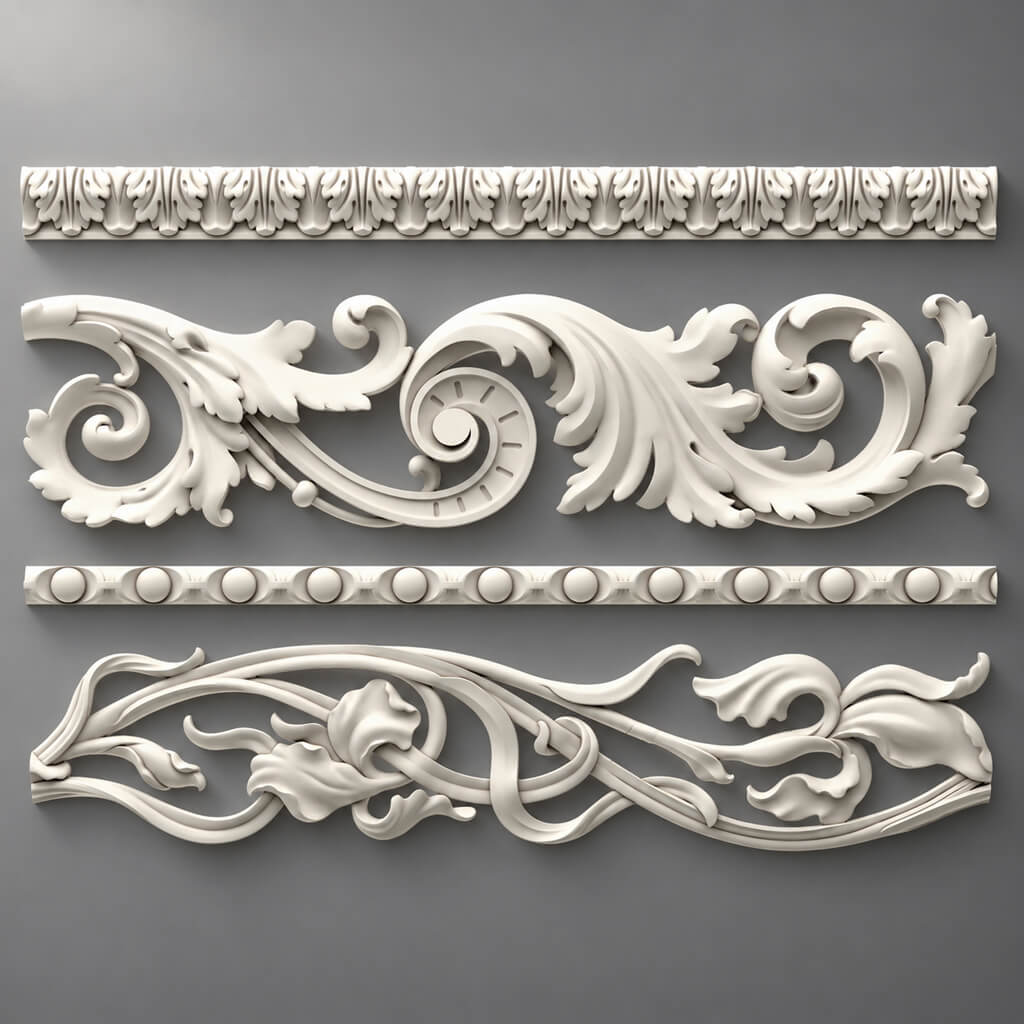
Stucco decor for a video call wallis a delicate topic. Active stucco directly behind the head draws the eye, creates visual noise, and competes with the speaker's face. Subtle, well-chosen molding decor adds architectural quality without aggression.
Moldings in the wall color: invisible architecture
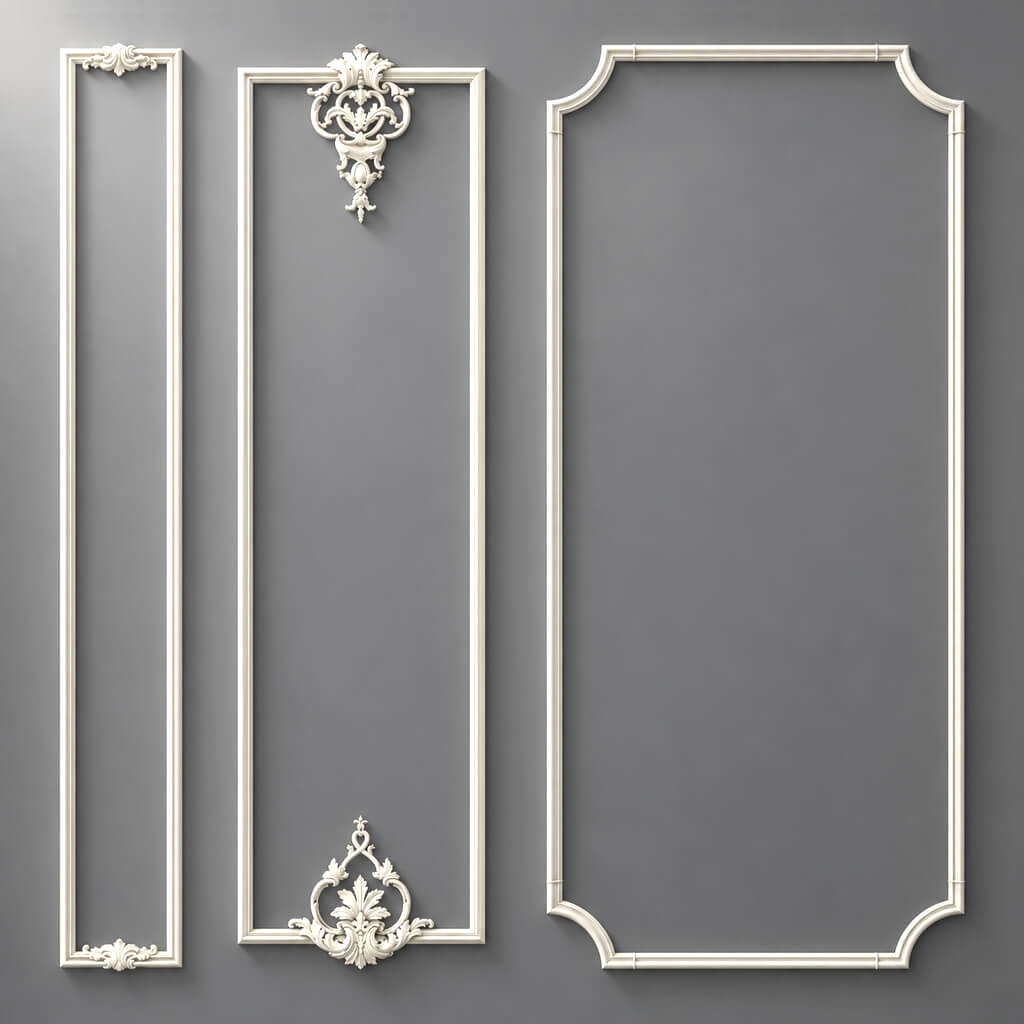
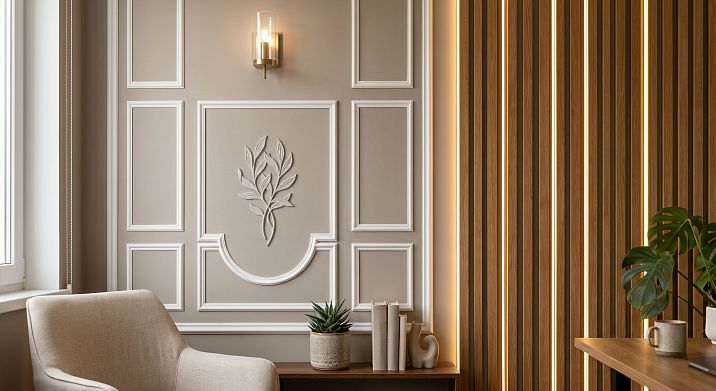
This is the smartest technique for a video call wall.Moldings made of polyurethaneThey are painted the same color as the wall — and create a relief pattern that is visible as shadow and volume, but not as a separate colored element. In the camera, such a wall looks like a background with depth: not empty, not overloaded — architectural.
Boiserie frame panels in the wall color behind the workspace — this is a style used in professional studios and meeting rooms precisely because it reads in the camera as a "correct background."
Vertical moldings as an alternative to slats
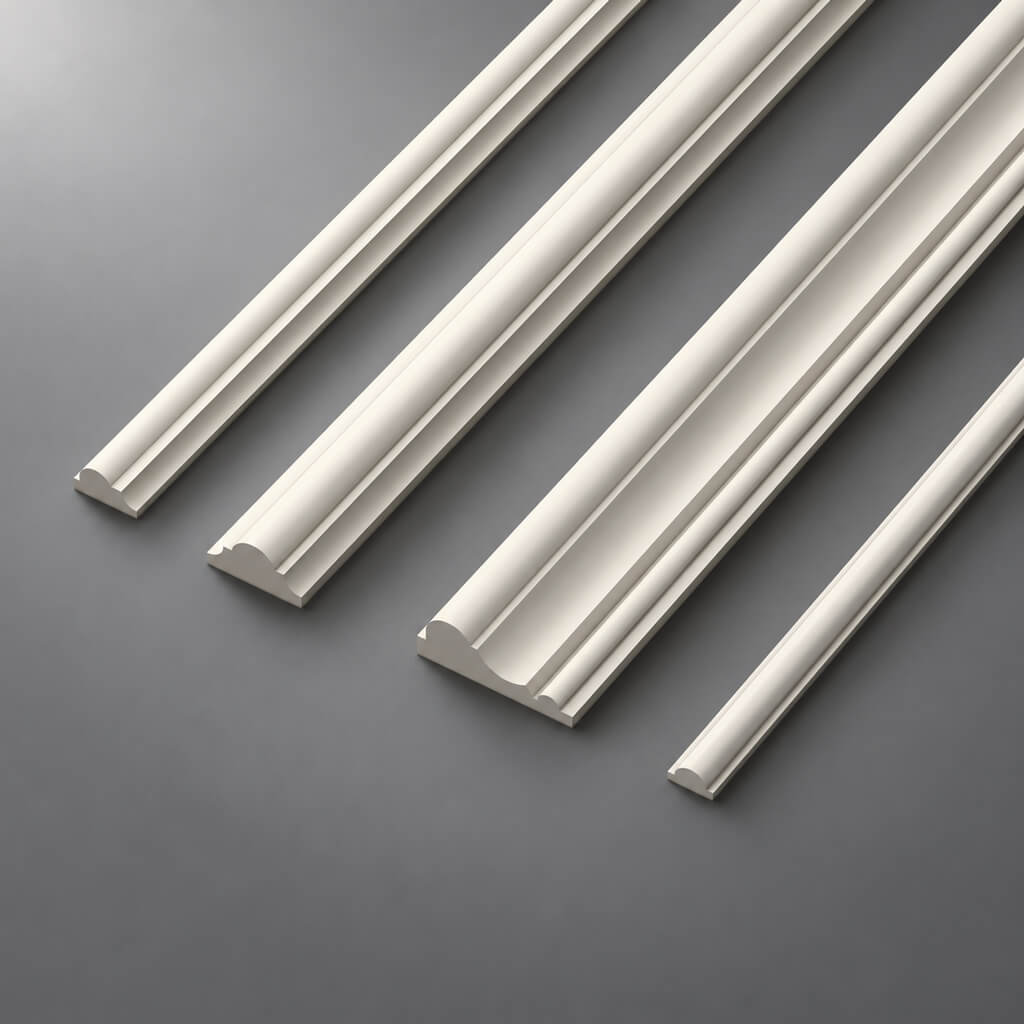
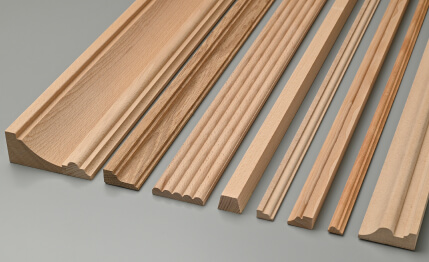
If wooden slats seem too informal for a specific image (for example, for legal or medical consultations) — verticalDecorative wooden moldingsor polyurethane profiles create a similar vertical rhythm, but in a more strict, classic key.
Vertical moldings 30–40 mm wide with a spacing of 25–35 cm — this is exactly the scale that reads well in the camera: there is rhythm, but it is not small and does not ripple.
Horizontal molding belt
A horizontal belt of molding at a height of about 120–140 cm from the floor divides the wall into two zones: the lower (less important in the frame) and the upper (background zone). This is an architectural technique that structures the wall — and in the camera creates a feeling of a well-thought-out space.
Polyurethane wall decorin the form of a horizontal belt — easy to install and delicate in visual result. Exactly what is needed for background space.
Stucco frame around the central zone
A molding frame marking the central zone behind the workspace is an "anchor" technique. The frame tells the camera: here is the zone, here is the center, here is the space. Inside the frame is a calm painted wall or slatted section. Outside is a neutral background.
The molding is chosen thin — 20–30 mm profile.Moldings made of polyurethane — optimal material: lightweight, precise in installation, easy to paint.
Combination of slats and moldings in one frame
This is an advanced solution. A slatted section in the center of the wall, molding frames on the sides, a horizontal belt at the boundary of zones. For good implementation, it is important to follow the scale rule: moldings should not be smaller than slats — otherwise, a feeling of two competing systems arises.
Slats and stucco on the wall work as a single system when moldings serve as a frame for the slatted section — that is, they form a border around it. Slats are the content of the frame, moldings are the frame itself.
Baseboard in the frame: the bottom line that cannot be ignored
Many miss this point: if the camera is slightly below the horizon or captures a wide angle — the baseboard enters the frame. Especially when shooting from a laptop that sits on a table: the lower part of the wall behind the workspace is clearly visible.
A messy baseboard in the frame is like a wrinkled collar at a business meeting: it seems like an insignificant detail, but an attentive interlocutor notices it.
MDF baseboard for the work area
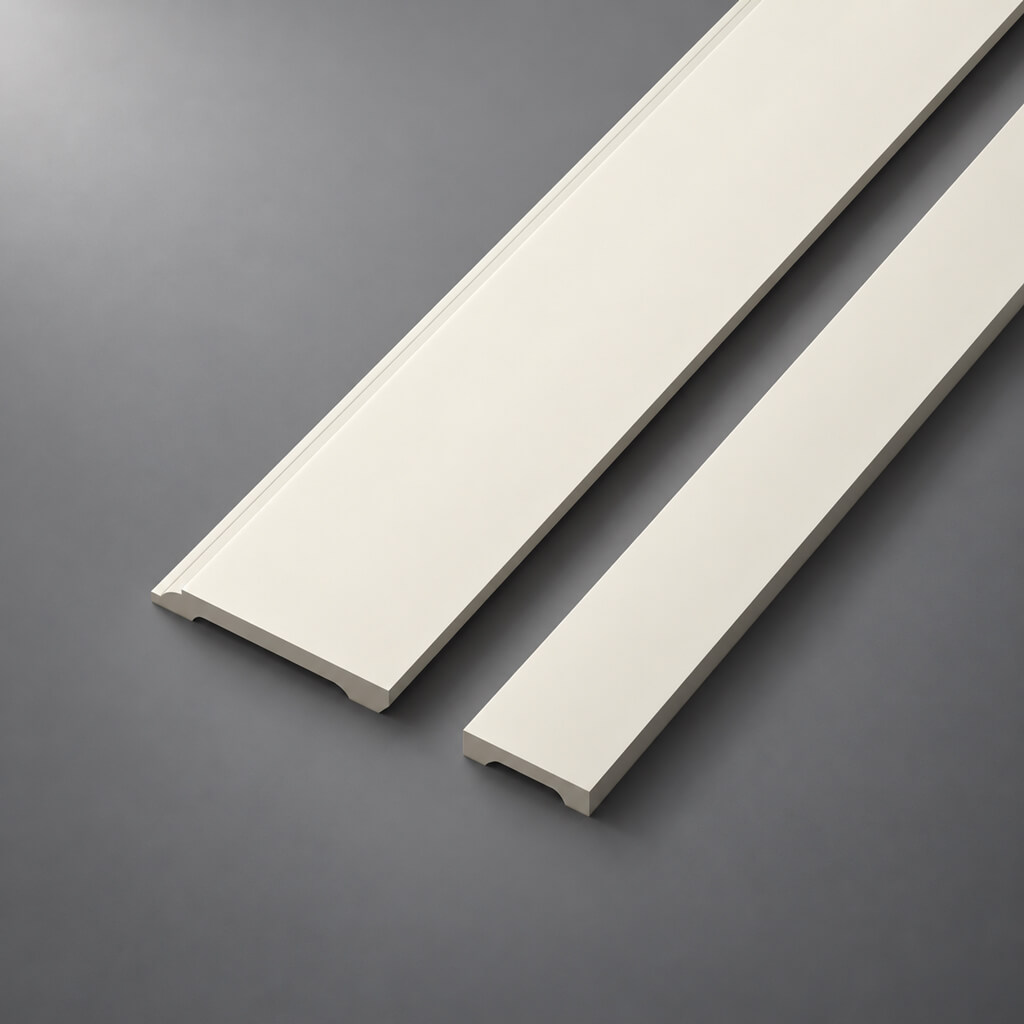
MDF Skirting Board— a universal choice for a wall for video calls in a modern interior. Smooth, even surface, clear geometry, neutral bottom line.— is a horizontal element that frames the room at the bottom of the walls where the wall meets the floor. Skirting boards perform several functions: they hide the technological gap between the wall and floor covering (necessary for thermal expansion), protect the lower part of the wall from mechanical damage, create visual completion, and may conceal wiring.allows you to paint it the same color as the wall — and the lower border of the background becomes invisible: the wall and baseboard merge into a single plane.
This is especially important for minimalist backgrounds: the fewer horizontal lines in the frame, the more space there is for the speaker's face and gaze.
White MDF Skirting Board— for light neutral walls. It creates a clear lower border that structures the frame without emphasis.
Wooden baseboard matching the slats
If the wall is finished withwooden slats for wall finishing, the baseboard should be made of the same wood, with the same tint.to buy wooden baseboardmade of oak or ash in the same tint as the slats — and the bottom line becomes part of the wooden system.
Wooden baseboardwith a clean profile against a slatted wall in the frame looks like a signature interior detail: it's clear that the space is designed systematically — from floor to ceiling.
Wide baseboard for an office and studio
For a home office with high ceilings or a professional studio — a widewith a classic profile creates a sense of solidity, reliability.from 80–100 mm creates a monumental bottom line that adds weight to the frame. A wide baseboard in the frame is a detail that reads as “expensive” and “thoughtful.”
Baseboard in the color of the wall: when the background should be as clean as possible
For medical, psychological, or legal consultations — when the background should be neutral to the point of being indistinguishable —— is a horizontal element that frames the room at the bottom of the walls where the wall meets the floor. Skirting boards perform several functions: they hide the technological gap between the wall and floor covering (necessary for thermal expansion), protect the lower part of the wall from mechanical damage, create visual completion, and may conceal wiring.in the same color as the wall gives a perfectly clean result. The bottom line disappears. The wall is perceived as a monolithic plane.
Ceiling cornice and the top line of the frame
The top of the wall enters the frame with a wide-angle lens or when the camera is positioned below eye level — which is typical for a laptop on a desk. The transition from wall to ceiling without decor is an open joint: unsightly and inevitably noticeable.
A wooden cornice matching the slats
wooden cornicealong the top line of the slatted wall — this is the horizontal finish of the entire decorative system. In the frame, it creates the upper boundary of the background: the wall is finished, the frame is structured.
Wooden beamsfor a study are chosen with a moderate profile — not too massive, so as not to overload the upper part of the frame.
Polyurethane cornice in the color of the ceiling
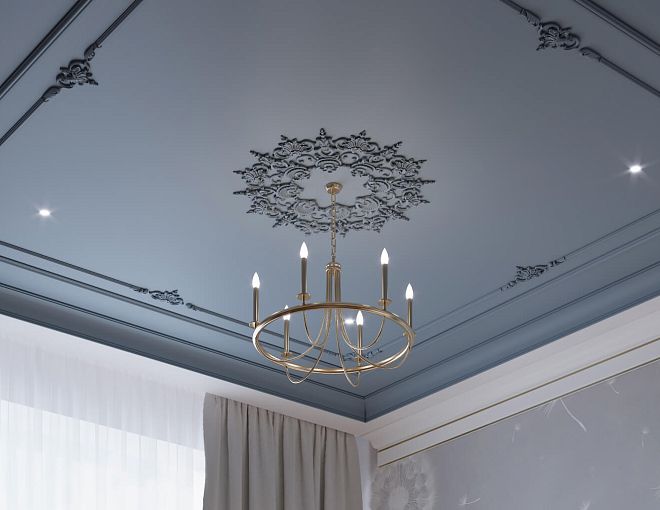
For a neutral background where wooden accents are not needed —polyurethane ceiling decorin the form of a thin cornice around the perimeter, painted in the color of the ceiling, creates a neat transition without a color accent. The joint is closed, the transition is smooth, the top line of the frame is clean.
Light shelf or built-in LED line above the slatted area
Advanced solution for a content studio: a wooden shelf is mounted above the slatted wall on awooden block — and an LED strip is placed underneath it. Soft top lighting provides even side illumination of the slatted wall, emphasizes the wood texture, and adds depth to the frame.
This is not just decor — it is an element of light control in the frame that professionally elevates video quality.
Molding, corners, and blocks: details that make the frame clean
Now about the most unobvious — but perhaps the most important for the frame.wood trim items — this is what turns 'made' into 'made right'.
Wooden corner for the ends of the slatted area
The side ends of the slatted section — the horizontal cuts of the slats on the left and right — must be covered withwooden corner pieceto match the slats. In the frame, an open end of a slat looks like carelessness — especially with side lighting, when shadows emphasize every detail.
The corner piece is selected from the same wood species and tint as the slats. It is mounted strictly vertically along the side edge of the slat section — from the baseboard to the cornice.
Wooden block as a hidden base
Wooden blockis used as a horizontal base for mounting the slat section on the wall. The block is attached to the wall horizontally at several points along the height — the slats are fixed to it. This ensures a perfectly even vertical plane of the slats and the correct distance from the wall.
Precise geometry of the slat screen is the key to ensuring that the shadows from the slats in the frame are even and rhythmic, not chaotic.
Wooden molding as a horizontal border
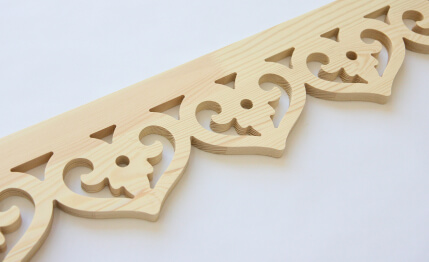
Wooden Picture Framewith a thin profile — a horizontal line at the boundary between the slat zone and the molding part of the wall. In the frame, it reads as a deliberate architectural solution, not a random joint.
Systematic approach: from slat to cornice with one solution
For a video call wall, system consistency is especially important:Trimming Items, slats, baseboard, and cornice must be from the same wood species, same tint, same manufacturer. Only then does everything in the frame look like a unified system — not a set of similar parts, but a cohesive architectural object.
Lighting in the frame: how wall decor affects light
A slatted wall with depth creates vertical shadows in the frame. This is not a problem — it's an advantage. Shadows from the slats with a side light source give the frame volume and thr-
D. But for this, the light source must be side — to the right or left of the speaker. Front light "kills" the shadows from the slats and makes them flat.
Moldings on the wall in the color of the wall — the ones that create relief without color — are also emphasized by side light. With front light they almost disappear, with side light they create a characteristic play of light and shadow.
Practical tip: if you are decorating a wall for video calls or content shooting, plan the lighting simultaneously with the wall decor. A side source (ring light at 45 degrees or natural light from a side window) is an ideal companion for a slatted background.
Ready-made wall decoration schemes for video calls
Five scenarios — five solutions.
Scheme 1: Minimalism — white wall, moldings, MDF baseboard
For: consultants, doctors, lawyers — specialists for whom the image of cleanliness and order is important.
-
The wall is painted in neutral white or warm white
-
VerticalMoldings made of polyurethaneon the wall — thin, in the same white
-
White MDF Skirting Boardmatching the wall — the bottom line disappears
-
Ceiling molding frompolyurethane decor for ceilings— thin, in the color of the ceiling
In the frame: a clean, structured, professional background without color noise.
Scheme 2: Warm office — wooden slats, wooden baseboard, cornice
For: coaches, business consultants, psychologists, authors — those who value an image of expertise and human warmth.
-
Rafter panelsacross the entire wall behind the workspace — made of light oak or ash
-
Wooden baseboardof the same species and tint — the bottom line matching the wall
-
wooden cornicealong the top line of the slat zone — completion
-
Wooden corner piecesalong the side edges
In the frame: a warm, prestigious, expert background — wood works as "soft light."
Scheme 3: Background for an expert — slats on the sides, central smooth zone
For: online teachers, webinar hosts, business trainers.
-
Central zone behind the workspace — a smooth wall painted in a neutral tone
-
On both sides of the central zone — verticalWooden rails for decorationas side architectural accents
-
Around the perimeter of the central zone —polyurethane molding framein the color of the wall
In frame: clear center, side depth, architectural frame around the speaker.
Scheme 4: Content studio — slats with backlighting, full linear footage
For: video bloggers, content creators, online schools.
-
Rafter panelsacross the entire wall — background base
-
Under the top crossbar — hidden LED strip onwooden block
-
Wooden cornice along the top line — covers the lighting structure
-
Bottom —Wooden baseboardmade of the same wood species as the slats
-
Side ends —Wooden corner piecesalong the entire height
-
wood trim itemsfor all joints
In frame: professional studio background with backlight — maximum image quality.
Scheme 5: Online consultations — calm wall, slats, neat baseboard
For: psychologists, nutritionists, health specialists.
-
The wall is painted in a soft neutral tone — sage green, soft beige, light gray
-
Vertical slats on part of the wall to the right of the work chair — made of light wood
-
Molding frames made of. Clear lines, created using modern technologies, emphasize the strict aesthetics of the room. Each decorative element harmoniously fits into the overall concept, creating a sense of order and thoughtfulness.— in the color of the wall
-
Delicate polyurethane ceiling molding
In the frame: a soft, trustworthy, professional background — inspires trust and calm.
Table: which solution for which professional image
| Image | Slats | Moldings | Skirting board | Crown Molding |
|---|---|---|---|---|
| Lawyer, financier | White or neutral | Frames in wall color | White MDF | Thin polyurethane |
| Coach, business trainer | Warm oak, ash | Horizontal belt | Wooden tone | wooden cornice |
| Psychologist, nutritionist | Light, sparse | Decorative frames | MDF for Painting | Polyurethane |
| Blogger, content creator | Full slat wall | Minimum | Wide wooden | Light shelf |
| Webinar host, teacher | Side slats | Central frame | MDF matching the wall color | Wood or polyurethane |
Mistakes when decorating a wall for video: don't do this
Slats too close together. A spacing of less than 10–12 mm creates a moiré effect on camera. A fine, frequent grid flickers on the digital sensor — especially with video compression. Optimal spacing is from 20 mm.
Active molding directly behind the head. Large decorative patterns or relief molding directly behind the speaker's head compete with the face. Decorative molding behind the head should be very thin and match the wall color. Larger decor should be on the side walls.
Baseboard of a different color without logic. A bright, contrasting baseboard at the bottom of the frame creates a 'step' — it distracts the eye from the face. The baseboard in the background area should either match the wall color or fit clearly into the wooden system.
Exposed ends of wooden slats. In the frame — with side lighting — the exposed end of a slat catches the eye.Wooden angleon the side edge of the slat zone — a mandatory element.
Massive cornice at the top of the frame. A bulky profile cornice at the top of the frame presses down from above and narrows the space. For a wall for video calls — only light, thin profiles.
Too bright slat backlighting. Bright LED backlighting behind the slats creates a strong light contrast — the camera cannot adapt and exposes either the slats or the speaker's face. Backlighting for a slat background should be soft, diffused.
Many small objects and shelves in the frame. Books, figurines, flowers, frames — all this turns into visual chaos in the frame. Frame rule: one large accent is better than five small ones.
Different wood shades without a system. Dark oak slats, light pine baseboard, birch cornice — this is not eclecticism, it's a mess. Uniform tinting of all wooden moldings is a mandatory condition for a good frame.
Practical tips: how to check the wall before shooting
Before finally installing the wall for video calls, check the result through the camera. A few simple tests:
Test 1: daylight. Sit at your workspace, turn on the laptop or smartphone camera without adding additional lighting. How does the wall look on an ordinary day?
Test 2: side light. Place a light source (lamp) at a 45-degree angle to the wall — on the right or left. How do the slats create shadows? Is the depth sufficient?
Test 3: moiré check. Take a camera and film the slat wall. Record a video and watch it in motion — is there a rippling moiré pattern? If yes, the slat pitch is too small.
Test 4: bottom line. Place the camera at table level — as in a typical video call. Is the baseboard visible? How well does it harmonize with the overall wall?
Test 5: top line. Tilt the camera upward at a wide angle. Does the wall-to-ceiling transition appear in the frame? Is a cornice needed there?
FAQ: popular questions about wall design for video calls
What wall color works best as a background for video calls?
Neutral warm tones — warm white, soft beige, light gray, sage green — work best. They don't reflect onto the speaker's face, don't draw attention, and are well perceived by the camera in different lighting conditions. Pure cool white is less successful: it reflects a bluish tint, especially in daylight.
Slats or moldings — which is better for the background?
It depends on the image. Slats provide warmth, texture, and depth — a "living" background. Moldings in the wall color provide architectural quality without color — an "official" background. For an expert image with a human touch — slats. For strict professional consultations — moldings. For maximum effect — a combination: slats as the central zone, moldings as framing.
Is a baseboard needed in the background area for video calls?
If the camera is at table level — the lower part of the wall is in the frame. A baseboard is needed, and it should harmonize with the overall solution. Optimal: — is a horizontal element that frames the room at the bottom of the walls where the wall meets the floor. Skirting boards perform several functions: they hide the technological gap between the wall and floor covering (necessary for thermal expansion), protect the lower part of the wall from mechanical damage, create visual completion, and may conceal wiring.in the tone of the wall — it becomes invisible. Or a wooden baseboard in the tone of the slats — it becomes part of the system.
How to avoid the moiré effect from slats on camera?
Slat spacing — from 20 mm. Slat width — from 30 mm. Avoid very thin, frequent slats 8–12 mm wide with 8–10 mm spacing: this is almost guaranteed moiré. Before final installation, test a sample through the camera.
Can I add backlighting to a slatted background?
Yes, and it's a powerful technique. A hidden LED strip behind the top horizontal crossbar or behind the side posts of the slatted screen creates a soft halo behind the slats. Important: the backlight brightness should be minimal — it's an atmospheric accent, not a working light source. Warm white (2700–3000K) is the optimal temperature.
Which cornice should I choose for the top line of the wall for video calls?
For a modern interior — a thin polyurethane cornice in the color of the ceiling: it covers the joint without emphasis. For a wooden office —wooden cornicematching the slats: it completes the wooden system. A massive profile cornice with a large overhang — is not suitable: it presses down from above in the frame.
How to properly close the side ends of the slatted area?
Wooden angleof the same tint — is mounted strictly vertically along the side edge of the slatted section. The top and bottom ends of the corner piece are cut at 45 degrees to the cornice and baseboard. An alternative isa linear profilewith a selection that fits onto the ends of the slats.
STAVROS: a system for your professional background
A wall for video calls is not a one-time decorative project. It is an investment in a professional image that you recoup at every meeting, every webinar, every video. That is why it is important to work with a system supplier — one who offers a complete set of coordinated elements.
STAVROS is a Russian manufacturer of solid wood and polyurethane products. Slats, baseboards, cornices, moldings, trim, corners, and bars are produced in a unified system of tints and profiles. This means: when you take a STAVROS slat, baseboard, and cornice — they are already coordinated with each other. There is no need to look for color and profile matches from different suppliers.
Full range for a wall for video calls and content shooting:
-
Wooden planks— the base of the slatted background
-
Wooden plank— a single slat with precise geometry
-
Rafter panels— for quick installation of the slatted background
-
Decorative wooden moldings— for frames and vertical accents
-
Moldings made of polyurethane— for delicate framing in the color of the wall
-
Polyurethane wall decor— frame panels and architectural accents
-
polyurethane ceiling decor— cornices for the top line of the frame
-
wooden corniceandWooden beams— completion of the slat system
-
MDF Skirting Board— bottom line for a modern office
-
Wooden baseboard— for wooden systems and warm offices
-
Wooden angle— for neat ends and corners
-
Wooden block— frame base for the slat screen
-
wood trim items— system solutions for all joints
-
Polyurethane Items— the entire range of stucco decor
Your professional image starts not with a jacket or lighting. It starts with the wall behind you. Get it right — and every meeting, every shot, every webinar will speak for you better than any words.