





































Article Contents:
- It sells not only the product — it sells the space
- Zoning through decor: showroom map
- Logo wall: the face of the brand
- Area behind the counter: authority and order
- Fitting room area: the selling mirror
- Display window area: frame for the product
- Accent wall with product
- Pass-through area and waiting area
- Photo zone for clients
- Wooden slats for commercial interiors: tactics and practice
- Decorative function: texture, rhythm, warmth
- Functional role: slats as a mounting system
- Wear resistance in a commercial context
- Parameters for different types of showrooms
- Stucco decor and moldings: the architectural language of a boutique
- Moldings as a frame for the display window and product
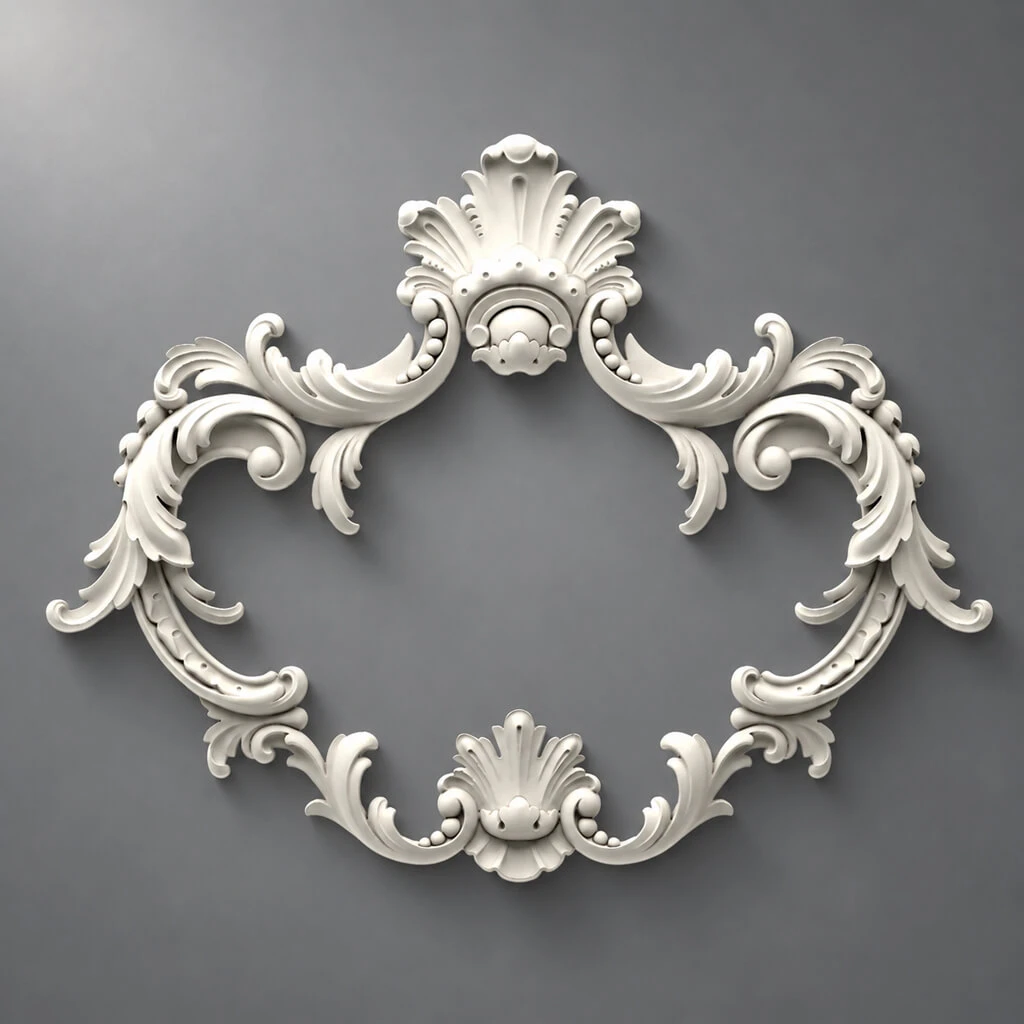
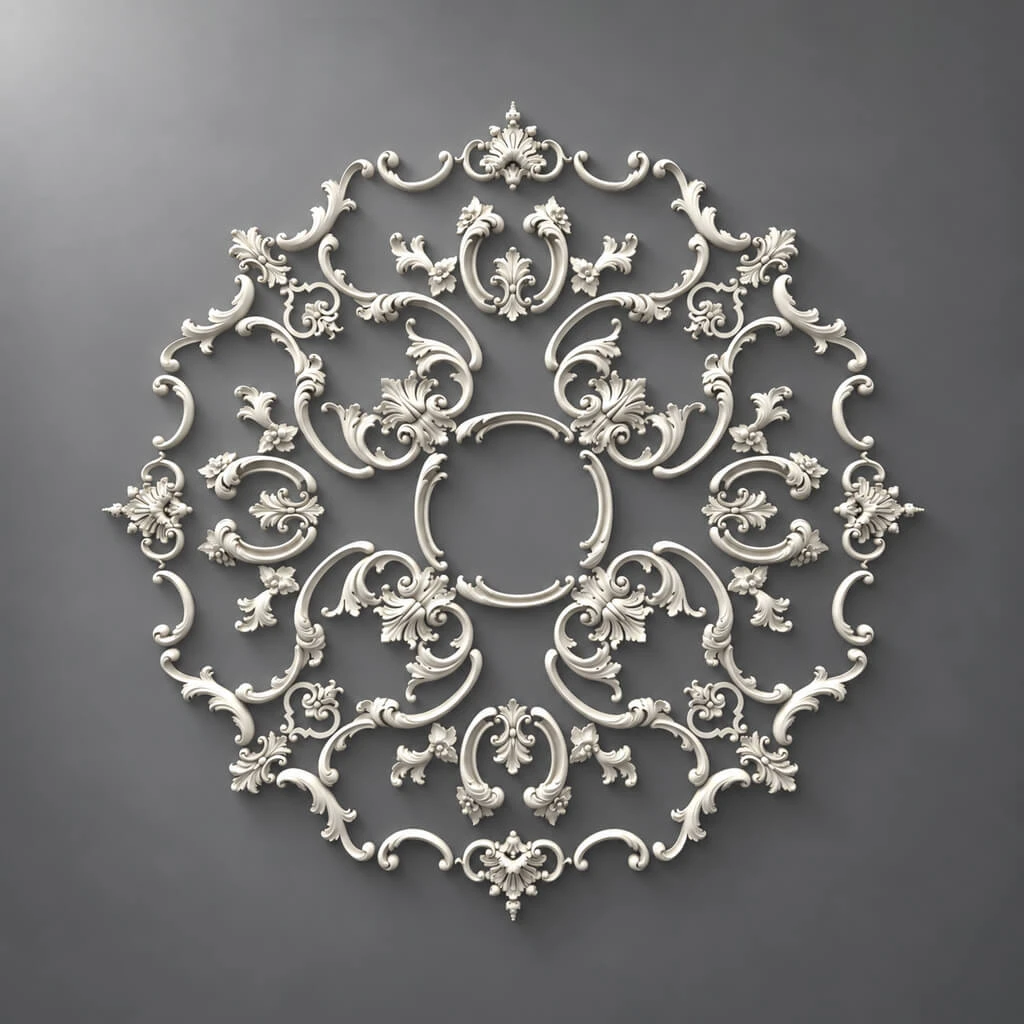
- Stucco decor around the logo
- Moldings on the wall behind the cash register
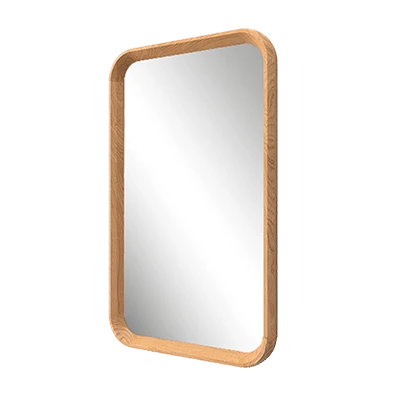
- Moldings around the mirror in the fitting room
- Polyurethane ceiling decor
- Ceiling cornice for showroom: the top line that defines class
- Wooden cornice for a furniture and decor showroom
- Polyurethane cornice in wall color
- Two-level ceiling and cornice
- Baseboard for showroom and boutique: the bottom line of commercial interior
- MDF baseboard: a practical choice for a retail space
- Wooden baseboard for a premium showroom
- Wide wooden baseboard for the premium segment
- How to solve the issue of baseboard wear resistance
- Molding for commercial interiors: durability in details
- Wooden corner piece for external and internal corners
- Wooden block as a load-bearing structure
- Wooden baguette as a horizontal zone divider
- Systematic molding: the rule of a single wood species
- Ready-made design schemes: five scenarios for commercial spaces
- Scheme 1: Clothing boutique — moldings, mirror in fitting room, MDF baseboard
- Scheme 2: Furniture showroom — wooden slats, wooden baseboard, cornice in matching tone
- Scheme 3: Decor salon — stucco molding, moldings, accent walls
- Scheme 4: Premium segment store — wide baseboard, expressive cornice, moldings
- Scheme 5: Photo zone — slats, moldings, neat ends, lighting
- Material combinations: decision-making table
- Mistakes in showroom and boutique design: an honest breakdown
- FAQ: popular questions about showroom and boutique design
- STAVROS: a systemic solution for commercial interiors
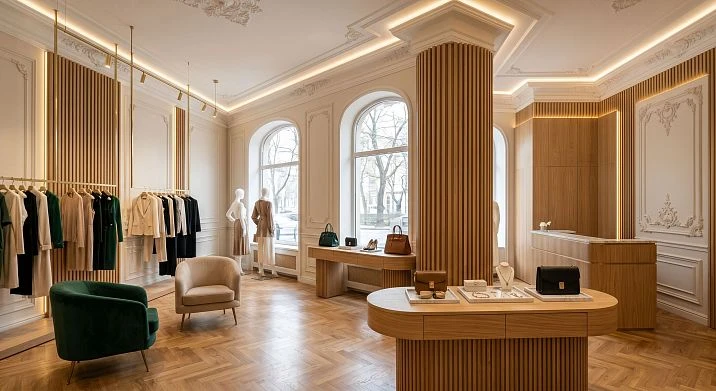
Step into any memorable boutique — and you will certainly feel the difference. You won't immediately understand what it is. Then you look around: the walls are clean but not empty. The ceiling is finished with a cornice. The baseboard has no gaps or random transitions. The fitting room feels like a separate room. The wall behind the register carries something — a signature detail, texture, rhythm. And you think: it's not just an item being sold here. An atmosphere is being sold here.
This is the essence of commercial design: the space itself becomes a sales tool.Wooden slats for a showroom, stucco decor for a boutique, a properly selected baseboard, cornice, and trim — these are not decorations. They are the architecture of impression, which the buyer reads instantly, without thinking, but reacting with their wallet.

Sells not just a product — sells a space
There is a simple pattern in retail: the more expensive the interior looks, the higher the perceived value of the goods inside it. This is not a metaphor — it's a perception mechanism used by all serious brands.
Why in one store does a customer buy an item without hesitation, while in another they hesitate for a long time, even though the price is the same? Because in the first, the space says: "You're in the right place. Everything is thought out here. You can trust this." In the second — the silence of characterless white walls, random details, heterogeneous elements.
The interior of a showroom or boutique must solve commercial tasks. It should guide the eye, create accents, hold attention, and set the mood for purchase. AndSculptural wall decoration, wooden slats and moldings are tools for exactly these tasks.

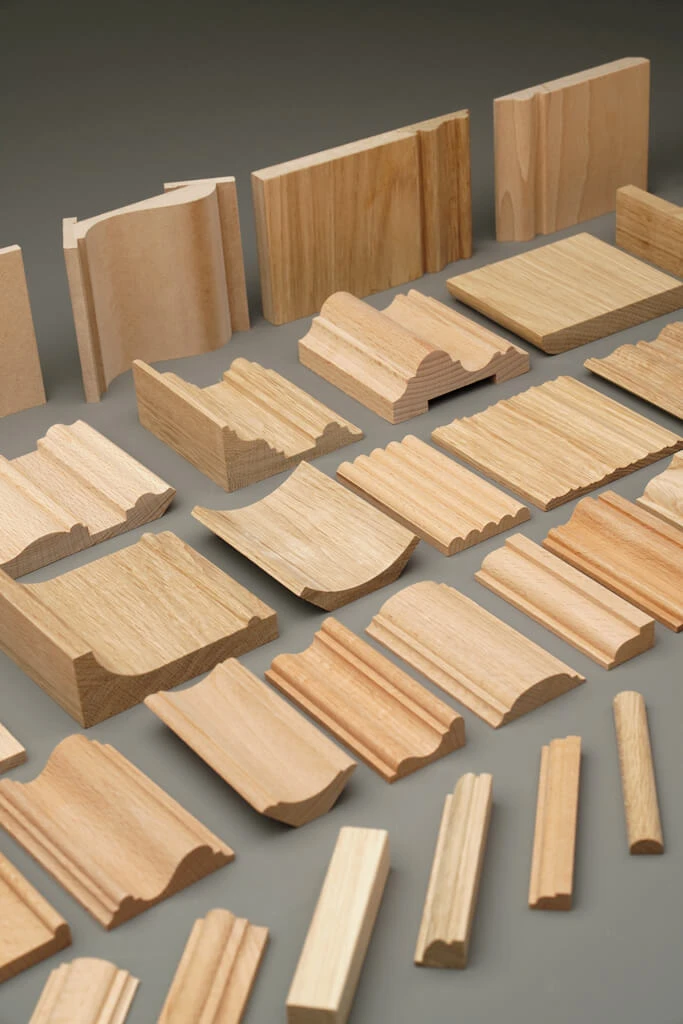

Zoning through decor: the showroom map
Before choosing specific materials, you need to understand the space map. In a showroom or boutique, each zone has its own commercial function — and decor should support it, not just decorate.
Our factory also produces:
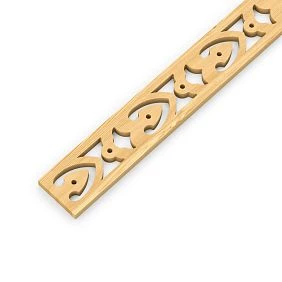
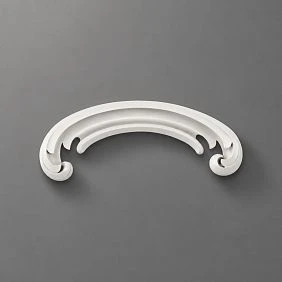
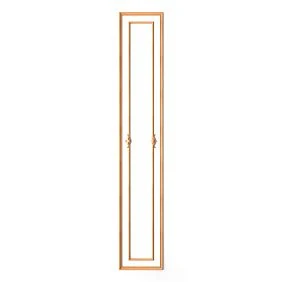

Logo wall: the face of the brand
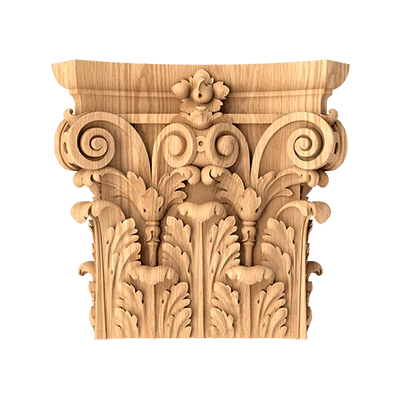
The logo wall is the main brand identification point in the space. It should be noticeable, clear, and work as a background for photos — customers will definitely take pictures here.Stucco decor around the logocreates an architectural context: a molding frame around the logo, a slatted section as a background, a ceiling cornice on top.
Principle: the logo must be readable. The background should be neutral or rhythmic (slats), but not active (no bright wallpaper or complex patterns).
Get Consultation
Area behind the checkout: authority and order
The wall behind the checkout is what every customer looks at during payment. It's a long gaze — several seconds of fixation. What should they see? Order, status, brand confidence.
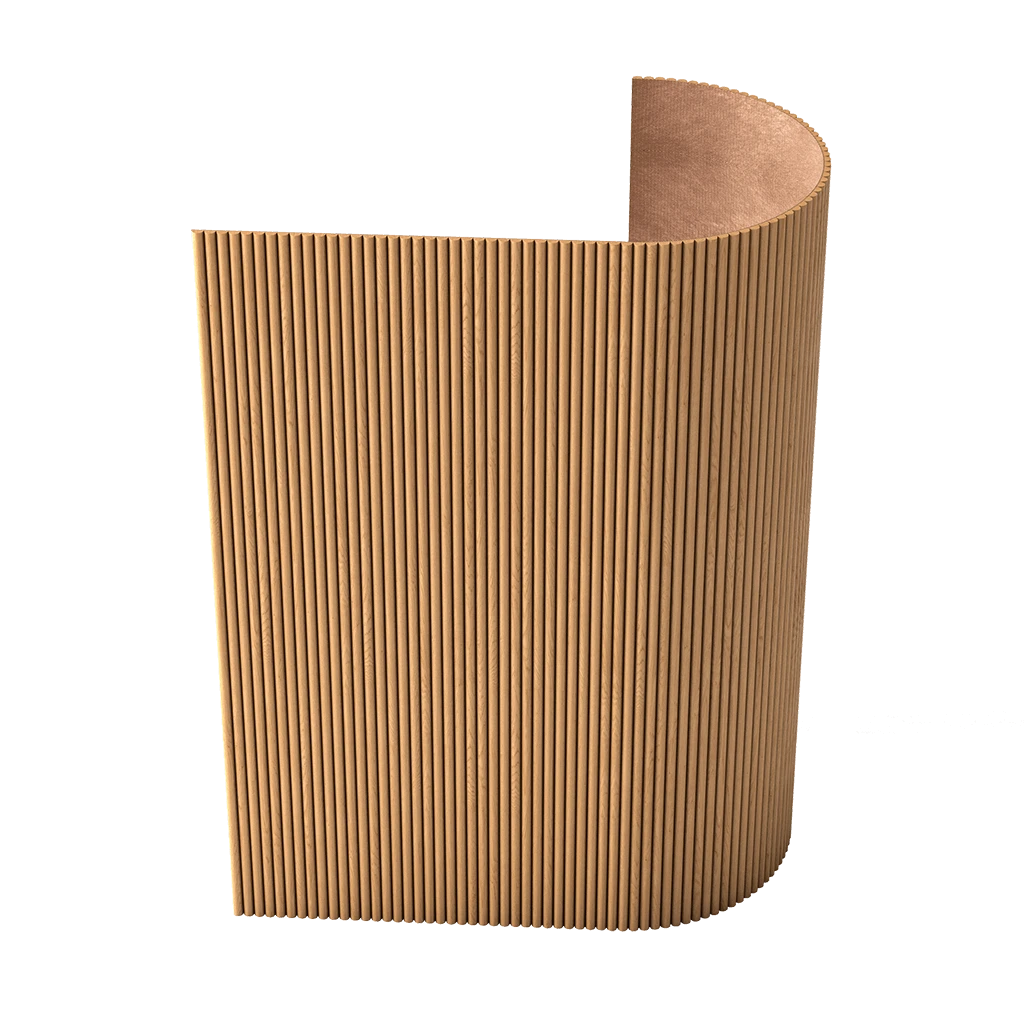
Wooden slats behind the checkout— a vertical accent creating a structural, authoritative background. Moldings on the piers — architectural consistency. A shelf with a few thoughtful details against a slatted background — this is the brand's signature.
Fitting room area: the selling mirror
The fitting room is where the purchase decision is made. Everything matters here: lighting, mirror, background behind the mirror, how the customer looks inside.Wooden slats for the fitting roomcreate a warm, textured background — wood 'highlights' the figure with warmth, making the reflection in the mirror more attractive. A molding frame around the mirror is a classic technique that turns the mirror into an architectural element.
The baseboard in the fitting room is a special case: it must withstand constant contact with shoes and feet.MDF Skirting Boardwith a hard coating orWooden baseboardmade of hardwood — oak, ash — are optimal solutions.
Showcase zone: a frame for the product
The showcase zone is literally a stage where the product plays the main role. The background of the showcase should not compete with the product.Rafter panelsin a neutral tint allow the product to 'perform' against a wooden background — like a painting on a gallery wall.
Moldings around the showcase niche are an architectural frame that emphasizes: 'here — something special.'
Accent wall with product
The wall on which hangers, shelves, panels with products are located should be functional and at the same time decorative.Wooden slats for the sales floorcan be used as a mounting system: between the slats — metal rods for hangers, on the slats — small hooks. Function and decor are combined in one solution.
Pass-through area and waiting area
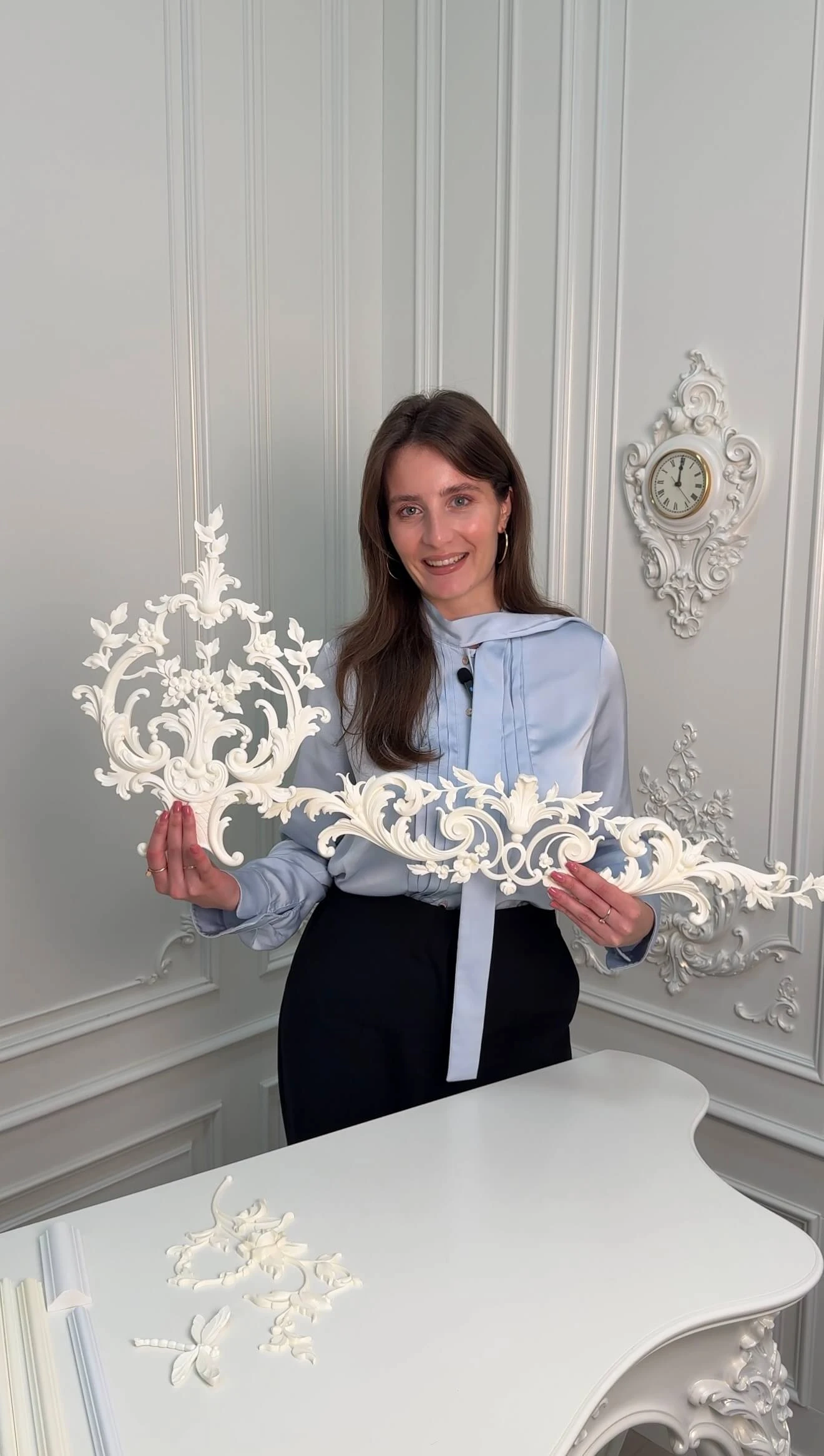
Corridor areas and waiting areas — zones where the client has time to examine details. It is here thatSculptural wall decorationworks with particular effect: framed molding panels on the walls,polyurethane ceiling decorin the form of a thin cornice — all this creates architectural depth that the client perceives as quality.
Photo zone for clients
A modern boutique is unthinkable without a photo zone: it is the point from which the client publishes photos on social networks with a geotag. Free advertising — provided the photo is beautiful.Wooden slats for the backgroundwith a logo on the slatted section, a molding frame, neutral light — this is a photo zone that clients deliberately seek out.
Wooden slats for commercial interiors: tactics and practice
Wooden slats for commercial interior — это одновременно декоративный и функциональный инструмент. Разберём оба измерения.
Декоративная функция: фактура, ритм, тепло
Вертикальные рейки на стене создают ритм. В пустом пространстве шоурума этот ритм — единственная «музыка», которую слышит взгляд. Правильный шаг реек не навязчив, но структурирует восприятие.
Wooden plank с сечением от 25×25 до 40×60 мм для шоурума — оптимальный диапазон. Более тонкие рейки дают воздушный, лёгкий результат — для бутика одежды или косметики. Более массивные — для шоурума мебели или строгого мужского магазина.
Тонировка имеет прямой коммерческий эффект. Тёмный орех или венге — статус, строгость, премиальность. Светлый дуб или ясень — свежесть, доступность, молодость. Белая или крашеная рейка — минимализм, концептуальность.
Функциональная роль: рейки как система крепления
Wooden planks for decoration в шоуруме могут нести функциональную нагрузку. Между рейками — металлические штанги для одежды на вешалках. На рейках — специальные крючки для аксессуаров. В реечном пространстве — небольшие полки для товара. Это система, в которой красота и коммерческая функция неразделимы.
Износостойкость в коммерческом контексте
Шоурум — не квартира. Здесь ежедневный трафик, случайные контакты, перемещение товара, уборка.Деревянные рейки для магазинаmust have a durable coating: several layers of hard wax, wax compound, or varnish — with a Brinell hardness of at least 3. Slats with open pores (uncoated) in a commercial interior will become dirty after a month of intensive use.
Parameters for different types of showrooms
| Showroom type | Batten width | Step | Tinting |
|---|---|---|---|
| Clothing boutique | 25–35 mm | 15–25 mm | Light oak, white |
| Furniture showroom | 35–50 mm | 20–35 mm | Oak, walnut, mocha |
| Cosmetics store | 20–30 mm | 15–20 mm | Light, neutral |
| Jewelry boutique | 40–60 mm | 25–40 mm | Dark, wenge, walnut |
| Decor showroom | 30–50 mm | 20–35 mm | Natural wood |
Stucco decor and moldings: the architectural language of a boutique
Moldings in a boutique are what distinguish an "expensive place" from a "mere store." They don't shout about themselves, but they remove emptiness from the wall, give depth to the space, and make the interior clearly recognizable as thoughtfully designed.
Moldings as a frame for the display window and merchandise
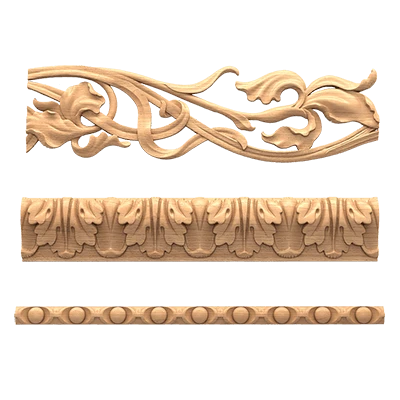
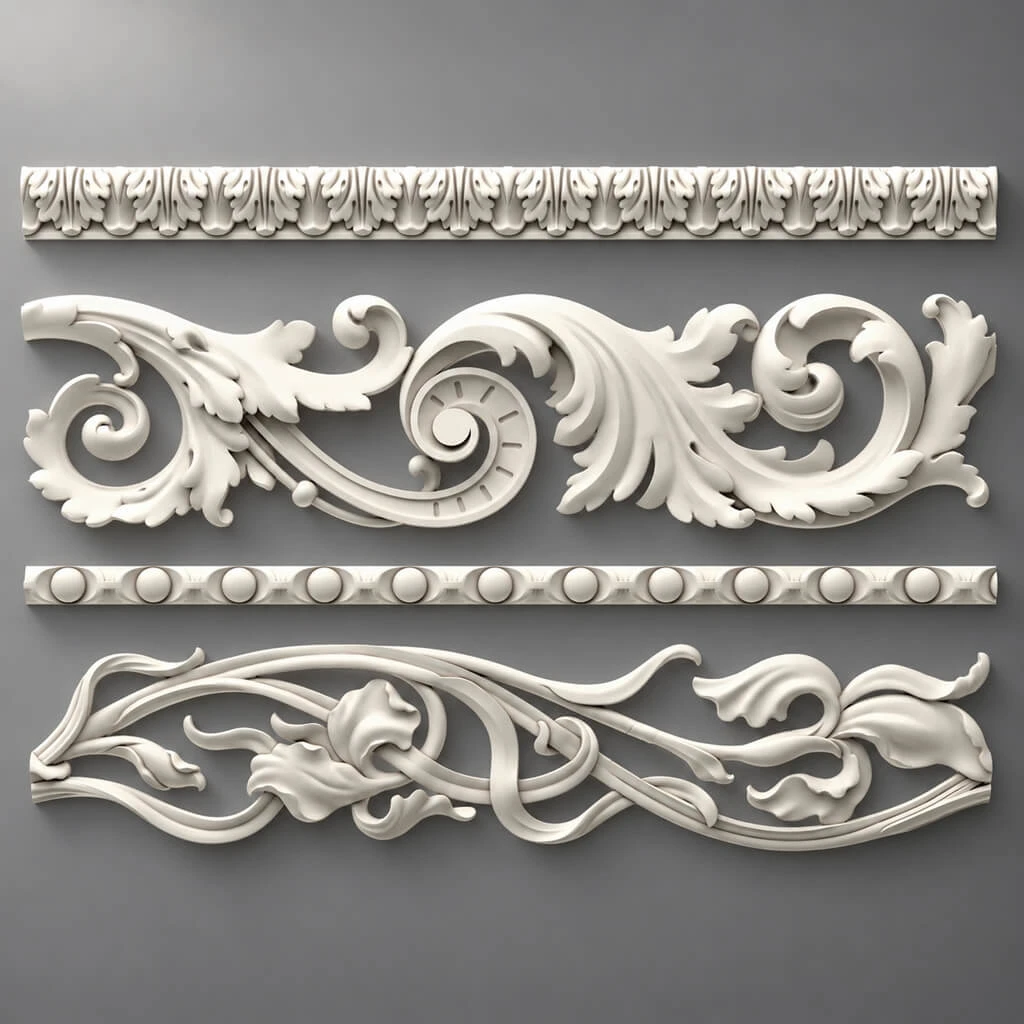
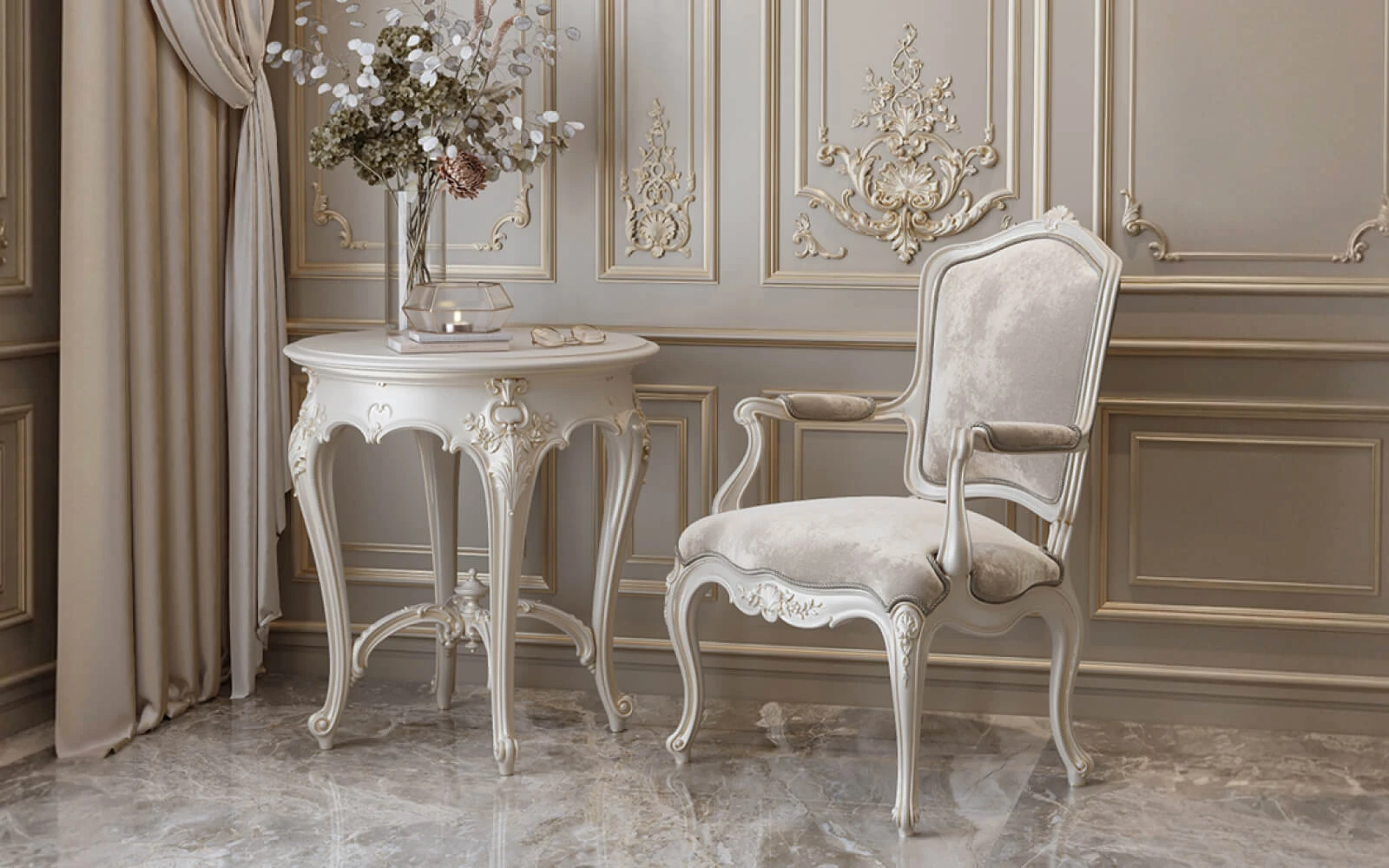
Moldings made of polyurethanein the role of architectural frames around display niches — a classic technique of museum and gallery design, transferred to retail. A molding frame around a product zone says: "Here is an exhibit." The buyer perceives it exactly that way: subconsciously increasing the significance of the item inside the frame.
The molding for the display frame is chosen with a moderate profile — too complex an ornament will compete with the merchandise.Decorative wooden moldingswith a profile cross-section of 30–50 mm create a clear frame without decorative noise.
Stucco decor around the logo
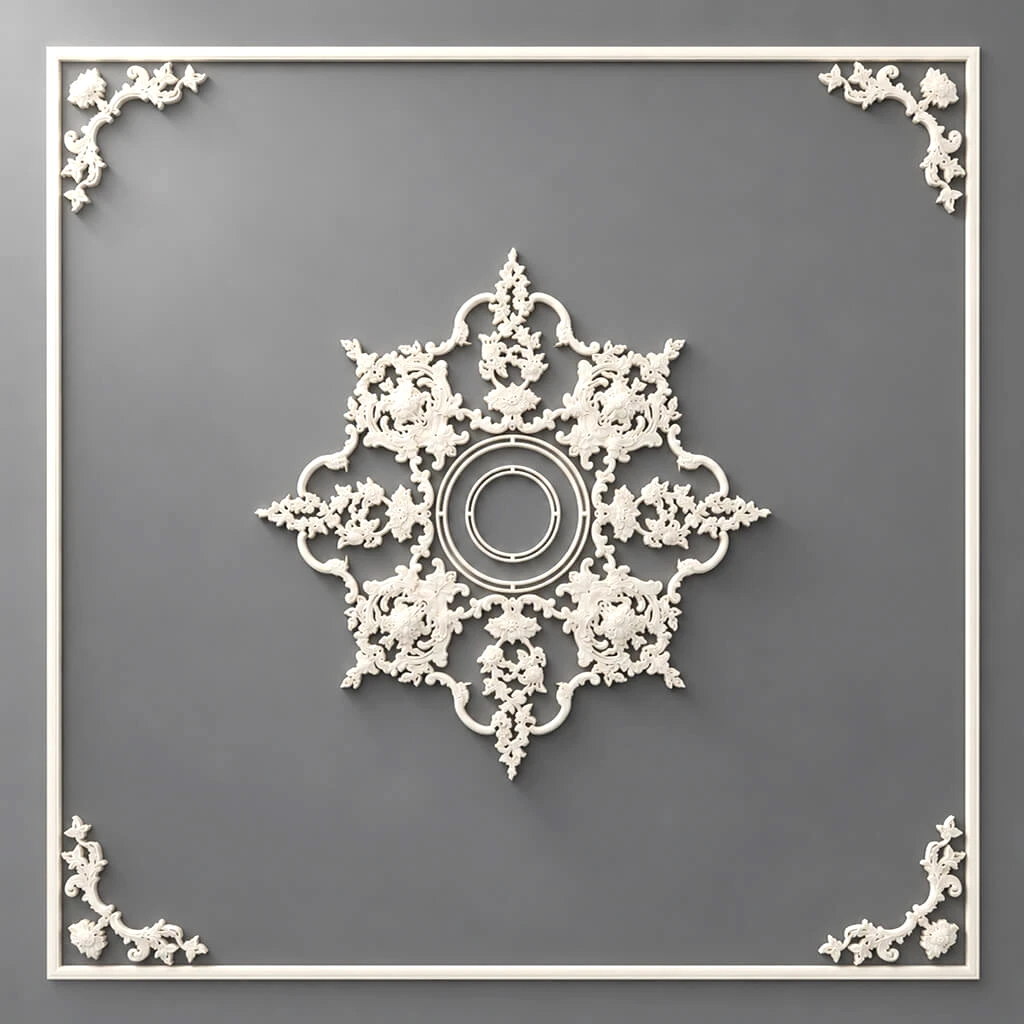
Brand logo on the wall, framed by moldings made ofpolyurethane wall decor— this is a branded plaque designed as an architectural portal. The molding frame around the logo doubles its visual weight and creates a sense of a brand style refined down to the details.
The molding for the logo wall should be in a neutral color that harmonizes with the brand colors. Polyurethane is the ideal material: it can be painted in any color, including custom brand shades.
Moldings on the wall behind the cash register
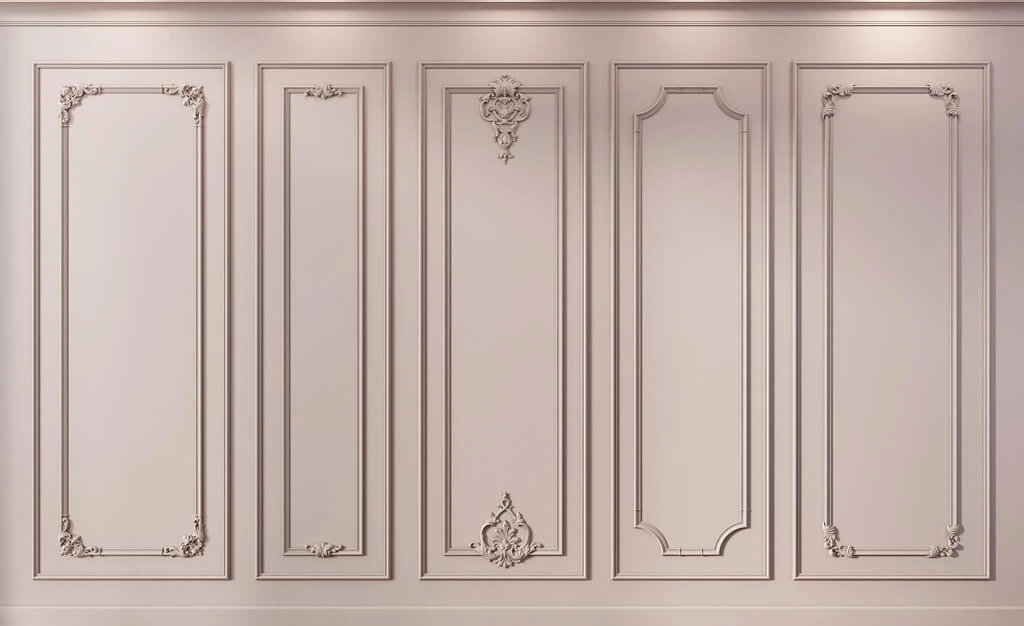
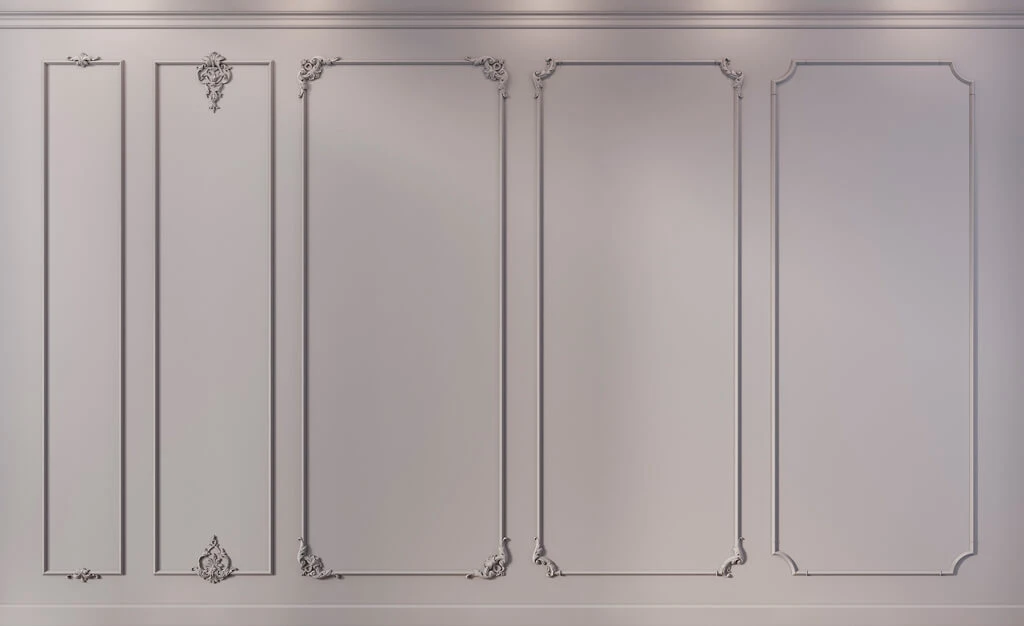
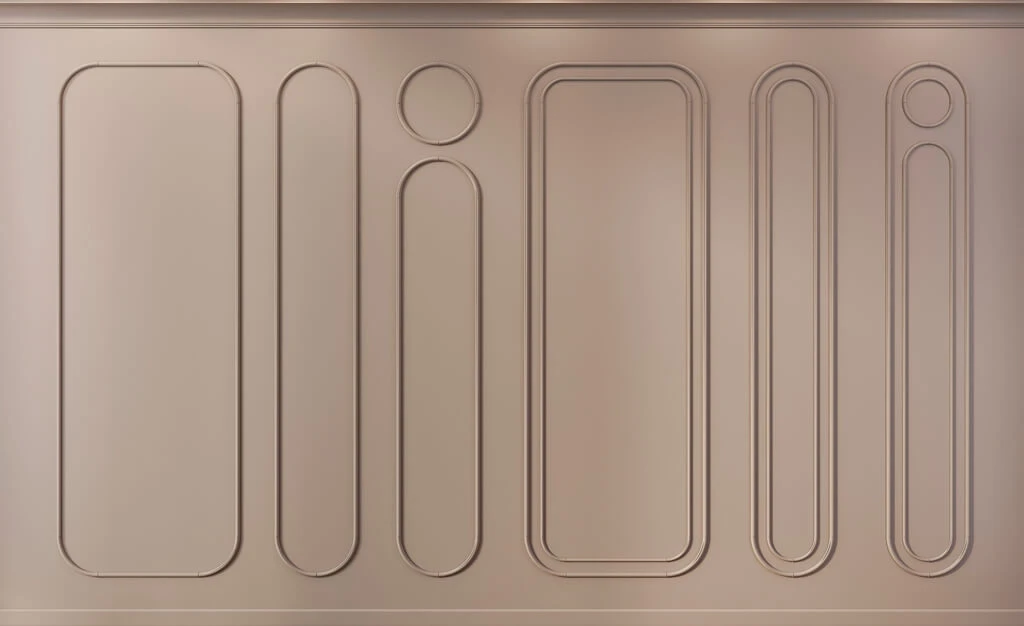
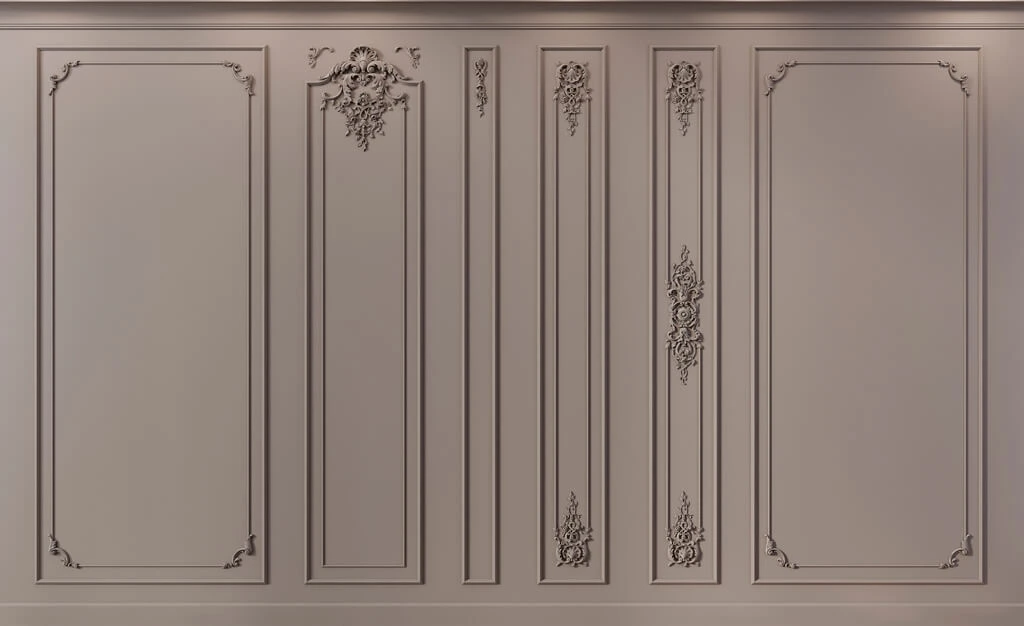
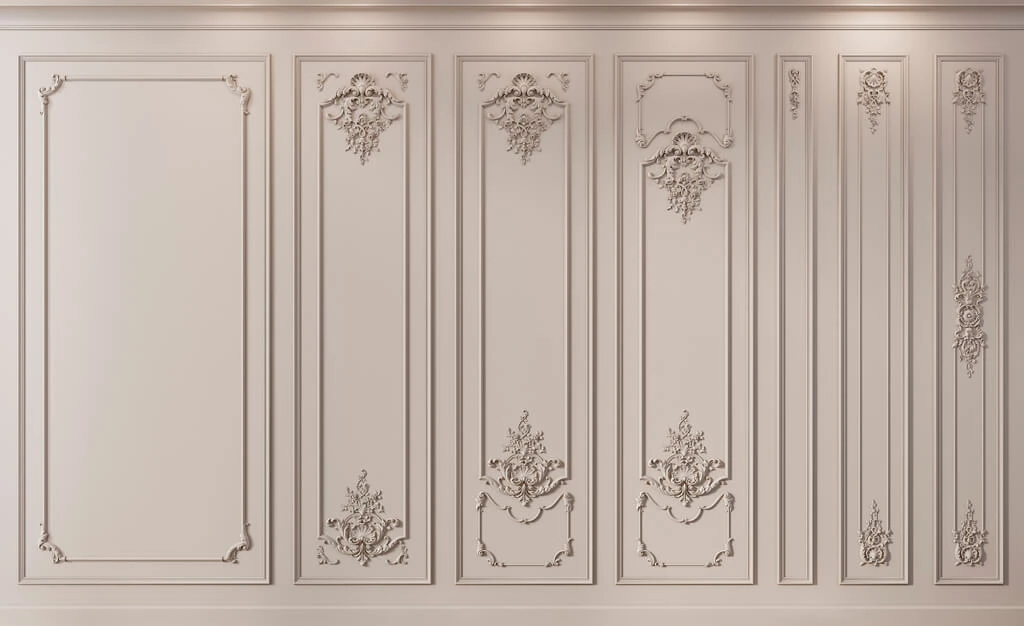
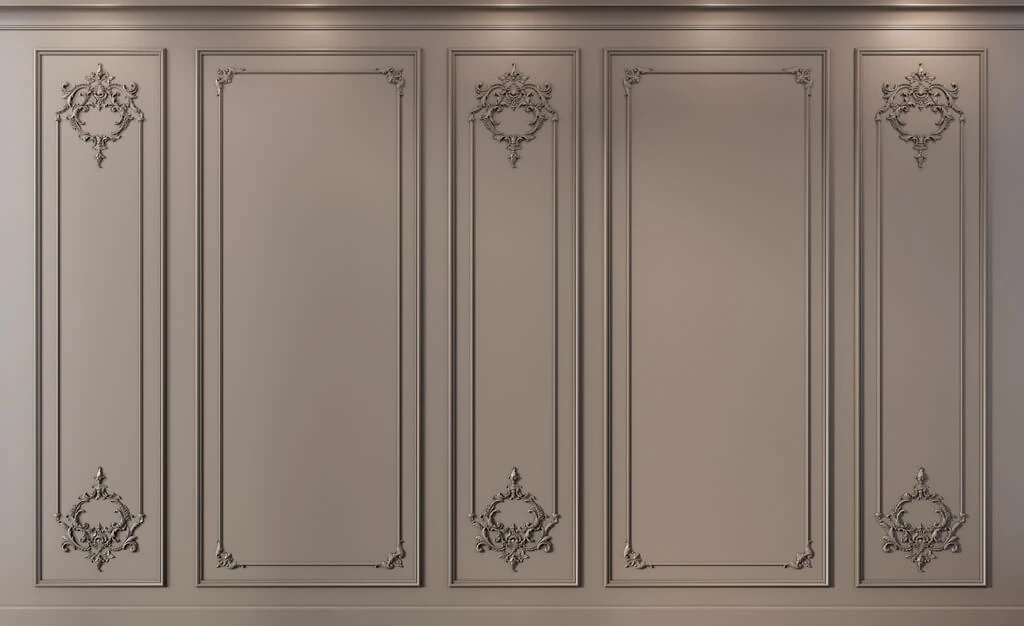
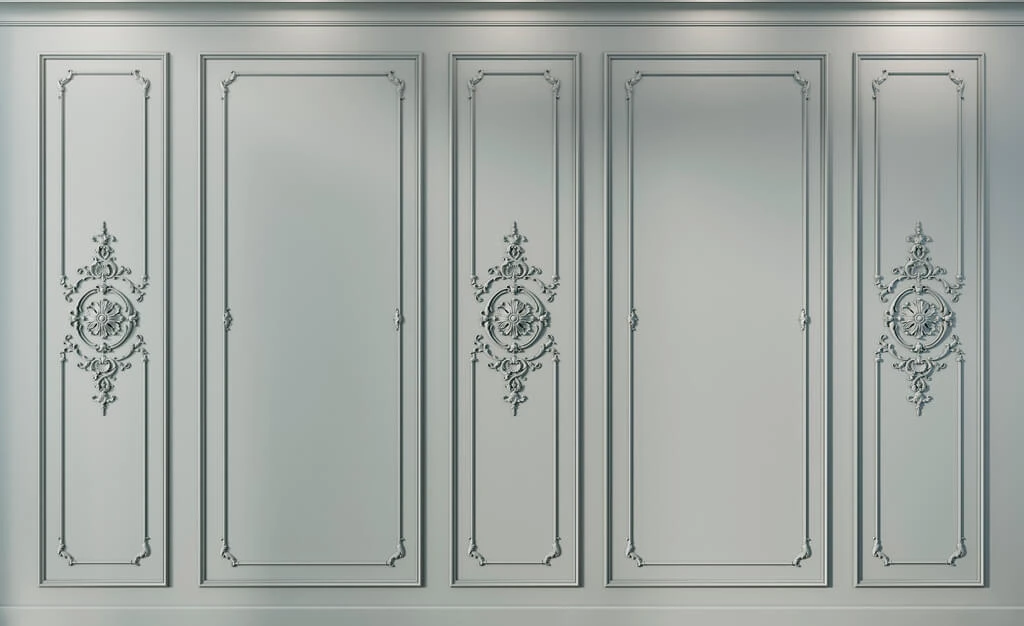
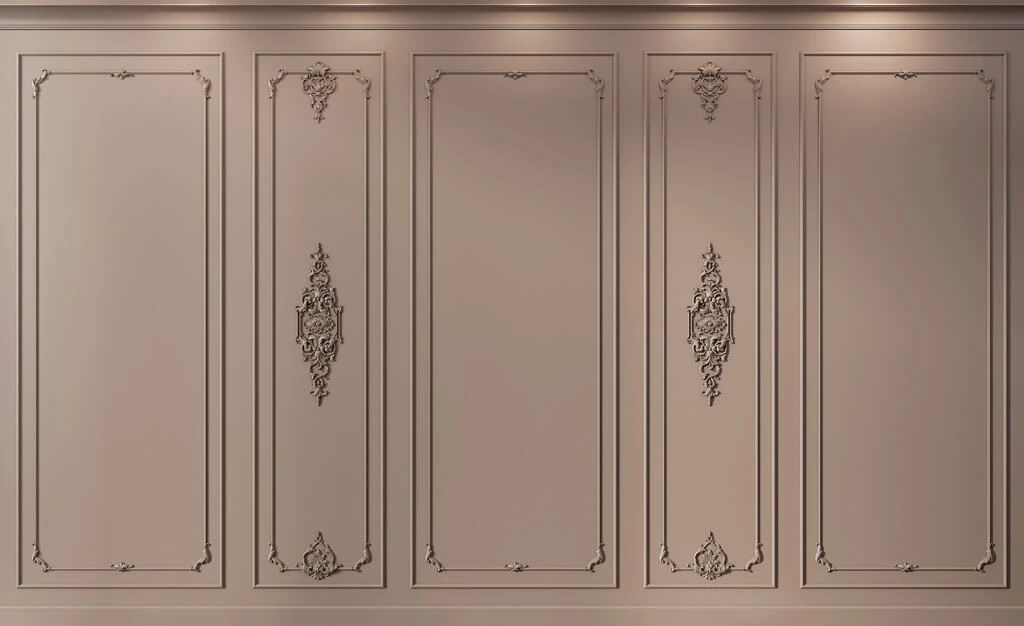
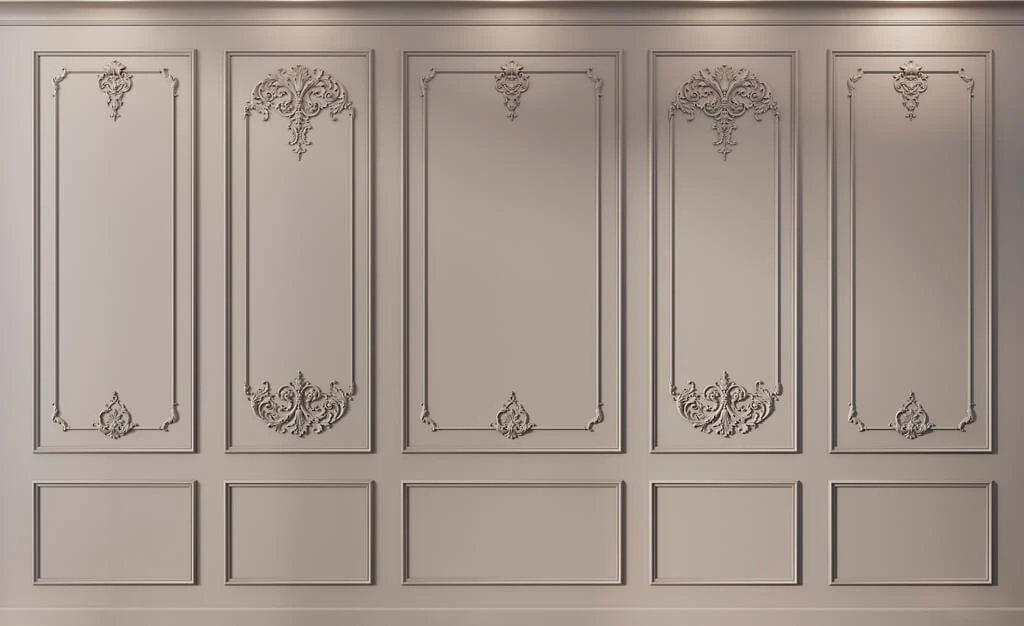
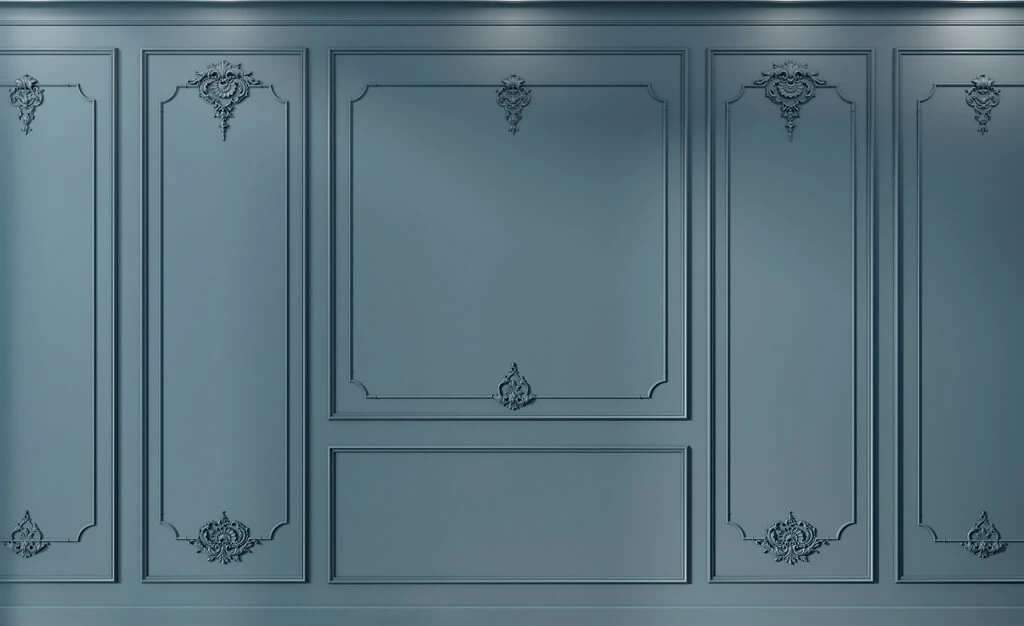
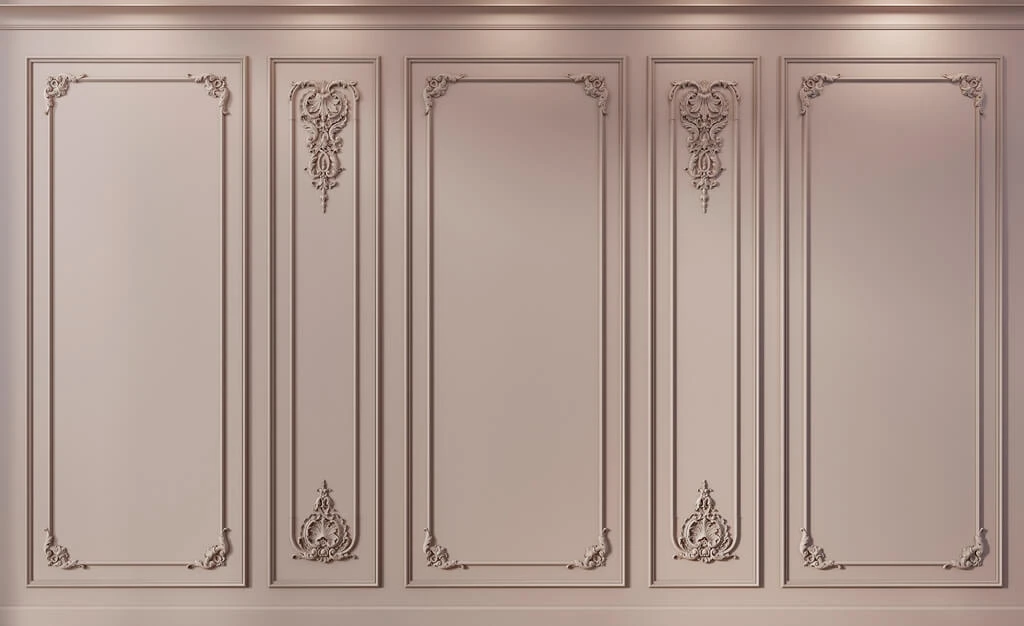
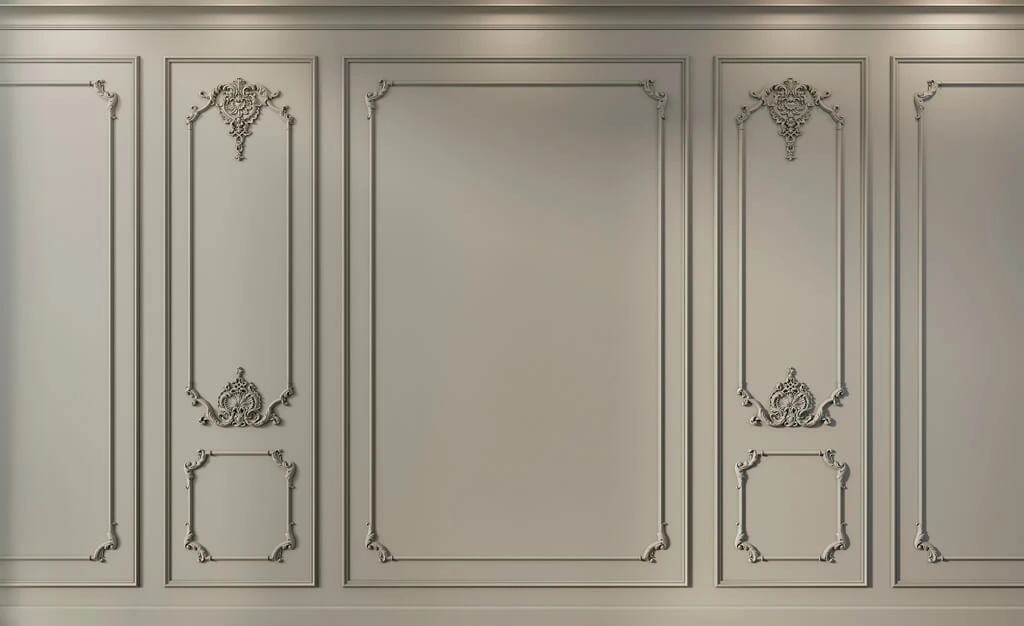
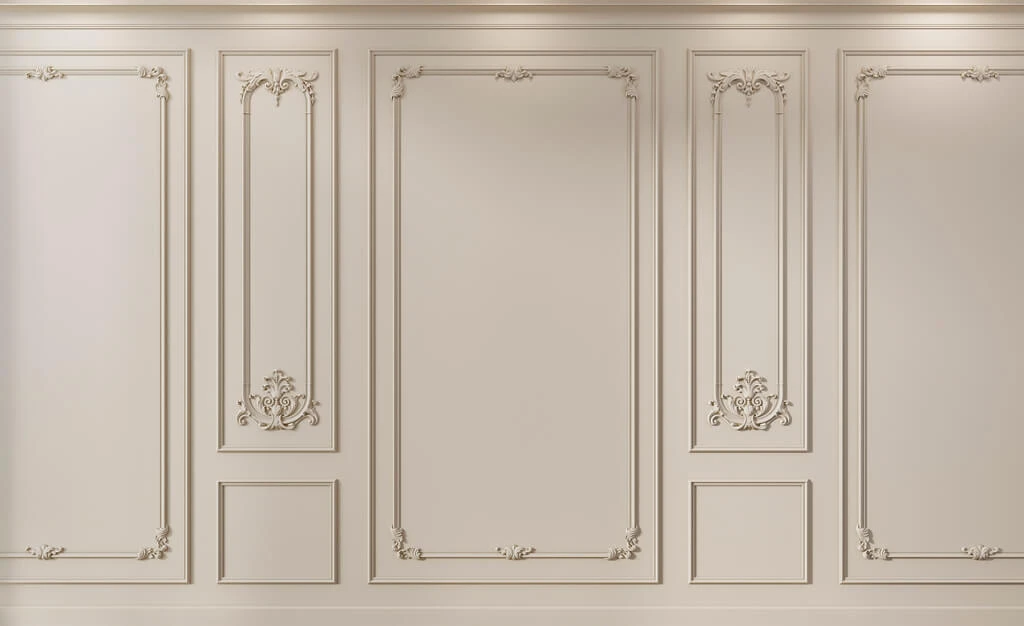
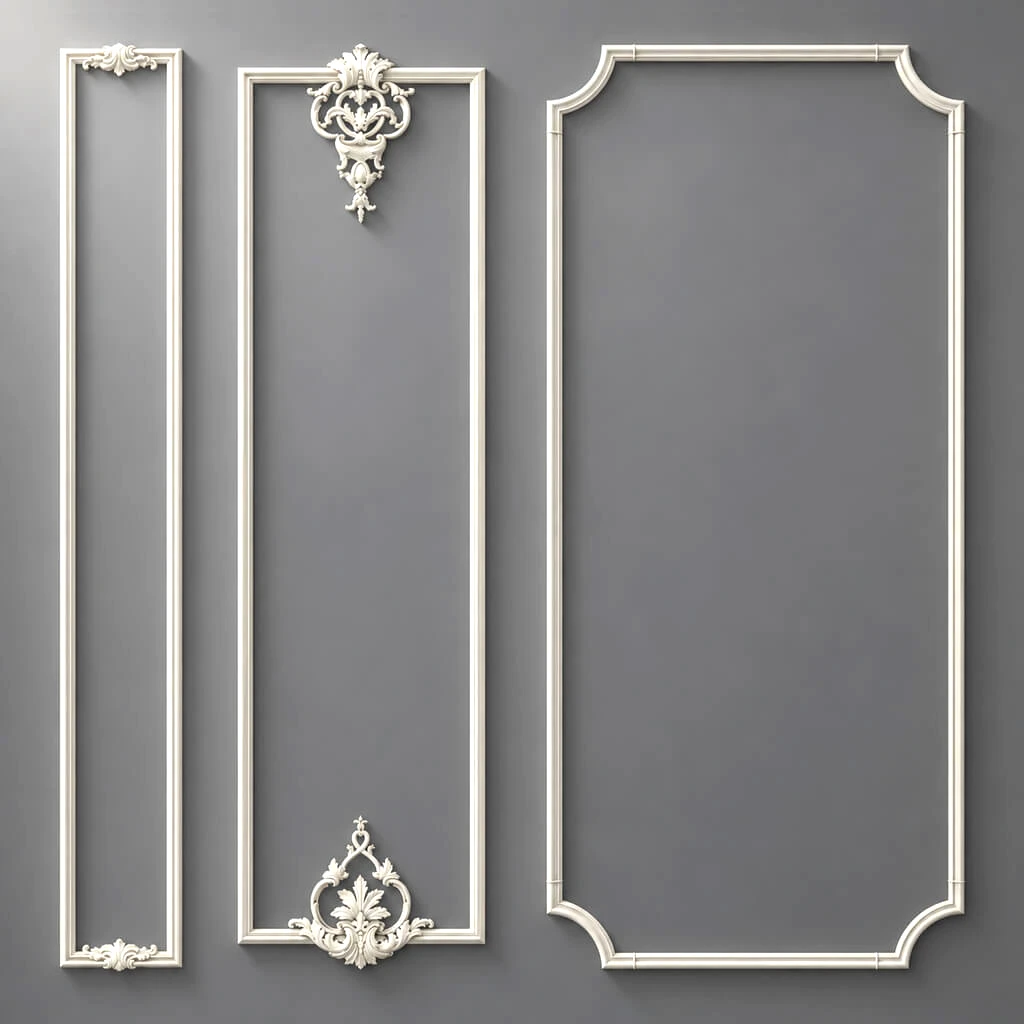
Frame molding panels on the wall behind the checkout area create a classic "boiserie" scheme — an architectural division of the wall into rectangular fields. In a commercial interior, this reads as a mark of quality: this is how expensive stores, banks, and jewelry boutiques are decorated.
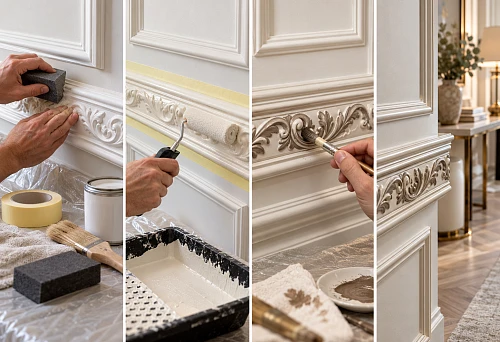
Polyurethane Itemsallow you to create a boiserie scheme in one or two days: the moldings are glued to the wall without special equipment and then painted together with the wall.
Moldings around the mirror in the fitting room
Moldings for a boutiquearound the mirror in the fitting room is a mandatory element. A mirror without a frame in the fitting room looks like a random object. A mirror in a molding frame is the mirror's "outfit": it becomes an architectural element of the room.
The molding profile for the fitting room mirror depends on the boutique's style: a thin, minimalist profile for a modern, minimalist store, a classic, ornate one for a premium boutique in a traditional style.
Ceiling decor made of polyurethane
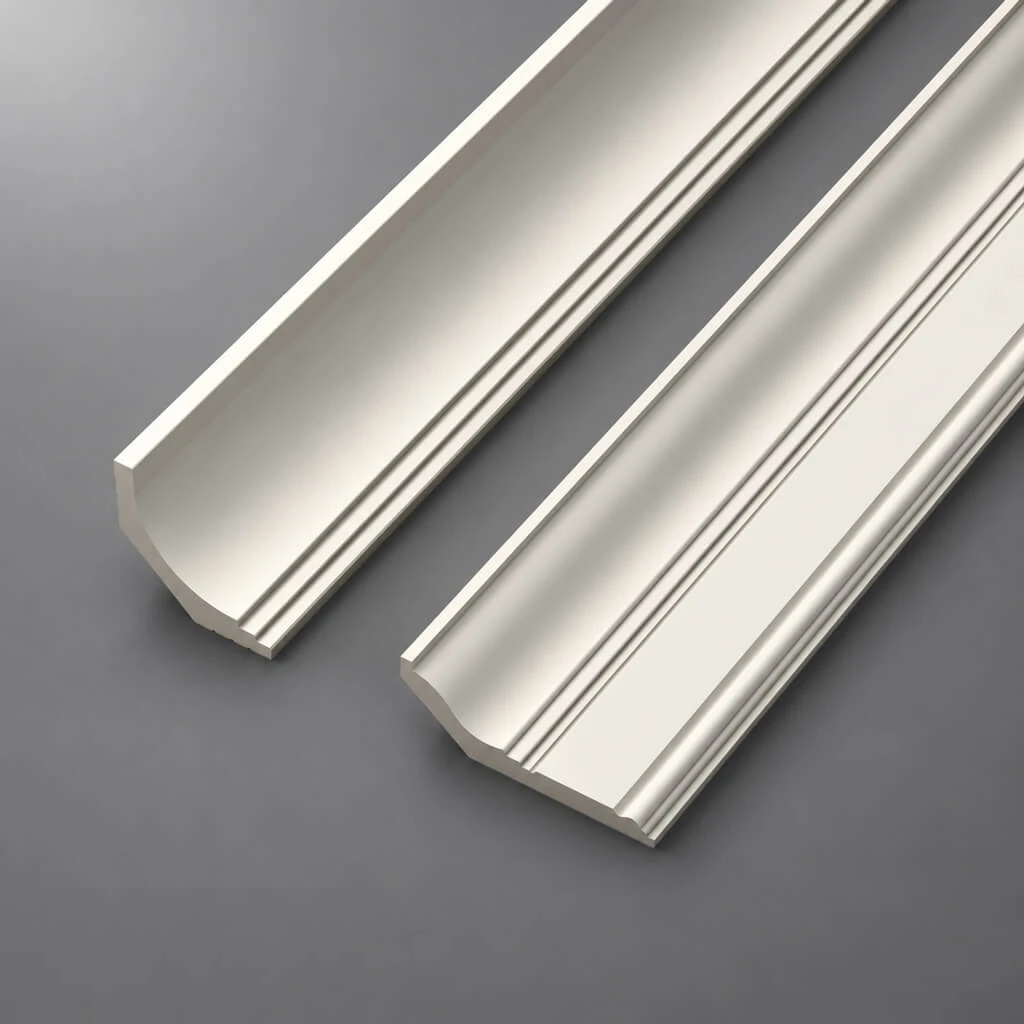
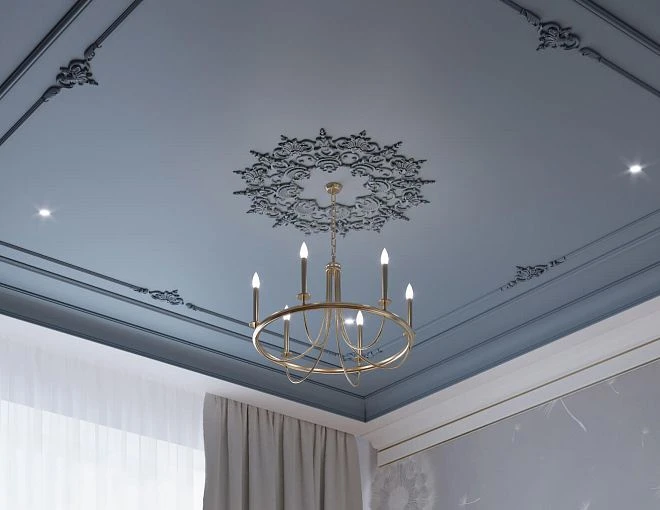
polyurethane ceiling decorin the sales floor is a horizontal plane that everyone sees. In a small boutique, the ceiling is part of the visible space, and its design directly affects the perception of height and price.
For a small boutique — a thin polyurethane cornice around the perimeter, matching the ceiling color. For a high sales floor — a more expressive profile with relief.
Ceiling cornice for a showroom: the top line that defines class
The transition from wall to ceiling is one of the most noticeable yet often ignored elements of a commercial interior. Without a cornice, this joint looks unfinished: like a painting without a frame.
Wooden cornice for a furniture and decor showroom
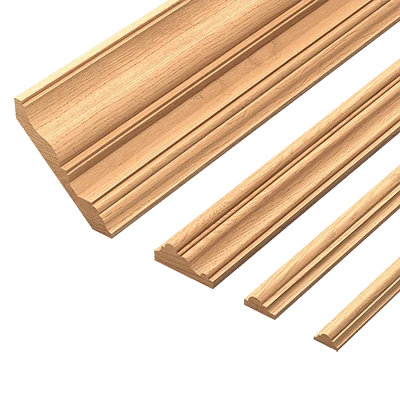
wooden cornicefor a furniture showroom is an organic choice: it matches the wooden DNA of the interior.Wooden beamswith a profile create a horizontal line that 'holds' the entire interior from above.
For a showroom with high ceilings (from 3 m) — a profiled wooden cornice with a projection of 50 mm or more adds monumentality and architectural weight. For a small boutique with a ceiling of 2.5–2.7 m — a lightweight cornice with a moderate profile to avoid creating a feeling of a hanging ceiling.
Polyurethane cornice matching the wall color
For a modern minimalist boutique —Polyurethane ceiling decorationMatching the wall color: the cornice is present, the transition is hidden, but there is no accent. The interior looks monolithic and expensive.
This is the principle of "invisible architecture": the element is present, performs its function, but does not attract separate attention.
Two-level ceiling and cornice
If the showroom has a two-level ceiling or ceiling beams, the cornice between the levels becomes a key decorative element.Buy wooden crownwith a profile matching the wooden beams — and the ceiling structure gains integrity.
Baseboard for showroom and boutique: the lower line of a commercial interior
A baseboard in a showroom is not just a decorative element. It is the first contact zone: it gets hit by carts, customers' feet, and cleaning equipment. It must be beautiful while withstanding the loads of commercial use.
MDF baseboard: a practical choice for a retail space
MDF Skirting Boardis the optimal choice for most retail interiors. Durable surface, impact resistance, and ease of replacement when damaged are important practical advantages.
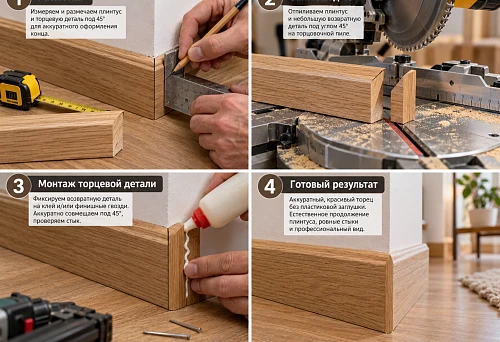
— is a horizontal element that frames the room at the bottom of the walls where the wall meets the floor. Skirting boards perform several functions: they hide the technological gap between the wall and floor covering (necessary for thermal expansion), protect the lower part of the wall from mechanical damage, create visual completion, and may conceal wiring.allows it to be painted in the exact brand color — which is critical for a boutique with strict brand standards. There is no other baseboard material that offers such freedom in choosing the final color.
White MDF Skirting Board— standard for bright boutiques, cosmetics stores, jewelry shops. It is neutral, clean, and does not compete with the product.
Wooden baseboard for a premium showroom
to buy wooden baseboardfor a furniture showroom or interior store — a logical solution. The natural wood texture on the lower part of the wall matches wooden slats, furniture, and wooden decorative interior elements.
Wooden baseboardmade of oak or ash — a choice with a safety margin: these species are characterized by high hardness and wear resistance, which is important for a commercial interior with high traffic.
Wide wooden baseboard for the premium segment
Wide Wooden Skirting Boardfrom 80–100 mm in high showroom halls or in areas with high ceilings — a monumental bottom line that adds weight and status to the interior. A wide baseboard itself signals a premium level: such solutions are used in expensive stores, hotels, and bank offices.
How to solve the issue of baseboard wear resistance
For areas of maximum contact — at the entrance, near fitting rooms, near cash registers — the baseboard is additionally protected with transparent polyurethane varnish in two to three layers. This extends the service life to 5–7 years without the need for replacement.
Molding for commercial interior: durability in details
In a showroom, every corner, every end, every joint is under load. It is preciselywood trim itemsprotect these vulnerable points and ensure the durability of the finish.
Wooden corner trim for external and internal corners
Wooden angleis a mandatory element for any external corner in the showroom. The ends of slatted sections, corners of decorative boxes, junctions with doorways — everywhere there is an external corner under load, a corner trim made of hardwood is needed.
In a commercial interior, without a corner trim, the external corner of a slatted wall will start to chip and splinter after a few months of use. The corner trim prevents this and maintains a neat appearance of the finish for years.
Wooden block as a load-bearing structure
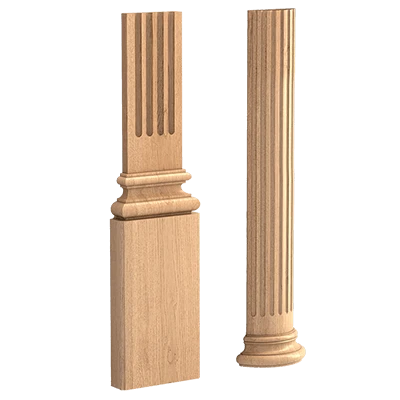
Wooden blockin the showroom is the invisible foundation of the entire decorative system. Horizontal blocks are guides for slatted panels. Vertical ones are side posts of decorative sections. The blocks create precise geometry and ensure the correct distance of the slats from the wall — for shadow and depth.
In a commercial interior, the block should be made of hardwood, not softwood — oak, ash, birch. Hardwood does not deform under the load of fasteners.
Wooden molding as a horizontal zone divider
Wooden Picture Framewith a light profile separates the slatted and non-slatted zones of the wall — where the showroom is zoned by height. For example: the lower part of the wall is a neutral painted surface, the upper part is slatted. A horizontal molding at a height of 120–150 cm creates a clear dividing line.
Systematic approach to trim: the rule of a single wood species
The rule for commercial interiors is stricter than for residential: all wooden millwork — slats, baseboards, cornices, corner pieces, bars — must be from the same wood species and the same stain. Even a slight discrepancy in tone in a commercial space is perceived as negligence and reduces the perceived quality of the entire interior.
Trimming Itemsfrom one manufacturer in coordinated stains — this is not a whim, but a commercial requirement.
Ready-made design schemes: five scenarios for commercial spaces
Scheme 1: Clothing boutique — moldings, mirror in the fitting room, MDF baseboard
Space: boutique 30–60 sq.m., ceiling 2.7–3 m, light neutral interior.
-
Wall with logo:Wooden planksfrom light oak — a slatted section as a background for the logo
-
Sales area walls: framed molding panels fromof polyurethane moldingsin the color of the walls
-
Fitting room: mirror in a wooden molding frame,Wooden slats for the fitting roomas a side accent
-
Skirting board:White MDF Skirting Boardneutral bottom line along the entire perimeter
-
Cornice: thinpolyurethane ceiling decorin the color of the ceiling
-
Ends of the slatted section:Wooden anglematching the slats
Result: a light, airy interior with a warm wooden accent and architectural walls.
Scheme 2: Furniture showroom — wooden slats, wooden baseboard, cornice in matching tone
Space: showroom 100–200 sq.m., high ceilings from 3 m, warm neutral tones.
-
Accent walls:Rafter panelsmade of oak — background for furniture display
-
Wall with logo: wooden slatted section with molding frame made ofwooden moldings
-
Baseboard: widewith a classic profile creates a sense of solidity, reliability.from 80–100 mm — monumental bottom line
-
Crown molding:wooden cornicewith a profile matching the slats and baseboard
-
Molding:Wooden corner pieceson all external corners,stripsas the load-bearing base of the slatted sections
Result: a monumental, warm wooden interior where furniture looks "more expensive" than in the warehouse.
Scheme 3: Decor salon — stucco molding, moldings, accent walls
Space: a small salon of 40–70 sq.m., mix of styles, warm tones.
-
Walls:Polyurethane wall decor— framed panels in neutral and contrasting colors
-
Accent wall: wooden slats as a textured background for the display
-
Showcase niches: molding frames made ofpolyurethane
-
Skirting board:Wooden baseboardmatching the wooden details of the display
-
Edges and junctions:wood trim items— corners, strips, baguettes
Result: an artistic, rich interior where the store decor becomes part of the display.
Scheme 4: Premium segment store — wide baseboard, expressive cornice, moldings
Space: jewelry boutique or luxury accessories store, small area, high price segment.
-
Walls: framed molding panels made ofof wooden moldingsin a dark, noble tone
-
Display window zones: molding frames as "gallery" framing
-
Baseboard: wideWooden baseboardmade of dark oak or walnut, from 100 mm
-
Crown molding:wooden cornicewith a classic profile, matching the baseboard
-
Wall with logo: stucco decor around the logo —polyurethane decorin the brand color
Result: an interior that "costs" several price categories above the product — this sells.
Scheme 5: Photo zone — slats, moldings, neat edges, lighting
Space: photo zone in any type of boutique or showroom — small (1.5–2.5 m width).
-
Back wall:Rack panelmade of light oak — a rhythmic, photogenic background
-
On the sides of the photo zone:Wooden corner piecesfor neat closure of the side ends
-
Molding frame around the perimeter of the zone: made ofpolyurethanein a neutral tone
-
Lighting: hidden LED strip on awooden blockalong the upper perimeter of the photo zone
-
Skirting board:MDF Skirting Boardmatching the wall tone — neutral, clean bottom of the frame
Result: a photogenic zone that clients intentionally seek out — and share online.
Material combinations: decision-making table
| Showroom style | Slats | Skirting board | Crown Molding | Moldings |
|---|---|---|---|---|
| Modern minimalism | White or neutral | MDF for Painting | Thin polyurethane | Wall color |
| Warm natural | Light oak, ash | Wooden, light | Wooden, lightweight | Wooden |
| Premium, classic | Dark oak, walnut | Wide wooden | Wooden, profiled | Wooden, profiled |
| Industrial loft | Dark slats, brushed | Dark MDF | Without cornice or steel | Minimum |
| Neutral branded | Brand color paint | MDF in brand color | Polyurethane in brand color | In the brand color |
Mistakes in designing a showroom and boutique: an honest breakdown
Making a wall too active — and distracting attention from the product. Bright wall decor in the sales floor competes with the product for the buyer's attention. Decor should be a background, not a stage. An accent wall with slats is the maximum. All four walls with active decor is overload.
Forgetting about a durable baseboard. In a commercial interior, a baseboard without protective coating becomes unusable within six months. Investing in a high-quality baseboard made of solid wood or MDF with durable varnish pays off with years of use without replacement.
Not covering the ends of wooden slats. In a showroom, an open end of a slat at an external corner will start chipping and delaminating after a month of use.Wooden angle — a mandatory element at every open end in a commercial space.
Using a massive cornice with a low ceiling. A large profiled cornice in a room with a 2.5 m ceiling "presses down" from above and visually reduces the space. For low ceilings — a thin polyurethane profile or no cornice at all.
Mixing several wood shades without a system. Dark oak slats, light pine baseboard, and birch cornice — these are three different "wood stories" in one space. The buyer perceives this as chaos and transfers the feeling to the brand.
Not planning mirrors and fitting rooms. A fitting room without a well-thought-out mirror, lighting, and background is a place where the buyer makes a "no" decision. A mirror in a frame, warm slats, proper light — a place where they make a "yes" decision.
Making decor beautiful but impractical. Fragile plaster moldings in walk-through areas, unvarnished wood near the entrance, white baseboard in a high-traffic zone — beautiful on the first day and unsightly after six months.
Do not combine the checkout area, display windows, and walls into a single system. Each zone is designed differently — the checkout area in one style, the display windows in another, and the walls in a third. As a result, the customer feels chaos and inconsistency, which they project onto the brand.
FAQ: popular questions about showroom and boutique design
Which wooden slats are best for a boutique — from which wood species and with what coating?
For a clothing or cosmetics boutique — oak or ash in a light tint, with oil or wax coating. For a jewelry boutique — dark oak or walnut with a hard varnish. The main requirement for a commercial interior is a durable coating: at least three layers. The wood species influences the image: oak — strictness and reliability, ash — lightness and freshness, walnut — luxury.
How to properly use moldings in a boutique so they don't look "old-fashioned"?
The key is in color and scale. Moldings in the wall color are modern in any style. A thin profile without ornamentation is modern. Moldings in a boiserie frame scheme are modern provided strict geometry. Moldings with baroque ornamentation on a smooth white wall, not connected to the rest of the decor, look outdated.
Is a cornice needed in a small boutique with a 2.5 m ceiling?
Yes, but a light one. A thin polyurethane profile 30–50 mm high around the perimeter covers the wall-ceiling joint and creates completeness without pressure from above. A cornice with a large overhang with a low ceiling is a mistake.
How to choose a baseboard for a high-traffic area — near the entrance and checkout?
MDF Skirting Boardwith a hard varnish coating orWooden baseboardmade of oak with 3–4 layers of varnish. Additionally, in the entrance area, there is a metal protective plate on the bottom end of the baseboard. For high-traffic areas, the baseboard width is from 60 mm: a wider baseboard holds the coating more stably against impacts.
Can the same slats be used on all walls of the showroom?
It depends on the task. If the goal is to create a unified wooden background for the entire space —Rafter panelson all walls will provide maximum integrity. If zoning is needed — slats only on accent walls, the rest neutral. The second option is more effective for managing customer attention.
How long will wooden decor last in a showroom?
With proper coating (hard varnish or oil with wax, 3–4 layers) and proper care (dry cleaning, neutral products) — wooden slats, baseboards, and cornices in a showroom last 7–10 years without restoration. Critical areas — corners and ends — withwooden corner piecesare additionally protected.
How to properly design a photo zone in a boutique?
A slatted panel as a background is the best choice: the rhythmic texture of wood works beautifully in a smartphone camera. The width of the photo zone is from 150 cm. The height of the slatted section is from floor to ceiling. Lighting — hidden, soft, warm. A molding frame around the perimeter of the photo zone marks it as a special place. And mandatory: the brand logo or name in the frame space.
STAVROS: a system solution for commercial interiors
A showroom or boutique is a commercial tool that must work for years without losing its appearance. That is why it is especially important to work with a manufacturer that offers not a set of individual products, but a complete system of coordinated elements.
STAVROS is a Russian manufacturer of solid wood and polyurethane products. Slats, baseboards, cornices, moldings, linear products, corners, and bars are produced in coordinated tints and profiles — which makes it possible to create a unified decorative system for any commercial space.
The entire range for decorating a showroom and boutique:
-
Wooden planks — for accent walls, photo zones, and fitting rooms
-
Wooden plank — with precise dimensions and tint selection
-
Rafter panels — for quick installation of slatted accent walls
-
Decorative wooden moldings — for frames, display cases, and mirrors
-
Moldings made of polyurethane — for boiserie, panel frames, and logo framing
-
Polyurethane wall decor — architectural accents for all zones
-
polyurethane ceiling decor — lightweight cornices for the sales floor
-
wooden corniceandWooden beams — for furniture showrooms and premium boutiques
-
MDF Skirting Board — a practical choice for the sales floor
-
Wooden baseboard — for wooden systems and the premium segment
-
Wooden angle — edge protection in contact zones
-
Wooden block — the load-bearing base for all decorative structures
-
wood trim items — system solutions for all joints and junctions
-
Polyurethane Items— the entire range of stucco decor
A showroom or boutique is not just a retail space. It is a stage where your brand's story unfolds. Think through every detail — and customers will return not only for the product but for the feeling of the place.