Article Contents:
- Architectural elements made of polyurethane: cornices, sills, pilasters
- Facade cornices: horizontals setting the rhythm
- Sills: elegant finishing of openings
- Pilasters: vertical accents of strength and stability
- Trim and moldings: frame for openings
- Decorative elements: rosettes, cartouches, keystone
- Proportions and scale: harmony of decoration with openings
- Rule of thirds: classical harmony
- Visual weight and balance
- Rhythm and repetition
- Hierarchy of importance
- Style consistency with building design
- Entrance staircase and wooden balusters: unity of materials and forms
- Porch construction: from function to aesthetics
- Wooden balusters: beauty and safety
- Handrails and balustrades: comfort and aesthetics
- Posts and pedestals: compositional anchor points
- Combining wood and polyurethane: rules of harmony
- Canopy over the porch: architectural completion
- Climate resistance and protection of decoration
- Properties of polyurethane in outdoor conditions
- Installation considering climate
- Protection of wooden elements
- Regional Characteristics
- Regular Maintenance
- Examples of successful solutions: from classic to modern
- Classic portico with columns
- Mediterranean villa
- English cottage
- Modern minimalism
- Russian estate
- FAQ: Answers to Popular Questions
- Conclusion

The entrance group of a house is its face, the first impression received by every guest and passerby. Here, the architecture of the building must 'speak' especially expressively, demonstrating the style, taste, and status of the owner. But how often do we see beautifully finished facades that end in a completely unremarkable entrance — a simple door, a modest porch without character. Or conversely: a luxurious porch with columns looks like a foreign element against smooth walls.
The secret to a harmonious entrance group lies in the visual unity of all elements.Facade decoration made of polyurethaneIt allows you to easily and elegantly create this connection, unifying the facade, doors, windows, and staircase into a cohesive composition. Modern production technologies for polyurethane elements open up limitless possibilities for realizing the boldest architectural ideas — from classical to ultra-modern.
In this article, we will thoroughly examine how to properly design and finish an entrance group so that it becomes a true calling card of your home. Which elements to use, how to maintain proportions, how to protect the decor from weather fluctuations, and how to create a composition that will delight the eye for many years.


Polyurethane architectural elements: cornices, sashings, pilasters
Polyurethane has today become the number one material for facade decoration. It has replaced heavy concrete, fragile plaster, and expensive natural stone due to its unique combination of properties — lightness, strength, durability, and low cost.




Facade cornices: horizontals that set the rhythm
A cornice is a horizontal projecting element that divides the wall surface into sections, creates a play of light and shadow, and emphasizes the architectural structure of the building. In classical architecture, cornices separated the plinth from the main wall, floors from each other, and crowned the building under the roof.
For the entrance group, cornices play the role of a unifying element. Imagine: a cornice runs above the entrance door, continuing left and right, framing the first-floor windows. This horizontal line links separate openings into a single composition, creating a sense of thoughtfulness and completeness.
Polyurethane cornices are available in a vast variety of profiles — from simple rectangular to complex multi-tiered with brackets, modular units, and carved details. For a private home, optimal cornices are 15–25 cm wide and 8–15 cm projecting. Smaller dimensions will be lost on the facade, while larger ones will appear heavy.
Cornices are installed using a special adhesive with additional fixation by screws. Joints between individual elements are carefully spackled and sanded to create a monolithic surface without visible seams after painting. A correctly installed cornice serves for decades without deforming or losing relief detail.
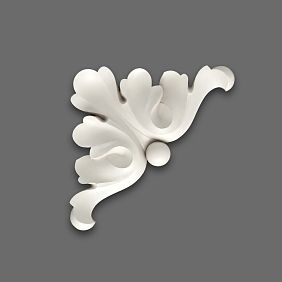
Our factory also produces:


Sashings: elegant finishing of openings
A sashing is a small decorative cornice above a window or door. Essentially, it is a miniature overhang that protects the opening from water dripping from above and simultaneously decorates the facade. In classical architecture, sashings were a mandatory element of any significant opening’s design.
For an entrance door, a sashing is especially important. It creates a visual accent, draws attention to the entrance, and gives it a sense of grandeur. Even the simplest door looks impressive and prestigious under a beautiful sashing.
Sashings come in various shapes. Straight triangular ones resemble ancient porticos, semicircular (arched) ones are softer and more flexible, with broken pediments — baroque and decorative. The choice depends on the overall facade style and your preferences.
The size of a sashing should correspond to the size of the opening. For a standard entrance door 90–100 cm wide, a sashing 120–150 cm long is suitable. It will project 15–25 cm beyond the opening on each side, creating a harmonious composition. A too small sashing will be lost, while a too large one will overwhelm the door with its mass.
Facade window decoration from polyurethaneIn the form of sashings, the building’s appearance transforms dramatically. Imagine a facade with ten identical windows — dull and unremarkable. Add an elegant sashing above each window — and the facade comes alive, acquires character, becomes memorable.
Get Consultation
Pilasters: vertical accents of strength and stability
A pilaster is a flat vertical column projecting from the wall plane. Unlike a real column, a pilaster does not bear real load — it is purely decorative. But what a powerful effect it produces!
Pilasters on either side of the entrance door — a classic technique that instantly transforms a simple entrance into a grand portal. Two symmetrical verticals create a 'frame' for the door, making it stand out from the wall plane, and giving it significance. Pilasters can be topped with a cornice or sashing — resulting in a complete architectural composition in the style of classicism or neoclassicism.
Pilaster construction is usually three-part: base at the bottom, shaft (body) in the middle, capital at the top. The base is massive and stable, the shaft may be smooth or fluted (with vertical grooves), and the capital is adorned with carved details — volutes, acanthus leaves, rosettes.
The height of pilasters is determined by the height of the opening and overall composition. For a standard door 210 cm high, pilasters 250–280 cm tall are suitable. They start at the level of the porch or slightly below and end above the door, creating a sense of upward movement.
The width of pilasters is usually 12–20 cm, and the projection from the wall is 3–8 cm. This is purely decorative element that should not interfere with door opening or pedestrian movement. Polyurethane is ideal for pilasters — it is lightweight, strong, holds its shape well, and does not crumble upon accidental impacts.
Trim and moldings: frames for openings
Trim is a decorative frame for an opening that covers the junction between the wall and the door or window casing. The simplest trim is a flat strip. More complex variants include profiled elements, rosettes at corners, carved details.
For the entrance group, trims play a key role. They connect the door to the wall, making the transition smooth and complete. Wide trims 10–15 cm wide give the opening monumentality, while narrow 5–7 cm trims convey elegance and lightness.
Trims can be combined with other elements. For example, vertical parts of the trim transition into pilasters, and the horizontal upper part into a sashing. This results in a multi-level composition with rich plasticity.
The color of trims can match the wall color (in this case, they emphasize texture and relief) or contrast (then they actively highlight the opening). A classic solution is white or light beige trims on a richly colored facade. A modern solution is dark trims on a light background.
Decorative elements: rosettes, cartouches, keystone stones
Rosettes are round or oval decorative elements with plant or geometric ornamentation. They are used as accents in compositions — at the center of a sashing, at the corners of a trim, on pilasters. A rosette with a diameter of 20–30 cm looks harmonious on the facade of a private home.
Cartouches are decorative shields or plaques, often with ornamental framing. You can place the house number, owner’s monogram, or commemorative inscription on them. A cartouche above the entrance door is an elegant solution that adds individuality.
Architectural stone - a decorative element in the center of the upper part of an arched opening. It imitates the keystone, which in masonry holds the entire arch. In polyurethane form, this is purely decorative, but it visually enhances the opening, giving it solidity.
Cornices and brackets - projecting elements that appear to support cornices and architraves. They do not perform any real load-bearing function, but they create an illusion of structural logic, which is important for architectural harmony.
Proportions and scale: harmony between decoration and openings
The most common mistake when designing a facade is ignoring proportions. Too large a decoration will overwhelm a small house, while too small a decoration will disappear on a large one. Finding the golden mean is an art form.
Rule of thirds: classical harmony
Architects have long used the rule of thirds to create harmonious compositions. The principle is simple: a decorative element should be approximately one-third the size of the object it adorns.
For an entrance door 210 cm high, the architrave should be approximately 70 cm (including the projecting part and decorative elements). For a 120 cm high window - 40 cm. These are approximate figures, with deviations of 10-15 percent allowed, but the general principle must be followed.
The width of the architrave or casing relative to the opening width follows the same logic. If the door is 100 cm wide, the side casings may be 12-15 cm wide, and the architrave may project 20-30 cm beyond the opening on each side.
Visual weight and balance
Decorative elements have visual weight - some appear light and airy, others heavy and massive. This depends on the profile, degree of relief, and color.
Dark elements appear visually heavier than light ones. Deep relief creates a play of light and shadow, adding mass. Smooth profiles appear lighter than complex multi-tiered ones. Consider these nuances when selecting decoration.
For the entrance group, balance between top and bottom is important. If above the door there is a heavy architrave with brackets, the bottom must be balanced - for example, with a porch featuring a balustrade or wide steps. A heavy top on thin legs looks unstable and uncomfortable.
Rhythm and repetition
The human eye loves rhythm - repeating identical elements at equal intervals. This creates a sense of order and harmony. Use this principle when designing a facade.
If you install an architrave of a certain shape above the entrance door, use similar architraves above windows. They do not need to be absolutely identical - windows may be smaller, so the architraves can be more modest. However, the overall style, proportions, and profile character must be repeated.
Pilasters along the sides of the entrance can be repeated at the corners of the building - creating an architectural frame that unifies the facade. Brackets under the cornice can be repeated at 50-80 cm intervals around the entire building perimeter, creating a rhythmic pattern.
Hierarchy of importance
Not all facade elements are equal. The entrance door is primary and should stand out in scale and richness of decoration. Windows are secondary, with simpler decoration. Technical openings (ventilation, basement) are minimally decorated or entirely undecorated.
This hierarchy must be visually readable. Above the entrance - the largest and most ornate architrave, possibly with additional elements - cartouches, rosettes. Above first-floor windows - slightly simpler. Above second-floor windows - even more modest. This gradation directs the viewer's gaze, indicates the main entrance, and creates architectural drama.
Style consistency
Decoration must match the overall architectural style. For a classical house with a symmetrical facade, suitable elements include strict pilasters, triangular architraves, cornices with modillions. For a modern minimalist house - simple rectangular frames without unnecessary details.
A Provence or country-style house requires more intimate, homey decoration - arched openings, small semi-circular architraves, simple casings. A Gothic mansion - pointed arches, ogee moldings, pinnacles. Modern style - asymmetrical compositions, botanical ornaments, flowing lines.
Do not attempt to combine incompatible styles. Baroque volutes on a high-tech facade will look ridiculous. Strict Doric pilasters on a gingerbread house in Russian style - likewise. Choose one stylistic direction and follow it consistently.
Entrance staircase and wooden balusters: unity of materials and forms
A porch with a staircase is an inseparable part of the entrance group. It is here that polyurethane facade decoration meets wooden railing elements, and the overall impression depends on how harmoniously they combine.
Porch construction: from function to aesthetics
A porch serves a utilitarian function - providing convenient access from ground level to the door level. But this does not mean it should be dull. A well-designed porch becomes an architectural focal point, setting the tone for the entire entrance group.
The porch platform size must be sufficient for comfortable door opening and accommodating several people. Minimum 150x150 cm, ideally 200x200 cm or even larger. A spacious porch conveys hospitality and solidity.
The number and height of steps are determined by the height difference. Comfortable step height - 15-18 cm, tread depth - 28-32 cm. To rise 90 cm, 5-6 steps are needed. A staircase with an odd number of steps is considered more harmonious - the person begins and ends movement with the same foot.
The porch shape can be rectangular, semi-circular, or polygonal. Rectangular - the simplest and most universal. Semi-circular with fan-like steps - grand and ceremonial. Polygonal or asymmetrical - modern and original.
The material of the porch affects the overall style. Concrete clad with tiles or stone - classic for stone and brick houses. Wood - for wooden, frame, country, or chalet-style homes. Composite materials - for modern architecture.
Balusters made of wood: beauty and safety
wooden balusters for terraceand porches - elements that combine functionality with decorativeness. They form a railing that ensures safety and simultaneously adorn the staircase, giving it a finished look.
According to construction norms, the height of the railing should be at least 90 cm. This is the minimum for adult safety. If there are children in the house, it is better to increase it to 100-110 cm. The distance between balusters should not exceed 15 cm, so that a child cannot fit their head through.
The shape of the balusters determines the style of the entire railing. Classic turned balusters with smooth transitions, thickening, and crossbars suit traditional interiors. Straight square or rectangular ones - for modern minimalist designs. Carved with ornamentation - for ornate grand staircases.
The wood species is chosen based on operating conditions and budget. For an outdoor porch exposed to rain, snow, and temperature fluctuations, durable species are needed - oak, larch, beech. They are dense, low-porosity, and well resistant to rot.
Spruce is cheaper but requires careful protective treatment. Without it, it quickly darkens, develops mold, and cracks. Quality impregnation with antiseptics and coating with varnish or oil can extend the life of spruce balusters to 10-15 years.
Exotic species - teak, merbau, ipe - have natural resistance to moisture and biological damage. They are expensive but practically eternal. Terraces and porches made of teak last 30-50 years without loss of quality.
Handrails and railings: comfort and aesthetics
The handrail is the upper horizontal part of the railing, which people hold onto when ascending or descending. It should be comfortable to grip - not too thick or too thin. The optimal cross-section for a round handrail is 45-50 mm, for rectangular - 60 by 40 mm.
The height of the handrail is 90-100 cm from the step. For children, an additional handrail at a height of 50-60 cm can be added. It is attached to the same balusters, creating a two-level safety system.
The handrail can be made of the same wood species as the balusters or contrasting. Light-colored balusters with a dark handrail - a classic combination that emphasizes the structure. A single color creates a monolithic impression.
The shape of the handrail follows the logic of the staircase. A straight flight - a straight handrail. If there are landings or turns, the handrail follows their contour. The ends of the handrail on posts can be simple (beveled cut) or decorative (scroll, ball, cone).
Posts and pedestals: compositional support points
Support posts are installed at the beginning and end of the staircase, at turns, and every 1.5-2 meters along straight sections. They are thicker than balusters - usually 100 by 100 or 120 by 120 mm. These are load-bearing elements that support the entire railing structure.
Posts can be simple square, turned with a decorative profile, or carved with ornamentation. Their upper part is often topped with a decorative cap - ball, pyramid, vase, or decorative carving. This gives posts a finished look and makes them visual accents.
Pedestals are massive supports at the base of the staircase. They can be brick, concrete, clad with stone or plaster. A wooden post installed on such a pedestal results in a combined structure that is especially strong and durable.
Pedestal decoration should match the facade decoration. If the facade has rustication, it can be repeated on the pedestals. If polyurethane cornices are used, a similar profile can crown the pedestal. Such correspondences create visual unity.
Combining wood and polyurethane: rules of harmony
Wood and polyurethane are materials differing in nature, texture, and processing method. How to make them not conflict but complement each other?
The first rule is color harmony. If the polyurethane facade decoration is painted white or light beige, wooden balusters can be natural color under transparent varnish or tinted in warm wood tones. Contrasting textures (smooth polyurethane and textured wood) with similar tones create an interesting effect.
The second rule is stylistic unity. If the facade decoration is classical, with pilasters and cornices, the balusters should also be classical - turned, with a traditional profile. Modern minimalist decoration requires similarly simple balusters - square, without unnecessary details.
The third rule is proportional correspondence. Massive pilasters and wide cornices on the facade require proportionally sized balusters - not thin rods, but substantial elements with a cross-section of 70-80 mm. Conversely, delicate facade decoration does not match with bulky, thick balusters.
Canopy over the porch: architectural completion
Canopy or overhang over the porch - not only protection from rain and snow, but also an important compositional element. It connects the porch with the facade, creating a transition from the vertical wall to the horizontal landing.
A cantilevered canopy is attached to the wall with brackets or beams. Its size should provide protection for the entire porch area plus the upper steps. Minimum overhang - 120 cm, ideally 150-200 cm. Width - 30-50 cm wider than the door width on each side.
A canopy on posts or columns creates a portico - a covered gallery before the entrance. This is a more substantial solution that turns the entrance into a grand one. Posts can be wooden to match the staircase balusters or with polyurethane decoration - fluting, capitals.
The shape of the canopy repeats or contrasts with the shape of the porch. Rectangular porch - rectangular canopy. Semi-circular - arched. A modern angular porch may be crowned with a canopy of unusual geometric shape.
The roofing material of the canopy is chosen according to the overall style. Metal roofing or profiled sheet in the color of the main roof - for traditional houses. Polycarbonate - for modern designs. Flexible tile - a universal option. Copper or zinc-titanium - for elite mansions.
Canopy cladding (lower part) - another surface for decoration. Simple white siding - boring. Wooden with decorative profile - more interesting. Coffer (divided into squares by beams) - luxurious. You can add polyurethane rosettes to each coffer - resulting in a rich decorative surface.
Weather Resistance and Decor Protection
Facade elements operate under harsh conditions - rain, snow, frost, heat, ultraviolet rays, wind. Not every material can withstand such loads. Let's figure out how to ensure the longevity of decor.
Properties of polyurethane in outdoor conditions
Polyurethane was originally designed as an outdoor material. It is chemically inert, does not absorb water, does not rot, and is not affected by fungi and bacteria. This is a huge advantage over wood and gypsum.
The operating temperature range of polyurethane is from minus 60 to plus 80 degrees. It does not become brittle in cold and does not soften in heat. Cycles of freezing and thawing, which destroy concrete and stone, are not a problem for polyurethane.
However, polyurethane has a weak spot - ultraviolet radiation. Direct sunlight gradually breaks down polymer bonds, the material yellows, becomes brittle, and starts to crumble. The process is slow - it takes years - but inevitable.
UV protection is a mandatory condition for longevity. All quality facade polyurethane elements undergo special UV-stabilizer treatment during production. This extends service life to 15-20 years even on southern facades with intense sunlight.
Additional protection is provided by facade paints with UV filters. A layer of quality acrylic or silicone paint acts as a shield, reflecting ultraviolet rays. The coating needs to be renewed every 7-10 years - and the decor will last for decades.
Installation considering climate
The quality of installation directly affects longevity. The main problem with facade decor is water penetration into joints and gaps. When freezing, water expands, creating stresses that destroy adhesive bonds and the material itself.
Outdoor adhesive must be frost-resistant, elastic, and have high adhesion. Polyurethane adhesives, MS-polymers, professional construction compounds like Ceresit CT83 or equivalents - these are the right choices. Ordinary PVA or acrylic adhesives intended for indoor use do not work on facades.
Mechanical fixation with anchors is mandatory for elements weighing more than 5 kg and measuring more than 1 meter. Adhesive holds, but anchors provide protection against detachment due to strong winds or temperature deformations of the building. Anchors are driven into the material, holes are filled with putty and sanded.
Sealing joints - a critically important operation. All joints between elements, junctions to walls, and corners are sealed with acrylic or silicone-based sealant. It is elastic, compensates for thermal expansion, and does not allow water to pass. The sealant color is matched to the decor or paint.
Drainage - ensuring water runoff. Horizontal surfaces (top of cornice, sash) must have a slight outward slope to prevent water stagnation. Drainage holes are provided in large elements to drain condensation.
Protection of wooden elements
Wood outdoors without protection lasts only a few years. Moisture, temperature fluctuations, ultraviolet rays, fungi, insects - enemies from all sides. But proper treatment turns wood into a durable material that serves for decades.
Antiseptic treatment - the first mandatory step. Antiseptics can be surface (penetrating 1-3 mm) or deep penetration (up to 10-15 mm). For outdoor elements, deep penetration types are required. They contain fungicides that kill fungal spores and insecticides against wood-boring insects.
The best antiseptics are based on organic solvents (with white spirit or other solvents). They penetrate wood deeper than water-based ones. But working with them requires a respirator, as the odor is strong. Water-based antiseptics are safer but less effective.
Treatment is applied in two to three layers with intermediate drying. Special attention is given to ends, which absorb moisture most intensely. Ends can be additionally sealed with wax-based compounds.
Finish coating creates a barrier between wood and the external environment. Options: varnish, oil, paint, stain. Each has pros and cons.
Varnish creates a strong film that excellently protects against water. But it is not elastic - it cracks when wood deforms. For outdoor use, special yacht or parquet varnishes with enhanced durability are required. Renewal every 3-5 years.
Oil penetrates into wood without forming a surface film. Wood remains "breathable" and does not crack. But protection is weaker than with varnish. Oil requires regular renewal - every 1-2 years. Restoration is simple - clean, dry, apply a new layer.
Paint completely hides wood texture but provides maximum protection. Quality facade acrylic or alkyd paints last 7-10 years without noticeable changes. For classic interiors, white painted balusters are a traditional solution.
Stains (semi-transparent impregnations) - a compromise between oil and paint. They tint wood while preserving texture visibility and simultaneously protect. Contain UV filters, water-repellent components, fungicides. Renewal every 3-4 years.
Regional characteristics
Climate of the region determines requirements for materials and technologies.
Southern regions with hot sun - the main problem is ultraviolet radiation. Polyurethane decor requires paints with maximum UV protection. Wood must be coated with compounds containing strong filters, otherwise it will quickly fade. Light colors are preferable to dark ones - they heat up less.
Northern regions with harsh winters - the problem is prolonged exposure to negative temperatures and freeze-thaw cycles. Critical is sealing all joints to prevent moisture penetration. Frost resistance of adhesives and sealants must be confirmed.
Coastal regions with high humidity and salty air - an aggressive environment for any materials. Salt accelerates corrosion of metal fasteners, which must be stainless steel only. Wood requires especially thorough antiseptic treatment. Polyurethane is relatively resistant, but joints must be sealed particularly well.
Continental regions with sharp temperature fluctuations - materials experience significant stresses from expansion and contraction. Elasticity of adhesives and sealants is critical. Rigid connections quickly fail.
Regular Maintenance
Even the highest quality materials and perfect installation do not eliminate the need for maintenance. Regular inspection and preventive care extend the life of decor for years.
Spring inspection after winter - check the integrity of coverings, presence of cracks and peeling. If problems are detected, address them immediately, do not postpone. A small crack will become a large one over the summer, requiring serious repair.
Facade washing once a year removes dirt that accumulates in the relief of the decoration. Use a soft brush and water, optionally with a mild detergent. High-pressure washing is permissible, but carefully - a strong stream may damage joints.
Update coverings as needed. Wood finishes such as varnish or paint typically require refreshing every 3-5 years. Polyurethane decor can be repainted less frequently - every 7-10 years. The main sign that it's time to repaint is the appearance of small cracks in the coating, loss of gloss, and chalkiness (paint leaves a mark on the hand upon touch).
Examples of successful solutions: from classic to modern
Theory is theory, but nothing illustrates possibilities better than concrete examples. Let's consider several typical options for designing an entrance group in different styles.
Classic portico with columns
Two columns on either side of the entrance, supporting a triangular pediment - a formula that has worked reliably for over two and a half thousand years. Modern technologies allow for easy and inexpensive recreation of this ancient motif.
Polyurethane half-columns with a diameter of 30-40 cm and a height of 3-3.5 meters are installed on either side of the entrance door. They consist of a base, a fluted shaft, and an Ionic or Corinthian capital. All elements are supplied ready-made and mounted using adhesive with anchors.
Antabлемент (horizontal part above columns) includes architrave, frieze, and cornice. For a private house, the total height of the antabлемент is 40-60 cm. The frieze can be left smooth or decorated with triglyphs and metopes for the Doric order, or with meander for the Ionic order.
Pediment (triangular finish) is mounted above the antabлемент. In its center is the tympanum, which can be left empty or decorated with a rosette, cartouche with monogram, or relief panel. The corners of the pediment are often adorned with acroteria - decorative pinacles.
The porch under such a portico should match the scale. Wide steps spanning the full width of the portico, clad in natural stone or stone-effect ceramic tile. Balustrade with white balusters and substantial newels at the edges. This creates a grand entrance group in the spirit of classicism.
Mediterranean villa
The warm south of Europe gave the world a unique architectural language - simplicity of forms, abundance of arches, terracotta tones, and lush greenery. This style can be recreated even in our climate.
Arched portal for the entrance door - central element of composition. A semi-circular arch is framed with a polyurethane arch molding. Above the arch is a small semi-circular sash, creating additional shadow.
Walls around the entrance can be rusticated - creating an imitation of stone masonry using polyurethane elements. Rustication at the building's corners and door frame gives the appearance of an old stone structure. Color - sandy, ochre, terracotta.
Porch with smooth steps, possibly semi-circular. Cladding with ceramic tiles featuring ethnic ornamentation. Railing made of wrought iron with plant motifs or wooden balusters painted white.
Roof made of shingles on wooden beams clad with natural-color wooden siding. Supports holding the beams can be carved. Abundance of greenery in planters on the porch completes the image of a Mediterranean villa.
English cottage
Modesty, durability, tradition - these are the characteristics of the English style. No fussiness, only quality materials and noble simplicity of forms.
The entrance door is framed by simple rectangular casings 10-12 cm wide. Above the door is a triangular sash with a strict profile. No scrolls or rosettes - only clear geometry. Color - white or cream against brickwork.
On either side of the door, place rectangular pilasters without fluting, with simple capitals in the Tuscan order style. They are not massive, rather delicate, emphasizing verticals but not dominating.
The porch is small, 2-3 steps, clad in clinker tiles or natural stone in gray-brown tones. Railing made of simple wrought iron pattern - vertical bars with minimal scrolls.
Gable roof, like a miniature roof, covered with the same shingles as the main roof. Supported by carved wooden brackets. The entire structure is compact, neat, without pretense of monumentality, but radiating reliability and comfort.
Modern minimalism
Absence of decoration is also decoration, if forms are thought out and precise. Modern architecture offers a completely different approach to designing an entrance group.
Door with concealed mounting, without casings, flush with the wall. Or, conversely, a deep portal - the door is recessed 30-50 cm, creating a shadow niche. Portal framing - simple rectangular polyurethane profiles, painted in wall color or contrasting.
Vertical accents are created not by pilasters, but by wide flat panels. They run from ground to roof, creating strong graphics. Material - polyurethane panels with smooth or textured surface.
Horizontals are minimal - one clear profile above the door or even its absence. Overhang - cantilevered, made of metal or glass, with hidden supports (mounting concealed). It can be straight or with a slight slope, but must be geometrically precise.
Porch and stairs - monolithic concrete, clad in large-format ceramic tile. No balusters - railing made of glass in metal frame or thin metal cables. Color palette is achromatic - white, gray, black, possibly with accent in door color.
Russian estate
Russian wooden architecture created its own unique language of forms. It can be interpreted in a modern way, using new materials.
Carved porch - central element. Posts with carved capitals and bases, ornate brackets under the overhang, carved balusters with plant or geometric ornamentation. All elements made from solid wood, coated with transparent varnish preserving texture.
The facade around the entrance can be decorated with polyurethane elements imitating traditional Russian carving - cornices with kokoshniks, sanchiriks with lattices, corner pilasters with geometric ornamentation. Color in traditional colors - white, blue, ochre.
Two-slope eaves with overhang, covered with wood (shingles, shakes) or wood-style soft tile. The edges of the eaves are decorated with carved lattices - delicate boards with pierced ornamentation.
High porch (traditionally in Russian houses, a high undercroft), with massive steps. The platform is spacious, allowing placement of a bench. Wooden floor, made of plank. The entire structure exudes solidity and hospitality.
FAQ: Answers to popular questions
Can polyurethane facade decoration be used in regions with harsh climates?
Yes, modern polyurethane withstands temperatures down to -60 degrees Celsius without losing properties. The main thing is quality installation with frost-resistant adhesive and careful sealing of joints. Painting with facade paints will provide additional protection.
How often should the protective coating on wooden balusters on the porch be renewed?
It depends on the type of coating and operating conditions. Oil requires renewal every 1-2 years, varnish - every 3-5 years, quality paint - every 5-7 years. If the balusters are protected by an awning, intervals double.
What size sanchirik is optimal for a standard entrance door?
For a door 90-100 cm wide and 200-210 cm high, a sanchirik 130-150 cm wide (protruding 15-25 cm beyond the door edges on each side) and 50-70 cm high will be suitable. This will create harmonious proportions.
Should polyurethane elements be painted before installation?
Better after installation. This way, you immediately cover joints, spackled areas, and screw marks. You’ll get a unified monolithic surface. However, if the elements are white and will remain white, you can install them without painting.
What distance should be between the porch balusters?
According to construction norms - no more than 15 cm (between adjacent balusters). This is a safe distance, as a child cannot fit their head through. For greater decorative effect, you can reduce it to 10-12 cm.
Can polyurethane and wooden elements be combined in one entrance group?
Yes, and this is a very common practice. Facade decoration is made of polyurethane, while porch balusters and handrails are made of wood. The key is to coordinate styles, proportions, and color palette to create a unified composition.
How to protect polyurethane decoration from sun fading?
Use facade paints with UV filters. Light colors fade less than dark ones. Quality manufacturers add UV stabilizers into the material during production. Renewing paint every 7-10 years will keep the decoration in perfect condition.
What adhesive to use for installing polyurethane facade decoration?
Specialized polyurethane adhesives such as Tytan, Orac Decofix, Ceresit CT83, or equivalents. They are frost-resistant, elastic, and have high adhesion to various substrates. Standard PVA or acrylic adhesives for interior use are not suitable.
How long does polyurethane facade decoration last?
With proper installation and periodic coating renewal - 25-30 years or more. The material itself practically does not age; the main thing is to protect it from UV radiation with paint and monitor the integrity of joint seals.
Which wood species is best for outdoor porch balusters?
For outdoor use, optimal choices are oak, larch, and beech. They are dense, resistant to moisture and rot. Exotic species (teak, merbau) are even better but more expensive. Pine requires careful protective treatment, but with proper care, it also lasts a long time.
Conclusion
The entrance group is the house’s calling card, forming the first impression and setting the tone for the perception of the entire architecture. Harmonious combination of polyurethane facade decoration and wooden porch elements creates a composition that pleases the eye and demonstrates the homeowner’s taste.
Modern production technologies for polyurethane elements and wood treatment open practically unlimited possibilities for implementing any architectural ideas. Classical porticos with columns, romantic Mediterranean arches, restrained English entrances, bold minimalist solutions - all of this is accessible and achievable.
The key is to follow principles of harmony: correct proportions, stylistic unity, thoughtfully designed rhythm of elements, color and texture coordination. Equally important is professional installation using quality materials and following technologies. This guarantees that your entrance group will serve for decades, preserving its original beauty.
STAVROS Company offers a full range of elements for creating an ideal entrance group - from elegant polyurethane cornices and sanchiriks to noble wooden balusters made of solid oak and beech. Decades of production experience, quality control at every stage, wide range of styles and sizes allow implementing projects of any complexity. Choosing STAVROS products means choosing reliability, beauty, and longevity for your home. Create an entrance group worthy of your home and a source of pride for many years.