







































Article Contents:
- Why walls, ceiling, and floor should be designed as a single whole
- Architectural vertical: from baseboard to cornice
- Where to use stucco decor and where to use wooden slats
- When stucco decor is needed
- When wooden slats are needed
- Key principle of combination
- How to combine slats and moldings on a wall
- Slats as a central accent zone with a molding frame
- Moldings on the sides of a slatted panel
- Slats in a niche, moldings along the wall perimeter
- Stucco frame as a "mat" for the slatted area
- The rule of "air" between materials
- Ceiling cornice as a connecting link between wall and ceiling
- Wooden cornice: warmth and natural material
- Polyurethane cornice: versatility and profile precision
- How to choose a cornice for a slatted interior
- How to properly match a cornice with ceiling decor
- How to choose a baseboard for slats and stucco
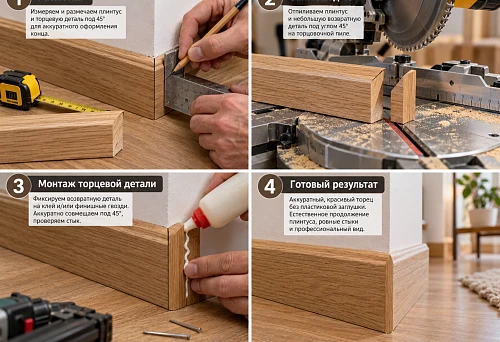
- Wooden baseboard: natural bottom line
- MDF baseboard for painting: white outline
- Rules for coordinating baseboards with the entire interior
- Wooden slats on the wall and ceiling: scenarios and transitions
- Slats transition from wall to ceiling
- Slats only on the wall, ceiling with cornice
- Ceiling made of wooden slats: a separate architectural technique
- Slats as zoning for kitchen-living room and hallway
- Linear products as the basis of a cohesive interior
- What is included in linear products
- Why a unified series of linear products is important
- Corner and block: small details, big result
- Which combinations look expensive and professional
- White polyurethane molding + natural oak slats
- Wooden baseboard + wooden cornice + slats
- Slats in the TV area + moldings on the side walls
- MDF baseboard + polyurethane moldings + thin cornice
- Wooden slats + thin ceiling decor
- Mistakes when combining slats, moldings, and baseboards
- Too many profiles on one plane
- Different wood shades without a system
- High baseboard without considering ceiling height
- Massive cornice in a small room with slats
- Slats, moldings and an active ceiling
- Ignore joints between materials
- How to assemble the system: a step-by-step algorithm
- About the Company STAVROS
- Frequently Asked Questions
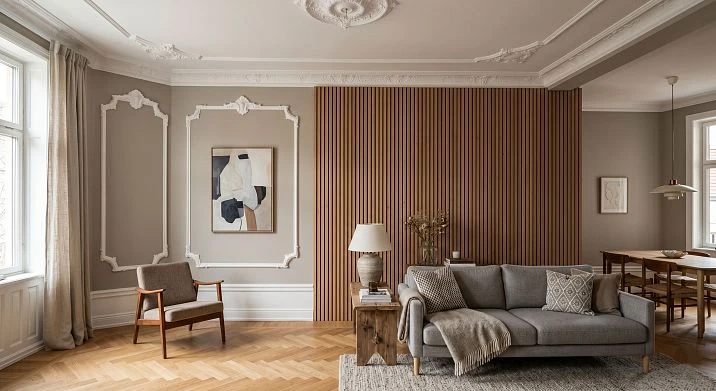
There is one question that torments most people during renovation, but which is rarely voiced: why do good furniture, good wallpaper, and good light fixtures still give a feeling of 'something is off'? Why does the interior look like a random set of items rather than a cohesive space?
The answer is almost always the same: because the walls, ceiling, and floor were chosen separately, without a unified system. The slats were chosen based on mood, the baseboard to match the floor, the ceiling cornice to match 'something classic', and the moldings were added at the last minute because 'it looks nice'. The result is several good solutions that don't communicate with each other.
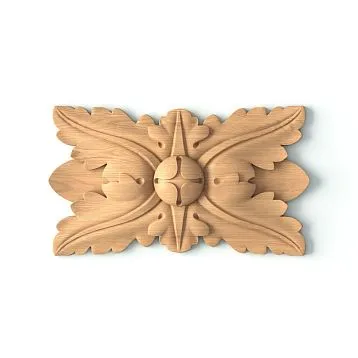
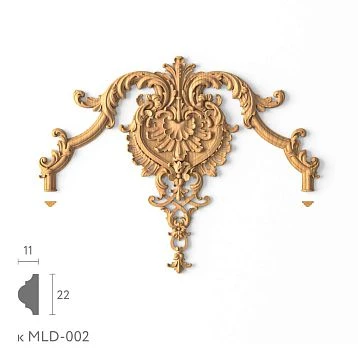
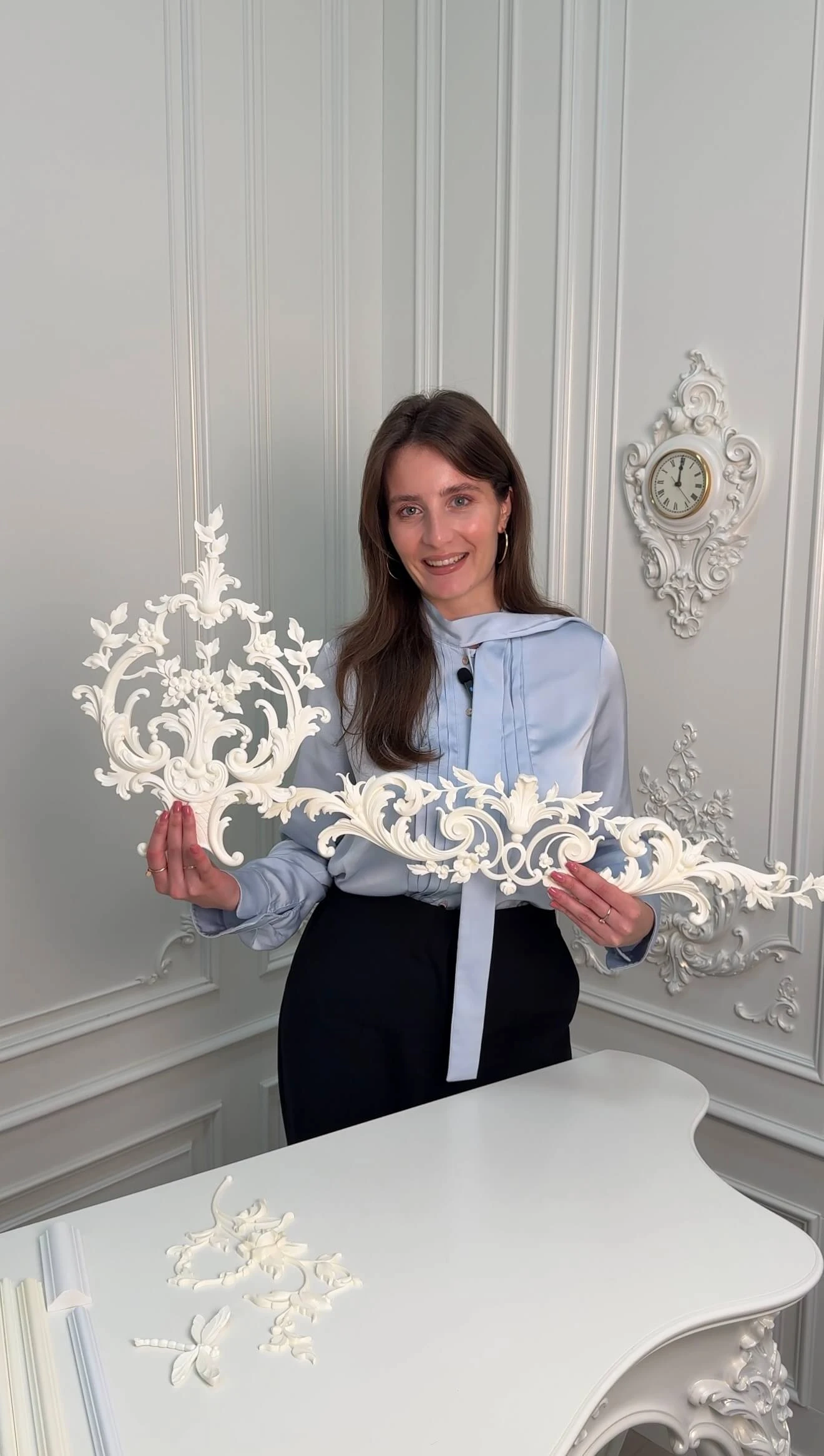
This article is about how to build a unified decorative system:molded decoration made of polyurethanefor walls and ceiling,Wooden planksas a textured accent,Wooden baseboardor MDF as the lower line of the space, and the cornice as a connecting link between the wall and ceiling. All of these are not separate items, but parts of one language.

Why walls, ceiling, and floor should be designed as a single whole
An interior is a three-dimensional system. Floor, walls, and ceiling exist simultaneously, all present in a person's field of view at once. When each plane "lives its own life" — it's noticeable. The eye registers the inconsistency, the brain processes it as discomfort, and the space feels uncomfortable, even if every detail is good on its own.
A cohesive interior is built on the principle of vertical connectivity: floor — baseboard — wall — moldings and battens — ceiling cornice — ceiling. This is the "backbone" of the interior, its hidden architecture. When these elements are coordinated in style, material, scale, and color — the space reads as a complete system, not a warehouse of disparate solutions.
That's why the conversation about wooden battens and moldings in the interiorcannot be separate from the discussion of baseboards and ceiling cornices. A batten on the wall without the logic of "where it starts" (baseboard) and "where it ends" (cornice or molding) is an unfinished sentence.


Architectural vertical: from baseboard to cornice
Imagine a wall as a page of text. The baseboard is the bottom margin of the page: it separates the text from the backing and sets the baseline horizontal. Moldings and battens are the main text: they create structure, rhythm, accents. The ceiling cornice is the top margin: it "closes" the page from above and connects it to the ceiling.
If the bottom margin (baseboard) is too narrow and the top margin (cornice) is too wide — the proportion is off. If there is no transition between battens and cornice — the wall looks "cut off." If the baseboard is in warm wood and the cornice is in cold white, without an intermediate connecting element — they conflict.
A properly assembled system looks like this:
-
The floor baseboard covers the joint between floor and wall, setting the bottom horizontal
-
Rails or moldings form the middle "layer" of the wall — its main decorative language
-
A ceiling cornice completes the wall from above and marks the transition to the ceiling
-
Ceiling decor, if necessary, continues the logic of the cornice into the ceiling plane
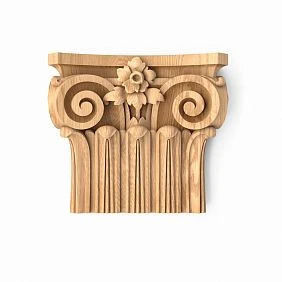
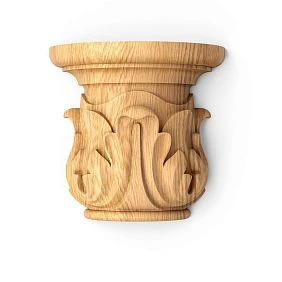
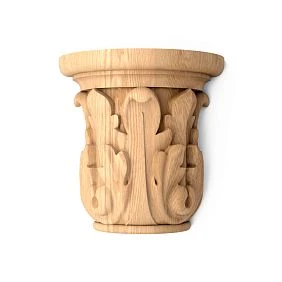
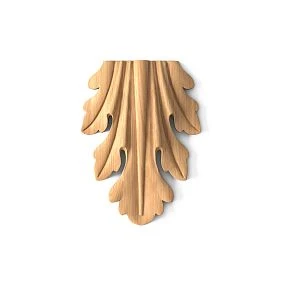
Our factory also produces:
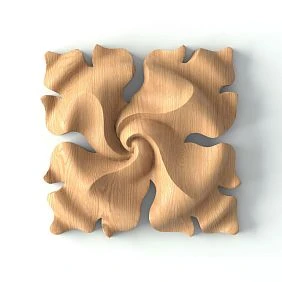

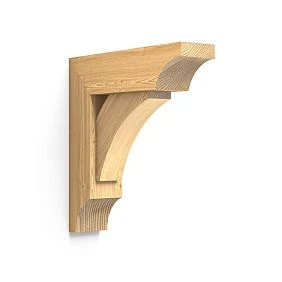
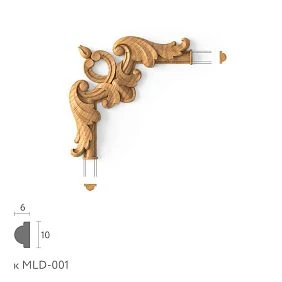
Where to use stucco decor and where to use wooden rails
This is not a competition between two materials, it is a collaboration of two languages. StuccoPolyurethane wall decorandwooden rails for wall decorationsolve different tasks — and that is why they work well together when applied correctly.
Get Consultation
When stucco decor is needed
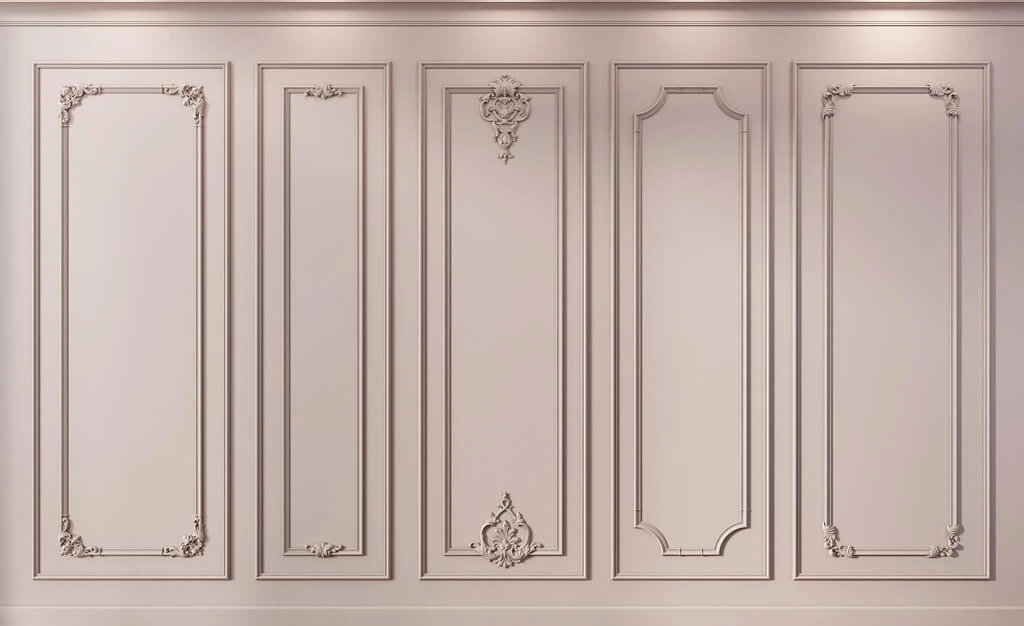
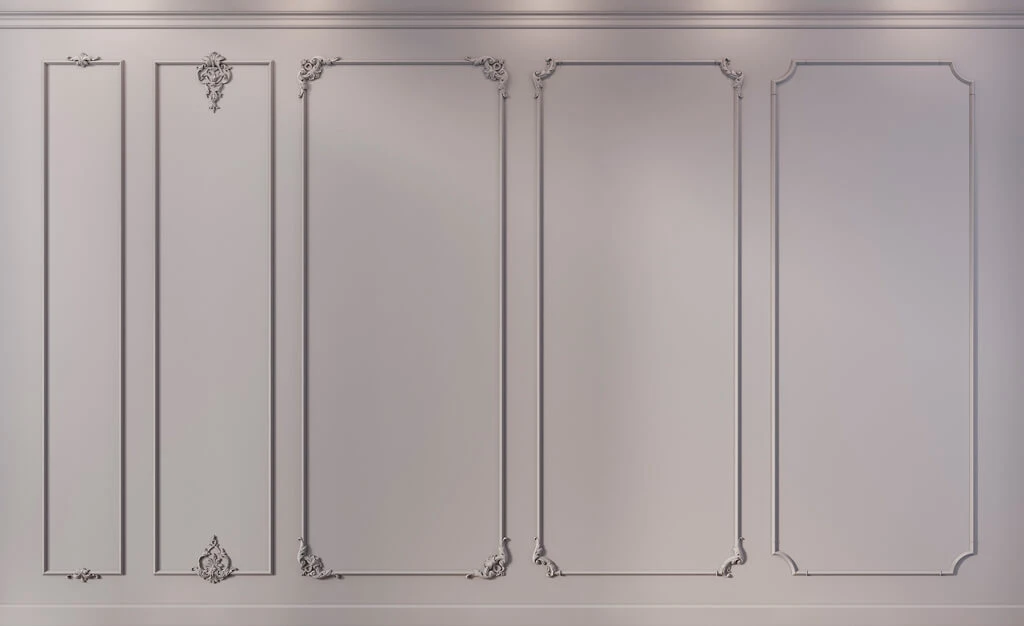
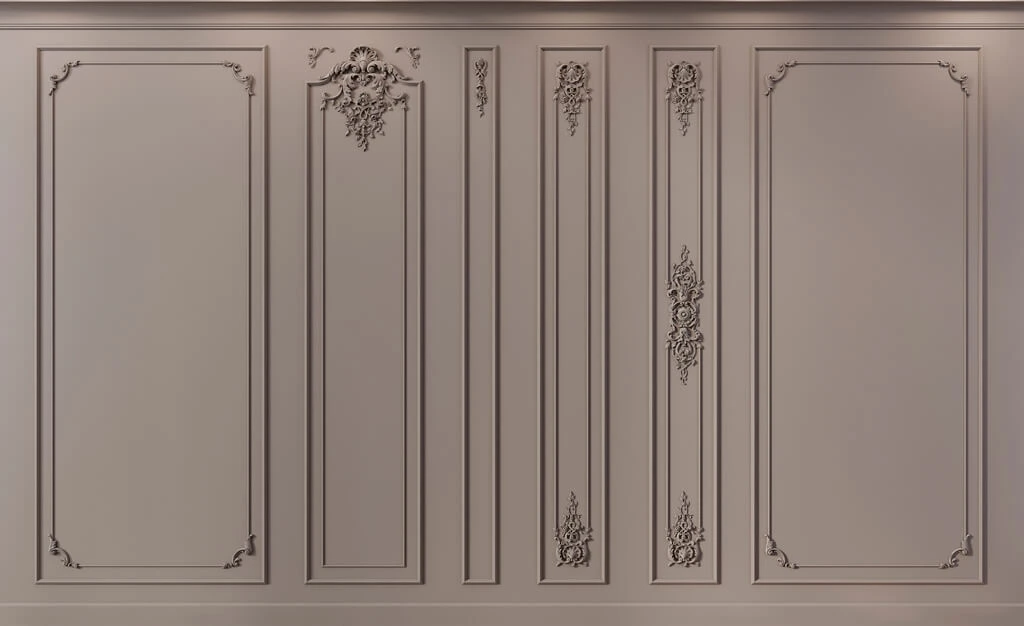
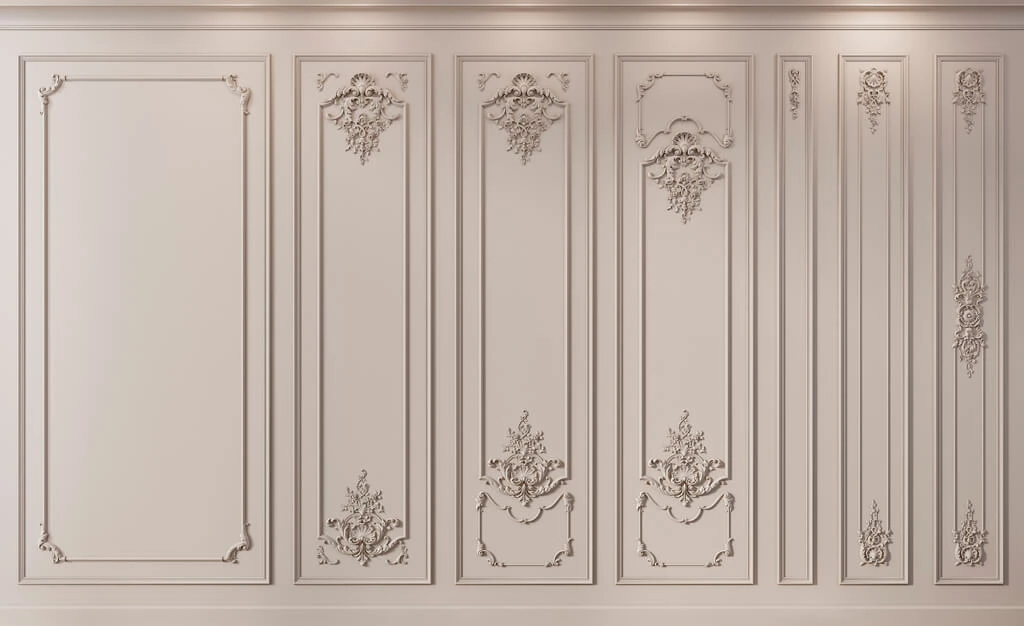
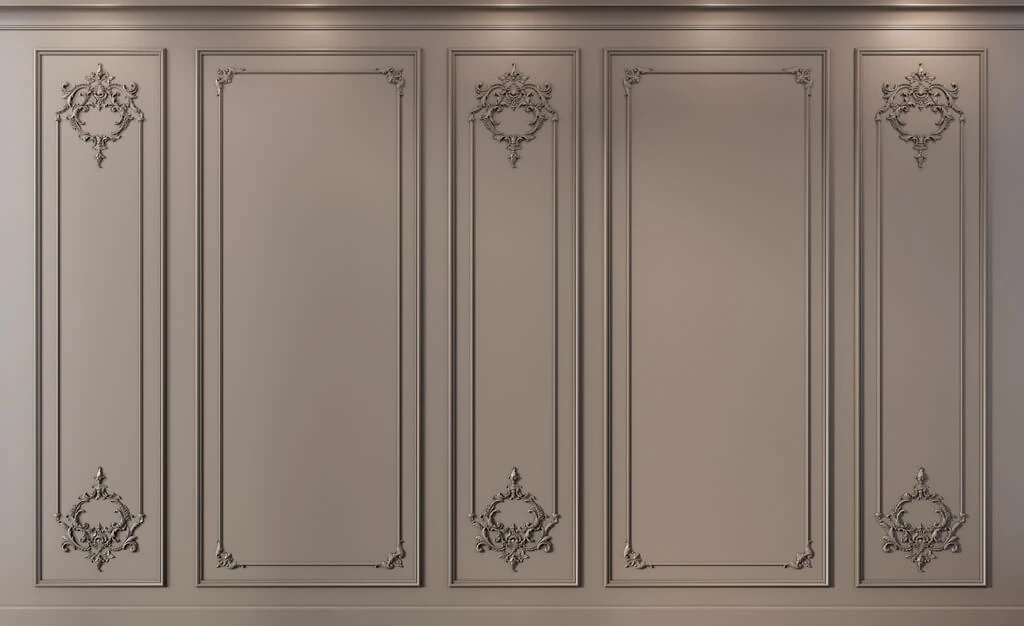
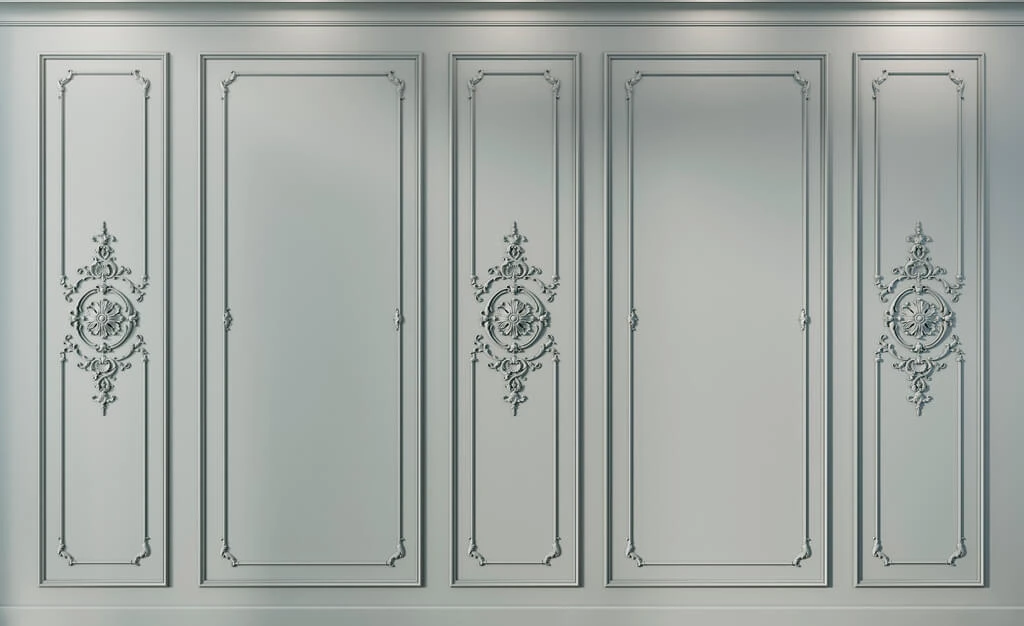
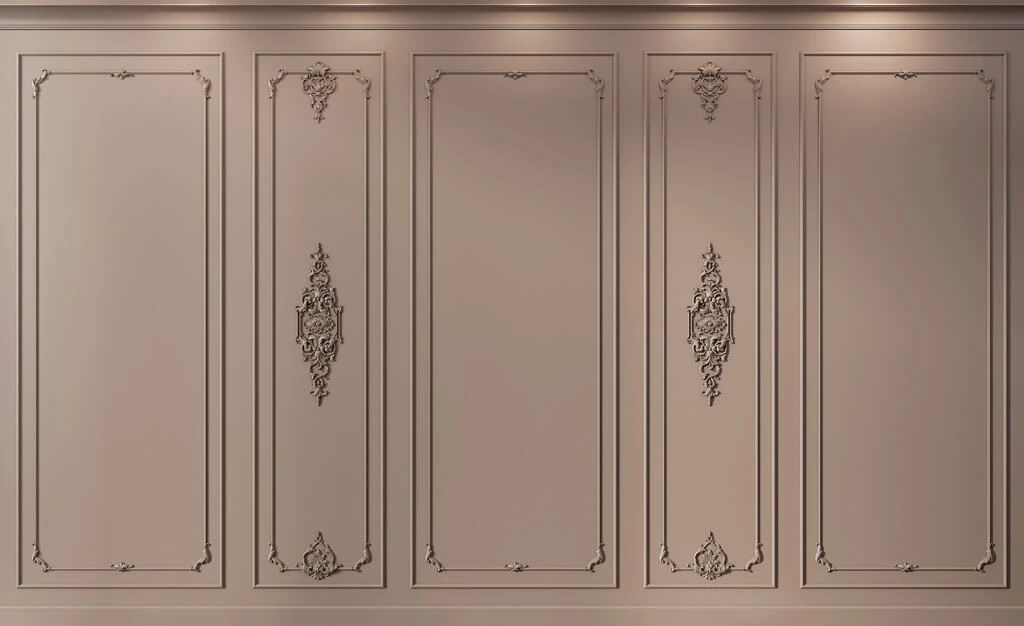
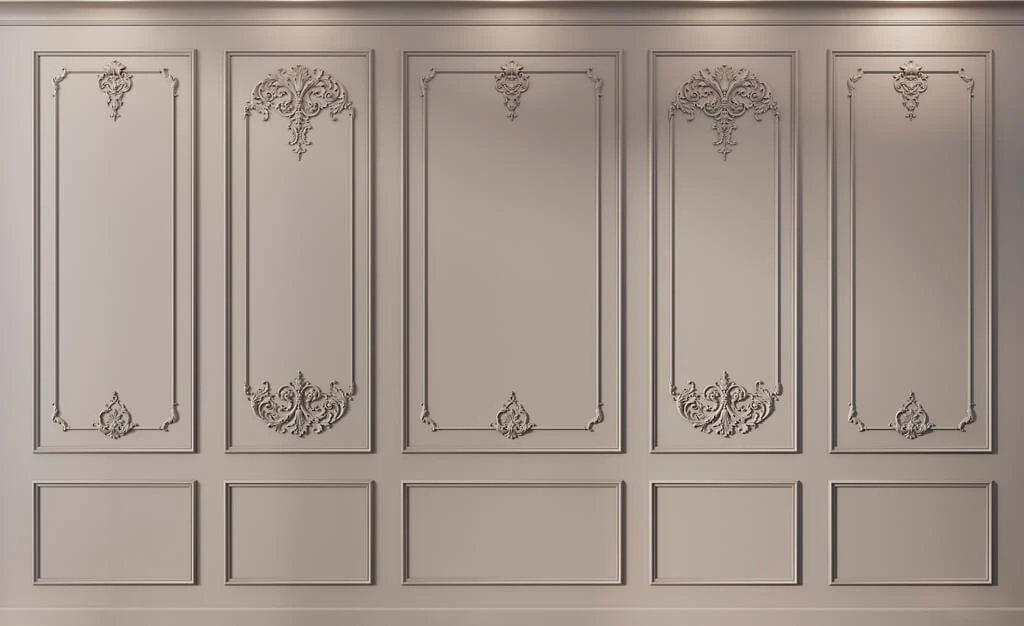
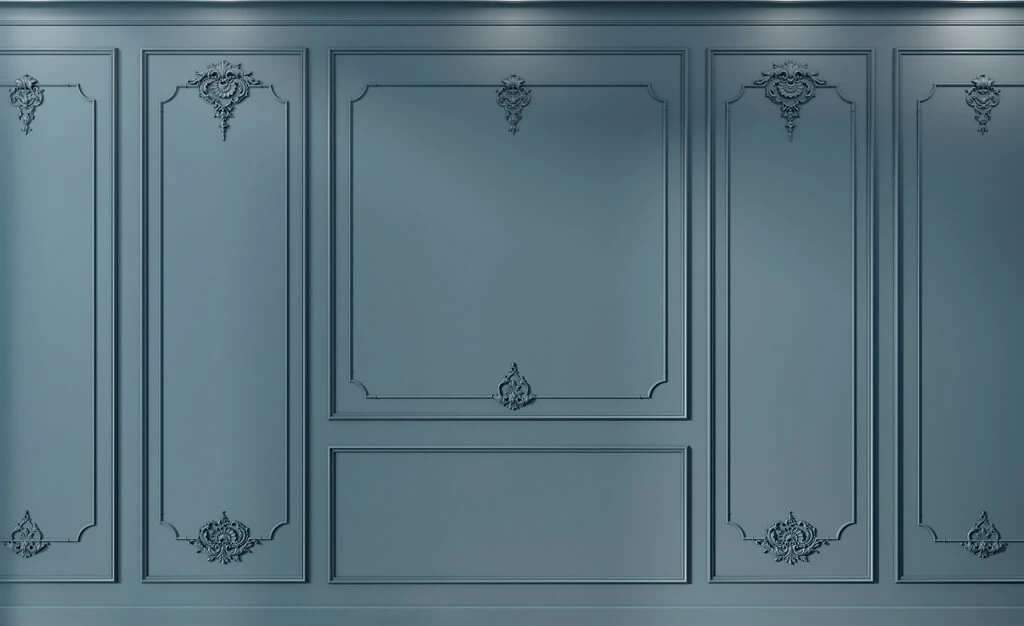
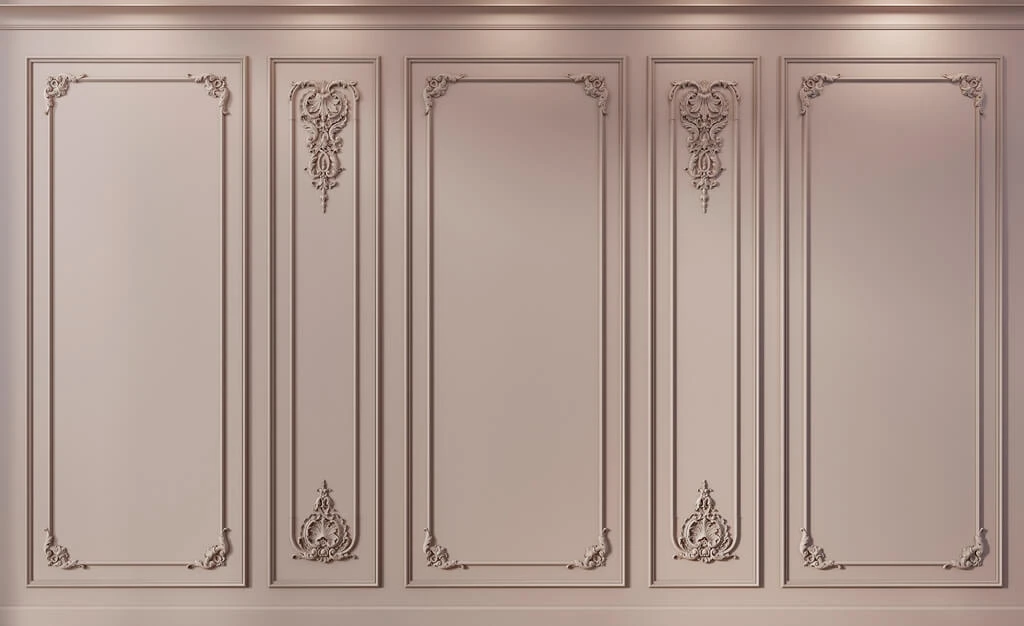
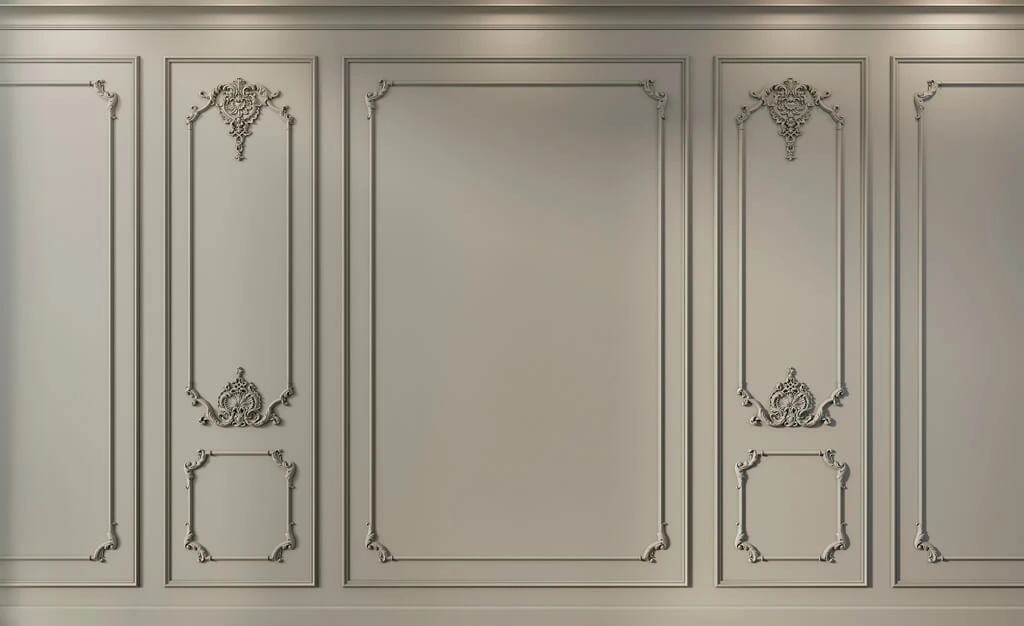
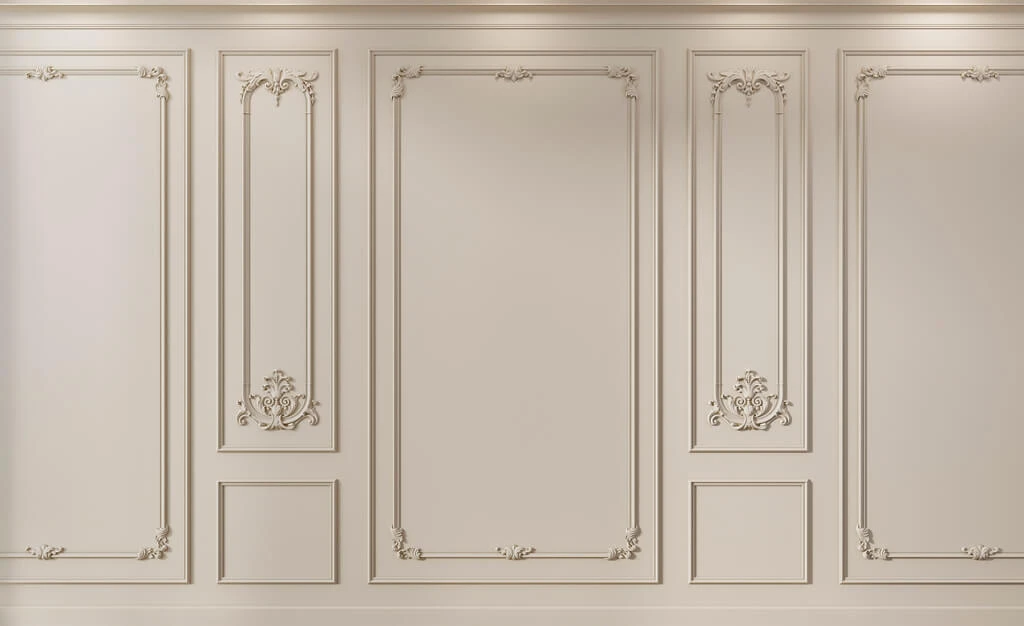
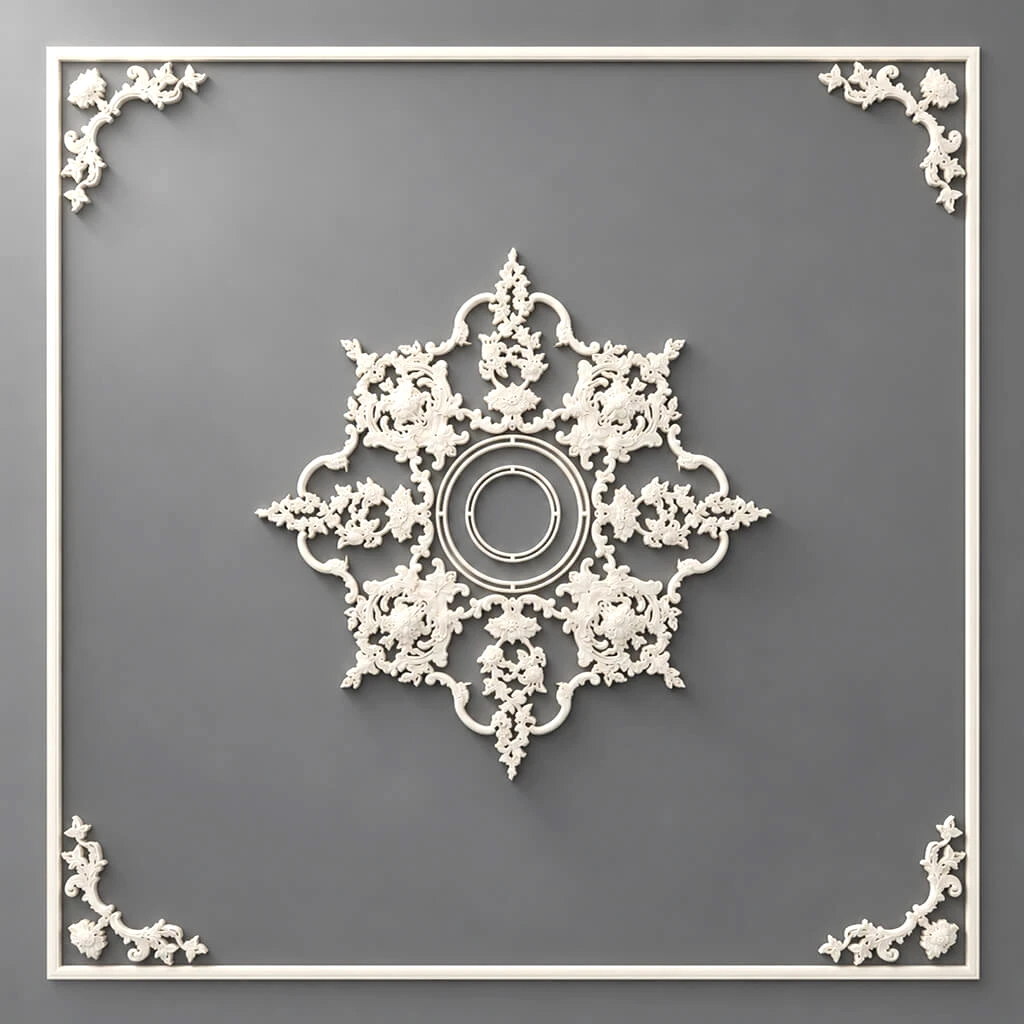
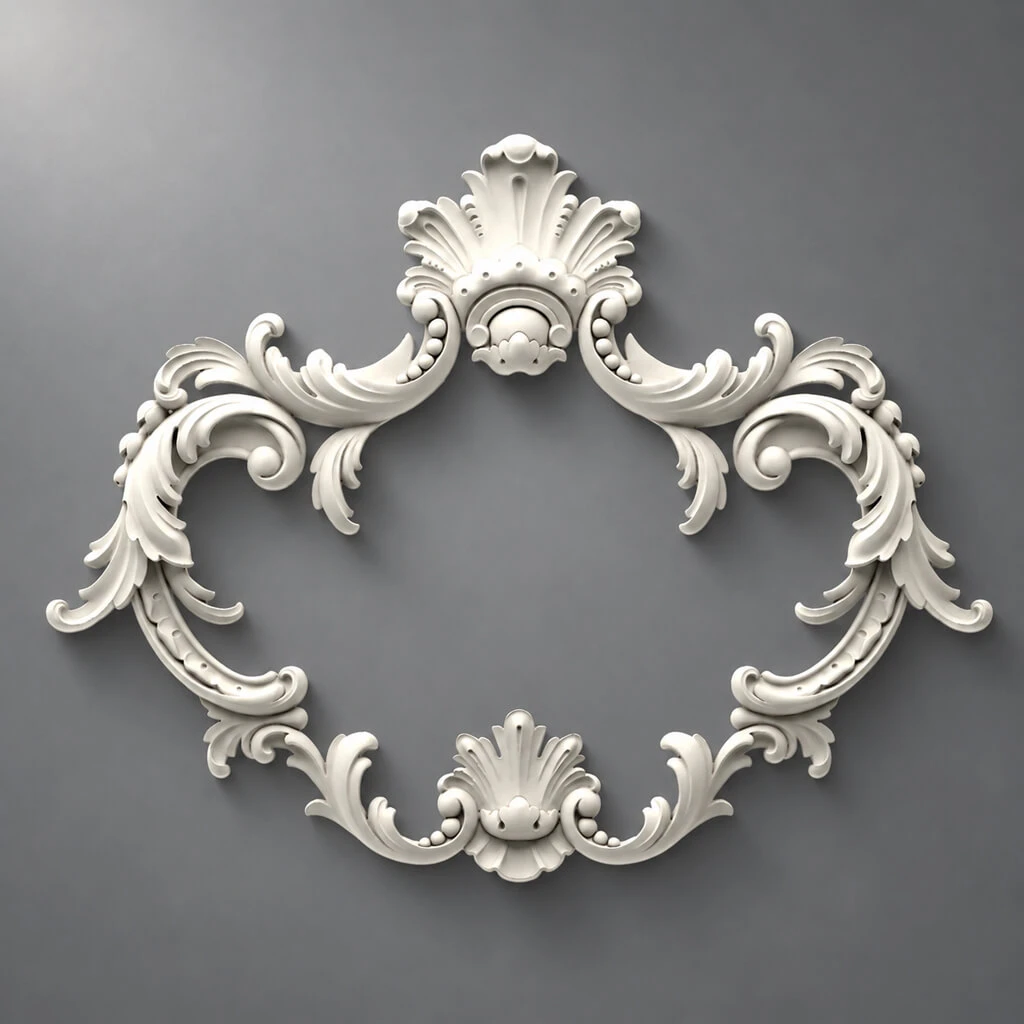
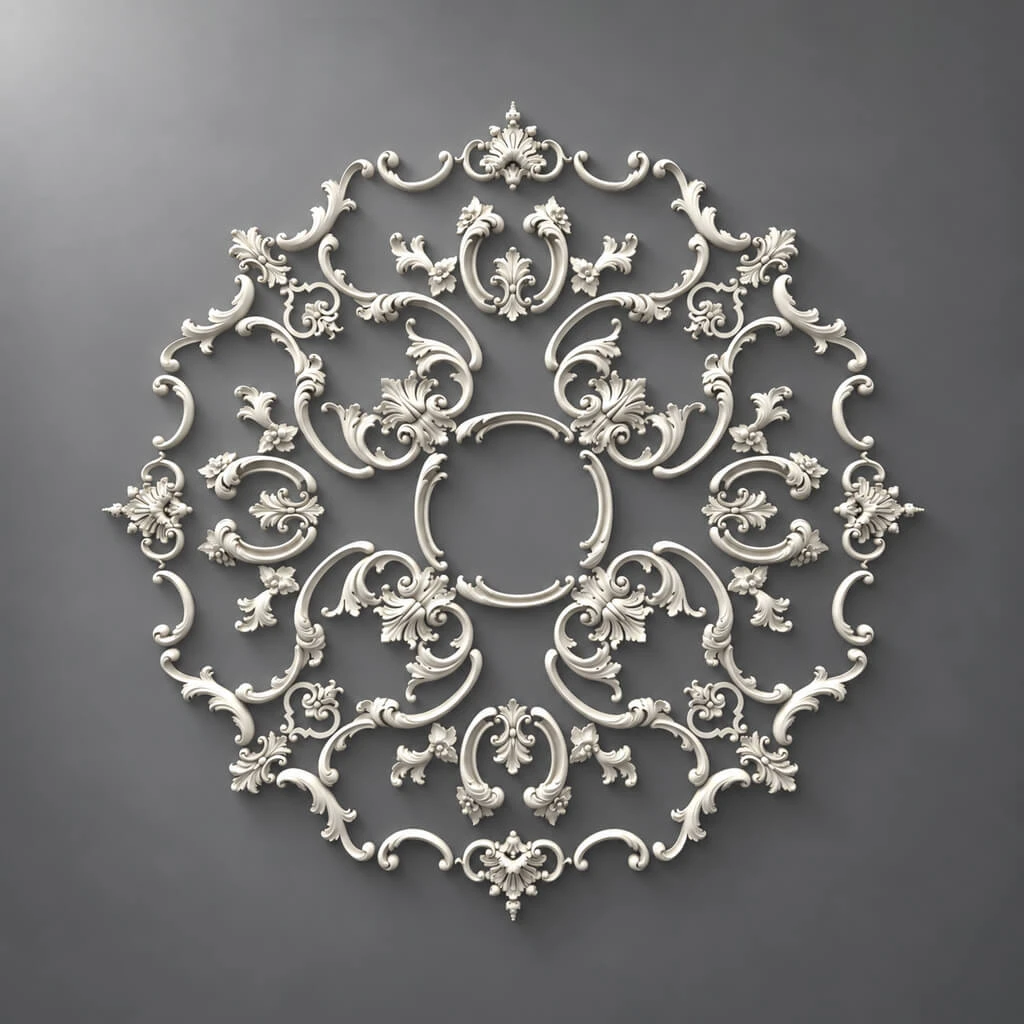
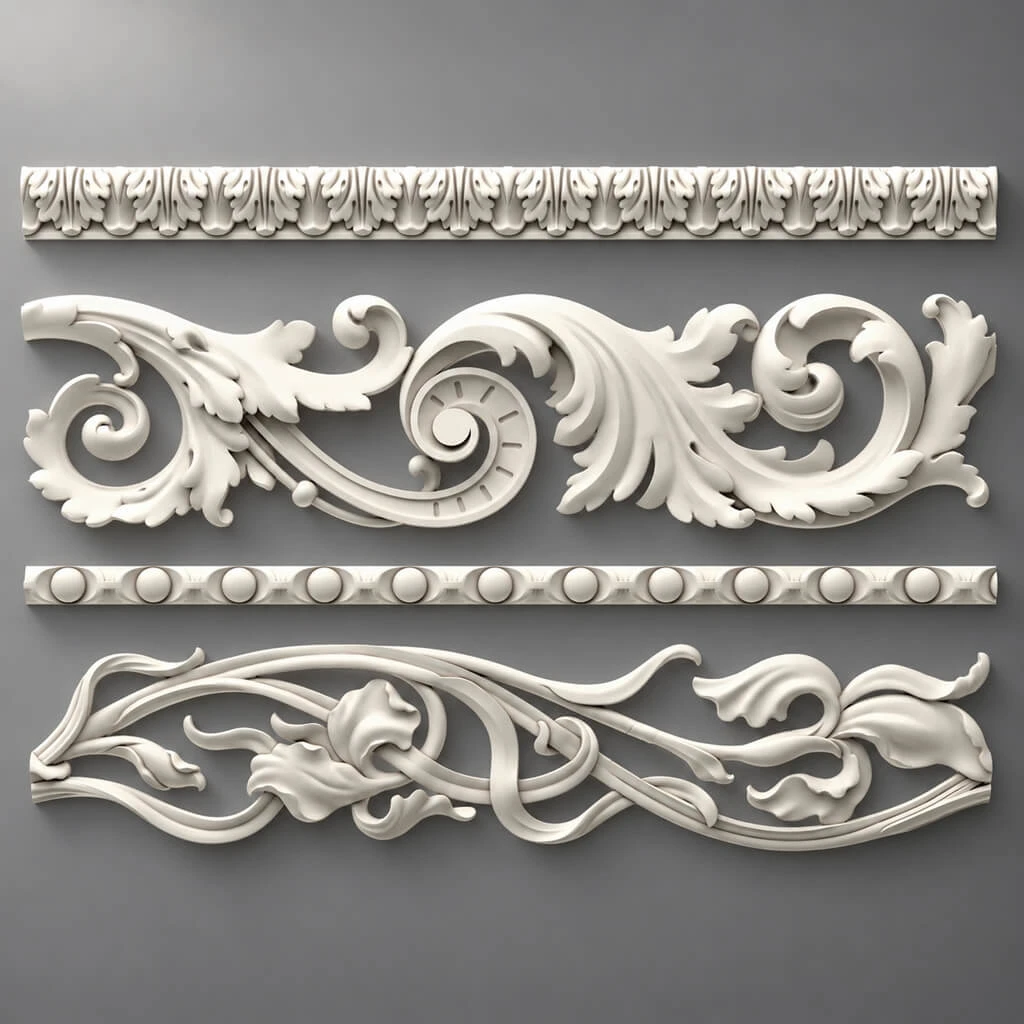
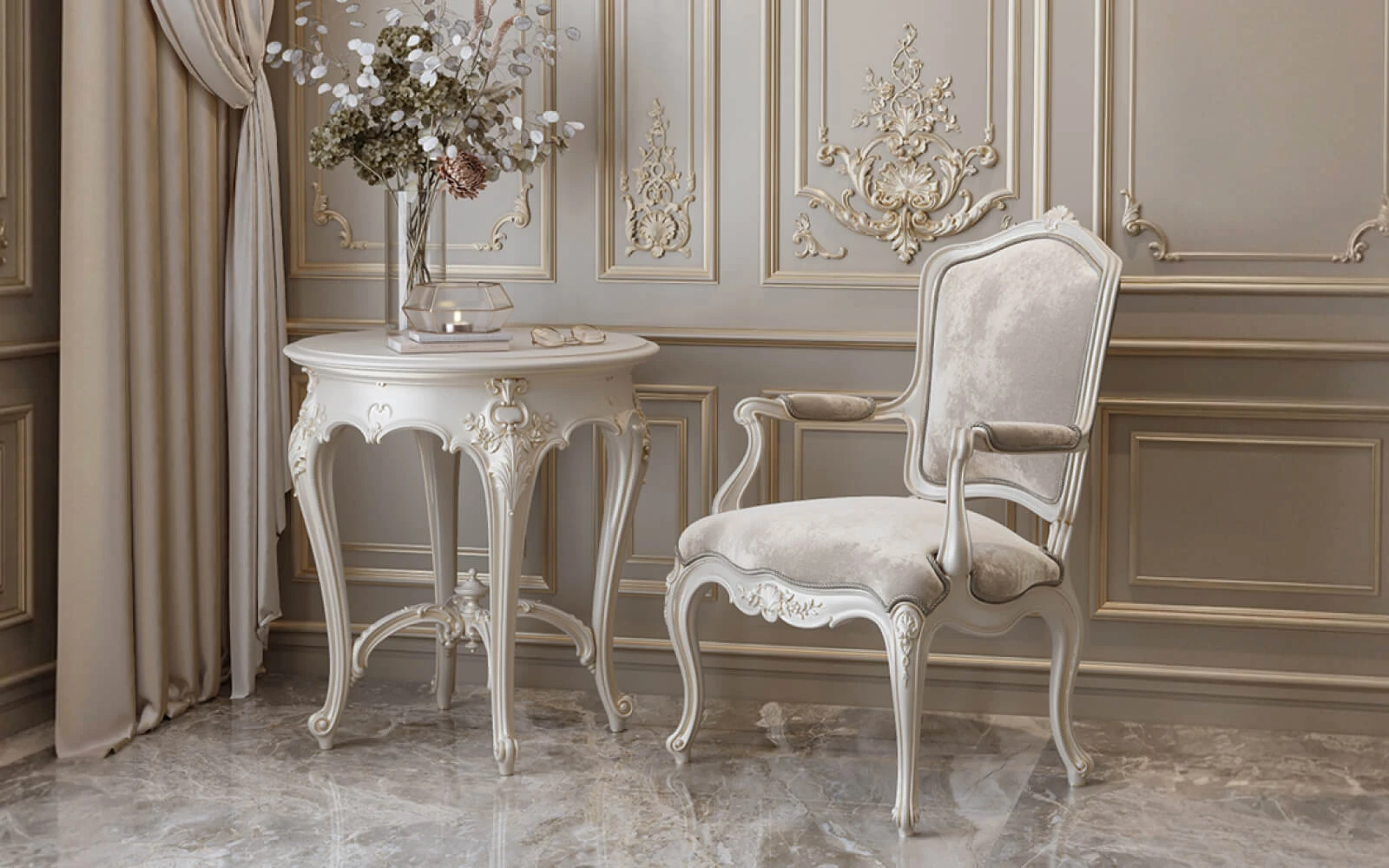
Polyurethane stucco on the wall is about an architectural frame, about symmetry, about the rhythm of horizontal and vertical lines. It works as the "skin" of the wall: organizes the plane, creates structure, sets a classical or neoclassical order.
Stucco decor is especially appropriate:
-
Above a sofa or bed — as a decorative "frame" for a painting or mirror
-
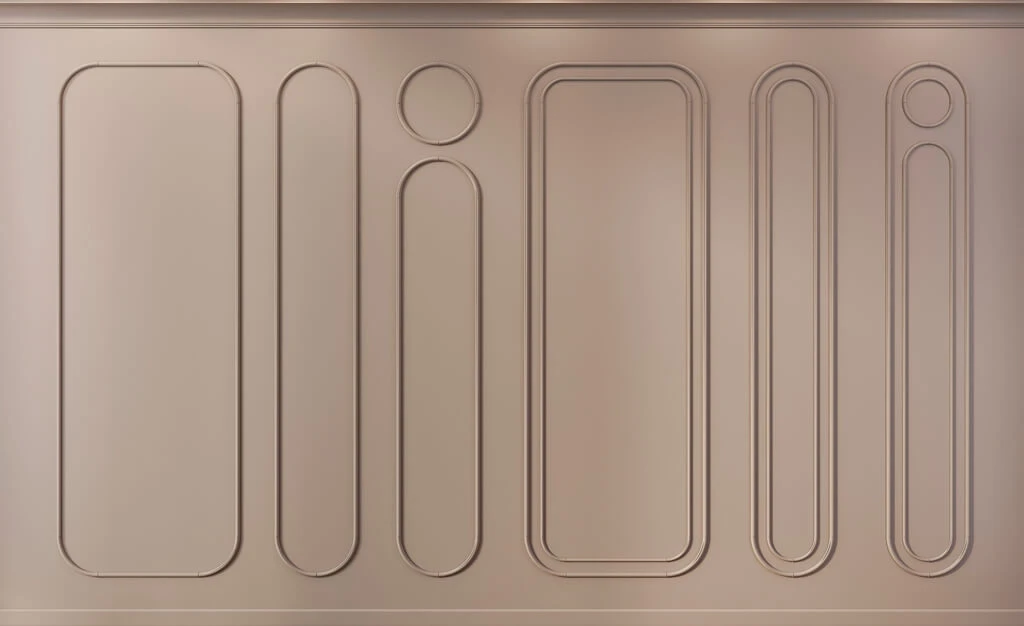
Along the perimeter of the wall — molding frames creating the feel of paneling
-
At the junction of two zones — as an architectural divider
-
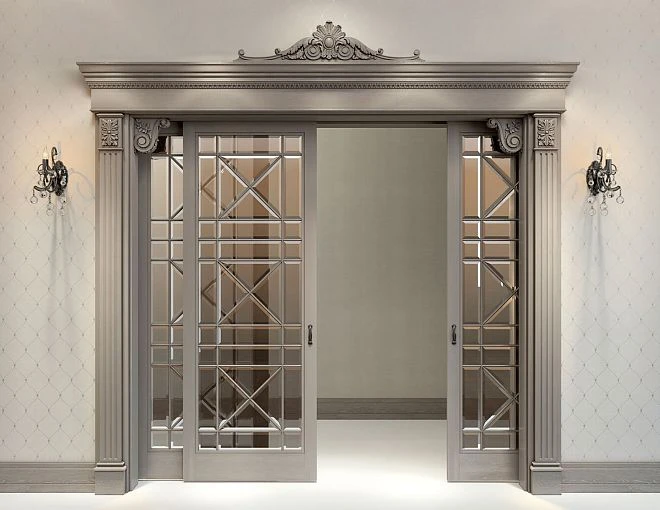
Around doorways and windows — as framing for architectural "holes" in the wall
-
On the ceiling — cornices, rosettes, molding frames
When wooden slats are needed
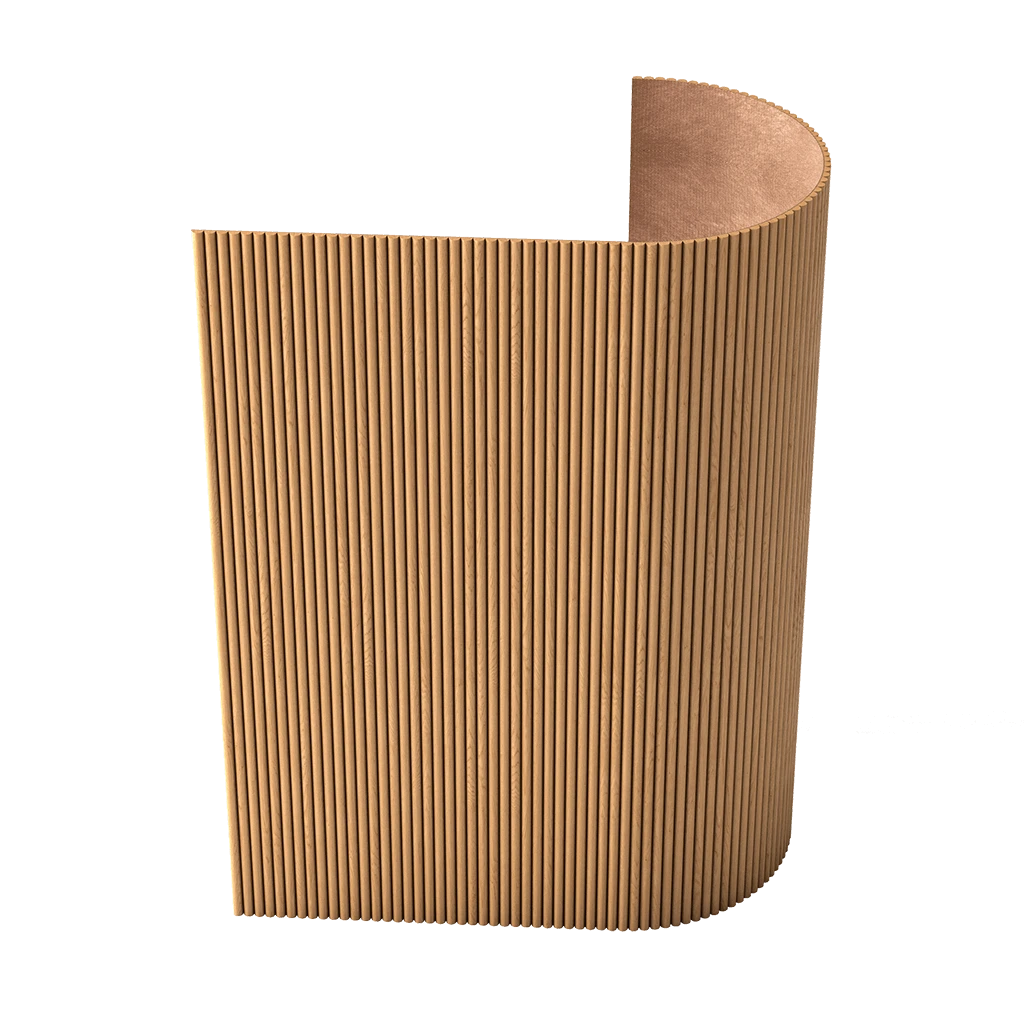
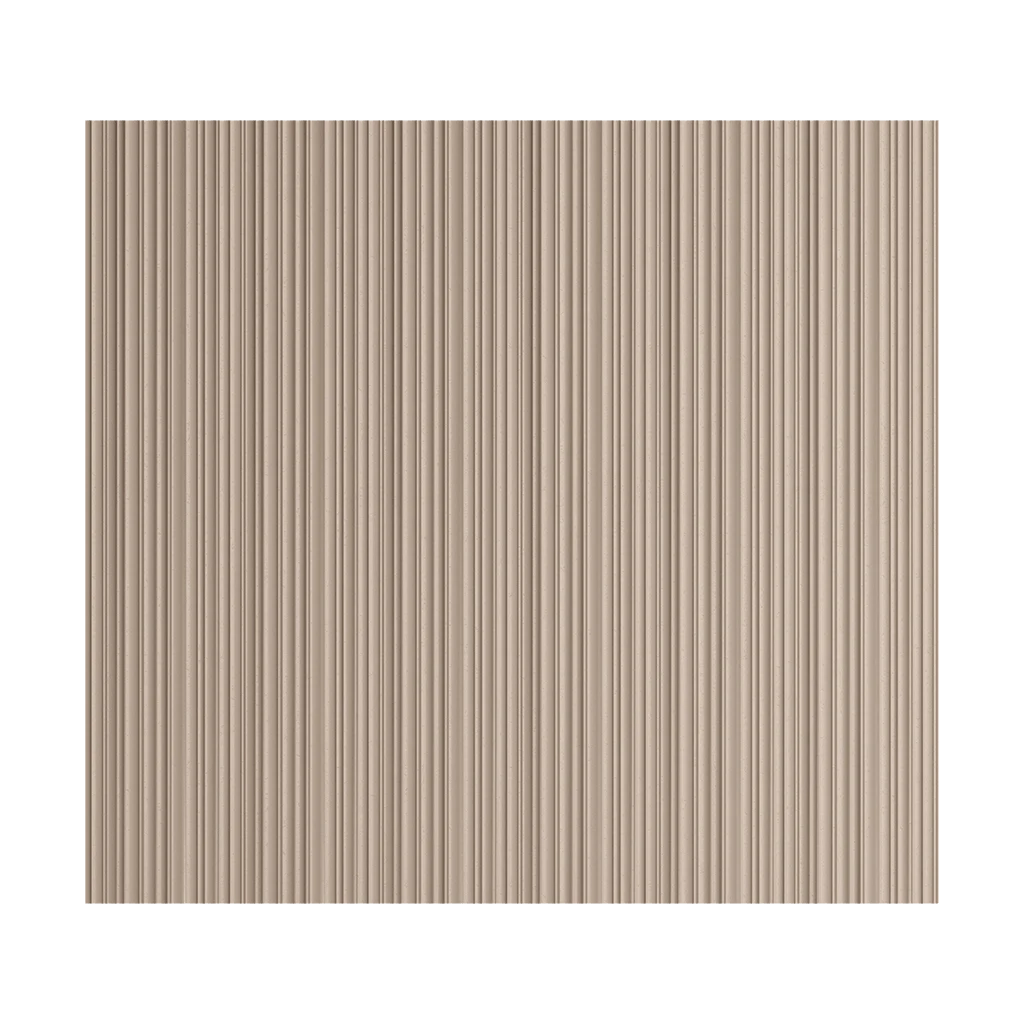
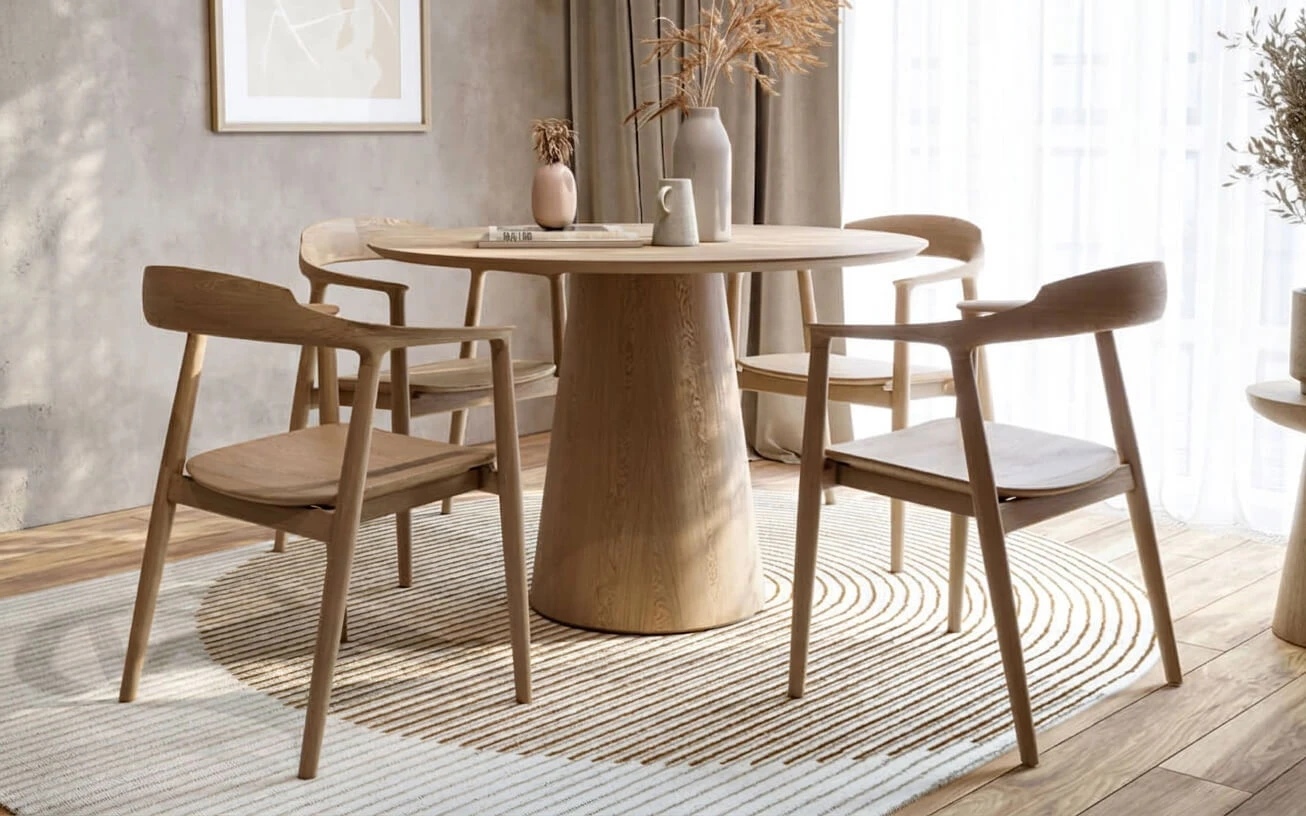
Decorative wooden slat — it's about texture, warmth, vertical rhythm. Slats create an accent zone — behind the TV panel, above the headboard, in a niche, in the hallway. They bring the organic feel of natural material, a sense of depth, and tactile warmth that white stucco cannot provide.
Slats are especially appropriate:
-
As a TV zone: the vertical rhythm of slats behind the panel creates an expressive backdrop
-
How to use slats behind the bed instead of a soft headboard
-
In the hallway — slatted panel as a textured "counter" element
-
In the study — slats on one wall create a businesslike, structured backdrop
-
On the ceiling — slatted ceiling in Scandinavian or Japanese aesthetics
Key principle of combination
Slats and stucco in one room — a working solution. But they should not be on the same plane without a clear logic of separation. Slats — texture and vertical. Stucco — contour and horizontal. They complement each other precisely because they work along different axes.
How to combine slats and moldings on a wall
This is where real design work begins.Wooden slats and moldings in interiorcan exist in several configurations — and each of them gives a different visual result.
Reiki as a central accent zone with a molding frame
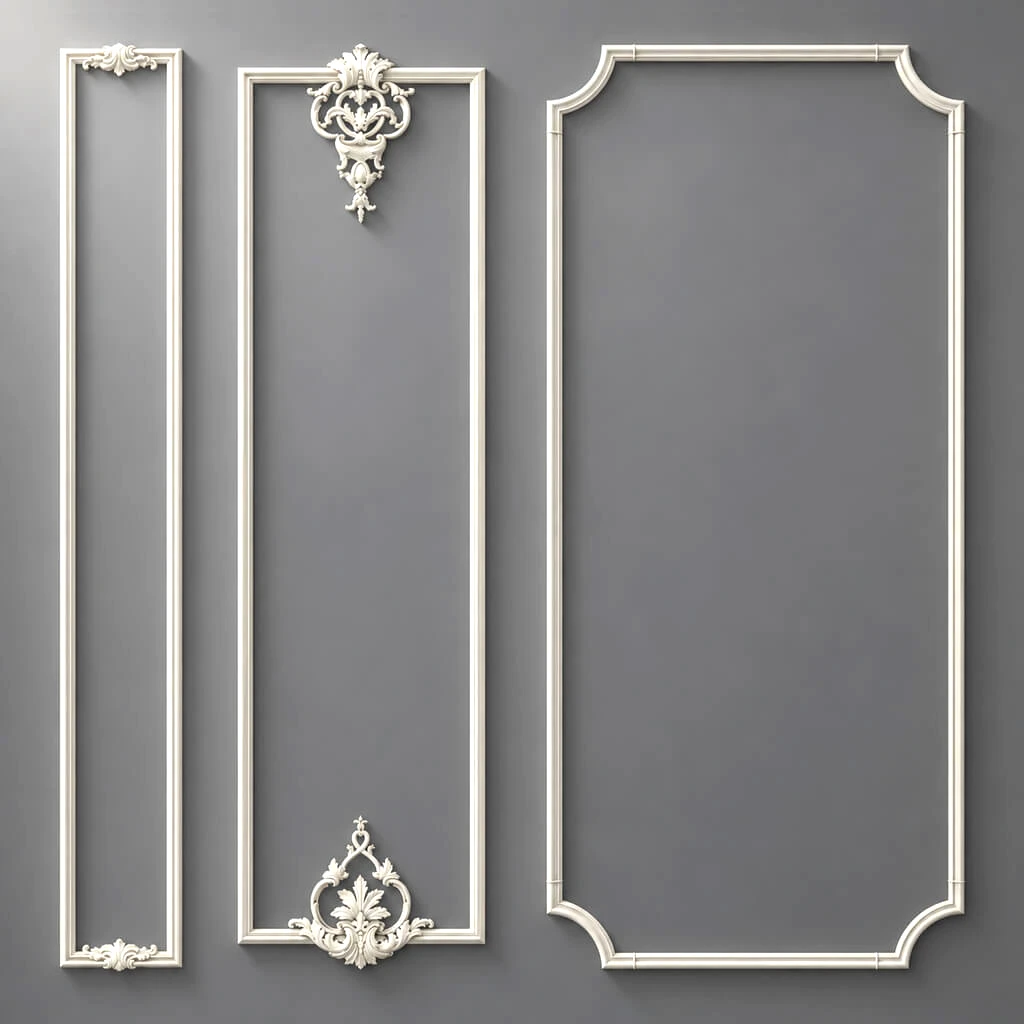
The most expressive and complete option:Rafter panelsoccupy the central part of the accent wall, and around the perimeter of this zone, a polyurethane molding creates a frame. The frame 'frames' the slatted zone like a painting, separating it from the rest of the wall plane.
This solution works flawlessly in the living room above the sofa or behind the TV panel. Slatted zone 1.8–2.4 m wide, molding frame 20–30 mm around the perimeter. Slats — natural oak or ash. Molding — polyurethane, painted in the wall color or white. Between the slats and the molding — 'air': a gap of 5–8 mm, which creates a sense of depth and visually separates the two materials.
Moldings on the sides of the slatted panel
Another scenario: slats occupy the central zone of the wall, and on the side parts of the same wall — symmetrical molding frames. Three 'fields' on one wall: left frame — slatted panel — right frame. This creates a symmetrical 'triptych' that works well in the dining room or bedroom.
Important nuance: the molding frames on the sides should be empty — without filling. It is the empty field of the frame, painted in the same color as the wall, that creates the feeling of a recessed panel. There is no need to fill the frame with textured plaster or other material — this creates overload. Frame = geometry. That is enough.
Slats in a niche, moldings around the perimeter of the wall
The third option is the 'cleanest' in terms of demarcation: the slats are placed in a niche or limited to the furniture area (cabinet, TV stand), while the moldings work on the rest of the wall plane as a structuring element. The slats and stucco are in different 'territories' and do not compete — they are simply different parts of the same wall.
Stucco frame as a 'mat' for the slatted zone
A large polyurethane frame — for example, 2.0 × 1.6 m — on the wall above the sofa, inside which a slatted panel is placed. The frame molding is 25–35 mm, with a small profile. Inside the frame, slats are tightly arranged vertically. Outside the frame, the wall is clean.
This is a technique that designers call a "mat for the material": the frame highlights the slatted area as an independent decorative object, preventing it from "spreading" across the entire wall. It is precisely this solution that looks expensive: not slats from corner to corner, but slats in a frame — like a work of art.
The rule of "air" between materials
The main mistake when combining slats and moldings on one wall is the lack of a pause. When the molding frame is flush against the slats, the two materials "merge" and create visual noise. A gap is needed: 5–10 mm between the slats and the molding — and both elements begin to "breathe."
Ceiling cornice as a connecting link between the wall and ceiling
The wall ends. The ceiling begins. And this transition moment is one of the most important in the interior. An unsuccessful connection between the wall and ceiling destroys the entire vertical system you have built. The right cornice is not just about "closing the gap," it is an architectural statement.
Wooden cornice: warmth and natural material
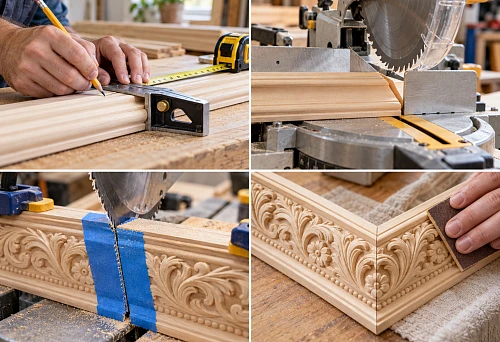
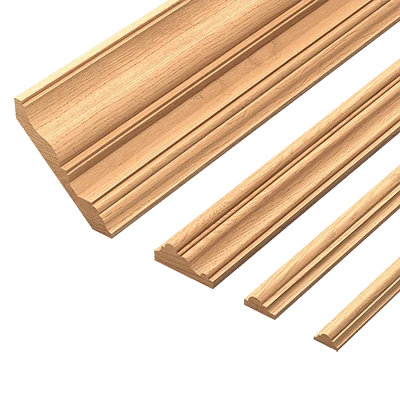
wooden cornice — a logical continuation of the slatted wall finish. If the interior uses wooden slats, slatted panels, or a wooden baseboard, a wooden ceiling cornice creates a "through" material line across the entire interior: wood at the bottom — wood at the top. This creates a sense of architectural integrity that cannot be replicated in any other way.
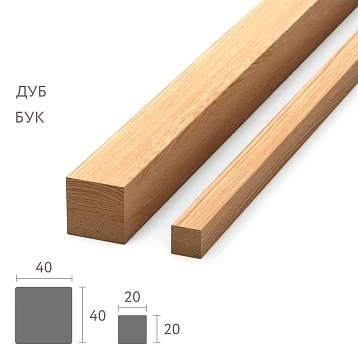
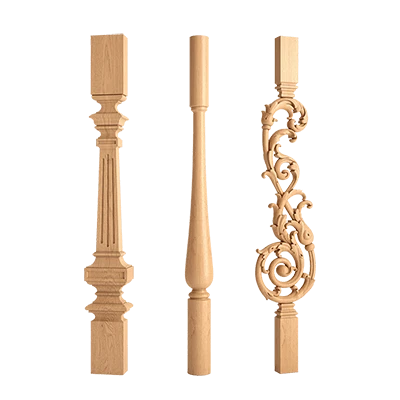
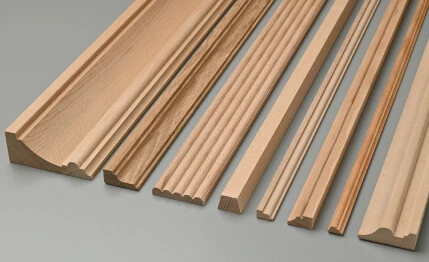
Wooden beams in the STAVROS assortment are turned or milled profiles made of solid wood: oak, ash, pine, birch. The surface is ready for painting, tinting, or applying oil — depending on the task and final aesthetics.
Polyurethane cornice: versatility and profile precision
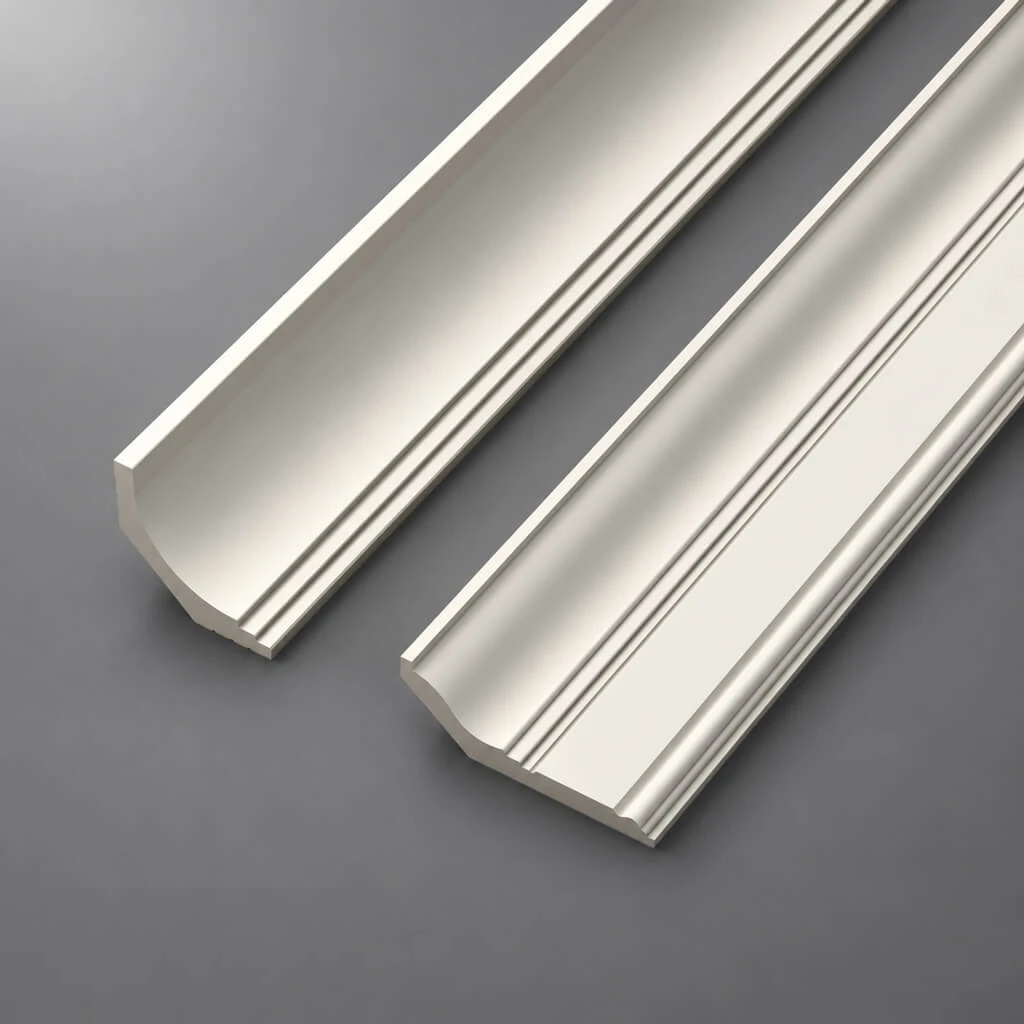
Moldings made of polyurethanein the cornice format — a more versatile solution than wood, precisely because they are easier to process and more accurately reproduce the profile. A polyurethane cornice with a 50–80 mm profile creates an architectural "cornice" — a projection that connects a vertical wall to a horizontal ceiling through a smooth or angular transition.
When the walls feature polyurethane moldings and frames, and the ceiling has polyurethane decor, it is logical to choose the cornice from the same linepolyurethane products. A single material throughout the system ensures that all elements will react uniformly to painting and have a similar surface texture.
How to choose a cornice for a slatted interior
If the room is dominated by wooden slats — natural, with a pronounced wood texture — the ceiling cornice can be of two types:
-
A wooden cornice of the same species (or close in tone), painted or tinted to the same shade as the slats. A unified material language.
-
A white polyurethane cornice — a contrast to warm slats. This is a "Scandinavian" technique: warm wooden surfaces + white architectural lines. In this scenario, the cornice does not "dissolve" into the interior but creates a clear horizontal division between the wall and ceiling.
How to properly coordinate the cornice with ceiling decor
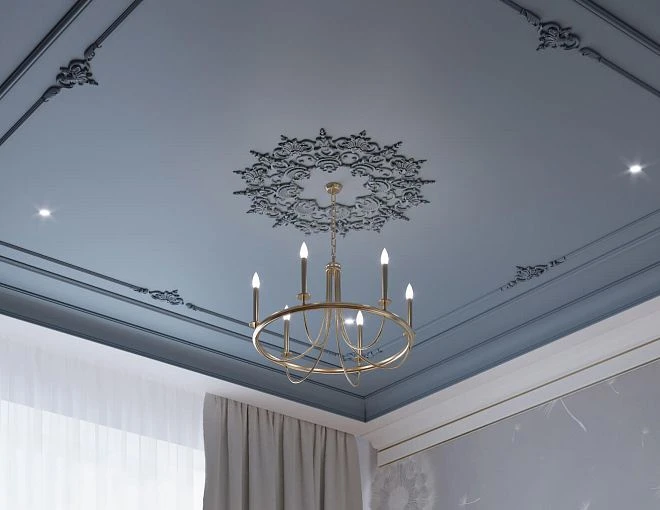
If the ceiling is complemented by molding frames orpolyurethane ceiling decor— the cornice around the perimeter and ceiling frames should be from the same series. Different profiles from the same line — cornice A50 + 15 mm molding for the frame — create a unified system. A cornice from one series and a molding from another create visual inconsistency that is felt even if it's hard to put into words.
How to choose a baseboard for slats and stucco
The lower line of the room — the floor baseboard — is no less important than the upper one. But it is the baseboard that receives the least attention when designing an interior. "I'll buy something suitable later" — and as a result, an excellent interior gets a "random" baseboard that ruins the system.
Wooden baseboard: a natural lower line
with a classic profile creates a sense of solidity, reliability.— a logical solution where natural wood is present in the interior. If the slats are oak, a wooden baseboard made of oak or a material close in tone creates a continuous "wooden thread" that connects the wall vertically: baseboard at the bottom, slats in the middle.
Wooden baseboards come in:
-
Narrow (40–60 mm) — for modern and minimalist interiors. It does not emphasize the lower line, simply neatly covers the joint between the floor and the wall.
-
Medium (70–100 mm) — a universal range. It reads as a finished architectural element but does not dominate.
-
Wide (100–150 mm) — for classic and neoclassical interiors with high ceilings. Creates a pronounced base, a sense of a wall "plinth."
The width of the wooden baseboard should match the scale of the cornice: if the ceiling cornice is 60 mm, the floor baseboard should not be 150 mm. Proportion: baseboard ≈ cornice ± 20–30 mm.
MDF baseboard for painting: white contour
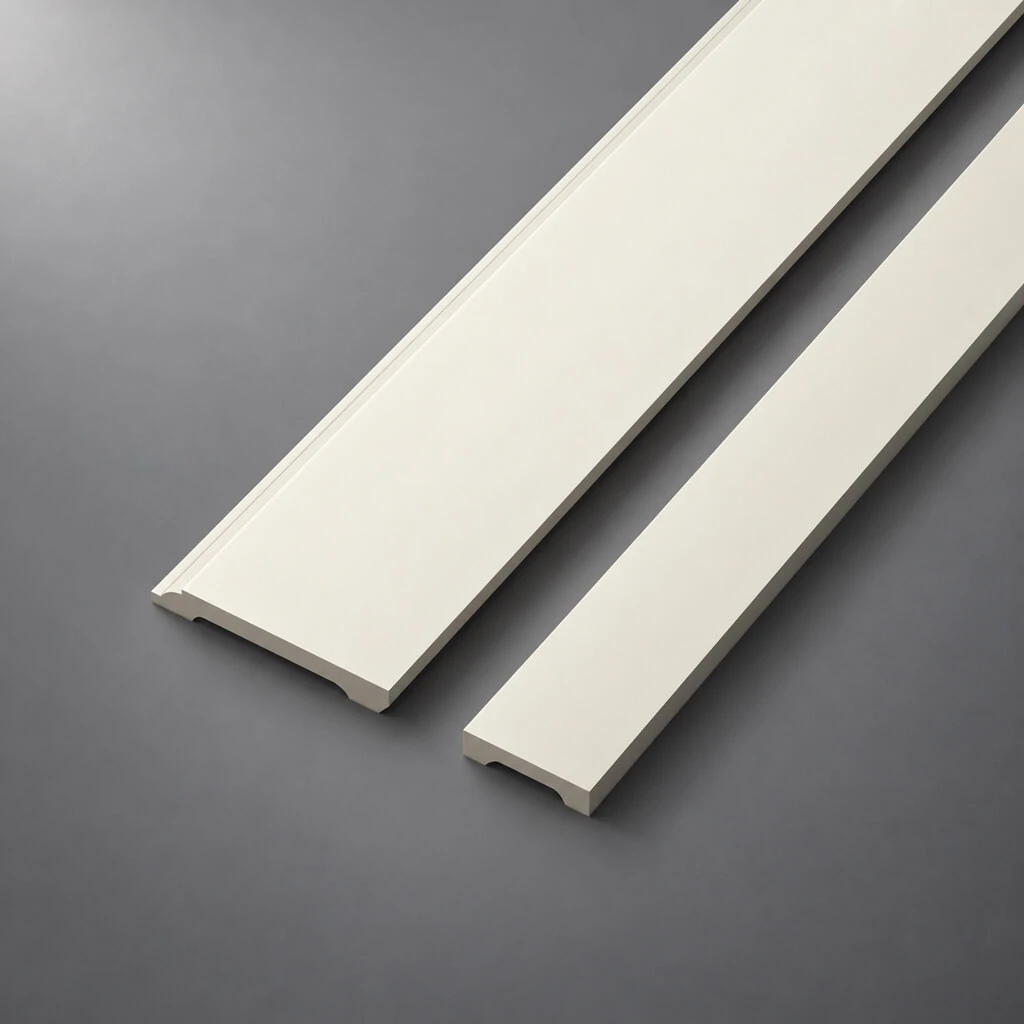
MDF Skirting Board — the second popular option. An MDF baseboard for painting in white or wall color creates an "invisible" bottom line: the eye does not linger on the baseboard, but simply sees a clean contour between the floor and the wall.
A white MDF baseboard creates visual continuity with white door casings, white ceiling cornices, and white window frames. When all architectural details are executed in the same color, they form a unified system, a spatial framework that connects disparate elements — floor, walls, ceiling, furniture — into an integral composition. This technique is fundamental to Scandinavian design, where white architectural decor creates a light shell within which the most diverse colors and textures can coexist. works well where the slats are warm, rich in color — walnut, oak, tinted. The white bottom line "lightens" the space, preventing warm wood tones from "overloading" the lower zone.
— is a horizontal element that frames the room at the bottom of the walls where the wall meets the floor. Skirting boards perform several functions: they hide the technological gap between the wall and floor covering (necessary for thermal expansion), protect the lower part of the wall from mechanical damage, create visual completion, and may conceal wiring. is also ideal when polyurethane stucco decor prevails in the interior: moldings on the walls are white, the cornice is white — and the white MDF baseboard closes this white architectural system from below.
Rules for matching the baseboard with the entire interior
| Interior type | Slats | Skirting board | Crown Molding |
|---|---|---|---|
| Modern Classic | Bleached oak | White MDF 80–100 mm | White polyurethane 60 mm |
| Scandinavian | Light pine / ash | White MDF 60–70 mm | White polyurethane 40 mm |
| Neoclassical | Natural oak | Wooden 100–120 mm | Wooden or polyurethane 70 mm |
| Modern minimalism | Thin slats 20×60 | Straight MDF 40–60 mm | None or minimal 30 mm |
| Warm classic | Walnut / tinted oak | Wooden walnut 80–100 mm | Wooden 60–80 mm |
Wooden slats on walls and ceilings: scenarios and transitions
Slat finishing has long moved beyond a single wall.wooden rails for wall decorationToday they are used on ceilings, in wall-ceiling transitions, in niches, and even on furniture. This creates a rich toolkit for building a cohesive material narrative.
Slats transitioning from wall to ceiling
One of the most expressive techniques in modern interiors is slats that start on the wall and 'flow' onto the ceiling without interruption. This transition creates a sense of architectural continuity: there is no rigid boundary between wall and ceiling, only a smooth material transition.
Ceiling wooden railIn such a transition, the same slat is used as on the wall, simply mounted horizontally on the ceiling instead of vertically on the wall. Technically, this requires precise preparation: proper fastening on the ceiling plane, accurate 90° corner transitions.
This scenario works particularly well in a study, hallway, above the bed in a bedroom—where a strong textural accent that 'envelops' the space is needed.
Slats only on the wall, ceiling with cornice
The second, more common scenario is slats limited to the wall (one or several), while the ceiling is finished with a cornice and, if necessary, a molding system. This is a 'calmer' solution: slats create an accent on the vertical plane, the cornice completes the wall at the top, and the ceiling remains clean or with delicate decor.
Here, it is important that the cornice 'echoes' the slats: either by material (wooden cornice + wooden slats) or by color (white cornice + white or light slats). If the cornice is brown and the slats are whitewashed, the space falls apart.
Wooden slat ceiling: a distinct architectural technique
A ceiling made of wooden planks— a fully slatted ceiling, as in Scandinavian and Japanese interiors, is a radical but very expressive step. In this case, the walls remain clean or with minimal decor, and the decorative "weight" moves upward.
With a slatted ceiling, the baseboard should be as laconic as possible — straight MDF 50–70 mm, matching the wall color or white. Stucco molding on the walls with a slatted ceiling is possible, but only in the form of thin molding lines, not voluminous decor. Otherwise, a conflict arises: a "heavy" wooden ceiling + heavy ornamental decor on the walls = too much.
Slats as zoning for a kitchen-living room and hallway
In open-plan layouts, slats work well as a "soft partition" — they define a zone without blocking it. A slatted panel behind the bar counter, separating the kitchen from the living room, is a classic technique. Slats in the hallway, creating the "first impression" of the apartment, is another.
When using slats for zoning in an open plan, stucco decor (cornices and moldings) works around the entire perimeter of the space — as a single unifying system. Slats highlight a specific zone, while the cornice unifies the entire space from above.
Linear products as the foundation of a cohesive interior
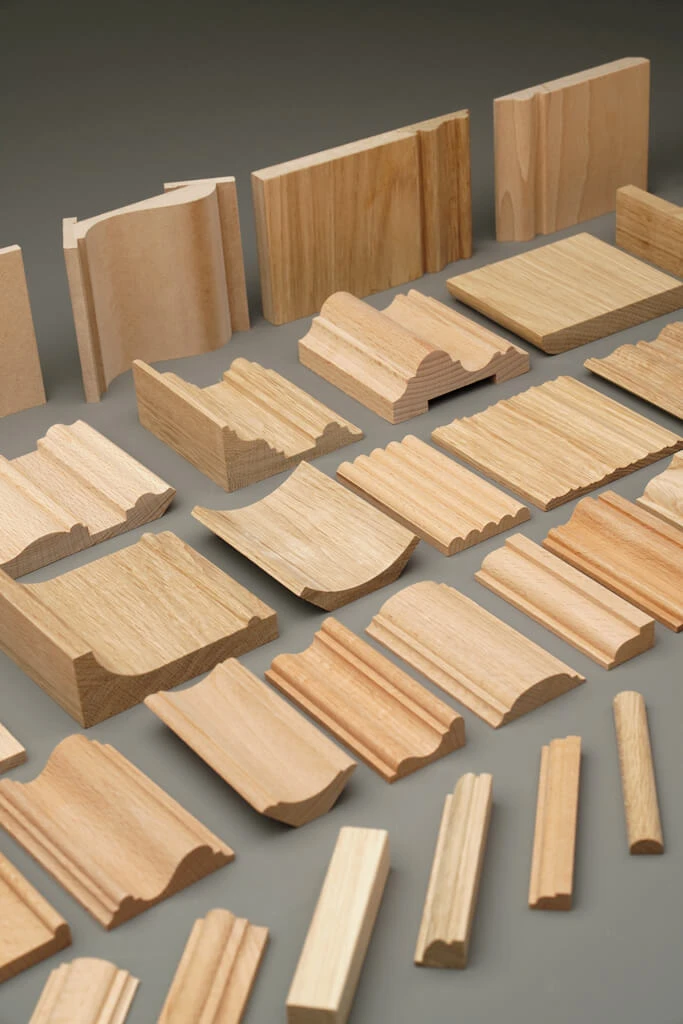
The word "linear products" sounds technical, but it hides a very simple idea: it refers to all long decorative elements that are installed by linear meters. Slats, baseboards, cornices, moldings, bars, corners, baguettes — all these are linear products, and together they form the "framework" of the interior.
What is included in linear products
-
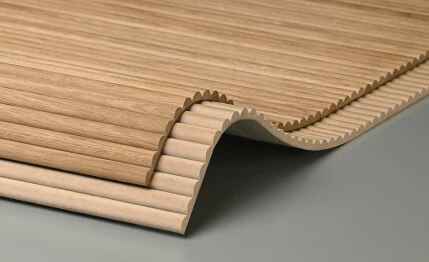
Wooden planks— vertical accents on walls and ceiling
-
Wooden skirting boards— lower horizontal
-
Wooden beams— upper horizontal
-
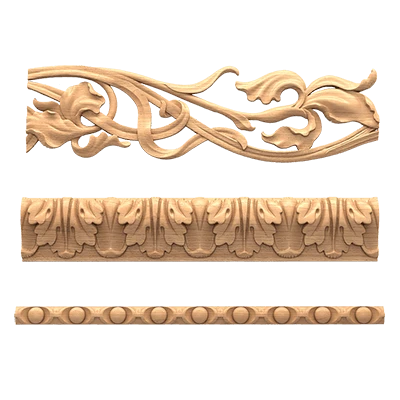
Decorative wooden moldings— intermediate decorative lines and frames
-
Wooden angle— for finishing external and internal corners
-
Wooden block— for creating volumetric accents, shelves, stepped transitions
Why a unified series of moldings matters
All elements from one series in the STAVROS catalog — the same wood species, the same surface treatment (sanding or milling), the same reaction to painting or tinting. This means that baseboards, slats, corners, and cornices from the same line will look like a single whole. Calculating this at the start means avoiding the situation of "wooden baseboard and wooden slats of different shades," which occurs in every third interior.
Corner and block: small details, big result
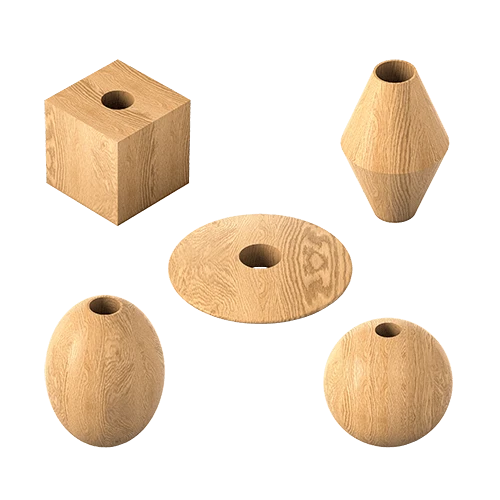
Wooden anglecovers the external corners of slatted finishes, transitions between different materials on the wall, joints of slatted panels with smooth surfaces. Without a corner, the joint looks rough — with a corner, it becomes a clean architectural line.
Wooden block— a more voluminous element. Used to create stepped transitions between finish levels, as a base for hanging shelves, as a volumetric accent in a slatted composition. Two blocks above the headboard of a bed from which slats "grow" — this is a structured system, not just "nailed slats."
Which combinations look expensive and professional
There are several stable combinations that in any interior give the result "expensive and well-thought-out." Here are the most convincing ones.
White polyurethane stucco + natural oak slats
White polyurethane molding frames on the walls, a white cornice along the perimeter — and in the selected area, behind the sofa or TV, a slatted panel made of natural or bleached oak. The contrast of the warmth of wood and the purity of white stucco is one of the most foolproof interior techniques. A wide wooden baseboard matching the slats connects the lower and middle zones of the wall.
Wooden baseboard + wooden cornice + slats
All wooden elements — baseboard, cornice, slats — are from the same species, in the same color. The wall between them is neutral: white or light gray. This is a restrained system where wood appears strictly along the "frame": at the bottom, at the top, and with accent verticals in the right place. Between the wooden elements is a neutral surface. The result: an interior with architectural order and material warmth.
Slats in the TV area + moldings on the side walls
The central wall behind the TV is slatted, the side walls have molding frames made ofwall decor. This is a "three-part" living room system where each surface reads as its own, but all three are coordinated in color and proportion. The baseboard around the entire perimeter is uniform — wooden or MDF.
MDF baseboard + polyurethane moldings + thin cornice
Fully "white" option:White MDF Skirting Board 80 mm, polyurethane molding frames on the walls, a thin white cornice 40–50 mm. Everything is white. The walls are any color, the floor is warm wood. This system gives a feeling of modern neoclassicism without a single "palatial" accent. This is what is commonly called "quiet luxury."
Wooden slats + thin ceiling decor
Rafter panelson the wall as an accent — and minimal ceiling decor: only a 40 mm cornice around the perimeter, without frames or rosettes. The slats "speak" — the ceiling "stays silent." This proportion works in modern interiors with a pronounced Scandinavian or biophilic character.
Mistakes when combining slats, moldings, and baseboards
Let's break down the most common — and the most costly in terms of time and materials.
Too many profiles on one plane
Slats + molding frames + decorative overlays + cornice — all on one wall. Rule: one plane — one main decorative tool. Slats — without molding frames on the same wall, or frames — without slats. Combining is only allowed on the principle of "a frame encloses the slats," but not "slats + frames + more frames."
Different wood shades without a system
Dark slats + light baseboard + "medium" wood cornice. Three different shades on one vertical line — that's chaos, even if all three are good individually. Either one wood shade for all wooden elements, or two — but with a clear principle: warm + neutral, or dark + light.
High baseboard without considering ceiling height
A baseboard of 150–180 mm with a ceiling height of 2.5 m — too large a share of the visible wall height. The baseboard takes up 6–7% of the visible wall height and creates a feeling of a "low ceiling." With a height of 2.5 m — the baseboard should be no wider than 80–100 mm.
Massive cornice in a small room with slats
A 120 mm cornice + slatted panels with 40×60 mm slats in a 15 m² room — these are two heavy tools in one space. Large slats require a laconic cornice. A massive cornice requires calm walls. They do not work simultaneously.
Slats, moldings, and an active ceiling
Slatted panels on walls + molding frames + a decorative ceiling with a rosette + a cornice — these are four active decorative tools in one room. For a 20 m² room with a 2.6 m ceiling, this is guaranteed overload. Rule: if the wall is saturated, the ceiling is calm. If the ceiling is saturated, the walls are calm.
Ignore joints between materials
The most unnoticeable during planning and the most noticeable during execution: how does the slatted panel join with the molding? How does the slatted panel transition to the baseboard at the bottom? Where does the cornice 'land' if the slats go all the way to the ceiling? These joints need to be thought through at the design stage, not resolved 'on the spot'.
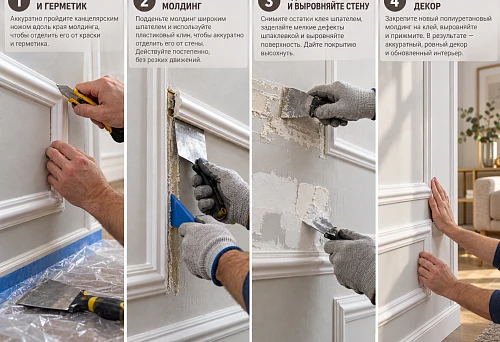
Wooden angle covers external corner joints.installing polyurethane molding — a detailed guide on how to make neat corners and hidden joints when working with polyurethane decor.
How to assemble the system: step-by-step algorithm
One of the key questions: where to start when you want slats, stucco, baseboard, and cornice in one interior?
Step 1. Define the dominant element. What will be the main decorative tool: slats or molding? The dominant element occupies the accent wall. Everything else is a supporting system.
Step 2. Choose a material theme. All wood — or wood + polyurethane? Warm natural tones — or warm wood + white molding?
Step 3. Start with the baseboard. Determine the height and type of floor baseboard — this sets the lower horizontal line and the scale of the entire system. See the sectionMDF skirting boardsorwooden baseboardsin the STAVROS catalog.
Step 4. Choose the cornice. The cornice based on the parameter "baseboard width ± 20–30 mm". Wooden — if the interior is entirely wooden. Polyurethane — if precision of profile and white color are needed.
Step 5. Decide on the wall zone. Slats — in the accent zone. Molding framesmade of polyurethane — on neutral walls. Or without moldings — if the interior is minimalist.
Step 6. Add ceiling decor if necessary. Only with a ceiling of 2.7 m or higher and provided that the walls are not overloaded.ceiling decor — molding frames or a rosette — only as a supporting, not competing element.
Step 7. Check the entire system. All elements on paper — baseboard, slats, moldings, cornice, ceiling. Do the style, material, and scale match? Are there any conflicts at the joints?
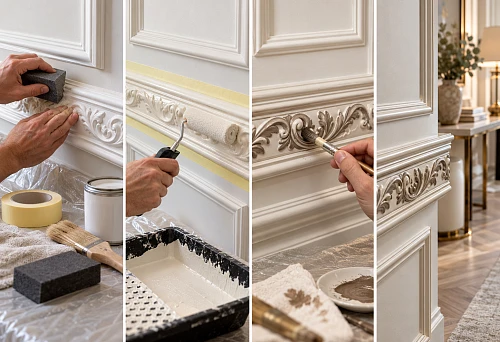
Complete technologyinstalling polyurethane molding is described in a separate practical guide — from surface preparation to final painting.
About the company STAVROS
STAVROS is a Russian manufacturer of decorative interior products made from solid wood and polyurethane. The company's range covers all key elements of the decorative interior "framework": polyurethane moldings, cornices, ceiling and wall decor; wooden slats, slatted panels, solid wood and MDF baseboards, wooden cornices, corner pieces, bars, and linear products from various wood species.
STAVROS producesRafter panelsandrailsfrom oak, ash, pine, and birch. The full rangewood trimallows you to choose a unified series for baseboards, cornices, moldings, and corner pieces from the same wood species — guaranteeing visual unity of the entire system.
In the STAVROS catalog, there are solutions for any interior style: from minimalist Scandinavian aesthetics to classic neoclassicism with a full set of polyurethane stucco decor.
Frequently asked questions
Can slats and moldings be used in the same interior?
Yes. They serve different purposes: slats provide vertical accent and texture, moldings provide contour, symmetry, and horizontal structure. The main rule: do not mix them on the same plane without clear logic and pauses.
How to choose a baseboard for wooden slats?
A wooden baseboard of the same wood species and shade as the slats — for warm, natural interiors. A white MDF baseboard — for contrast with warm slats in modern interiors. Baseboard height: 60–100 mm for ceilings 2.5–2.7 m.
How to connect a ceiling cornice and a floor baseboard?
Unified material (both wooden or both polyurethane in white) and proportional scale (cornice ≈ baseboard ± 20–30 mm). Monochrome painting of the cornice in the ceiling color, and the baseboard in the wall or floor color.
Which cornice to choose for wooden slats?
A wooden cornice from the same series as the slats — for a unified material language. A white polyurethane cornice — for a contrasting "Scandinavian" effect.
How not to overload the interior with slats and stucco molding?
One main tool per one plane. Slats on an accent wall — stucco molding on the others. Or stucco molding around the perimeter — slats in the center as an insert. No more than two active decorative tools per room.
What is better: MDF baseboard or wooden one for slats?
A wooden baseboard — if the slats are made of natural wood and the interior is warm, organic. MDF for painting — if the slats are light, bleached, or if the entire decor is monochrome white.
How to make the interior cohesive using baseboard, cornice, and slats?
Use one series of moldings for all wooden elements. Maintain the baseboard-to-cornice proportion. Limit slats to one accent zone. Cornice and baseboard — around the entire perimeter, slats — only where an accent is needed.