Article Contents:
- What is Included in the Concept of Custom Molding
- Which Decorative Elements Belong to Molding
- When Ready-Made Solutions Are Enough and When Custom Order Is Needed
- Why Custom Molding Is More Convenient Than Standard Elements
- What Types of Molding Can Be Ordered in Moscow
- Molding for Walls
- Molding for Ceilings
- Molding for Doors and Portals
- Decorative Elements for Zoning and Accent Walls
- Molding Sets for Classic and Neoclassical Interior
- For which interiors is custom molding suitable
- Classic Interior
- Neoclassicism
- Modern classicism
- Apartment interiors
- Private house interiors
- Commercial spaces
- What materials are used for molding
- Gypsum
- Polyurethane
- Duropolymer
- Decorative elements made of wood and MDF
- What to choose for a specific task
- How to choose molding for the interior
- By room style
- By ceiling height
- By room size
- By surface type
- In combination with furniture, doors, and walls
- What is best to order for walls, ceilings, and doors in different rooms
- living room
- for the bedroom
- For the hallway
- For kitchen and dining room
- For Office
- For staircase and hallway areas
- When custom-sized or project-specific molding is needed
- If the interior has already been designed by a designer
- If decor needs to be integrated into an existing space
- If non-standard patterns and compositions are needed
- If symmetry and precise element alignment are important
- How to order molding in Moscow
- What to prepare before ordering
- What dimensions and photos are needed
- Is a sketch or design project required
- How to coordinate elements with each other
- Common mistakes when ordering custom molding
- Why it's important to select molding as a system, not as individual elements
- Molding for interiors: examples of application by room
- FAQ: Answers to Popular Questions
- STAVROS: a manufacturer of decorative molding with experience

Custom molding in Moscow is not just beautiful decor on walls and ceilings. It is an architectural language that speaks about the level of an interior without a single word. Properly selected decorative elements transform an ordinary space into something alive, proportionate to a person, and truly valuable—in the aesthetic sense of the word. Today, decorative molding is in demand not only in classic residences and mansions but also in urban apartments, commercial spaces, restaurants, and premium-level offices. The secret is that molding knows how to adapt: it is equally organic in strict neoclassicism and in modern classicism with its restrained luxury.
But here's the paradox: precisely because of the wide choice, many customers get lost. Moldings, cornices, rosettes, friezes, portals, columns—how to navigate this diversity? How not to overload the interior, not choose an inappropriate scale, not mix incompatible styles? This article answers all these questions—systematically, concretely, and based on real practice.
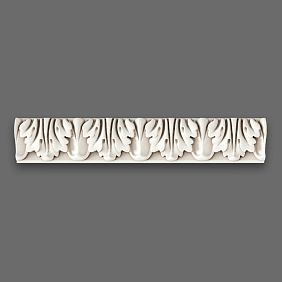


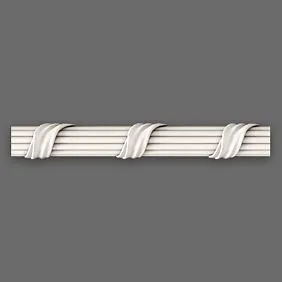


What is included in the concept of custom molding




What decorative elements are considered stucco work?
The term 'stucco work' encompasses an entire system of decorative elements, each playing its own role in the interior. It's not just 'decoration'—it's the architectural framework of a space, expressed in relief and form.
The main elements of stucco decoration include:
-
Moldings—horizontal and vertical profile strips that divide walls into zones, create framed compositions, and set the rhythm of a room.wall and ceiling moldings—one of the most versatile tools in a designer's arsenal.
-
Cornices—wide profiles that connect the wall and ceiling. They visually raise the ceiling, conceal joints, and give completeness to the entire volume.
-
Ceiling rosettes—central decorative elements of the ceiling, typically round or polygonal in shape. They accentuate the lighting fixture area and create a visual focal point in the room.
-
Friezes—decorative strips with ornamentation or geometric patterns that run along the perimeter of walls or divide planes.
-
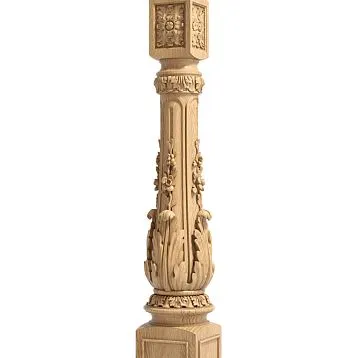
Columns and half-columns—powerful vertical elements that structure space and create a sense of scale.
-
Door portals and surrounds—stucco frames around door openings that transform an ordinary passage into an architectural accent.
-
Decorative panels are wall-mounted frame sections filled with ornamentation or fabric inserts.
-
Baseboards are lower profiles at the base of walls that complete the vertical composition.
-
Pilasters, brackets, capitals, and consoles are accent and load-bearing decorative elements characteristic of classical and order-based interiors.
The combination of these elements forms what professionals call the system ofinterior stucco decoration..
Our factory also produces:


When ready-made solutions are sufficient, and when a custom order is needed
Ready-made stucco elements are suitable for most typical situations: standard ceiling heights, rectangular rooms, interiors without non-standard structural details. If you are choosing a cornice for a ceiling height of 2.8–3.2 meters or a molding for a standard niche—generally, a ready-made solution of the required profile can be found in the catalog.
A custom order for the project becomes necessary when:
-
the room has non-standard dimensions, sloped ceilings, or complex angles;
-
the designer has developed an original decorative scheme with precise parameters;
-
It is necessary to integrate decorative elements into an already completed renovation.
-
The project involves atypical combinations or large formats.
Get Consultation
Why custom plaster molding is more convenient than standard elements
Custom plaster molding production in Moscow offers one undeniable advantage: exact alignment with your project. No 'almost fits' and no compromise on dimensions. You receive an element with the required parameters for width, depth, length, and profile—specifically for your room, your doors, your ceiling.
Moreover, ordering according to the project allows for maintaining a unified decorative system: all elements are of the same level of detail, the same relief thickness, and the same style. This is critically important for interiors where harmony matters, not a random collection of beautiful details.
What types of plaster molding can be ordered in Moscow
Wall molding
Wall plaster molding is primarilyMoldings for walls, frame panels, friezes, and applied ornaments. Moldings divide the wall into visual zones—upper, middle (dado), and lower—creating that very 'three-level' classic wall, which looks both rich and proportionate.
Frame panels made from moldings are one of the most popular techniques in classical and neoclassical finishes. They structure the wall without using expensive materials and create a basis for color or texture contrast: inside the frame—one color, outside—another.
Applied rosettes, cartouches, and medallions for walls create focal accents: above the sofa, above the fireplace, in the center of an accent wall. This is not an overload of decor—it is the arrangement of visual priorities.
Ceiling molding
Ceiling molding— Cornices, rosettes, friezes, and ceiling skirting boards are perhaps the most powerful tool for transforming space. A cornice defines the boundary between the wall and ceiling, giving the room a sense of completion. A central rosette creates a visual focal point and logically connects the ceiling to the chandelier.
With ceilings from 3 meters and higher, ceiling decor works to its full potential: a cornice 150–200 mm wide, a frieze beneath it, and in the center — a rosette 60–90 cm in diameter. Such a system makes the ceiling not just the 'upper boundary' of a room, but a full-fledged architectural plane.
ceiling rosettes under chandeliersare now produced in a wide range of diameters — from 200 to 1500 mm — allowing you to select an element for any room: from an intimate bedroom to a grand foyer.
Molding for Doors and Portals
A door portal is one of the most expressive elements of decorative molding, instantly changing the perception of an interior. A molding frame transforms an ordinary doorway into an architectural detail: pilasters are added on the sides, a frieze on top, sometimes a keystone or decorative overlay.
Portals are especially appropriate in living rooms and halls, where a door should be perceived not as a technical opening, but as a design element. It is important thatmolding for doorsmust be coordinated with the overall decorative system: if the walls have moldings of a certain profile, the door frame should correspond to the same language of forms.
Decorative Elements for Zoning and Accent Walls
Molding is a powerful tool for decorative zoning. With it, you can visually highlight a relaxation area in a living room, designate a bed headboard in a bedroom, decorate a niche for a TV or a fireplace wall. Moldings and framed panels create clear zone boundaries without partitions and without losing floor space.
An accent wall with symmetrical molding frames and a central medallion is a classic technique that always works. Especially if the background inside the frames is painted in a deeper shade than the rest of the wall.
Molding sets for classic and neoclassical interiors
For those who don't want to select elements one by one, there are ready-made sets: coordinated collections of cornices, moldings, baseboards, and rosettes in a unified style. This approach eliminates compatibility errors and guarantees that all elements will look like a single system, not a random selection from a catalog.
For which interiors custom molding is suitable
Classic interior
Classicism is the native environment for stucco decoration. The order system, symmetry, clear hierarchy of elements, contrast of white stucco and colored background — all these are signs of a full-fledged classic interior. Here, stucco doesn't just decorate; it carries a constructive function: divides space, designates zones, creates rhythm.
In classicism, cornices with rich profiles, rosettes with multi-layered ornamentation, columns and half-columns, and frame panels along the entire perimeter of the walls are used. The scale of the decor must correspond to the scale of the room — the higher the ceiling and the more spacious the room, the more substantial the elements can be.
Neoclassicism
Neoclassicism works with the same elements as classicism, but with greater restraint. The cornice here is simpler in profile, moldings are thinner, rosettes have fewer layers of ornamentation. The color palette is softer: not white with gold, but white with graphite, or light gray with cream.
Preciselydecorative stucco in neoclassical styleis the most requested format today. It adds depth and architectural character without heaviness and overload. This is the case where 'a little less' gives 'much more'.
Modern classic
Modern classicism is when stucco elements are applied in a targeted manner, creating accents rather than filling all the space. One cornice at the ceiling, molding frames on an accent wall, a rosette for the central light fixture — and that's enough for the interior to gain character.
In modern classic design, the material is often polyurethane: lightweight, geometrically precise, and easily painted in any color. This allows moving away from white to beige, gray, or any other shade that will organically fit into the interior's color scheme.
Apartment interiors
Moldings have long moved beyond country mansions. In a city apartment with ceilings of 2.7–3.0 meters, decorative molding is quite appropriate — provided the elements are chosen proportionally. A cornice 80–100 mm wide, a thin molding on the wall, a small rosette 40–60 cm in diameter — and the apartment acquires that very 'expensive' look that cannot be bought with finishing materials alone.
Important: it's better to use moldings in an apartment systematically, even in minimal quantities. A single cornice without moldings will look unfinished. But a cornice plus a baseboard plus frames on an accent wall — that's already a complete story.
Private house interiors
In private houses, especially with ceilings from 3.5 meters, moldings fully come into their own. Here, large-scale cornices, large rosettes, portals with pilasters, and full-wall framing systems are appropriate. The decor of a private house requires more detailed elaboration, thereforecustom molding manufacturingcustom sizing is especially relevant here.
Commercial spaces
Restaurants, hotels, executive offices, banking halls, beauty salons in the 'New World' style — these are all spaces where moldings work as an element of premium positioning. The decor here creates an atmosphere and tells the visitor: this is a serious place.
Commercial interiors often use non-standard solutions: columns with capitals along the hall axis, cornices with lighting in niches, framed panels with branded ornamentation. All of these are exclusively custom-made elements.
What materials are used for molding?
Plaster
Gypsum is historically the first and most 'honest' material for decorative molding. It is environmentally friendly, takes paint well, and provides high relief detail. With proper installation, gypsum elements last for decades.
The main disadvantage of gypsum is its weight. Large gypsum elements require reliable fastening and sometimes reinforcement. Additionally, gypsum does not tolerate moisture and is not suitable for bathrooms, kitchens, and unheated rooms.
Polyurethane
Polyurethane is the main material of modern decorative molding. Lightweight, elastic, not afraid of moisture, easily cut with a miter box, glued with liquid nails or special adhesive. At the same time, the relief of polyurethane molding is in no way inferior to gypsum—provided the product is made from high-quality raw materials.
Polyurethane cornices, moldings, and rosettestoday form the basis of the assortment of most manufacturers. They are suitable for apartments, houses, wet rooms (under neutral conditions), and commercial facilities.
Duropolymer
Duropolymer is an enhanced version of polyurethane with the addition of chalk and special modifiers. Elements made of duropolymer are denser, hold their shape better, and are less prone to mechanical deformation. Often used in facilities with increased durability requirements.
Externally, duropolymer is practically indistinguishable from gypsum, while being significantly lighter and not requiring special storage and installation conditions.
Decorative elements made of wood and MDF
Wood and MDF in the context of interior decor are moldings, cornices, baseboards, trims, and framed panels made from natural wood or MDF with decorative veneer. Such elements are especially appropriate in interiors where the tactile and visual warmth of natural material is important.
Wooden decor in classic style— beams, coffers, wooden cornices made of oak, beech, or ash — creates a special atmosphere that cannot be replaced by any polyurethane. Wood lives, breathes, changes color over time — and this is its main advantage.
What to choose for a specific task
| Task | Recommended material |
|---|---|
| Apartment, standard conditions | Polyurethane, duropolymer |
| Private house, high ceilings | Polyurethane, plaster, wood |
| Wet rooms (kitchen, bathroom) | Polyurethane |
| Commercial object | Polyurethane, duropolymer, plaster |
| Historical decor, restoration | Plaster |
| Warm wooden interior | Wood, MDF with veneer |
| Custom sizes on order | Any material — tailored to the project |
How to choose molding to match the interior
Based on the style of the room
First and foremost — style. It's not a matter of taste, it's architectural logic. A cornice with a multi-step profile and ornament references classicism and Baroque. A cornice with a simple semicircular cross-section — to Empire and Neoclassicism. A cornice with straight angles and a minimal profile — to modern classicism.
The mistake of mixing styles is one of the most common: people buy a 'beautiful' cornice from one catalog, 'beautiful' moldings from another — and end up with visual conflict instead of harmony. Before ordering, it's important to clearly define the stylistic direction and stick to it in all elements.
Based on ceiling height
Ceiling height is the main parameter when choosing the scale of molding. Working formula:
-
Up to 2.7 m — cornice 50–80 mm, moldings 30–50 mm, rosette no more than 40 cm;
-
2.7–3.2 m — cornice 80–150 mm, moldings 50–80 mm, rosette 50–80 cm;
-
3.2–4.0 m — cornice 150–250 mm, moldings 80–120 mm, rosette 80–120 cm;
-
Over 4 m — monumental elements without restrictions.
If you install a large cornice in a room with a low ceiling — it will not visually raise the ceiling, but will lower it, weighing down the space.Selecting decor by proportions— is not a technical, but an artistic question.
By room size
The area of the room affects not only the size of individual elements, but also the density of the decor. In a large room, a full wall system with frame panels, cornice, baseboard, and frieze will look natural. In a small room of 15–18 m², the same will turn into clutter.
In a small space, it's better to work in a targeted manner: one cornice, one molding as a divider — and stop. Let there be few accents, but each one should be meaningful.
By surface type
The ceiling material—drywall, concrete slab, or wooden decking—determines the mounting method and possible weight of elements. For drywall, lightweight polyurethane elements are preferable. For concrete ceilings—any. For wooden surfaces—wooden or polyurethane elements with adhesive or mechanical fastening.
In combination with furniture, doors, and walls
Molding does not exist in a vacuum—it always interacts with furniture, doors, wallpaper, and flooring. If the furniture is dark and heavy in form—the molding can be more restrained. If doors have rich milling and intricate frames—the molding on the walls should be coordinated with them in detail, not to compete but to complement.
Coordination is especially importantbetween molding and door decor: the profile of the door frame should echo the profile of the moldings on the walls—this creates a sense of a cohesive architectural solution.
What is best to order for walls, ceilings, and doors in different rooms
For the living room
Living room—the main formal room, it is here that molding reveals its full strength. Recommended minimum: cornice around the perimeter of the ceiling, ceiling rosette for the chandelier, frame moldings on the accent wall. With high ceilings, a frieze under the cornice and frame panels covering the full perimeter of the walls are appropriate.
A portal above the fireplace, if present, is a mandatory element. It creates the semantic center of the room and focuses the gaze.
For the bedroom
In the bedroom, moldings should create an atmosphere of tranquility, not formality. Here, delicate moldings, a gentle cornice with a modest profile, and a moderately sized rosette work well. The accent element is a molding frame behind the headboard: this is both a decorative and functional technique that allows you to highlight the sleeping area.
For the hallway
The hallway is the first impression. A space small in area but significant in content. Pilasters at the entrance, a cornice along the perimeter of the ceiling, frame molding on the walls, or mirror framing work well here. In a narrow corridor — only a cornice and baseboard, without wall moldings: this will preserve the sense of space.
For the kitchen and dining room
In the kitchen, moldings are used selectively: a cornice in the upper zone, a light molding as a divider between the work and formal areas. In the dining room — everything depends on the style: in a classic dining room, both frame panels and a ceiling rosette for the chandelier above the dining table are appropriate.
The material for the kitchen is strictly polyurethane: it is not afraid of humidity and temperature fluctuations.
For an office
The study is a space for concentration and status. Here, library frame panels on the walls, a solid cornice, columns or half-columns in the corners — if space allows — work well. Wooden moldings and oak baseboards will add warmth and weight.
For stairwell and hallway areas
The hall and staircase are the 'tallest' areas of the house, where moldings can be particularly large-scale. Large cornices, pilasters along the vertical of the staircase flight, ceiling decor in niches — all this creates that solemn effect of ascent, which makes the staircase an event, not just a transition between floors.
When custom-sized or project-specific moldings are needed
If the interior has already been designed by a designer
Working with a design project is the optimal scenario for ordering molding. The project contains precise dimensions of all elements, a layout scheme, and an agreed-upon style. The manufacturer's task is to realize the vision with maximum accuracy.
In this case, molding is ordered according to the dimensions specified in the project: linear footage length, rosette diameter, molding and cornice width, profile shape and depth.
If you need to fit decor into an existing space
The renovation is already complete, furniture is in place — but you want to add decor. This is a common situation, and it's solvable. The main thing is to take all measurements accurately: room perimeter, distance from ceiling to top of doors, location of outlets and niches.
Buy ceiling molding and moldingsin exact sizes for a finished interior — a standard service from experienced manufacturers who work with individual requests.
If you need non-standard assemblies and compositions
Non-standard situations: columns with atypical spacing, oversized rosettes, moldings with special profiles, door portals with precise opening dimensions. All of these are reasons for a project-based order. A good manufacturer takes on such tasks and delivers elements that fit perfectly into the designated space.
If symmetry and precise joining of elements are important
Symmetry is the foundation of a classic interior. If the cornice must join precisely in the corner, moldings must form an even frame with equal offsets from all walls, and the rosette must be in the geometric center of the ceiling — all of this requires preliminary marking and precise dimensions.
Custom sizing ensures minimal seams and a flawless composition. This is especially important in formal rooms where the interior is perceived as a unified whole.
How to order molding in Moscow
What to prepare before ordering
A good order starts with good preparation. Before contacting a manufacturer, you need to:
-
Identify the room and its parameters: area, ceiling height, configuration.
-
Define the style: classic, neoclassical, modern classic.
-
Understand which elements are needed: cornice, moldings, rosette, baseboard, door surrounds.
-
Measure the room's perimeter to calculate linear footage.
-
Determine the material: polyurethane, plaster, wood.
-
Prepare photos of the room (preferably from several angles).
What dimensions and photos will be needed
-
Ceiling height (exact, measured at multiple points).
-
Wall perimeter (for calculating cornices, moldings, baseboards).
-
Dimensions of door and window openings (for framing).
-
Distance from ceiling to top of doors (for calculating vertical decor).
-
Photos of the room in natural lighting.
-
If available — room plan from the design project.
Is a sketch or design project needed?
A design project is the ideal option. But not mandatory. Many manufacturers offer consultation on selecting elements based on the room description and interior style. For standard situations, this is sufficient.
If the interior is non-standard or you want a custom solution — a designer's sketch will speed up the process and eliminate errors.
How to coordinate elements with each other
All plaster elements in one room should belong to the same stylistic family. The easiest way is to follow collections: when the cornice, molding, baseboard, and rosette are part of the same series, they are guaranteed to match. If you are selecting from different series, compare the profiles, depth of relief, and ornamentation: they should be in the same register.
Common mistakes when choosing custom plasterwork
This is the most painful topic because mistakes here are costly. Here's what happens most often:
Choosing large decor for a small room. A monumental cornice in a room of 12 m² with a height of 2.6 m is not richness, it's heaviness. The scale of the plasterwork should be proportionate to the room.
Overloading walls and ceilings. The logic 'the more decor, the more beautiful' is false. Plasterwork works through pauses: an empty wall between moldings is just as important as the molding itself.
Mixing incompatible styles. A Baroque-style cornice plus minimalist moldings from a modern catalog is not eclecticism, it's a stylistic error. Plaster elements should speak the same language.
Not considering ceiling height. A cornice 200 mm wide with a 2.7 m ceiling 'eats up' 20 cm of height visually—the space becomes lower, not higher.
Buying elements without an overall plan. The most costly mistake is ordering a cornice now, moldings a month later, and baseboards even later. Without a plan and thoughtful proportions, none of this forms a cohesive system.
Choosing material without understanding the task. Plaster in a bathroom is a disaster. Wood where a crisp white relief is needed is not the best choice. The material must match the operating conditions.
Ignoring the depth of relief. Too deep relief in a modern interior looks archaic. Too flat in a classic one looks poor. The depth of relief is not a detail, but part of the stylistic language.
They don't think about installation in advance. Some elements require built-in anchors or special fasteners. If this isn't planned before finishing begins, installation will become a problem.
Why it's important to select molding as a system, not as individual elements
This is perhaps the main professional principle of working withdecorative interior elements. Each element individually is just a detail. A system of elements is an interior.
When the cornice, molding, baseboard, and rosette belong to a single stylistic solution, maintain a uniform relief depth, and have coordinated proportions, the room begins to 'resonate'. This is an effect that's awkward to describe in words but instantly perceived: everything is in its place, everything is precise, everything breathes.
Designers often speak of the 'decorative rhythm' of an interior—and this is not a metaphor. Rhythm is created by repeating identical forms at identical intervals. Moldings with equal spacing, frames of the same size, cornice and baseboard from the same stylistic family—that's what creates this rhythm.
It's important to remember: an expensive interior is not one with expensive materials. It's an interior with well-considered proportions. That's why a budget apartment with properly selectedceiling moldingslooks richer than a spacious house with a chaotic collection of 'beautiful' details.
A systematic approach to molding includes:
-
a unified style of all elements in the room;
-
matching the scale of decor to the room dimensions;
-
coordination with doors, windows, furniture;
-
a well-thought-out composition on each wall and ceiling;
-
proper placement of accents — and knowing when to stop.
When all this is observed — the interior needs no explanation. It simply makes an impression.
Molding for interiors: examples of application by room
For a clearer understanding — a brief table with recommendations by room:
| Room | Recommended elements | Material | Style |
|---|---|---|---|
| Living room | Cornice, rosette, frame moldings, portal | Polyurethane, plaster | Classic, neoclassic |
| Bedroom | Cornice, moldings, headboard frame | Polyurethane | Neoclassicism, modern classic |
| Hallway | Cornice, baseboard, pilasters, framed mirror | Polyurethane | Neoclassical |
| Kitchen/dining room | Cornice, divider molding | Polyurethane | Any |
| Office | Cornice, frame panels, wooden decor | Wood, MDF, polyurethane | Classic |
| Hall/staircase | Cornice, pilasters, ceiling decor | Polyurethane, plaster | Classic, empire |
FAQ: Answers to popular questions
What is included in custom molding?
The concept of 'custom molding' includes moldings, cornices, ceiling rosettes, friezes, baseboards, columns, pilasters, door portals, and frame panels. Elements are manufactured to the customer's dimensions or selected from a catalog for a specific project.
Can custom molding be ordered to specific dimensions?
Yes. Most manufacturers produce custom elements to individual dimensions — by linear length, rosette diameter, cornice width. For this, precise room dimensions and preferably a layout plan for the decor placement should be provided.
What type of molding is best for an apartment?
For an apartment, polyurethane is optimal: lightweight, moisture-resistant, does not require special fastening. Cornice width — 80–130 mm, rosette — 40–70 cm in diameter. Moldings — no more than 50–70 mm wide.
What to choose for the ceiling: cornice or rosette?
Both — but in the right combination. A cornice frames the perimeter of the ceiling and connects the wall to the ceiling. A rosette accents the center and secures the chandelier. They complement each other and create a complete ceiling composition.
Is molding suitable for a modern interior?
Yes, provided the elements are chosen correctly. In modern interiors, minimalist moldings with a small profile, simple cornices, and geometric baseboards are used. Here, decor structures rather than adorns.
Can molding be used in a small room?
It is possible and necessary — but in minimal volume. One cornice and baseboard + one molding as a wall divider — that is enough. The main thing is to maintain scale: thin profiles, a small rosette, without overload.
What materials are best for molding decor?
Polyurethane - for most residential and commercial tasks. Plaster - for historical and restoration projects. Wood and MDF - for warm interiors with natural materials. Duropolymer - for objects with increased durability requirements.
How to choose molding for doors and walls?
The profile of wall moldings should echo the profile of the door framing. If doors have flat, simple milling - moldings should also be simple. If doors have rich relief - moldings can be more saturated, but not overpower the doors in accent.
What is best for neoclassicism?
For neoclassicism, restrained elements with clear but not excessive relief are suitable: a cornice with an expressive but not overloaded profile, medium-width moldings, a rosette with geometric or floral ornamentation of moderate size. Color - white, ivory, light gray.
How to order molding in Moscow without mistakes?
Prepare accurate room dimensions, decide on a style, choose elements from one series or a coordinated style, consult with the manufacturer's manager. Don't order one element at a time - think in terms of a system. And be sure to request samples before a large order.
STAVROS: a manufacturer of molding decor with experience
If you are looking for a reliable manufacturerCustom moldings in Moscow— pay attention to the company STAVROS. Over 24 years of operation, STAVROS has become one of the most renowned Russian manufacturers of wood and polyurethane decor for interiors of any scale.
STAVROS offers a full range of molding decor:Moldings and cornices, ceiling rosetteswith diameters from 200 to 1500 mm, decorative panels, baseboards, pilasters, and columns — all made from quality materials with clear relief and impeccable geometry. Production in Russia guarantees adherence to deadlines and full quality control at every stage.
Among the key advantages of STAVROS:
-
product quality without complaints;
-
extensive stock program for quick solutions to your tasks;
-
strict adherence to production deadlines;
-
delivery of even a single item across all of Russia;
-
over 246 verified reviews with a 5.0 rating;
-
working with both private clients and designers, architects, and finishing companies.
Every STAVROS product is the result of meticulous work, embodying artistic taste and manufacturing perfection. If your interior requires decor that will stand the test of time and scrutiny — that is exactly what STAVROS does.
Learn more, view the catalog, and place an order:www.stavros.ru