












































































Article Contents:
- What is a Classic Ceiling and the Role of Ceiling Molding
- Why Molding is Needed — Three Levels of Answer
- What Materials Modern Molding is Made From
- Ceiling Rosette — Central Element for the Chandelier
- Why a Rosette is Not Just an Ornament
- How to Choose the Diameter of a Rosette
- Framing a Chandelier with Molding: Complete System
- Moldings and Cornices — Frame Design for the Ceiling Perimeter
- What is a Ceiling Molding Strip
- Wooden Cornice vs. Molded Cornice: When to Choose What
- Cornice Proportions: How Not to Make a Mistake
- Corner Elements: Rosettes and Blocks
- Medallions and Coffers — Three-Dimensional Ceiling Plane Decor
- Decorative Ceiling Medallion
- Decorative Ceiling Coffer Element
- Classical Ceiling Ornament: Rhythm and Symmetry
- Molding on a Stretch Ceiling — Mounting Features
- What Not to Do on a Stretch Ceiling
- Correct Solutions
- Decor for Stretch Ceilings: Specialized Solutions
- How to Match the Scale of Molding to the Room Area
- Basic Rule of Scale
- Scale Correspondence Table
- Scale Mistakes and How to Avoid Them
- How Molding Works in Small Rooms
- Painting Molded Decor — Uniform Tone or Contrast
- Uniform White Tone: Classic Without Risk
- Contrasting Cornice: Boldness That Works
- Patination and gilding
- Matte vs glossy finish for moldings
- Ceiling decor system: how to put it all together
- Design sequence
- Connection between ceiling decor and floor/wall decor
- FAQ - answers to popular questions
- About the Company STAVROS

The ceiling is the most underrated surface in any room. Walls get decorated, floors are laid meticulously, doors are chosen carefully. But the ceiling? At best, it gets whitewashed. At best — a stretch film is installed. And that's precisely why, when a person first enters a space whereCeiling moldingit's executed properly — with rosettes, cornices, moldings, medallions — they freeze. They can't immediately explain what exactly happened. They just feel: it's different here. Here, they thought about the upper tier of the space as seriously as about the lower one.
A classical ceiling is a system. Not a set of decorations slapped on indiscriminately, but an architectural logic where each element knows its place, its purpose, its proportion. This article is about how to build this system: from choosing the central rosette to the final painting of the cornice. In detail, practically, without generalities.


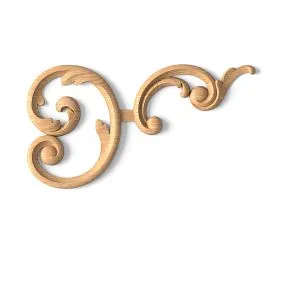



What is a classical ceiling and the role of moldings on the ceiling
A classical ceiling is not style for style's sake. It's an architectural concept in which the horizontal upper plane of a room is perceived as a full-fledged 'fifth facade' — with its own structure, hierarchy, and decor. In classical architecture, the ceiling always had a center, a perimeter, and the field between them. The center was accentuated by a rosette or medallion. The perimeter was framed by a cornice or molding. The field was divided by moldings, coffers, or painted.




Why moldings are needed — three levels of answer
The first level — utilitarian.Ceiling moldingIt conceals joints: the cornice covers the wall-to-ceiling junction, the rosette masks the electrical wiring outlet, moldings cover imperfections in the field. Any experienced finisher will say: under a cornice, you can 'forgive' a few millimeters of misalignment in the plaster.
The second level — architectural. Molded decor structures the ceiling plane, creates a hierarchy of elements — what is primary, what is secondary, where to look first. Without this structure, the ceiling is just a white plane. With it — it is architecturally legible.
The third level — psychological. Ornament, relief, the shadow from the cornice affect the subconscious. Moldings signal: details were considered here. Everything here is intentional. This space deserves attention. It is precisely this signal that makes a classical interior 'expensive' even without expensive furniture.
Our factory also produces:

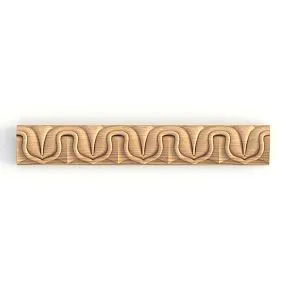


What materials modern moldings are made from
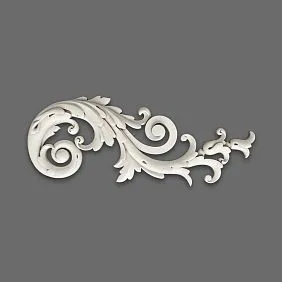
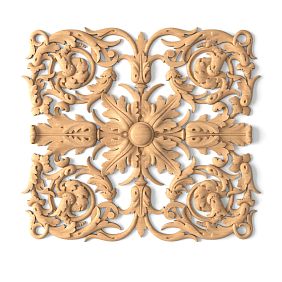
TodayRelief Decorationis produced from three main materials, each with a clear area of application.
Polyurethane (NPU/PU). The most common material for serial molded decor. Lightweight — minimal load on the ceiling. Flexible — doesn't crack from building vibrations. Moisture-resistant — works in kitchens and bathrooms. Takes paint well. STAVROS offers molded decor from NPU series polyurethane: rosettes, cornices, moldings, medallions, coffers — all for painting, with perfect geometry.
Plaster. The traditional material, used in handcrafted work and in premium segment products. Heavier than polyurethane, requires reinforced fastening. Provides unparalleled detail in handcrafted work. Sensitive to moisture without coating.
MDF and solid wood. For wooden ceiling cornices, moldings, and trims — that's a separate story, which we've discussed in detail in other materials.Wooden ceiling cornicemade from solid oak or beech — is an element with its own texture, warmth, and architectural weight, irreplaceable by any polyurethane.
Get Consultation
Ceiling rosette — the central element for the chandelier
Let's start with the heart of the classical ceiling. A decorative ceiling rosette is a round or polygonal ornamental element installed at the chandelier suspension point. This is where the ceiling begins to be 'read' as an architectural system.
Why a rosette is not just an ornament
The rosette solves three tasks at once. First — it masks the electrical wire outlet and the junction box. Instead of an unsightly hole or patched spot — a decorative detail that intentionally draws the eye. Second — it creates a visual center for the ceiling. The gaze of a person entering the room moves according to logic: center → perimeter → details. The rosette fixes the center. Third — it 'grounds' the chandelier: the light fixture gets an architectural frame that makes it not just a suspended object, but part of the interior composition.
How to choose the rosette diameter
This is the most frequent question, and there's a simple formula for it. The rosette diameter in centimeters should be 1–1.5% of the room area in square centimeters. Formula too complex? Here's a simpler one: the rosette diameter equals 1/10–1/12 of the smallest room dimension. A room 4×5 m — rosette diameter 40–50 cm. A room 6×7 m — rosette 55–70 cm.
The second guideline — the chandelier diameter. The rosette should be larger than the chandelier's mounting base, but not larger than its shade (main decorative part). If the chandelier has a wide dome of 60 cm — a rosette of 50–55 cm creates proper framing. If the rosette is larger than the chandelier — it will 'swallow' the light fixture visually.
Framing a chandelier with moldings: the complete system
A classic chandelier surround with molding is not just a rosette. It's a rosette + a medallion-cartouche + a ring molding around the perimeter of the medallion. Three concentric elements that reinforce each other. STAVROS offers ready-made molding decor kits CPU-5-6 (from 4,550 rub.) and C-051 (from 20,930 rub.) — fully assembled systems for framing a central light fixture.
For small rooms — NPU-426L (from 1,940 rub.): a laconic rosette with a delicate floral ornament, medium diameter, style transitional between classic and neoclassical.
Cornices and covings — frame-like perimeter decoration of the ceiling
If the rosette is the center, then the ceiling molding cornice is the frame. It is the cornice that defines the upper horizontal line of the room, connecting the walls and ceiling into a single architectural system.
What is a ceiling molding cove
Coving is a term rooted in the living history of the building craft. Historically, a 'tyaga' (cove) referred to a profile applied on-site: a master would prepare mortar, apply a profile template to the wall, and draw it along the corner, leaving a continuous strip of the required cross-section. A modern ceiling molding cove is a ready-made lineal element of the same principle: a continuous profile installed around the perimeter of a room.
Unlike a single cornice, a cove can be composite: several moldings of different profiles are mounted in parallel, forming an elaborate architectural band. The height of such a band ranges from 120 to 350 mm, depending on the room height and the scale of the task.
Wooden cornice vs. molded cornice: when to choose what
The difference is fundamental.wooden corniceA wooden cornice made of solid oak or beech is a material, tactile, living thing. It is warm to the touch, has a natural texture, and ages gracefully. If desired, it can be repainted in a different shade, restored, or polished. The KZ-009 (from 4,480 rub./linear meter) or KZ-017 (from 3,650 rub./linear meter) cornice from the STAVROS catalog is a full-fledged architectural element in the upper tier of a room.
A molded polyurethane cornice is lighter, takes paint better in white or any other color, and reproduces fine ornamental detail (acanthus leaves, dentils, ovolos). For a classic white interior with rich decor, this is the precise choice.
Key rule: do not mix wooden and molded (polyurethane) cornices in the same room. The material contrast disrupts the unity of style.
Cornice proportions: how not to make a mistake
The cornice should be 1/20–1/25 of the room height. With a ceiling of 2.7 m — cornice 108–135 mm. With 3.2 m — 128–160 mm. With 3.8 m — 152–190 mm. A smaller cornice will 'get lost', a larger one will create pressure and compress the space from above.
The projection of the cornice (horizontal overhang from the wall) is 60–80% of its height. For a 120 mm cornice — projection 70–95 mm. This rule creates the 'correct' shadow under the lower shelf of the cornice — it is this shadow strip that visually separates the ceiling from the wall.
Corner elements: rosettes and blocks
In a classic cornice system, room corners are not just turning points. They are accent points. A corner block (corner rosette) is installed in each internal corner: a square or rectangular ornamental element, to which linear cornices adjoin on both sides. This solution eliminates the need for precise mitering of the cornice for the corner and simultaneously adds a decorative accent to the corners.
Medallions and coffers — three-dimensional decor for the ceiling plane
The cornice frames the perimeter. The rosette accents the center. Between them lies the ceiling field. And this is where the real work with space begins: medallions, coffers, and ornamental strips transform a flat surface into a relief architectural landscape.
Decorative ceiling medallion
A medallion is an oval or round ornamental element, smaller in size than the central rosette. It can be installed symmetrically around the rosette (four medallions along the axes), in the corners of the ceiling field, or form an ornamental band along the cornice.
A medallion works well as a 'filler' for large ceiling fields in spacious rooms. A room 7×8 m is 56 sq. m of ceiling. A single central rosette gets lost against this background. Four medallions in the corners of the field + cornice + rosette create a system where no area of the ceiling remains 'empty' in an architectural sense.
Decorative ceiling coffer element
A coffer is a recessed panel in the ceiling, framed by decorative ribs. Historically, coffers were structural elements: stone vaults were lightened by a cellular structure. Today, a coffered ceiling is a decorative imitation of this system.
A decorative coffered element is a flat frame made of moldings, forming a rectangle or square. Inside the frame is a 'field' (either simply a painted ceiling or additional decor). The frames are arranged in a grid across the entire ceiling surface, creating a visual rhythm.
For the coffer pattern, theWooden moldingsMLD series from the STAVROS catalog are used: simple profiles for minimalist coffers, elaborate multi-level ones for monumental classic ones. Important: all moldings in the coffer grid are taken from the same collection, the same wood species.
Classical ceiling ornament: rhythm and symmetry
Classical ornament is always based on symmetry and rhythm. Symmetry is the mirror equality of the right and left, upper and lower halves of the ceiling. Rhythm is the repetition of an element at equal intervals: coffer after coffer, medallion after medallion. Violating one of these principles immediately makes the ceiling 'restless' — the eye begins to search for symmetry and does not find it.
Molding on a stretch ceiling — installation features
Stretch ceilings today are one of the most common solutions. And the question 'can a stretch ceiling be combined with'with molded decorationconstantly arises. The answer is yes, it can, but with several important caveats.
What not to do on a stretch ceiling
Do not attach molding directly to the stretch ceiling fabric. PVC or fabric material is not a structural base—under load it deforms, and the molding along with a piece of the film will simply fall off. Even for a small rosette with a diameter of 30 cm, weighing 200–400 g, direct attachment to the film is unacceptable.
Correct solutions
Rosette on a stretch ceiling. A special mounting ring made of plywood or MDF is attached to the ceiling slab with studs before stretching the fabric. The fabric is stretched, cut out along the ring, and the edge is secured with a decorative rosette. The rosette is attached to the ring, not to the fabric.
Cornice on a stretch ceiling. The cornice is mounted on the wall before installing the stretch ceiling. The ceiling fabric is brought flush to the lower plane of the cornice and attached to a special profile-batten. There is a 0 mm gap or minimal gap between the fabric and the lower shelf of the cornice.
Moldings across the field of a stretch ceiling. If you need to create a coffered pattern on a stretch ceiling, moldings are attached to a wooden frame on the ceiling slab—before stretching the fabric. The fabric is stretched over it, following the relief of the frame. Light polyurethane moldings can be glued with special adhesive to PVC fabric—but only if the total load does not exceed the permissible limit for that specific type of fabric.
Decor for stretch ceilings: specialized solutions
Polyurethane molded decor is optimally suited for stretch ceilings: lightweight, flexible, allowing installation on PVC fabric under light load. Rosettes NPU-426L (from 1,940 rub.) and sets CPU-5-6 (from 4,550 rub.) are ready-made solutions suitable for stretch ceilings when installation rules are followed.
How to choose the scale of molding according to the room area
Scale is perhaps the most complex aspect of working with molding. This is where mistakes are most often made, making expensive decor look 'heavy,' overloaded, or, conversely, lost against a large surface.
Basic rule of scale
All elements of molded decor should be proportional to the room. This is not an abstract principle—it's mathematics. Cornice height: 1/20–1/25 of the ceiling height. Rosette diameter: 1/10–1/12 of the minimum room dimension. Coffer size: no more than 1/9 of the ceiling area per cell (with a 3×3 grid of coffers in the room).
Scale correspondence table
| Room area | Socket diameter | Cornice height | Coffer size |
|---|---|---|---|
| Up to 15 sq. m | 30–45 cm | 60–90 mm | 40×40 — 50×50 cm |
| 15–25 sq. m | 45–60 cm | 90–120 mm | 50×50 — 70×70 cm |
| 25–40 sq. m | 60–75 cm | 120–150 mm | 70×70 — 90×90 cm |
| 40–60 sq. m | 75–100 cm | 150–180 mm | 90×90 — 120×120 cm |
| Over 60 sq m | 100 cm and more | 180–220 mm | 120×120 — 150×150 cm |
Scale mistakes and how to avoid them
The most common mistake is an oversized ceiling medallion in a small room. An 80 cm medallion in a 12 sq m room occupies a third of the ceiling — it's no longer an accent but a dominant feature that overwhelms the space. The second mistake is a too-high cornice with a low ceiling. A 150 mm cornice with a 2.5 m ceiling is 6% of the height: visually, the ceiling appears lower, and the room feels compressed.
The third mistake is mismatched scales of elements. A large, monumental medallion + a thin molding cornice = a system without internal logic. All elements must 'know' each other: the medallion and cornice should be of the same scale, and the rosettes should be proportional to the coffers.
How plasterwork functions in small rooms
A small room is not a contraindication for plasterwork. It's a challenge. Delicate plaster decor in a compact space works like fine jewelry: a small-diameter but richly detailed medallion of 35–40 cm, a thin profile cornice of 60–80 mm with an elaborate cross-section — and a small room gains a sophistication that a bare ceiling could never provide.
Painting plaster decor — unified tone or contrast
The final decision is about color. And it often determines whether the plasterwork becomes 'part of the interior' or 'decoration hanging on the ceiling.'
Uniform white tone: classic and risk-free
The most common and safest solution: all plasterwork, walls, and ceiling — in white. Cornices, medallions, moldings — white to match the ceiling. The plasterwork is perceived through relief and shadows, not color. This solution works in any style — from strict neoclassicism to contemporary interiors.
Technology: insulating primer (mandatory for polyurethane and wood — prevents yellowing) → finishing acrylic enamel in two coats with intermediate sanding using P320 grit.
Contrasting cornice: boldness that works
A bolder solution: the cornice is painted to match the wall color, the ceiling — white. Or vice versa: the cornice is white, and the ceiling is painted in a rich color. In both cases, the cornice becomes a clear graphic line separating two color zones. This solution requires confidence in color choice and an understanding of how color alters the perception of height.
A dark ceiling with a white cornice visually lowers the room, creating intimacy and coziness. A light ceiling with a dark cornice is more neutral; the frame simply outlines the field. A white cornice on a colored ceiling is the most architectural solution: the ceiling becomes another 'wall' with a clear frame.
Patination and gilding
For richly decorated classical plasterwork — medallions with acanthus, cornices with dentils and ovolo — patination is used: applying special compounds that create an effect of aged gold, silver, or bronze. Technology: base coat in a dark tone → application of metallic wax patina on the raised parts of the profile → polishing.
Gilding is a more labor-intensive process: applying a special primer (mordant) → leaf gold (gold leaf or imitation). Applied selectively: only the most expressive elements of the medallion or cornice. Gilding the entire cornice around the perimeter is excessive and heavy. Gilding several key moldings within a cornice assembly is exquisite.
Matte vs glossy finish for plasterwork
Ceiling plasterwork under a matte coating is an almost universal solution. A matte surface doesn't produce glare, doesn't highlight minor relief defects, and creates a 'quiet' surface that is perceived through shadows, not reflections.
A glossy finish is appropriate only in rooms with abundant lighting and perfectly smooth elements. Gloss enhances every curve of the profile — this is good with flawless product quality and bad with any shape defects.
Ceiling decor system: how to put it all together
Now — about synthesis. Individual elements are clear. But how do they work together?
Design sequence
First — the cornice. It determines the scale of the entire system, sets the height of the upper tier. From the cornice, the size of the medallion, the size of the coffers, and the size of the rosettes are derived.
Then — the medallion and central element. The diameter is chosen based on proportion to the room and to the chandelier.
Then — the ceiling field. Are coffers needed? Rosettes? Or does the field remain clean, with only the perimeter and center working?
Then — the material. Everything from one material and in one tone — or from different ones, but with clear stylistic justification.
And only after that — installation.
Connection of ceiling decor with floor and wall decor
Ceiling cornice andthe wooden floor baseboard— these are the upper and lower horizontal belts of the room. Ideally, when they are made of the same material and the same profile 'language'. Between them is the wall. It can be divided by vertical accents:Wooden pilastersor moldings creating panels.
Thus, a classic interior in the full sense is born: the lower horizontal tier (baseboard), the vertical tier (pilasters or moldings), the upper horizontal tier (cornice), the ceiling field (rosette, coffers). These are not separate elements — this is architectural speech.
FAQ — answers to popular questions
Can you install molding yourself?
Yes. Light polyurethane rosettes and moldings are glued with mounting adhesive onto a pre-primed ceiling. The difficulty lies in marking and mitering the corners of the cornice. If you have a laser level and a miter saw — a non-specialist can handle it.
How does polyurethane molded decor differ from plaster?
Polyurethane is lighter, more flexible, moisture-resistant, and cheaper to install. Plaster is heavier, requires reinforced fastening, but provides a more 'lively' surface in manual work and perfectly accepts thin coatings. For standard interiors — polyurethane. For unique restoration projects — plaster.
How to calculate the amount of cornice for a room?
Perimeter of the room minus the total width of door openings plus 10% reserve. Example: room 4×5 m, perimeter 18 m, one door 0.9 m = 17.1 m + 10% = 18.8 linear meters.
Do you need to remove a stretch ceiling to add a rosette?
Not always. If the rosette is light (up to 400 g) — it can be glued to the fabric with special adhesive. If heavy — an embedded mount installed before stretching the fabric is needed.
How to properly paint molding under a chandelier without staining the ceiling?
Paint the rosette before installing the chandelier. After installation — seal the joint between the rosette and the ceiling with sealant, sand it, apply the final coat of paint with a thin brush. Painter's tape around the perimeter of the rosette during the final ceiling touch-up is mandatory.
Can you mix wooden cornice and polyurethane rosette in one room?
Stylistically — not advisable. Different materials create a different 'character' of the surface. If it's impossible to choose one — use wood for the cornice (linear element) and polyurethane for complex decor (rosettes, medallions with fine detailing). But the color should bring everything to a common denominator.
What type of molded decor is suitable for a kitchen?
Only polyurethane or MDF decor with a lacquer coating. Plaster in the kitchen deteriorates under the influence of steam and grease condensation. The profile should be without small relief indentations — they accumulate grease and are difficult to clean.
About the company STAVROS
A classic ceiling is not a luxury accessible to a few. It is a competent system that anyone can implement who works with the right manufacturer.
STAVROS — a Russian manufacturer of decorative elements for interiors:ceiling cornicesmade of solid oak and beech 18 models of the KZ series,moldingover 40 profiles, polyurethane molded decor of the NPU series — rosettes, medallions, sets. The STAVROS catalog also featurespilasters and columnsfor vertical wall decor andsolid wood trim piecesfor floor and wall systems.
STAVROS accepts comprehensive orders for the project — cornices, moldings, baseboards, pilasters from a single batch of wood, with a unified tone and geometry. Delivery throughout Russia. Specialist consultation on element selection — free. Because a classic interior begins not with a purchase, but with the right conversation about proportions.


