Article Contents:
- Ceiling Decor: More Than Just an Ornament
- Psychology of perceiving ceiling decoration
- Materials for Ceiling Molding: Polystyrene, Polyurethane, Duropolymer
- Duropolymer: The Premium Segment
- How to Calculate the Amount of Material for an Entire Floor
- Calculating Corner Elements and Additional Parts
- Styling of Ceiling Decor: Selection Based on Interior Design
- Combining Elements into a Unified Composition
- Installation of Ceiling Skirting: Technology for Flawless Installation
- Features of Installing Wide and Heavy Cornices
- Painting Ceiling Molding: Final Finishing
- Care for Painted Molded Decor
- Ready-Made Kits: Advantages of a Systematic Approach
- Individual Kit Configuration for a Project
- Commercial Premises: Special Requirements for Ceiling Decor
- Design of Commercial Spaces
- Frequently Asked Questions
- Conclusion: Create a Perfect Interior with Quality Decor

The ceiling is the fifth wall of a room, which often goes unnoticed until it receives proper decoration. The junction of the wall and ceiling, the seamless transition between planes, the correctly selected ceiling molding—all of this creates that very atmosphere of completeness that distinguishes a well-thought-out interior from a random set of elements. Why does one house evoke admiration while another leaves one indifferent? The answer lies in the details, and ceiling decor is one of the key ones.
Today, the market offers a huge variety of materials and solutions for ceiling decoration. From simple foam cornices to luxurious plaster moldings, from laconic modern profiles to richly decorated classical compositions. How not to get lost in this diversity? How to choose impact-resistant polystyrene ceiling skirting that will last for decades while maintaining a flawless appearance? And most importantly—how to buy a ready-made kit for an entire floor without making mistakes in calculations and style?

Ceiling Decor: More Than Just an Ornament
Why is ceiling molding even needed? Isn't it enough to simply paint the junction of the ceiling and wall? At first glance, it may seem like an unnecessary expense on an element that few people notice. But this is a profound misconception. Skirting molding performs many crucial functions, without which the interior loses its integrity.
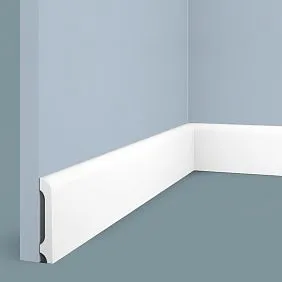
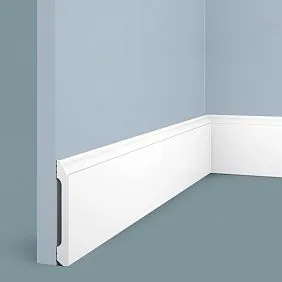
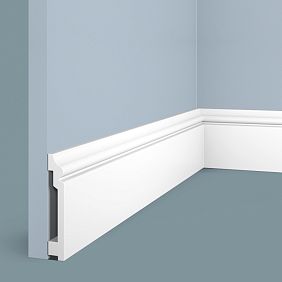
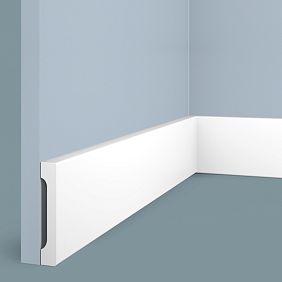
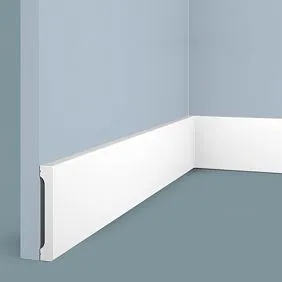
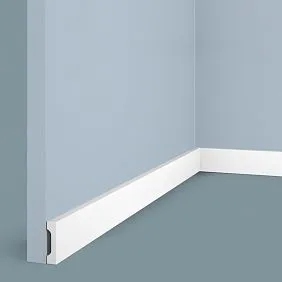
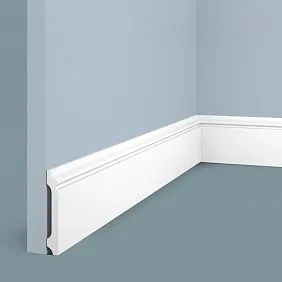
Visual completion of the composition is the first and main function. A bare junction of the wall and ceiling looks unfinished, abrupt, like a sentence without a period.Polyurethane Ceiling MoldingsIt creates a smooth transition, frames the room, and gives it architectural definition. Even the most modest cornice transforms the space, making it well-groomed and thoughtful.
Masking defects is the second function. A perfectly even junction of the wall and ceiling is extremely rare. Minor irregularities, cracks, plaster imperfections—all of this becomes exposed upon close inspection. A well-chosen impact-resistant wall molding conceals these flaws, creating the illusion of perfect execution. At the same time, expensive leveling is not required—the decorative element takes on this task.
Protection against mechanical damage is the third function. The upper corners of walls are regularly subjected to impact: when rearranging tall furniture, moving ladders, or washing walls. Impact-resistant skirting takes the blow, protecting the wall and ceiling finishes from chips and scratches. This function is especially relevant in commercial premises, children's rooms, and hallways.
Visual correction of proportions is the fourth function. A wide cornice visually lowers the ceiling height, creating a sense of intimacy and coziness. A narrow profile matching the ceiling color, on the contrary, raises it, adding airiness. A contrasting color draws attention to the junction line, emphasizing the architecture. The correct choice of width and color allows for correcting layout flaws without construction work.
Concealing utilities is the fifth function. Behind a wide ceiling cornice, you can hide wiring for concealed lighting, security system sensors, and ventilation elements. This is especially relevant when creating modern interiors with complex lighting scenarios. Polyurethane ceiling panels combined with cornices create a unified decorative system behind which all technical elements are hidden.




Psychology of ceiling decoration perception
Why does a beautifully decorated ceiling create a sense of comfort? Interior psychologists explain this with the Gestalt completion effect. The human brain strives for complete forms and holistic compositions. An unfinished junction of the wall and ceiling is subconsciously perceived as incompleteness, unfinished work, which causes a barely noticeable discomfort.
Classical decorative elements—cornices, rosettes, moldings—appeal to cultural memory. For centuries, these elements have been used in palaces, mansions, and ceremonial halls. Their presence in a modern interior creates a connection with architectural traditions, adding a sense of stability, reliability, and time-tested aesthetics. Even minimalist modern profiles carry echoes of classical forms.
Our factory also produces:


Materials for Ceiling Molding: Polystyrene, Polyurethane, Duropolymer
What is better to choose for ceiling finishing — polystyrene or polyurethane? This question is asked by everyone planning a renovation. There is no definitive answer because each material has its own characteristics, advantages, and optimal areas of application. Understanding these nuances helps make the right choice.
Polystyrene— a lightweight foamed material produced by extrusion. Polystyrene granules are heated, foamed, and molded into products of the desired shape. The density of extruded polystyrene is 25-45 kg/m³, making it extremely lightweight. A 2-meter long baseboard weighs only 100-200 grams.
The advantages of polystyrene are obvious. Minimal weight facilitates transportation, storage, and installation. Low cost makes the material affordable for budget projects. Ease of processing allows cutting the baseboard with a regular utility knife. Moisture resistance enables use in any rooms, including bathrooms. Thermal insulation properties provide additional comfort by reducing heat loss through the upper part of the walls.
The disadvantages of polystyrene should be considered when choosing. Relatively low mechanical strength makes the material vulnerable to impacts and scratches. Rough handling easily causes dents on the surface. Limited detail of relief prevents creating thin, complex ornaments. Sensitivity to some solvents requires caution when selecting adhesives and paints. The flammability of polystyrene necessitates fire safety measures.
Polyurethane— an elastic polymer with a three-dimensional network structure. Products are obtained by casting in molds, ensuring high detail. The density of polyurethane for decorative elements ranges from 200 to 400 kg/m³, which is significantly higher than polystyrene. The same two-meter baseboard will weigh 400-800 grams.
The advantages of polyurethane make it the material of choice for quality decor. High mechanical strength ensures resistance to impacts, pressure, and scratches. Excellent relief detail allows reproduction of the finest ornaments and complex molded compositions. Material elasticity enables bending elements along a radius for finishing curved surfaces. Chemical resistance permits the use of any adhesives and paints. The durability of polyurethane is measured in decades — quality products last 50-70 years without losing properties.
The disadvantages of polyurethane are relative. Higher cost compared to polystyrene (2-3 times) is offset by durability and quality. Greater weight requires more careful fastening, but for ceiling elements, this is not critical. Processing complexity — polyurethane is cut only with a saw — is compensated by high manufacturing precision, minimizing fitting.
Get Consultation
Duropolymer: Premium Segment
Duropolymer — a modified high-density polystyrene (100-120 kg/m³), occupying an intermediate position between regular polystyrene and polyurethane. The material has increased strength, excellent detail, while maintaining lightness and ease of processing. Duropolymer is more expensive than regular polystyrene but cheaper than polyurethane, making it the optimal choice for those seeking a middle ground.
impact-resistant ceiling polystyrene skirting board— made of duropolymer withstands significant mechanical loads, does not crumble, and does not break upon impact. This is an ideal solution for commercial premises, children's rooms, corridors — places where the likelihood of damage is high. At the same time, the material retains all the positive properties of polystyrene: lightness, moisture resistance, and ease of installation.
How to Calculate the Amount of Material for an Entire Floor
Purchasing a ready-made kit for an entire floor is a reasonable solution that saves time, creates stylistic unity, and avoids calculation errors. However, for the kit to be truly ready, an accurate calculation of the quantity of all elements is necessary. How to do this correctly?
Measuring the perimeter of rooms is the first step. Measure the length of all walls in each room on the floor where baseboard installation is planned. Add up the obtained values. Do not forget corridors, hallways, bathrooms, storage rooms — all rooms requiring finishing. Record the result — this is the base perimeter.
Accounting for doorways is the second step. Formally, baseboard above the door is not needed, but many prefer not to interrupt the decorative line. Decide whether you will mount baseboard above doors. If not — subtract from the total perimeter the width of all doorways multiplied by the number of doors. If yes — leave the perimeter unchanged.
Choosing element length is the third step. The standard length of ceiling baseboard is 2 meters; less commonly, products are 2.4 and 3 meters long. Longer elements are more convenient for installation (fewer joints) but more difficult to transport and require two installers. Choose the length based on room features and delivery capabilities.
Calculating the number of elements is the fourth step. Divide the total perimeter by the length of one element. Round the result up. Add a 10-15% reserve for cutting, possible defects, and installation errors. For example, with a perimeter of 80 meters and element length of 2 meters, 80/2=40 elements + 10% reserve = 44 baseboards are needed.
Calculating Corner Elements and Additional Details
corner elements— significantly simplify installation and improve joint quality. Instead of complex angled cutting, ready-made internal and external corner elements are used, precisely repeating the profile of the main baseboard. To calculate their quantity, count all internal corners (usually four in a standard rectangular room) and external corners (protrusions, niches, columns). Multiply by the number of rooms — you get the required number of corner elements.
ceiling rosettes— are planned based on the quantity and location of chandeliers and pendant lights. A rosette not only decorates the mounting point but also visually enlarges the light fixture and creates an accent. In classic interiors, a rosette is mandatory for central lighting in each room. In modern styles, rosettes are used selectively to create accents.
Moldings for Creating Frames— on walls or ceilings require separate calculation. Determine the dimensions and number of frames, calculate their perimeter, add 15% reserve. Moldings usually have a smaller cross-section than ceiling baseboards, allowing creation of elegant decorative compositions without overloading the interior.
Stylistics of Ceiling Decor: Selection Based on Interior Design
How to choose a baseboard profile so that it harmoniously fits into the interior? The shape, width, and relief of the decor should correspond to the overall style of the room. An error in choosing the baseboard style can ruin even the most thoughtful design.
Classical style involves using richly decorated cornices with plant ornaments, acanthus leaves, rosettes, and garlands. The width of such elements is 100-200 mm, with deep, expressive relief.Molding on ceiling cornice rosette— creates a luxurious atmosphere of a palace interior, emphasizing the status of the room.
Neoclassicism uses more restrained forms while preserving classical motifs. Ornaments are simplified, relief is less deep, lines are cleaner. Cornice width is 80-120 mm. Such decor combines excellently with modern furniture, creating a balance between tradition and relevance. Neoclassicism is the most universal style, suitable for most interiors.
Baroque and Rococo require maximally lavish decor. Complex curls, abundance of small details, asymmetrical compositions, gilding. Cornice width reaches 200-300 mm. Such decor is appropriate in large rooms with high ceilings, where it does not overload the space but creates impressive theatricality.
Art Nouveau is characterized by smooth curved lines, plant motifs of stylized form, and asymmetry. Medium-width cornices (70-100 mm) with flowing forms resembling natural objects. The color palette often includes contrasting combinations, patination, and tinting.
Modern minimalism involves clean profiles without ornaments. Simple geometric shapes, clear lines, narrow cross-section (30-60 mm). A skirting board matching the ceiling color creates a barely noticeable transition, avoiding emphasis. This approach visually increases the room's height, adding airiness and light.
Combining elements into a single composition
Ceiling molding elementsshould form a harmonious ensemble. Cornice, rosette, and moldings are chosen from the same collection, with matching ornament styles and detail scales. Mixing elements of different styles creates visual dissonance and disrupts the interior's integrity.
Proportions are critical. In a room with a height of 2.7 meters, a 200 mm wide cornice will look massive and visually lower the ceiling. A narrow 40 mm profile in a hall with four-meter ceilings will get lost and fail to create the desired effect. The golden rule: the width of the cornice should be 1/20 to 1/30 of the room's height.
Color scheme affects the perception of space. A skirting board matching the ceiling color increases its area and raises the height. A skirting board matching the wall color visually extends the wall upward, lowering the ceiling. A contrasting color creates a clear boundary, emphasizing the architecture. Classic white is universal, suits any interior, and creates a sense of cleanliness and light.
Ceiling skirting board installation: technology for flawless installation
Even the highest quality impact-resistant polystyrene ceiling skirting board will not reveal its advantages with unprofessional installation. Mistakes at this stage lead to peeling elements, gaps at joints, and uneven decorative lines. How to avoid typical errors and perform installation at a professional level?
Surface preparation is the critically important first step. The ceiling and upper part of the walls where the skirting board will be attached must be clean, dry, and sturdy. Remove all dirt, dust, wallpaper remnants, or peeling paint. Check the base strength—plaster should not crumble, paint should not peel. Reinforce weak spots with deep-penetration primer.
Marking is the second step. Before starting installation, mark the horizontal line. Use a laser level to snap a strictly horizontal line around the room's perimeter. Even a slight deviation from horizontal will be noticeable after installing all elements. Check the marking at several points—building structures are not always perfectly level.
Adhesive selection is the third step. For molding skirting boards, specialized acrylic or polyurethane-based adhesives are used. Acrylic adhesives like 'liquid nails' are suitable for lightweight polystyrene elements on even surfaces. Polyurethane adhesives provide a stronger bond, suitable for heavy polyurethane products and uneven bases. Never use solvent-based adhesives—they destroy polystyrene.
Cutting corners is the fourth step, requiring precision and skill. The classic method is cutting at a 45-degree angle using a miter box. A simpler modern method is using. The second option is significantly simpler for beginners and guarantees perfect corner quality.that precisely replicate the skirting board profile. The second option gives perfect corners even without experience, saves time, and minimizes waste.
Applying adhesive and gluing is the fifth step. Adhesive is applied to both mounting surfaces of the skirting board (adjacent to the wall and ceiling) in a thin snake or dotted pattern. The element is placed at the installation spot, pressed, and held according to the adhesive instructions (usually 30-60 seconds). Excess adhesive protruding from under the skirting board is immediately removed with a damp cloth.
Sealing joints is the sixth step. Joints between elements are filled with white acrylic sealant. Sealant is applied from a gun and smoothed with a wet finger or rubber spatula. High-quality joint sealing makes them almost invisible, creating the illusion of a monolithic structure. After the sealant dries, seams can be additionally sanded with fine sandpaper.
Features of installing wide and heavy cornices
Wide cornices (over 100 mm) and heavy polyurethane elements require additional mechanical fastening. Adhesive alone is insufficient—under its own weight, the product may peel off. Combined fastening is used: adhesive plus screws or dowels.
The technology is as follows: the cornice is glued in place and pressed. Through the front surface at future fastening points, holes are drilled with a small-diameter drill bit. Screws are driven into these holes, countersinking into the skirting board material. Screw heads are filled with putty, sanded after drying. After painting, the fastening points become invisible.
Alternative method—preliminary installation of a wooden batten along the mounting line. The batten is attached to the wall with dowels, serving as a reliable base for gluing the heavy cornice. This method is labor-intensive but ensures maximum reliability, especially when installing on problematic bases.
Painting ceiling molding: finishing
Most ceiling decor elements are supplied in white, ready for painting. Painting not only gives the products the desired color but also protects the material, eases maintenance, creates a uniform surface that hides joints and fastening points. How to properly paint ceiling molding?
Surface preparation is the first step. After the adhesive and sealant are completely dry (usually 24 hours), wipe the skirting board surface free of dust. Large irregularities, sealant drips, protruding edges are sanded with fine sandpaper. Before painting, applying a coat of primer is advisable—it improves paint adhesion, reduces consumption, and ensures coating uniformity.
Paint selection is the second step. For ceiling molding, water-based paints on acrylic or latex bases are used. Acrylic paints create a durable, washable coating resistant to abrasion. Latex paints are more elastic, better suited for polyurethane products. Glossy paints emphasize relief but highlight the slightest defects. Matte paints hide irregularities, creating a soft, noble surface.
Painting technique is the third step. Medium-sized brushes with soft bristles are used for painting ceiling molding. Paint is applied in a thin layer, thoroughly blended into all relief curves. Avoid drips—immediately blend excess paint. After the first coat dries (usually 2-4 hours), apply a second coat. Two-layer coverage ensures uniform, rich color, completely covering the base.
Decorative painting techniques are the fourth step for those wanting to create a special effect. Patination—applying a second color (usually gold, silver, bronze) to the protruding parts of the relief. Creates an antique molding effect, emphasizing the depth of the ornament. Toning—using several shades of one color to create volume. Fresco effect—applying translucent paints, creating the illusion of painting.
Care for Painted Molding
Painted ceiling molding does not require complex maintenance. Periodically (every few months), wipe the surface with a dry soft cloth or a special duster to remove dust. In areas with high soiling (kitchens, hallways), wet cleaning with a soft sponge and a small amount of soapy solution can be used.
Avoid using abrasive cleaners, stiff brushes, solvents. If stains appear that cannot be removed by wet cleaning, the area can be locally touched up with the same paint. High-quality acrylic paints retain their color for decades, do not fade or yellow, minimizing the need for renewal.
Ready-made kits: advantages of a systematic approach
Why is it more advantageous to buy a ready-made kit for the entire floor rather than selecting elements separately? The systematic approach has many advantages that manifest at all stages—from planning to operation.
Stylistic unity is the first advantage. All kit elements are designed in a unified style, with matching ornaments, proportions, and line characteristics. This creates a harmonious composition and visual connection between rooms. The house is perceived as an integral organism, not a collection of disjointed rooms.
Accurate calculation is the second advantage. When ordering a kit, specialists help calculate the required quantity of all elements considering layout features. This eliminates situations where material is insufficient or there is a large surplus. Consumption optimization saves money.
Completeness is the third advantage. The ready-made kit includes not only the main elements (skirting boards, cornices) but also all necessary additional parts: corner elements, rosettes, moldings, adhesive, sealant. There's no need to search for compatible materials or match shades — everything is well-thought-out and ready for installation.
Time saving is the fourth advantage. There's no need to drive around stores, compare offers, or search for missing elements. One order — a complete set for the entire floor with delivery. This is especially valuable when renovation deadlines are tight.
Compatibility guarantee is the fifth advantage. All elements of the kit are made from the same material, using a single technology, ensuring uniform properties, color, and texture. Installation proceeds without issues, with no element incompatibility arising.
Custom kit tailored to the project
A ready-made kit does not mean a standard solution. Modern manufacturers offer custom kits adapted to a specific project. You choose the style, profile of elements, sizes — specialists assemble a kit precisely according to your needs.
moldings, cornices, skirting boardsare selected considering the architectural features of the rooms, the planned design, and the functional purpose of the rooms. For the living room, a more decorative option may be offered; for bedrooms — a restrained one; for children's rooms — impact-resistant. At the same time, all elements maintain stylistic unity.
Commercial premises: special requirements for ceiling decor
Ceiling design in commercial premises — offices, hotels, restaurants, shops — imposes special requirements on materials. High foot traffic, intensive use, and frequent cleaning demand increased strength and durability. Impact-resistant wall molding becomes not just decor, but functional protection.
Impact resistance is a critical parameter for commercial facilities. Moving furniture, equipment, and ladders during maintenance creates a risk of damage. High-density polyurethane decor withstands significant mechanical impacts without forming dents, chips, or cracks.impact-resistant ceiling polystyrene skirting boardmade from duropolymer is also suitable for such conditions, providing an optimal combination of strength and cost.
Durability is the second important parameter. Commercial premises are used for decades, and repairs in them are difficult due to the need to interrupt business processes. The decor must maintain a flawless appearance throughout its service life without repair or replacement. Polyurethane stucco lasts 50-70 years, which fully meets these requirements.
Fire safety is the third criterion. Strict fire safety regulations apply in commercial buildings. The materials used must have certificates confirming compliance with requirements. High-quality polyurethane belongs to class G2 (moderately flammable), which permits its use in most facilities.
Ease of maintenance is the fourth parameter. Regular cleaning is conducted in commercial premises, often using cleaning agents. The decor must be resistant to moisture, chemical exposure, and not absorb dirt. Painted polyurethane stucco is easy to clean, does not lose color, and does not deform from moisture.
Design of commercial spaces
The design of ceiling decor in commercial premises is determined by the specifics of the business. Offices of large corporations prefer a strict neoclassical style — restrained profiles, elegant lines, neutral colors. This creates an atmosphere of reliability, professionalism, and stability.
Boutique hotels choose luxurious classical interiors with richly decorated cornices, ceiling rosettes, and moldings. Such decor emphasizes exclusivity and creates a sense of refined comfort. Fine dining restaurants also gravitate towards classic styles, using stucco decor to create an atmosphere of solemnity.
Modern shopping malls, coworking spaces, and creative hubs prefer minimalist decor or its complete absence. Concise narrow profiles, hidden cornices with lighting, geometric compositions — such solutions create a modern, dynamic image.
Frequently Asked Questions
Can ceiling skirting be used in the bathroom?
Yes, both polystyrene and polyurethane skirting boards are completely moisture-resistant. They do not absorb water, do not swell, do not deform, and do not rot. For bathrooms, this is an ideal solution. It is only important to use moisture-resistant adhesive and paint designed for wet rooms. After quality installation and painting, ceiling stucco will last in the bathroom as long as in dry rooms.
How does polystyrene differ from expanded polystyrene?
Extruded polystyreneis a material with a closed fine-pored structure, produced by extrusion. Foam plastic is a material with large open pores, produced by foaming granules. Polystyrene is denser, stronger, has a smooth surface, and better relief detail. Foam plastic is more porous, brittle, and has a granular surface. For ceiling decor, extruded polystyrene is used, not foam plastic.
How long does it take to install skirting in one room?
With experience, installing ceiling skirting in a standard 3x4 meter room takes 2-3 hours, including preparation, cutting, gluing, and sealing joints. A beginner will need 4-6 hours. Using ready-made corner elements reduces the time by 1.5-2 times. Painting adds another 1-2 hours plus drying time for the paint.
Can polyurethane skirting be bent for decorating arches and columns?
Yes, polyurethane has a certain elasticity. Depending on the thickness and density of the material, skirting can be bent to a radius from 50 cm to several meters. For tighter curves, special flexible cornices or composite structures made of short segments are used. Polystyrene is rigid and cannot be bent — it breaks if attempted.
Should a white skirting be painted if the ceiling is also white?
Painting is advisable even if the colors match. First, the factory white color of the products and the color of the ceiling paint usually do not match in shade. Second, painting hides joints and seams, creating a monolithic surface. Third, paint protects the material and facilitates maintenance. However, if you are visually satisfied with the result without painting — you can leave it as is.
How to calculate the width of a cornice for a specific room?
Use the rule: cornice width = room height / 20-30. For a room with a height of 2.7 m, the optimal width is 70-100 mm. For a room of 3.5 m — 100-120 mm. For halls with ceilings of 4-5 m — 150-200 mm. This is a basic rule that can be adjusted depending on style: classic requires wider cornices, minimalism — narrower ones.
Why do gaps appear in corners after installation?
Main causes: inaccurate corner cutting, uneven walls or ceiling, adhesive shrinkage, thermal deformation. To prevent, use ready-made corner elements (eliminate cutting errors), quality adhesive (minimal shrinkage), thoroughly seal joints with sealant immediately after installation. Small gaps appearing after installation are easily eliminated by additional application of sealant.
What adhesive is best to use for heavy polyurethane cornices?
For heavy elements, polyurethane construction adhesive in tubes or cartridges is optimal. It provides strong bonding, withstands significant weight, compensates for minor base irregularities. Additionally, use mechanical fastening with screws or anchors. Avoid regular 'liquid nails' — they are not designed for such weight.
Can baseboard be mounted on a stretch ceiling?
The skirting board is attached only to the wall, the ceiling is not affected. This is important for stretch ceilings — no load on the film. Choose lightweight polystyrene elements, ensure quality attachment to the wall. Wide skirting boards may visually overlap part of the stretch fabric, which should be considered when choosing the width.
How to care for ceiling molding in the kitchen?
In the kitchen, molding is exposed to grease, soot, and moisture. Regularly (once a month) wipe the surface with a damp sponge and mild detergent to remove grease deposits. Avoid aggressive chemicals and abrasives. For heavy soiling, the molding can be repainted — this will refresh the appearance and create fresh protection.
Conclusion: create a perfect interior with quality decor
Ceiling molding is not a luxury, but a necessary element of a well-thought-out interior. It completes the composition, creates harmony, masks imperfections, and protects against damage. Properly selected ceiling molding transforms an ordinary room into a space with character, style, and individuality.
Material selection is determined by the balance between budget and quality requirements.Ceiling skirting board polystyrene— an affordable solution for residential spaces with moderate load. Polyurethane molding is the choice for those who value durability, quality, and impeccable detailing. Impact-resistant wall molding made of duropolymer occupies a middle position, combining strength and reasonable price.
Purchasing a ready-made kit for the entire floor is a reasonable solution, ensuring stylistic unity, accurate calculation, and saving time and money. A systematic approach allows creating a harmonious interior where every detail is in its place, every element works for the overall composition.
Company STAVROS — a leading Russian manufacturer of interior decorative elements. The assortment featuresa complete line of moldings, cornices, and skirting boardsmade of polystyrene, polyurethane, and duropolymer. Years of experience, modern production equipment, and strict quality control guarantee that each product meets the highest standards.
STAVROS offers not only a wide range of standard elements but also services for developing custom solutions. A team of experienced designers will help select the optimal configuration for your project, calculate the required quantity of all elements, and provide recommendations for installation and finishing.ceiling rosettes, Moldings for walls, corner elements — everything needed to create an exquisite interior you will find in the STAVROS catalog.
By contacting STAVROS, you receive not just quality materials but professional support at all stages — from selection to installation. Create interiors that amaze with STAVROS — your reliable partner in the world of decorative art.