








































Article Contents:
- What are flexible wall panels and why rigid panels don't solve all problems
- Where slatted texture works especially well
- Buy flexible wall panels: when this solution is truly justified
- When flexible panels are the only reasonable answer
- When flexible format is justified but not mandatory
- What types of flexible wall panels exist: breakdown by type
- Flexible slatted panels on fabric backing
- Flexible MDF panels for painting
- Flexible solid oak panels
- How to choose flexible panels by material: MDF vs solid oak
- How to choose a flexible panel by surface type
- Flat straight wall
- Curved wall with smooth radius
- Column
- Arch
- Niche
- Furniture facade, counter, island
- How to choose based on interior design task
- Accent wall in the living room
- TV Area
- Bed headboard
- Hallway and corridor
- Office, reception, commercial space
- Designer project
- What to look for before buying: 9 parameters
- How much does it cost to buy a flexible wall panel: what determines the price
- Mistakes when choosing a flexible panel: seven scenarios
- How to determine which model is right for you
- Why flexible slat panels are one of the strongest formats
- Flexible slat panels in different interior styles
- Modern minimalism
- Scandinavian Style
- Japandi
- Neoclassicism and Modern Classicism
- Loft and Industrial Style
- Warm natural interior
- Flexible panel installation: step-by-step instructions
- Lighting: how to bring a slat wall to life
- Acoustics: an unexpected bonus
- B2B and project supplies
- How to place an order: step by step
- FAQ: answers to the most frequently asked questions
- Conclusion: how to make the right decision and avoid overpaying
- About the Company STAVROS
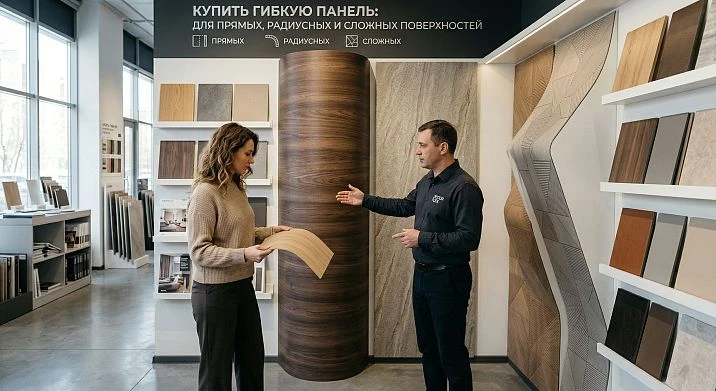
You are standing before a wall. It curves. Or leads into an arch. Or transforms into a column—and becomes a wall again. And you already know: something special is needed here. Not just a panel, not just a finish—but a solution that follows the form, rather than fights against it.
That's when the question arises:buy flexible wall panels. Not out of idle curiosity — but for a specific task. And it's precisely this task we'll examine here in detail: what to choose, how to choose, what parameters to compare by, the differences between materials, how much it costs, and which model will suit your space specifically.
This text is not an encyclopedia entry. It's a practical commercial guide for those who have already made a decision and are now thinking about how to implement it correctly.




What is a flexible wall panel and why rigid panels don't solve all problems
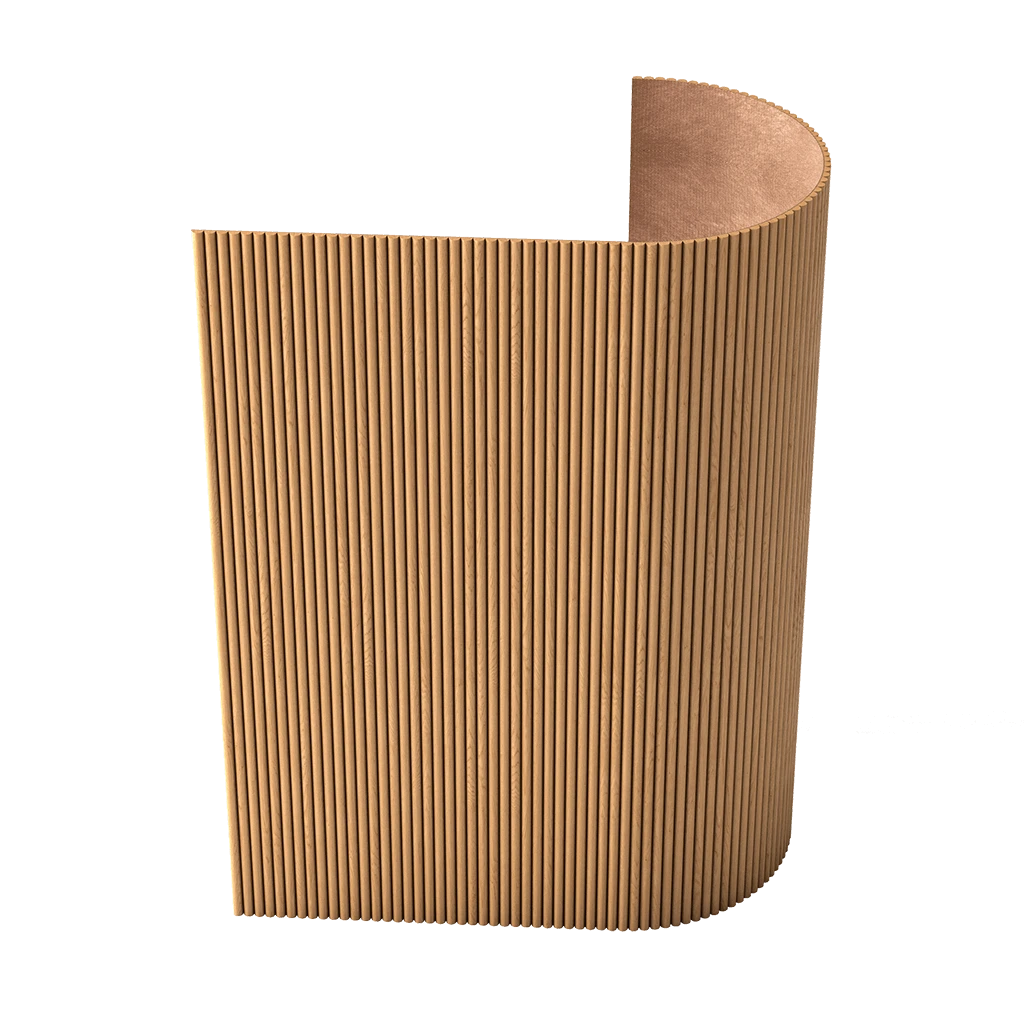
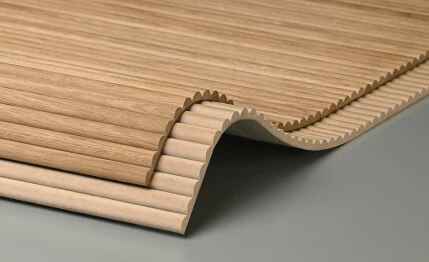
To explain without unnecessary words — a flexible wall panel is a structure of parallel wooden or MDF slats, fastened at equal intervals on an elastic fabric base. Between the slats are air gaps, which give the structure its main property: to bend along any curve without deforming the pattern.
Here's what a rigid panel cannot do: curve around. A rigid slatted module is slats plus an MDF board at the base. A monolith. Flawless geometry on a straight wall, perfect rhythm of slats — but as soon as a curve appears, the monolith becomes an obstacle. It cannot be bent. It will have to be sawn into pieces, fitted manually, gaps filled. The result — seams, compromises, loss of integrity.
A flexible slatted panel is constructed differently. The fabric base is elastic, but not stretchable along the length of the slat. This means: the panel bends across, without changing the spacing of the slats or deforming the pattern. A straight wall, a radius surface, a column, an arched vault, a rounded corner — for the flexible format, this is one material with one behavior.


Where slatted texture works especially powerfully
A slatted surface is a tool for working with light. Vertical slats slice through the flow of directional lighting and create an expressive play of light and shadow: the surface comes alive, gains volume, depth. It is this that makesslatted panels for wallsone of the most powerful tools in modern design—not just a finish, but a sculptural architectural element.
On curved surfaces, this effect is amplified: slats on a column or arched vault create a smooth, rhythmic play of light and shadow that cannot be replicated by plaster, wallpaper, or paint.
Our factory also produces:

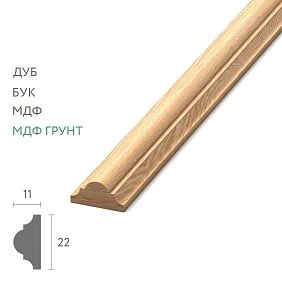


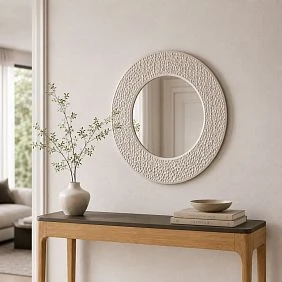

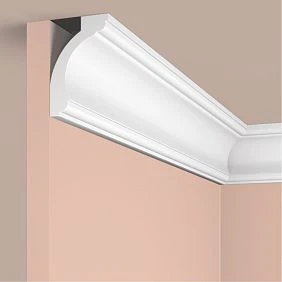
Buy flexible wall panels: when this solution is truly justified
Get Consultation
When a flexible panel is the only reasonable answer
Radius walls. A wall along a smooth curve—in a restaurant, office, or apartment with a designer layout. A rigid panel would require cutting into narrow strips with manual fitting. A flexible one will lay over the shape as a single canvas.
Columns. A cylindrical column is the absolute limit for a rigid panel. A closed cylinder cannot be covered with a monolithic module without rough seams. A flexible panel wraps around the column along the entire perimeter, joining at the least noticeable point—the result looks like monolithic slat cladding.
Arches. An arched vault with slat finishing is a powerful architectural technique. The rhythm of the slats follows the curve of the vault, maintains an even pitch, and transitions seamlessly into adjacent walls.
Niches with rounded transitions. OnlyFlexible panel for interior finishingIt wraps around such a transition as a single sheet — without fitting, without joints, without visible seams.
Rounded corners. Modern interiors increasingly move away from sharp angles toward soft geometry. A rounded transition is a task for a flexible format.
Furniture fronts with curved geometry. Flexible slatted panels replace expensive handcrafted joinery from individual elements.
When a flexible format is justified but not mandatory
Straight accent wall, TV area, bed headboard, decorative inserts — both formats work here. By the way: flexible and rigid panels combine excellently in one project. Use rigid modules on flat planes, flexible ones on transitions and curved surfaces. When the spacing and slat width match, the transition between formats is visually seamless.
What types of flexible wall panels exist: a breakdown by type
Flexible Slat Panels on Fabric Backing
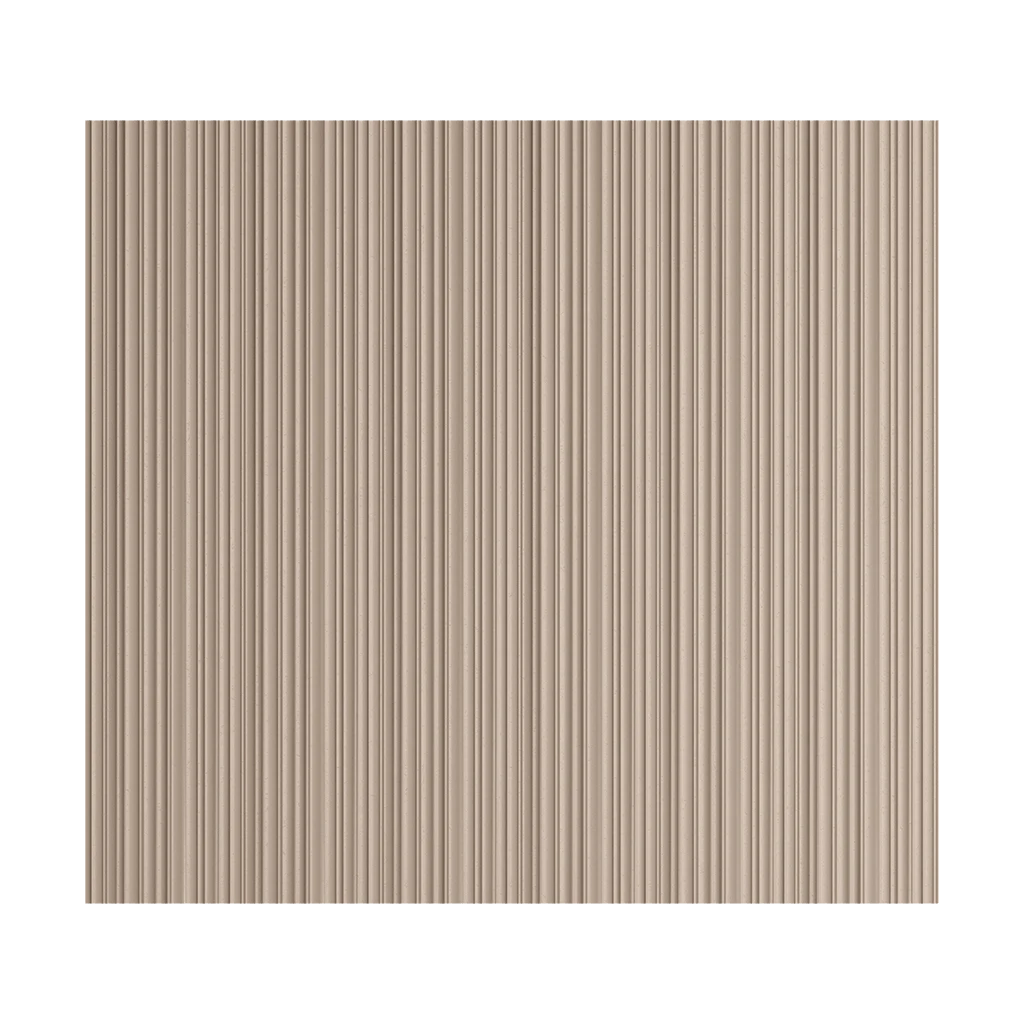
The primary and most versatile type. Slats — MDF or solid oak — are fixed at a set spacing on a dense elastic fabric. In the STAVROS catalog, models PAN-001 and PAN-002 are presented for this purpose. PAN-001 works equally effectively on a straight wall and a radiused vault, creating a slatted texture without manual assembly of planks. PAN-002 is a primed version, ready for final painting in any color.
Flexible MDF panels for painting
MDF is the perfect base material when precise color is important. Uniform structure, smooth surface, ideal base for any paints — from matte to semi-gloss. Complete freedom in choosing a shade from any palette: RAL, NCS, Pantone.
Flexible solid oak panels
For those who value natural aesthetics and living texture. Oak is one of the densest and most durable species: 700–750 kg/m³, high resistance to mechanical wear. Under transparent oils and varnishes, oak reveals a warm golden tone. Tinting oils offer a range from light Scandinavian to deep wenge.
How to choose a flexible panel by material: MDF vs solid oak
| Parameter | MDF for painting | Solid oak |
|---|---|---|
| Surface | Smooth, uniform | Living wood grain texture |
| Color | Any from the palette | Tinting + lacquer/oil |
| Price | More affordable | Higher |
| Durability | Medium | High |
| Naturalness | No | Yes |
| Repainting | Yes, without dismantling | No |
| Mechanical strength | Below | High |
| Application | Residential and commercial | Commercial and premium |
Choose MDF for painting when precise color is important, uniformity is needed, the budget is limited, or repainting is planned in the future.
Choose solid oak when natural aesthetics, durability, and tactile feel are important — especially in commercial spaces with high traffic.
How to choose a flexible panel by surface type
Flat straight wall
Both formats work. The choice is determined by other parameters.
Curved wall with a smooth radius
Only flexible format. The smaller the radius, the wider the gap between slats should be.Buy a flexible panel for a radius wallcan be calculated for a specific radius — check the minimum working radius for a particular model.
Column
Full cylinder. A standard task for a flexible panel. The panel wraps around the column along the entire perimeter, the decorative slat rhythm closes into a ring — the column becomes an architectural element.
Arch
Task for a flexible panel with a bending margin. Important nuance: when transitioning from an arch to adjacent straight walls — maintain the continuity of the slat rhythm.
Niche
Flat niche with straight angles — a rigid panel will handle it. Niche with rounded transitions — only flexible. For niches, seamless module joining is especially important.
Furniture front, counter, island
Flexible slat panel on a curved furniture front — this is an alternative to manual carpentry. For straight furniture fronts — rigid format is preferable.
How to choose based on the interior design task
Accent Wall in Living Room
Classic application.Flexible wall panelsallow wrapping decorative columns and rounded niches with a single panel — without seams or material changes.
TV area
The slatted panel serves a dual function: a decorative accent surface and concealment of cable channels in the gaps between slats.
Bed headboard
A slatted panel behind the bed creates an 'architectural wall' — an accent that sets the scale for the entire bedroom. If the headboard is built into an arched niche, the flexible panel maintains the unity of the slatted rhythm.
Hallway and corridor
Interior flexible wall panelsin the hallway, they frame arched openings and non-standard architectural elements with a single material, concealing minor imperfections in old walls.
Office, reception, commercial space
In a commercial interior, buying a flexible wall panel means investing in atmosphere and reputation. Solid oak on reception walls reads as a language of quality. Radius walls — definitely require a flexible format.
Designer project
For a designer, a flexible panel is a standard working tool. Predictability, precise edge geometry, consistent batch tone, custom sizes — key parameters for a professional.
What to look for before buying: 9 parameters
-
Surface geometry — is there even one curve? If yes — a flexible format is mandatory.
-
Slat material — MDF for painting or solid oak. Decide first.
-
Slat width and spacing — narrow (10–20 mm), medium (25–40 mm), wide (50 mm+). The scale of the slat correlates with the scale of the room.
-
Slat profile — rectangular (sharp shadow) or semi-circular bead (soft chiaroscuro).
-
Panel thickness — affects the visual depth of the relief.
-
Type of fabric base — dense, durable fabric that does not tear when bent. Check on a sample.
-
Seamless joining — place two samples end-to-end: slat to slat, without a gap. A precise joint is a sign of precise manufacturing.
-
Length and format — standard or custom. For large surfaces, a long module reduces the number of joints.
-
Compatibility with lighting — if LED strip is planned, lay the cable route before installation.
How much does it cost to buy a flexible wall panel: what the price depends on
Slat material — the main factor. MDF is more affordable, solid oak is more expensive. The difference is justified by the difference in aesthetics and durability.
Profile and finish — Unfinished MDF, primed MDF, oak with tinting — price tiers. Custom color or non-standard tinting — extra charge for color matching.
Format and length — standard formats are cheaper. Custom sizes — always more expensive, but sometimes save on cutting and waste.
Order volume — large volumes qualify for wholesale terms. B2B inquiries are considered separately.
Delivery — depends on region and volume. Within Moscow and Contact us to confirm shipping to your destination.
General principle: don't look for 'the cheapest flexible wall panel'. Look for a solution tailored to your task. A cheap panel with a weak core will fail when installed on a column — redoing it will cost more. For details on the current price range, see the sectionflexible panels: priceon the STAVROS website.
Mistakes when choosing a flexible panel: seven scenarios
1. Choosing based only on photos. Photos don't convey core quality, edge precision, or real flexibility. Always request a physical sample before a large order.
2. Not considering the surface radius. Not every 'flexible' panel bends to a small radius. Clarify the minimum working radius for your task.
3. Not checking the joint. Testing two samples end-to-end is mandatory. An imprecise joint is a problem that no amount of care can fix.
4. Ignoring the substrate. Loose fabric tears when bent, allowing battens to shift. Result: crooked joints, delamination, rework.
5. Confusing decorative batten and full panel. Different constructions, different behaviors, different installation.
6. Not accounting for installation and trimming. An 8–12% surplus over calculated area is standard practice.
7. Looking for 'the cheapest'. A quality panel costs once. A cheap one — often twice.
How to understand which model is right for you
For an apartment — MDF for painting on a limited budget, solid oak for a natural atmosphere. Flexible format — only if there are arches, rounded niches, or non-standard geometry.
For a country house — natural materials are always preferable. Solid oak with oil finish is an organic choice.
For an office and reception — representativeness and durability. Oak with dark tinting. Radius walls — flexible format.
For a restaurant, hotel — high traffic requires durable material.Slatted panels for walls and ceilingSolid oak is the optimal choice.
For furniture manufacturing — flexible slatted panels on fabric backing for curved facades. Savings on manual joinery are obvious.
For design projects — predictability: precise edge geometry, consistent batch tone, custom sizes, professional consultation.
Why slatted flexible panels are one of the strongest formats
Visual depth. A flat wall is a background. A slatted wall is volume. Even without accent lighting, the slats create shadows in the gaps — the surface is three-dimensional.
Play of light and shadow. With directional lighting, the slatted surface transforms. Gaps become stripes of shadow, slats become stripes of light. The surface comes alive.
Enduring aesthetic value. The slatted structure appeals to architectural traditions — wooden interiors, Japanese sliding walls, Scandinavian joinery. This is not a one-season trend.
Continuity on any geometry. One material, one aesthetic — for a straight wall and for a column. A wholeness impossible to achieve with a set of different materials.
The feel of expensive custom joinery. A slatted wall is perceived as custom cabinetry. This feeling creates an atmosphere that people remember.
To learn how slatted decor works in a broader context — read the section onwall panels in interior designon the STAVROS website.
Flexible slatted panels in various interior styles
Modern minimalism
Narrow or medium slats, neutral color — white, light gray, off-white. MDF for painting with a matte finish. The panel works as a subtle accent — you don't notice it at first glance, but it's what makes the wall come alive.
Scandinavian style
Oak with clear oil or light stain. Moderate spacing, semi-circular profile. The panel creates warmth and natural depth — not a decoration, but an architectural material.
Japandi
Very narrow slats, minimal spacing, oak with dark restrained tinting or whitewashed finish. Meditative fine rhythm — even and calm.
Neoclassicism and modern classicism
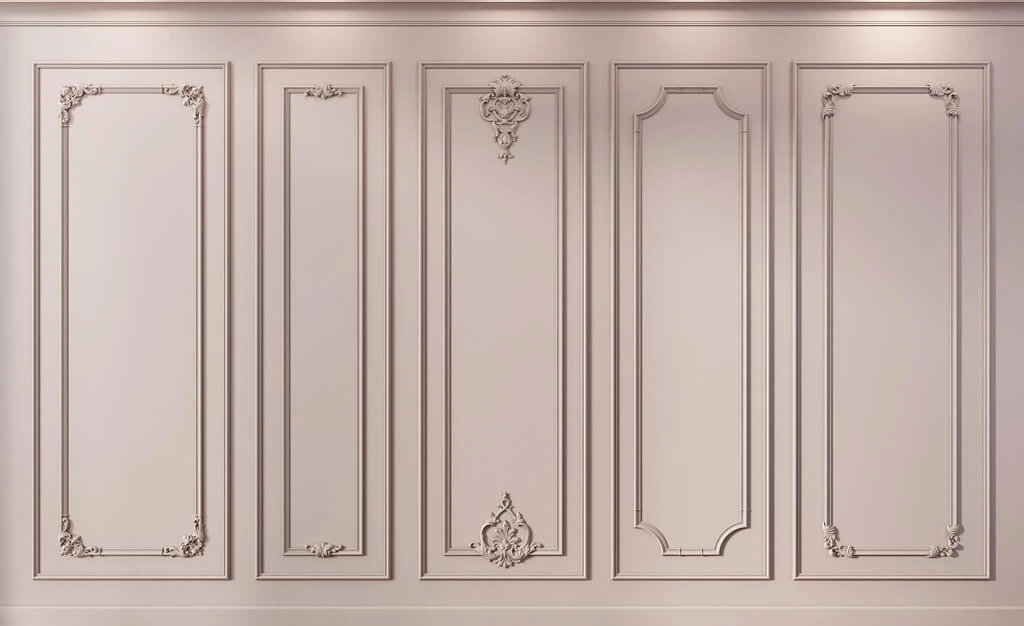
The slatted panel occupies the lower third of the wall as a frieze, framed by moldings. Buying a flexible wall panel in a neoclassical key means combining it withwith decorative wall panels, moldings, cornices.
Loft and industrial style
Wide slats, dark painting: anthracite, dark blue, olive. Nearby — concrete surfaces, metal accents. The slatted panel is a 'warm' counterpoint to cold materials.
Warm natural interior
Natural oak with oil without tinting. The slatted surface here is the central material, not an addition.
Flexible panel installation: step-by-step instructions
Step 1. Surface preparation.
Remove unstable elements: peeling wallpaper, loose paint, crumbling putty. Apply primer. Eliminate irregularities exceeding 5 mm per linear meter. Key point: a damp wall is the enemy of installation.
Step 2. Marking and dry fitting.
Apply guide lines, mark joints, lay out panels dry. This is half an hour that saves several hours of rework.
Step 3. Cutting.
MDF battens are cut with a utility knife along the fabric backing. For solid oak, use a fine-toothed saw or miter saw. Angle strictly 90° for joints.
Step 4. Applying adhesive and fixing.
Structural adhesive with high initial adhesion – apply in a zigzag pattern on the fabric backing and on the wall. Press smoothly, from edge to edge. On curved surfaces – gradually, with pressure for 5–10 seconds.
Step 5. Joining modules.
Batten to batten, without gaps or overlaps. Check joint evenness with a level.
Step 6. Finishing corners.
External — 'to the mustache' at 45°. Internal — one panel flush against another. Adjacencies to other materials — via a transition profile or sealant in matching color.
Step 7. Finishing.
MDF: primer + two coats of paint, edges are covered with the same finish. Oak: oil in two passes with intermediate sanding.
Lighting: how to make a slatted wall come alive
A slatted panel without accent lighting is 40–50% of the material's potential.
Directional light in front of the panel. Spots or track lights at a sharp angle. Sharp shadows in the gaps — maximum volume, pronounced chiaroscuro. For living rooms, receptions, commercial spaces.
Recessed LED strip in the gaps. Soft glow from the depth of the surface. Delicate atmospheric effect — for bedrooms, restaurant halls with evening ambiance. Plan the cable route before installation.
Backlighting behind the panel. When mounted on a frame — LED strip behind the panel. Soft ambient light shines through the gaps. Especially interesting for radius walls and columns.
Acoustics: a non-obvious bonus
Vertical slats scatter sound waves and reduce reverberation. The effect is enhanced by placing sound-absorbing material behind the panel (when mounted on a frame). Relevant for meeting rooms, restaurant halls, home theaters, open-space offices.
B2B and project-based supplies
Interior designers — a standard tool for non-standard geometry. Predictability, samples, exact batch.
Furniture manufacturers — curved fronts, radius cabinets, bent islands. An alternative to handcrafted joinery.
Architects — durability and technical specifications. Solid oak for commercial projects.
Developers — finishing premium-class apartments.Buy flexible panels wholesale— a typical task for development teams.
How to place an order: step by step
-
Define the task and surface — are there any curves?
-
Choose the material — MDF or solid oak.
-
Specify the parameters — slat width, pitch, profile, module length, tint.
-
Calculate the area + 8–12% cutting allowance. Entire volume — from a single batch.
-
Request a cost calculation and delivery terms.
-
Go to catalog: buy flexible wall panels → STAVROS.
FAQ: answers to the most frequently asked questions
Can I buy a flexible panel for a column?
Yes. The flexible slat panel wraps around a cylindrical column along the entire perimeter, joining at the least noticeable point — the result looks like monolithic cladding. Rigid format is not applicable for a column.
Is a flexible panel suitable for an arch?
Yes. The panel follows the curve of the vault, maintains uniform slat pitch, and transitions continuously to adjacent walls.
Can flexible MDF panels be painted?
Yes. MDF for painting: primer + two coats of finish paint in any color by RAL, NCS, Pantone. If necessary — repainting without dismantling.
Can flexible panels be used on furniture?
Yes. They are actively used for curved furniture fronts, radius cabinets, bent kitchen islands, and rounded shelving units.
What is better: MDF or solid oak?
It depends on the task. MDF — when precise color and budget are important. Oak — when natural texture, durability, and tactile feel are important.
Can I order to Moscow with Contact us to confirm shipping to your destination.?
Yes. Delivery within Moscow and shipping across all of Russia via transport companies. Please clarify the terms when placing your order.
How to calculate the number of panels?
Area of walls for finishing (m²) + 8–12% for cutting and trimming. The entire volume should be from a single batch (especially for solid oak).
Can I order a sample before purchasing?
Yes. A sample allows you to assess the actual quality of the base, precision of edges, color, and flexibility — things that no photograph can convey.
Is special wall preparation needed?
Standard: clean, dry, grease-free substrate. Minor irregularities up to 3 mm are acceptable. Significant level differences must be corrected before installation.
How are the modules joined?
End-to-end, rail-to-rail, without gaps. With precise end geometry, the joint visually disappears into a unified rail surface.
Conclusion: how to make the right decision and not overpay
When the task is clear — the choice is obvious. If there is a curve: a column, an arch, a radius wall, a rounded niche — the flexible format is the only option. For a straight wall — both formats work, the choice is determined by other parameters.
When the task is more complex — a systematic approach helps. Nine parameters, considered sequentially, turn a complex choice into a specific solution.
The main rule: don't look for cheaper, look for more precise. The solution that precisely matches your task and geometry is the most economical in the long run.
About the company STAVROS
When architecture demands a precise solution — professionals turn to STAVROS.
STAVROS is a manufacturer of MDF and solid oak rail panels for interior wall finishing, including flexible modules on a fabric base for working with radius surfaces, columns, arches, niches, and furniture facades of any complexity. Production covers standard formats for residential interiors and custom solutions for specific projects: non-standard sizes, custom tinting, B2B supplies for design studios, furniture manufacturers, and development teams.
STAVROS offers stable end geometry, batch uniformity, surfaces ready for finishing. Delivery in Moscow and across Russia. Full catalog, technical parameters, and professional consultation are available on the official website.
Architectural continuity from a straight wall to a radius surface is what makes a well-thought-out interior complete. And this becomes possible when the solution is chosen correctly.