Article Contents:
- What is a base and why it's more important than the countertop
- Carga — the invisible spine of strength
- Diagonals and rigidity: the physics of stability
- Height adjustment: the feet solve the problem
- Solid wood: the choice of species determines the fate of the product
- Construction schemes: from classic to avant-garde
- Load calculation: an engineering approach to household furniture
- Carpentry joints: art tested over centuries
- Assembly and fitting: professionalism in details
- Countertop installation: unnoticed but important elements
- Specifications for bases under heavy countertops
- Restoration and repair: a second life for the base
- Custom base: individual solutions
- Combination with Other Interior Elements
- Economic efficiency: price and value
- Transportation and installation: practical nuances
- Care and operation: extending the life of the base
- Ecological safety: health comes first
- Comprehensive solutions: from base to interior
- Trends and fashion: modern directions
- Frequently Asked Questions
- What height of base is optimal for a dining table?
- Why is a wooden base better than a metal one?
- Can an old base be used with a new countertop?
- How often should joints of a disassemblable base be tightened?
- Which finish is better for the base — oil or varnish?
- Can I Make a Support Myself?
- What safety factor should a base have?
- How to protect a wooden base from moisture?
- Does the color of the base affect the perception of the interior?
- Is it worth buying an antique base?
- Conclusion: Investment in Quality and Comfort

When it comes to creating a truly high-quality table, many mistakenly focus only on the tabletop. Meanwhile, it is precisely what lies beneath — the wooden frame, support system, foundation of the entire structure — that determines how long your table will last and whether it will retain its geometry during use. A properly designed and professionally manufacturedbuy wooden table basefrom a proven manufacturer — is a solution that eliminates problems for decades ahead.


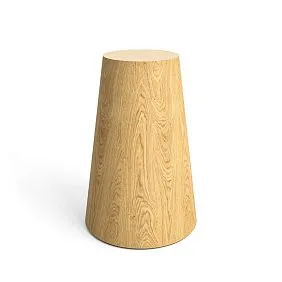
What is the substructure and why it is more important than the tabletop
Imagine a house. Beautiful facade, elegant finishing, expensive roof tiles. But if the foundation is poured with violations, within five years the walls will crack. The same applies to tables. You can choose a tabletop made of rare Karelian oak, polish it to a mirror shine, but if the support structure is poorly executed, the table will start wobbling, become uneven, and the expensive tabletop will warp or crack in the center due to uneven load distribution.
Base for Dining Tables— it is a complex engineering structure including vertical supports, horizontal connections, diagonal stiffeners, and a mounting system to the tabletop. Each element of this system performs its own function, and an error in any of them leads to a reduction in the overall product's reliability.
The frame structure must withstand not only static loads — the weight of the tabletop and items on it — but also dynamic impacts. When a person leans on the edge of the table with their hands, the load on the nearest support increases several times. When children swing on chairs, holding onto the tabletop, lateral forces arise that tend to pull out the fasteners. A quality construction takes into account all these factors and provides a safety margin.




The crown — the invisible spine of strength
The word 'crown' often appears in discussions about furniture construction, but not everyone understands what it is and why it is needed. Meanwhile, it is precisely the crown belt that turns four separate legs into a single rigid system capable of bearing significant loads.
The crown is a horizontal frame made of solid wood, connecting the upper parts of the legs. The tabletop is attached to this frame, and through it, the weight is distributed to all supports. Without crowns, the legs will work independently, and any lateral force will cause the connections to loosen.
The cross-section of the crown is selected depending on the size of the table and the expected load. For a small coffee table, a block with a cross-section of forty by fifty millimeters is sufficient. For a heavy dining table for eight people, a crown with a cross-section of seventy by ninety millimeters or even more is required. Saving on the thickness of the crown results in deflections, creaking, and rapid failure of the table.
The most important point — connecting the crown to the legs. The traditional peg joint, where a protrusion is formed on the end of the crown and inserted into a groove on the leg, remains the most reliable. Modern adhesive compositions provide joint strength higher than the strength of the wood itself. This means that under extreme loads, the component itself will break rather than the joint will separate.
There are also alternative connection methods — metal brackets, threaded bolts, special fastening systems. They speed up assembly and simplify transportation of disassemblable structures, but they are less reliable than traditional peg joints with adhesive. For a table that will remain in one place for decades, the classical technology is preferable.
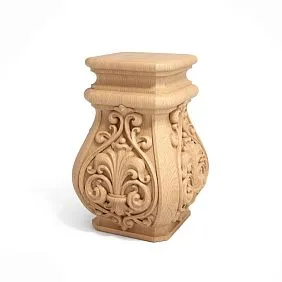
Our factory also produces:


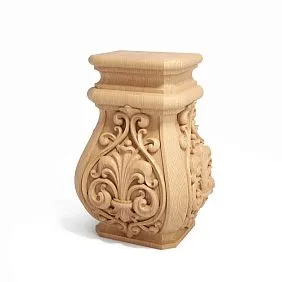


Diagonals and stiffness: the physics of stability
Here is a simple experiment. Assemble a rectangular frame from four planks connected at the corners by hinges. Try pressing on one corner diagonally. The frame easily deforms, becoming a parallelogram. Now add a fifth plank diagonally between opposite corners. The frame becomes absolutely rigid, and no force can change its shape.
The same principle applies to the substructure construction. The crown belt forms a rectangular frame. Without additional elements, this frame may deform under lateral loads, especially if the table has a large length. Diagonal connections are elements that connect opposite corners of the frame and transform it into an unchangeable system.
The diagonal can be located in the plane of the crown belt — this is a flat diagonal connection. It is especially effective for wide tables, where the distance between long crowns is large. A block with a cross-section of thirty by forty millimeters, installed diagonally under the tabletop, can double the stiffness of a two-meter-long table.
For narrow and long tables, vertical diagonals are effective, connecting the upper part of one leg with the lower part of the opposite leg. Such connections create a spatial truss — a structure where each element works either in tension or compression, but not in bending. This is the most economical scheme in terms of material consumption and the most effective in terms of stiffness.
It is important to understand: diagonal elements do not necessarily have to be thick. Unlike crowns, which bear bending loads and must have a significant section moment of inertia, diagonals work under axial forces. For them, the material's strength in tension or compression is important, not thickness. Therefore, a diagonal connection can be two to three times thinner than a crown and still perform its function perfectly.
Get Consultation
Height adjustment: the heel pads solve the problem
Perfectly level floors do not exist. Even in new buildings with professionally laid screed, the height difference over a distance of two meters may be five to seven millimeters. In older buildings, unevenness is even more significant. The result is predictable: the table wobbles, resting on three legs instead of four, and no cardboard shims will solve the problem.
Professional solution — adjustablebuy furniture legs and supportswith built-in heel pads. A heel pad is a height-adjustable element installed at the bottom of the leg. The adjustment range is usually from ten to twenty-five millimeters — this is sufficient to compensate for any real floor unevenness.
The adjustment mechanism is simple: inside a plastic or metal housing is a threaded rod with a support pad. By turning the rod with a key or screwdriver through a special hole in the leg's side, you can precisely adjust the height of each support. The procedure takes a few minutes, but the result is a completely stable table with no slightest wobbling.
An additional advantage of heel pads — protection of the leg's end from contact with the floor. Wood does not absorb moisture during wet cleaning, does not darken, does not break. A plastic or rubber pad slides more easily over the floor than wood, simplifying furniture rearrangement and protecting floor coverings from scratches.
For heavy tables designed for significant loads, reinforced heel pads with metal housings are used. Such elements can withstand a load of up to one hundred and fifty kilograms per support, which with a safety margin exceeds the requirements even for tables with heavy stone tabletops.
Solid wood: the choice of species determines the fate of the product
When you decideBuy a pedestalFor a serious table, the choice of wood becomes a decisive factor in longevity. Not all species are equally suitable for structural elements of furniture, and saving on material may result in disappointment.
Oak — it is the standard. Wood density around seven hundred kilograms per cubic meter, hardness by Brinell 3.8 units, expressive texture with large rays. An oak substructure is practically eternal. It does not fear humidity fluctuations, withstands colossal loads, and only gains a noble tone over the years. The only drawback — high cost, but it is fully justified by the exceptional properties of the material.
Beech — a worthy alternative to oak in mechanical properties. Density is slightly lower — six hundred eighty kilograms per cubic meter, but hardness is almost the same. Beech wood has a uniform fine-pored structure, is easy to work with, and holds fasteners well. The light warm tone of beech is universal and suitable for almost any interior. Important point: beech is more hygroscopic than oak, so it requires quality protective finishing, especially if the table will be used in conditions of high humidity.
Ash combines strength with elasticity. Its wood works well under bending and impact, which is important for elements subjected to dynamic loads. The light ash wood with an expressive pattern of annual rings looks modern and elegant. In terms of price, ash occupies an intermediate position between beech and oak.
Coniferous species such as pine and spruce are rarely used for making table bases. Their density is significantly lower, and soft wood is easily damaged; resinous properties create problems during finishing. The use of coniferous species is justified only for lightweight decorative tables where loads are minimal.
A critically important parameter — wood moisture. Freshly cut wood contains up to fifty percent moisture by mass. As it dries, wood shrinks, deforms, and cracks. For furniture production, material from kiln-dried wood with moisture content of eight to twelve percent is required. Only at this moisture level does wood remain in equilibrium with the air in heated rooms and does not change dimensions during use.
Structural schemes: from classic to avant-garde
Classic four-leggedCountertop substructurewith aprons around the perimeter — a time-tested scheme. Four legs are positioned at the corners of the rectangle formed by the apron band. The tabletop is attached from above to the aprons. The scheme ensures maximum stability and even load distribution. The drawback — legs occupy corner zones, which may cause inconvenience when placing people around the table.
The central support scheme solves the problem of free space for feet. A massive central post or a group of three to four vertical elements supports the tabletop from below. Legs do not interfere with seated people, but the structure requires a thicker tabletop capable of transmitting load from edges to the center without sagging. Central support is effective for round and square tables up to 120 centimeters in diameter.
T-shaped bases combine the advantages of both schemes. A central vertical post transitions downward into a horizontal crossbar or T-shaped base, ensuring stability. For rectangular tables, the optimal scheme features two T-shaped supports placed along the long axis. This provides free space for feet along the short sides of the table.
Console schemes, where the tabletop rests on only one side, require massive bases and are primarily used for wall-mounted tables. The free overhang of a console rarely exceeds seventy to eighty centimeters due to limitations in strength and rigidity.
X-shaped and A-shaped bases attract attention with their expressive design. Diagonal elements forming a distinctive silhouette simultaneously serve as primary load-bearing structural components. Such schemes are especially popular in loft and industrial-style interiors.
Load calculation: an engineering approach to household furniture
Many consider calculating furniture strength an unnecessary luxury. After all, it's obvious whether it will hold up or not. However, a professional approach requires quantitative assessment. For a dining table for six people, the typical operational load is approximately 100 kilograms — the weight of dishes, plates, and people's hands resting on the tabletop. The self-weight of a massive oak tabletop, 40 millimeters thick and 2 meters by 1 meter, adds another 50 kilograms.
Total distributed load: 150 kilograms. If the table has four legs, each leg bears approximately 37 kilograms on average. It seems little. But the load is distributed unevenly. When a heavy dish is placed closer to one edge, the load on the nearest legs increases, while the load on the distant legs decreases.
To account for unevenness, calculation coefficients are applied. The maximum load on one leg can reach the total load divided by the number of legs minus one. In our example: 150 kilograms divided by three equals 50. This is the calculated load on the most heavily loaded leg under unfavorable weight distribution. With a safety factor of 1.5, this becomes 75 kilograms.
Now about aprons. An apron works as a beam supported by two legs. With an apron length of 180 centimeters and distributed load from the tabletop, the maximum bending moment occurs at the midpoint of the span. To limit deflection within acceptable limits, a certain section stiffness is required, proportional to the cube of the beam’s height. Doubling the apron’s height increases stiffness by eight times. This is why you cannot economize on apron height for long tables.
When you decideBuy table baseNote the proportions of the structure. Too thin aprons over a long span — a sign of unprofessional design. A quality base appears proportionate and visually conveys a sense of reliability.
Joinery: an art proven over centuries
Dowel joints remain the gold standard in furniture production since ancient Egyptians began making wooden furniture four thousand years ago. The principle is simple: one part has a protrusion — the dowel, and the other has a recess — the socket. The dowel fits into the socket with minimal clearance, and the parts are glued together. After the glue dries, the joint becomes practically monolithic.
Various types of dowels are used to join aprons to legs. Through dowels pass through the entire thickness of the leg and are visible from the opposite side. This is the strongest joint, but not always aesthetically pleasing. Blind dowels enter the socket to a certain depth, usually two-thirds of the leg’s thickness, and remain invisible. Blind dowels are used for high-end furniture.
The shape of the dowel also varies. A straight dowel has parallel sides. A trapezoidal dowel, known as a "birdsmouth," widens toward the end and provides resistance to pulling out. "Birdsmouth" joints are often used to attach cross braces and reinforcing elements.
An important point — manufacturing precision. The clearance between the dowel and socket should be one to two tenths of a millimeter. A larger clearance results in a weak joint, while a smaller clearance prevents parts from fitting together. Modern CNC equipment ensures the required precision, but requires proper programming and setup.
Dowel joint glue must have specific properties. It must wet the wood, penetrate pores, and provide strong adhesion after polymerization. Traditional animal protein-based woodworking glues have been replaced by synthetic compositions — PVA, polyurethane, and epoxy. Modern glues create joints stronger than the wood itself — under extreme load, the wood near the joint breaks, but not the joint itself.
Assembly and fitting: professionalism in details
A quality base cannot be assembled on a knee. A flat, level assembly surface is required. Parts are laid on a workbench, aligned, and clamped. Only after verifying all dimensions and diagonals is final assembly performed with glue.
Diagonal check — a critical stage. The distance between opposite corners of the apron band is measured. Diagonals must be equal to within one millimeter. If one diagonal is longer than the other, the structure is skewed — this will cause problems when installing the tabletop and disrupt geometry during use.
After glue assembly, the structure must remain clamped for at least twelve hours. Modern glues set quickly, but reach full strength over a day. Removing clamps prematurely may cause part displacement and weakened joints.
Final finishing of the assembled base includes sanding all surfaces, removing sharp edges, and eliminating minor defects. Then a protective-decorative coating — oil, wax, varnish, or enamel — is applied. The choice of coating depends on the wood species, interior style, and usage conditions.
Oil finish highlights the natural wood texture, imparts a silky surface, and provides moisture protection. It requires periodic renewal but is easily repairable locally. Varnish finish creates a strong glossy film resistant to abrasion and dirt, but is less repairable.
Tabletop installation: inconspicuous but important elements
The method of attaching the tabletop to the base determines the entire structure’s longevity. Wood is a living material that continues to "breathe" even after processing. A solid wood tabletop changes dimensions across the grain with changes in air humidity. Over a heating season, a tabletop one meter wide may shrink by three to five millimeters, and in spring, when humidity rises, it returns to its original dimensions.
If the tabletop is rigidly screwed to the aprons with ordinary screws, it will not be able to move freely. Internal stresses will arise, leading to warping or cracking. Professional attachment must provide vertical fixation while allowing horizontal movement of the tabletop relative to the base.
The classic solution — wooden biscuits. These are small blocks with a groove shaped like the letter G. The short side of the biscuit is screwed from below to the countertop, while the long side fits into the groove on the inner side of the leg. The countertop is pressed against the legs but can slide freely along the groove when dimensions change.
A modern alternative — metal Z-shaped clips. One side of the clip is screwed to the leg, the other to the countertop. Elastic deformation of the metal compensates for changes in the countertop's dimensions. Clips are faster to install and provide more even pressure compared to biscuits.
For countertops made of plywood, MDF, or stabilized solid wood types that do not change dimensions, rigid mounting on metal angles or directly with screws through the legs is acceptable. However, for solid-wood panels, movable fasteners must be used.
Special considerations for bases under heavy countertops
When the customer chooses a countertop made of natural stone, artificial aggregate, or thick glass, the weight of the structure increases manyfold. A granite countertop, 30 mm thick and 2 meters by 1 meter, weighs about 150 kilograms. This is three to four times heavier than a similar wooden countertop.
Furniture supportSuch a table must be significantly reinforced. The cross-sections of the legs and legs are increased, additional diagonal braces are added, and reinforced connection joints are used. Often, for tables with stone countertops, hybrid constructions are used, where wooden elements are supplemented with metal reinforcements.
Special attention is paid to connection joints. Drilling holes in stone countertops for screw fasteners is not possible — the stone may crack. Epoxies or mechanical clamps that encircle the countertop edge are used. The base structure must include elements for installing such fasteners.
A glass countertop requires soft gaskets between the glass and wood to prevent point loads that could cause cracking. Rubber or silicone pads 3–5 mm thick are used. Glass is fastened using special suction cups or adhesives designed for glass.
Restoration and repair: a second life for bases
A quality wooden base lasts for decades, but sometimes requires restoration. The most common problem is loosening of dowel joints. Over time, the glue ages, loses elasticity, and connections weaken. The table begins to wobble and creak.
Professional restoration begins with disassembly. Old glue is softened with special agents or steam, and parts are carefully separated. Dowels and mortises are cleaned of glue residue, checked for cracks or chips. Damaged areas are restored by gluing inlays or adding material.
After preparing the parts, reassembly is performed using fresh glue. A properly executed restoration returns the structure to its original strength. A restored base can serve for several more decades.
Sometimes it is more practical not to restore an old base but to make a new one. If the countertop has historical or emotional value but the base is deteriorated, ordering a new frame allows preserving the valuable surface and giving it a new life.
Custom bases: individual solutions
Standard sizes do not suit everyone. Ceiling height, room size, number of family members, personal preferences — all these factors influence the optimal table dimensions. Manufacturing a base to order allows obtaining a structure that precisely matches your requirements.
First, the countertop dimensions are determined. They depend on the number of seating positions and room size. Approximately 60 cm of countertop width is required per person. A table for six people should have a length of at least 180 cm and a width of 90 cm.
Table height is chosen individually. A standard height of 75 cm is convenient for people of average height. For tall individuals, a table height of 78–80 cm is more comfortable. For children or when using the table as a standing workstation, height-adjustable structures are used.
The base style is chosen according to the overall interior design. Classic turned legs, carved legs, and decorative aprons suit traditional interiors. Straight, clean lines, minimal decoration, open structure — these are characteristics of modern style.
The wood species is chosen based on budget and aesthetic preferences. Oak provides maximum durability and elegance, but costs more. Beech or ash — a good compromise between price and quality. Exotic species — veneer, teak, rosewood — are used for exclusive projects.
Color and type of finish affect the perception of the interior. Light tones visually expand space, dark tones create a sense of solidity. Matte surfaces look elegant and hide minor dirt, glossy surfaces are eye-catching but require careful maintenance.
Combination with other interior elements
The base does not exist in isolation — it must harmonize with the rest of the room’s furniture. If the interior includeswooden planks on the wallit makes sense to choose the same wood species and finish type for the base. Material unity creates interior cohesion.
chair legsThe chairs should match the table legs in shape and color. Exact matching is not necessary, but stylistic harmony is required. If the table has turned legs with a classic profile, chairs with chrome tubular legs will look out of place.
When planning the dining room’s interior, consider all wooden decorative elements.wall moldingPolyurethane elements can imitate wood carving and complement the theme set by a carved base.wooden corniceThe windows harmonize with the table’s legs, creating visual connections between different parts of the room.
Economic efficiency: price and value
Can you save money by buying a cheap base? Formally, yes, but real savings are questionable. A structure made of poorly dried wood with thin legs and weak joints will last three to five years, after which it will require replacement. A quality base made of properly dried solid wood with professional joinery lasts half a century or more.
Let’s calculate annual costs. A cheap base costing 15,000 rubles with a five-year lifespan costs 3,000 rubles per year. A quality base costing 50,000 rubles with a 50-year lifespan costs 1,000 rubles per year. Real savings lie in purchasing a quality product.
This also includes the intangible component. A table on a quality base does not wobble or creak, looks solid, and evokes positive emotions. It is pleasant to gather family around it, entertain guests, or work. An inexpensive structure irritates with constant minor problems, spoils the mood, and lowers the interior’s status.
Transportation and assembly: practical nuances
Large base is problematic to transport assembled. To facilitate delivery, disassembled structures are used. Legs and rails are connected with threaded fasteners or special furniture connectors. Assembly on-site takes half an hour and does not require special tools.
Disassembled base is slightly inferior to non-disassembled in terms of joint rigidity, but for household furniture this difference is insignificant. It is important to use quality hardware — cheap Chinese fasteners quickly loosen, weakening the connection.
When assembling independently, it is important to follow the sequence of operations. First, assemble side frames from two legs and connecting rails. Then connect the frames together with long rails. Only after complete assembly of the base install the tabletop.
Before tightening threaded connections, check the perpendicularity of elements and equality of diagonals. Place the pre-assembled structure on a flat surface and check for lack of rocking. Only after confirming everything is correct, finally tighten the fasteners.
Care and operation: extending the life of the base
Proper care of wooden base is simple, but crucial for longevity. Main rule — avoid extreme conditions. Do not place the table close to radiators — overheating and drying out of wood cause cracking. Avoid prolonged contact with water — wipe spilled liquid immediately.
Regular cleaning with a damp cloth removes dust and dirt. Use specialized wood furniture care products. Aggressive cleaning agents containing solvents or abrasives damage protective coatings.
Renew protective coating every one to two years. For oil-finished furniture, this means applying a fresh layer of oil after light sanding. For lacquered surfaces, local restoration of damaged areas may be required.
Ecological safety: health comes first
Natural wood is an eco-friendly material, emitting no harmful substances. However, safety of the finished product depends on adhesives and coatings used. Modern woodworking adhesives based on PVA or polyurethane are absolutely safe and certified for use in children's furniture after polymerization.
Coatings are more complex. Traditional nitro lacquers contain volatile solvents that evaporate during drying and for some time afterward. For residential spaces, water-based coatings or natural oils and waxes are preferable. They have no odor, emit no harmful substances, are safe for allergy sufferers and children.
When ordering a base, clarify what materials are used for finishing. A conscientious manufacturer will provide certificates for adhesives and lacquers, confirming their safety.
Comprehensive solutions: from base to interior
Buying a base is often not the only task in interior design. If you plan comprehensive styling of dining or living room, it makes sense to consider all elements as a whole.
All these elements should match the main furniture in style and material.Balusters for staircase, Decorative brackets for shelves, decorative rose outletsWorking with one supplier simplifies the task. You receive all elements from the same wood species, with a uniform finish, executed in a consistent stylistic approach. This saves time on selection and eliminates the risk of mismatched shades or textures.
Trends and fashion: modern directions
Furniture fashion changes, but slower than clothing fashion. Quality base does not become outdated morally for decades. Nevertheless, certain trends are noticeable. In recent years, there has been growing interest in minimalist constructions with clean lines and minimal decoration. Open structure, showcasing joinery and wood texture, is preferred over carved decorative elements.
Combined constructions combining wood with metal are gaining popularity.
Made from steel pipes or profiles combined with wooden elements, they create a distinctive industrial look. Such solutions fit well into loft and modern urban interiors.Furniture SupportsDemand is growing for furniture made of wood with traces of history — with cracks, knots, uneven coloring. Effects such as aged wood, patina, and brushing — techniques that highlight the natural beauty of the material and give the item individuality.
What height of base is optimal for a dining table?
Frequently asked questions
Standard height of a dining table from floor to tabletop is seventy-five centimeters. If the tabletop is four centimeters thick, the top surface of the rail should be seventy-one centimeters. For tall individuals, a table height of seventy-eight to eighty centimeters is more comfortable. Children's tables are made lower — fifty-five to sixty centimeters depending on the child's age.
The standard height of a dining table from the floor to the top of the tabletop is seventy-five centimeters. If the tabletop is four centimeters thick, then the height of the upper plane of the apron should be seventy-one centimeters. For tall people, a table height of seventy-eight to eighty centimeters is more comfortable. Children's tables are made lower—fifty-five to sixty centimeters depending on the child's age.
Why is wooden base better than metal?
Wood feels warmer to the touch, does not cool in winter, is more visually pleasant. Wooden structures are easier to repair — damaged elements can be replaced or restored. Metal structures are cold, emit unpleasant sounds upon impact, and require welding for repair. Wood fits better into classic and warm modern interiors, while metal suits industrial styles better.
Can an old base be used with a new tabletop?
Yes, if the base is in good condition, not loose, and has correct dimensions. It may be necessary to modify fastening elements for installing a different type of tabletop. For example, if the old tabletop was solid wood and the new one is MDF, the fastening system must be changed. Sometimes it is simpler and cheaper to make a new base than to modify the old one.
How often should connections of a disassembled base be tightened?
What finish is better for the table base — oil or varnish?
Oil highlights the wood grain, feels pleasant to the touch, and is easily repairable locally. The downside is that it requires periodic renewal every one to two years. Varnish creates a durable protective film resistant to wear and stains, and does not require frequent renewal. However, damaged varnish is harder to repair. For dining tables in residential spaces with moderate load, an oil-based wax finish is suitable; for commercial spaces, use polyurethane varnish.
Can you make a table base yourself?
Theoretically yes, if you have the necessary equipment, skills, and materials. You will need a jointer to flatten lumber, a jointer or planer to trim to size, a router for cutting dados and forming tenons, a drill, saw, and clamps. The wood must be kiln-dried to the required moisture content. The process will take several days of pure working time. For your first attempt, the result may be far from professional quality.
Theoretically yes, if you have the necessary equipment, skills, and materials. You will need a jointer for leveling lumber, a thickness planer for planing to size, a router for cutting grooves and forming tenons, a drill, a saw, and clamps. The wood should be kiln-dried to the required moisture content. The process will take several days of pure working time. For a first attempt, the result may be far from professional level.
What safety factor should the table base have?
Professional standards require a safety factor of at least 1.5 for static loads. This means the structure must withstand a load 1.5 times greater than the maximum calculated operational load. For dynamic loads, which occur under sudden force application, the safety factor is increased to 2. Excessive safety factor leads to increased weight and cost of the structure; insufficient safety factor leads to risk of failure.
How to protect a wooden table base from moisture?
The primary protection is a quality finish coating that creates a water-repellent barrier. Oils and varnishes seal the wood pores, preventing moisture absorption. Additionally, it is important to avoid prolonged contact with water — immediately wipe up any spilled liquids. In rooms with high humidity, use hardwoods — oak, larch, teak — which are less sensitive to moisture.
Does the color of the table base affect the perception of the interior?
It significantly affects. Light tones visually expand space, making the interior feel airy and suitable for small rooms. Dark tones create a sense of solidity, emphasize status, but may visually reduce space. Natural wood tones are versatile and harmonize well with most interior color schemes. Colored enamels — white, black, gray — allow the table to fit into a specific style.
Is it worth buying an antique table base?
Antique furniture has historical and collectible value, but is not always practical for daily use. Old constructions may have non-standard dimensions that do not match modern tabletops. Joints weakened over decades of use require restoration. Antique prices are often inflated due to market hype. If you need a practical, reliable table, it is better to order a new, high-quality table base styled to look antique.
Conclusion: Investment in Quality and Comfort
Selection and Purchasecountertop supportsThis is a solution that affects your life daily for many years. At the dining table, the family gathers twice a day, spending a total of several hours. A wobbly, creaking table is annoying, creates discomfort, and spoils the atmosphere. A reliable, stable structure remains unnoticed, but this very invisibility is the highest quality — the thing simply works, requiring no attention.
A quality wooden table base made from properly dried solid wood with professional joinery is not an expense, but an investment. It pays off through longevity, reliability, and enjoyment of use. Such a table base will last through several generations of owners, becoming a family heirloom passed down through inheritance.
STAVROS specializes in producing premium-class furniture elements from natural wood. Years of experience, modern equipment, skilled craftsmen, and quality control at every production stage — all this guarantees a result meeting the highest standards. When you choosebuy legs for a table, legs for furniture to buyorFurniture Legs and Supportsfrom STAVROS, you get not just parts, but the foundation for creating furniture that will serve for decades.
A wide range of ready-made solutions and the ability to manufacture to custom sizes allow you to realize any design ideas. From classic carved constructions to modern minimalist forms, from compact tables to monumental dining tables — STAVROS offers solutions for any task.
By contacting STAVROS, you receive professional consultations on selecting the optimal construction, assistance in choosing materials and finishes, warranty and post-warranty service. Our goal is not just to sell products, but to help you create an interior where you will feel comfortable living, working, and entertaining guests.
Invest in quality. Choose reliability. Create a space where every detail contributes to your comfort. STAVROS — the foundation of your ideal interior.