Article Contents:
- Why Contrast of Forms is Not Just Spectacular, but Functional
- Round Mirrors on the Wall: How They Interact with the Baseboard
- One Large Circle or a Composition of Several: How to Choose the Format
- One Large Mirror — Monumentality and Accent
- Composition of Several Mirrors — Rhythm and Dynamics
- How to Match the Mirror Diameter to the Baseboard and Ceiling Height
- Ceiling Height and Mirror Diameter
- Baseboard Height and Composition Balance
- Distance from the Baseboard to the Mirror
- Styles Where the Contrast of Circle and Straight Line Works Flawlessly
- Scandinavian Style: Minimalism, Light, and Naturalness
- Japanese Minimalism: Emptiness, Line, Balance
- Modern Eclectic Interior: Boldness and Freedom
- Neoclassicism: Elegance, Symmetry, Nobility
- How to Avoid 'Childishness' When Working with Circles
- Choose Noble Materials
- Don't Overdo the Number of Round Elements
- Avoid Bright, Childish Colors
- Use Expressive Profiles
- Practical Examples of Using the Composition
- Entryway: First Impression
- Living Room: Accent Above the Fireplace or Console
- Bedroom: Softness and Intimacy
- Bathroom: Functionality and Style
- Additional Composition Elements: Moldings, Cornices, Decor
- Wall Moldings
- Cornices and Ceiling Baseboards
- Decorative overlays and sockets
- Lighting: How to Emphasize the Contrast of Forms
- Overhead Lighting
- Side lighting
- Contour Lighting
- Accent lighting for baseboards
- Color palette: how to combine mirrors and baseboards
- Dark mirror on a light wall
- Light mirror on a dark wall
- Monochromatic Palette
- Accent color
- Materials: wood, MDF, polyurethane — what to choose?
- Solid Wood: Nobility and Durability
- MDF: affordability and versatility
- Polyurethane: modernity and practicality
- Installation: how to properly hang a mirror and install a baseboard
- Installing the baseboard
- Hanging a mirror
- Care for wooden baseboards and mirror frames
- Regular Cleaning
- Moisture Protection
- Recoating
- Protection from Mechanical Damage
- Common mistakes when working with round mirrors and baseboards
- Mistake 1: Mismatched proportions
- Mistake 2: Lack of visual connection between elements
- Mistake 3: Mirror placed too low or too high
- Mistake 4: Excess of round elements
- Error 5: Ignoring Lighting
- Frequently Asked Questions
- Conclusion

Contrast is one of the oldest and most effective techniques in architecture and design. The geometry of form can control the perception of space in a way that no color palette can. When soft roundness meets rigid straightness, the interior begins to resonate — figuratively, emotionally, visually convincingly. It is on this principle that the composition is built, where the main characters areround mirror in a frameand the impeccable horizontality of a wooden baseboard.
Why does such a tandem work? Because the round shape softens, calms, and focuses attention within itself. And the straight line directs, structures, organizes. Together they create dynamics without chaos, order without monotony. Such a composition suits almost any space: from a concise Scandinavian studio to an elegant living room with elements of Japanese minimalism or a modern eclectic interior.


Why contrast of forms is not just spectacular but functional
The human eye is designed to distinguish objects by contrast. Form, color, texture — everything is built on juxtaposition. When a room is dominated only by right angles and parallel lines, the space becomes boring, monotonous, lacking vitality. But add a circle to the composition — and everything changes.
A roundmirror in wooden frameagainst the strict verticals of walls and the horizontal line of the baseboard instantly captures attention. It becomes the center of the composition not through color or decor, but thanks to its natural form — smooth, complete, natural. This is how geometry works: it guides the gaze, sets the rhythm of the interior, places accents quieter than words but louder than any declarations.
A mirror in a round frame is not only beautiful. It is practical. The circle visually expands the space, softens corners, and adds air to the room. And when such a mirror is hung above a clear baseboard line, a visual support arises — a balance between the vertical of the wall and the horizontal of the floor.




Round mirrors on the wall: how they interact with the baseboard
Imagine a room that has everything: furniture, lighting, finishes. But something is missing. A sense of incompleteness. And then you add to the walla round mirror in a frame— and everything falls into place. Why?
Because a circle is a focal point. And when a round mirror is placed above a baseboard, especially if it isWooden baseboardwith an expressive profile, a visual axis emerges. The horizontality of the baseboard becomes the foundation of the composition, and the mirror — its culmination.
This works flawlessly in an entryway, where a mirror is an essential functional element. When you enter the house, the first thing your eye falls on is precisely it. And if that mirror is round, hanging on a wall with impeccably calibrated proportions, and with a clear contrast of forms — the effect is memorable.
The same logic works in the living room, bedroom, bathroom. A round mirror above a console, dresser, or table is always a winning technique. Especially if there's a horizontal skirting board line below, setting the rhythm for the entire space.
Our factory also produces:


One large circle or a composition of several: how to choose the format
There are two main approaches to placing round mirrors in interior design: either one large mirror that dominates, or a composition of several mirrors of different diameters, creating a visual rhythm.
Get Consultation
One large mirror — monumentality and accent
When you want to create a bright central element, choose a large round mirror. The diameter can vary from 80 to 150 centimeters — depending on the size of the room and ceiling height. Such a mirror attracts the eye, serves as the main decorative object, and sets the tone for the entire interior.
It's important to understand: a large mirror needs visual support. And hereWooden baseboardbecomes not just a finishing element, but part of the composition. Its line should be clear, the profile — expressive, the material — noble. Solid oak or beech with a natural wood texture creates that very supporting horizontal line that balances the roundness of the mirror.
One large mirror in a round frame looks especially impressive in spacious rooms with high ceilings. It doesn't get lost or dissolve in the space; on the contrary, it gathers it around itself. This is a solution for those who appreciate conciseness, minimalism, but are not afraid of bold accents.
Composition of several mirrors — rhythm and dynamics
Another approach is to create a group of two, three, or even four round mirrors of different sizes. This is a more complex technique, requiring a sense of proportion and compositional balance. But the result is an incredibly lively, dynamic interior where each element complements the other.
Mirrors can be arranged asymmetrically, forming a visual 'constellation' on the wall. Or lined up in a row, emphasizing the horizontal skirting board line below and the molding line above. It's important that their diameters differ — monotony kills the idea. Let one mirror be 60 cm in diameter, another — 40 cm, a third — 30 cm. Such rhythm creates movement without destroying harmony.
A composition of several mirrors works excellently in narrow spaces — hallways, corridors, galleries. It visually expands the wall, adds depth, and plays with light. And when there's a strict line of wooden skirting board below, the entire composition gains a foundation, becomes whole and complete.
How to match the mirror diameter to the skirting board height and ceiling
Proportions are the foundation of any successful composition. If the mirror is too large for the room, it will 'overwhelm' the interior. If too small — it will get lost and not play its role. The same applies to the skirting board: too narrow will disappear, too wide — become excessive. How to find balance?
Ceiling height and mirror diameter
If the ceiling height is standard (2.5–2.7 meters), the optimal mirror diameter is from 60 to 90 cm. This is the golden mean: the mirror is noticeable but doesn't dominate aggressively. With a ceiling height of 3 meters and above, you can allow a diameter of 100–120 cm, and in particularly spacious rooms — even 140–150 cm.
It's important to consider not only the height but also the width of the wall. On a narrow wall, a large round mirror may look disproportionate. On a wide wall — on the contrary, it becomes an ideal accent.
Skirting board height and composition balance
Wide wooden skirting boardis a separate topic in the context of a composition with a round mirror. Wide models with a height of 10 to 20 cm create a powerful horizontal line that can balance even a large mirror. If you choose a mirror with a diameter of 100 cm or more, the skirting board should be at least 12–15 cm high, otherwise the composition will look unbalanced.
Narrow skirting board (6–8 cm) is suitable for mirrors of smaller diameter — up to 70 cm. This is a solution for minimalist interiors where lightness, airiness, and the absence of visual 'weight' are important.
Remember: the horizontal line of the skirting board should be expressive. If the skirting board profile is unexpressive, flat — it cannot serve as support for the composition. Choose models with clear relief, with play of light and shadow on the bevels, with a noble wood texture.
Distance from the skirting board to the mirror
Another important point is the height at which the mirror is hung. If hung too low, close to the skirting board, the composition will look 'squat,' lacking air. If too high — the connection between the mirror and the skirting board will be lost.
The optimal distance from the top edge of the skirting board to the bottom edge of the mirror is from 20 to 60 cm. This ensures a visual connection but doesn't create a feeling of tightness. If the mirror hangs above a console or dresser, the distance can be smaller — from 10 to 20 cm.
Styles where the contrast of circle and straight line works flawlessly
Round mirrors and straight skirting boards are a universal technique that organically integrates into a wide variety of styles. But there are several directions where this contrast reveals itself most vividly.
Scandinavian style: minimalism, light, and naturalness
Scandinavia is the kingdom of light, purity, and geometry. Here, a round mirror in a simple wooden frame is a mandatory element. Often, frames made of light wood or painted white are chosen. Such a mirror is hung on a wall painted in a snow-white or gray shade, and below goesWhite Wooden Baseboard, impeccably clean and laconic.
The main task of a Scandinavian interior is to reflect light. A round mirror handles this brilliantly. It multiplies natural lighting, makes the room visually more spacious, adds air. And a white skirting board creates a clear horizontal line that structures the space without overloading it with details.
Scandinavian style leaves no room for excess. Therefore,round mirror in a wooden framechoose minimal decor. The frame can be smooth, with a slight bevel, and a barely noticeable wood grain. No carved elements, gilding, or ornate details—only pure form.
Japanese minimalism: emptiness, line, balance
Japanese aesthetics is the art of emptiness. Here, less is more. A round mirror in a dark wood frame (wenge, walnut, stained oak) becomes the focal point in an interior where every detail is in its place, and nothing is accidental.
The baseboard in Japanese style is inconspicuous yet impeccable. Narrow, strict, often dark. It doesn't draw attention but creates a line that guides the eye around the room's perimeter. And the round mirror is a stopping point, a place of concentration.
In Japanese minimalism, asymmetry is important. Therefore, the mirror can be offset from the center of the wall, hung slightly above or below the usual level. This creates dynamics and makes the space 'breathe.'
Modern eclectic interior: boldness and freedom
Eclecticism is a style with no rules but with taste. Here, you can combine a classic carved mirror frame with a modern baseboard of geometric profile. Or vice versa—a minimalist mirror in a simple frame paired with a widebaseboard of classic stylewith carved elements.
Eclecticism allows experimenting with sizes, proportions, and colors. The mirror can be huge—140 cm in diameter—hanging on a dark wall surrounded by modern lighting. And the baseboard can be wide, light, with an expressive profile.
The key in eclecticism is not to cross the line between boldness and chaos. The round shape of the mirror and the straight line of the baseboard help maintain balance. They establish order, even amidst bold combinations of textures, colors, and styles.
Neoclassicism: elegance, symmetry, nobility
Neoclassicism is a modern interpretation of classical principles. Here, a round mirror can be framed by a carved wooden frame with elements of gilding or patina. And the baseboard—tall, wide, with a classic profile, made of solid oak or beech.
The contrast of forms in neoclassicism works differently than in minimalism. Here, the circle of the mirror softens the strictness of classical lines, making the interior less formal and more lively. And the baseboard supports the overall architectural logic, emphasizing the proportions of the room.
In a neoclassical interior, symmetry is important. If the mirror is centered on the wall, the baseboard should run along the entire perimeter of the room without breaks, creating a continuous line. If there are multiple mirrors, they should be arranged symmetrically relative to an axis.
How to avoid a 'childish' look when working with circles
The round shape is wonderful. But there's a risk that an interior with round mirrors may start to look naive, childish, especially if colors, materials, and proportions are chosen incorrectly. How to avoid this?
Choose noble materials
Wood is always a safe choice. Solid oak, beech, walnut—materials with history, texture, and character. When a mirror frame is made of natural wood, there can be no 'childishness.' Even if the mirror is small, even if the shape is simple—the material adds seriousness, maturity, and nobility.
Wooden baseboardSolid wood is the foundation. If you choose a cheap plastic imitation, the entire composition will fall apart. Wood anchors the space, sets the tone, and creates a foundation for any visual idea.
Don't overdo it with the number of round elements
One round object is an accent. Two or three—a composition. Five or more—a risk of turning the interior into chaos. If you have several round mirrors on the wall, other round elements (clocks, decorative plates, lighting) should be minimized.
It's important for the circle to remain special. If there are too many, it stops being an accent and starts being perceived as background. And that kills the idea of contrast.
Avoid bright, childish colors
A round mirror in a bright pink or blue frame is a direct path to childish aesthetics. If you want color, choose restrained, noble shades: graphite, dark blue, emerald, burgundy. Or stick to the natural palette of wood—honey oak, dark walnut, bleached beech.
The same applies to the baseboard. White, gray, natural wood—safe options. Bright baseboard colors are appropriate only in very bold, well-thought-out design solutions.
Use expressive profiles
Simplicity does not mean primitiveness. A round mirror can be minimalist, but the frame should have a clear profile, play of light and shadow. A flat frame without relief looks cheap. But a frame with a bevel, a slight recess, or wood texture is already an architectural element.
The same with the baseboard.Wooden baseboards with a shaped profilecreate visual interest, emphasize the transition between wall and floor, add volume. Even if the overall style is minimalist, the baseboard profile can be complex — this is not a contradiction, but a balance.
Practical examples of composition usage
Theory is good. But how to apply this knowledge in practice? Let's consider several specific scenarios.
Entryway: first impression
The hallway is the first thing a guest sees upon entering the house. Here, a mirror is a functional necessity. A round mirror with a diameter of 70–80 cm, hung at a height of 140–150 cm from the floor, is the optimal choice. The frame can be made of dark wood if the walls are light, or light wood if the walls are dark.
Below — a clear baseboard line 10–12 cm high. It doesn't just finish the wall; it becomes part of the composition. A narrow console — wooden, metal, glass — can be placed under the mirror. On the console — a key holder, a tray for small items, a decorative vase. Together, this creates a functional and aesthetically cohesive zone.
If the hallway is narrow, one mirror may not be enough. Add two round mirrors with diameters of 40 and 50 cm, placed asymmetrically. This will visually expand the space and add dynamism.
Living room: accent above the fireplace or console
In the living room, a round mirror is often placed above a fireplace, console, or chest of drawers. This is a classic technique that works flawlessly. A mirror with a diameter of 90–120 cm, depending on the size of the furniture and ceiling height.
The mirror frame can be carved if the interior leans towards classic, or laconic if the style is modern. It's important that the frame material echoes the wood of the baseboard. If the baseboard is oak, the frame should also be oak. If the baseboard is white, the frame can be white or natural light wood.
Under the mirror on the console — symmetrically arranged items: candles, vases, books. This enhances the sense of order and balance. And below — a wide baseboard that creates a visual foundation for the entire composition.
Bedroom: softness and intimacy
In the bedroom, a round mirror creates an atmosphere of softness and coziness. It can be placed above a dressing table, above a chest of drawers, on the wall opposite the bed (to visually expand the space).
The mirror diameter in the bedroom can be small — 60–70 cm. The frame — made of light wood, possibly with a light patina. The baseboard — narrow, 7–9 cm, light, matching the overall color palette of the room.
It's important that the mirror is not hung directly opposite the bed (this disturbs peace, according to many designers and psychologists). It's better to place it to the side, creating a visual accent, but not a dominant one.
Bathroom: functionality and style
In the bathroom, a round mirror is not just decor, but a working tool. Diameter — from 60 to 90 cm. The frame must be moisture-resistant, so choose wood with a protective coating or MDF models with high-quality finishing.
The baseboard in the bathroom is often replaced with one made of moisture-resistant materials, but if the bathroom is spacious with good ventilation, a wooden baseboard with water-repellent impregnation can be used.
A mirror above the sink is a classic. But you can place two round mirrors above a double sink, creating symmetry. Or one large mirror in the center if there is a single sink.
Additional composition elements: moldings, cornices, decor
A round mirror and baseboard are the foundation. But the composition can be enhanced by adding additional architectural elements.
Wall moldings
Moldings are vertical or horizontal overlays that create visual frames, panels, and divisions on the wall. If you place a round mirror inside a molding frame, it gains even greater significance, becoming an object placed in an architectural context.
It's important that the moldings are made of the same material as the baseboard. If the baseboard is wooden, the moldings should also be wooden. This creates stylistic unity, a visual connection between the elements.
Cornices and ceiling baseboards
A cornice is a horizontal element under the ceiling. It finishes the wall from above, just as the baseboard finishes it from below. When an interior has both a baseboard and a cornice, with a round mirror between them, a visual frame arises. The mirror finds itself at the center of the composition, framed between two horizontals.
The cornice can be wide and carved if the style is classic, or narrow and laconic if the style is modern. The main thing is unity of material and proportions.
Decorative overlays and rosettes
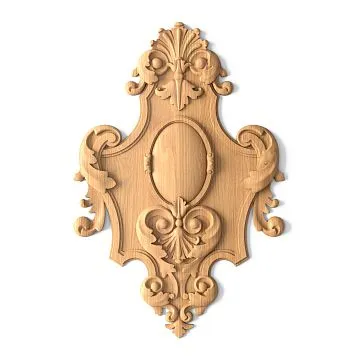
If the interior allows, decorative overlays — carved elements that enhance the visual effect — can be added around the mirror. But it's important not to overdo it. The decor should emphasize the shape of the mirror, not compete with it.
Rosettes (round decorative elements) can be placed in the corners of the wall, creating symmetry. But if the mirror is round, the rosettes should be smaller in diameter, otherwise the composition will lose its focus.
Lighting: how to emphasize the contrast of forms
Light is a tool that can either enhance the composition or destroy it. How to properly illuminate a round mirror against the backdrop of straight baseboard lines?
Overhead light
If a ceiling light is positioned above the mirror, its light will reflect in the mirror, multiplying the brightness. This is good for functional areas (entryway, bathroom) but can be excessive for a bedroom or living room.
Side lighting
Sconces placed on either side of the mirror create soft, even light. This is the ideal option for a vanity, for the area above a console. The light falls from the side, avoiding harsh shadows and emphasizing the shape of the mirror.
Contour lighting
Modern mirrors can be equipped with built-in LED backlighting along the perimeter. This creates a 'floating' mirror effect, especially if the lighting is positioned on the back side. This technique enhances the contrast of forms: a round mirror glows against a dark wall, with a clear baseboard line below.
Accent baseboard lighting
Modern designers sometimes use hidden baseboard lighting — an LED strip placed behind the baseboard or inside a special profile. This creates a 'floating' wall effect, emphasizes the horizontal line, and makes the composition lighter and more airy.
Color palette: how to combine a mirror and a baseboard
Color is another level of contrast. Even if the shape is round and the line is straight, color can enhance or diminish this contrast.
Dark mirror on a light wall
If the mirror frame is made of dark wood (wenge, walnut, stained oak) and the wall is light (white, beige, gray), the contrast is maximal. The mirror stands out, attracts the eye. The baseboard can be dark, matching the frame — this creates a visual 'top-bottom' link.
Light mirror on a dark wall
The reverse option: the mirror frame is white or made of light wood, the wall is dark (graphite, dark blue, black). The mirror becomes a light spot, a focal point. The baseboard can be light, creating contrast with the wall, or dark, blending with it.
Monochromatic palette
If the mirror frame, wall, and baseboard are in the same color scheme (e.g., all in shades of gray), contrast is created only by form. This is a subtle, restrained technique suitable for minimalist interiors.
Accent color
If the interior allows, you can make the mirror frame an accent — paint it a deep green, blue, burgundy. The baseboard remains neutral — white, gray, natural wood. This creates a bright visual effect without overloading the space.
Materials: wood, MDF, polyurethane — what to choose?
Solid wood: nobility and durability
Solid wood baseboard made of oak or beech— is a classic, tested for centuries. Natural wood has a unique texture, tactile pleasantness, and the ability to 'breathe.' It creates an atmosphere of warmth, coziness, and naturalness.
A solid wood mirror frame is an investment. Such a mirror will last for decades without losing its appearance. Wood can be restored, repainted, stained — it is alive, flexible, and responsive.
MDF: affordability and versatility
MDF is a modern material that allows for creating complex shapes, carved elements, and any profiles. Mirror frames made of MDF can be painted any color, covered with veneer, or patinated. It is a more affordable option than solid wood, but with quality execution, it is visually indistinguishable.
MDF baseboards are also popular — they are lighter than wooden ones, easier to install, and not afraid of minor humidity fluctuations. But they are less durable than solid wood.
Polyurethane: Modernity and Practicality
Polyurethane baseboards and moldings are a material that allows for creating complex carved profiles at minimal cost. Polyurethane is easy to paint, not afraid of moisture, and does not deform. But it lacks the warmth and tactility that wood provides.
For mirrors, polyurethane frames are used less often — the material is not suitable for large structures. But for small mirrors, especially in modern interiors, polyurethane is quite appropriate.
Installation: how to properly hang a mirror and install a baseboard
Baseboard installation
The baseboard is installed after finishing the walls and floor. It is important that the wall is even, otherwise the baseboard will not fit tightly, creating gaps.
A wooden baseboard is attached with screws or adhesive (liquid nails). Screws are a more reliable option, especially for wide and heavy models. The screw heads are covered with decorative caps or filled and painted to match the baseboard.
Baseboard corners are cut at a 45-degree angle — this ensures a neat joint. If the baseboard profile is complex, the cut requires precision and experience.
Hanging a mirror
A round mirror can be heavy, especially if the frame is made of solid wood. It's important to use reliable fasteners — anchors, dowels, hooks — rated for the mirror's weight.
If the mirror is large (over 100 cm in diameter), it's better to use two fasteners placed symmetrically. This ensures stability and prevents tilting.
The hanging height of a mirror is calculated based on the residents' height and the mirror's function. For an entryway mirror, the optimal center height is 150–160 cm from the floor. For a decorative mirror in the living room — higher, 170–180 cm.
Caring for wooden baseboards and mirror frames
Wood is a living material that requires care. How to preserve its beauty for many years?
Regular cleaning
Dust is wood's main enemy. Regularly wipe the baseboard and mirror frame with a soft, dry cloth. A slightly damp cloth can be used, but it's important to dry the surface immediately.
Protection from moisture
Wood is afraid of excess moisture. If the baseboard is installed in a bathroom or kitchen, it must be coated with a water-repellent finish — varnish, oil, or wax. The same applies to a mirror frame in the bathroom.
Recoating
Over time, the varnish or paint on a wooden baseboard may fade. You can refresh the finish by lightly sanding the surface and applying a new coat of varnish or wax. This will restore the wood's original shine.
Protection from mechanical damage
Baseboards often suffer from vacuum cleaner impacts, furniture, and pets. To minimize damage, be careful when cleaning, use soft vacuum attachments, and avoid pushing furniture right up against the baseboard.
Common mistakes when working with round mirrors and baseboards
Mistake 1: Disproportionate sizing
A large mirror on a narrow wall or, conversely, a small mirror in a spacious room — this is a mistake that ruins the composition. Always calculate proportions, considering wall size, ceiling height, and baseboard width.
Mistake 2: Lack of visual connection between elements
If the mirror frame is made of one material and the baseboard of another, the composition falls apart. It's important for materials to echo each other — if the frame is oak, the baseboard should also be oak. If the frame is white, the baseboard can be white or natural light wood.
Mistake 3: Mirror hung too low or too high
A mirror hung too low creates a feeling of cramped space and squatness. One hung too high loses functionality, turning into decor that's inconvenient to interact with.
Mistake 4: Excess of round elements
If there are several round mirrors, round clocks, round lights, round decorative plates on a wall — it's overkill. The circle stops being an accent and becomes background. It's important to exercise moderation.
Error 5: Ignoring lighting
A mirror without proper lighting loses half its expressiveness. If a mirror hangs in a dark corner, it won't function as either a practical or decorative element. Always plan the lighting.
Frequently asked questions
What diameter mirror to choose for a 4–5 sq. m entryway?
For a small entryway, a diameter of 60–70 cm is optimal. The mirror should be noticeable but not overwhelm the space. If you want to visually expand the entryway, you can place two mirrors with diameters of 40 and 50 cm.
Can a round mirror be paired with a narrow baseboard?
Yes, it can. A narrow baseboard (6–8 cm) suits mirrors up to 70 cm in diameter. This is a solution for minimalist interiors where lightness and airiness are important.
How to hang a mirror if the wall is made of drywall?
Use special drywall anchors (butterfly anchors, molly bolts). If the mirror is heavy, it's better to find a metal stud inside the wall and attach to it. Or reinforce the mounting point with a wooden block installed in the wall during drywall installation.
What baseboard to choose for wet areas?
For bathrooms and kitchens, baseboards made of moisture-resistant MDF with protective coating or solid wood treated with water-repellent finishes are suitable. Polyurethane baseboards are also a good option — they are not afraid of water.
Can a wooden mirror frame be painted a different color?
Yes. If the frame is made of solid wood without a varnish finish or is stained, it can be sanded and painted any color. If the frame is already painted, the old finish will need to be removed.
How to prevent a bathroom mirror from fogging up?
Use heated mirrors (with built-in film to prevent condensation) or treat the mirror with special anti-fogging products. Good ventilation in the bathroom is also important.
What should be the distance between the mirror and the ceiling?
Minimum 20–30 cm. This provides visual balance and avoids a cramped feeling. If the ceiling is high (over 3 meters), the distance can be greater.
Can round mirrors be used in a children's room?
Yes, but it's important to choose safe materials. The mirror must be securely fastened, and the frame should have no sharp corners. The baseboard should be made of eco-friendly wood or MDF without harmful emissions.
How to choose the height of the baseboard for a room with a ceiling height of 2.5 meters?
For standard ceiling height, baseboards 8–12 cm high are suitable. If you want to visually increase the height of the room, choose narrow baseboards (6–8 cm). If you want to add solidity — wide ones (12–15 cm).
Should the interior style be considered when choosing the shape of a mirror?
Yes. A round mirror is versatile, but the frame details should match the style. For classic — a carved frame, for minimalism — a simple one, for eclectic — you can experiment.
Conclusion
The contrast of round shapes and straight lines is not just a visual technique, but a philosophy of space. The soft circle of the mirror and the impeccable horizontal of the baseboard create dynamics that keep the interior in tone, preventing it from becoming boring, monotonous, predictable. This technique works in any style — from strict Scandinavian minimalism to luxurious neoclassicism, from laconic Japanese design to bold eclecticism.
The main thing is to maintain proportions, choose noble materials, and think through every detail. A round mirror in a wooden frame is not just a reflective surface; it is an architectural object that gathers space around itself, organizes it, and makes it whole. And a wooden baseboard is not just a finishing element; it is the foundation of the composition, the line along which the gaze slides around the perimeter of the room, returning to the central accent — the mirror.
When you create an interior, remember: form is a language. The circle speaks of harmony, completeness, softness. The straight line speaks of order, structure, clarity. Together they create a dialogue that makes the space alive, interesting, deep.
The company STAVROS has been creating unique decorative elements from natural wood for many years — baseboards, moldings, cornices, frames for mirrors and paintings. Every STAVROS product is the result of meticulous craftsmanship, the use of the best materials, and advanced wood processing technologies. STAVROS understands that details create atmosphere, and each element is designed with its role in the overall interior composition in mind. Choosing STAVROS means choosing quality tested by time, the eco-friendliness of natural wood, and impeccable taste that will never go out of style.