












































































Article Contents:
- Neoclassicism 2026: Revival of Traditions in a Modern Context
- Principles of Neoclassical Staircase Design
- Round Oak Handrail: The King of Neoclassical Staircases
- Aesthetics of the Oak Handrail
- Technology of Manufacturing a Round Oak Handrail
- Carved Newels: Verticals of Elegance
- Types of Carved Newels for Neoclassicism
- Technology of Creating Carved Newels
- Capital: The Crown of Beauty
- Types of Capitals for Neoclassical Staircases
- Capitals on Support Columns
- Pilaster: Flat Elegance
- Pilasters in Staircase Space
- Integration of Pilasters into Interior
- Classic Furniture: Dialogue with the Staircase
- Wood Selection for Furniture
- Stylistic Correspondences
- Furniture Placement Relative to the Staircase
- Installation and Integration: Creating a Unified Whole
- Preparation and planning
- Installing Support Posts
- Newel Installation
- Handrail Installation
- Lighting for Neoclassical Staircases
- Interaction of Light and Furniture
- Maintenance of Neoclassical Staircases
- Regular Cleaning
- Recoating
- Protection against damage
- Cost of Neoclassical Staircases
- Company STAVROS: Traditions of Quality
- Frequently Asked Questions

Neoclassicism is a style that never goes out of fashion. In 2026, it is experiencing a new wave of popularity, combining centuries-old traditions of classical architecture with modern technologies and materials. And if there is an interior element that most fully embodies the spirit of neoclassicism, it is the staircase withround oak handrailscarved newels and elegant capitals. Imagine: the noble texture of oak, polished to a silky sheen, the strict proportions of ancient columns embodied in wooden newels, and capitals adorned with botanical ornamentation — all of this creates an atmosphere of restrained luxury and timeless elegance.
Why oak? This species has been considered a symbol of strength, longevity, and nobility for centuries.Round oak handrailIt is not just a functional element of the staircase — it is an investment in beauty that will serve generations. And carved newels transform an ordinary staircase into a work of art, where each element tells a story of craftsmanship and attention to detail. In an era of mass production and synthetic materials, a neoclassical staircase made of natural wood becomes especially valuable — it speaks of the owner’s taste, his respect for traditions, and his pursuit of perfection.
In this article, we will embark on a journey into the world of neoclassical design in 2026. We will examine why round oak handrails remain the gold standard for this style, explore the art of creatingcarved balusters, delve into the language of architectural forms — from capitals to pilasters. We will also consider how a neoclassical staircase integrates into a modern interior and how it harmonizes with classic furniture, creating a balanced space. Ready to discover neoclassicism in its most refined form?


Neoclassicism 2026: Reviving Traditions in a Modern Context
Neoclassicism, as an architectural and interior design style, originated in the 18th century as a reaction to the excessive ornamentation of Baroque and Rococo. Turning to the clean lines and proportions of ancient Greece and Rome, neoclassicism proclaimed principles of symmetry, harmony, and restrained elegance. In 2026, we observe a new wave of interest in this style, but with a modern interpretation. Contemporary neoclassicism is not about copying historical models, but about reinterpreting classical principles in light of modern lifestyles and technological possibilities.
What are the features of neoclassicism in 2026? It is the preservation of classical proportions with simplified decoration. If in historical neoclassicism carving could cover significant surface areas, the modern approach implies accentual use of decorative elements. A carved capital on a staircase post, elegant balusters with a precisely shaped profile, but without excessive ornamentation — this is the language of modern neoclassicism. It is elegance without fussiness, luxury without ostentation.
The color palette of neoclassicism in 2026 leans toward natural tones of noble wood species. Oak, with its warm golden-brown hue, has become a favorite. Both light tones of natural oak and darker shades — stained oak, tinted to walnut — are popular. White, traditional for classical interiors, is used for walls and ceilings, creating contrast with the dark wood of the staircase. Gold and bronze accents in hardware and lighting fixtures complete the picture.




Principles of Neoclassical Staircase Design
Symmetry — the foundational principle. The staircase in a neoclassical interior must be the compositional center around which the rest of the space is arranged. If it is a grand staircase in a foyer, it is positioned along the central axis, with equal space on both sides. Balusters are installed with an ideally equal spacing, posts — at key compositional points.
Proportionality — the second key principle. All elements of the staircase must relate to each other in size and form. The height of the baluster, the diameter of the handrail, the size of the capital — all of this is calculated according to the principle of the golden section or classical architectural orders. You cannot install a massive oak handrail with a 70 mm diameter on thin balusters with a 30 mm diameter — this would violate proportions and destroy harmony.
Quality of execution — the third pillar of neoclassicism. This style does not tolerate carelessness. Every detail must be executed flawlessly: a perfectly smooth handrail surface, crisp carving on capitals, precise fitting of joints. This is whystaircase componentsin neoclassical style requires the work of skilled craftsmen and the use of high-quality wood.
Our factory also produces:


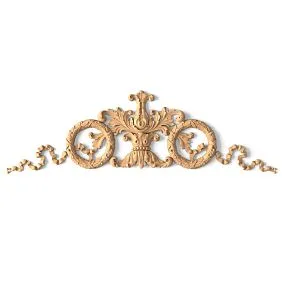

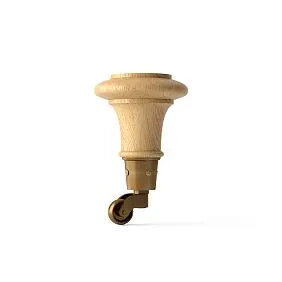


Round oak handrail: the king of neoclassical staircases
— this is classic, which never becomes outdated. Oak is chosen not by chance: its density of 700–750 kg/m³ and hardness of 3.7–4.0 on the Brinell scale ensure exceptional strength and durability. A staircase is an interior element used daily, often dozens of times. The handrail is subjected to constant contact with hands, friction, and pressure. Oak withstands this load for decades without visible wear.Round oak handrailThis is classic, never outdated. Oak is chosen deliberately: its density of 700–750 kg/m³ and hardness of 3.7–4.0 on the Brinell scale provide exceptional strength and durability. The staircase is an interior element used daily, often dozens of times. The handrail is subjected to constant contact with hands, friction, and pressure. Oak withstands this load for decades without visible wear.
The round shape of the handrail with a diameter of 50–55 mm — a standard established by centuries of practice. Why exactly round, and not square or oval? A round cross-section provides the most comfortable grip with the palm. When ascending or descending the stairs, the hand naturally wraps around the handrail, fingers close, creating a secure support. There are no sharp edges that could cause injury or catch clothing. For children and elderly people, for whom reliable support is especially important, a round handrail — a question of safety.
Get Consultation
Aesthetic of the oak handrail
Oak has a unique texture with characteristic vertical rays (medullary rays), which create a beautiful pattern on the surface. When radially sawn, these rays are especially noticeable, creating a "mirror" effect — light spots against the background of the main wood color. This gives the oak handrail a noble, aristocratic appearance. After polishing and finishing with oil or varnish, the texture becomes even more pronounced, playing with light.
The color of natural oak varies from light golden to rich brown. For neoclassical interiors, medium and dark tones are often chosen, creating a sense of solidity and luxury. Stained oak, treated with special compounds or soaked in water to achieve a dark, almost black color, is used in especially refined projects. Such a handrail against white walls and light marble flooring creates a dramatic contrast characteristic of neoclassicism.
Staining oak allows you to achieve any desired shade while preserving the visibility of the texture. Popular stains include walnut (warm brown with a reddish undertone), wenge (dark brown with black veins), and bleached oak (light gray with preserved wood grain pattern). The choice of tone depends on the overall color concept of the interior and coordinates with the shade of balusters, posts, and other wooden elements.
Technology of manufacturing round oak handrails
ModernRound oak handrailsRound oak handrails
are manufactured using the lamination technique. This means the handrail is not made from a single piece of wood, but from short blocks (lamellas) 300–500 mm long, glued together lengthwise on a dovetail joint. Why not a solid block? Because solid wood is prone to warping and cracking with changes in humidity. Internal stresses in the block can lead to deformation even after many years of use.
A laminated handrail is free from these drawbacks. When gluing, lamellas with fibers oriented in different directions are selected, which compensates for internal stresses. Each lamella is pre-dried to 8–10% moisture in calibrated drying chambers. The joints are practically invisible — an experienced craftsman arranges them so they blend with the natural wood grain. After gluing, the blank is processed on a lathe, where it is given an ideally round shape.
If the handrail — this is the horizontal axis of the staircase, then
— its vertical rhythm. In neoclassicism, balusters play a critically important role: they not only support the handrail and ensure safety, but also set the aesthetic tone of the entire composition. Carved balusters in neoclassical style often repeat the forms of ancient columns in miniature: they have a clear three-part structure — base (foundation), shaft (stem), and capital (finishing element).Carved wooden balustersIts vertical rhythm. In neoclassicism, balusters play a critically important role: they not only support the handrail and ensure safety, but also set the aesthetic tone of the entire composition. Carved balusters in neoclassical style often replicate miniature forms of ancient columns: they have a clear three-part structure — base (foundation), body (shaft), and capital (finial element).
Types of carved balusters for neoclassicism
Balusters in the Doric style — the most severe and minimalist. The Doric order, the oldest of Greek architectural orders, is characterized by simple forms and the absence of excessive ornamentation. A Doric baluster has a massive base, a slightly tapering shaft with vertical grooves (flutes), and a simple, almost ornament-free capital. Such balusters create a sense of strength, masculinity, and monumentality. They are ideal for spacious rooms with high ceilings.
Balusters in the Ionic style — more elegant and decorative. The Ionic order is distinguished by slender proportions and a characteristic capital with volutes (scrolls). An Ionic baluster is thinner than Doric, the shaft may have a more complex profile with bulges and tapers. The capital is adorned with carved volutes, sometimes supplemented with vegetal ornamentation. These balusters create a sense of lightness and elegance, suitable for medium-sized residential interiors.
Corinthian balusters are the most luxurious and decorative. The Corinthian order, the last of the classical Greek orders, is known for its ornate capital adorned with carved acanthus leaves. A Corinthian baluster is a woodcarver’s masterpiece. The capital is covered with intricate multi-level carving, imitating acanthus leaves, volutes, rosettes. The baluster’s stem may also have decorative elements — bands, rings, carved inserts. Such balusters are used in the most prestigious interiors, where displaying status and taste is important.
Technology of Creating Carved Balusters
Manufacturing a carved baluster is a multi-stage process requiring high skill. It begins with selecting the blank. For carved balusters, high-grade wood — category A or Extra — is used, free of knots, cracks, or resin pockets. Moisture content must be strictly 8–10%, ensuring no further deformation.
First stage — turning. On a lathe, the blank is given its basic shape: the base, stem, and capital are formed. The stem profile may be simple (cylinder, truncated cone) or complex (with several bulges and tapers, creating rhythm). Modern CNC lathes allow creating complex profiles with perfect accuracy and repeatability — all balusters in a batch will be absolutely identical.
Second stage — carving. This is either manual work by a master carver or CNC milling according to a complex program. Carving is performed on the capital and possibly on separate stem sections. Carving depth and ornament detail depend on style and project budget. Simple carving includes grooves (vertical channels) or several rows of leaves. Complex carving features a multi-level composition with acanthus leaves, volutes, rosettes, beads, where each element is carefully worked out.
Third stage — sanding and finishing. All surfaces, including carved elements, are sanded to remove roughness. This is delicate work, especially on carved areas, where it’s necessary to preserve line clarity without blurring details. After sanding, the baluster is coated with a protective-decorative finish: oil, wax, or varnish. For neoclassicism, a varnish with a light sheen is often chosen, which highlights the relief of carving, creating play of light and shadow.
Capital: The Crown of Beauty
The capital is the upper part of a column or baluster, serving as a transition from vertical support to horizontal covering (in the case of a staircase — to the handrail). In classical architecture, the capital is one of the most important and decorative elements. It not only performs a structural function (distributes load) but also sets the stylistic character of the entire composition. The capital’s shape allows instantly identifying to which order the column belongs — Doric, Ionic, or Corinthian.
Types of Capitals for Neoclassical Staircases
Doric capital — the simplest. It consists of two main elements: the echinus (a convex element resembling a cushion) and the abacus (a square plate on top). Doric capital is minimalist, without ornamentation; its beauty lies in the purity of geometric forms and proportions. On wooden balusters, the Doric capital is created by turning — the echinus forms as a smooth expansion, and the abacus as a flat disc or square platform.
Ionic capital — more decorative. Its characteristic feature is volutes, spiral scrolls, located on two or four sides of the capital. Between volutes, decorative elements are often placed — egg-shaped ornaments (ovules), beads, or leaves. An Ionic capital on a wooden baluster is a complex carved element requiring skill. Volutes are carved manually or on a CNC milling machine, each scroll must be perfectly symmetrical.
Corinthian capital — the pinnacle of decorative art. It is a multi-tiered composition of carved acanthus leaves arranged in two or three rows, gradually curving outward. Between leaves, stems with scrolls (cauliculi), small volutes in the corners, a central rosette or flower may be placed. A Corinthian capital on a baluster is a miniature sculpture, where each leaf has detailed veins, and each scroll has a clear form.
Capitals on Support Columns
If balusters are the standard elements of a staircase, then support columns are accents, architectural dominants. Columns are installed at the beginning and end of the flight, at turns, and on landings. They have a larger cross-section (usually 100×100 mm or 120×120 mm) and height (1200–1500 mm), making them noticeable elements of the composition. Capitals on columns are significantly larger and more decorative than on balusters.
A neoclassical-style column often resembles a miniature classical column. The base is massive, sometimes with carved details (bosses, bands). The stem may be smooth or adorned with grooves. The capital is an ornate carved element, 200–300 mm high. On Corinthian columns, the capital may be a true masterpiece of carving, where the craftsman demonstrates all his skill.
Above the column’s capital, a finial (top ornament) is often placed — a decorative element crowning the composition. This may be a sphere, vase, pyramid, acorn, or more complex shape — for example, a carved pinecone, pineapple (a symbol of hospitality in classical architecture), eagle, or lion (heraldic symbols). The finial adds height and significance to the column, making it a true architectural element.
Pilaster: Flat Elegance
A pilaster is a flat vertical projection on a wall, imitating a column. Unlike a column, a pilaster is not a standalone element — it is inseparably connected to the wall. Pilasters are used for vertical division of wall surfaces, creating rhythm, emphasizing important zones. In neoclassical interiors, pilasters often frame doorways, fireplaces, niches, mirrors.
Pilasters in Staircase Spaces
In the context of a staircase, pilasters may be used to decorate the wall along which the flight runs. For example, if the staircase runs along a wall and has significant length, the wall can be divided into sections by pilasters. This creates a visual structure, breaks the monotony of the surface, and adds architectural expressiveness.
Pilasters are made of wood (to match the staircase material) or polyurethane (a more economical option, allowing complex shapes). Wooden pilasters are typically made of oak, ash, or beech, and are coated with the same finish as staircase elements. They have a base, stem, and capital — just like columns, but in flat form.
The pilaster’s capital may be carved, with ornamentation matching the style of baluster capitals. This creates stylistic unity: if balusters have Corinthian capitals with acanthus leaves, pilasters should have similar motifs. The pilaster’s stem may be smooth or adorned with grooves — vertical channels that create play of light and shadow, adding plasticity.
Integrating Pilasters into the Interior
Pilasters are effective not only on the wall alongside the staircase but also in other zones visually connected to the staircase space. If the staircase is located in a hall, pilasters may frame the entrance door, creating a grand portal. If a living room is adjacent to the staircase, pilasters may frame the arched opening between the hall and living room, creating an architectural frame.
Proportions are important. Pilasters must relate to the scale of the room and other architectural elements. Too thin pilasters in a spacious hall with high ceilings will look short; too massive pilasters in a small space will appear overwhelming. Classical rule: for Ionic and Corinthian orders, pilaster height should be 8–10 times its width; for Doric, 6–8 times.
Classic Furniture: Dialogue with the Staircase
A neoclassical staircase does not exist in a vacuum — it is part of the interior, and its style must harmonize with furniture and other elements of the decor.Classic FurnitureMade of natural wood — an ideal partner for such a staircase. Console tables on curved legs, chairs with carved arms, cabinets with inlays, mirrors in gilded frames — all this creates a unified stylistic environment.
Choosing Wood for Furniture
To create stylistic unity, furniture should be made of the same wood species as the staircase, or of harmoniously matching species. If the staircase is made of oak, ideal choices are oak console tables, tables, chairs. Texture and tone match, creating a sense of thoughtful interior design. If exact matching is impossible, choose species with similar tones: oak pairs well with walnut, ash, beech, or wood stained in brown tones.
A contrasting option — light furniture made of beech, birch, or bleached oak against a dark oak staircase. Such contrast creates visual dynamism, emphasizing each element. However, it requires caution: too sharp a contrast may disrupt harmony. Use intermediate tones in textiles and decor to link dark and light elements.
Stylistic correspondences
Neoclassical furniture is characterized by several features. Straight lines and symmetry — the foundation of the composition of each piece. A chest, console, or table have clear geometric forms, symmetrical facades, and handles placed at equal distances. Reserved decoration — carving, inlay, gilding are used accentually, not covering the entire surface. Carved elements — leaves, rosettes, meanders — are placed at key points: corners, center of the facade, on legs.
Quality hardware — handles and inlays made of bronze or brass with patina, imitating antique pieces. Hardware forms repeat classical motifs: lion heads, lyres, urns, wreaths. Refined proportions — furniture should not be too low or too high. Classical proportions, based on the golden section, create a sense of visual harmony.
Placement of furniture relative to the staircase
A hall with a grand staircase is not only a transit zone but also a reception space that makes the first impression on guests. Here, a console against the wall opposite or beneath the staircase (if space allows) is appropriate. Decorative items are placed on the console: a vase with flowers, a sculpture, a clock. Above the console — a mirror in a classical frame, which visually expands the space and reflects the staircase, doubling its beauty.
On both sides of the start of the staircase, you can place a symmetrical pair of chairs or a bench. This is not only a decorative element but also functional — a place to sit while putting on shoes. The bench may have soft upholstery in velvet, brocade, or leather, matching the overall color scheme. The bench legs — carved or turned — correspond to the forms of the balusters.
Installation and integration: creating a unified whole
Even the highest quality components will not create an impressive staircase if the installation is done carelessly.installation of balusters and handrailsInstallation in neoclassical style requires special care, as any inaccuracy will be noticeable against the backdrop of strict symmetry and clear proportions.
Preparation and Planning
Before beginning installation, a detailed staircase project is created, indicating the exact placement of each element. Posts are marked at key points: start of the flight, end of the flight, turns. Balusters are placed at equal intervals — usually two balusters per step for a standard staircase width of 900–1000 mm. The distance between balusters should not exceed 150 mm for safety (to prevent a child from fitting their head through).
All wooden elements must be acclimated — left in the installation room for at least 7 days. This allows the wood to adapt to humidity and temperature, preventing further deformation. Before installation, each element is inspected, checked for dimensional accuracy, and absence of defects.
Installation of Support Posts
Installation begins with setting up support posts. The starting post at the beginning of the flight — a key element to which all others will be attached. The post is secured to the floor and to the staircase structure (stringer or rafter) with strong bolts or anchors. It is important to ensure perfect verticality — a level and plumb bob are used. Even a slight tilt of the post will be noticeable and spoil the impression.
After installing the starting post, intermediate posts (if any) and the finishing post are mounted. All posts must be strictly vertical and aligned in a straight line. A string is stretched between the starting and finishing posts — it should touch all intermediate posts or pass at equal distances from them.
Installing balusters
Balusters are mountedBalusters are attached to treads and to the handrail. Several mounting methods exist, but for neoclassical staircases, concealed methods are preferred, which do not disrupt the visual purity of the structure. Dovetail joints or mounting on metal bolts with subsequent covering of the mounting points — these are standards.
Each baluster is installed strictly vertically. For carved balusters, it is also important to maintain uniform orientation: if the capitals have asymmetrical elements, they should be oriented identically on all balusters. The distance between balusters must be absolutely identical along the entire length of the flight — even a difference of 2–3 mm will be noticeable to the eye and disrupt the rhythm.
Handrail installation
Round oak handrailThe handrail is laid on the upper ends of the balusters and posts. At the connection points with the posts, the handrail is inserted into the posts using a tenon joint for maximum strength. The tenon is formed at the end of the handrail, and the mortise is milled into the post. The joint is reinforced with glue and may additionally be secured with a concealed bolt.
On long flights, section joints of the handrail may be required. The joint should be located between balusters, equidistant from the nearest supports. Connector sleeves — metal tubes or wooden tenons — are inserted into the handrail and tightened to join the sections. The joint is carefully fitted and sanded to be invisible.
Lighting of the neoclassical staircase
Proper lighting is critically important for revealing the beauty of the neoclassical staircase. Carved elements, oak texture, play of light and shadow on capitals — all of this must be emphasized by lighting.
Types of lighting
General lighting is created by a chandelier located above the staircase landing. For neoclassicism, a chandelier in a classical style is chosen — multi-armed, with crystal pendants or without them, with bronze or brass elements. The size of the chandelier should correspond to the scale of the space. In spacious halls with high ceilings, a large multi-tiered chandelier with a diameter of 1–1.5 meters is appropriate. In more modest spaces — a compact chandelier with a diameter of 60–80 cm.
Accent lighting highlights architectural details. Wall sconces along the staircase create soft, diffused light that beautifully plays on carved balusters. Sconces should be in a classical style — with fabric shades, wrought iron bases, crystal elements. They are placed at equal distances from each other (usually with a 1.5–2 meter spacing), creating rhythm.
Decorative lighting sets the mood. LED underlighting of steps, built into the risers or lower part of the handrail, makes the staircase safer at night and adds a modern touch to the classic design. The light should be warm (2700–3000K) to emphasize the warmth of oak wood.
Care for a Neoclassical Staircase
A walnut staircase with carved elements is an investment that requires proper care to maintain its beauty for decades.
Regular cleaning
Wipe the handrail, balusters, and posts weekly with a slightly damp, soft cloth to remove dust. Pay special attention to carved elements—dust accumulates in the recesses of the carving, which should be gently removed with a soft brush or a specialized carving brush. Do not use overly wet cloths—excess water may damage the finish.
Recoating
Lacquered surfaces do not require frequent reapplication, but the handrail, which is in constant contact with hands, may lose its gloss over time. Every 2–3 years, you can refresh the handrail’s lacquer: lightly sand with fine-grit sandpaper (320–400 grit), remove dust, and apply 1–2 coats of lacquer. This will restore the handrail to its original appearance.
Protection against damage
Avoid striking carved elements with heavy objects. When moving furniture, protect balusters and posts. Do not place hot items on the handrail, and avoid prolonged exposure of the same areas to direct sunlight (this may cause fading). Maintain stable humidity in the room (40–60%)—this will prevent wood cracking.
Cost of a Neoclassical Staircase
A walnut neoclassical staircase with carved balusters is a premium product, and its cost reflects this. Let’s consider approximate prices for the main elements.
Round walnut handrail, 50 mm diameter: 3500–5500 rubles per linear meter depending on wood grade and finish type. Carved balusters from walnut: from 1500 rubles for a simple turned baluster with minimal carving to 5000–8000 rubles for complex ones with Corinthian capitals. Support posts with carved capitals: from 8000 to 20000 rubles per piece depending on size and carving complexity. Installation: 50000–100000 rubles for a 14-step staircase depending on complexity.
The total cost of a walnut neoclassical staircase with carved elements ranges from 200000 to 500000 rubles and more, depending on size, carving complexity, and additional elements. This is a significant investment, but the result is a staircase that will serve generations and remain stylish for decades.
STAVROS Company: Traditions of Quality
Creating a neoclassical staircase is a task that requires not only skill but also access to high-quality materials. The company STAVROS has specialized in producingwooden itemshigh-quality products. STAVROS offers a complete range of components for neoclassical staircases: round walnut handrails of various diameters and lengths, turned and carved balusters in classic styles, support posts with capitals, finials, and handrail supports.
All STAVROS products are made from carefully selected wood that has undergone kiln drying to optimal moisture levels. The production facility is equipped with modern CNC turning and milling machines, enabling the creation of elements with complex profiles at the highest precision. At the same time, STAVROS preserves traditional handcrafting techniques: carved capitals are crafted by experienced master carvers, and final finishing and quality control are performed manually.
STAVROS offers not only standard models from the catalog but also custom manufacturing based on the client’s sketches. If you need an exclusive baluster with a unique ornament or a capital of a special shape—the STAVROS masters will bring your idea to life in wood. Professional consultants will help you select the optimal combination of elements, take into account the specifics of your interior, and calculate the exact amount of materials needed.
Choosing STAVROS, you receive a quality guarantee proven by thousands of completed projects. Your neoclassical staircase made from STAVROS components will become a home decoration, a source of pride, and a reliable element that will serve many generations of your family.
Frequently asked questions
Can a round walnut handrail be used in a modern interior?
Absolutely. Neoclassicism in 2026 integrates beautifully into modern spaces. A walnut handrail with simple, uncluttered balusters looks great in minimalist interiors, adding warmth from natural material.
How long does it take to manufacture custom carved balusters?
The timeframe depends on the complexity of the carving and quantity. Simple turned balusters are manufactured in 1–2 weeks. Complex carved balusters with Corinthian capitals may require 3–4 weeks for a batch of 30 pieces.
Do carved elements require special care?
No more complicated than smooth surfaces. The main feature is the need to carefully remove dust from the recesses of the carving using a soft brush. Otherwise, care is standard.
Can a walnut staircase be painted white for neoclassicism?
Yes, although this will hide the beautiful walnut grain. White is characteristic of French neoclassicism. It is better to choose semi-transparent white oils or stains that lighten the wood while preserving the visibility of the grain.
How to combine a walnut staircase with a marble floor?
This is a classic combination for neoclassicism. Dark walnut contrasts beautifully with light marble. For a smooth transition, use wooden treads for the first 2–3 steps, gradually transitioning into marble.
Is special ventilation needed for a wooden staircase?
Special ventilation is not required, but it is important to maintain stable humidity (40–60%) and temperature (18–25°C). Avoid placing the staircase near heating appliances.
Can a neoclassical staircase be installed in a small house?
Yes, by adapting the scale. Use thinner balusters (35–40 mm diameter), less massive posts, and simplified carving. The principles of neoclassicism—symmetry, proportion, and quality—will remain intact at any scale.
How long does a walnut staircase last?
With proper care, over 100 years. Oak is one of the most durable species. Many historic oak staircases have been in use for 200–300 years and continue to be used.
How to choose the oak tone for a staircase?
Match the floor and furniture color. If the home has light tones, choose natural or light oak. For dark interiors, select stained or chocolate-toned oak.
Can oak be combined with other species on one staircase?
Technically yes, but this is not characteristic of neoclassicism. It is better to use one species for all elements. It is acceptable to combine oak for treads and handrails with bleached oak or beech for balusters to create a light contrast.


