












































































Article Contents:
- The Importance of Proper Attachment for the Longevity of Wooden Balusters
- Why It Is Important to Properly Attach Balusters
- Screws
- Angle Brackets and Fasteners
- Screws
- Construction Adhesive
- Marking and Surface Preparation
- Pre-drilling Holes
- Step 1. Attaching Balusters to the Main Structure
- 1.1. Positioning Balusters
- 1.2. Installation Using Screws
- 1.3. Reinforcing Attachment with Angle Brackets
- Step 2. Installing Railing
- 2.1. Marking and Drilling Holes for Railing
- 2.2. Attaching Railing
- Step 3. Installing Posts and Handrails
- 3.1. Marking and Installing Posts
- 3.2. Attaching Handrails
- Step 4. Final inspection and finishing
- 4.1. Checking Fastener Connections
- 4.2. Finishing and Treatment
- Question 1: Why is pre-drilling holes important when attaching balusters?
- Question 2: Which types of fasteners are the most reliable for wooden balusters?
- Question 3: Can balusters be installed on a wooden staircase by oneself without professional help?
- 1. Use Quality Materials
- 2. Proper Installation Technique
- 3. Regular Maintenance and Technical Care
- 4. Use of concealed mounting methods
- Case 1: Classic wooden staircase
- Case 2: Modern composite staircase
- Case 3: DIY project for beginners
- Attention to detail
- Application of modern technologies
- Training materials and consultations
- Inaccurate marking and measurements
- Lack of pre-drilling
- Use of low-quality fasteners
- Incorrect combination of mounting methods
- Ignoring material characteristics
- Main Conclusions
- Call to Action
- Final Thoughts
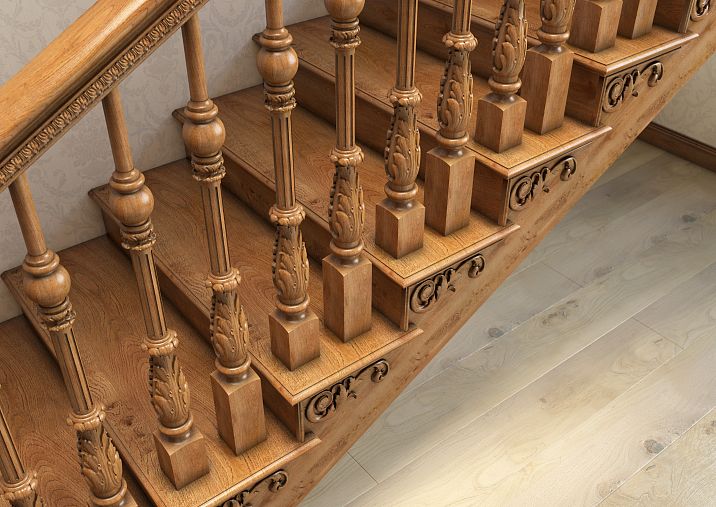
A staircase is not just a means of moving between floors, but a central element of interior design that sets the style, atmosphere, and level of comfort in your home. Especially important in this ensemble are balusters, which not only perform a protective function but also become a true decorative accent. However, even the most beautiful and refinedBalusters for staircase lose their attractiveness and reliability if their mounting is done poorly.
In this article, we will thoroughly examine the features of mounting wooden balusters, discuss the selection of proper fasteners, mounting methods, and provide practical recommendations for ensuring the longevity of the structure. Our guide is aimed at those who wantbuy balusters to install them themselves, as well as for professionals striving to improve their work. Familiarize yourself with our detailed guide and learn how to ensure strong and durable mounting forwooden balusters.
We will discuss the following topics:
● Importance of proper mounting for wooden balusters.
● Main types of fasteners: screws, brackets, anchors, mounting adhesive.
● Preparation and marking – foundation of quality mounting.
● Step-by-step process of mounting balusters on a wooden staircase.
● Tips for maintaining fastener connections and avoiding common mistakes.
● Frequently asked questions and professional recommendations.
Let’s start by examining the importance of quality mounting for the longevity of wooden balusters.


Importance of proper mounting for the longevity of wooden balusters
Wood is a natural material that, despite its strength and beauty, requires careful handling and proper maintenance. Mounting balusters is the foundation upon which not only the aesthetics of the staircase structure depend, but also its safety. Improper mounting can lead to weakened joints, play, deformation, and even cause injuries.




Why it is important to properly mount balusters
- Safety: Reliable mounting ensures the stability of balusters and prevents their displacement during staircase use. This is especially important in homes with children or elderly people.
- Durability: Quality mounting connections allow the structure to retain its operational characteristics even under prolonged and intensive use. The lifespan and appearance of the product depend on proper mounting.
- Aesthetics: With proper mounting, fastener elements remain invisible, allowing for a perfectly beautiful and harmonious staircase. Using concealed mounting methods helps maintain an ideal appearanceHandrails and balusters.
- Time and cost savings: Errors in fastening lead to the need for repeated repairs and replacement of parts, increasing expenses. Quality initial fastening avoids costly corrections in the future.
Our factory also produces:


Main types of fasteners for wooden balusters
Various types of fasteners are used for reliable fastening of wooden balusters. Let's consider the main ones.
Get Consultation
Screws
Screws are the most common and reliable method of fastening wooden balusters.
● Advantages:
○ Ease of installation and the ability to quickly secure.
○ High strength of the joint when using quality stainless steel screws.
○ Ease of adjusting the fastening and replacing damaged elements.
● Features:
○ Always drill pilot holes before tightening to avoid splitting the wood.
○ It is recommended to use screws with wide heads to evenly distribute load on the surface.
If you wantbalusters for staircase to buyusing quality screws — the guarantee of reliable fastening.
Angle brackets and fastening clips
Metal angle brackets and fastening clips are used to strengthen joints, especially if balusters are mounted to a wooden base.
● Advantages:
○ Provide additional support and even load distribution.
○ Allow minimizing the risk of displacement or deformation of balusters.
● Features:
○ Angle brackets are mounted on the inner side of balusters, allowing them to be hidden from view and maintain the aesthetic appearance of the structure.
○ It is necessary to use angle brackets with anti-corrosion coating to prevent rusting during long-term use.
For creating a reliable structure, it is recommended to use qualityWooden balusters in combination with angle brackets.
Dowels
Dowels are especially effective when installing balusters on concrete or brick surfaces. They evenly distribute the load and provide a strong connection.
● Advantages:
○ High reliability of fastening on hard surfaces.
○ Even distribution of loads over the entire area of the joint.
● Features:
○ Dowels must be selected based on the diameter and depth of the hole, as well as the type of material to which the fastening is being applied.
○ Drilling pilot holes is mandatory for proper installation of dowels.
If your staircase has a concrete base, using dowels will be an excellent solution forbuy wooden balusters for the staircase.
Construction adhesive
Construction adhesive is used as an additional or primary fastening method, especially if you aim for concealed installation.
● Advantages:
○ Ensures even load distribution and additional reinforcement of the joint.
○ Allows avoiding visibility of fastening elements, improving the aesthetic appearance of the structure.
● Features:
○ The adhesive must be intended for bonding wood and metal if you plan to use combined fastening.
It is necessary to observe the drying time of the adhesive to ensure the strongest possible connection.
For those who preferinstalling balusters and railings by handWhen using construction adhesive in combination with mechanical fasteners, it guarantees the longevity of the structure.
Preparation for installing wooden balusters
Before beginning installation, it is important to properly prepare all materials and the staircase surface.
Marking and surface preparation
- Accurate marking:
Use a tape measure, level, and laser level to mark fastening locations. Ensure even spacing betweenBalusters for staircaseto ensure convenience and safety. - Surface Preparation:
Clean the wooden staircase surface of old finishes, dust, and contaminants. Sand to remove irregularities. Treat the surface with antiseptics and protective coatings to prevent wood deformation.
Tip: Use protective coatings if you plan toBalusters from wood for sale in SPBto ensure the longevity of the structure.
Pre-drilling holes
Pre-drilling is a necessary step that prevents wood splitting and ensures accurate fastening.
● Drill holes at previously marked locations, selecting the correct drill bit diameter for the screws or anchors being used.
● Monitor drilling depth to ensure holes are uniform around the balusters' perimeter.
Tip: If you areinstalling wooden handrails and balusters doing it yourself, always pre-drill to achieve an ideal result.
Step-by-step installation process
Step 1. Attaching balusters to the main structure
We begin installation by mounting balusters on the wooden staircase. This step includes placement, securing, and checking the fastening connections.
1.1. Baluster placement
● Mark on each step the locations where theWooden balusters.
● Ensure the distance between balusters complies with safety standards.
● Use a level to check the vertical alignment of the markings.
1.2. Installation using screws
● Secure the balusters to the marked positions using stainless steel screws, pre-drilled into the holes.
● Gradually tighten the screws, checking that the balusters do not shift and remain aligned.
● If the fastening seems insufficiently strong, additionally use construction adhesive.
Tip: For reliability, it is recommended to usewooden balusters for staircasethat have already been treated with protective coatings.
1.3. Strengthening the attachment using angle brackets
● After initial baluster mounting, install metal angle brackets at the junctions between balusters and the main structure.
● Ensure that the brackets are tightly fitted to the surface and the fasteners are securely fixed.
● Check that the brackets do not protrude beyond the edge of the balusters, maintaining the aesthetic appearance of the structure.
Tip: Usestaircase componentsto achieve maximum stability and longevity of the attachment.
Step 2. Installing handrails
Handrails are an essential part of the railing and give the staircase a finished look. They should be installed simultaneously with the balusters to maintain the structural integrity.
2.1. Marking and drilling holes for handrails
● Mark the locations for handrail attachment on each step and on support posts.
● Drill pilot holes as done during baluster installation to avoid damaging the material.
2.2. Installing handrails
● Secure the handrails using screws or anchors, depending on the surface type.
● If you are installingHandrails and balusters for the staircase, ensure they harmonize well and are securely fastened.
● Check that the handrails are not misaligned and are installed strictly horizontally.
Tip: Usebuy wooden balusters, if you wish to emphasize the natural warmth of wood in your interior.
Step 3. Installing posts and finials
Posts and finials complete the staircase railing, creating a cohesive ensemble.
3.1. Marking and installing posts
● Carefully mark the locations forPosts for staircase based on the staircase.
● Drill pilot holes and install posts using screws and construction adhesive, if necessary.
● Ensure that the posts are positioned strictly vertically and can support the load from installed balusters and handrails.
3.2. Installing finials
● Finials are installed on the top of posts, completing the overall composition of the staircase railing.
● SecureNewel posts, using screws or special fasteners.
● Check that the finials are not misaligned and perfectly matchrailings and balusters.
Tip: Secure attachment of posts and finials provides additional safety assurance for the entire staircase structure.
Step 4. Final Inspection and Finishing
After completing all installation stages, perform a final inspection of the structure.
4.1. Checking fastener connections
● Check the stability of eachStaircase BalusterGently rock them to ensure there are no loose fittings.
● Ensure that allHandrails and balusters are securely fastened and free of misalignment.
4.2. Finishing and Processing
● After inspection, perform final finishing of wooden surfaces: apply protective varnish or oil to ensure longevity and an attractive appearance.
● Clean the structure of dust and small remnants of mounting materials.
Tip: Regular maintenance of installed elements will help preserve their original appearance and operational characteristics for many years.
Frequently asked questions
Question 1: Why is pre-drilling holes important when installing balusters?
Answer: Pre-drilling prevents wood splitting and ensures accurate screw placement. This is especially important forWooden balusters, where wood may be sensitive to mechanical damage.
Question 2: What types of fasteners are the most reliable for wooden balusters?
Answer: The most reliable option is combined fastening, including the use of screws, metal brackets, and mounting adhesive. This method ensures a strong connection, even load distribution, and long-term durability. If you plan tobalusters for staircase to buy, pay attention to high-quality fasteners.
Question 3: Can balusters be installed on a wooden staircase without professional help?
Answer: Yes,installing balusters and railings by hand It is entirely possible if you have basic skills with tools and follow all technological stages. The key is to carefully prepare the work area, accurately mark mounting points, and use high-qualitystaircase components.
Professional Tips for Ensuring Fastener Durability
1. Use Quality Materials
Never cut corners on fasteners. Quality screws, brackets, anchors, and mounting adhesives are the guarantee of a reliable connection.
Tip: Work with trusted suppliers and usebuy wooden balusters for the staircase, if you want to be sure of the fastener quality.
2. Proper Installation Technique
Following the technological process is key to success.
● Always pre-drill holes to avoid splitting.
● Use combined fastening: screws, brackets, and mounting adhesive together provide the strongest connection.
● Check the quality of each connection using a level and other measuring tools.
3. Regular Maintenance and Technical Care
After installation, regularly inspect the condition of fastener connections. This will help you promptly identify and address loosening or damage.
● Periodically tighten fasteners, especially if the staircase is heavily used.
● Renew protective coatings on wooden elements to prevent exposure to moisture and ultraviolet rays.
4. Use of concealed mounting methods
Concealed mounting allows achieving perfect aesthetics when fasteners are not visible. This is especially important for modern interiors, where design is of primary importance.
Tip: Use concealed mounting methods when installingHandrails and balusters, to create a perfectly neat appearance of the staircase.
Practical cases: real examples of installation
Case 1: Classic wooden staircase
In one of the private house projects, a classic wooden staircase withwooden balusters. The work began with careful marking and pre-drilling, after which each baluster was securely fastened using screws and metal brackets. Additionally, mounting adhesive was used to strengthen the joints. The result was a safe, beautiful, and durable staircase that became a true feature of the interior.
Case 2: Modern composite staircase
For a loft-style city apartment, installation of composite balusters was chosen, where the main material is wood, supplemented with metal and concrete elements. Such a project required a special approach: preliminary marking, precise drilling, and use of combined fasteners. The result was a stylish and modern staircase, where each joint was executed with particular care. Thanks to the use of quality staircase components, the structure turned out not only aesthetically pleasing but also maximally reliable.
Case 3: DIY project for beginners
One of the house owners decided to installbuy wooden balusters for the staircase on their own. He sequentially completed all stages—from marking to final finishing. Using pre-drilling and combined fastening (screws plus mounting adhesive) allowed avoiding typical mistakes, and careful control at each stage ensured a flawless result. The project became an excellent example thatinstalling balusters and railings by hand is possible even for beginner craftsmen.
Additional tips for optimizing installation
Attention to Details
Every detail matters. Even minor deviations in marking or fastening can negatively affect the overall strength and appearance of the staircase.
● Use templates for drilling: This will help achieve identical holes.
● Regularly check vertical alignment: Use a level at every stage of installation to avoid misalignment.
Application of modern technologies
Modern tools and technologies allow significantly simplifying the installation process and increasing its accuracy.
● Laser level: Provides maximum accuracy for marking.
● Digital measuring instruments: Allow quickly and accurately determining dimensions and distances between elements.
Educational materials and consultations
If you have questions or doubts, do not hesitate to consult educational videos, master classes, or professionals. The Internet provides numerous resources where you can find detailed instructions and advice onInstalling balusters and handrails on a wooden staircase.
First mistake - unstructured mixing. A classic chair, loft table, Scandinavian chest, and minimalist cabinet in one room is not eclecticism, but visual chaos. Each item draws attention to itself, not creating cohesion. A system, logic, unifying idea is needed. Choose one dominant style, add a second as an addition, and possibly a third as an accent. But no more than three, and all should have something in common - color, material, era, or functionality.
Inaccurate marking and measurements
Errors in measurements may lead to misalignment and uneven load distribution, negatively affecting the staircase's safety.
Solution: Always take multiple measurements, use a laser level and templates for marking. Careful preparation is the key to success.
Lack of pre-drilling
Without pre-drilling, wood may crack, and fasteners may be installed unevenly.
Solution: Drill holes at the pre-marked locations to ensure even and secure fastening.
Use of substandard fasteners
Low-quality fasteners wear out quickly, leading to structural loosening.
Solution: Use only provenstaircase components. Screws, brackets, and anchors must be high quality and meet strength requirements.
Incorrect combination of fastening methods
Using a single fastening method may be insufficient to ensure connection reliability.
Solution: Combine fastening methods (screws, brackets, mounting adhesive) to achieve maximum strength and structural stability.
Ignoring material characteristics
When installing wooden balusters, it is important to note that wood is a material requiring special attention. Failure to follow technical norms may result in deformations and damage.
Solution: Use only quality wood treated with antiseptics and protective compounds, and follow all installation stages to ensure the longevity of the product.
Conclusion
Main Conclusions
Fastening wooden balusters is a key stage of staircase installation, determining not only the appearance but also the safety of the entire structure. Reliable fastening ensures:
● Durability: Quality fastening allows balusters to serve for many years without deformation or damage.
● Safety: Proper fastening prevents displacement and loosening of balusters, which is especially important for families with children and elderly people.
● Aesthetics: Hidden mounting and neat placement of fasteners preserve the ideal appearance, enhancing interior style.
Key points to pay attention to:
● Careful marking and pre-drilling holes.
● Selection of quality fasteners: screws, brackets, anchors, and mounting adhesive.
● Combining fastening methods to ensure maximum reliability.
● Regular inspection of fastener connections and timely maintenance.
Call to Action
If you want to ensure the longevity of your staircase structure and create a safe, stylish interior, do not compromise on fastener quality. Use only provenbalusters for staircase to buy Handrails and balusters andPosts for staircase. Study our recommendations, follow the step-by-step instructions, and build a reliable and long-lasting staircase yourself.
We also strongly recommend paying attention tostaircase components, to ensure maximum reliability and aesthetic completion of your structure.
Final Thoughts
Fastening wooden balusters is not just a technical process, but a true art requiring attention to the smallest details. Strict adherence to all installation stages, use of quality fasteners, and regular maintenance will allow you to create a staircase that will serve you for many years and become a true hallmark of your home.
Let every installation stage, everyStaircase Baluster, be carried out with love and care. Invest in quality, experiment with fastening methods, and create an interior that will delight you and your loved ones every day.
If you dream of a reliable and stylish staircase that will become the center of attention, follow our recommendations, use provenHandrails and balusters for staircases andPosts for staircase. Because a properly installed staircase is not only a practical interior element, but also a reflection of your impeccable taste and pursuit of perfection.


