












































































Article Contents:
- Aesthetic Revolution: How Italy Changed the Understanding of Beauty
- Historical Legacy of Beauty
- Modern Interpretation of Classical Canons
- Philosophy of Beauty in Details: Anatomy of Italian Design
- Proportions as the Foundation of Harmony
- Materials as Carriers of Beauty
- Color as an Emotional Language
- Variety of Styles: Beauty in Different Forms
- Neoclassical Elegance
- Modern minimalism
- Rustic Naturalness
- Functional Categories: Beauty for Every Room
- Bedroom: Sanctuary of Rest and Beauty
- Living Room: Theater of Everyday Life
- Dining Room: The Art of Shared Meals
- Technological Aspects of Beauty
- Modern Surface Treatment Methods
- Innovative materials
- Psychology of Perceiving Beauty
- Influence of Color on Emotional State
- Tactile Sensations and Their Role in Perceiving Beauty
- Cultural Aspects of Beauty
- Regional Characteristics of Italian Design
- Influence of Art on Furniture Design
- Modern Trends and the Future of Beauty
- Ecological Aesthetics
- Economic Aspects of Using Picture Frame Molding
- Conclusion
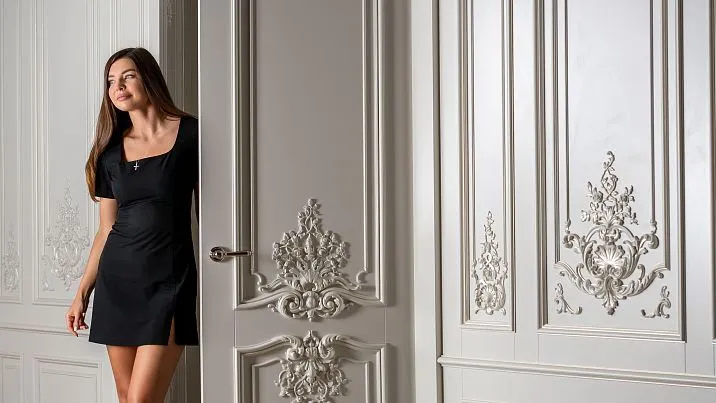
Beauty... What is it in the world of furniture? Why do some items make us stand in awe, while others leave us indifferent? Beautiful Italian furniture It has captivated the hearts of lovers of beauty around the world. It possesses that elusive magic which transforms an ordinary dwelling into a work of art, and everyday life into an aesthetic pleasure.
But what makes Italian furniture so appealing? It is not merely about flawless materials or virtuoso craftsmanship. The secret lies in a unique philosophy of beauty that permeates every line, every detail, every touch of the artisan to the material. Italians do not simply make furniture — they create poetry in wood, metal, fabric, and leather.
Imagine a morning in a home furnished with Italian furniture. Sunlight plays across polished surfaces, highlighting the natural beauty of wood. Each piece seems to tell its own story — of the artisan who created it, of traditions passed down from generation to generation, of a culture where beauty is not a luxury, but a necessity.


Aesthetic Revolution: How Italy Changed the Understanding of Beauty




Historical Legacy of Beauty
History beautiful Italian furniture It traces its roots back to the Renaissance, when Italy became the cradle of a new aesthetic. It was here that the understanding emerged that beauty must serve not only as decoration, but as a source of spiritual elevation. Furniture ceased to be merely a functional item — it became a means of self-expression, a way to create a harmonious living space.
The Florentine masters of the Medici era laid the foundations of what we today call Italian style. They understood: true beauty arises from the ideal balance of proportions, nobility of materials, and perfection of execution. Each piece was created as an artwork, intended not only for use but also for contemplation.
Venetian glassblowers taught the world to appreciate transparency and the play of light. Roman sculptors passed on to furniture makers an understanding of volume and form. Neapolitan decorators brought passion and emotion into design. Each region of Italy contributed to the formation of a unique aesthetic tradition.
But most importantly, Italians understood that beauty cannot be superficial. It must permeate the object from concept to the smallest detail. This understanding became the foundation of the Italian approach to furniture design, which has remained unchanged for centuries.
Our factory also produces:


Modern interpretation of classical canons
Modern Italian designers do not merely copy past examples — they creatively reinterpret classical principles of beauty, adapting them to the needs of the 21st century. Classic Italian furniture Today — it is a synthesis of eternal aesthetic values and modern functional requirements.
The golden ratio, discovered by ancient Greeks and developed by Renaissance masters, continues to define the proportions of modern Italian furniture. But now it is supplemented by ergonomic studies, psychology of spatial perception, and understanding of modern lifestyle.
Color harmony is built on the same principles as in the Renaissance era, but the palette expands thanks to new materials and coloring technologies. Natural wood tones are complemented by refined hues of modern finishes, creating a rich yet uncluttered color symphony.
Decorative elements evolve from Baroque opulence to modern minimalism, yet retain the core — the ability to move the soul, evoke an emotional response, and transform a functional object into a source of aesthetic pleasure.
Get Consultation
Philosophy of beauty in details: anatomy of Italian design
Proportions as the basis of harmony
At the foundation of each item beautiful Italian furniture lies a mathematically precise system of proportions. This is not cold calculation, but living geometry based on natural laws. Italian designers study human body proportions, plant-world ratios, architectural canons, creating furniture that intuitively appears correct and beautiful.
The height, width, and depth of each item are in harmonious relation to one another. But this is not mechanical adherence to formulas — it is creative use of mathematical principles to create visually perfect forms. Every line, every curve is calculated so that the eye perceives the item as a unified, cohesive artwork.
Special attention is paid to transitions between different structural elements. Sharp angles are softened by smooth radii, vertical lines are balanced by horizontal ones, heavy details are lightened by elegant accents. This work with form requires not only technical skill, but also a developed aesthetic sense.
Scaling also plays an important role in creating beautiful furniture. The item must harmoniously fit into space, not overwhelming it with its size, yet not disappearing into it. Italian designers create furniture of various scales — from intimate to monumental — but always taking into account the context of use.
Materials as carriers of beauty
The beauty of Italian furniture is inseparably linked to the quality of materials used. Solid wood furniture It demonstrates the natural beauty of wood — its texture, color, ability to change over time, acquiring a noble patina.
Each wood species has its own character of beauty. Oak impresses with the power and solidity of its texture. Walnut captivates with the play of light and shadow in its grain. Cherry wins with warmth and elegance of tones. Masters choose not just quality wood, but material with special aesthetic expressiveness.
Surface treatments transform raw material into a work of art. Polishing reveals the depth of wood, creating reflections. Brushing highlights natural texture, making it more expressive. Patination imparts an air of noble antiquity, linking the item to historical examples.
Metallic elements — Italian furniture hardware — also serve not only functional but also aesthetic purposes. Handles, hinges, decorative inlays are created as jewelry. Their shape, size, finish are carefully considered to create an overall composition.
Textile materials bring tactile beauty into furniture. Silk adds luxury, linen — naturalness, velvet — richness of texture. Each fabric is chosen not only for practical properties, but also for its ability to enhance the aesthetic impact of the item.
Color as an emotional language
Color solution beautiful Italian furniture — is the delicate art of creating an emotional atmosphere. Italian designers understand the psychology of color, using its ability to influence mood and create a specific impression.
Natural wood tones serve as the foundation of the color palette. But this does not mean limited choice — nature offers incredible variety of shades: from nearly white ash to dark wenge, from pink cherry to golden oak. Each shade carries its own emotional weight.
Additional colors are introduced delicately, through upholstery materials, decorative elements, hardware. Golden accents create a sense of luxury, silver — modernity, copper — warmth and coziness. Color contrasts are used to create visual accents, drawing attention to particularly important details.
Special attention is paid to the compatibility of furniture colors with the surrounding interior. Italian designers create not individual items, but elements of cohesive interior compositions. Color becomes the connecting link between different pieces of furniture.
Variety of styles: beauty in different forms
Neoclassical elegance
Neoclassical style in Italian furniture is a triumph of refined beauty based on eternal principles of harmony. Here, every detail adheres to strict compositional logic, yet radiates warmth and humanity.
Characteristic features of neoclassical beauty include noble restraint of forms, refined proportions, and craftsmanship bordering on perfection. Decorative elements are used sparingly, but each carries deep meaning and bears significant compositional weight.
Carved elements in neoclassical furniture exhibit exceptional refinement. This is not ornate baroque, but delicate carving that highlights structural elements and emphasizes functionally important details. Vegetal motifs, geometric ornaments, and classical symbols are executed with jewel-like precision.
Gold in neoclassicism is used sparingly, only to create refined accents. Matte gold is preferred over bright gold, creating an effect of noble antiquity. Silvering is also employed, especially in furniture with cool color palettes.
Modern minimalism
Minimalist approach to beauty
Minimalist form beautiful Italian furniture is extremely laconic. No unnecessary details, no random elements. Every line is functional and necessary. Beauty arises through perfect proportions, surface quality, and the play of light and shadow.
The color palette of minimalism is built on natural tones of materials. White, gray, black, natural wood tones — these colors allow focus on form, texture, and craftsmanship quality. Bright accents are used extremely rarely and only to create compositional centers.
Production technologies in minimalist furniture reach the peak of perfection. Every surface must be ideal, every joint invisible, every mechanism functioning flawlessly. Here, there is no possibility to hide flaws behind decoration — everything must be perfect.
Rustic authenticity
Rustic style offers a different approach to beauty — through emphasizing the naturalness of materials and preserving their inherent character. This is beauty without embellishment, grounded in honesty and authenticity.
Wood in rustic furniture retains its natural characteristics — knots, uneven textures, traces of time. These 'defects' are not concealed but highlighted, transforming into decorative elements. Each such inclusion tells the story of the wood, making the item unique.
Surface treatments in rustic style are minimal. Rough sanding preserves the material's texture, creating pleasant tactile sensations. Techniques of artificial aging — brushing, burnishing, mechanical damage — may be used to simulate natural wear.
Structural elements in rustic furniture are often displayed prominently. Visible joints, metal fasteners, rough assembly — all this creates a sense of reliability, solidity, and connection to traditional craftsmanship.
Functional categories: beauty for every room
Bedroom: sanctuary of rest and beauty
The bedroom is a special space where the beauty of furniture should contribute to rest, relaxation, and recovery of strength. Beds Italian design creations are not only functional items but also compositional centers of the bedroom, defining the character of the entire space.
Headboards become true works of art. Wood carving, upholstered stretchers, inlays, painting — all these techniques are used to create unique, memorable images. Yet, aesthetic expressiveness never compromises comfort.
Nightstands, chests, and dressing tables are designed as a unified ensemble with the bed. Unified style, materials, and color palette link individual items into a harmonious composition. Every detail — from handles to legs — is carefully considered.
Storage systems in the bedroom are addressed especially delicately. Wardrobes must be spacious and functional, yet not dominate the space. Italian designers create built-in systems that practically dissolve into the interior, or freestanding wardrobes perceived as decorative elements.
Living room: theater of everyday life
The living room is a space for communication, receiving guests, and family relaxation. Furniture here must not only be beautiful but also contribute to creating a warm, welcoming atmosphere. Each item plays its role in this theater of everyday life.
Sofas and chairs are the main actors in the living room. Their beauty is determined not only by appearance but also by their ability to create comfort for all present. Shape, size, upholstery are chosen so that the furniture facilitates communication while allowing each person to feel comfortable.
Coffee tables, consoles, and shelves complement the main furniture, creating functional zones for various activities. Reading, working with documents, tea drinking, games — appropriate surfaces and storage systems are provided for each activity.
Storage systems in the living room must be especially elegant, since they often remain in view. Bookcases, display cases, chests become decorative elements, showcasing collections, books, works of art. Their design should highlight the beauty of their contents.
Dining room: art of shared meals
The dining room is a place where food becomes art, and dining becomes a ritual of communication. Furniture here should create a solemn yet cozy atmosphere conducive to enjoying food and conversation.
Dining table — central element of the dining room. Its beauty is determined not only by materials and finish but also by its ability to unite people. The shape of the tabletop influences the nature of communication: a round table encourages equal dialogue, while a rectangular table creates a more formal atmosphere.
Chairs should not only be beautiful but also comfortable for long-term sitting. Backrest height, seat shape, angle of inclination — all affect comfort. Upholstery is chosen with practicality in mind — it should be easy to clean, yet still look elegant.
Buffets, sideboards, and dish cabinets create a functional dining area environment. They should be spacious but not bulky, elegant yet practical. Internal organization is thought out in detail — special places are provided for each type of dishware.
Technological aspects of beauty
Modern surface finishing methods
Beauty beautiful Italian furniture is largely determined by the quality of surface finishing. Modern technologies allow achieving effects unattainable with traditional methods, while preserving the natural beauty of materials.
Laser processing opens new possibilities for creating decorative elements. Delicate ornaments, complex textures, gradient transitions — all of this can be created with a laser. At the same time, the impact on the material is minimal, allowing to preserve its natural properties.
Plasma polishing creates mirror-like surfaces without using chemical compounds. This method is especially effective for metallic furniture elements — hardware, decorative inlays, legs. It results in a perfectly smooth surface with deep, rich luster.
Ultrasonic cleaning allows preparing surfaces for final finishing with micron-level precision. It removes the finest particles of dust, grease, and residues of previous coatings. This is critically important for achieving an ideal result in painting or polishing.
Nanotechnologies in finishing create coatings with unique properties. Self-cleaning surfaces, antimicrobial coatings, compositions that change color depending on lighting — all of this is already reality in the production of premium furniture.
Innovative materials
The search for new materials for creating beautiful furniture never stops. Traditional wood, metal, fabric are supplemented by innovative composites, which expand designers' possibilities and improve consumer properties of products.
Composite materials based on natural fibers retain the ecological nature of traditional materials, but have improved technical characteristics. They do not deform from moisture, do not crack from drying out, are not susceptible to pests.
Smart materials react to changes in the surrounding environment. Wood impregnated with special compounds can change color depending on temperature or humidity. This creates dynamic effects, bringing life to static furniture.
Recycled materials allow creating environmentally responsible furniture without compromising beauty. Restored wood from old buildings has a unique patina and texture. Recycled metal can have an interesting structure and color.
Hybrid materials combine properties of different components. Wood reinforced with carbon fiber becomes stronger than steel, yet retains its natural beauty. Fabrics with metallic threads acquire new visual and tactile qualities.
Psychology of beauty perception
The influence of color on emotional state
Furniture color solutions have a deep impact on a person's psychological state. Italian designers study color psychology, using its therapeutic properties to create a harmonious atmosphere in the home.
Warm tones of wood — oak, walnut, cherry — create a sense of coziness, safety, stability. They stimulate serotonin production, promote relaxation, improve rest quality. Such colors are ideal for bedrooms, living rooms, offices.
Cool tones — light beech, whitewashed oak, gray shades — have a refreshing, invigorating effect. They increase attention concentration, stimulate creative activity. These colors are suitable for work offices, children's rooms, kitchens.
Contrasting combinations create a dynamic atmosphere, stimulating activity. But they should be used carefully — excessive contrast may lead to fatigue, irritability. It is better to apply them locally, for creating accents.
Neutral colors — beige, gray-brown tones — create a calm base for interior design. They do not strain the eyes, allowing focus on the shape and texture of furniture. Such colors are universal and suitable for any room.
Tactile sensations and their role in beauty perception
The beauty of furniture is perceived not only by the eyes, but also by the hands. Tactile sensations play an important role in forming an impression of the product, influencing emotional attitude toward it.
Smooth polished surfaces are associated with luxury, perfection, high quality. Touching such a surface brings pleasure, evokes positive emotions. This is especially important for furniture that a person frequently interacts with.
Textured surfaces create a sense of naturalness, closeness to nature. Brushing wood, preserving natural stone texture, using fabrics with pronounced texture — all of this appeals to basic human instincts.
Material temperature also affects perception. Wood always seems warm, creating a sense of coziness. Metal may feel cold, associated with modernity, technology. Stone occupies an intermediate position, symbolizing reliability and eternity.
Material elasticity affects the subconscious level. Soft upholstery creates a sense of comfort, safety. Elastic materials are associated with energy, dynamism. Rigid surfaces are perceived as reliable, stable.
Cultural aspects of beauty
Regional characteristics of Italian design
Italy is a country with a rich regional culture, and this is reflected in the diversity of approaches to creating beautiful Italian furnitureEach region contributed to the formation of the national style, creating unique traditions and techniques.
Tuscany gave the world an understanding of noble simplicity. Tuscany furniture is characterized by clear forms, quality materials, restrained decoration. Here, the natural beauty of wood, stone, and metal is valued. The color palette is built on natural shades of earth, sky, and vegetation.
Venice introduced theatricality, play of light and color into furniture art. Venetian masters skillfully work with glass, creating unique effects of transparency and reflection. Gold leaf here is used not for luxury, but to create light accents.
Rome gave an understanding of monumentality, grandeur of forms. Roman furniture impresses with its scale, solidity, and connection to ancient traditions. Here, form follows function, yet expresses ideas of power, dignity, and eternity.
Milan is the capital of modern Italian design. Milanese furniture is distinguished by innovation, bold solutions, and use of the latest technologies. Here, trends are born that then spread around the world.
Influence of Art on Furniture Design
Italian furniture has always developed in close connection with visual arts. Painting, sculpture, and architecture influenced the shaping of forms, color solutions, and decorative techniques of furniture makers.
Painting traditions are reflected in the color compositions of furniture. The Venetian school of painting, with its richness of color, influenced the development of coloring and decorative techniques. Florentine masters adopted from artists an understanding of chiaroscuro, the play of light on surfaces.
Sculptural traditions determined the approach to creating three-dimensional forms. Carved elements of furniture are created according to the same principles as sculptural works. Understanding of plasticity, movement, and emotional expressiveness of form is transferred from marble to wood.
Architectural principles influence the structure of furniture, its proportions, compositional arrangement. Furniture is perceived as miniature architecture, where every detail has both constructive and aesthetic significance.
Decorative and applied arts provided furniture makers with a rich arsenal of ornamental motifs, decorative techniques, and methods of working with various materials. Majolica, mosaic, inlay — all these techniques found application in furniture art.
Modern Trends and the Future of Beauty
Ecological Aesthetics
Modern understanding of beauty is inseparably linked with ecological responsibility. Beautiful Italian furniture The future should not only be aesthetically perfect, but also ecologically safe.
Use of renewable materials is not only an ethical requirement, but also a source of new aesthetics. Fast-growing wood species, recycled materials, biodegradable composites open up new possibilities for design.
Energy-efficient production technologies influence furniture design. Products are created taking into account minimization of energy consumption during production, transportation, and use. This requires new approaches to construction and material selection.
The concept of circular economy changes the view on the life cycle of furniture. Products are designed with the possibility of disassembly, recycling, and reuse of components. Beauty should not only be eternal, but also renewable.
Biomorphic forms inspired by natural models become a source of new aesthetics. Studying the structures of living organisms provides ideas for creating more perfect, functional, and beautiful forms.
Personalization and Individualization
The future of beautiful furniture is linked to the possibility of full customization for a specific user. Mass customization will allow each person to obtain a unique product perfectly suited to their needs and tastes.
Parametric design allows creating an infinite number of variations of basic forms. By changing parameters in a computer program, one can obtain furniture precisely to the dimensions of the room, the user's anatomical features, and their aesthetic preferences.
Additive technologies (3D printing) open up possibilities for creating complex forms inaccessible through traditional manufacturing methods. This is especially promising for decorative elements, hardware, and small details.
Interactive furniture, responding to the presence and behavior of the user, creates new opportunities for personalization. Lighting, color, even shape can change depending on the needs of the moment.
Artificial intelligence helps create personalized design by analyzing the user's preferences, lifestyle, and usage patterns of furniture. Machine learning allows creating products that improve over time, adapting to changing needs.
Beauty is a subjective concept, but Beautiful Italian furniture it possesses a special ability to find resonance in the hearts of people of different cultures and ages. The secret to this universality lies not in following fashion trends, but in appealing to eternal principles of harmony, proportion, and quality.
Each item is born from a deep understanding of human needs — not only physical, but also emotional, aesthetic, and spiritual. Masters create not just functional objects, but environments for a full life, spaces for self-expression, and daily sources of inspiration.
Investing in beautiful Italian furniture is investing in quality of life. Every day spent surrounded by beautiful things makes us a little happier, more confident, and more harmonious. Beauty is not luxury — it is necessary for a full human life.
Conclusion
The world of beautiful Italian furniture is a universe where every detail matters, where traditions and innovations create a symphony of perfection, where beauty serves not as decoration, but as the foundation of human comfort and well-being.
In an era of rapid changes and superficial solutions, Italian furniture remains an island of stability and quality. It reminds us of the importance of beauty in everyday life, the value of craftsmanship, and that true perfection is achieved only through attention to detail.
Choosing beautiful Italian furniture means choosing not just decorative items — we choose a philosophy of life where quality matters more than quantity, where beauty is not a luxury but a necessity, where each day begins with joy from contemplating the beautiful.
The future of this industry is linked to further development of technologies, emergence of new materials, and changes in people's lifestyles. But core principles — striving for perfection, respect for traditions, understanding human needs — will remain unchanged.
Beauty will save the world — these words of Dostoevsky take on special meaning when it comes to creating spaces for living. Every beautiful item in our home makes the world a little better, kinder, more harmonious. And in this great work of transforming the world, Italian furniture plays far from a minor role.
The company STAVROS embodies the best traditions of creating beautiful furniture, combining on its own production the centuries-old secrets of Italian craftsmanship with modern technologies and understanding of Russian consumer needs. In STAVROS production workshops, furniture is born that does not fall short of the best Italian examples in beauty and quality, but surpasses them in adaptation to Russian usage conditions. Every STAVROS item is created as a work of art — with careful selection of materials, meticulous attention to details, flawless execution quality. Own production allows controlling all stages of furniture creation, guaranteeing consistently high quality and the possibility of realizing the boldest design ideas. STAVROS masters do not merely manufacture furniture — they create beauty that will delight owners for many years, becoming an inseparable part of their lives and family history.


