Article Contents:
- Purpose of consoles: when decor becomes function
- Visual support: creating structural logic
- Stylistic enrichment: turning function into art
- Scaling elements: enhancing architectural resonance
- Space zoning: vertical accents
- Typology of forms: from antiquity to modernism
- Classical consoles: order logic
- Baroque consoles: organic opulence
- Renaissance consoles: geometric clarity
- Art Nouveau: organic nature
- Modern minimalist consoles: form without ornament
- Console installation: reliability technologies
- Decorative installation: adhesive bonding
- Functional installation: hidden reinforcement
- Ceiling console installation: working with cornices
- Corner consoles: joining planes
- Application of consoles: from cornices to tables
- Under ceiling cornices: order system
- Under wall shelves: function and aesthetics
- Console tables: furniture without legs
- Under beams and false beams: imitation of load-bearing structures
- Fireplace portals: framing the fire
- Load-bearing capacity: structural reality
- Physical properties of polyurethane
- Calculation of permissible load
- Metal reinforcement: hybrid construction
- Finishing: material imitation
- Wood imitation: texture and color
- Stone imitation: marble, granite, limestone
- Metallization: bronze, copper, silver, gold
- Monochrome: modern interpretation
- Frequently asked questions about polyurethane corbels
- Conclusion: architectural logic in details

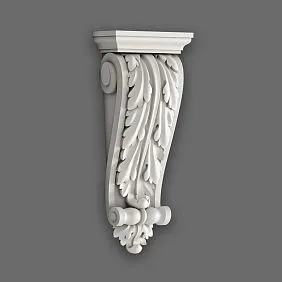
A corbel is an architectural element projecting from a wall, supporting a horizontal structure (beam, cornice, shelf) or creating the illusion of such support. Historically, corbels were carved from stone—medieval castles, Gothic cathedrals, Renaissance palaces preserve stone brackets supporting balconies, vaults, cornices. Stone is heavy, expensive, and requires professional carving.Polyurethane molding corbelrevolutionizes decorative construction—corbels are cast in molds taken from historical samples, reproduce carving with millimeter precision, weigh twenty times less than stone, and are mounted with adhesive without mechanical fasteners for decorative functions. Polyurethane is moisture-resistant (does not deteriorate in bathrooms, kitchens, on facades), paintable (imitates wood, stone, metal through skilled painting), durable (lasts for decades without cracking, crumbling, deformation).
Corbel classification is determined by function and location. Wall-mounted (attached to a vertical wall, project horizontally—support a shelf, cornice, console table top). Ceiling-mounted (attached to the ceiling, project downward—decorate the wall-ceiling junction, visually enhance the cornice, create the illusion of a load-bearing structure). Corner (installed in corners where walls meet at ninety degrees—support a corner shelf, decorate the corner, uniting two planes). The load-bearing capacity of polyurethane corbels is limited—the material is decorative, not structural. A pure polyurethane bracket can withstand up to five kilograms without deformation. For greater loads (shelf with books, heavy table top), hidden reinforcement is required—a metal angle bracket or wooden beam is mounted inside the corbel, and the corbel becomes a decorative shell over the actual structural element.


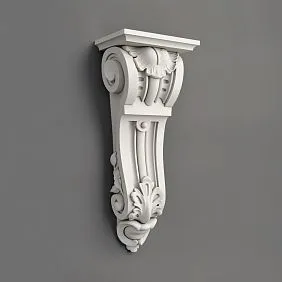
Purpose of a corbel: when decor becomes function
Why install a corbel? Historically—a structural necessity. A stone wall, a wooden floor beam projecting outward requires support—the corbel transfers the load from the beam to the wall. Today, the function has shifted—the corbel is decorative first and foremost.




Visual support: creating structural logic
A shelf hangs on the wall, secured with hidden anchors. Visually, it appears suspended, floating, illogical—what holds it up? Installingdecorative corbelsunder the shelf creates visual logic—the shelf rests on brackets. The actual load is borne by the anchors inside the wall, the corbels are decorative, but perception changes—the structure reads as understandable, traditional, architecturally correct.
Our factory also produces:
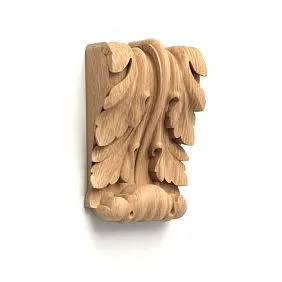
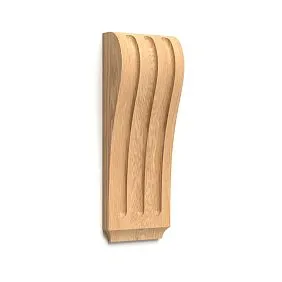
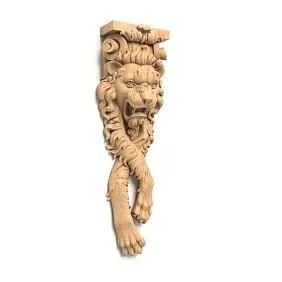


Stylistic enrichment: turning function into art
A simple wooden shelf—a functional element, nothing more. The same shelf with carved polyurethane corbels underneath—an item of decorative art. Baroque corbels (acanthus scrolls, lush, voluminous) turn the shelf into an element of a palace interior. Neoclassical corbels (strict, with Ionic volutes, palmettes) add aristocracy. Art Nouveau corbels (stylized plant motifs, flowing lines) create artistry.
Get Consultation
Scaling elements: enhancing architectural impact
A cornice ten centimeters wide runs along the ceiling perimeter—present, but not dominant. Corbels are installed under the cornice (every meter to meter and a half along the walls)—the cornice is visually enhanced, appears more massive, significant, architectural. Corbels create rhythm (repeating vertical accents at equal intervals), add volume (project more than the cornice, create play of light and shadow), transform a simple molding into an architectural order.
Zoning space: vertical accents
A long wall in a dining room, kitchen, living room is monotonous. Installing corbels at equal distances with shelves above them divides the wall into rhythmic sections. Each section—a potential zone (between corbels—a painting, mirror, decorative composition). Corbels work as vertical pilasters—articulate the plane, create structure, eliminate monotony.
Typology of forms: from antiquity to modernism
The form of a corbel is determined by the interior style, the era being reproduced or interpreted.
Classical corbels: order logic
Antiquity created the corbel as an architectural element—a modillion (corbel under the cornice of the Corinthian order), a bracket of the Ionic entablature. The form is determined by function—an S-shaped profile (top wide, attaches to wall or ceiling, middle narrows, bottom widens, supports the cornice). Decoration is restrained—volutes (Ionic scrolls), egg-and-dart (a row of egg-shaped elements), bead-and-reel (a pearl string).
Application of classical corbels. Neoclassical interiors (living rooms, dining rooms, studies—where reference to antiquity, aristocracy, cultural depth is important). Under cornices (visually enhance the order system—wall as colonnade, cornice as entablature, corbels as modillions). Under shelves (bookshelves, shelves for antiques—classical corbels emphasize the value of stored items).
Baroque corbels: organic opulence
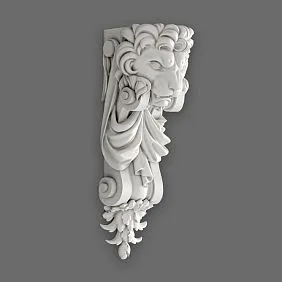
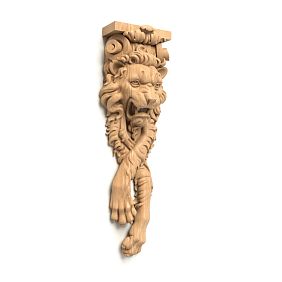
Baroque explodes classical restraint. A Baroque corbel—not S-shaped geometry, but organic sculpture. Acanthus leaves wrap the form, scrolls spill beyond boundaries, putti (winged infants) support the cornice with their hands, mascaron (masks, faces) gaze from the corbel, fruits, flowers, grape clusters hang. The form is asymmetrical (Baroque allows deviations from strict symmetry), voluminous (deep relief, multi-level), dynamic (sense of movement, growth, life).
Application of Baroque corbels. Luxurious interiors (palatial living rooms, formal halls, boudoir bedrooms—where theatricality is appropriate). Under mantel shelves (corbels flank the fireplace, create a portal, framing). Under interior balconies (double-height spaces in private homes—a second-floor balcony overlooking the living room is visually supported by Baroque corbels). As standalone decor (corbel on a wall without a shelf—purely decorative element, sculptural accent).
Renaissance corbels: geometric clarity
The Renaissance returns to antiquity but reinterprets it. The Renaissance console is geometric—rectangular blocks, clear lines, strict symmetry. Decoration is present but subordinate to geometry—rosettes in the centers of square blocks, meanders along the edges, stylized acanthus (not Baroque chaos, but an ordered pattern).
Application of Renaissance consoles. Studies, libraries (where an intellectual atmosphere, seriousness, and balance are important). Under shelves for books, sculptures, collections (Renaissance consoles create a museum effect—objects are presented as exhibits). In combination with wooden paneling (walls clad in wood—polyurethane consoles painted to resemble wood continue the materiality of the walls).
Art Nouveau: the organic nature
The Art Nouveau console (Art Nouveau, early twentieth century)—stylized nature. The form imitates a tree trunk, branch, root, climbing plant. Lines are smooth, curved, without right angles. Decoration is floral—leaves, flowers, but not lush Baroque ones, rather stylized and graphic (irises, lilies, poppies—plants characteristic of Art Nouveau). Natural asymmetry (as in nature—branches grow unevenly).
Application of Art Nouveau consoles. Interiors in the Art Nouveau style (rarely encountered, but necessary for authentic projects). Dining rooms, living rooms with a fireplace (consoles under the mantel shelf, imitating wooden branches—a natural accent). In combination with stained glass, curved furniture, floral patterns on wallpaper (creating a cohesive period style).
Modern minimalist consoles: form without ornament
Minimalism does not abandon consoles, it simplifies the form. A minimalist console—a rectangular block, trapezoid, triangle without decoration. Pure geometry, sharp edges, monochrome coloring (white, gray, black—without material imitation). Function—visual support for a shelf, creating a shadow accent (a white console on a white wall is revealed by the shadow it casts).
Application of minimalist consoles. Modern interiors (minimalism, Scandinavian style, contemporary—where ornament is excessive). Under floating shelves (the shelf is attached with hidden fasteners, consoles underneath provide minimal visual support—a hint of structure, nothing more). In monochrome spaces (white on white—the console is revealed by form and shadow, not color or ornament).
Console installation: reliability technologies
How to attach a polyurethane console? Depends on the function—decorative (does not bear load) or functional (supports a shelf with weight).
Decorative installation: adhesive bonding
A purely decorative console (under a cornice, on a wall without a shelf, under a false beam) is attached with polyurethane adhesive. Technology: the wall (or ceiling) surface is cleaned of dust, primed. The console is test-fitted (position marked with a pencil). Adhesive is applied to the back of the console (in strips along the perimeter of contact with the surface, dots in the center—not a continuous layer, excess will squeeze out). The console is pressed against the wall, held for a minute (adhesive sets). Additional temporary fixation (painter's tape, support from below) for two to three hours until the adhesive fully cures. After twenty-four hours, the console holds firmly, withstands its own weight, mechanical impacts (accidental bumps, touches).
Advantages of adhesive installation. Simplicity (does not require drilling, dowels, screws). Aesthetics (no visible fasteners, the console looks solid, organically integrated). Speed (installation of one console—five to ten minutes).
Limitations. Does not withstand significant loads (up to five kilograms maximum). Requires a flat surface (on a curved wall, adhesive will not provide uniform contact, the console will detach).
Functional installation: hidden reinforcement
A functional console (under a shelf with books, under a console table top, under a heavy cornice) requires reinforcement. Technology: inside the polyurethane console (if hollow—many consoles are cast hollow to reduce weight) a metal angle bracket, wooden block, or steel plate is mounted. The bracket is attached to the wall with anchors, dowels (withstands tens of kilograms). The shelf is placed on top of the bracket. The polyurethane console is placed over the bracket like a decorative cover, glued from below and the sides, concealing the metal structure. Visually—the shelf rests on a beautiful molded console. In reality—the load is borne by the metal bracket, the console is decorative.
Reinforcement calculation. Shelf one meter long, twenty-five centimeters deep, three rows of books—weight up to fifty kilograms. Two consoles under the shelf (at the edges). Each console must withstand twenty-five kilograms. Metal angle bracket fifty by fifty millimeters, thickness three millimeters, length twenty centimeters (depth of console), attachment to the wall with four anchors eight millimeters in diameter—withstands up to eighty kilograms. Twofold safety margin—reliable.
Installation of ceiling consoles: working with cornices
A console under a ceiling cornice is attached simultaneously to the ceiling and the cornice. Sequence: the cornice is installed (glued around the room perimeter). The console is test-fitted (upper part touches the ceiling, lower part—the cornice). Adhesive is applied to both surfaces of the console (top—for contact with ceiling, bottom—for contact with cornice). The console is pressed, temporarily fixed (support, tape) until the adhesive dries. After drying, the joint between the console and cornice is filled with acrylic putty (seam becomes invisible), sanded, painted together with the cornice.
Rhythm of consoles under a cornice. Distance between consoles depends on room size, ceiling height, cornice width. For small rooms (twenty-thirty square meters)—consoles every one to one and a half meters (six-eight consoles around the perimeter). For large spaces (fifty-one hundred square meters)—consoles every meter (twelve-sixteen consoles). Too sparse consoles (every three-four meters) do not create rhythm, too frequent (every fifty centimeters) overload.
Corner consoles: joining planes
A corner console is installed in a corner where two walls meet at ninety degrees. Console shape—two wings (each adjacent to its wall), central volume (protrudes from the corner). Installation: both walls in the corner are primed. Adhesive is applied to both wings of the console. The console is inserted into the corner (centering is critical—the console must sit exactly in the corner, not shifted toward one wall), pressed. Temporary fixation (spacer between console and opposite wall, support from below) until adhesive dries.
Application of corner consoles. Under corner shelves (triangular or curved shelf fitted into the corner, console underneath provides visual support). In corners under cornices (reinforce corner junction of cornices, make corners accents, not problem areas). As standalone decor (corner console without a shelf—decorative element, softening the rigidity of a right angle, adding plasticity).
Application of consoles: from cornices to tables
Where arePolyurethane bracketsinstalled? The application spectrum is broad.
Under ceiling cornices: order system
A cornice without consoles—a horizontal line. A cornice with consoles—an architectural order. Consoles are installed vertically under the cornice at equal intervals, creating rhythm, dividing the ceiling perimeter into sections. Effect—the ceiling is perceived as an architectural structure (consoles act as capitals of invisible pilasters, the cornice as an entablature), the room gains monumentality, status, historical depth.
Stylistic variants. Classicism—consoles are strict (Ionic volutes, minimal ornament), rhythm uniform, color white. Baroque—consoles are lavish (acanthus scrolls, putti), rhythm can be uneven (larger consoles in corners, smaller along walls), color gilded or white with gold accents. Empire—consoles with palmettes, laurel wreaths, strict, color white or bronze.
Under wall shelves: function and aesthetics
A shelf in the kitchen (for dishes, jars, decor), in the living room (for books, photos, collections), in the bathroom (for towels, cosmetics) looks complete when it rests on consoles.Polyurethane console moldingunder the shelf adds stylistic belonging — the shelf ceases to be a utilitarian IKEA element, becomes part of a stylistically thought-out interior.
Number of consoles under the shelf. Shelf up to a meter long — two consoles (at the edges, stepping back ten to fifteen centimeters from the edge). Shelf from one to two meters — three consoles (two at the edges, one in the center). Shelf over two meters — four consoles (evenly distributed). Consoles not at the very edges of the shelf (set back ten to twenty centimeters from the edge) — visually the shelf overhangs the consoles, creating dynamism, lightness, the consoles do not look like a crude support.
Console tables: furniture without legs
A console table (console-furniture, not an architectural console) — a narrow table placed against a wall, often without rear legs (the tabletop rests on the front legs and is attached to the wall). Decorative polyurethane consoles are installed under the tabletop of a console table instead of rear legs or in addition to them. The effect — the tabletop rests on carved brackets, visually floats, the rear support is not a massive leg, but an elegant molded console.
Installation of a console table. The tabletop (wood, MDF, glass) is attached to the wall with metal brackets (hidden from the inside). Polyurethane consoles are installed under the tabletop decoratively (glued to the wall and to the underside of the tabletop). The front legs (wooden, metal) bear part of the weight, the consoles are decorative, but create visual logic — the tabletop rests on consoles and legs, the structure reads as understandable.
Styles of console tables. Baroque — consoles are lush, gilded, tabletop is marble or painted to resemble marble, legs are curved and carved. Neoclassical — consoles are strict, white or painted to match the walls, tabletop is wooden or glass, legs are straight and turned. Modern — consoles are stylized plant-like, tabletop with smooth edges, legs are curved and organic.
Under beams and false beams: imitation of load-bearing structures
Decorative beams on the ceiling (false beams, imitating wooden load-bearing beams) are installed to create the effect of a country house, chalet, loft. Consoles under the beams enhance the illusion — the beam is not just glued to the ceiling, but rests on consoles, which transfer the load to the walls. In reality, the beam is hollow and light, the consoles are decorative, but the effect is convincing.
Placement of consoles under beams. Consoles are installed where the beam intersects the wall or adjoins it. If the beam runs along the room (from wall to wall) — consoles at both ends of the beam (the beam rests on consoles at the walls). If the beam crosses the room (perpendicular to the wall) — consoles where the beam intersects imaginary pilasters or columns (creating a beam-console-pilaster system, imitating a wooden frame).
Fireplace portals: framing the fire
A fireplace (functional or electric decorative) requires architectural framing — a portal. The portal consists of vertical elements (pilasters, columns) and a horizontal finish (mantel shelf). Consoles are installed under the mantel shelf (on both sides, on pilasters or the wall) — visually support the shelf, create completeness of the composition.
Stylistics of fireplace consoles. Classical fireplace — consoles are strict (volutes, egg-and-dart, beads), painted white or to resemble marble. Baroque fireplace — consoles are lush (acanthus scrolls, mascaron, fruit garlands), gilded or painted to resemble bronze. Modern fireplace (minimalist, with a glass firebox) — consoles are simple geometric (rectangular blocks, trapezoids), monochrome (matching the walls or contrasting black, graphite).
Load-bearing capacity: reality of the structure
Can a polyurethane console bear a load? Yes, but limitedly.
Physical properties of polyurethane
Density of polyurethane for molding — two hundred to three hundred kilograms per cubic meter (light material, two to three times lighter than wood, five to seven times lighter than plaster). Compressive strength — fifteen to twenty-five kilopascals (polyurethane withstands weight but deforms under significant load). Flexural strength — five to ten kilopascals (weaker than compressive — a console working in bending requires reinforcement).
Calculation of permissible load
Console size twenty centimeters high, fifteen deep, eight thick. Contact area with the wall — twenty by eight centimeters (one hundred sixty square centimeters). Polyurethane adhesive holds two to three kilograms per ten square centimeters. Contact one hundred sixty square centimeters — holds up to thirty to forty kilograms (but this is the strength of the adhesive joint, not the polyurethane).
The console protrudes fifteen centimeters from the wall. A load (edge of the shelf) is placed at the edge of the console (fifteen centimeters from the wall). The load creates a bending moment. Polyurethane under a load of more than five kilograms begins to deform (sag). Conclusion: a polyurethane console without reinforcement reliably withstands up to five kilograms at a distance of fifteen centimeters from the wall. For larger loads, reinforcement is necessary.
Reinforcement with metal: hybrid construction
A metal angle, steel plate, or wooden block is inserted inside the polyurethane console (if hollow). The metal is attached to the wall with anchors (independently of the polyurethane). The polyurethane is placed over the metal as a decorative shell, glued to the wall around the metal structure. The load is borne by the metal (withstands hundreds of kilograms), the polyurethane is decorative.
Example of a hybrid console. Shelf one and a half meters long, three consoles under it (two at the edges, one in the center). Each console contains a steel angle fifty by fifty millimeters, thickness four millimeters, length twenty-five centimeters (depth of the console). The angle is attached to the wall with four anchors. On the shelf — books, weight up to sixty kilograms (twenty kilograms per console). The metal withstands without deformation, the polyurethane hides the metal, creates aesthetics.
Finish: imitation of materials
White primed polyurethane — a neutral base. Finish painting turns the console into an element of wood, stone, metal.
Imitation of wood: texture and color
The console is painted to resemble wood (oak, walnut, mahogany, wenge) using a multi-layer technique. Base layer (light brown, beige) — foundation. Second layer (dark brown, diluted with water to semi-transparency) is applied with a sponge, creating unevenness (imitation of wood grain). Third layer (dry brush — stiff brush, almost dry, with minimal dark paint) is brushed over the console's relief, highlighting the protrusions (light), depressions remain dark. Finish — matte varnish (protects, gives the noble matte finish of wood).
Detailing the texture. For advanced imitation: thin brush strokes are applied (imitation of wood fibers), uneven, with breaks, with small branches. Sponge adds spots (imitation of knots, wood irregularities). Effect — the console is visually indistinguishable from carved wood.
Imitation of stone: marble, granite, limestone
The console is painted to resemble stone using sponge and brush techniques. For marble: a base layer of white or cream (the color of marble). Gray and light brown spots (imitating marble veins) are applied with a sponge (sea sponge with uneven texture) — light touches, uneven. Veins (dark gray, black, winding, with branches — characteristic of marble) are drawn with a thin brush. Glossy varnish (polished marble shines) or matte (honed marble is matte) — depending on the desired effect.
For granite: a base layer of gray (the color of granite). Small black, white, light gray, beige dots (imitating the granular structure of granite) are applied with a sponge — densely, covering the surface. Matte varnish (granite is rarely polished to a gloss).
For limestone: a base layer of beige, light brown (warm stone). A light texture (unevenness, porosity of limestone) is created with a sponge. Matte varnish or wax (limestone has a velvety surface).
Metallization: bronze, copper, silver, gold
The console is painted with metallic paints (acrylic paints with metallic pigment). For bronze: bronze-colored paint (dark gold with a greenish, brownish tint) is applied in two layers. Patination (green patina — verdigris — in the recesses of the ornament) creates the effect of oxidized bronze, antique, museum-like. Matte varnish fixes it.
For copper: copper-colored paint (reddish gold) is applied evenly. Patina is dark brown (in recesses) or green (oxidized copper). Semi-matte varnish (copper shines, but not glossy).
For silver: silver-colored paint (cold shine) is applied evenly. Patina is black (in recesses, creates contrast) or gray (aged silver). Semi-gloss varnish.
For gold: gold-colored paint (yellow, white, red gold — shades to choose from) is applied in two to three layers (gold requires dense coverage). Patina is dark brown, black (in the recesses of the ornament, reveals details). Glossy varnish (gold shines) or matte (matte antique gold).
Monochrome: a modern interpretation
The console is painted in one color (without imitations, textures, patinas). A white console on a white wall (classic minimalism, the console is revealed by its relief). A black console on a light wall (dramatic contrast, graphic quality). A gray console on a gray wall (monochrome, sophistication). A colored console (blue, green, terracotta) on a neutral wall (a modern accent).
Frequently asked questions about polyurethane consoles
Can polyurethane consoles be used on building facades?
Yes, facade polyurethane (density three hundred to three hundred fifty kilograms per cubic meter, with UV stabilizer additives) withstands external conditions. Consoles are installed under facade cornices, under balconies (decoratively), above windows (as architectural accents). Installation: facade polyurethane adhesive, additionally — mechanical fastening (the console is screwed to the wall with self-tapping screws through a flange, screws are covered with decorative rosettes). Painting with facade paints (acrylic, silicone — weather-resistant, do not fade, do not crack). The service life of facade consoles is twenty to thirty years without restoration.
What is the difference between a console and a bracket?
Terminologically — synonyms. Console (from French console) — an architectural term denoting a protruding element, one end is fixed, the other is free. Bracket (from German Kragstein) — a technical term denoting a support element. In practice: console is more often used for a decorative element (a molded console under a cornice), bracket — for a functional one (a metal bracket for a shelf). But for polyurethane elements, the terms are interchangeable.
How much does a polyurethane console measuring 30x20x10 cm weigh?
The volume of the console (if solid) — thirty by twenty by ten centimeters — six thousand cubic centimeters (six liters, zero point zero zero six cubic meters). Polyurethane density is two hundred fifty kilograms per cubic meter. Weight — zero point zero zero six multiplied by two hundred fifty — one and a half kilograms. In reality, consoles are cast hollow (walls one to two centimeters thick, hollow inside) — weight is reduced to seven hundred to nine hundred grams. For comparison: a similar plaster console weighs four to five kilograms, a carved wooden one — two to three kilograms.
How to glue a console to a drywall wall?
Drywall is a weak material, it only holds through a frame (metal or wooden, to which the drywall is screwed). For a decorative console (not load-bearing): adhesive is applied to the console, the console is pressed against the drywall. The adhesive holds the console (weight less than a kilogram), the drywall withstands it. For a functional console (under a shelf with weight): the console must be attached to the frame through the drywall. Technology: holes are drilled at the installation site (the metal profile of the frame is found with a magnet or metal detector), self-tapping screws (long, reaching the profile) are screwed through the console and drywall into the profile. The console is held by self-tapping screws secured in the frame. The screw heads are puttied, sanded, painted — become invisible.
Is it possible to manufacture a console of an individual shape?
Yes, the technology allows it. Process: the customer provides a sketch, photo of the desired console or description (dimensions, style, ornaments). A sculptor creates a master model (from plasticine, wax, clay) or the model is milled on a CNC machine (from a 3D file). A silicone mold is taken from the master model. Polyurethane is poured into the mold, the console is cast. The cost of custom production is from fifteen to fifty thousand rubles (depends on complexity, size, batch). Minimum batch — from five to ten pieces (covers the mold cost).
How to care for polyurethane consoles?
Minimal care. Dust is removed with a dry soft brush, duster, vacuum with a soft attachment (especially for consoles with deep relief, where dust accumulates in recesses). Stains (accidental marks) are wiped with a damp cloth and mild detergent (for painted consoles). Do not use abrasives (scratch the painted surface), aggressive chemicals (solvents, acids — damage polyurethane and paint). Repainting — every ten to fifteen years (if the paint has faded, worn out, become tiresome) — the surface is easily sanded (removing the gloss of the old paint), primed, repainted.
Conclusion: architectural logic in details
Polyurethane molding corbel— an element that turns functional structures into architectural compositions. A shelf ceases to be a utilitarian object — the consoles beneath it create visual logic, stylistic belonging, aesthetic value. A cornice without consoles is a molding. A cornice with consoles is an entablature of a classical order, an architectural system referencing antiquity. A console table with polyurethane brackets gains lightness — the tabletop floats, resting on elegant carved elements instead of massive legs. Ceiling beams with consoles are read as load-bearing structures (though decorative), creating a convincing illusion of a wooden frame of a country house, chalet, loft.
The typology of forms covers all historical styles. Classical consoles (S-shaped profile, volutes, egg-and-dart) — for neoclassical interiors, studies, libraries, where an antique reference, intellectual atmosphere is important. Baroque consoles (acanthus scrolls, putti, organic sculptural quality) — for luxurious spaces, palace living rooms, grand halls, where theatricality, decorative excess is appropriate. Renaissance consoles (geometric clarity, symmetry, restrained ornament) — for serious rooms, museum interiors, collection spaces. Art Nouveau (stylized nature, flowing lines, plant motifs) — for artistic interiors, dining rooms, living rooms with fireplaces, where nature becomes decoration. Minimalist consoles (pure geometry without ornament) — for modern spaces, where function is more important than decorativeness, form is valued for its conciseness.
Installation is adapted to function. Decorative consoles (non-load-bearing) are attached with adhesive — simple, quick, without visible fasteners. Functional consoles (under shelves with weight, under tabletops) require hidden reinforcement — a metal angle, a wooden block inside the polyurethane shell, attachment to the wall with anchors. The load-bearing capacity of polyurethane is limited (up to five kilograms without reinforcement), but a hybrid construction (metal + polyurethane decor) withstands tens of kilograms, looks like a solid carved console. Finishing turns neutral white polyurethane into any material — wood (multi-layer painting, imitation of texture, wood grain), stone (marble, granite, limestone — sponge technique, veins, granular texture), metal (bronze, copper, silver, gold — metallic paints, patination, oxidation effect), monochrome (modern color solutions without imitations).
The company STAVROS offers comprehensive solutions for architectural decoration using polyurethane consoles. The catalog includes over one hundred and fifty console models — from miniature (height fifteen to twenty centimeters, for small shelves, fireplace portals) to monumental (height fifty to seventy centimeters, for large cornices, facades, grand interiors). Stylistic coverage — classicism, baroque, renaissance, rococo, empire, art nouveau, modern minimalism. Material — polyurethane with a density of two hundred fifty kilograms per cubic meter (interior decor) and three hundred fifty (facade decor), primed with white acrylic primer, ready for installation or painting.
Artistic finishing services are available in the STAVROS workshops. Painting to resemble wood (oak, walnut, mahogany, wenge, ash — multi-layer technique, imitation of texture, wood grain, knots). Painting to resemble stone (white, gray, black marble; gray, red granite; beige, cream limestone — sponge technique, veins, granular texture). Metallization (yellow, white, red gilding; bronzing; silvering; copper — metallic paints, patination, protective varnishes). Monochrome painting (tinting to any RAL color — white, black, grays, colors — matte or semi-matte paints, velvety surface). Custom painting (artistic detailing, color accents, unique effects — turns a standard console into an author's work).
Designer consultations help select consoles stylistically correctly. For a neoclassical interior, classical consoles (S-shaped, with volutes, egg-and-dart) are recommended, medium size (twenty-five to thirty-five centimeters in height), color white or monochrome (matching the walls), placement under cornices (rhythmically, every meter to one and a half meters) or under shelves (two to three consoles evenly). For baroque — lush consoles (acanthus, with putti, fruit garlands), large size (forty to sixty centimeters), color gilded or white with gold accents, abundant placement (under cornices frequently, under a mantel shelf two large consoles, on walls as independent decor). For minimalism — geometric consoles (rectangular, trapezoidal, without ornament), small size (fifteen to twenty centimeters), color monochrome (white on white, gray on gray, black contrasting), laconic placement (under one shelf, under a cornice rarely — only in corners).
Installation crews install consoles professionally. Decorative consoles are glued with polyurethane adhesive (temporary fixation with painter's tape, supports until dry). Functional consoles are reinforced with hidden metal (brackets, plates are attached to the wall with anchors, the console is placed over the metal and glued like a decorative cover). Consoles under cornices are installed after the cornice is mounted (glued to the ceiling and cornice, joints are puttied, sanded, painted together with the cornice — seams are invisible). Corner consoles are centered precisely (laser level, tape measure — the console sits exactly in the corner, symmetrical to both walls). Two-year installation warranty — if the console peels off, shifts, or the coating is damaged (due to poor installation) — free restoration.
Choosingpolyurethane molding consolesSTAVROS, you receive architectural elements of museum quality (molds taken from historical samples, detailing identical to stone carving), technological materials (lightweight, moisture-resistant, paintable — polyurethane overcomes the limitations of stone, plaster, wood), an encyclopedic assortment (one hundred and fifty models cover all styles, scales, functions), artistic services (painting, imitations, hand-painting — the console becomes a work of art), professional installation (precision, neatness, guarantees).decorative consolesfrom STAVROS — a tool for transforming functional structures (shelves, cornices, tables) into architectural compositions, where each element has visual logic, each support is aesthetically meaningful, each detail works to create an interior where beauty and function are inseparable, where architectural history is materialized in modern technological materials, where luxury is achievable not through palace budgets, but through the thoughtful selection of elements, professional installation, and artistic finishing.