Article Contents:
- Why Buy Decor as a Set
- Advantages of a Comprehensive Approach
- What Elements Are Included in the Set
- Materials and production technologies
- Solid Wood: Nobility and Durability
- MDF and Polyurethane: Practicality and Affordability
- Finishing and surface treatments
- Stylistic solutions for different interiors
- Classic: Symmetry and the Order System
- Neoclassical: Restraint and Refinement
- Modern Style: Clean Lines
- Loft: Brutality and Industrial Aesthetics
- How to Choose the Right Set
- Defining Style and Concept
- Calculating the required quantity
- Coordination with Overall Finishing
- The Budget Question
- Ordering and Delivery Process
- Consultation with a Manager
- Forming Technical Specifications
- Logistics and Cargo Receipt
- Installation and Integration of Elements
- Surface Preparation
- Installation of Trim Products
- Installation of Furniture Hardware
- Maintenance and operation
- Protection against damage
- Regular Cleaning
- Restoration and renewal
- Frequently Asked Questions
- About the Company STAVROS

Creating a harmonious interior requires attention to the smallest details. Every element—from the ceiling cornice to the furniture handle—affects the perception of space. But what if, instead of a tedious search for individual components, you could order everything you need in one place? A comprehensive purchaseof decorative elements and furniture hardwareopens up a completely new level of convenience for designers, furniture makers, and homeowners.
In 2026, the interior decor market is finally transitioning to the 'all-in-one-order' concept. The time when you had to search for molding from one supplier, trim products from another, and furniture handles and legs from a third is irrevocably gone. The modern approach is a unified stylistic ensemble of complementary elements, selected by professionals.


Why Buy Decor as a Set
An interior is built like a musical composition—every note must sound in unison with the others. Disparate elements from different collections rarely form a harmonious whole. Even a slight difference in wood shade or surface texture can ruin the intended atmosphere of a room.




Advantages of the comprehensive approach
A single order guarantees the compatibility of all components. Whenwall molding, baseboards,Furniture Handlesandfurniture legsare produced by one company, you can be confident in the unity of style. The manufacturer considers the characteristics of each element, creating collections where cornices visually echo furniture overlays, and decorative moldings complement the shape of furniture legs.
Time savings become obvious from the first minutes of work. Instead of studying dozens of catalogs from different suppliers, it's enough to choose a ready-made set or assemble your own kit from a single collection. Logistics are simplified to the extreme—one delivery, one invoice, one contact manager.
Financial benefits manifest on several levels. A comprehensive purchase is often accompanied by discounts unavailable for retail purchases. Transportation costs are reduced, and the need for minimum order amounts from different suppliers disappears. Ultimately, savings reach 15–25% of the cost of disparate purchases.
The guarantee of stylistic unity eliminates the risk of element incompatibility. Classic carved decor fromwooden products catalogorganically combines with hardware from the same line. Even if the order is fulfilled in parts with a gap of several months, the manufacturer maintains consistency in technologies and materials, ensuring product identity.
Our factory also produces:



What Elements Are Included in the Set
A modern interior decor set includes four main groups of products. Each category performs its own function, but together they create a complete picture.
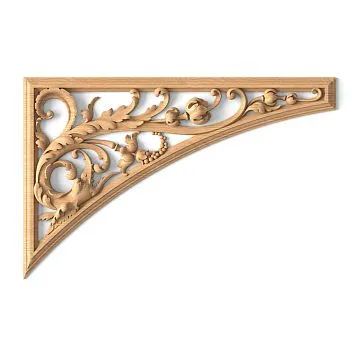
Moldings and decorative elements shape the architectural expressiveness of a space. Ceiling cornices visually separate walls from the ceiling, giving the space a finished look. Wall moldings create relief panels, adding depth to flat surfaces. Overlays, rosettes, and corner elements transform an ordinary room into a space with character.Wooden cornices and moldingsmade of solid oak or beech become central accents in a classic interior.
Trims provide transitions between different planes.Ceiling skirtinghides the joint between wall and ceiling, creating a neat border. Floorwooden and MDF baseboardsprotect the lower part of walls from damage and complete the flooring. Door and window casings frame openings, emphasizing the geometry of the space. The height of baseboards varies from compact 60 mm to stately 120 mm, allowing proportions to be matched to any room.
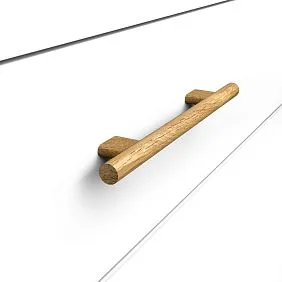
Furniture handles become a tactile point of contact with the interior. Wooden, metal, combined — they define the character of the furniture. Concise rails emphasize the minimalism of modern kitchens. Carved handles with patina bring back the era of classicism. Hidden profiles integrate into facades, creating an 'invisible' opening effect. EachSolid wood furniture handlecarries not only a functional but also an aesthetic load.
Furniture legs lift the body above the floor, adding lightness to massive structures. Turned balusters, conical supports, carved cabrioles — the shape of the legs determines the style of the entire piece. High legs visually enlarge the space, creating a sense of air under the furniture. Low supports provide stability and solidity.Furniture legs made of oak and beechensure durability and structural strength.
Get Consultation
Materials and production technologies
The quality of the final product directly depends on the raw materials and processing methods. Modern decorative production combines centuries-old traditions of joinery with high-precision equipment.
Solid wood: nobility and durability
Natural wood remains the quality standard for interior decor. Oak, beech, ash — these species have a dense structure, resistance to deformation, and expressive texture. Each product made ofsolid woodis unique, as the grain pattern never repeats.
Oak leads in strength characteristics. Its density of 700–750 kg/m³ provides exceptional resistance to mechanical damage. Tangential sawing shows an expressive pattern of annual rings, radial sawing creates a calm striped texture. Oak products are not afraid of humidity fluctuations, maintaining their geometry for decades.
Beech is famous for its uniform structure and ability for fine processing. Its light shade with a pinkish undertone is ideal for interiors in Scandinavian style. Heat treatment increases the moisture resistance of beech, eliminating its only drawback — hygroscopicity. Thermobeech acquires a rich brown color, reminiscent of walnut.
Ash demonstrates a contrasting texture with alternating light and dark stripes. Its elasticity allows for creating bent elements without the risk of cracking. Furniture legs made of ash withstand significant loads due to the fibrous structure of the wood.
MDF and Polyurethane: Practicality and Accessibility
Alternative materials expand decorative possibilities, making them accessible to a wide audience. MDF is a fine wood fraction pressed under high pressure. The homogeneous structure of the board eliminates knots and voids, guaranteeing stable quality for each product.
MDF baseboards with a height of 60–120 mmare coated with white enamel for painting or veneer of valuable species. Milling allows for creating complex profiles indistinguishable from solid wood. The cost of MDF products is 2–3 times lower than wooden counterparts with comparable aesthetics.
Polyurethane moldings revolutionized the decorative market. A two-component composition of European production ensures high relief clarity. The products do not absorb moisture, do not deform with temperature fluctuations, and weigh 5–7 times less than plaster counterparts. Installation is simplified to gluing with polymer adhesive without preliminary wall reinforcement.
The decorative possibilities of polyurethane are limitless. Imitation of wood carving, antique ornaments, baroque curls — all reproduced with photographic accuracy. Painting in any color, patination, gilding transform a standard element into an exclusive art object.
Finishing and surface treatments
The technology of turning a blank into a finished product includes many stages. Drying wood in chambers to 8–10% humidity stabilizes the material, preventing warping. Cutting according to optimal schemes minimizes waste and preserves valuable texture.
Milling on CNC machines ensures profile accuracy up to 0.1 mm. Three-dimensional processing creates volumetric elements — carved rosettes, relief overlays, shaped brackets. Sanding in several stages with gradual reduction of abrasive grit brings the surface to perfect smoothness.
The finish coating determines the appearance and performance properties. Oil-wax emphasizes the natural beauty of wood, preserving the tactile warmth of the material. Varnish creates a protective film resistant to abrasion and moisture. Enamel allows for any RAL color, from snow-white to deep black.
Patination adds a patina of time, emphasizing the relief of the decor. Gilding with leaf recreates the luxury of palace interiors. Brushing removes soft fibers, revealing the structural pattern of the wood. Each technique opens new facets of the material.
Stylistic solutions for different interiors
A universal decorative kit does not exist — each style requires specific forms, proportions, and details. Understanding the features of directions helps avoid stylistic inconsistencies.
Classic: Symmetry and the Order System
Classic interior is built on the canons of ancient architecture. Proportions of the golden ratio, symmetrical composition, the order system — these principles determine the choice of decor. High ceiling cornices with multi-step profiles visually raise the ceiling. Wall moldings form rectangular panels, inside which wallpaper or paint is placed.
Furniture requires appropriate framing. Carved overlays with floral ornaments adorn the facades of cabinets and dressers. Furniture handles in the form of rings with rosettes, brackets with curls, buttons with engraving emphasize the status of the setting. Legs are executed in the form of fluted columns, balusters with bindings, animal paws — the classic repertoire of forms is limitless.
wooden moldingGold accents highlight formal areas — the living room, dining room, and study. Natural wood tones create an intimate atmosphere in bedrooms and libraries. The unity of wall and furniture finishes is achieved by using elements from the same collection.
Neoclassicism: Restraint and Refinement
A modern interpretation of classicism is freed from excessive decoration. Key elements remain — cornices, baseboards, door casings — but their profiles are simplified. Instead of multi-step moldings, concise forms with one or two curves are used. Carving is minimized, giving way to smooth surfaces with an expressive play of light and shadow.
Furniture hardware gravitates towards geometric shapes. Rectangular rail handles in matte metal are combined with wooden inlays. Legs take on a conical or cylindrical form with minimal decoration. The emphasis shifts to material quality and impeccable execution.
The color palette is limited to natural wood shades — from light ash to dark walnut. White enameled surfaces contrast with the warm tones of parquet flooring.Ceiling molding and floor baseboardof the same height create a visual frame that outlines the walls.
Modern style: purity of lines
Minimalism and high-tech exclude traditional decor but do not abandon trim products. Baseboards with a straight profile, 60–80 mm high, neatly finish the junction between the floor and wall. Hidden cornices for lighting are installed behind a stretch ceiling, creating a floating surface effect.
Furniture handles become technological elements. Milled profiles on the edges of facades replace protruding hardware. The push-to-open system allows for no visible handles at all. When handles are still used, minimalist designs are chosen — thin rails, recessed brackets, profile cutouts.
Furniture legs follow the same logic. Metal supports with square or round cross-sections create a sense of lightness. Wooden legs have strict geometry without decorative elements. Colors are neutral — black, white, metallic, natural light wood.
Loft: Brutality and Industrial Aesthetics
The industrial style exploits contrasts — rough textures and refined details, untreated surfaces and precise geometry. Decorative stucco is out of place here, but trim products are actively used. Massive dark wood baseboards, 100–120 mm high, protect brick or concrete walls.
Furniture hardware gravitates towards industrial forms. Handles made of black metal, imitating pipeline fittings. Leather hinges with rivets. Massive brackets made of roughly processed iron. Wooden handles with intentionally rough surfaces, emphasizing the wood grain.
Furniture legs are chosen deliberately simple. Metal studs with a round cross-section create a sense of weightlessness. Wooden blocks with a square profile and visible tool marks. Industrial-style casters turn static objects into mobile elements.
How to Choose the Right Set
A conscious choice requires understanding many factors — from room dimensions to usage specifics. Sequential analysis prevents mistakes and disappointments.
Defining style and concept
The first step is clearly defining stylistic preferences. Reviewing references, creating a mood board, and discussing with a designer help crystallize the image of the future interior. It's important not to mix incompatible directions — Baroque stucco conflicts with high-tech furniture, and Scandinavian austerity does not coexist with Empire-style luxury.
The concept defines not only the visual style but also functional priorities. A family with children needs durable, wear-resistant materials. Those who like frequent updates will appreciate paintable elements. Connoisseurs of authenticity should choose solid wood with a natural finish.
Calculation of required quantity
Accurate measurements are the foundation of a correct order. The room perimeter determines the linear footage of baseboards, accounting for doorways. Wall height and configuration affect the number of moldings. The number of furniture pieces dictates the need for handles and legs.
An allowance for cutting and possible defects is 10–15% of the calculated quantity. Trim products are supplied in standard lengths — usually 2000–2500 mm for solid wood, 2400 mm for MDF. It is necessary to calculate the optimal number of pieces with minimal waste.
ForFor wooden baseboards and cornicesit is important to consider corner joints. Internal corners are cut at 45°, external corners require more complex fitting. Special corner elements simplify installation but increase the order cost.
Coordination with Overall Finishing
Decor does not exist in isolation — it interacts with wall, ceiling, and floor finishes. The color of baseboards is coordinated with the floor covering or contrasts with it. Light baseboards on a dark floor visually expand the space. Dark ones on a light floor create a clear boundary.
Ceiling cornices are coordinated with the room height. In rooms with ceilings of 2.5–2.7 m, cornices 50–80 mm wide are used. High ceilings of 3–3.5 m allow for massive profiles of 100–150 mm. A too-large cornice in a low room feels 'oppressive,' while a too-small one in a high room gets lost.
The texture of the decor should harmonize with the wall finish. Glossy enameled surfaces pair with smooth wallpaper or paint. Matte natural wood textures go well with textured coverings — plaster, textiles, paintable wallpaper.
The Budget Question
Financial planning begins with defining priorities. If the budget is limited, it's worth investing in quality solid wood trim products — they define the basic atmosphere. Furniture hardware can be chosen more modestly for now and replaced later.
An alternative is combining materials. Visible areas — cornices, door casings, furniture handles — are made of solid wood. Hidden or less significant elements — baseboards behind furniture, dining chair legs — are made of MDF or polyurethane. This approach saves 25–35% without losing visual quality.
Bulk purchases reduce cost. A complete order for the entire apartment is cheaper than phased purchases. Participating in manufacturer promotions, seasonal sales, and loyalty programs — all of this helps optimize expenses without compromising quality.
Ordering and delivery process
A well-organized purchasing process saves time and eliminates misunderstandings. Transparent procedures guarantee predictable results.
Consultation with a manager
The initial inquiry is best made through the official STAVROS product catalog. A feedback form or phone call initiates a dialogue with a manager. A qualified specialist asks clarifying questions — the area of the object, style, implementation timeline, budget constraints.
Based on the information received, the manager offers several configuration options. The basic set includes the necessary minimum. The extended set adds additional elements — corner blocks, decorative overlays, sockets. The premium kit contains exclusive items with hand carving or custom design.
Material and finish samples help make the final decision. Many manufacturers send samples free of charge or for a nominal fee. Evaluating color and texture in person eliminates disappointment upon receiving the main order.
Formation of technical specifications
Detailed specifications record all order parameters. For linear products, the profile, material, cut lengths, finish, and quantity are specified. For furniture fittings — model, size, finish, mounting method, number of sets.
Drawings and installation diagrams prevent errors during installation. For complex molding compositions, a layout is developed indicating junction points. Corner joints are drawn separately with cut dimensions.
Agreeing on production timelines realistically assesses capabilities. Standard items from the stock program are shipped within 1–3 days. Custom-made items are produced in 7–21 days depending on complexity and production load. Exclusive carved elements may require up to 45 days.
Logistics and cargo acceptance
Transporting fragile items requires a professional approach. Linear elements are packaged in shrink film and corrugated cardboard. Carved parts and furniture fittings are placed in individual boxes with cushioning inserts. Pallet shipping protects against damage during handling.
Delivery is organized via the manufacturer's own transport or through logistics partners. Courier delivery is convenient for small orders within the city. Transport companies provide interregional shipments with delivery to a terminal or the recipient's address. Pickup from the manufacturer's warehouse saves on logistics.
Cargo acceptance is performed in the presence of a representative of the transport company. Completeness, absence of visible damage, and conformity of markings are checked. Any defects found are documented in a report with photographs. This serves as the basis for replacement or return.
Installation and integration of elements
Quality installation is no less important than the choice of products. Even premium decor loses its appeal with unprofessional installation.
Surface preparation
Walls and ceilings must be level, dry, and sturdy. Variations exceeding 3 mm per meter of length create gaps under baseboards and cornices. Leveling with plaster or drywall eliminates curvature. Deep-penetration primer strengthens the substrate and improves the adhesion of adhesive compounds.
Marking determines the position of elements. Horizontal lines are set using a laser level or water level. Verticals are checked with a plumb line or level. Centering of molding panels is done from the room's axial lines to avoid narrow trims in corners.
Installation of linear products
floor skirting boards are mounted with adhesive or mechanical fasteners. The adhesive method provides invisible fastening but requires perfectly level walls. Self-tapping screws or cleats are used on uneven substrates but leave visible fixing points. The combined method — adhesive plus temporary fixation with pins until setting — combines the advantages of both options.
Ceiling cornices are mounted similarly. Polyurethane elements are set on polymer adhesive. Wooden cornices require additional fixation with self-tapping screws into the ceiling structure or wall profile. Corner joints are cut with a miter box at a precise 45° angle or pre-made corner blocks are used.
Wall moldings form panel layouts. Rectangular frames visually structure the plane. The distance from the floor and ceiling is kept consistent around the entire perimeter. Panel width is calculated to avoid narrow fragments in corners. Vertical moldings are joined with horizontals at a right angle or with a 45° miter cut.
Installation of furniture fittings
Furniture Handles are attached with screws or bolts and nuts. Before installation, drilling points are marked considering the center-to-center distance of the mounting holes. Drilling is performed strictly perpendicular to the facade to prevent the handle from being skewed. The hole diameter corresponds to the diameter of the mounting screw.
Symmetrical placement of handles is critical for perception. On hinged fronts, handles are mounted at the same height. On drawers — strictly centered horizontally. Measuring from the edges of the front ensures accuracy. A template made of plywood or plastic with pre-drilled holes speeds up marking identical elements.
Furniture legs require precise installation to maintain stability. Marking is done considering the distance from the corners of the body. Asymmetric placement leads to tilting and wobbling. Mounting is done via a threaded connection with a metal insert in the body or on dowels with adhesive. Adjustable legs allow compensation for floor unevenness.
Care and Maintenance
The longevity of decor depends on usage conditions and regular maintenance. Simple measures extend service life for decades.
Protection against damage
Wooden products are sensitive to excessive humidity and direct sunlight. Air humidity of 40–60% is optimal for maintaining wood stability. Humidifiers in winter and dehumidifiers in summer maintain a comfortable microclimate. UV radiation will fade natural wood — curtains or window tinting protect against fading.
Mechanical damage is minimized by careful handling. Furniture is not pushed flush against baseboards, leaving a 5–10 mm gap. Handles are not used as support when lifting the body. Legs are equipped with protective felt or plastic stickers to prevent floor scratches.
Regular cleaning
Dry cleaning is performed with a soft cloth or a vacuum cleaner with a delicate surface attachment. Dust is removed weekly, preventing it from accumulating in the relief of carvings. Damp wiping with a slightly moistened cloth is acceptable for items with varnish or enamel finish. Oil-wax surfaces are cleaned only with dry methods.
Special wood care products nourish and protect the surface. Polishes create a thin protective film that repels dust and moisture. Waxes fill micro-cracks, restoring smoothness. Treatment frequency is 2–4 times per year depending on intensity of use.
Restoration and renewal
Local defects are repaired without full replacement of elements. Scratches on lacquered surfaces are filled with retouching markers or wax of a matching shade. Chips are restored with epoxy putty followed by sanding and painting. Darkened areas are refreshed by reapplying the finish.
Refinishing the coating restores the original appearance. Enameled surfaces are repainted after light sanding to improve adhesion. Lacquer coating is removed with a sander down to bare wood and reapplied. Oil-wax surfaces are refreshed by simply applying a fresh coat without prior treatment.
Frequently asked questions
Can elements made from different materials be combined in one set?
Yes, combining materials is permissible and even desirable for budget optimization. Visible elements—cornices, trims, furniture handles—are made from solid wood to showcase the texture and nobility of the material. Hidden or less noticeable items—baseboards behind furniture, dining chair legs—can be made from MDF or polyurethane without losing overall aesthetics.
How long do wooden decorative elements last?
With proper use, the service life of solid wood is measured in decades. Oak and beech products with high-quality finish retain functionality and appearance for 30–50 years. MDF elements last 15–25 years depending on operating conditions. Polyurethane molding does not deform or crack throughout the building's lifespan.
Are special skills required for self-installation?
Basic carpentry skills are sufficient for installing simple elements. Baseboards and cornices are mounted with a miter box, tape measure, level, and adhesive. Molding compositions require experience in marking and cutting angles. Furniture hardware is installed using a drill and screwdriver. Complex carved elements are best entrusted to professionals to guarantee results.
How to match the color of the decor to existing finishes?
Request material samples from the manufacturer before the main order. Apply testers to walls, floors, and furniture under both natural and artificial lighting—color changes depending on the light source. White enamels are universal and match any color palette. Natural wood shades are coordinated with warm interior tones. Tinted surfaces are chosen 1–2 shades lighter or darker than the main finish to create contrast.
Is partial replacement of elements possible in the future?
Manufacturers maintain product lines for years, allowing for the purchase of identical elements later. When ordering, it is recommended to record the exact profile name and article number. If a model is discontinued, a similar profile can be custom-made from a sample. The finish is matched as closely as possible to the existing one; minor differences will even out over time.
How does a decor set affect the perception of space?
Properly selected decor corrects room proportions. High ceiling cornices and low baseboards elongate the space vertically. Contrasting moldings create visual depth on flat walls. Light furniture hardware on dark facades accentuates functional zones. Unity of style across all elements creates a sense of harmony and completeness.
About the company STAVROS
Russian manufacturer STAVROS has been creating world-class decor and furniture hardware for over two decades. Its own full-cycle production controls quality at every stage—from raw material procurement to final finishing. Collections include thousands of items covering the needs of any interior project.
The enterprise's technological equipment includes modern CNC machines for high-precision processing. Drying chambers stabilize wood to optimal moisture content. Painting lines ensure even application of finishing compounds. Quality control at the output guarantees the absence of defects in finished products.
The stock program allows shipping popular items on the day of request. A regional distributor network ensures product availability across Russia. Technical support provides consultation during selection and installation. Warranty obligations protect buyers' interests.
ChoosingSTAVROS decorative elements and furniture hardware set, you are investing in the durability, beauty, and functionality of your interior. A single order saves time, money, and nerves, guaranteeing a harmonious result.