




























Article Contents:
- Style is born in details, not in budget
- Why classic interior relies on details
- The role of polyurethane wall decor in classic interior
- Moldings as a tool of architectural logic
- Ready-made decor sets: time savings and style guarantee
- Painting stucco: a subtlety that is underestimated
- How to choose furniture for walls with stucco
- The principle of activity balance
- Dark classic furniture: a special case
- Light furniture and stucco molding
- Furniture decor: legs, supports, handles, and brackets
- Wooden legs: visual weight and character of furniture
- Decorative supports: power and elegance
- Brackets: shelves, consoles, and decorative accents
- Handles: what cannot be ignored
- Molding, baseboard, and trim: the link between wall and furniture
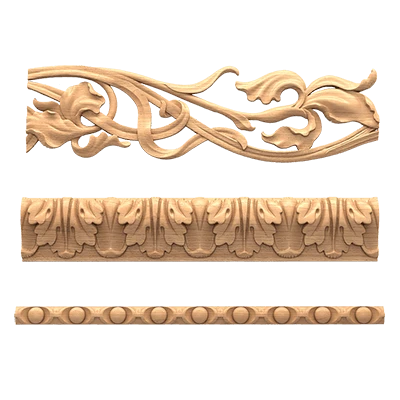
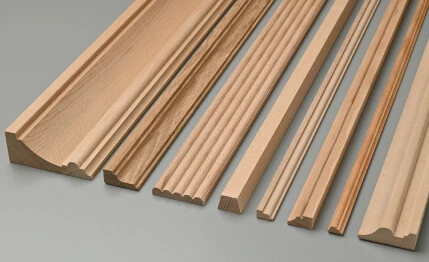
- Wooden molding: a frame as an architectural element
- Wooden baseboard: the lower boundary of the interior
- Wooden layout: for facades and doors
- Wooden glazing bead: fine work
- Classic living room: wall, furniture, and decor in detail
- Sofa area: accent without overload
- Coffee table and armchairs
- Chest of drawers and mirror
- Classic bedroom: headboard, nightstands, and details
- Headboard as the main accent
- Nightstands, chests of drawers, wardrobes
- Dressing table: special attention to details
- Mistakes when combining stucco and classic furniture
- Too much molding in one space
- Different shades of wood without a concept
- Large stucco in a small room
- Modern handles on classic furniture
- Picture frame doesn't match the wall style
- Stucco without connection to furniture
- Interior by room: what to use where
- How to choose everything you need at STAVROS
- FAQ: Answers to Popular Questions

Style is born in details, not in budget
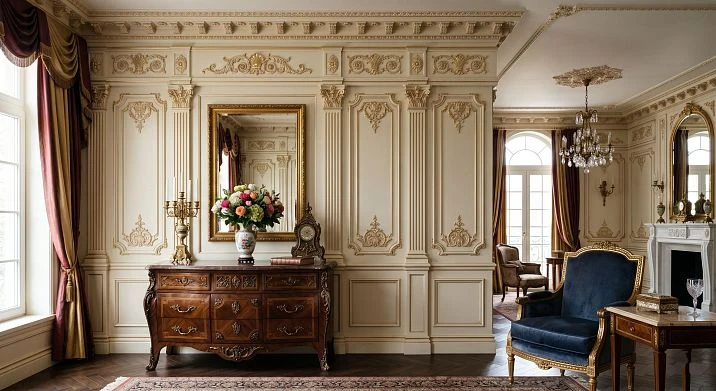
There is one thing you don't understand right away, but after many years of working with interiors: classic is not about expensive furniture. It's about consistency. About how the molding on the wall echoes the profile of the sofa leg. How the wooden frame of the mirror repeats the plasticity of the cornice. How the handles on the dresser drawers speak the same language as the stucco decoration above the fireplace.
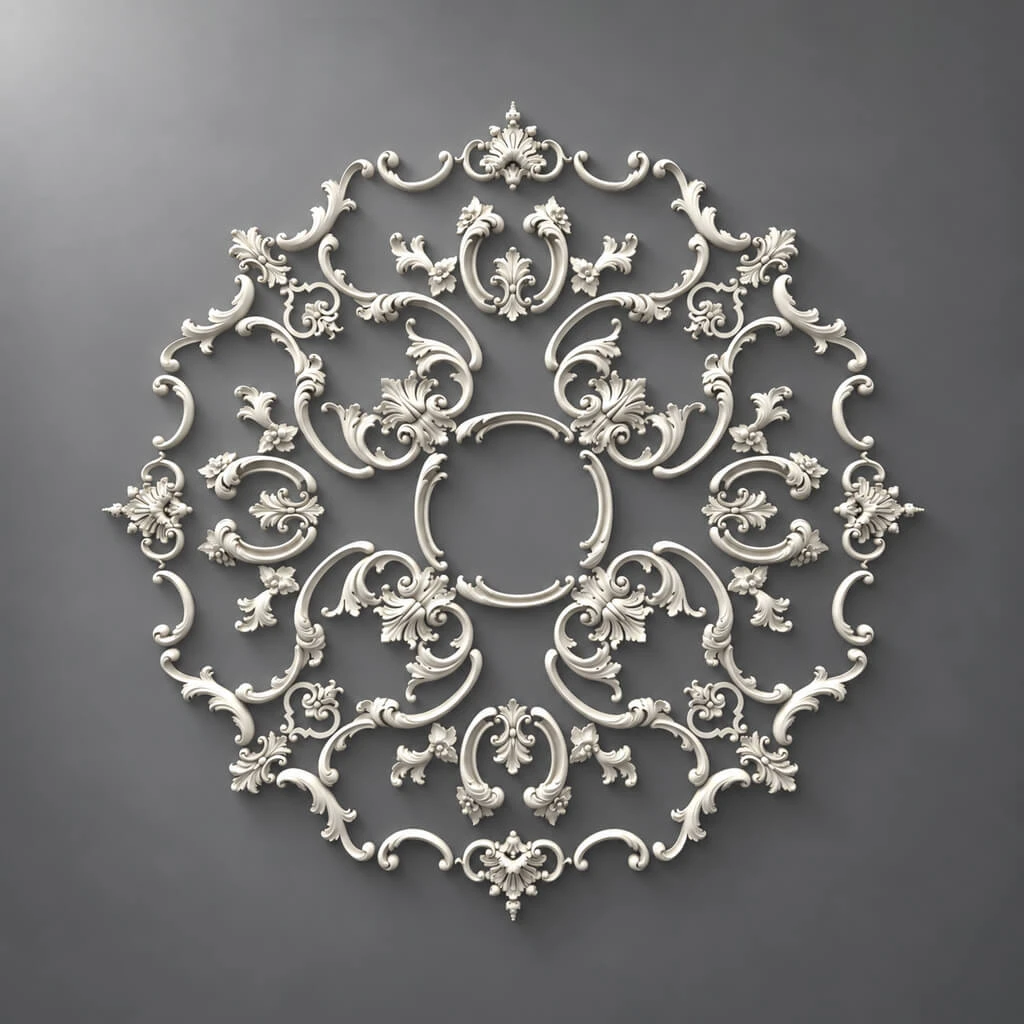
A classic interior looks cohesive only when the walls, furniture, and every decorative detail work together as one ensemble. Polyurethane wall decor helps set the architectural framework of the room: molding frames, symmetrical panels, vertical accents, stucco friezes. But this framework is just the beginning. For the interior to become truly complete, furniture legs, wooden handles, decorative supports, brackets, baseboards, baguettes, and overlays on facades must continue and develop the theme set by the walls.
This is exactly what this article is about. How to assemble a classic interior not from expensive coincidences, but from consciously selected elements. From the wall to the drawer handle.
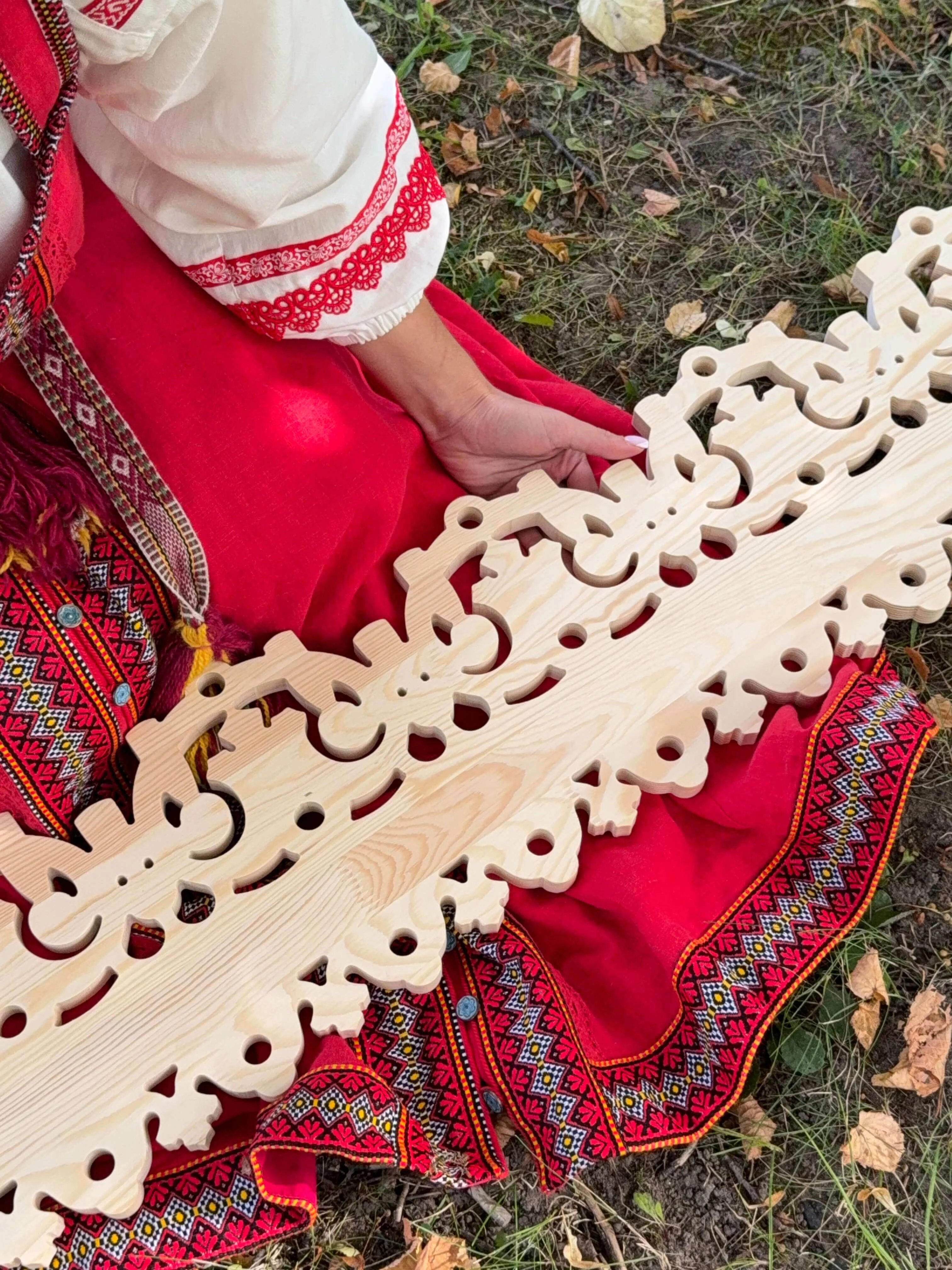
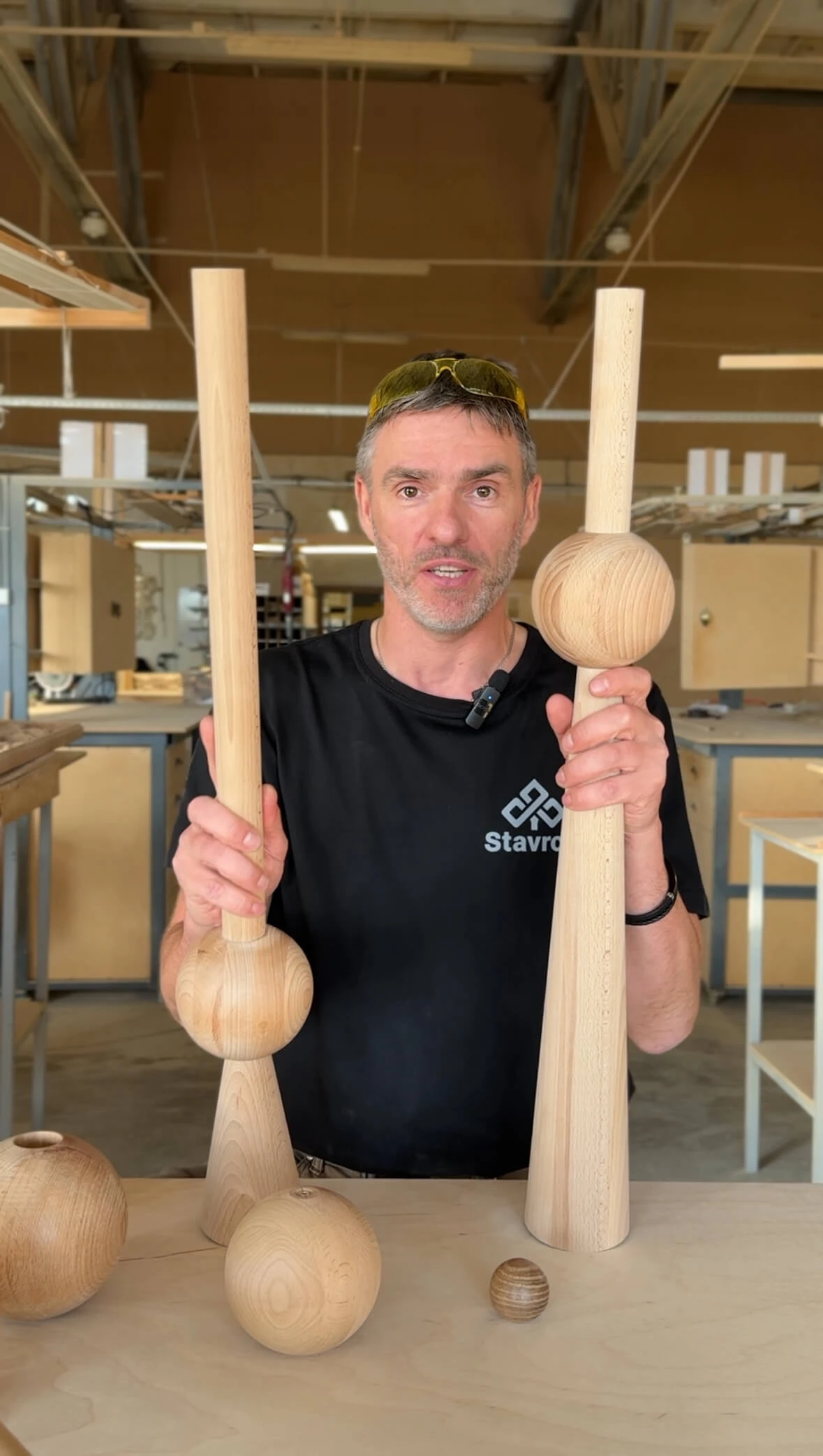
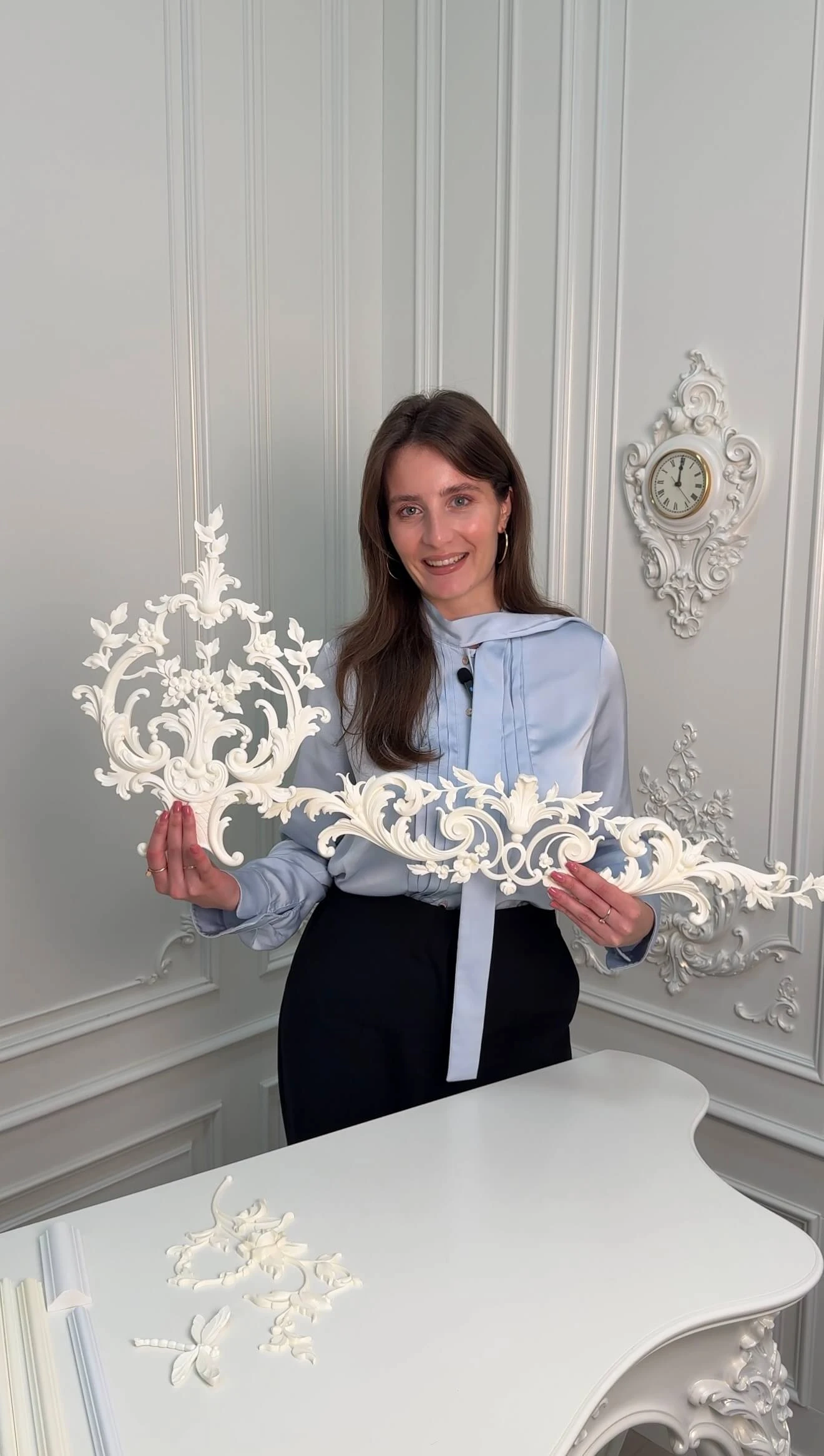
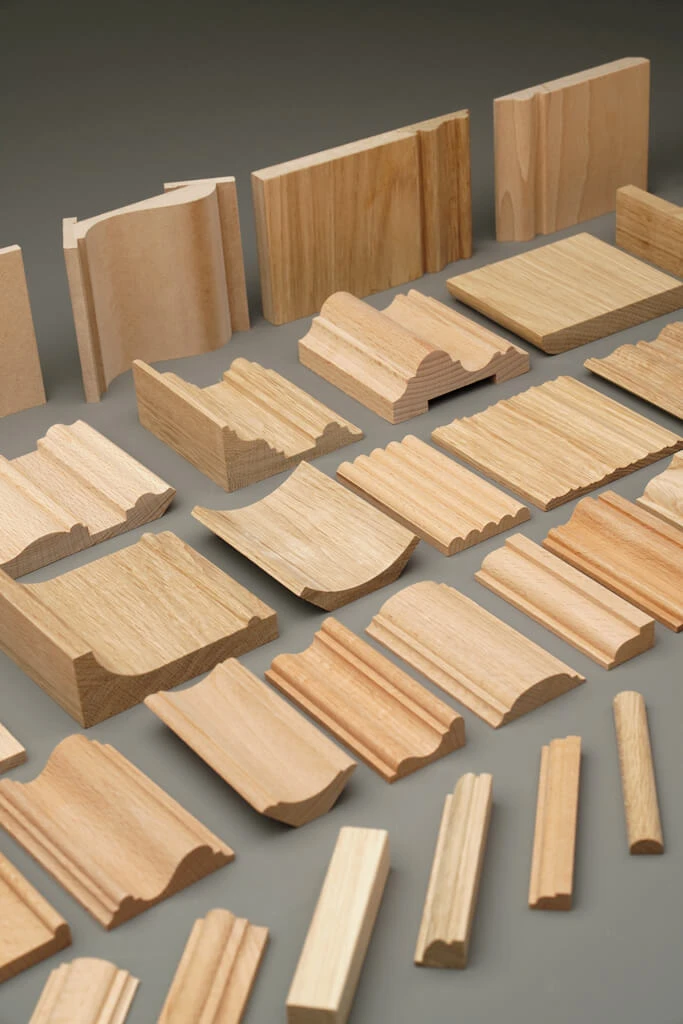
Why a classic interior relies on details
Ask any experienced decorator what the secret of a convincing classic interior is, and they will answer without pause: in the details that you don't notice when they are right, and that catch your eye as soon as something is wrong.
Classicism as a style has existed for several centuries. During this time, it has developed a strict internal logic: symmetry, rhythm, hierarchy of details, unity of materials and forms. Violation of any of these principles is instantly perceived — even if the person looking at the room cannot explain what exactly is wrong. They just feel: something is off.
Furniture and decor in a classic interior are not two independent worlds. They are a single system. Decorative stucco on the walls forms the visual rhythm of the room. Molding frames divide the wall into structural zones. The baseboard closes the bottom line. The cornice completes the top. Within this architecture, furniture must be part of the same story — not a guest from another style.
Classic furniture is not just carved legs and gilded hardware. It is proportionality of forms, respect for the material, attention to every joint and profile. That is why furniture and decor in a classic interior are inseparable: they create context for each other.
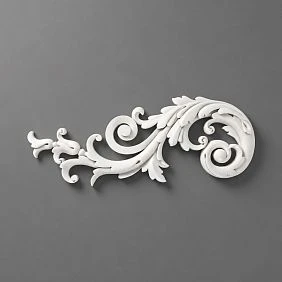
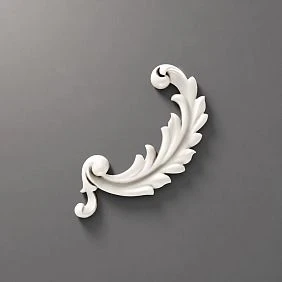
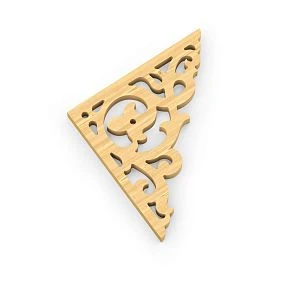
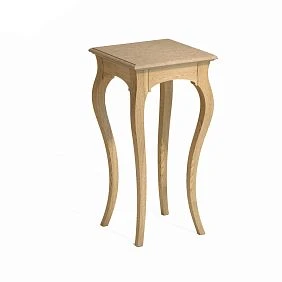
Our factory also produces:
The role of polyurethane wall decor in a classic interior
Why has polyurethane taken such a firm place in classic wall decoration? The answer lies in the material's properties. Before the advent of high-quality polyurethane, architectural wall decor was made from plaster, wood, or foam. Each of these materials has limitations: plaster is heavy and fragile, wood is expensive and requires complex processing, foam is short-lived and does not convey the necessary plasticity.
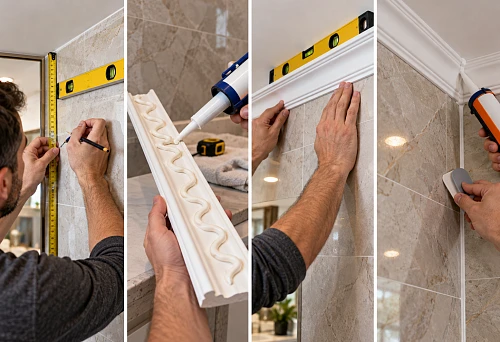
Polyurethane moldings combines lightness (density from 150 to 420 kg/m³) with excellent surface detail, resistance to moisture and temperature changes. It can be glued to the wall without special tools, cut with a regular hacksaw, painted with acrylic paints in any color — to match the wall, furniture, or baseboard.
Get Consultation
Moldings as a tool of architectural logic
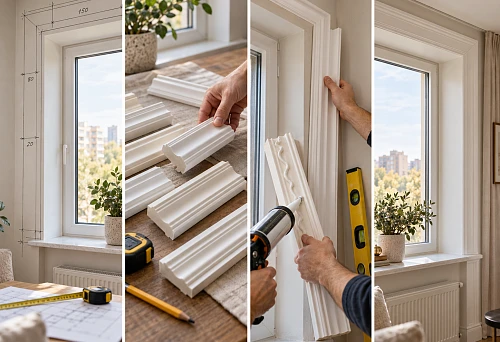
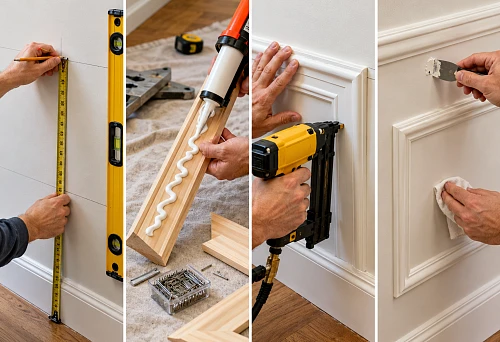
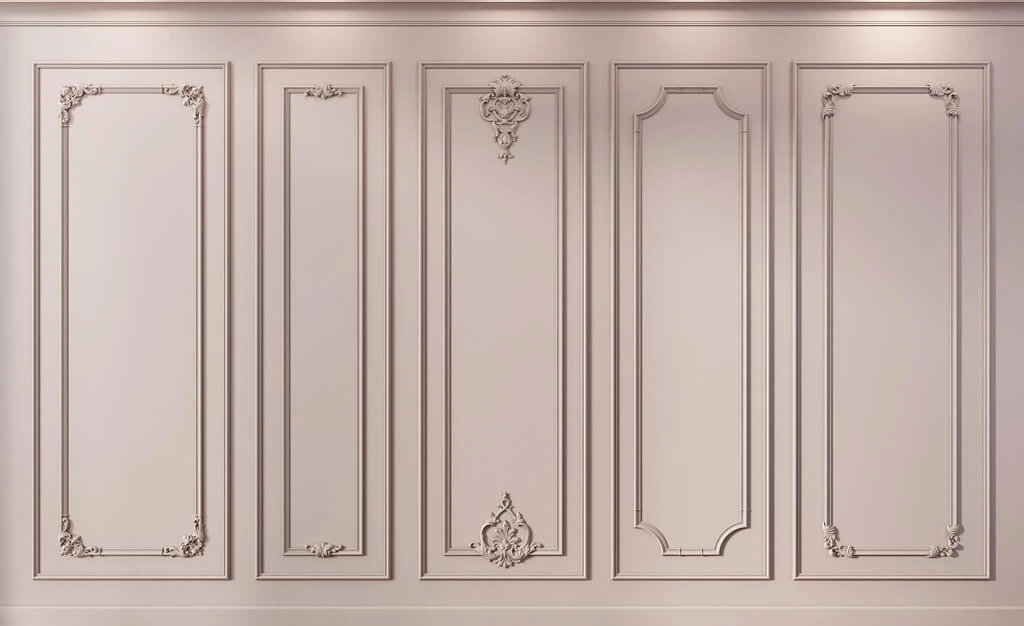
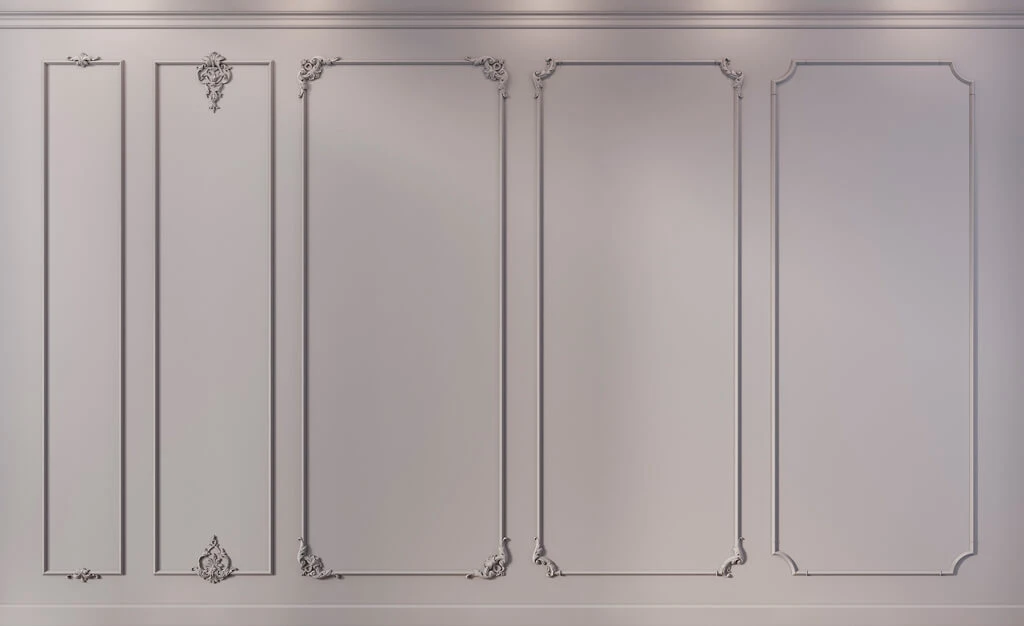
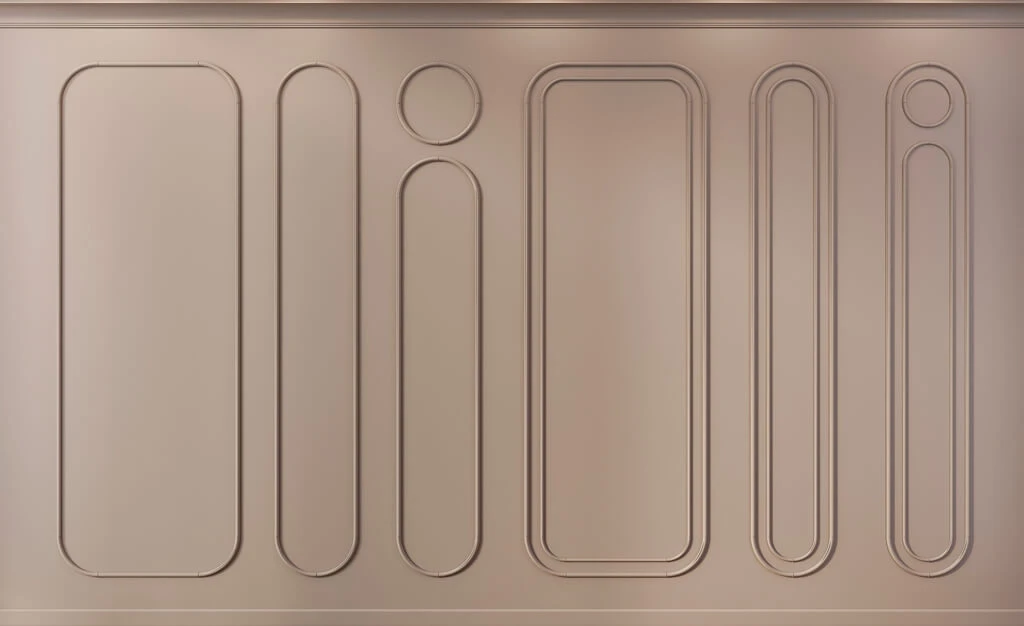
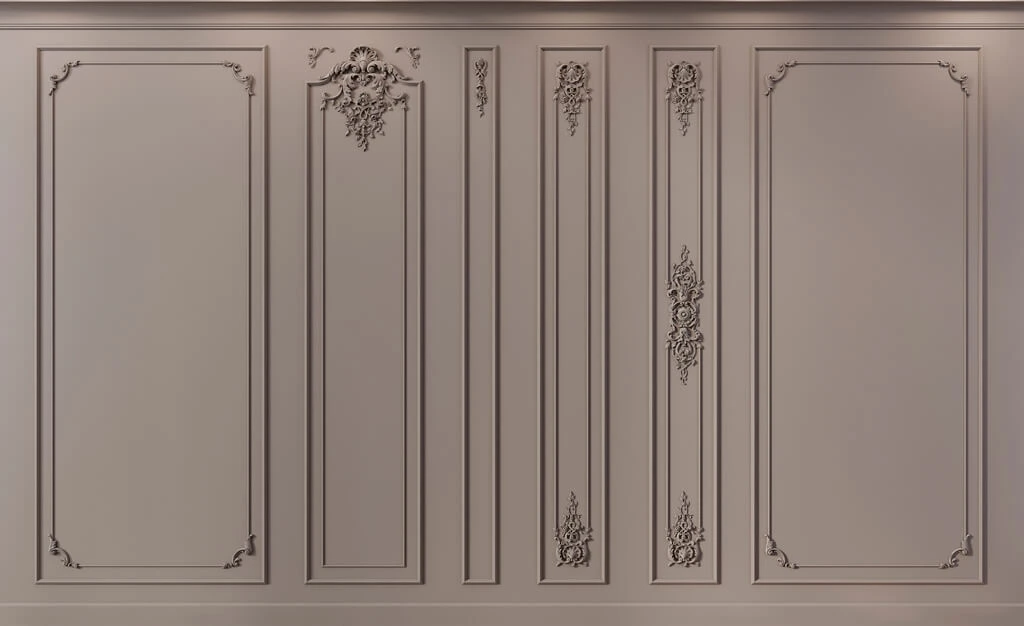
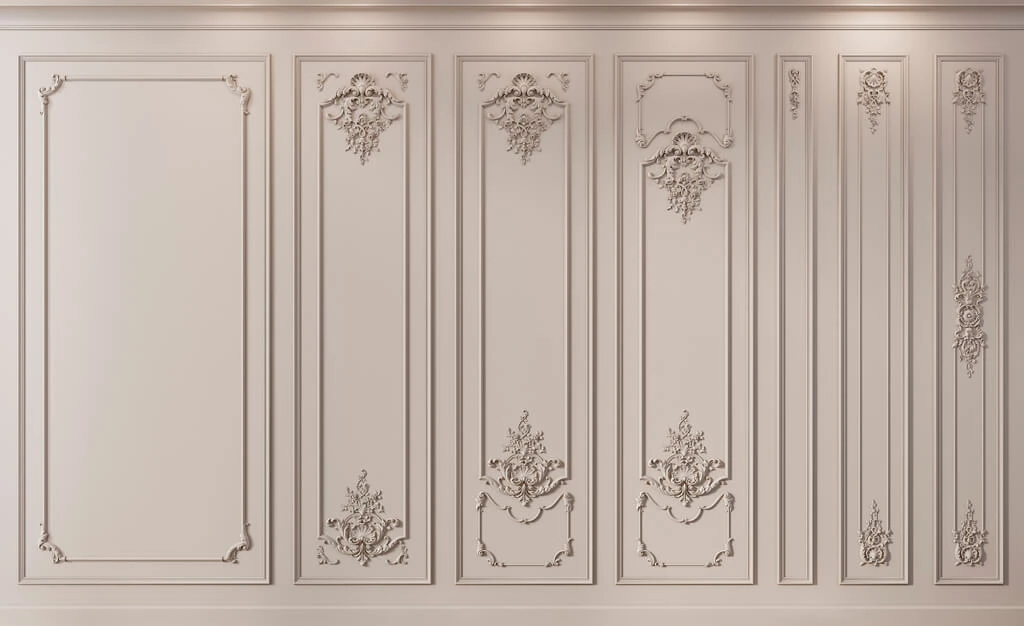
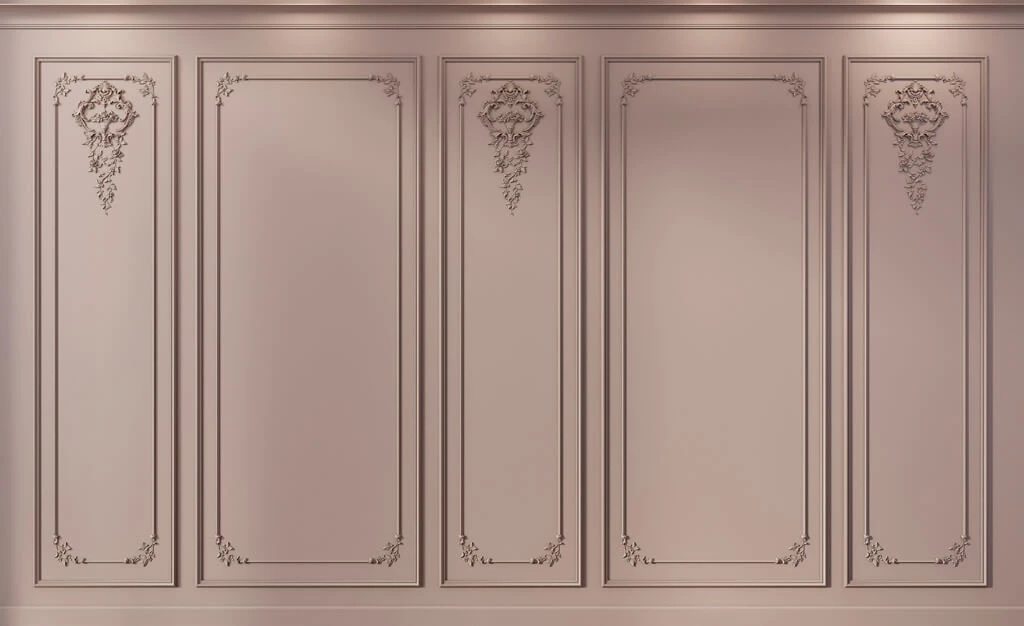
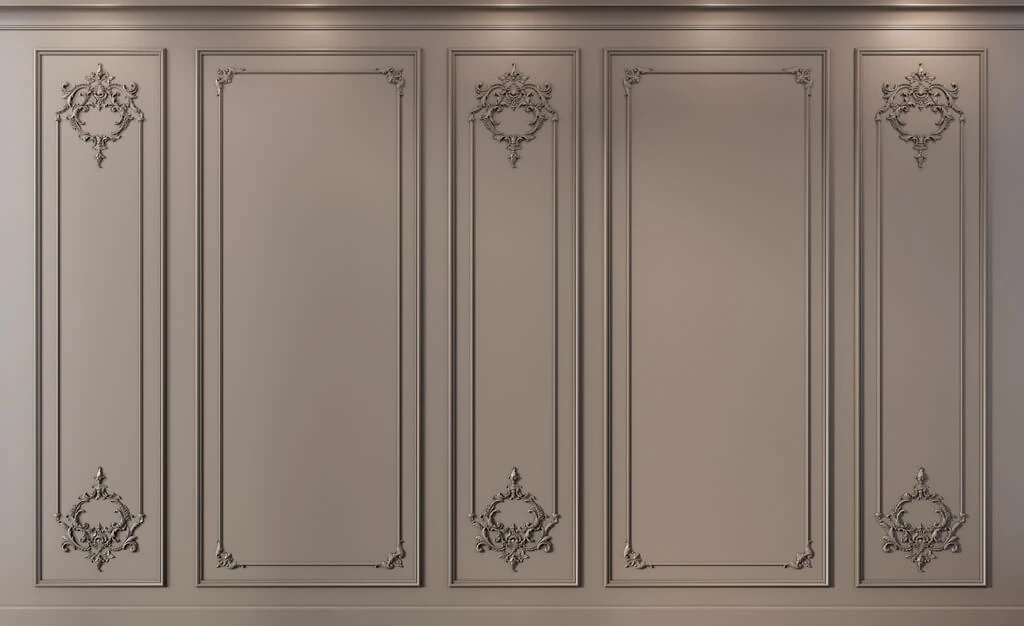
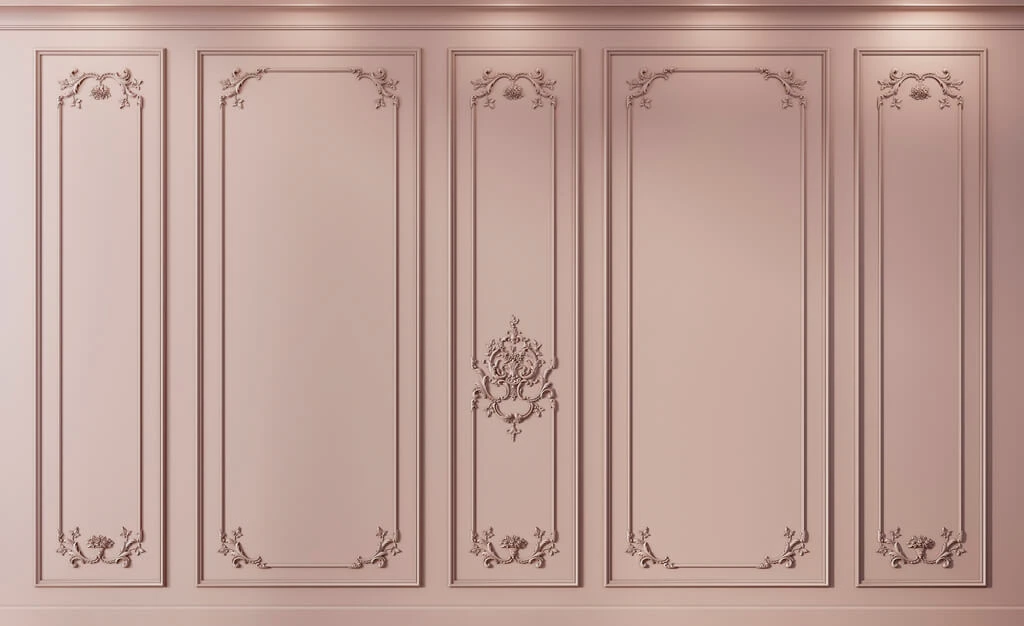
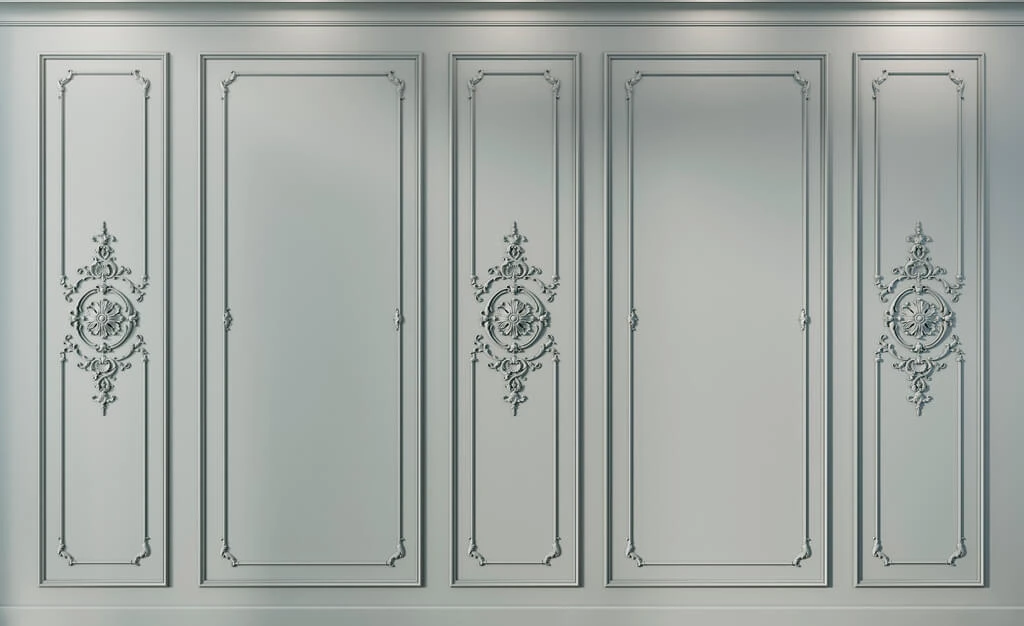
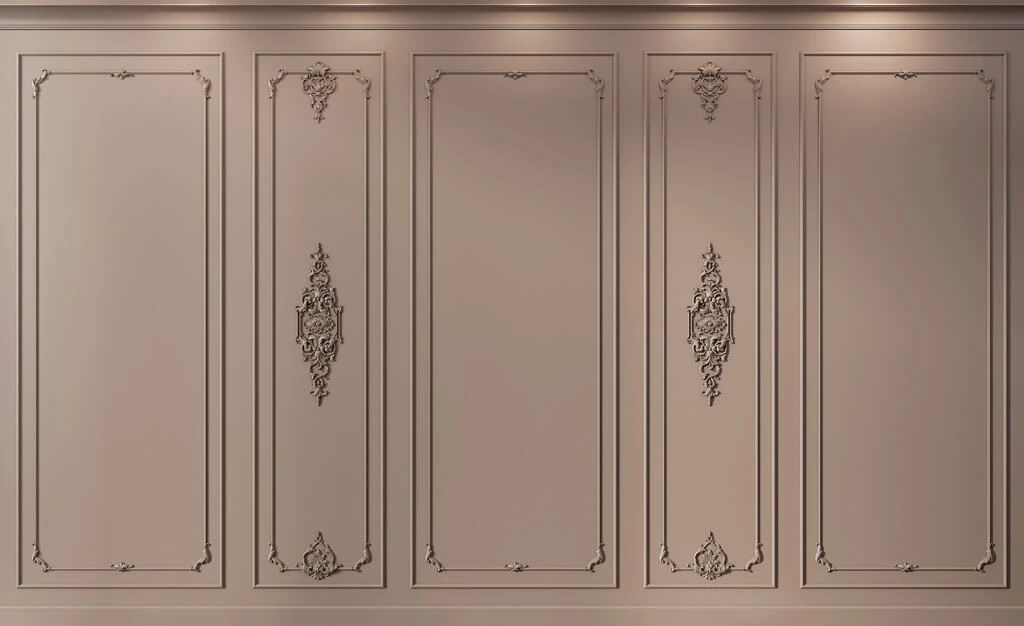
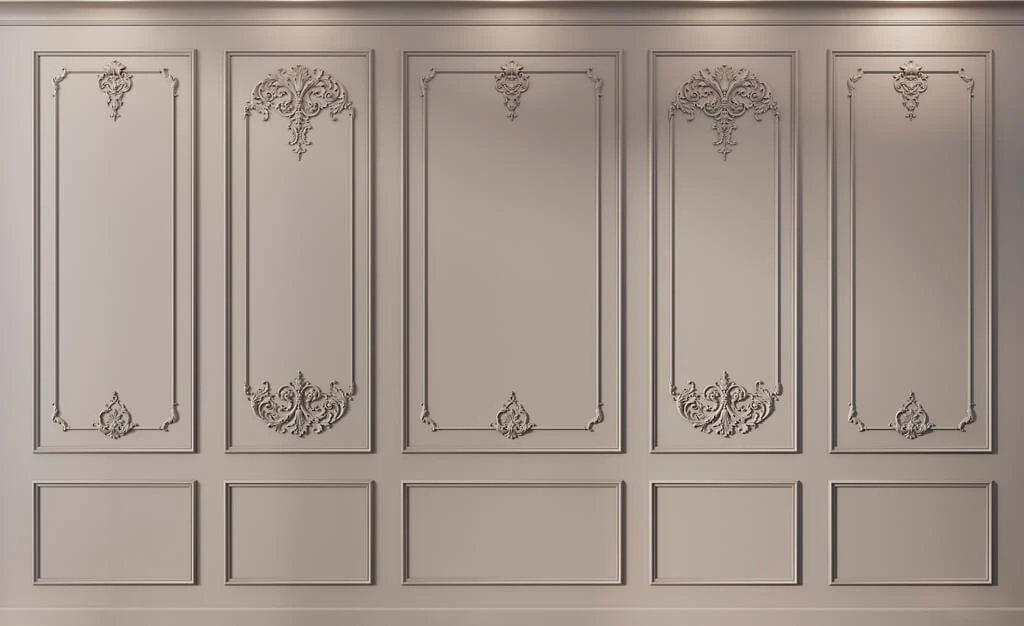
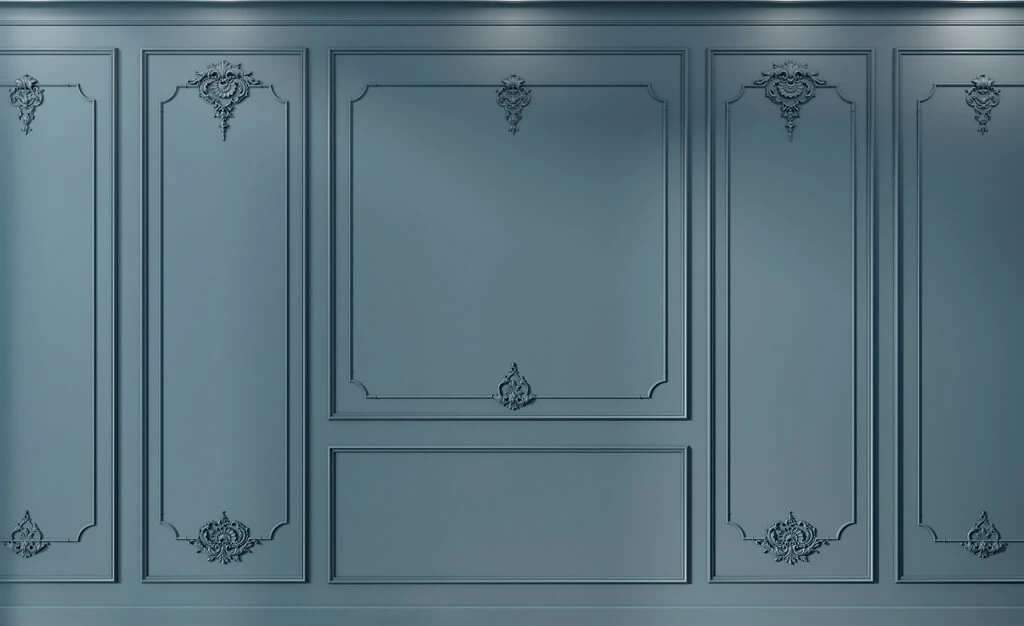
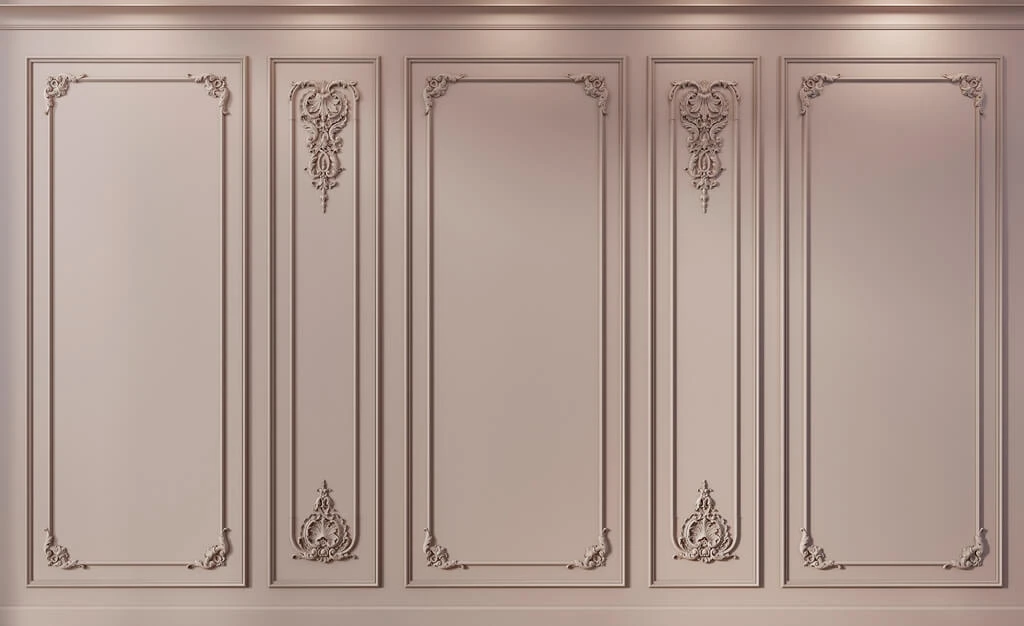
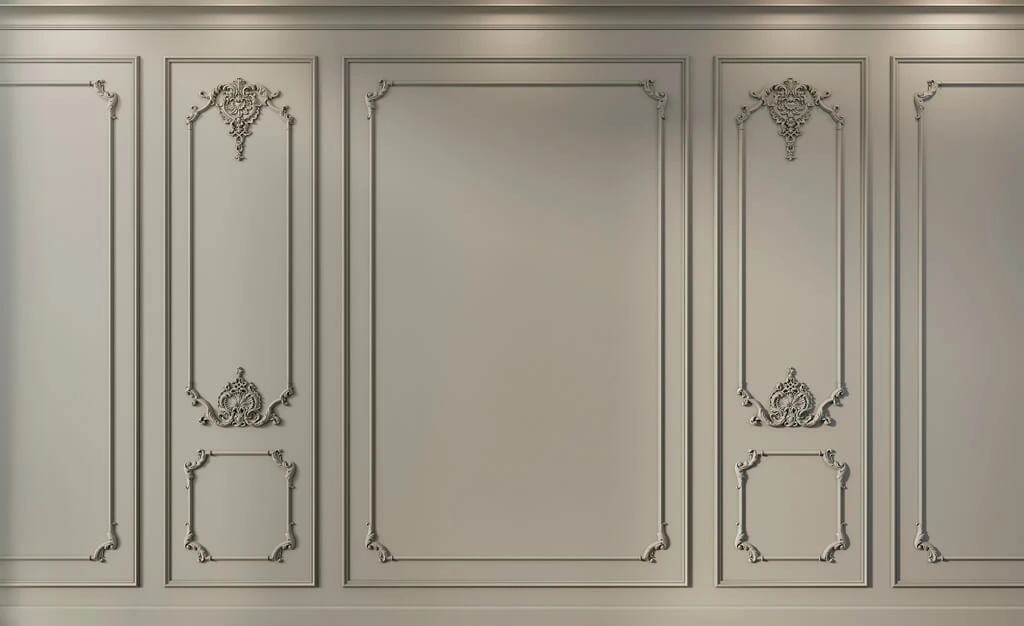
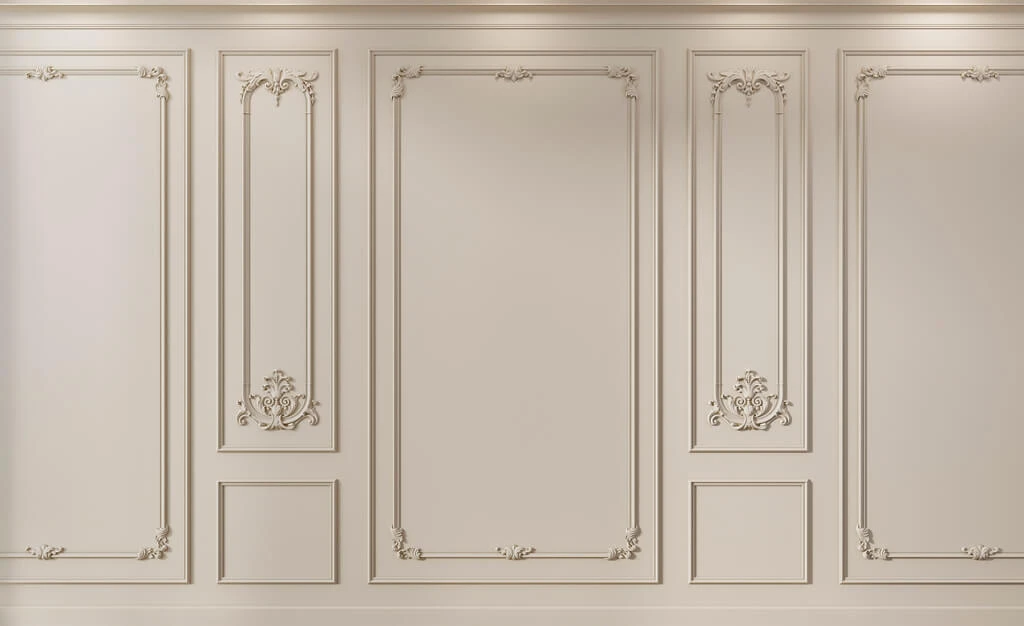
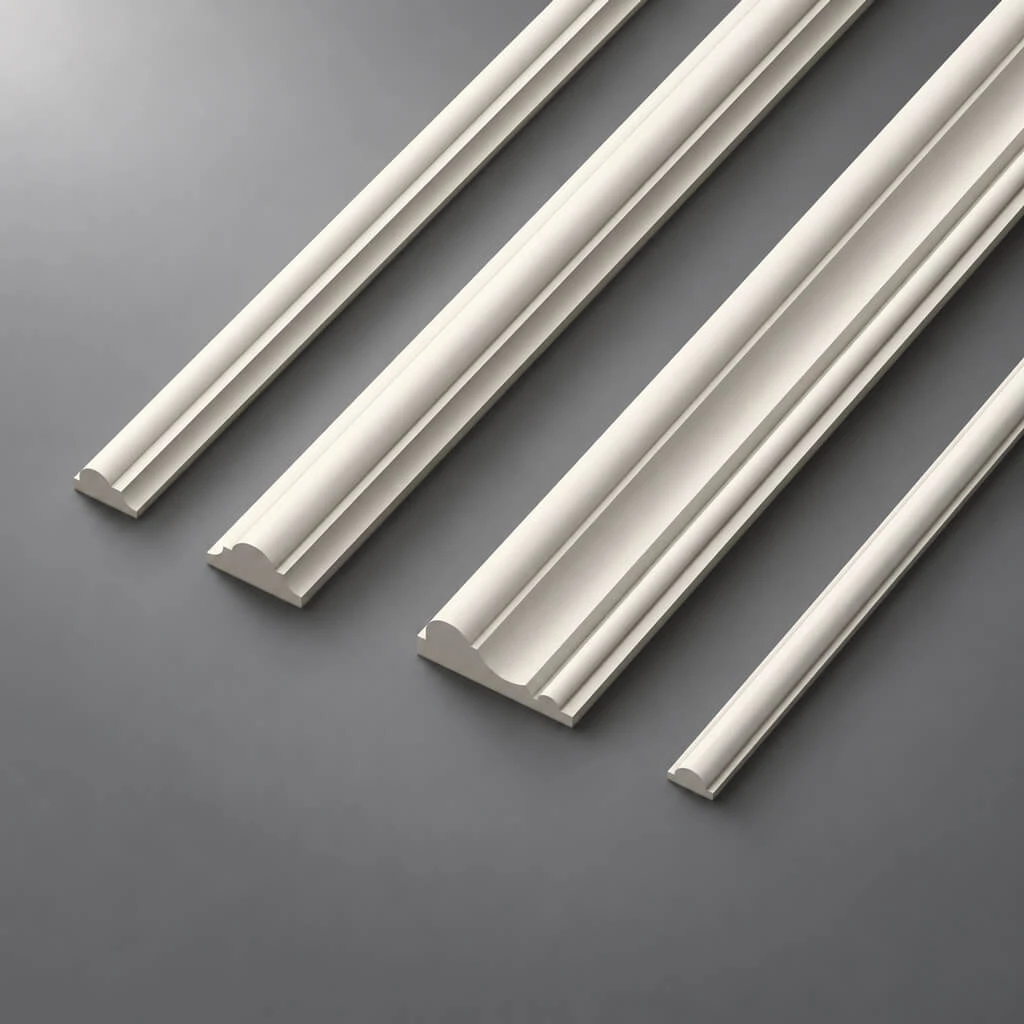
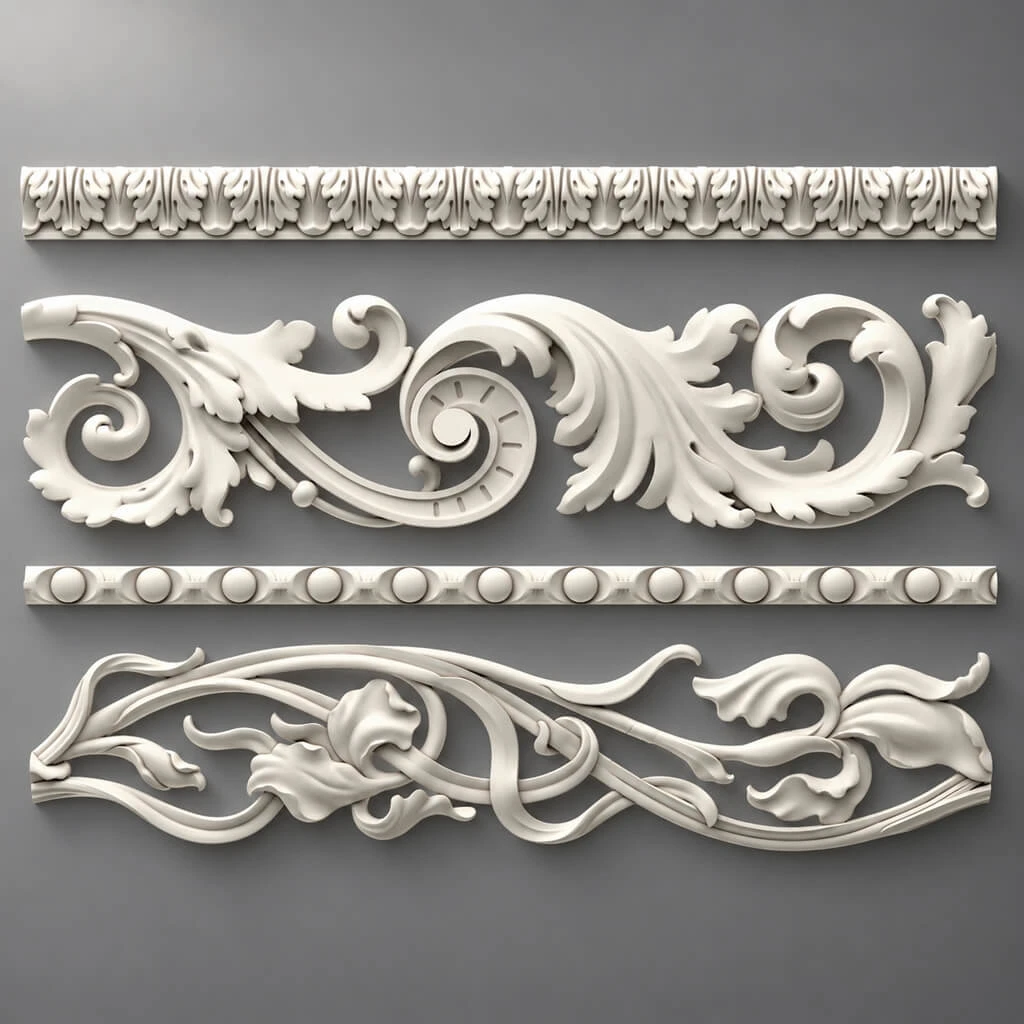
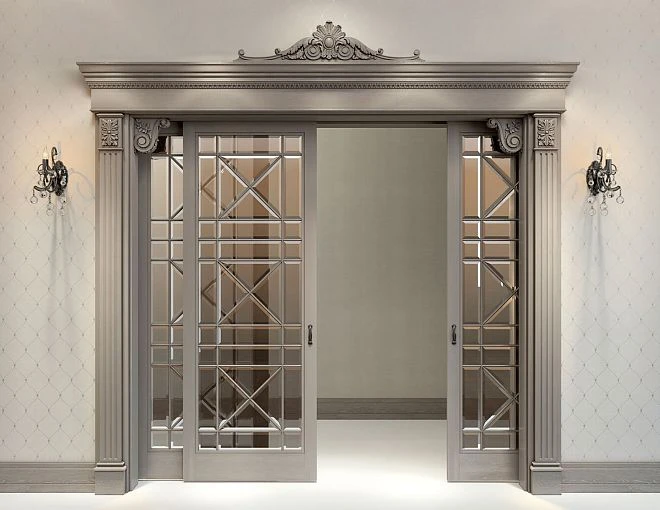
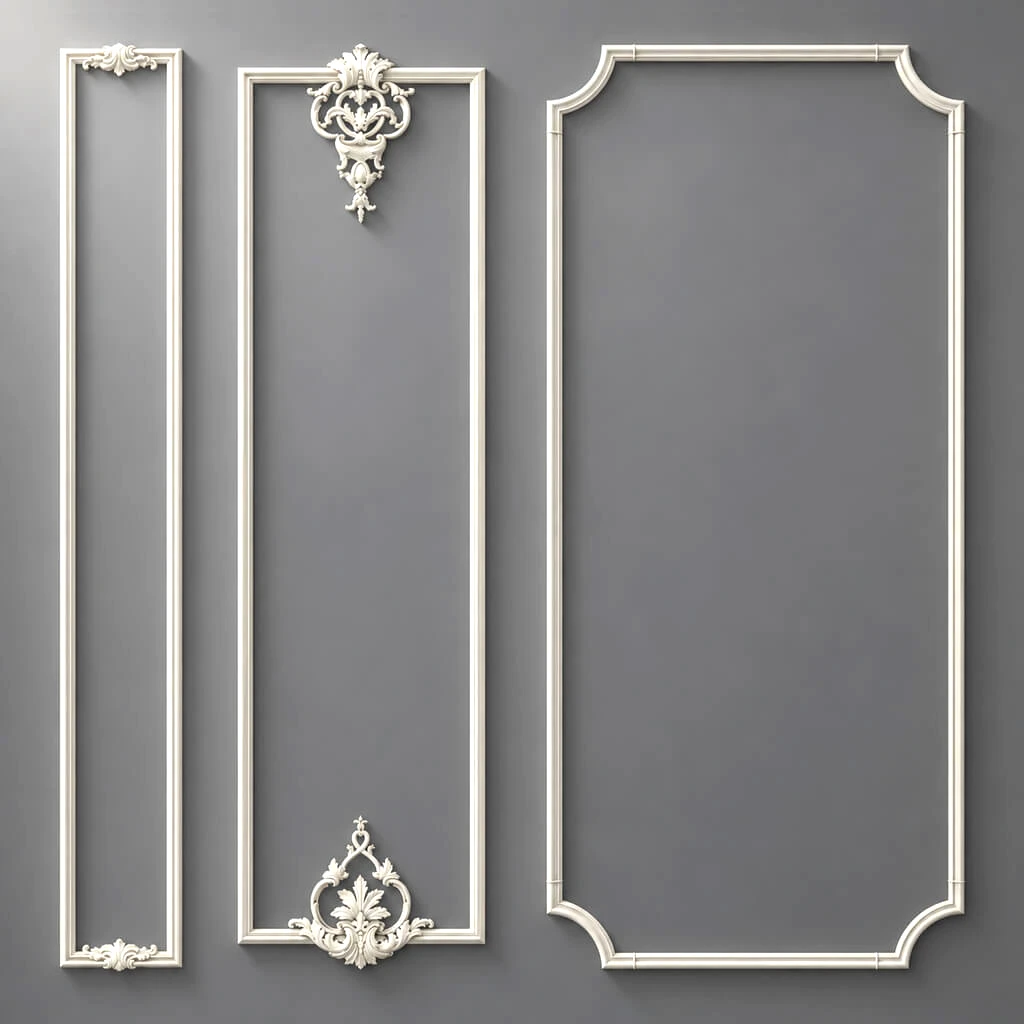
Moldings made of polyurethane — is the main tool for classic wall decoration. They are used to form rectangular and vertical panels, horizontal bands, decorative frames around areas. The molding structures the wall: what was just a painted surface becomes an architectural element.
In a classic interior, molding frames perform several functions simultaneously: they divide the wall into proportional zones, visually raise the ceiling through vertical lines, and create symmetry — the main principle of classicism.
Ready-made decor sets: time savings and style guarantee
Choosing moldings on your own means understanding profiles, scales, combinations, and proportions. This is within the power of a professional designer. For those who want results without diving into details, classic wall decor Versailles Light offers ready-made sets: all elements are already coordinated in style, scale, and profile. Buy it — and assemble without mistakes.
Wall decor in neoclassicism — a different choice: more restrained, geometric, without Baroque overload. For a modern apartment with classic aspirations — an ideal option.
Stucco painting: a subtlety that is underestimated
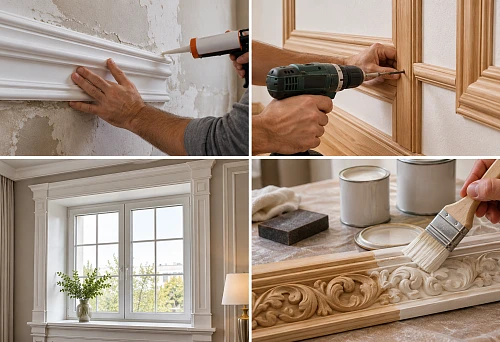
One of the most effective techniques is to paint polyurethane decor the same color as the wall. Then the moldings create relief without color contrast: the wall looks voluminous, architectural, but not overloaded. Another approach is a delicate contrast: white stucco on a wall of ivory or soft beige. This technique has long become a classic — in the most literal sense of the word.
You can also patinate: imitation of gilded or silver decor creates the feel of an antique interior. It is important that the patina of the moldings echoes the patina or tinting of the furniture hardware.
How to choose furniture for walls with stucco
This is the question most often asked — and answered least often substantively. Usually they advise "stick to one style," which explains nothing. Let's try to break it down more specifically.
The principle of activity balance
If the wall is rich in decor — moldings, stucco ornaments, complex frames — the furniture should be calmer. Expressive stucco already makes the room rich. Furniture with simple profiles, without carving, but with correct proportions will create the necessary balance. Furniture in a classic interior style in this case is not ascetic, but restrained: clean lines, quality fabric, wooden details without overload.
If the walls are decorated with strict moldings without ornamentation, modern classic furniture with more expressive decor will take center stage. Here the walls are the background, the furniture is the soloist.
Dark classic furniture: a special case
Dark classic furniture — made of tinted oak, walnut veneer, wenge — requires a special approach to the walls. Against the dark background of the furniture, white or light stucco reads as a clear counterpoint: expressive and convincing. Here Polyurethane wall decor it is better to paint in a light tone, contrasting with the furniture.
If dark wood furniture stands against a wall with patinated moldings, that is already a palace story. Such an interior requires high ceilings and sufficient natural light, otherwise the room will feel oppressive.
Light furniture and stucco molding
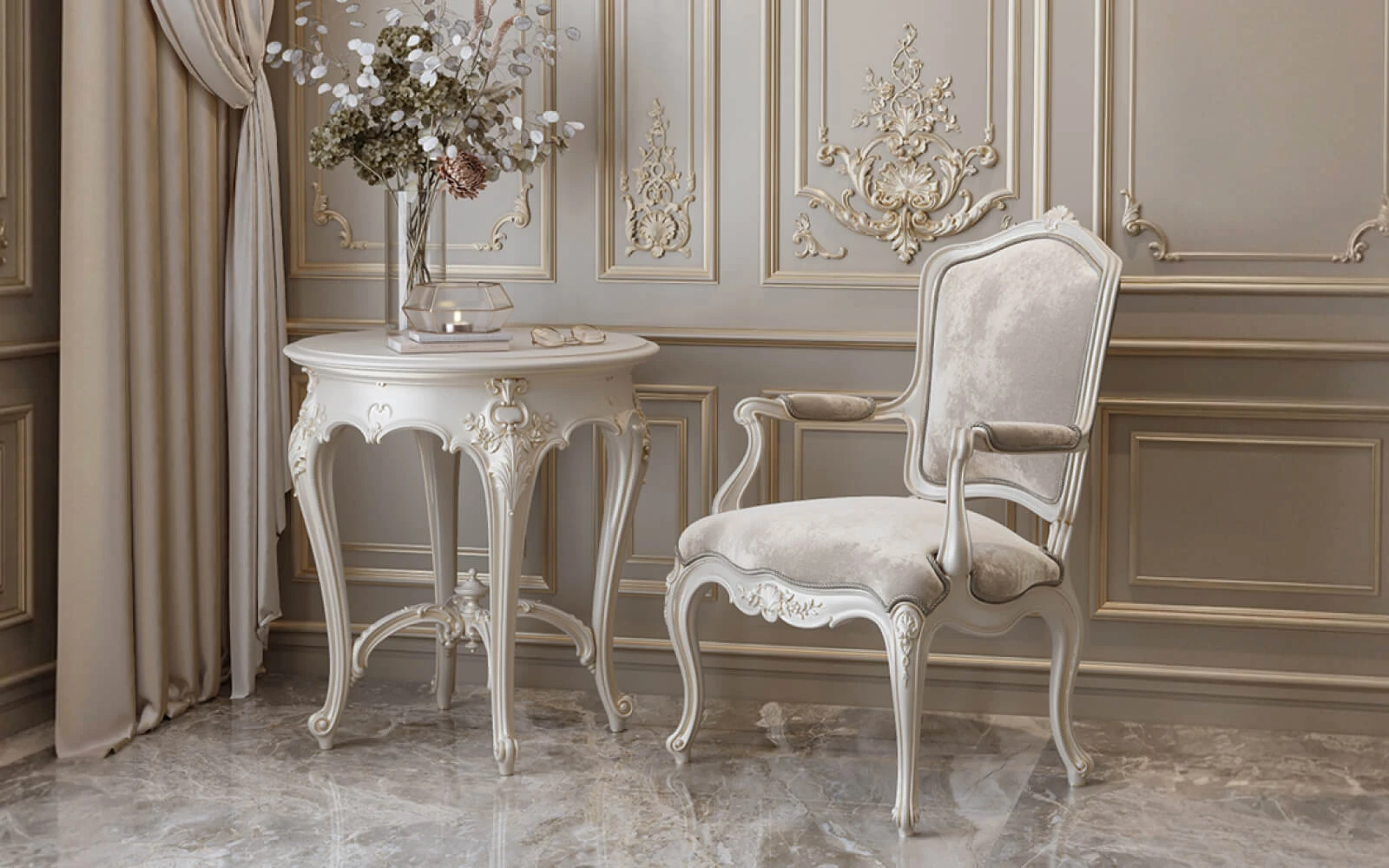
Light-colored classic-style living room furniture is one of the most popular requests today. Light furniture: cream, pearl, ivory — works well with Neoclassic Light wall decor. Delicate moldings, subtle relief, calm geometry — this design does not compete with light furniture, but creates a worthy backdrop for it.
The colors of classic furniture are a whole separate world: milky, ivory, champagne, gray-beige, light walnut, bleached oak. Each of these tones will find its match among polyurethane decors with a competent approach to tinting.
Furniture decor: legs, supports, handles, and brackets
Here is the block that really makes a difference. You can buy an excellent molding, choose the furniture correctly, maintain the color — and still end up with an unfinished interior. Why? Because the table legs, cabinet handles, and console supports are chosen randomly.
Furniture details are the connecting layer between the wall and the furniture. They are what create or destroy the sense of style.
Wooden legs: visual weight and character of furniture
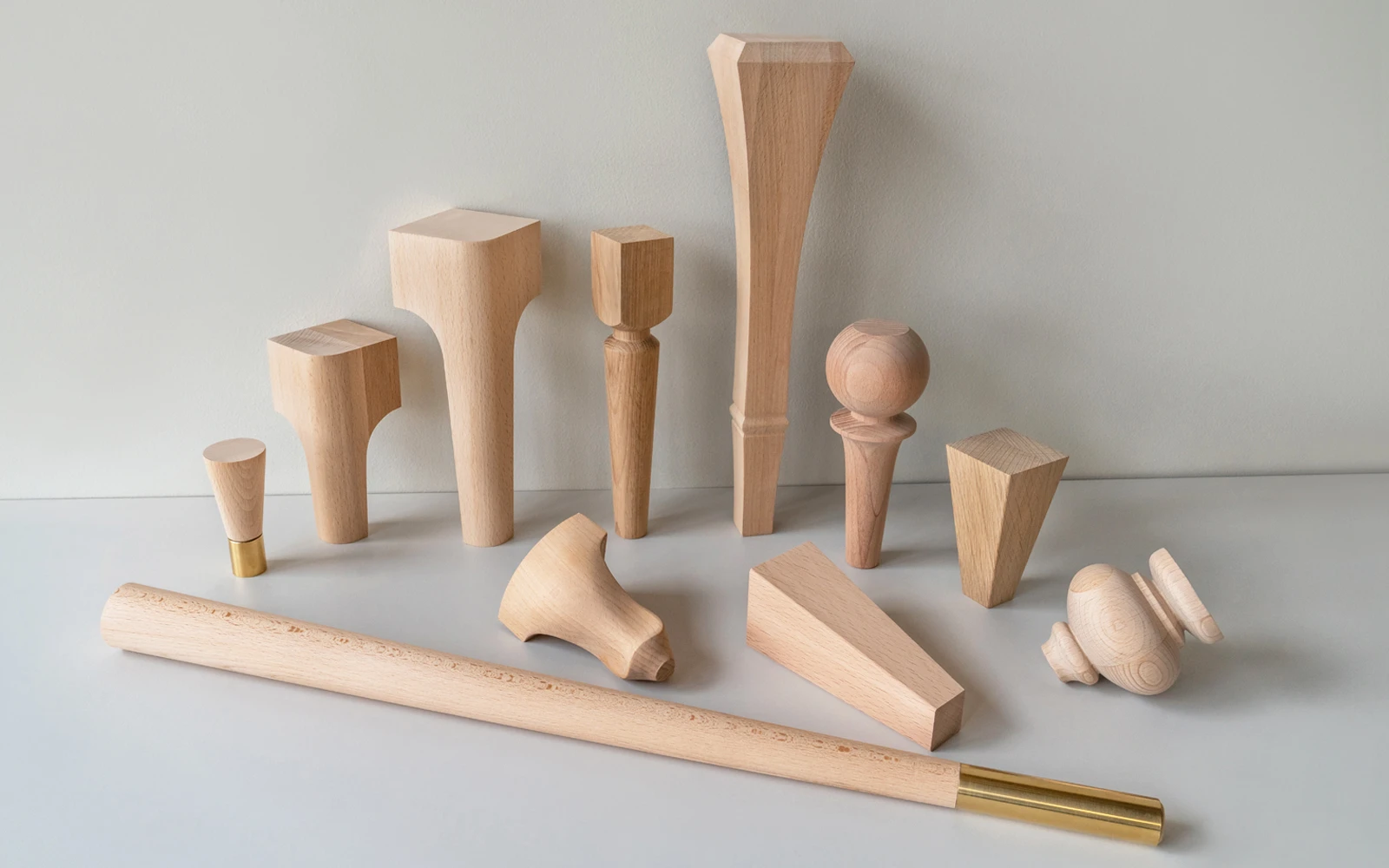
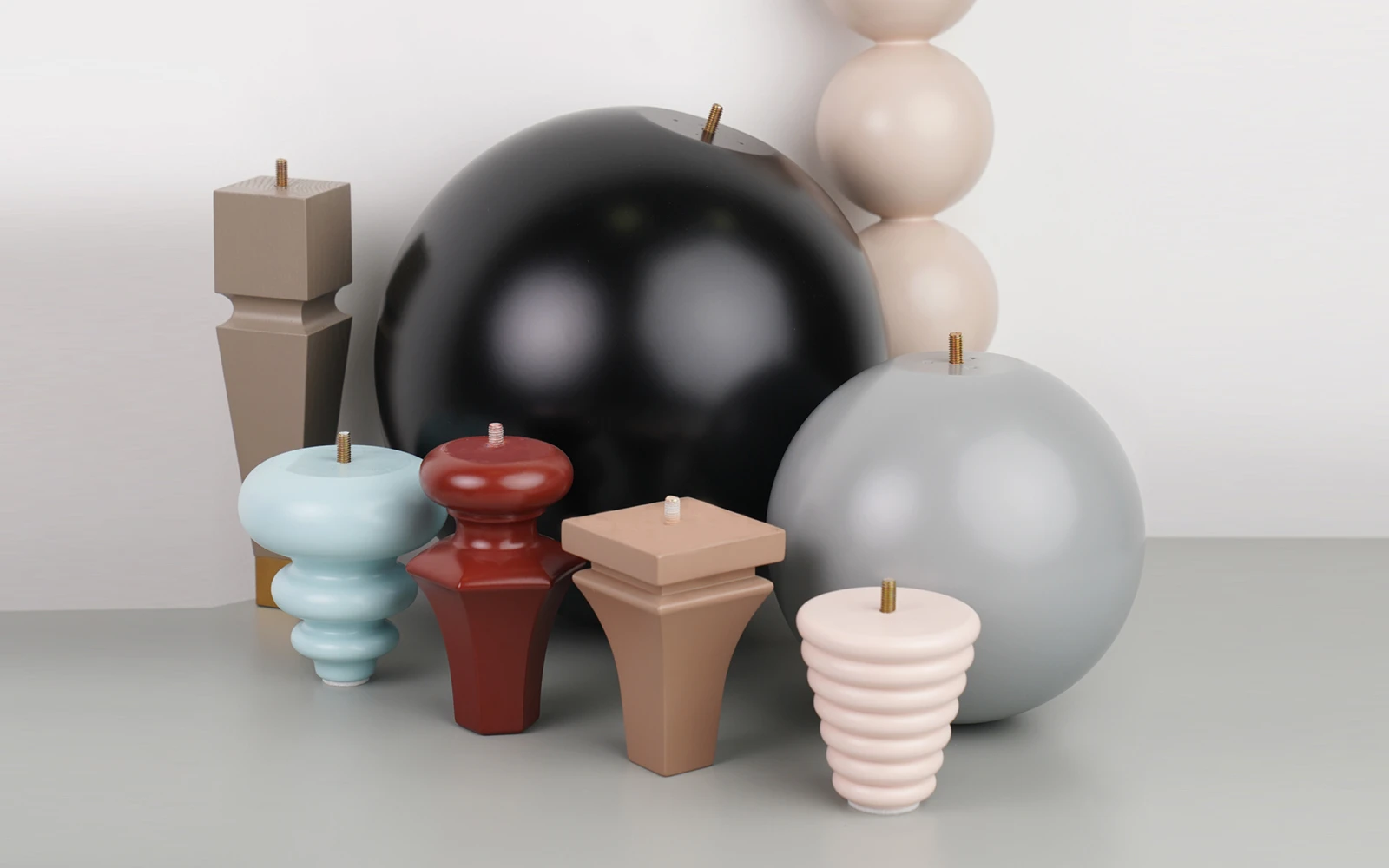
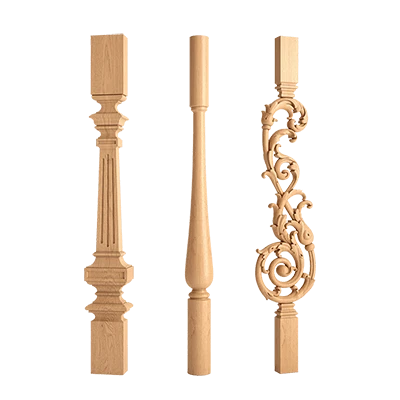
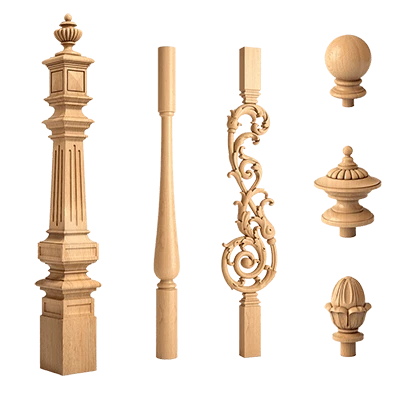
Wooden furniture legs are the first thing the eye notices after wall moldings. They set the character of the piece: light or heavy, formal or everyday, carved or calm.
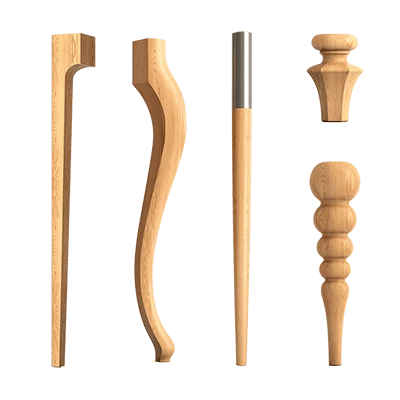
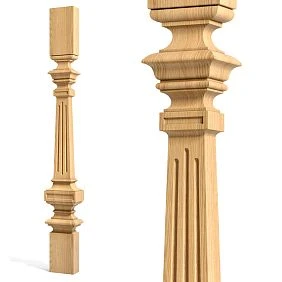
For a classic sofa — wooden sofa legs with soft turning, S-shaped curves, or light carving at the base. Such legs echo the plasticity of molding profiles and create a visual rhyme with the wall.
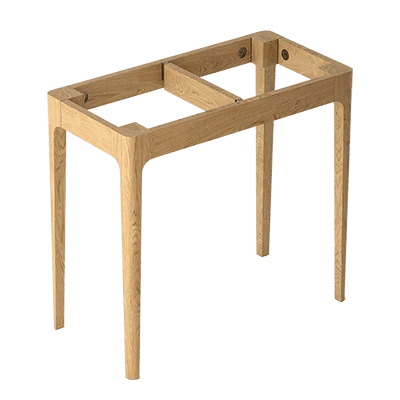
For a dining table — legs made of solid oak or beech, faceted or turned. These legs bear the load while looking architectural. It's worth buying wooden table legs with a margin of strength: dining furniture operates under demanding conditions.
Coffee table legs are a special case. More delicate shapes are appropriate here: thin turning, a tapered silhouette, a small decorative relief. Coffee table legs in a classic interior can have gilded tips — this instantly adds luxury.
For a chair — wooden chair legs with vertical turning or a ribbed surface. A good chair leg is both a structural element and a decorative detail: it must bear the load and enhance the space.
It's worth buying wooden furniture legs from one place — this ensures consistency of wood species, tone, and style. Mixing different manufacturers, different wood species, and different stain shades on furniture in the same room is a common mistake that ruins cohesion.
High furniture legs are a separate story. In a classic interior with high ceilings, tall furniture legs make pieces light and airy. Visually elevated furniture does not weigh down the space and pairs well with molding frames on the lower part of the wall.
Decorative supports: power and elegance
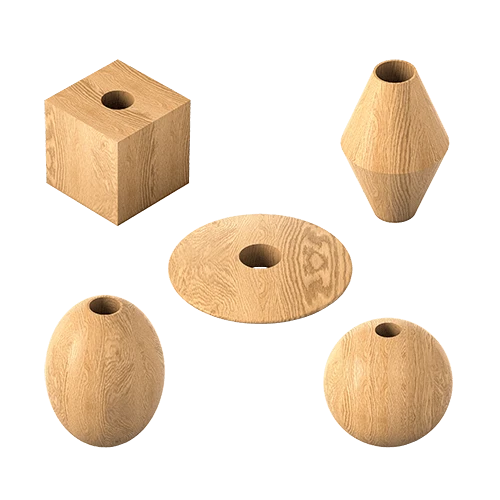
A decorative furniture support is both a load-bearing and decorative element. It is installed under consoles, wall-mounted cabinets, sideboards, and credenzas. The shape of the support can be classic — vase-shaped, faceted, with stucco relief. A round furniture support with a turned profile fits well into an interior with molding frames: the rounded lines of the support echo the smooth profiles of the moldings.
You should buy furniture supports considering the height of the console or shelf: it is important that the support is proportional to the load and scale of the furniture piece. A support that is too thin under a massive sideboard looks unsteady. A support that is too massive under a light shelf looks caricatured.
Several types of furniture supports — with threads, turned relief, or stucco decor — can be used in the same space if they are consistent in tone and scale.
Brackets: shelves, consoles, and decorative accents
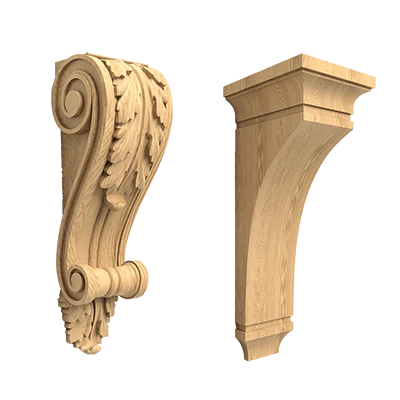
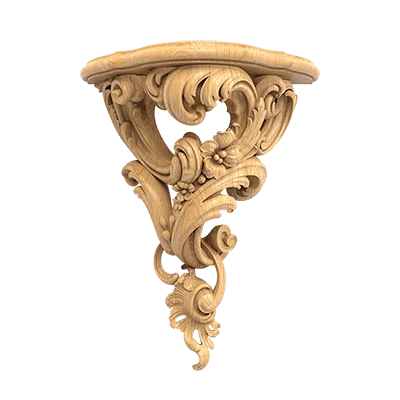
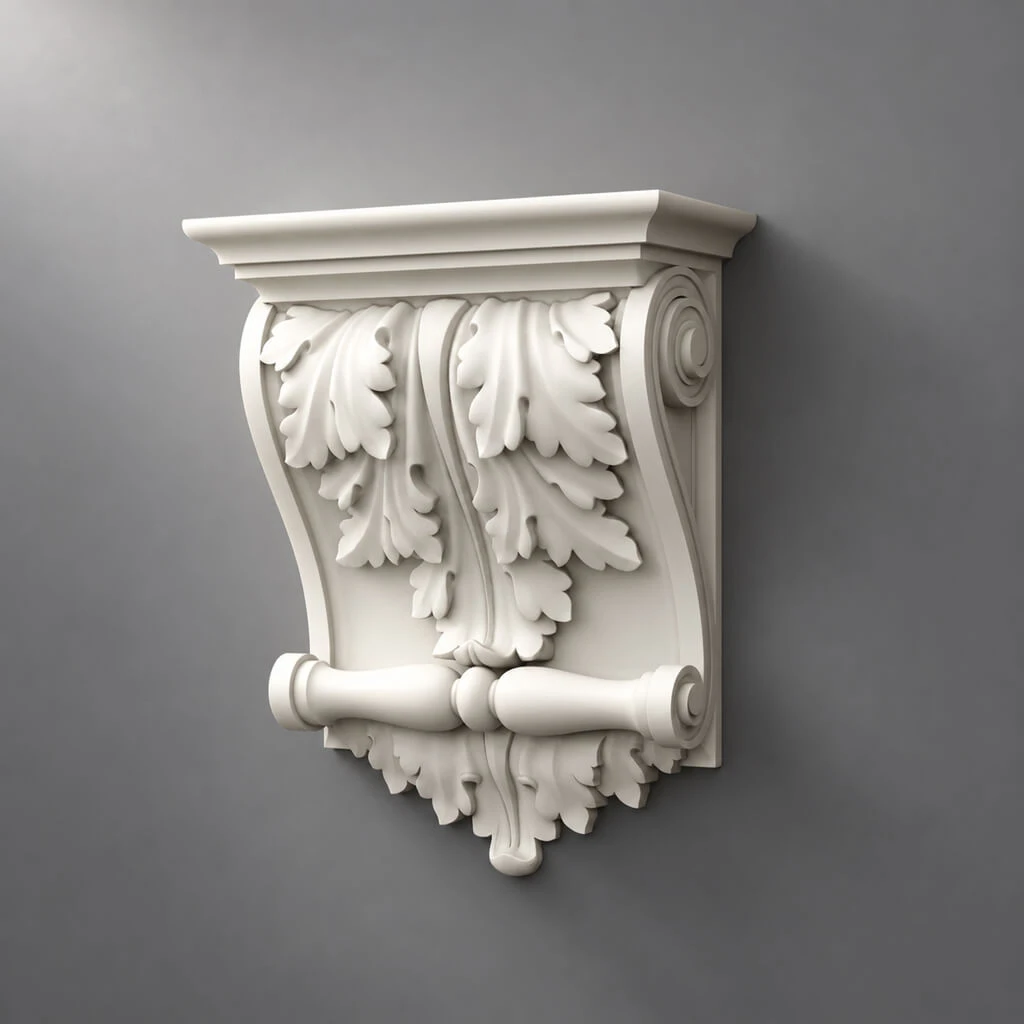
A furniture bracket or decorative bracket is a detail that is often underestimated. But in vain: it is the bracket that holds the shelf above the desk, the console in the hallway, the wall-mounted cabinet above the chest of drawers. And it is the bracket that is visible — especially from the side.
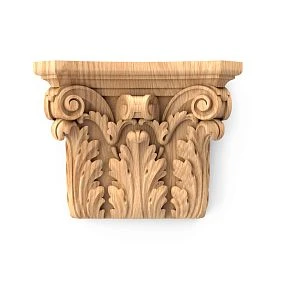
A wooden bracket with a carved or turned profile in a classic study or hallway becomes an independent decorative element. It not only bears the load — it tells about the character of the interior. decorative elements for furniture from polyurethane can be added to the side surface of the bracket — and the wooden structure will acquire stucco richness.
Handles: what cannot be ignored
A wooden furniture handle is a touch of style. Every time you open a door or drawer, you hold in your hand either something random or something appropriate.
A wooden bracket handle — for kitchen fronts, sideboards, cabinets. Its arc can be straight or smoothly curved — depending on the character of the furniture. A wooden knob handle — for chests of drawers, nightstands, small drawers. It is less noticeable, but that is why it is especially important: the wrong knob on a beautiful chest of drawers stands out like a false note.
You should buy wooden handles for furniture at the same time as the legs: unity of tint, wood species, and style is mandatory. If the legs are made of dark tinted beech, the handles should be made of the same material in the same color scheme.
Furniture handles for a children's room are a special case. Safety is key here: no sharp corners, no small parts that can be broken off. A children's wooden furniture handle is warm, natural, safe, and durable.
Bagette, baseboard, and layout: the link between wall and furniture
Between wall decor and furniture decor, there is an intermediate layer — wooden finishing elements. They create the transition between the wall and furniture, between the upper and lower architecture of the room.
Wooden baguette: a frame as an architectural element
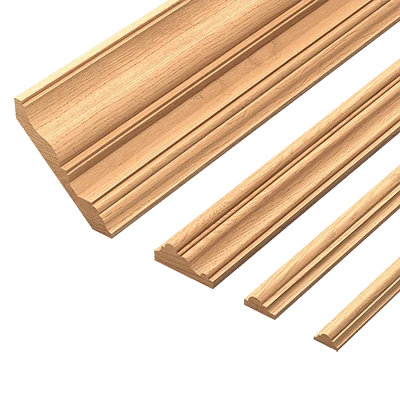
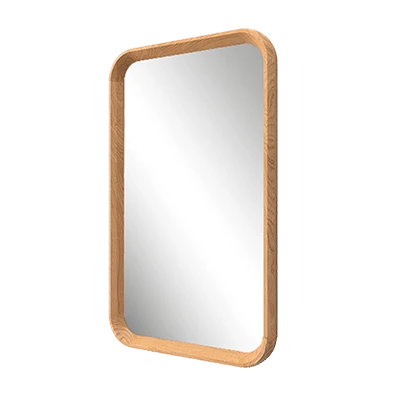
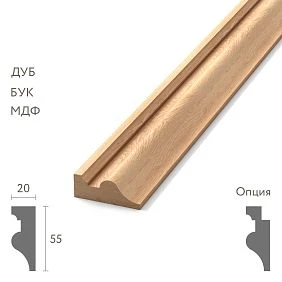
A wooden baguette for paintings is not just a frame. In a classic interior, a painting without proper framing looks unfinished. The baguette profile should echo the profile of wall moldings: if the molding has a semicircular protrusion, a baguette with similar plasticity will create a sense of a unified system.
You can buy a wooden baguette for different purposes: a wide classic profile for large paintings, a narrow baguette strip for graphics and watercolors, a figured profile with stucco decor for formal mirrors. A wooden baguette for paintings in a hallway or living room is not a decoration in itself, but part of a decorative system.
An important rule: the color of the wooden baguette should be linked either to the color of the furniture (dark baguette with dark furniture) or to the color of the stucco (light or gilded baguette with painted moldings). A random frame color destroys the ensemble.
Wooden baseboard: the lower boundary of the interior
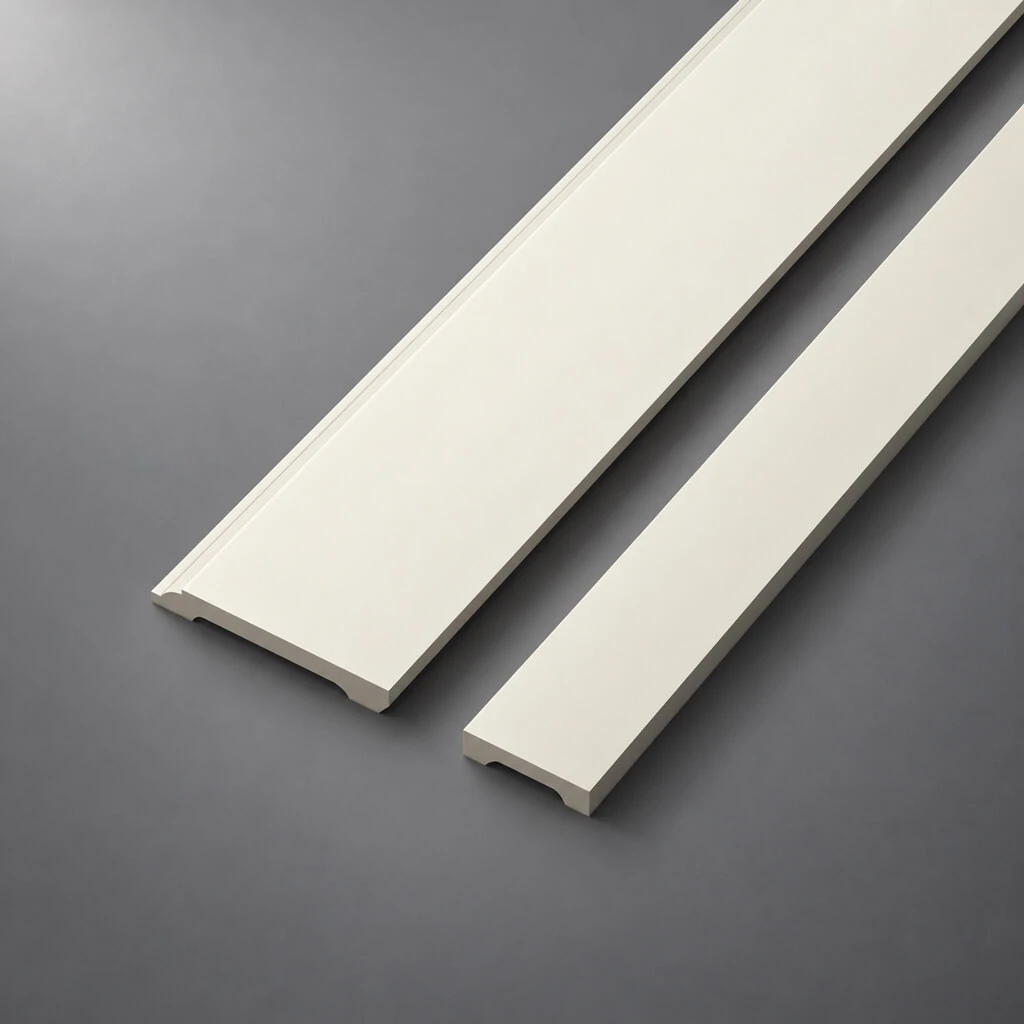
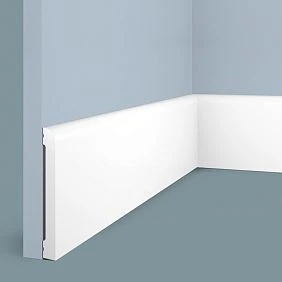
The baseboard is the first thing the eye sees at the base of the wall. A wooden baseboard for the floor in a classic interior should be high: at least 80–100 mm, and in rooms with high ceilings — 120–150 mm. A narrow, thin baseboard under molding frames looks like saving money in the wrong place.
It is worth buying a wooden baseboard at the same time as choosing moldings: it is important to coordinate the height of the baseboard with the scale of the molding frames. A baseboard that is too high "eats" the lower frame — one that is too low creates emptiness.
The color of the baseboard can match the color of the door — this is a classic technique that creates a single line around the perimeter of the room. Alternatively, the baseboard can match the furniture tone — then it visually "grounds" the furniture group, connecting it to the floor.
Wooden layout: for facades and doors
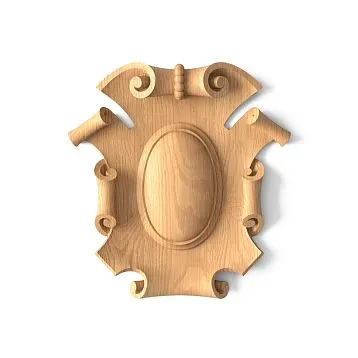
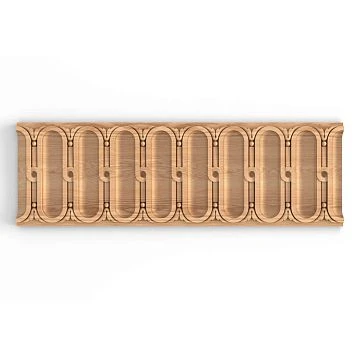
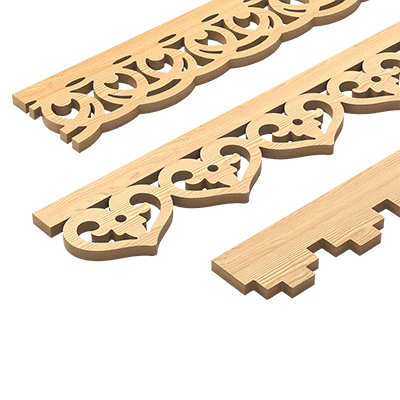
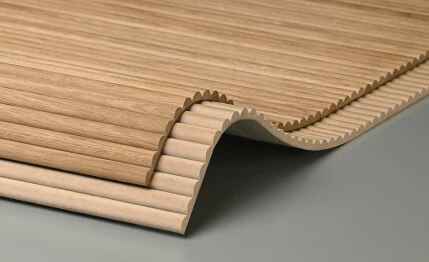
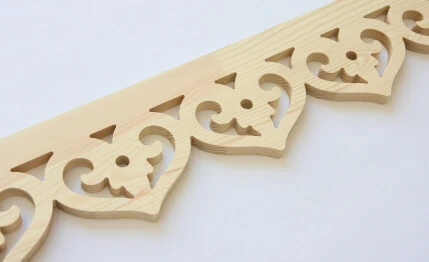
Decorative wooden layout is a narrow strip that is glued or nailed onto flat surfaces, creating a pattern. Shaped wooden layout gives a smooth facade a classic relief. Flat wooden layout is a more restrained option for interiors in a neoclassical style.
If the walls are decorated with molding frames, and a similar pattern from wooden layout is reproduced on the furniture facades — a rare feeling of architectural consistency arises: walls and furniture speak the same geometric language.
Wooden glazing bead: fine work
Wooden glazing bead is the most inconspicuous but the neatest finishing element. It is used to fix glass in cabinet and wardrobe doors, to decorate thin joints, and to create miniature decorative lines on panels and facades. A glazing bead 10–12 mm wide made of oak or beech, painted to match the facade, is a detail that is not noticed while it is in place. And it is immediately noticed when it is missing or made of a different material.
Classic living room: wall, furniture, and decor in detail
The living room is the main stage of a classic interior. Everything unfolds here: stucco behind the sofa, molding frames on the side walls, a chandelier above the coffee table, a chest of drawers against the wall with a mirror in a frame.
Sofa area: accent without overload
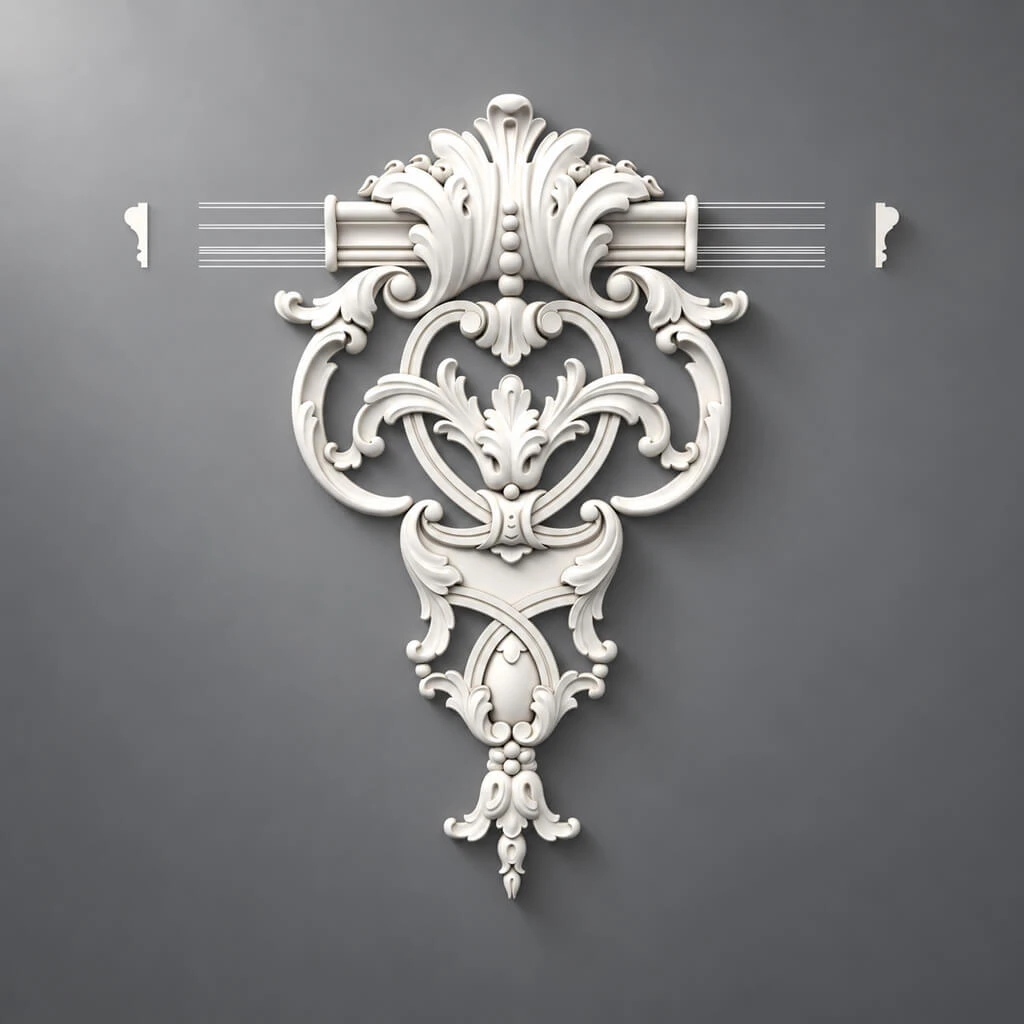
Behind the sofa is the main wall of the living room. This is where it works Polyurethane wall decor at full strength. A molding frame covering the entire width of the wall behind the sofa creates a focal point. If you add stucco corner elements or Decor for Molding in the form of central overlays — the wall becomes an architectural statement.
A classic-style sofa with wooden legs, upholstered in dense fabric in neutral tones, looks like an element of a well-thought-out ensemble against this background, rather than a random purchase.
Coffee table and armchairs
Wooden legs for a coffee table are a visible element located in the center of the living room. In a classic interior, table legs should have fine turning or an elegant curve. Massive straight legs are for more restrained neoclassicism. Twisted or vase-shaped legs are for rich classic style.
Armchairs with high wooden legs create a feeling of lightness. Classic-style living room furniture — a sofa, two armchairs, a coffee table — looks like a unified ensemble when all wooden details are kept in the same tone and stylistic key.
Chest of drawers and mirror
A chest of drawers with wooden handles and a mirror in a wooden frame is a classic pair for the living room. decorative elements for furniture polyurethane ones can be added to the facades of the chest of drawers: corner overlays, central medallions, frieze strips. After such a transformation, an ordinary chest of drawers acquires a classic look without replacing the body.
A wooden handle bracket on the chest of drawers combined with the wooden frame of the mirror creates a connection: wood of the same tone unites furniture items into a logical group.
Classic bedroom: headboard, nightstands and details
The bedroom is the most personal space. Here, classicism is often expressed more softly and delicately than in the formal living room: there is no need for heavy stucco decor; well-considered details are enough.
The headboard as the main accent
The wall behind the bed is the focal point of the bedroom. Neoclassic Light wall decor with delicate moldings creates exactly the desired effect here: quiet wealth without pomposity. Vertical moldings on the sides of the bed visually raise the ceiling and frame the headboard like a theater curtain.
Classic bedroom style furniture suggests a bed with a high headboard, bedside tables with wooden legs, a chest of drawers or a dressing table. All wooden furniture legs should be the same tone: this is the main rule of a classic bedroom.
Bedside tables, chests of drawers, wardrobes
Bedside tables in a classic bedroom are not just for storage. They are a pair of symmetrical items that support the architectural rhythm of the bed. Wooden furniture legs should be bought in pairs: identical legs on both tables create symmetry.
A wooden knob handle on the drawers of the bedside tables is a delicate detail. In a classic bedroom, it can have a slight relief: a rosette, a small medallion, a patterned profile. A wooden bracket handle on the wardrobe doors is slightly more noticeable but just as appropriate.
A wardrobe with wooden paneling on the facades and handles matching the tone of the bed legs is furniture that harmonizes with the walls.
Dressing table: special attention to details
A dressing table in a classic bedroom is an item examined up close. Here, every detail is in plain sight. Wooden legs for tables made of wood with fine turning, a mirror in a wooden frame, drawers with button handles — this is a complete image.
decorative inlays for furniture Polyurethane elements on the facades of the dressing table — corner pieces, a central medallion, a frieze strip — transform a simple item into something much more interesting.
Mistakes when combining stucco molding and classic furniture
Knowing the rules is good. Knowing the mistakes is even better. Here are the most common ones.
Too much carving in one space
Carved sofa legs, a carved mirror frame, carved decor on the cabinet, rich ornamental molding on the wall — all of this together in one room creates the feeling of an antique warehouse, not an interior. The design of stucco molding in a classic space should be coordinated with the character of the furniture carving: either the decor is active and the furniture is calm, or vice versa.
Different wood shades without a concept
Light ash on chair legs, dark walnut on cabinet handles, reddish cherry on a shelf bracket — three different woods without connection. The colors of classic furniture in one room should either be a single tone or a deliberate duo (dark and light). Everything else is randomness that reads as carelessness.
Large stucco molding in a small room
Types of stucco molding vary in scale: from narrow moldings 20 mm wide to rich cornice profiles 200 mm wide or more. In a room of 12–15 sq. m with a ceiling of 2.7 m, a large stucco profile will weigh down the space. The scale of stucco elements should match the scale of the room — this is a fundamental principle.
Modern handles on classic furniture
Chrome U-shaped handles in mid-century modern style on a classic sideboard with molded fronts are a contradiction that immediately catches the eye. Furniture decoration requires unity of all details. A handle is a small item, but it determines the final impression.
The molding does not match the style of the walls
A painting in a thin metal frame on a wall with rich molded panels is a mismatch of scale. Decorative elements for furniture and walls should speak in the same register: large molding requires a large frame.
Stucco without connection to furniture
Rich moldings on the walls — and simple chipboard furniture without any decorative details. There is no connection. Plaster ornament for walls and ceilings creates an expectation: after such a wall, the furniture should be on par. That is why furniture decoration — adding wooden legs, polyurethane overlays, wooden handles — is not an optional luxury, but a necessity.
Interior by rooms: what and where to use
| Room | Wall decor | Furniture details | Wooden elements |
|---|---|---|---|
| Living room | Molding frames, decor behind the sofa, cornice | Sofa and armchair legs, console supports, dresser handles | Mirror and picture frame molding, high baseboard |
| Bedroom | Headboard decor, vertical moldings | Bed and nightstand legs, button handles on drawers | Baseboard, layout on cabinet fronts |
| Office | Strict moldings, panels, horizontal band | Shelf brackets, supports, pull handles | Dark frame molding, tinted table legs |
| Hallway | Narrow moldings, frames at panel level | Hanger brackets, console support | Baseboard, door leaf layout |
| Dining room | Decor in the dining area, cornice | Dining table legs, chair legs | Picture frame molding, high baseboard |
How to choose everything you need at STAVROS
When you realize that an interior is a system, not a collection of beautiful things, a new question arises: where to get all the elements of this system in a single style, with quality guaranteed, without endless searching?
STAVROS is a Russian company that produces polyurethane decor for walls and furniture from European raw materials with a density of 150 to 420 kg/m³. Production follows strict standards: surface detailing, profile precision, paint durability — all are checked at every stage.
In the STAVROS catalog for a classic interior you will find:
-
Polyurethane wall decor — frames, panels, relief elements in 15 collections, including the classic Versailles Light and the restrained Neoclassic Light.
-
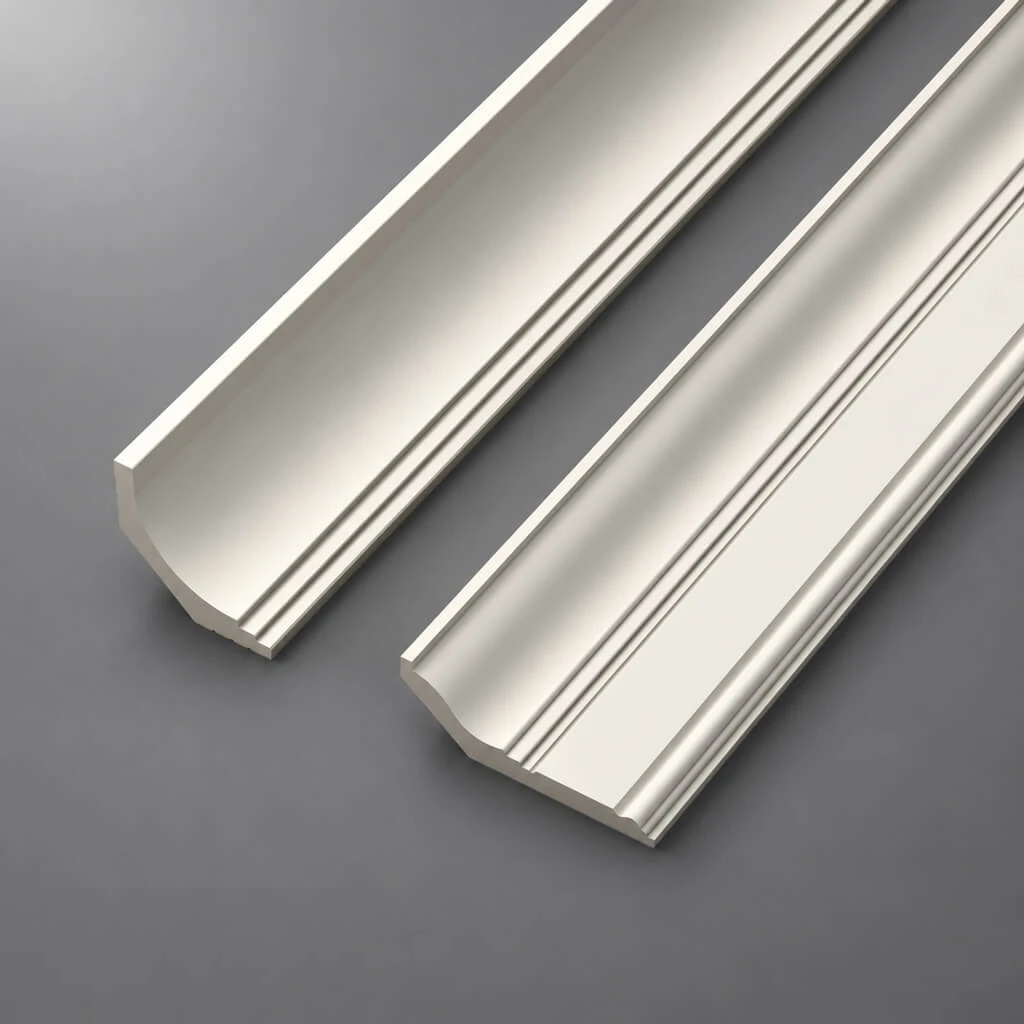
moldings, cornices, and baseboards — profiles of different scales for horizontal and vertical scenarios.
-
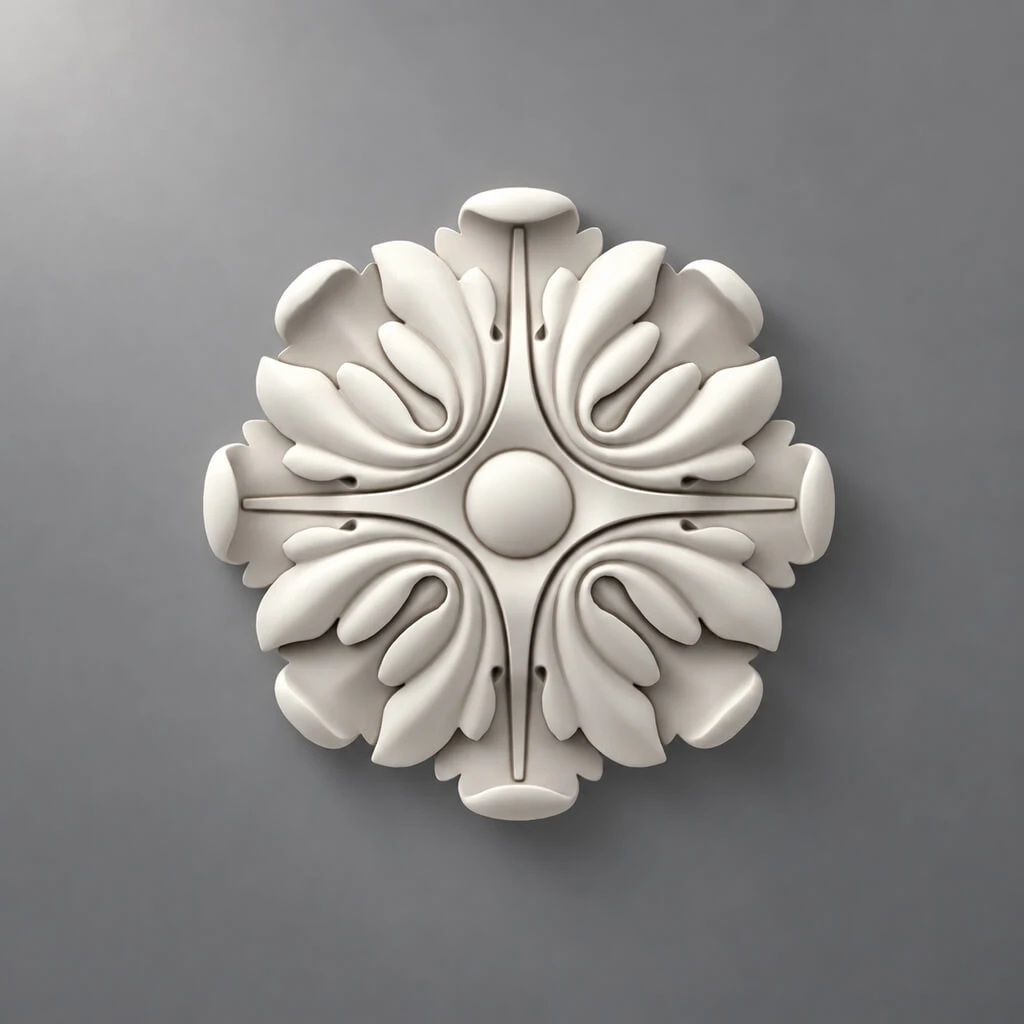
decorative inlays for furniture — corner, center, and frieze elements for updating facades.
-
Decor for Molding — corner and center overlays for reinforcing molding frames.
-
Neoclassic Collection — for modern apartments where classic style is needed without Baroque heaviness.
-
Classic decor Versailles Light — for formal living rooms, halls, and country houses.
For those who plan to install the decor themselves or supervise a craftsman, detailed materials are prepared: installing polyurethane molding — about clean corners, hidden joints, and painting, as well as a practical guide to installing stucco molding for professional craftsmen.
STAVROS works with designers, foremen, developers, and private clients across Russia. Consultation on selecting decor for a specific project is free. Because STAVROS understands: a good result is more important than a quick sale.
FAQ: Answers to popular questions
Is polyurethane wall decor suitable for a classic interior?
Yes, polyurethane decor is one of the best materials for classic wall design. It is lighter than plaster, easier to install than wood, and allows for reproducing complex profiles with high detail. It can be painted any color — to match the wall, furniture, or baseboard. Polyurethane moldings optimally suited for molding frames, friezes, cornices, and accent zones.
How to combine stucco molding and classic furniture?
The main principle is balance of activity. If the stucco on the walls is rich in ornamentation, it is better to choose furniture with calmer decor. If the furniture is expressive and carved, the walls can be designed with strict molding frames without ornamentation. The color of the wooden furniture details should be coordinated with the tone of the stucco or create a deliberate contrast.
Which furniture details go well with stucco molding?
Classic stucco molding pairs well with turned or lightly carved wooden legs, decorative vase-shaped or faceted supports, wooden handles with profile decor, brackets with turned relief, and polyurethane overlays on furniture facades. All details should be consistent in tone and style.
Can wooden baguette be used next to polyurethane stucco molding?
Yes, and this is a good solution. Wooden baguette frames paintings, mirrors, and decorative panels, while polyurethane stucco molding frames the wall itself. It is important that the baguette profile echoes the profile of the wall moldings: similar plasticity creates a sense of a unified system.
What to choose for a living room in a classic style?
For a classic living room, the optimal set is: Polyurethane wall decor — molding frames and an accent area behind the sofa, a tall wooden baseboard, a wooden baguette for mirrors and paintings, wooden furniture legs for the sofa and armchairs, wooden handles on the chest of drawers, Decorative overlays for facadesAll of this in a single tone and style.
How to choose wooden legs to match the stucco molding?
Look at the profile of the moldings: if it is smooth, with rounded protrusions — choose legs with soft turning. If the molding is geometric, faceted — choose legs with straight edges. If the stucco has a floral ornament — choose legs with light carving at the base. The main thing: the legs should be a continuation of the wall's plasticity, not an element from another interior.
Is a tall baseboard necessary in a classic interior?
Yes. A wooden baseboard less than 80 mm high in a classic interior looks like a cost-saving measure. For rooms with a ceiling of 2.7–3.0 m, the optimal baseboard height is 100–120 mm. For high ceilings (from 3.5 m) — 150 mm and above. The baseboard sets the scale for the entire lower tier of the interior.
Can old furniture be updated using polyurethane overlays?
Yes, and this is one of the most effective ways to decorate furniture. decorative elements for furniture Polyurethane overlays are glued onto facades, side walls, and friezes. After painting to match the furniture, they become indistinguishable from factory decor. This is cheaper and faster than replacing the furniture set.