








































Article Contents:
- What unites the CPU-13-1 and CPU-13-2 kits
- How is CPU-13-1 different from CPU-13-2
- CPU-13-1: when it's better to choose a narrow stucco decoration kit
- CPU-13-2: when you need a wide kit for the central wall
- How to choose CPU-13-1 or CPU-13-2 based on wall size
- CPU-13-1 or CPU-13-2 for a sofa, bed, console, and wardrobe
- For the wall behind the sofa
- For the wall behind the bed
- For the area above the console
- For the wall next to the wardrobe
- Where the CPU-13-1 and CPU-13-2 kits look best
- Entry Hall
- Bedroom
- Living Room
- Hallway
- How to understand which kit suits: CPU-13-1 or CPU-13-2
- Common mistakes when choosing the CPU-13 kit
- What to choose: CPU-13-1 or CPU-13-2
- FAQ: Answers to Popular Questions
- About the Company STAVROS
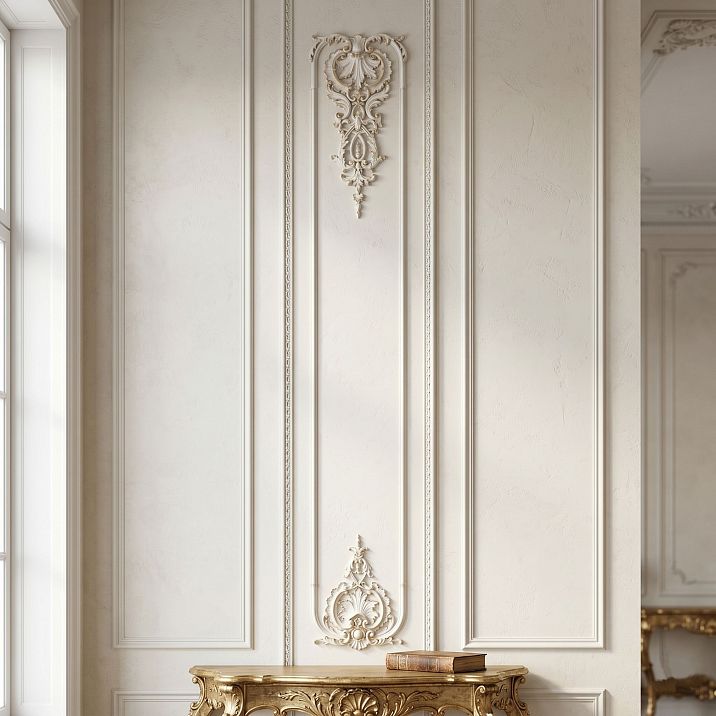
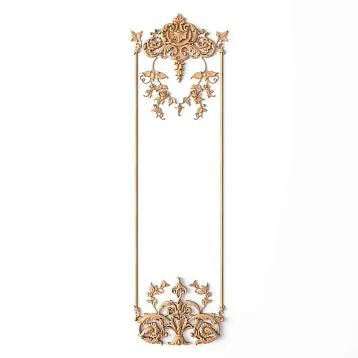
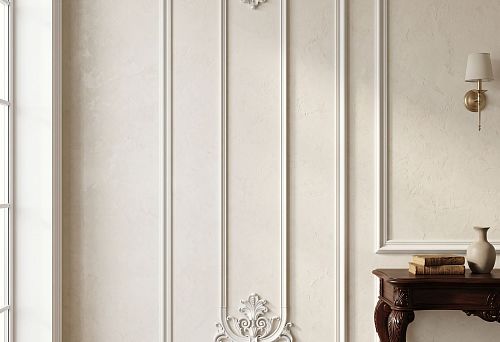
Sometimes the choice comes down not to beauty, but to an honest question: "What exactly do I need to do with this wall?" CPU-13-1 and CPU-13-2 from the "Peterhof" collection by STAVROS are not competitors. They are two different tools for two different tasks. One works where a precise vertical accent is needed. The second works where the wall needs to speak at full volume..
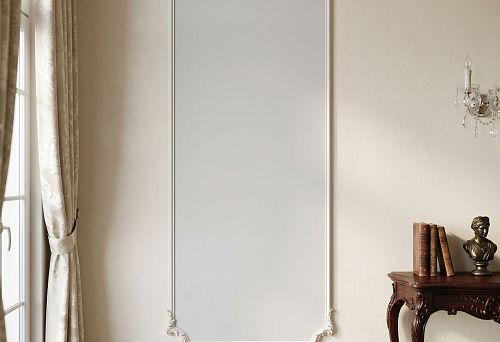
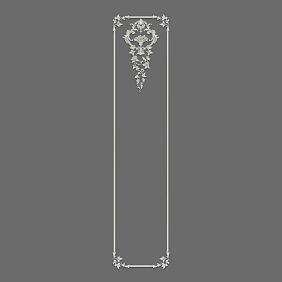
A simple answer to start with: if the task is to decorate a narrow wall section, an area next to a cabinet, a wall above a console, or a hallway — CPU-13-1 will handle it more precisely and cleanly. If a wide central composition is needed behind a sofa, bed, in a living room, or a spacious hall — CPU-13-2 creates exactly the scale that an accent wall requires. Further details, nuances, and specific scenarios will help make the right decision.
What unites the CPU-13-1 and CPU-13-2 kits
Before distinguishing them, it's worth looking at what holds these two kits together. Both belong to the "Peterhof" collection — and this is not just a common label. The collection is built as a unified architectural system: moldings, corner elements, frame proportions, ornamentation character — everything follows one decorative logic. CPU-13-1 and CPU-13-2 speak the same language, just with different intensity.
What unites these two kits:
-
Both are made of polyurethane — a material that is not afraid of moisture, does not deform with temperature changes, is easy to paint, and can be cut without special tools.
-
Both are fully suitable for painting: in the wall color for a soft architectural effect or in a light contrast for a more expressive accent.
-
Both are mounted with glue — without drilling, dowels, dust, or special skills.
-
Both are organic in interiors in the spirit of neoclassicism, modern classicism, soft decorative stylistics with elegant details.
-
Both can be used in the bedroom, living room, hallway, foyer, study, corridor.
-
Both allow you to get a ready-made decorative composition without independently selecting moldings, overlays and corner elements — everything is already assembled in a set.
Separately, it is worth mentioning compatibility: CPU-13-1 and CPU-13-2 can be used in the same interior. A pair of CPU-13-1 on the sides of the central zone and CPU-13-2 in the center is a classic three-part technique that turns a wide wall into a full-fledged architectural panel.




What is the difference between CPU-13-1 and CPU-13-2
The difference between these two sets is the difference between a violin and a cello. One instrument sounds more precise and higher, the second — deeper and more voluminous. Both are good. But they play their parts.
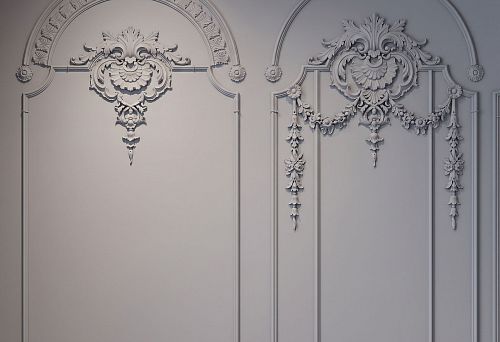
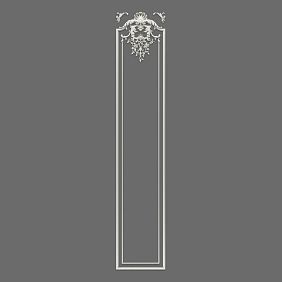
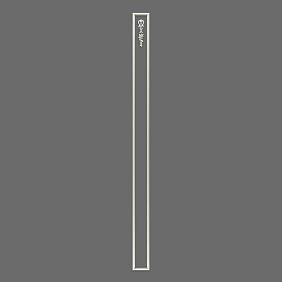
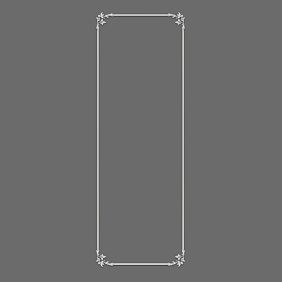
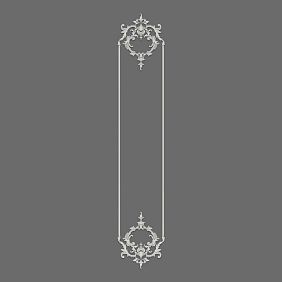
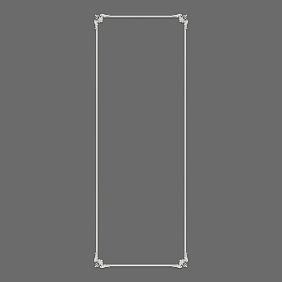
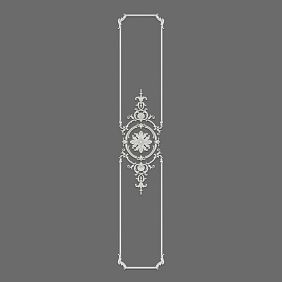
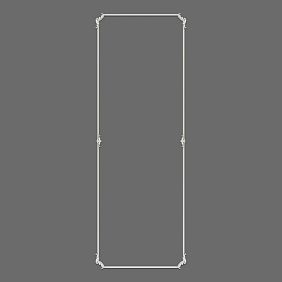
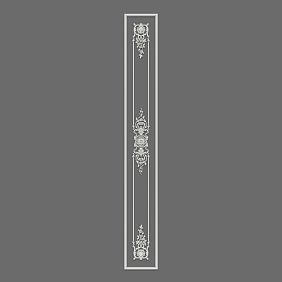
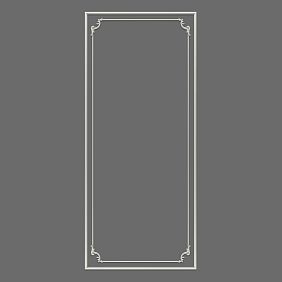
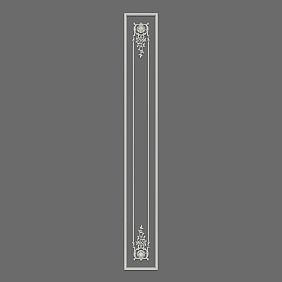
CPU-13-1 is narrow, vertical, assembled. Its proportion works for elongation, for accent, for architectural vertical. CPU-13-2 is wider, more noticeable, more central. This is a set that takes on the role of the main decorative statement on the wall.
| Criterion | CPU-13-1 | CPU-13-2 |
|---|---|---|
| Main Scenario | Narrow vertical accent | Wide central composition |
| Where to use | Pier, console, area near the wardrobe, corridor | Wall behind the sofa, bed, TV area, living room |
| Visual effect | Neat, elongated, calm | More noticeable, interior, accent |
| Wall type | Narrow or medium | Medium or wide |
| Furniture type | Console, chest of drawers, wardrobe, narrow cabinet | Sofa, bed, large furniture group |
| When to choose | When it's important not to overload the area | When a main wall decor is needed |
The logic of transitioning from one to another is clear: the wider and more significant the area, the more expressive a set it can accommodate. A narrow wall section won't handle a wide frame — it has no room to breathe. A large wall behind the sofa won't reveal the potential of a narrow set — it gets lost there. For the principles of this choice — a detailed breakdown in the articleCPU-12-1 or CPU-12-2: which set from the 'Petersburg' collection to choose: the same logic is broken down on another collection, with different examples.
Choosing between CPU-13-1 and CPU-13-2? First, define the task: for a wall section, console, or wall next to a wardrobe, CPU-13-1 is more often suitable, while for a central wall behind a sofa or bed, CPU-13-2 is.
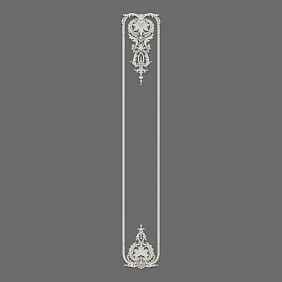
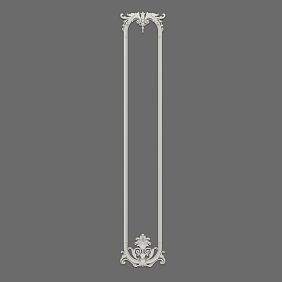
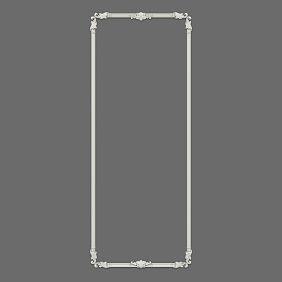
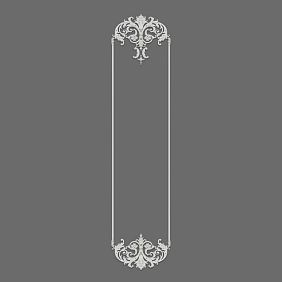
Our factory also produces:
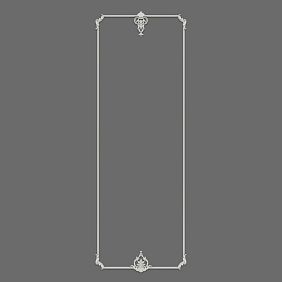
CPU-13-1: when it's better to choose a narrow set of stucco decor
There is a special type of space where decor should be precise, not loud. Where the wall does not invite large-scale solutions, but does not want to remain empty. It is for such areasnarrow set of stucco decor for the wallCPU-13-1 is created with the precision of a surgical instrument.
Let's look at specific situations — not in theory, but through real scenarios.
Narrow wall section. A classic of city apartments: a built-in wardrobe takes up almost the entire span, leaving a narrow vertical strip on the right or left — 50, 60, 70 centimeters. Leave it empty? Boring. Hang a painting? Not quite. CPU-13-1 here is an elegant decorative solution that frames the wall section as a deliberate architectural gesture, without overwhelming the limited space. More about such scenarios in the articlestucco decor for the wall next to built-in furniture.
Wall above a console. A console is furniture with character, but not pretentious monumentality. Its width rarely exceeds 100–120 cm. Above such a console, a wide frame would look disproportionate: the decor looms, the furniture gets lost. CPU-13-1 in this area is the right pair: its narrow format relates proportionally to the console, and the entire "axis" — furniture plus decor — is perceived as a single well-thought-out zone. How to properly build this pair is covered in the materialStucco decor for a wall with a console.
Area between a door and furniture. One of the trickiest spots in any apartment is the narrow gap between a doorway and the side wall of a wardrobe or section. CPU-13-1 here is not just appropriate — it turns this "residual" area into part of the overall decorative concept. Two such sets on either side of the doorway create the symmetry that was missing.
Hallway. The hallway space is the most densely packed in the apartment. Wardrobe, mirror, console, bench, shoe cabinet — all coexist in a minimal area. There is no room for broad decorative gestures here: every centimeter is occupied. CPU-13-1 in the hallway is decor that integrates into the existing system, without competing with furniture or weighing down the perception.
Corridor. The corridor is a tube-like space: elongated, narrow, with a low ceiling in perception. Horizontal decorative elements here only enhance the tunnel effect.Vertical wall decor made of polyurethaneworks as an antidote: it draws the eye upward, creates rhythm, and makes the corridor architecturally rich. Several CPU-13-1 units with the same spacing along the corridor length — this is no longer just finishing, it's an interior solution.
Side area next to a bed or sofa. Sometimes the task is not to decorate the wall behind the furniture, but to accentuate the side zones. Two CPU-13-1 units symmetrically on both sides of the central furniture group — and the wall gets architectural "columns" that hold the space. This technique is especially effective when the central wall is already decorated with a mirror or painting.
Get Consultation
CPU-13-2: when you need a wide set for the central wall
There are walls that await their moment. A large flat plane behind the sofa in the living room. The wall behind the bed headboard in the bedroom, which should become the decorative heart of the room. An accent wall in a spacious hallway, which every entrant sees first. For all these zones, you needWide set of stucco decor CPU-13-2.
This is a set of a different character. It creates not a point accent, but a decorative scene — a zone that structures all the surrounding space around itself.
Wall behind the sofa. The sofa is furniture with a horizontal dominance and serious width. A standard three-seater sofa is 180–200 cm. A corner sofa is 250–280 cm. Against such a background, CPU-13-1 visually "floats": there is decor, but it is not connected to the sofa. CPU-13-2 holds this scale: its width is commensurate with the furniture group, and the entire zone is perceived as a single decorative scene. Details on scenarios for decorating this zone are in the articlepolyurethane wall decor behind the sofa.
Wall behind the bed. The bed headboard is both the vertical and horizontal center of the bedroom. A bed with a width of 160 or 180 cm occupies a significant part of the wall. The decor behind it should be proportionate: wide enough to "frame" the furniture, and expressive enough to become the main accent of the room. CPU-13-2 here is a ready-made basis for an accent wall behind the headboard. How to choose the right decor size for a specific bed width is in the materialhow to choose a set of stucco decor for the width of a bed or sofa. About full scenarios for the bedroom — in the articleStucco molding set for the bedroom.
Central wall in the living room. The living room is a representative space. Here guests are received, time is spent, and style is demonstrated. Decor in the living room carries not only a decorative but also a status function. CPU-13-2 on the central wall in the living room is a statement about the interior: not just finishing, but an architectural gesture.
TV zone. In the TV zone, the television is the dominant object. The decor around it should not compete with it — it should create a context for it. CPU-13-2 here can work as a background frame around the TV or as a decorative panel on both sides of it — provided carefully calculated offsets.
Spacious hall. In apartments and houses with a spacious hall, there is a welcoming area. A large hall wall without decor is an unfinished wall. CPU-13-2 in the hall turns a neutral plane into a thoughtful architectural point that sets the tone for the entire interior.
Large empty wall. Sometimes a wall exists on its own — without furniture, without context. Just a large even rectangle. Here, CPU-13-2 creates a center and structure where there is none. If necessary, it can be supplementedpolyurethane moldingsaround the perimeter to create an expanded decorative panel.
Choosing a set of stucco decor to match your furniture? Check out the«Peterhof» collection: you can choose a narrow set for a pier or a wide one for an accent wall.
How to choose CPU-13-1 or CPU-13-2 based on wall size
Taste is a good advisor, but a tape measure is better. Choosing between two kit formats should start not with a picture on the internet, but with measuring your own wall. It takes five minutes and completely removes uncertainty.
Basic logic: measure the free section of the wall (from cabinet to door, from corner to corner, from the edge of furniture to the nearest obstacle), determine the role of the decor — and then the table puts everything in its place.
| Free wall area | What to choose | Why |
|---|---|---|
| Narrow pier up to 80 cm | CPU-13-1 | Does not overload, maintains verticality |
| Between the cabinet and the door | CPU-13-1 | Supports the vertical, does not compete with furniture |
| Above a narrow console | CPU-13-1 | Looks neat and proportionate |
| Above a wide console | CPU-13-1 or CPU-13-2 | Depends on the width of the furniture and the wall |
| Behind the bed | CPU-13-2 | Works better as a bedroom center |
| Behind the sofa | CPU-13-2 | Does not get lost against wide furniture |
| Large empty wall | CPU-13-2 + moldings | You can expand and structure the composition |
There is one useful tool for checking the size before buying: mark both options on the wall with painter's tape and look from a distance of 2–3 meters. Proportions look different from a real distance than up close. This method is part of a broader algorithm, which is detailed in the articlehow to place a set of decorative moldings on the wall.
If you need to accurately calculate the gaps and check which set is proportional to a specific wall with specific furniture — a step-by-step method is in the articlehow to calculate moldings and stucco decor for a wall.
CPU-13-1 or CPU-13-2 for a sofa, bed, console, and wardrobe
Furniture is the axis of the decorative solution. Not the wall, but the furniture. Its width, height, and placement determine which set will be proportional and which will be random.
For the wall behind the sofa
The sofa sets the horizontal line. Its width is the scale of the zone for which you need to select decor. A narrowSet of stucco decor behind the sofaagainst a wide sofa creates a visual imbalance: the decor seems to have 'shrunk' and is not connected to the furniture. CPU-13-2 works organically here: its width is proportionate to the sofa area, and the entire wall behind the sofa reads as a single decorative scene.
Principle: the width of the decor should not be significantly less than the width of the sofa. It can be slightly narrower — by 20–30 cm on each side — but should not "float" in the middle of wide furniture.
For the wall behind the bed
A bed is furniture with a clear central axis. The headboard always faces one point, and the decor behind it must be clearly centered on this axis. CPU-13-2 creates a frame around the headboard that "holds" the bed and turns the bedroom into an architecturally structured space.
Exception: if the bed is narrow (90–120 cm) or the decor is placed on a side wall next to the bed, rather than behind it — CPU-13-1 may be more suitable.
For the area above the console
The console sets the width of the zone. If the console is narrow (60–80 cm) or stands in a niche — CPU-13-1 breathes freely and proportionally next to it. If the console is wide (120–140 cm), there is a framed mirror or sconces nearby, and the entire zone is intended as a decorative scene with several elements — it makes sense to compare CPU-13-1 and CPU-13-2 directly on the wall using tape markings.
Detailed logic for designing console zones is discussed in the article Stucco decor for a wall with a console.
For the wall next to the wardrobe
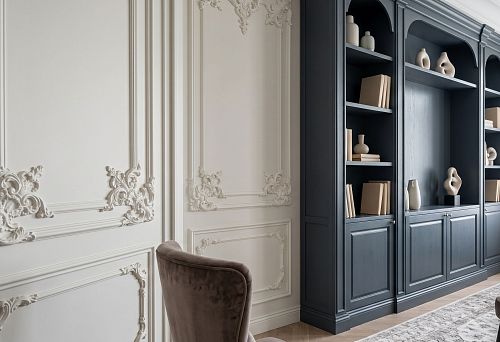
A built-in wardrobe is a dominant volume. Decor next to it should not compete with it. CPU-13-1 in a niche next to the wardrobe works as a vertical architectural accent: it does not argue with the furniture, but frames the space between it and the next structural barrier. Read more in the article stucco decor for the wall next to built-in furniture.
Where CPU-13-1 and CPU-13-2 sets look best
Let's break it down by room — specifically, without generalizations. Each room is a separate scenario with its own logic.
Entryway
The hallway is the first space that greets you. And at the same time — the most function-packed with minimal area. There is no "spare space" for decor here.
CPU-13-1 in the hallway is suitable for a niche next to the wardrobe, for a wall between the wardrobe and mirror, for a vertical zone next to the console. It does not overwhelm the limited space and turns a functional hallway into an architecturally structured entrance.
CPU-13-2 in the hallway — only in a spacious hall with a wide free wall. In a standard hallway of 4–6 m², the width of CPU-13-2 may be disproportionate to the available wall sections.
Bedroom
Bedroom — a space where decor works in two registers simultaneously: it creates an atmosphere and structures the space.
CPU-13-1 in the bedroom — for side walls next to the bed, for the area above the dressing table, for the wall section next to the wardrobe. This is a neat vertical accent that adds architecturality without the feel of a formal hall.
CPU-13-2 in the bedroom — for the main accent wall behind the headboard. Combined with neutral wall paint and proper lighting, CPU-13-2 turns the bedroom into an interior project. Detailed scenarios — in the materialStucco molding set for the bedroom.
Living Room
Living room — the most public room. Here, decor must be convincing: not loud, but noticeable.
CPU-13-1 in the living room — for side accent zones: next to the fireplace, by the wall section between windows, next to the doorway. It works well as an additional element of a broader decorative system.
CPU-13-2 in the living room — for the central wall behind the sofa, for the TV area, for the accent wall in the center of the space. This is the main decorative statement in the living room. You can addReady-made molding framesaround the perimeter — and the central wall will turn into an expanded architectural panel.
Corridor
Corridor — a specific space. It is always narrow, always elongated, and almost always has a problem of visual heaviness. Horizontal decorative techniques make the corridor even lower and tighter.
CPU-13-1 in the corridor — practically the only choice. The vertical proportion of the set works for visual elongation: the gaze goes upward, the space breathes. Several CPU-13-1 units with equal spacing along the corridor create a decorative rhythm that makes the passage elegant rather than tiresome.
CPU-13-2 in the hallway is only appropriate for non-standard wall widths of 150–170 cm. In most city hallways, there simply isn't that much space.
How to determine which set is suitable: CPU-13-1 or CPU-13-2
One of the main tips before buying any wall decor is not to rush. A polyurethane set has no shelf life in the store. But the wall you hang it on is yours. And you'll be looking at it for a long time.
Here is a step-by-step algorithm that works without a designer and without costly mistakes.
Step 1. Measure the free section of the wall. Record: width from edge to edge (cabinet, door, corner, opening), height from baseboard to cornice or ceiling.
Step 2. Mark the furniture. The width of the sofa, bed, console, or cabinet — record and mark on the wall with painter's tape or pencil.
Step 3. Find the center not of the wall, but of the zone. The center of the furniture group is not the same as the geometric center of the wall. The decor should be aligned along the furniture axis.
Step 4. Compare the dimensions of CPU-13-1 and CPU-13-2 with your measurements. Which option fits with normal margins of 15–25 cm on each side?
Step 5. Mark both options on the wall with painter's tape. One at a time, fixing the edges and center.
Step 6. Step back 2–3 meters. It is from this distance that the real perception of the decor in the interior is formed.
Step 7. Check for "obstructions": sockets, switches, sconces, ventilation grilles, wall lights. None of these should intersect with the future decor.
Step 8. If the CPU-13-1 layout looks like a clear, neat vertical accent and fits organically in the area — go with CPU-13-1.
Step 9. If the CPU-13-2 layout creates the feel of a full decorative wall and is proportionate to the furniture — go with CPU-13-2.
Once the choice is made, proceed to installation. Technical installation details are in the articles installing polyurethane moldingandinstallation of polyurethane molding.
Common mistakes when choosing the CPU-13 kit
Practice shows: most mistakes when choosing decor are made even before a person picks up a tape measure. Let's list the most common ones — to avoid falling into the same trap.
1. Choosing only by photo. A photo in an interior is always about angle, lighting, and someone else's wall proportions. What looks perfect on someone else's wall may be disproportionate on yours.
2. Choosing CPU-13-2 for a too narrow wall section. A wide wall molding kit in a narrow space looks cramped. Side margins disappear, the decor bumps into adjacent objects — and instead of an architectural accent, you get a decorative mistake.
3. Using CPU-13-1 for a large empty wall. A narrow set on a large wall is like a dot on a canvas. It doesn't structure the space, create an accent, or work with the furniture. The wall remains empty—only now with a small decor piece in the middle.
4. Not considering the width of the sofa or bed. The decor is centered on the wall, not on the furniture. The sofa is on the left, the wall is 3 meters long, the decor is at the geometric center—and the furniture and decor exist separately from each other.
5. Not checking the gaps. The decor is pressed against the baseboard, ceiling cornice, or side cabinet—and the wall looks cramped, not architectural.
6. Not considering outlets and sconces. The molding hits an outlet or a sconce wire—installation becomes impossible. This is discovered only after purchase. Marking with tape before ordering completely solves this problem.
7. Not linking decor with furniture. Wall decor is not an independent object. It exists in conjunction with furniture, lighting, and other decorative elements. Choosing it in isolation from furniture means missing the main point.
8. Overloading the wall. CPU-13-2 in the center, CPU-13-1 on the sides,PU decorative overlays in the corners, moldings around the perimeter—and the wall turns into decorative chaos. Less and more precise is always better than more and varied.
9. Not looking at the entire "Peterhof" collection. There may be other format options or ways to combine multiple elements in the collection. Review the full catalog before making a decision.
10. Not marking on the wall. The most expensive mistake is installing without preliminary marking. Twenty minutes with painter's tape protects against hours of rework and years of unpleasant results.
What to choose: CPU-13-1 or CPU-13-2
Final navigation table — for those who want a quick reference without lengthy reading:
| Situation | What to choose |
|---|---|
| Narrow pier | CPU-13-1 |
| Wall next to the wardrobe | CPU-13-1 |
| Area between the cabinet and the door | CPU-13-1 |
| Above a narrow console | CPU-13-1 |
| Above a wide console with a mirror | CPU-13-1 or CPU-13-2 |
| Wall behind the bed | CPU-13-2 |
| Wall behind the sofa | CPU-13-2 |
| Central wall in the living room | CPU-13-2 |
| TV zone | CPU-13-2 or a combination with moldings |
| Corridor | CPU-13-1 |
| Spacious hall | CPU-13-2 |
| Side accent near the bed | CPU-13-1 |
Commercial takeaway worth remembering: if you need a calm vertical composition that frames a specific wall section without clutter — choose CPU-13-1. If the decor should become the main architectural statement on the wall — choose CPU-13-2.
And in both cases, remember: the set is the foundation. It can be complemented with decor for moldings, expanded with of polyurethane moldings, enhanced with PU decorative overlays— and get a complete decorative solution that fits any wall width.
The entire catalogready-made stucco decor setsand a full sectionpolyurethane products — on the STAVROS website.
CPU-13-1 and CPU-13-2 — a ready-made base for wall decoration. Choose a kit according to the width of the area, mark it up, and if necessary, add moldings or decorative elements to the composition.
FAQ: Answers to popular questions
What is the difference between CPU-13-1 and CPU-13-2?
CPU-13-1 is a narrower, vertical kit for piers, walls next to a wardrobe, console, or in a hallway. CPU-13-2 is a wide, expressive kit for a central accent wall behind a sofa, bed, or in a living room. The difference is in scale and application scenario.
Which CPU-13 kit should I choose for a pier?
For a pier — CPU-13-1. It does not overload the narrow area, maintains the vertical, and neatly finishes the remaining wall section next to a wardrobe or doorway.
Which kit should I choose for behind the sofa?
Behind the sofa — CPU-13-2. The sofa is wide, and a narrower kit visually gets lost against its background. CPU-13-2 creates a decorative area proportionate to the furniture group.
Will CPU-13-1 work above a console?
Yes, CPU-13-1 works well on a narrow console or in a niche with a console. For a wide console with a mirror and sconces, it makes sense to compare both options by marking them on the wall.
Is CPU-13-2 suitable for a bedroom?
Yes. CPU-13-2 is a good choice for an accent wall behind the headboard. It creates the bedroom's focal point and serves as the foundation for the decorative area behind the bed.
Can CPU-13 be complemented with moldings?
Yes. If the wall is wider than the standard set,Ready-made molded decor kitsit can be complemented with moldings, overlays, and decorative elements. This is especially relevant for large living rooms and wide accent walls.
Can CPU-13-1 and CPU-13-2 be used together?
Yes. Two CPU-13-1 units on the sides and a CPU-13-2 in the center form a three-part symmetrical composition — a classic architectural technique for wide walls in a living room or bedroom.
How do I know which set size will fit?
Measure the free wall area, consider furniture and necessary clearances, compare with the set dimensions, and mark both options with tape. The breakdown algorithm is in the articlehow to calculate moldings and stucco decor for a wall.
About the company STAVROS
STAVROS is a Russian manufacturer of decorative polyurethane products for walls and ceilings. The catalog includes: moldings, cornices, baseboards, corner elements,Decorative Inserts, Decor for Moldingand ready-made wall kits from several collections — including "Peterhof", "Petersburg", "Versailles Light", "Neoclassic", "Neoclassic Light" and others.
STAVROS polyurethane products do not deform, are not afraid of moisture, are easy to cut, can be painted in any color, and are mounted with glue without drilling or special equipment. Installation is accessible on your own — without a team of finishers or designer support.
STAVROS works with private customers, interior designers, and construction teams. Showrooms in St. Petersburg and Moscow, delivery throughout Russia. If you are choosing between CPU-13-1 and CPU-13-2 and want to clarify which kit will be proportional to your specific wall, the company's specialists are ready to help you choose before placing an order. The full catalog is on the websitestavros.ru.