








































Article Contents:
- What unites the CPU-12-1 and CPU-12-2 kits
- How is CPU-12-1 different from CPU-12-2
- CPU-12-1: when it's better to choose a more vertical kit
- CPU-12-2: when you need a wider kit for an accent wall
- How to choose CPU-12-1 or CPU-12-2 based on wall width
- Which kit to choose for furniture: CPU-12-1 or CPU-12-2
- For the wall behind the sofa
- For the wall behind the bed
- For the area above the console
- For the wall next to the wardrobe
- CPU-12-1 and CPU-12-2 in the interior: where each kit looks better
- Entry Hall
- Bedroom
- Living Room
- Hallway
- How to check which kit fits: CPU-12-1 or CPU-12-2
- Common mistakes when choosing a CPU-12 kit
- So what to choose: CPU-12-1 or CPU-12-2
- FAQ: Answers to Popular Questions
- About the Company STAVROS
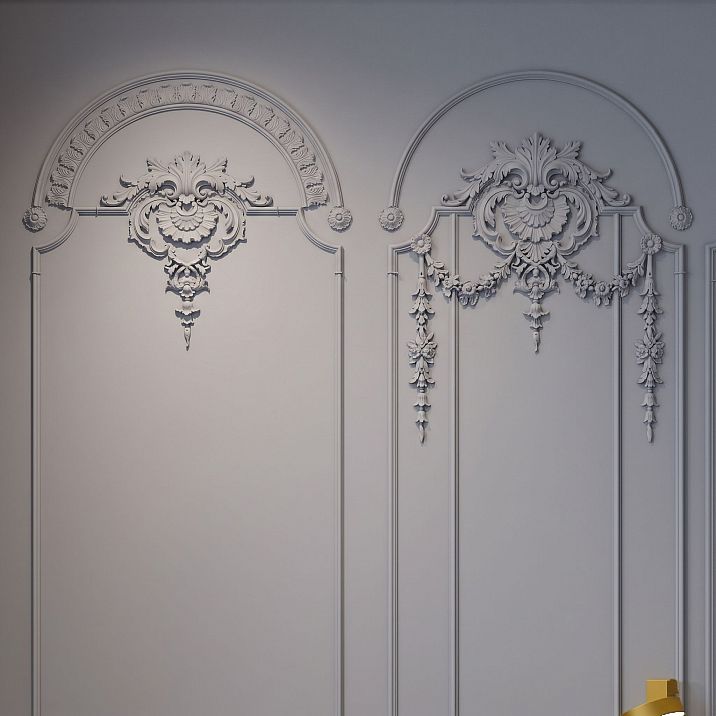
Choosing between two kits from the same collection is a task that seems simple until you're standing in front of an empty wall with a tape measure in your hands. CPU-12-1 and CPU-12-2 from the«Petersburg» collection by STAVROSare two solutions that are close in spirit but different in scale. Both are designed for walls. Both are suitable for painting. Both work in classic and neoclassical interiors. But their tasks are different — and that's why choosing between them makes sense.
Short answer: if you need a vertical accent for a narrow wall section, an area next to a cabinet, above a console, or in a hallway — look towards CPU-12-1. If the task is to create a full accent wall behind a sofa, bed, or in a living room — CPU-12-2 will handle it more convincingly. But there are enough nuances to break down each scenario separately.
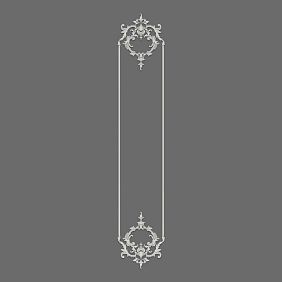
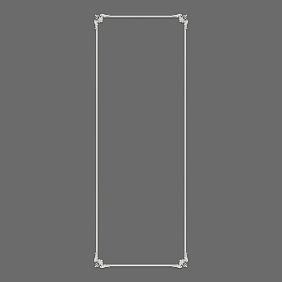
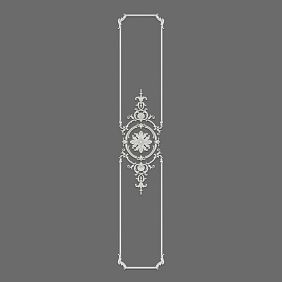
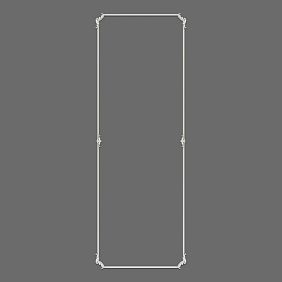
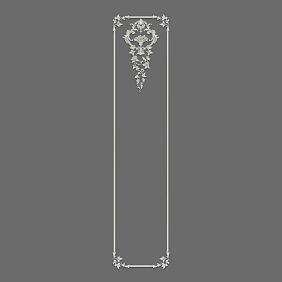
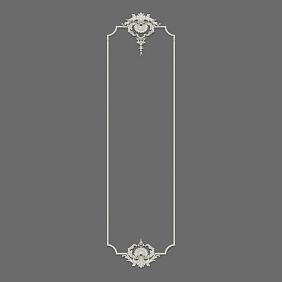
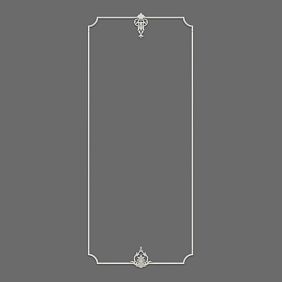
What unites the CPU-12-1 and CPU-12-2 kits
Before talking about the differences, it's worth noting what makes these two kits related. Both belong to the same collection — and this is not just a marketing adjacency.
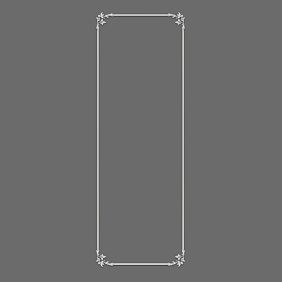
Stucco decor set "Petersburg"was formed as a system where solutions of different scales create a unified architectural language. The same rhythm of moldings, the same style of corner elements, the same logic of the frame structure — CPU-12-1 and CPU-12-2 speak the same decorative language, but with different volume.
Here's what unites them:
-
Both are made of polyurethane — a lightweight, durable, moisture-resistant material that does not deform, is easy to cut, and can be painted any color.
-
Both are fully suitable for painting: with water-based, latex, or enamel paint — matching the wall color or contrasting.
-
Both are mounted with adhesive without drilling, dowels, or special tools.
-
Both work in bedrooms, living rooms, hallways, foyers, and studies.
-
Both allow you to assemble a finished decorative composition without individually selecting moldings and corner elements.
-
Both fit organically into neoclassical, modern classic, and transitional styles between classic and restrained modernity.
Moreover: the manufacturer has provided the possibility of using both sets together. CPU-12-1 can serve as side vertical accents, while CPU-12-2 acts as a central frame. This three-part composition on a wide wall creates a full-fledged decorative panel in the spirit of classic interiors.




How CPU-12-1 differs from CPU-12-2
Here's the very question for which this article is opened. The difference between the two sets is not in quality or style. The difference lies in scale, proportion, and application scenario.
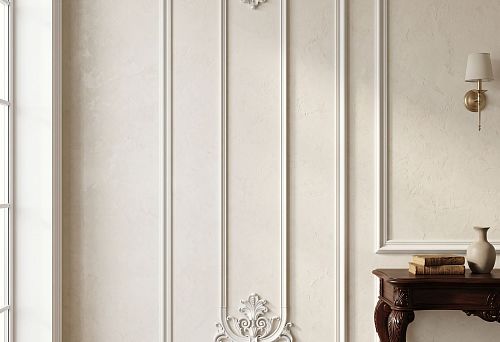
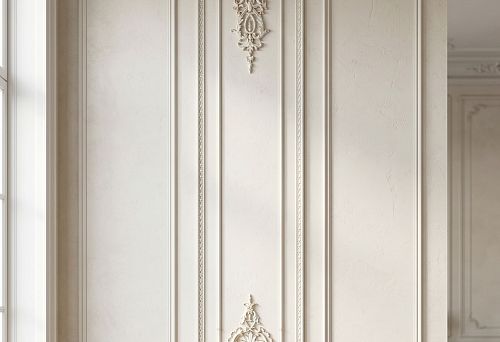
CPU-12-1 with an assembly width of 610 mm is a more compact and vertically elongated option. Its proportion tends toward an accent column, a vertical architectural element. CPU-12-2 is wider and more expressive — it is a solution for areas where decor should become the main focal point on the wall.
| Criterion | CPU-12-1 | CPU-12-2 |
|---|---|---|
| Main Scenario | Vertical accent | Accent wide composition |
| Where to use | Pier, area near the wardrobe, console, hallway | Wall behind the sofa, bed, TV area, living room |
| Visual effect | Neat, compact, elongated | More noticeable, stately, interior |
| For which wall | Narrow or medium | Medium or wide |
| For which furniture | Console, chest of drawers, wardrobe, narrow cabinet | Sofa, bed, large furniture group |
| When to choose | When it's important not to overload the wall | When a main decorative accent is needed |
The difference is felt precisely when you stand in front of a specific wall. CPU-12-1 fits where there isn't much space — and doesn't look like a scaled-down version of something larger. It's a self-sufficient vertical element. CPU-12-2 requires space — and gives it back with interest: the wall behind the sofa with such a set ceases to be just a background and becomes a decorative center.
On the principles of choosing between narrow and wide formats in general — a useful breakdown in the articlea narrow or wide set of stucco decor: size ranges and the logic of application for different zones are discussed there.
Our factory also produces:
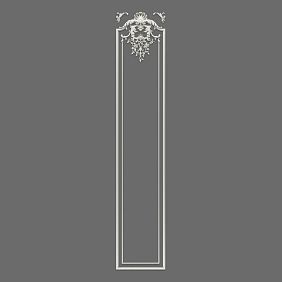
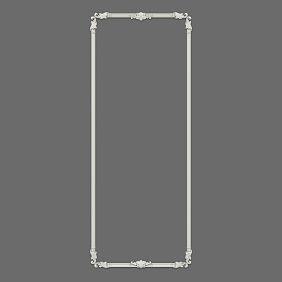
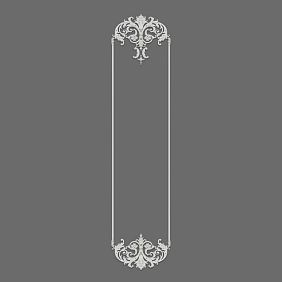
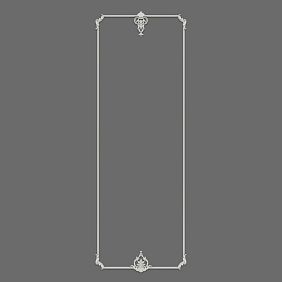
CPU-12-1: when to choose a more vertical set
There is a special category of tasks where wide and expressive decor is unnecessary. Where the wall doesn't invite grand gestures, but asks for a neat, precise, vertical accent. This is where CPU-12-1 works at full capacity.
VerticalSet of stucco decor CPU-12-1 — this is not a reduced copy of large decor. It is a separate category with its own zones and logic. Let's look at them in detail.
The wall section next to a wardrobe or dressing room. When built-in furniture takes up almost the entire wall, a narrow strip remains — 40, 50, 60 centimeters. This is a zone you want to decorate but not overload. CPU-12-1 with a width of 610 mm fits organically here: it does not press against the end of the wardrobe, does not compete with furniture facades, and turns an empty wall section into a deliberate architectural accent. More about decorating wall sections near furniture — in the articlestucco decor for the wall next to built-in furniture.
The area between the door and furniture. Corridor, hallway, foyer — anywhere door openings are next to furniture sections. The gap between the door frame and the side of the wardrobe is a classic spot for CPU-12-1. Vertical decor here works as an architectural link: it turns a random strip of wall into part of the overall design.
The wall above a console table. A console is narrow furniture. Its width rarely exceeds 100–120 cm, and often less. A wide set above it would look disproportionate. CPU-12-1 correctly relates to the console: its width is compatible with the proportions of this furniture, and the entire "pair" — console + decor — is perceived as a single architectural zone. About how to properly build this pair — in the materialStucco decor for a wall with a console.
Hallway. The hallway space is always limited. There is no room for a "main accent": everything here is a detail, and every detail is in plain sight. CPU-12-1 in the hallway does not overwhelm, does not fill the space, but makes it organized. It works especially well next to a mirror or a bench.
Side area next to a bed or sofa. Sometimes the task is not to decorate the wall behind the furniture, but to decorate the side wall section — to the right or left of the furniture group. Here CPU-12-1 appears as a symmetrical accent or as a paired element on both sides of the central zone. Two CPU-12-1 on the sides — and the accent wall gets architectural "frames" without resorting to heavy central decor.
Corridor. A narrow elongated space is difficult for any decor. Horizontal frames in a corridor create a feeling of an even lower ceiling. Verticalpolyurethane stucco decor for walls — an antidote: it draws the eye upward, visually widens the narrow space, and makes the corridor less "tubular".
If you are facing a wall up to 80–90 cm wide or want to decorate a specific vertical zone without overloading — CPU-12-1 is your choice.
Get Consultation
CPU-12-2: when you need a wider set for an accent wall
There are walls that are waiting for their moment. A large, flat, empty wall behind the sofa in the living room. A wall behind the headboard in the bedroom that you want to turn into a decorative center. An accent wall in the hallway that should be the first thing a guest sees.
These areas require decor of a different scale.Set of stucco decor CPU-12-2 — this is the solution for those cases when the decor should not be a support for the interior, but its main statement.
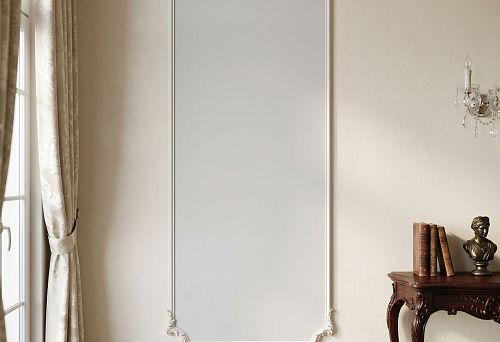
Wall behind the sofa. The sofa is large furniture. Its width is often 200–240 cm, and the entire sofa area together with side poufs, a floor lamp, and a table can take up even more space. Against such a background, a narrow set will get lost — not because it is bad, but because it is disproportionate to the task. CPU-12-2 holds this scale: it is wide enough so that the sofa reads as a furniture zone under it, rather than standing in front of the decor as a random object. More details on the principles of selecting decor for the width of the sofa are in the articlehow to choose a set of stucco decor for the width of a bed or sofa.
Wall behind the bed. An accent wall behind the headboard is one of the most popular decorative techniques in the bedroom. The bed is typically 160–200 cm wide. CPU-12-2 creates a frame that visually "holds" the bed, structures the bedroom space, and turns the headboard into a decorative scene. This works especially effectively in a neoclassical interior, where stucco in the color of the wall creates a sense of thoughtful architecture. About scenarios for the bedroom — in the materialStucco molding set for the bedroom.
Living room and TV zone. In the living room, decor serves a representative function. This is the space that guests see, where the owner spends time themselves. It is here that a more expressive, more prestigious set is appropriate. CPU-12-2 in the living room is a statement of intent to create an interior, not just furnish a room. In the TV zone, a wide set can work as background decor around the television — provided that the distances from the screen and bracket are observed. Decorating the wall behind the sofa with polyurethane is detailed in the articleDecorating the wall behind the sofa.
Hallway and entrance area. In a spacious hallway or in an apartment with a double-height ceiling, CPU-12-2 becomes the architectural accent that greets you at the entrance. Without it, a wide hallway wall looks unfinished — like a draft that was forgotten to be refined.
A wide wall without furniture. Sometimes a wall exists on its own — without a sofa, without a bed, without a console. It is simply large. Here, CPU-12-2 sets the structure where there is none: it creates a center around which the entire rest of the wall is built.
How to choose CPU-12-1 or CPU-12-2 based on wall width
Choosing between two sets "by eye" is not the best strategy. It is much more reliable to choose based on the width of the free wall area, taking into account furniture and necessary indents.
The logic is simple: the wider the free area, the more expressive and wide a set it can accommodate without feeling overloaded or lost. Conversely, the narrower the area, the more important it is not to "fit" decor, but to choose one that will be organic there.
| Free wall area | What to consider | Why |
|---|---|---|
| Narrow wall section up to 70–80 cm | CPU-12-1 | Does not overload, maintains verticality |
| Wall next to the wardrobe | CPU-12-1 | Helps to design the remaining area |
| Area above the console | CPU-12-1 or CPU-12-2 | Depends on the width of the console and wall |
| Wall behind the bed | CPU-12-2 | Works better as a central frame |
| Wall behind the sofa | CPU-12-2 | Decor doesn't get lost against wide furniture |
| Large accent wall | CPU-12-2 + moldings | Can be expanded and complemented with composition |
How to determine which size fits your specific wall — a step-by-step algorithm is covered in the articlehow to place a set of decorative moldings on the wall: it explains margins, layout, and proportion checks.
Another useful tool —how to calculate moldings and stucco decor for a wallThe calculation method allows you to accurately determine what size set will be proportional to a specific wall with specific furniture.
Can't choose between CPU-12-1 and CPU-12-2? Start with the task: for a narrow wall, the area near a wardrobe, or above a console, a more compact vertical option is often chosen, while for a wall behind a sofa or bed, a wider set is preferred.
Which set to choose for furniture: CPU-12-1 or CPU-12-2
Furniture is not just what stands in front of the wall. It is the axis along which all decor is aligned. And its width, height, and configuration directly affect which set will be proportional.
For the wall behind the sofa
A sofa is truly large furniture. Even a compact three-seater sofa takes up at least 180 cm in width. And a sofa group with a corner element, ottoman, and side table takes up all 280–300 cm.
Against such a background, CPU-12-1 will look like an accent point, not decor connected to the furniture. CPU-12-2 is more convincing here: its width is proportionate to the sofa, and the space between the edges of the set and the edges of the furniture creates the right breathing room—not too tight, not too wide.
Key principle: decor behind the sofa should be slightly narrower or proportionate to the width of the furniture. Not wider, not significantly narrower. CPU-12-2 fits this proportion more accurately.
For the wall behind the bed
A bed is furniture with a clearly defined central axis: the headboard always faces one point. Decor behind the bed should be centered on this axis and have sufficient width to 'hold' the entire piece of furniture.
CPU-12-2 behind the bed creates a sense of a frame around the headboard—especially if the bed is 160–200 cm wide. CPU-12-1 behind such a bed will look like a random vertical accent, not connected to the horizontal line of the furniture.
Exception: if the bed is narrow (90–140 cm) or the decor is placed not behind the headboard but on the side — CPU-12-1 may be a more suitable option.
For the area above the console
The console is an interesting case. It can be narrow (60–80 cm) or quite wide (120–150 cm). This is what makes the area above the console the most ambiguous in terms of choosing between the two sets.
For a narrow console — CPU-12-1. Its 610 mm width organically relates to the console: the decor does not overhang the furniture or extend far beyond its edges.
For a wide console with a mirror, sconces, and decorative items — CPU-12-2. The area above a wide console is already a small decorative stage: a larger frame that unites all elements into a single composition is appropriate here.
Detailed logic for designing console areas — in the article Stucco decor for a wall with a console.
For the wall next to the wardrobe
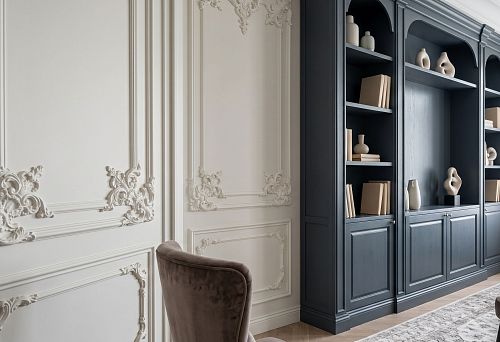
Here, almost always the best option is a vertical set of molding next to the wardrobeA wardrobe is a large volume. Decor next to it should not compete with the furniture in scale — it should shape the remaining space, making it part of the overall design.
CPU-12-1 is exactly what you need here: it fits into a narrow space, supports the vertical of a tall cabinet, and doesn't claim a central place in the interior.
CPU-12-1 and CPU-12-2 in the interior: where each set looks better
Let's break it down room by room — with specifics, no generalities.
Entryway
The hallway is a room where nothing is accidental: every centimeter is occupied. A built-in wardrobe, mirror, console, shoe cabinet, hooks — all of this exists in a minimal space.
CPU-12-1 in the hallway — for the wall section next to the wardrobe, for the wall between the wardrobe and the door, for the vertical area next to the mirror. It doesn't overwhelm the limited space, holds the vertical, and makes the hallway organized.
CPU-12-2 in the hallway — is only appropriate in a spacious hall with a large free wall. In a standard hallway of 4–6 m², CPU-12-2 will most likely be too wide for the available wall sections.
Bedroom
The bedroom is a space for two scenarios: relaxation and aesthetics. The decor here should be expressive enough to create an atmosphere and calm enough not to disturb relaxation.
CPU-12-1 in the bedroom — for the side walls next to the bed, for the area above the vanity table, for the wall section by the wardrobe. It's a neat decorative element that adds architecturality without turning the bedroom into a formal hall.
CPU-12-2 in the bedroom — for the main accent wall behind the headboard. It creates a visual center of the room around which the entire interior is built. Combined with proper lighting and a neutral color scheme, CPU-12-2 turns the bedroom into an interior design project.
Living Room
The living room is the most public space. Here lives the main decorative task: to create a space where you want to be and which you want to show off.
CPU-12-1 in the living room — for side accents, for decorating narrow areas near the fireplace, niche, or doorway. It works well as an additional element of a broader decorative system.
CPU-12-2 in the living room — for the central accent wall behind the sofa or for the TV area. This is the main decorative statement in the living room. Add to itMoldings made of polyurethane around the perimeter — and the wall will turn into a full-fledged architectural panel.
Corridor
Corridor — a trap space for decor. A too wide set overwhelms. A too small one gets lost. And here CPU-12-1 proves to be almost irreplaceable.
CPU-12-1 in the corridor — a vertical accent that elongates the space, breaks the monotony of a straight corridor, and creates rhythm without overload. If there are several wall sections between doors along the corridor, multiple CPU-12-1 units with identical offsets will create a regular decorative row.
CPU-12-2 in the corridor — only if the wall width is from 150–170 cm, which is rare for a corridor. In standard apartment corridors, CPU-12-2 will most likely be disproportionate.
How to check which set fits: CPU-12-1 or CPU-12-2
There is a proven algorithm that works for any choice between two decor formats. It requires no design knowledge — only a tape measure, painter's tape, and 20 minutes.
Step 1. Measure the free wall section. Width from extreme point to extreme point (cabinet, door, corner, opening) — write it down.
Step 2. Mark the furniture: sofa, bed, console, cabinet. Note their width and the central axis on the wall.
Step 3. Find the vertical center of the future composition — the center of the furniture or the center of a free wall.
Step 4. Compare the dimensions of CPU-12-1 and CPU-12-2 with your measurements. Which set fits with normal gaps?
Step 5. Mark both options on the wall with painter's tape — one at a time, sequentially. Look at each one.
Step 6. Step back 2–3 meters. From a real distance, proportions look completely different than up close.
Step 7. Check sockets, switches, sconces, baseboards, ceiling cornices. None of these should interfere with the decor.
Step 8. If the CPU-12-1 layout looks like a vertical accent and fits organically into the area — choose CPU-12-1.
Step 9. If the CPU-12-2 layout creates the feeling of a full decorative wall and is proportionate to the furniture — choose CPU-12-2.
Step 10. Only after this proceed to purchase and installation. About installation technique —installing polyurethane moldingandinstallation of polyurethane molding.
Common mistakes when choosing the CPU-12 set
Knowing these mistakes protects against rework. Each of them is a consequence of the same thing: a hasty decision without preliminary marking.
1. They choose by photo without checking dimensions. Photos in interiors can be misleading: perspective, frame width, room size in the image — all distort the sense of scale. Only measurements reveal the truth.
2. They take CPU-12-2 for a narrow space. A wide set for a narrow area — the set hits the end of a cabinet or door trim. No breathing room, proportions are off.
3. They take CPU-12-1 for a large empty wall. A small set on a big wall — like a single note in a symphony. It doesn't get lost — it screams its disproportion.
4. They don't account for the width of the sofa or bed. Decor is centered on the wall, not on the furniture. A 4-meter wall, a 2-meter sofa — decor centered on the wall, not on the sofa. Result: visual imbalance.
5. They don't check gaps from baseboard and ceiling. Decor pressed against the baseboard below and the cornice above — the wall looks cramped.
6. They don't account for outlets and switches. Molding lands on an outlet — rework needed. All this is solved by marking before installation.
7. They mix too many decorative elements. CPU-12-2 on the wall, CPU-12-1 on the sides, overlays on corners, moldings around the perimeter — results in an overloaded wall that doesn't read.
8. They don't look at the collection as a whole. Perhaps in«Petersburg» collection there are other options or ways to combine both sets in a three-part composition — worth checking before purchase.
9. They don't consider the style of furniture facades and doors. Next to a framed classic cabinet — minimalist decor without ornament. Next to a smooth modern cabinet — the same. Decor shouldn't compete with furniture for attention.
10. Don't mark the wall. The most costly mistake is to glue without preliminary marking with painter's tape. 20 minutes of marking — and no surprises.
Among useful tools for preparation is the articleReady-made molding frames for the wall: it explains typical schemes and principles of arranging ready-made frame systems.
So what to choose: CPU-12-1 or CPU-12-2
The final table is a compact navigator for the solution:
| Situation | What to choose |
|---|---|
| Narrow pier | CPU-12-1 |
| Wall next to the wardrobe | CPU-12-1 |
| Area above a narrow console | CPU-12-1 |
| Wide console with mirror and sconces | CPU-12-2 |
| Wall behind the bed | CPU-12-2 |
| Wall behind the sofa | CPU-12-2 |
| TV area with a wide wall | CPU-12-2 or both sets |
| Corridor | CPU-12-1 |
| Spacious living room | CPU-12-2 |
| Hallway, standard size | CPU-12-1 |
| Spacious hall | CPU-12-2 |
| Side accent near the bed or sofa | CPU-12-1 |
The main commercial takeaway of this article is simple: if in doubt, first define the task. Need a neat vertical accent? CPU-12-1. Need an expressive accent wall? CPU-12-2. After that, the choice ceases to be agonizing — it becomes technical.
If the wall is wider than the standard set — no problem. Both options can be supplemented with decorative polyurethane overlays, decor for moldings or additional profiles from the Polyurethane Items section. This allows adapting any set to a non-standard wall size without losing proportion.
CPU-12-1 and CPU-12-2 can be used as a ready-made basis for wall decoration. Choose the set according to the width of the area, mark it on the wall, and if necessary, supplement the composition with moldings, overlays, or decor for moldings.
FAQ: Answers to popular questions
What is the difference between CPU-12-1 and CPU-12-2?
CPU-12-1 is a more compact vertical set. It is optimally chosen for piers, areas near a wardrobe, above a console, or in a hallway. CPU-12-2 is wider and more expressive: for an accent wall behind a sofa, bed, in a living room, or a spacious hall.
Which set should I choose for the wall behind the sofa?
For the wall behind the sofa, CPU-12-2 is often the better choice: the sofa is wide enough, and a wider set doesn't get lost on a large wall. It creates the feeling of a full decorative zone, rather than a single accent.
Which set is suitable for the wall section next to the wardrobe?
For the wall section next to the wardrobe — CPU-12-1. It works as a vertical accent, fits into a narrow area, and doesn't compete with furniture facades. More details in the article.stucco decor for the wall next to built-in furniture.
Can CPU-12-1 be used above a console table?
Yes. CPU-12-1 correlates well in width with most console tables. If the console is wide or a mirror and sconces are planned nearby, you can compare CPU-12-1 with CPU-12-2 directly on the wall by marking with painter's tape.
Is CPU-12-2 suitable for a bedroom?
Yes, CPU-12-2 is an excellent choice for an accent wall behind the bed. It creates an architectural center for the bedroom and works well in combination with neutral walls and calm lighting.
Do I need to buy additional moldings for CPU-12?
If the free wall is wider than the standard set, you can supplement the composition.polyurethane moldingsor other decorative elements. This is especially relevant for large living rooms and wide walls behind the sofa.
Can CPU-12-1 and CPU-12-2 be used together?
Yes. Two CPU-12-1 units on the sides and a CPU-12-2 in the center create a three-part symmetrical composition — a classic architectural technique that works well on wide walls in a living room or bedroom.
How to calculate which set fits the size?
Measure the width of the free wall area, consider gaps from furniture, doors, and corners — and compare with the dimensions of the sets. If in doubt, mark with tape and view from a distance. Detailed algorithm in the articlehow to calculate moldings and stucco decor for a wall.
About the company STAVROS
STAVROS is a Russian manufacturerpolyurethane productsfor interior finishing. Moldings, cornices, baseboards, ready-made wall sets, decorative overlays — all are manufactured in Russia and designed for DIY installation without special equipment.
STAVROS polyurethane products are not afraid of moisture, do not crack with temperature changes, are easily cut with hand tools, and accept any paint. Installation — with acrylic glue or liquid nails: clean, fast, dust-free.
The STAVROS catalog features several collections of ready-made wall sets:Neoclassical, Neoclassic Light, Japandi, Versailles Lightand, of course,"Petersburg" collectionwith sets CPU-12-1 and CPU-12-2. Each set comes with precise dimensions, recommendations for application areas, and installation examples.
STAVROS works with private buyers, designers, and construction teams. Showrooms in Saint Petersburg and Moscow, delivery across Russia. If you are choosing between CPU-12-1 and CPU-12-2 and want advice for a specific wall — the company's specialists will help you select the right format before you make a purchase decision.