








































Article Contents:
- When details speak for themselves
- Why polyurethane decor and wood are the perfect pair
- Where to use polyurethane wall decor
- Molding frames: a classic that never gets old
- TV area and sofa area
- Headboard wall
- Hallway, study, dining area
- Piers and corridors
- Commercial interior: restaurant, hotel, office
- Where wooden elements work best
- Wooden batten: rhythm, warmth, verticality
- Wooden baguette: for paintings, mirrors, and decorative panels
- Wooden baseboard: the lower line of the interior
- Wooden layout: for facades, doors, and furniture
- Wooden glazing bead: fine work
- Wooden cornice: a classic finish
- How to connect wall decor and furniture
- Furniture legs as a connecting element
- Decorative furniture elements: overlays, brackets, supports
- Handles: details that cannot be ignored
- Staircase in the same style: balusters, handrails, posts
- Classic interior: how not to overload with stucco and wood
- What to choose for different rooms
- Mistakes when combining polyurethane and wooden decor
- Different styles in one room
- Too much carving
- Random wood color
- Scale mismatch
- Cheap plastic parts next to natural wood
- Stucco without connection to furniture
- Furniture legs and handles not matching the wall style
- How to start installation correctly: a brief guide
- How to choose decor from STAVROS: from wall to staircase
- FAQ: Answers to Popular Questions


When details speak for themselves
Существует старый принцип в дизайне интерьера, который не устаревает: пространство выглядит дорого не тогда, когда в нём много вещей, а тогда, когда все детали говорят на одном языке. Один молдинг на стене, случайный плинтус из строймаркета, мебельные ножки из разных коллекций и деревянная рейка, прибитая «чтобы было» — всё это превращает квартиру в склад идей, а не в интерьер.
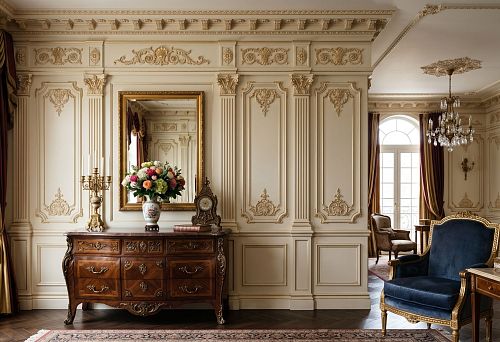
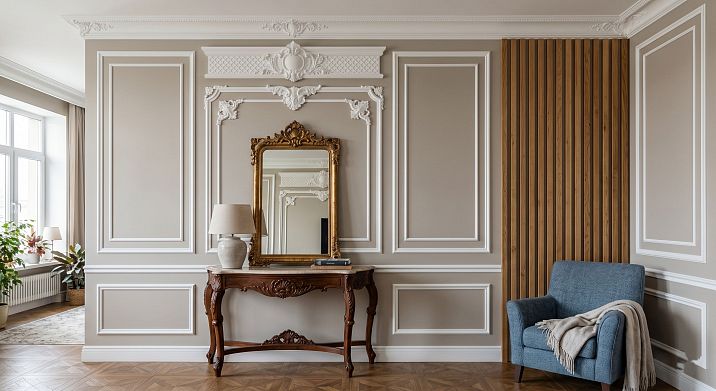
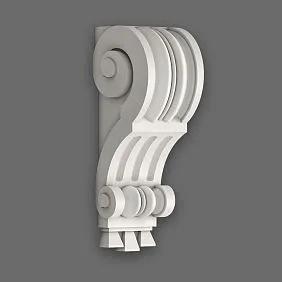
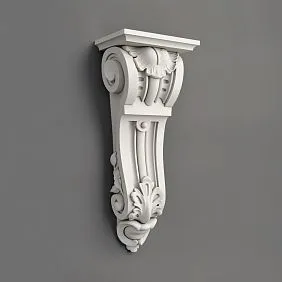
Polyurethane wall decor helps define the architecture of the space: frames, vertical lines, molding panels, accent zones behind the sofa or at the headboard. But a finished look appears only when wall polyurethane decor is combined with wooden baseboards, wooden baguettes, furniture legs, handles, stair balusters, and decorative elements for furniture — that is, with all the details that shape the interior as a unified system.
This is what this article is about. Not about how to glue molding. And not about how to choose a wooden slat. But about how to assemble an interior as a whole: walls, furniture, staircase, cornices, facades — in one style, in one logic, in one character.
This is harder than it seems. And much more interesting.




Why polyurethane decor and wood are the perfect pair
At first glance, it seems that polyurethane and natural wood are materials from different worlds. One is a modern polymer, the other is a living natural material with texture, smell, and tactility. But it is in this contrast that a true interior is born.
Polyurethane moldings — lightweight, moisture-resistant, high-tech material. Its density ranges from 150 to 420 kg/m³, allowing for the creation of complex reliefs without putting stress on the wall. Polyurethane decor is easily painted with acrylic paints and adapts to the color of the wall, furniture, or baseboard. It does not crack, does not absorb moisture, and does not deform with temperature changes. That is why it is reasonable to use it where visual architecture matters: walls, ceilings, molding frames, decorative compositions.
Wood, on the other hand, is irreplaceable where tactility, weight, texture, and mechanical strength are important. A wooden floor baseboard withstands contact with furniture and shoes. A wooden baguette holds glass and canvas. Wooden furniture legs bear the load of a table or sofa. Balusters and railings made of wood are both structural and decorative. A wooden slat on the wall creates a warm texture that no polymer can fully replace.
When Decorative stucco on the walls is painted in a color close to the tone of the wooden details, or, on the contrary, contrasts with dark wooden elements — the interior gains depth. A light molding on a beige wall and a dark oak baseboard below — this is not a contradiction, but an architectural play with horizontality and verticality. It is precisely such solutions that distinguish professional design from intuitive selection of details.
The conclusion is simple: polyurethane decor takes on walls and ceilings, while wooden elements — furniture, stairs, the floor line, and tactile accents. Together, they create an interior with character.
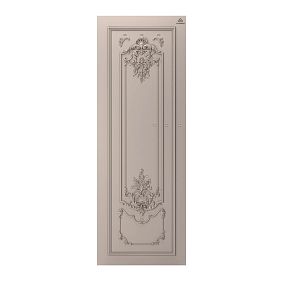
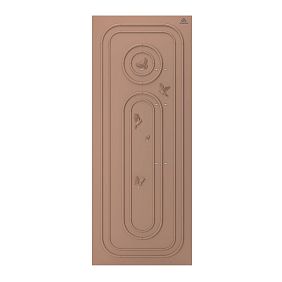
Our factory also produces:



Where to use polyurethane wall decor
Before thinking about wooden details, you need to understand where wall-mounted polyurethane decor works. This is not one scenario — it is a whole system of applications.
Get Consultation
Molding frames: a classic that never goes out of style
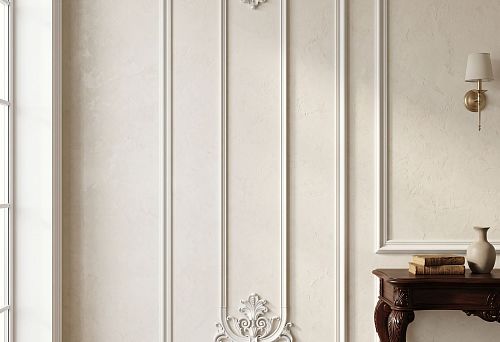
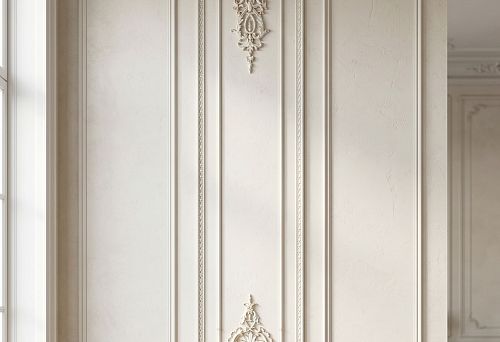
Moldings made of polyurethane — this is perhaps the most versatile tool for wall decor. They form rectangular panels that structure the wall, give it architectural quality, and visually raise the ceiling. In a classic interior, panels made of moldings are a must-have element. In neoclassicism — a delicate accent. In a modern style — a way to add geometry without heavy materials.
Important: a panel made of moldings looks good only when the proportions are precise. A narrow molding in a large room will get lost. A massive profile in a small room will overwhelm the space. The golden ratio rule works flawlessly here.
TV zone and sofa zone
Decorative stucco on the wall behind the TV or sofa is one of the most popular modern scenarios. It is not just decoration: vertical moldings or relief panels create a focal point in the living room, making the area complete and intentional. Wall decor from the Neoclassic collection is perfect for such solutions: it is expressive enough to catch the eye, yet restrained enough not to compete with the furniture.
Wall at the head of the bed
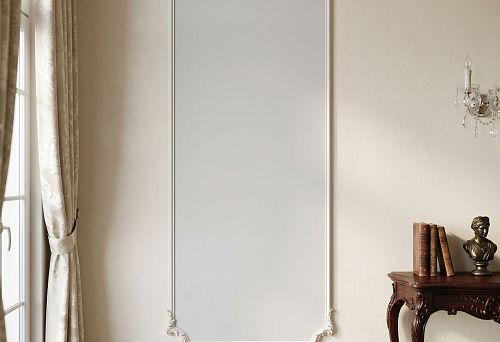
This is the area that is seen first when entering the bedroom. Neoclassic Light wall decor with laconic moldings and delicate frames creates a sense of quiet luxury. The combination of vertical and horizontal elements can "draw" a headboard on the wall — without furniture, only with decor.
Hallway, study, dining area
The hallway is the first thing a guest sees. Narrow molding frames at the height of the paneling give the hallway solidity and completeness. The study requires strictness: dark moldings, clear geometry, no decorative pomp. The dining area is a good place for classic Versailles Light decorornamental elements will create a festive atmosphere without overload.
Piers and corridors
Narrow piers between windows are an excellent place for vertical moldings. They visually expand the wall and create rhythm. Corridors benefit from horizontal molding belts at half the wall height.
Commercial interior: restaurant, hotel, office
Wall molding in a commercial space, it is a tool for creating atmosphere and branding. A restaurant with stucco decoration looks more expensive and cozier. A hotel lobby with molding panels creates a sense of class.
Where wooden elements work best
Wooden decor is not an alternative to polyurethane stucco. It is its partner. Each material occupies its own niche, and confusion here is costly for the interior.
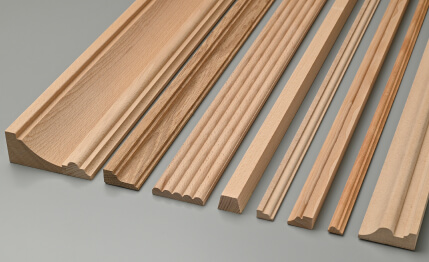
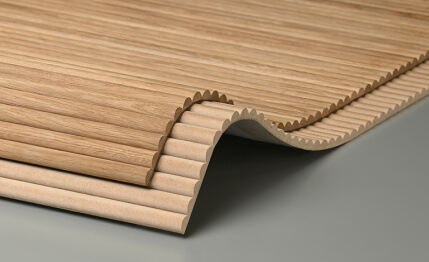
Wooden slats: rhythm, warmth, verticality
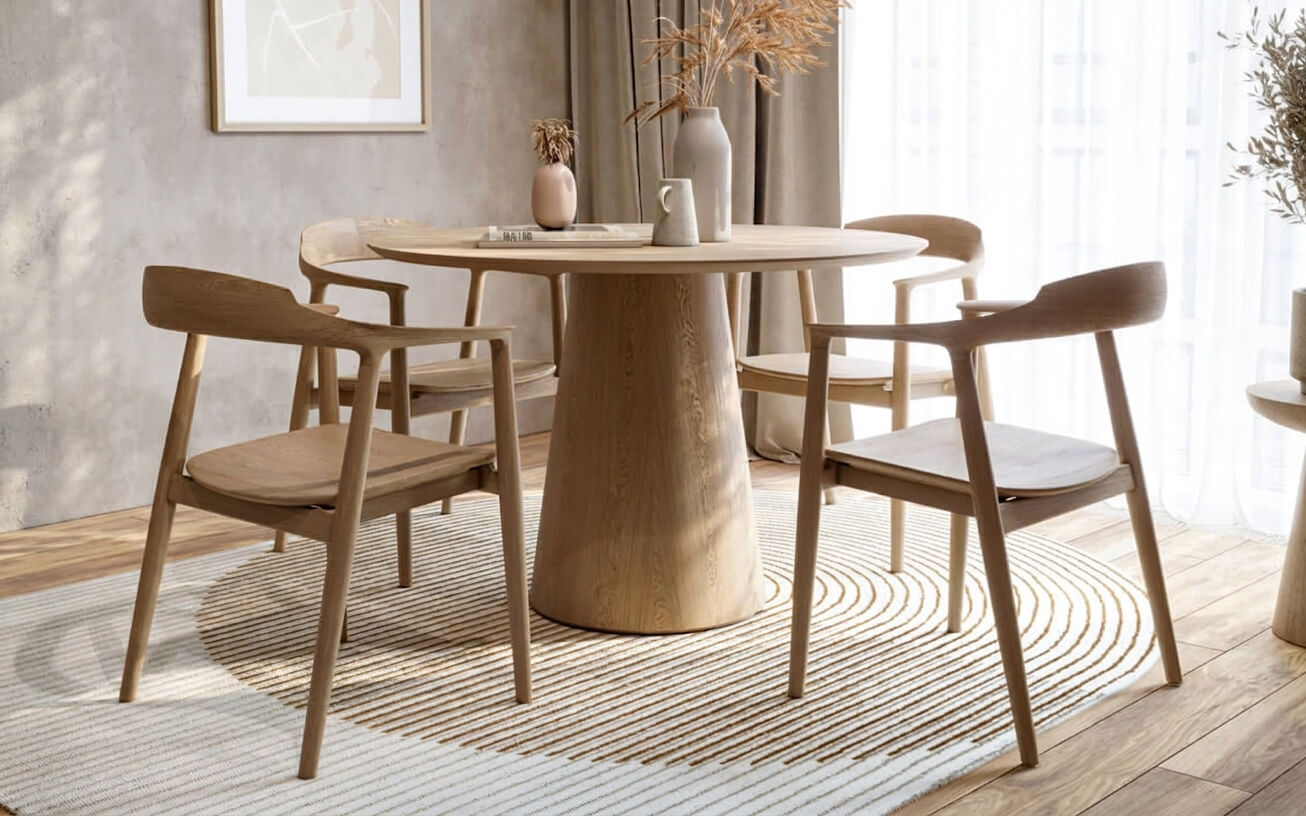
Wooden slats in the interior are primarily about rhythm. Evenly spaced verticals create a calming pattern that is perceived as a background rather than an accent. A wooden slat on the wall works well in niches, behind the bed, in the hallway at the entrance. In combination with wall decor in Japandi style — wooden slats enhance the natural aesthetic: warm wood and minimalist polyurethane decor speak the same language.
Wooden block and wooden corner are used as mounting and decorative elements: for fastening slats, forming frame structures, creating geometric accents on walls and furniture facades.
Wooden baguette: for paintings, mirrors, and decorative panels
A wooden baguette for paintings is a classic that nothing can replace. A profiled frame made of natural wood gives a mirror or canvas a finished look. Buying a wooden baguette for decorating a collection of paintings in the living room or study is a solution that always works: from a minimalist brushed beech to a gilded classic profile.
It is important that the baguette profile echoes the profile of the wall moldings. If the molding has a semicircular protrusion, a baguette with a similar profile will create the feeling of a single system.
Wooden baseboard: the bottom line of the interior
A wooden floor baseboard is the horizontal line that 'closes' the interior from below. The visual perception of the wall begins with it. If the baseboard is narrow and cheap, even beautiful moldings above look less convincing. A wooden baseboard made of oak or ash, painted or tinted to match the furniture, is an architectural element, not a technical detail.
It is worth buying a wooden baseboard with a reserve — it cuts well at angles, and its ends are easy to process. The color of the baseboard can match the color of the door, furniture, or wooden legs — this creates a unified color line around the perimeter of the room.
Wooden layout: for facades, doors, and furniture
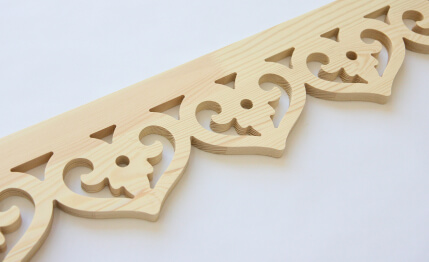
A decorative wooden layout is a narrow flat or shaped strip that is glued or nailed onto flat facades, door panels, and decorative panels. A flat wooden layout creates geometric patterns on smooth surfaces — rectangles, diamonds, a grid. A shaped wooden layout adds relief and volume, turning a simple facade into a classic furniture door.
Wooden corner molding is used to finish internal and external corners of furniture cases, giving them architectural clarity. If the walls are decorated with molding frames and similar molding is applied to furniture facades, the interior acquires rare consistency.
Wooden glazing bead: fine work
Wooden glazing bead is the most delicate element in this system. A narrow strip 10–15 mm wide is used to fix glass in frames, fine finishing of joints, and creating miniature decorative lines. You can buy a wooden glazing bead for decorating built-in wardrobe display cases, glass cabinet doors, and decorative partitions.
Wooden cornice: classic finish
A wooden cornice for a window or as a wall decoration element is the upper architectural line of the interior. A wooden cornice looks good in combination with polyurethane cornices and moldings: together they form a multi-level decorative system from top to bottom.
How to connect wall decor and furniture
This is perhaps the most underestimated aspect of interior design. Most people think about wall decoration separately from furniture. As a result, you get a beautiful wall — and furniture that has nothing to do with it.
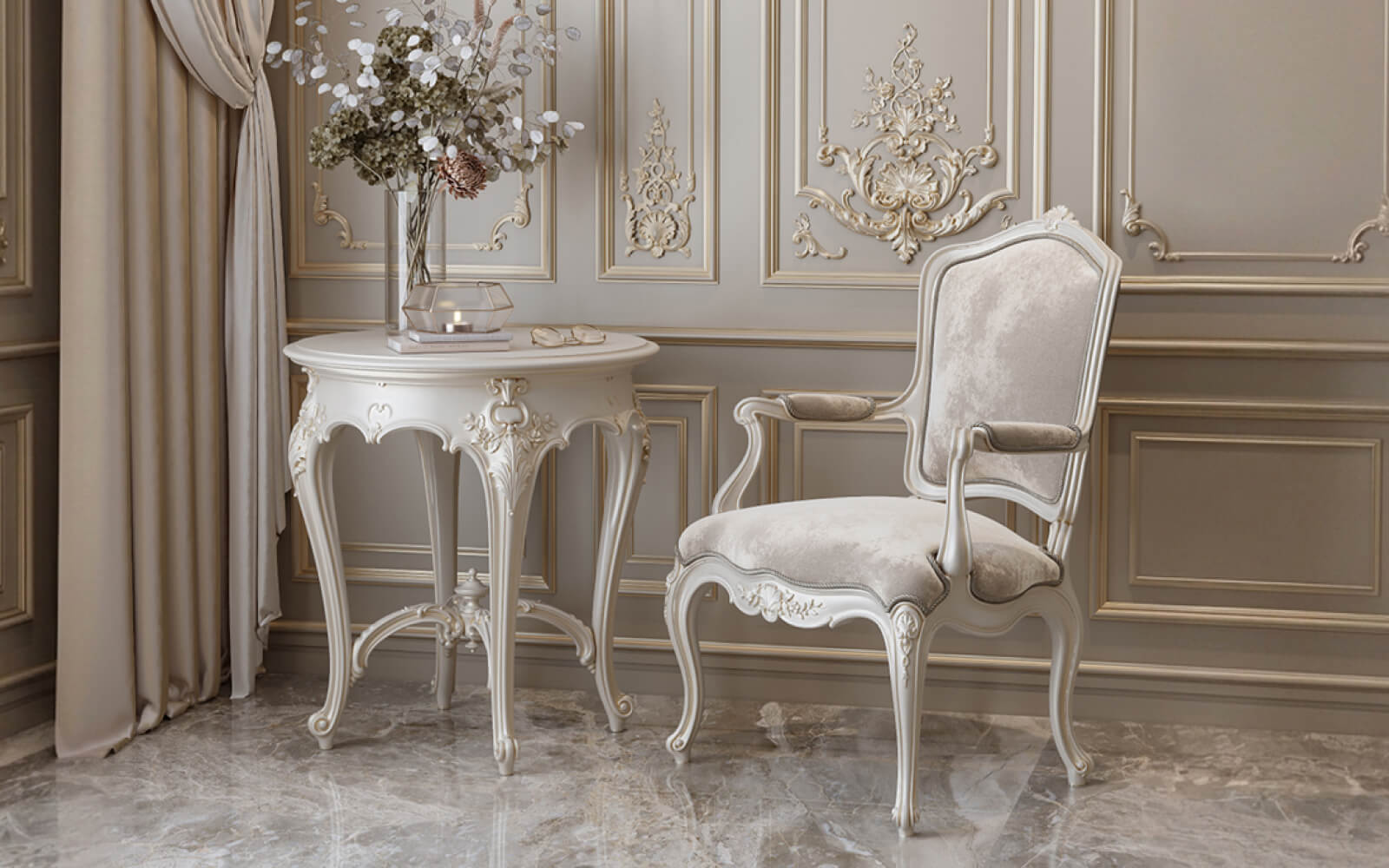
If the wall features classic stucco, molding frames, polyurethane cornices — the furniture should not look random. It's not about buying an expensive set. It's about furniture details repeating the plasticity of the walls.
Furniture legs as a connecting element
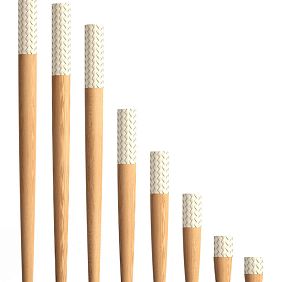
Wooden furniture legs are the first thing people notice after the walls. If the wall is decorated with classic moldings with smooth profiles, and the sofa stands on square metal legs — conflict is inevitable. Wooden sofa legs with soft turning or light carving repeat the plasticity of the moldings and create visual rhythm.
Wooden furniture legs should be purchased considering height: high furniture legs make the item light and airy, which works well in a classic interior with high ceilings. Wooden coffee table legs with fine turning are a delicate detail that adds elegance to the living room.
For a kitchen table, wooden table legs should be purchased with a margin of strength: dining table legs operate under harsh conditions. Here, massive turned or faceted shapes win, which also pair well with classic kitchen molding.
Decorative furniture elements: overlays, brackets, supports
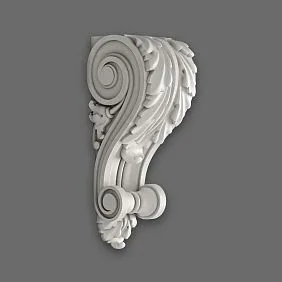
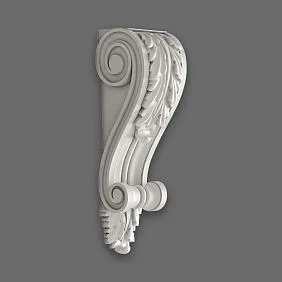
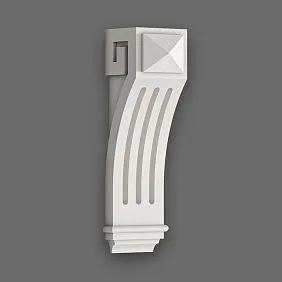
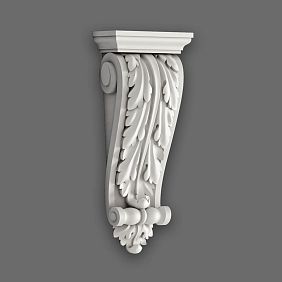
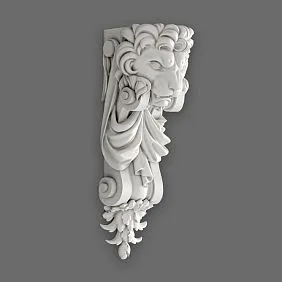
Decorative furniture elements made of polyurethane are overlays that turn a simple cabinet into a classic sideboard or chest of drawers. Such overlays are glued to the facade, frieze, side walls and instantly change the perception of furniture.
A decorative furniture support is used as both a load-bearing and decorative element: it lifts a cabinet, console, or nightstand to the desired height while being part of the style. A round furniture support with a turned profile is a choice for classic and neoclassical styles. A strict rectangular support is for modern interiors.
Furniture brackets and decorative brackets are used for shelves, consoles, and hanging elements. A wooden bracket with carved or turned decor becomes an independent decoration—especially in a study or hallway.
Handles: details that cannot be ignored
A wooden furniture handle is a touch. Literally: every time you open a cabinet door or desk drawer, you touch the handle. A plastic handle next to natural wood and classic wall molding is a destruction of the illusion.
A wooden pull handle is good for kitchens and sideboards. A wooden knob handle is for chests of drawers, nightstands, and small drawers. Buying wooden handles for children's furniture is a special case: here, safety of shape (no sharp corners) and naturalness of material are important.
Decor for Molding These are overlay elements installed in the corners of molding frames, at the center of horizontal planks, and at profile intersections. They work both on walls and on furniture facades, creating a unified decorative code for the interior.
Staircase in the same style: balusters, handrails, posts
A staircase is one of the most expressive interior elements. And one of the most frequently falling out of the overall decorative system. In a home with classic moldings and wooden details, a staircase with chrome handrails and glass balusters looks like a designer's mistake.
Staircase balusters should speak the same language as the walls. If the interior is classic — wooden balusters with a turned profile: vase-shaped, faceted, with carved decor. If neoclassical — stricter forms, geometry, a calm silhouette. Flat balusters are good for a modern interior with molding accents: they do not overload the space and create a rhythmic railing grid.
Wooden balusters are typically made of beech or pine. Beech balusters are dense and work well for different profiles. It is worth buying wooden balusters for stairs as a set with handrails and carved posts — this makes it easier to maintain style unity and scale.
Handrails and balusters as a system are not just a railing. They are the vertical rhythm of the staircase space. If the walls of the stair hall have vertical moldings and the balusters repeat their spacing, a rare effect of architectural completeness emerges.
Carved wooden support posts at the beginning and end of the flight are the final accent. They can be simple square or complex turned, but always set the scale and grandeur.
It is worth buying wooden staircase components from one manufacturer or supplier — this guarantees unity of tone, texture, and style. Mixing different wood species and different color tones on one staircase is a serious mistake.
Classic interior: how not to overload with stucco and wood
Classic requires balance. This is where most people make the main mistake: they think that the more stucco and carving, the more 'classic' it is. This is incorrect.
The principle is simple: a complex detail requires a simple environment. If the wall has a rich molding with a floral pattern, the furniture decor should be calm. Carved legs with large relief next to detailed stucco create visual noise.
Dark classic furniture made of oak or walnut requires a light or neutral wall. White or cream stucco on the wall will read as a clear counterpoint against the dark background of the furniture. Light-colored classic furniture looks better with painted stucco — in one tone with the wall or with a delicate contrast.
Modern classic furniture with minimal decor pairs well with expressive molding. Here the furniture "rests," and the walls work. If the furniture is expressive — classic wall decor should be more restrained: simple frames, even profiles, a minimum of overlay elements.
Furniture in a classic interior style often implies symmetry: two armchairs, two floor lamps, two sconces. The wall decor should support this symmetry — a central panel framed by identical side moldings.
Furniture for a living room in a classic style is typically a sofa with a high back, paired armchairs, and a coffee table on turned legs. The decor behind the sofa can be more saturated, while the side walls should be restrained.
What to choose for different rooms
| Room | Wall decor | Wooden elements |
|---|---|---|
| Living room | Moldings, frames, stucco decor behind the sofa, TV area | Wooden baguette, baseboard, furniture legs, handles |
| Bedroom | Headboard decor, vertical elements, frames | Wooden handles, bed legs, layout on facades |
| Hallway | Moldings, narrow frames, horizontal belt | Baseboard, wooden slat, glazing bead, hanger |
| Staircase hall | Vertical decor, cornices, wall moldings | Balusters, railings, carved posts, handrail |
| Office | Strict moldings, panels, geometry | Dark wood, baguette, furniture supports, brackets |
| Kitchen | Moldings above the backsplash, frames in the dining area | Wooden handles, legs for the kitchen table, facade layout |
| Children's room | Light frames, vertical accents | Wooden handles for children's furniture, wooden slat |
Mistakes when combining polyurethane and wooden decor
Knowing mistakes is half the success. Let's list the most common ones.
Different styles in one room
Baroque stucco on the wall and loft-style furniture is not 'eclecticism', it's chaos. Eclecticism implies a conscious choice of elements from different styles, united by a common idea. Random mixing is simply a lack of concept.
Too much carving
Carved legs, carved mirror frame, carved overlays on facades, carved cornice, carved balusters on the stairs - in a small living room, all this together creates the feeling of an antique shop. There should be no more than two or three expressive carved elements per room.
Random wood color
Light ash baseboard, dark walnut table leg, reddish pine on the rail — three woods, three colors, three characters. Such an interior looks unfinished. The wood color should be either uniform or deliberately contrasting (dark and light as a duo).
Scale mismatch
A narrow 20-millimeter molding in a large hall with three-meter ceilings will get lost. A large 150-millimeter profile in a small bedroom will overwhelm the space. The scale of the element should match the scale of the room.
Cheap plastic parts next to natural wood
This is perhaps the most painful mistake. Natural wooden legs, noble molding — and plastic handles on drawers. The contrast in material quality is instantly noticeable. You can save on the number of elements, but not on their quality.
Stucco without connection to furniture
Rich molding decor on the walls — and simple IKEA furniture in the center of the room. There is no connection: the walls live their own life, the furniture its own. Decorating furniture — adding wooden overlays, polyurethane elements for furniture, changing handles, legs — creates this connection.
Furniture legs and handles not matching the wall style
If the walls are decorated in a classic style with ornamental moldings, chrome modern handles on the cabinet create a disconnect. The types of stucco and stucco design set a certain code — furniture details should support it, not ignore it.
How to start installation correctly: a brief guide
For those just planning the decor, it is important to understand the sequence. First, the wall decor is determined: the style, scale of moldings, and placement of frames are chosen. Then, the color scheme: painting the stucco to match the wall, contrast, or nuance.
After that, wooden details are selected: baseboard, slats, baguette. Their color and tone are coordinated with the furniture. Then, furniture decor: legs, handles, overlays. And finally, the staircase, if there is one.
More details on how to properly attach moldings and achieve clean corners and joints can be read in the article about installing polyurethane moldings. And a full practical breakdown of the process is in the guide on installing polyurethane molding.
How to choose decor at STAVROS: from wall to staircase
STAVROS is a Russian company with production and a catalog of polyurethane decor that covers the entire range of interior tasks: from wall moldings to furniture overlays.
In the STAVROS catalog you can choose:
-
Polyurethane wall decor — frames, panels, relief elements in 15 collections: from classic Versailles to Japanese minimalism Japandi.
-
Polyurethane moldings, cornices, and baseboards — a wide selection of profiles for horizontal and vertical scenarios.
-
decorative inlays for furniture — for updating facades, decorating cabinets, creating classic furniture doors.
-
Decor for Molding — corner, central and decorative elements to enhance molding frames.
-
Ready-made wall solutions — system kits for decorating areas in a unified style.
Each STAVROS collection is designed with the principle of systemicity in mind: elements within the collection are coordinated in scale, profile and decorative code. This means that by choosing a molding from one collection, you get corner elements, central overlays and decor that will match perfectly.
STAVROS produces decor from European polyurethane with a density of 150 to 420 kg/m³. The material is certified, contains no toxic substances, and is suitable for bedrooms and children's rooms. All products are painted with acrylic paints, patinated, and can be adapted to any color.
If you need to select a set for a living room, bedroom, hallway or country house, STAVROS specialists will help you build a decor system: wall polyurethane decor, moldings, furniture overlays — for your project, for your furniture, for your staircase.
FAQ: Answers to popular questions
Can polyurethane wall decor and wooden decor be combined?
Yes, this is one of the best solutions for classic, neoclassical, and modern interiors. Polyurethane decor shapes the architecture of walls and ceilings, while wooden elements support the style in furniture, stairs, baseboards, moldings, and finishing details. The key is to coordinate the scale, color, and plasticity of the elements.
What is better for a wall: a wooden slat or polyurethane stucco molding?
It depends on the task. A wooden slat on the wall is suitable for creating a warm textured surface, rhythmic verticals, and a natural atmosphere in Japandi or Scandinavian style. Polyurethane molding on walls is better suited for molding frames, decorative compositions, and classic and neoclassical design. Often both materials are used in the same interior, but in different zones.
Can a wooden baseboard be used with polyurethane stucco molding?
Not only can it, but it should be. The wooden baseboard forms the lower architectural line of the interior, while polyurethane moldings and stucco decorate the walls above. This "bottom-up" system creates a cohesive space. It is important to match the tone of the baseboard with the color of the furniture and wooden details.
How to choose furniture legs to match the stucco on the wall?
If the wall has classic stucco decor with smooth lines and floral ornaments, choose wooden legs with soft curves, light carving, or calm turning. For neoclassicism, more restrained forms are suitable: faceted or slightly tapered legs without decor. Metal geometric legs do not combine with classic stucco.
Are wooden balusters suitable for an interior with polyurethane stucco?
Yes, especially in country houses, halls, and spaces with an open staircase. Wooden balusters, railings, and carved posts support the overall style of the walls and furniture. It is important that the wood tone of the balusters echoes the tone of the furniture legs and baseboard—this creates a unified wooden note in the interior.
Что такое декоративные элементы для мебели из полиуретана и зачем они нужны?
Это накладки, рамки, угловые элементы и фризы, которые клеятся на фасады мебели и превращают простой корпусный шкаф в классический буфет или комод. Decorative furniture elements made of polyurethane — дешёвый и эффективный способ обновить старую мебель или добавить декоративный код новым фасадам без замены корпусов.
Как оформить классический интерьер без перегруза?
Главное правило — одна выразительная зона на комнату. Богатый молдинг за диваном — остальные стены спокойные. Резные ножки у мебели — накладки на фасадах минимальные. Сложный орнамент на карнизе — плинтус простой профиль. Декор работает как акцент, а не как сплошной ковёр.
Как выбрать коллекцию для начинающих?
Начните с Neoclassic Light collections: она сдержанная, легко монтируется, хорошо смотрится в стандартных квартирах. Для тех, кто хочет более насыщенного классического декора — Versailles Light collection. Для природной эстетики — Japandi collection.
Interior design is not a collection of beautiful things. It is a system where every detail knows its place. Polyurethane wall decor sets the architecture, wooden elements create tactility and warmth, furniture details support the style, and stair balusters complete the overall picture. When all parts speak the same language — what is commonly called a true interior is born.
STAVROS is a company that offers not just decorative elements, but an interior design system: from walls to furniture facades. The catalog includes 15 collections of wall decor, moldings, cornices, baseboards, and furniture overlays made of European polyurethane with confirmed characteristics. STAVROS works with designers, foremen, developers, and private clients across Russia, with delivery and professional consultation at every stage of selection.