Article Contents:
- Classic bedroom look with soft symmetry
- Compositional center — the bed
- Second compositional center — dressing table with mirror
- Soft symmetry in furniture arrangement
- Color symmetry — repeating shades
- High baseboard around the room perimeter as a "plinth"
- Why a high baseboard is important in a classic bedroom
- Baseboard profile — classic, multi-level
- Baseboard height depending on ceiling height
- Baseboard material — only solid wood
- Baseboard color — milk white, ivory, light walnut
- Baseboard as a frame for the floor
- Oval mirror above the dressing table or chest of drawers
- Why oval is a shape of femininity and grace
- Oval mirror size — proportions relative to furniture
- Mirror frame — wood, carving, simplicity
- Mirror as a functional and decorative element
- Alternative — mirror above the chest of drawers
- Balance of rounded forms (mirror) and strict lines (baseboard, moldings)
- Oval mirror — soft shape
- Baseboard — straight horizontal line
- Wall moldings — verticals and horizontals
- Bed — rectangular, but with soft elements
- Textiles — rounded and straight forms
- How to avoid overloading the space with forms
- Finishing choice: milk white, ivory, light walnut
- Milk white — warm white for walls and ceiling
- Ivory — for baseboards and moldings
- Light walnut — for furniture and mirror frame
- Additional shades — powder, beige, gray-blue
- What to avoid in the bedroom color palette
- Details: sconces on the sides of the mirror, textiles, small decor
- Sconces on the sides of the mirror — symmetrical lighting
- Textiles — layers, textures, softness
- Small decor — vases, boxes, candles
- Paintings and posters — what to hang on the walls
- Chandelier — central lighting element
- Layout of a classic bedroom: examples and diagrams
- Small bedroom (12–14 sq. m)
- Medium bedroom (16–20 sq. m)
- Large bedroom (25–30 sq. m)
- Frequently Asked Questions
- Conclusion

A bedroom is not just a place to sleep. It is a space of silence, peace, and restoration. It doesn't need the dynamics of a living room, the functionality of a kitchen, or the formality of a study. It needs harmony. And the classic style provides it in full — through symmetry, through soft forms, through quality materials, through precise proportions.an oval mirror in a wooden frameabove the vanity table,Wide Wooden Skirting Boardaround the perimeter of the room, paired sconces on the sides, milky wall shades — all of this creates an atmosphere where it's easy to breathe, easy to fall asleep, easy to wake up. Let's talk about how to build a classic bedroom so that every detail contributes to the overall composition.


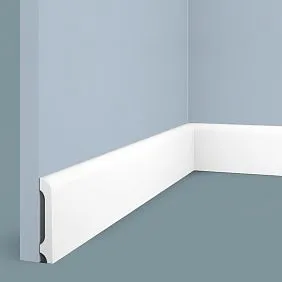
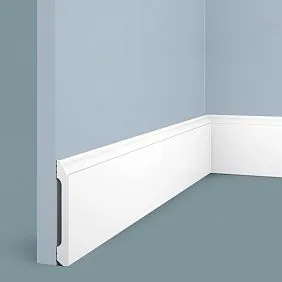
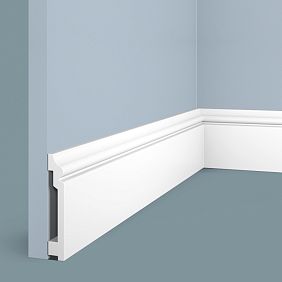
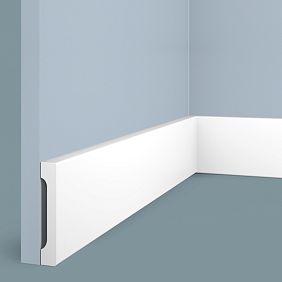
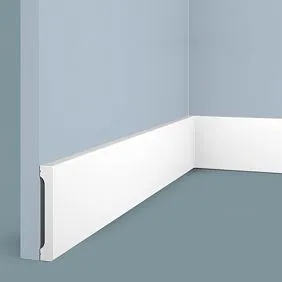
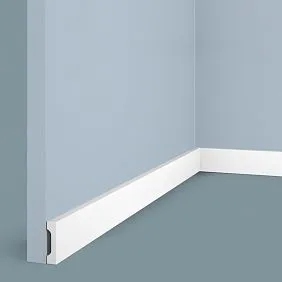
Image of a classic bedroom with soft symmetry
What is soft symmetry? It's not a mirror reflection, not absolute identity between the left and right sides. It's a balance where elements are arranged in pairs but not identically. Two nightstands — yes, but of different sizes. Two cabinets — yes, but one with a lamp, the other with a vase. Two sconces — yes, but the light is directed differently.




Compositional center — the bed
bed in classic style— is always the center of the bedroom. Not the mirror, not the dresser, not the window. The bed. It is placed with the headboard against a wall, preferably the one visible from the entrance. Symmetry is built relative to the central axis of the bed.
To the right of the bed — a nightstand. To the left — the same. On each — a lamp (or one lamp, one vase, one stack of books — variation is acceptable). Above the bed — a decorative wall panel with moldings or a soft headboard with tufting. On the sides of the bed — floor lamps or wall sconces. Everything is paired, but with slight differences.
Our factory also produces:


Second compositional center — vanity table with mirror
If the bedroom area allows (from 16–18 sq. m), a second compositional center appears in the room — a vanity table withan oval framed mirror. It is placed against a wall perpendicular to the bed, or by the window (if the layout allows).
The vanity table is symmetrical in itself: three drawers (central and two side ones), legs arranged in pairs. Above the table — a mirror, strictly centered. On the sides of the mirror — two sconces at the same height. On the tabletop — perfume, boxes, brushes — everything arranged symmetrically or with a slight shift.
Get Consultation
Soft symmetry in furniture arrangement
Hard symmetry (when everything is absolutely identical) creates coldness, formality. In a bedroom, this is inappropriate. Soft symmetry is needed — balance without strictness.
Example: to the left of the bed — an armchair with a high back and a floor lamp. To the right — a dresser with a lamp. Not identical, but balanced. The armchair and dresser have similar mass (visual weight), so they don't create imbalance.
Or: by the window on the left — a chaise lounge. On the opposite wall to the right — a bookcase. The chaise lounge is horizontal, low. The bookcase is vertical, tall. But if they are comparable in width, the composition remains balanced.
Color symmetry — repetition of shades
Soft symmetry is also manifested in color. If one wall has beige wallpaper with a subtle gold pattern, the opposite wall also has beige, but without the pattern. Or: the curtains on the window are milky with a cream border. The bedspread is cream with a milky border. The colors echo each other, creating harmony.
Textiles repeat the tones of the walls, furniture, and baseboards. If the baseboard is white, the curtains also have white elements. If the mirror frame is light oak, the dresser is also oak. Color echoes create spatial integrity.
High baseboard around the perimeter of the room as a 'plinth'
In classical architecture, the plinth is the foundation of a building, a massive part that supports the entire structure, visually grounds it, and creates stability. In a bedroom interior, the baseboard plays the role of the plinth.
Why a high baseboard is important in a classical bedroom
A low baseboard (6–7 cm) does not create a sense of solidity. It serves a purely utilitarian function — covering the gap between the floor and the wall. But in a classical interior, the baseboard is an architectural element, part of the composition.
A high baseboard (12–18 cm) visually raises the walls, creates verticality, makes the room appear taller. It sets the scale, proportions, and creates a sense of monumentality — even in a small bedroom.Wide wooden baseboard made of solid wood— is the foundation on which the entire composition rests.
Baseboard profile — classical, multi-level
A baseboard in a classical bedroom cannot be flat. It must have a complex profile with chamfers, coves, and beads. The cross-section resembles an architectural cornice — with multiple levels, playing with light and shadow.
A typical classical baseboard profile includes:
-
Lower base (flat part near the floor)
-
Concave chamfer (cove), creating a smooth transition
-
Convex bead (central element of the profile)
-
Upper shelf (flat part adjacent to the wall)
Such a profile is not just beautiful — it is functional. The concave part collects dust, preventing it from settling on the wall. The convex part protects the wall from impacts. The upper shelf creates a visual horizontal line framing the room.
Baseboard height depending on ceiling height
For standard ceilings (2.5–2.7 m), the optimal baseboard height is 12–15 cm. This creates classical proportions without overloading the space.
For high ceilings (3–3.5 m), the baseboard can be 16–18 cm. This emphasizes the height, making the room more solemn and monumental.
For very high ceilings (4 m and above, typical of old houses), the baseboard can reach 20–25 cm. Such height is typical for palace interiors, grand halls — but it also works in a bedroom if the ceilings allow.
Baseboard material — only solid wood
A plastic baseboard in a classical bedroom is nonsense. It is cold, lifeless, cheap. Classic style requires natural materials. The baseboard must be wooden — made of solid oak, beech, or ash.
Solid wood has a texture that is pleasant to look at. It is warm to the touch. It smells pleasant. It is alive — wood breathes, changes over time, acquires a patina. Plastic remains plastic forever — uniform, lifeless.
Baseboard color — milky, ivory, light walnut
In a classical bedroom, the baseboard is rarely dark. A dark baseboard creates heaviness, visually weighs down, and makes the room appear smaller. A bedroom requires lightness, air, and light.
Optimal baseboard colors:
-
Milky (warm white with a slight creaminess)
-
Ivory (color of elephant ivory, white with a yellowish undertone)
-
Ecru (unbleached linen, soft beige)
-
Light walnut (natural wood with light tinting)
-
Whitewashed oak (light wood with pronounced texture)
These shades are soft, neutral, noble. They don't draw excessive attention but create the foundation upon which the entire composition rests.
Baseboard as a frame for the floor
The baseboard around the room's perimeter creates a visual frame for the floor. The floor—parquet, laminate, porcelain tile—appears framed, finished. It's like a frame for a painting: without a frame, the painting gets lost on the wall; with a frame, it becomes a complete work of art.
In a bedroom with herringbone or French herringbone parquet, the baseboard emphasizes the laying geometry, creating a contrast between the baseboard's horizontality and the parquet's diagonals.
In a bedroom with a solid-color floor (light laminate, marble-look porcelain tile), the baseboard adds structure, preventing the floor from being bland.
Oval mirror above a dressing table or chest of drawers
The shape of the mirror matters in a classic bedroom. A rectangular mirror is strict, formal, suitable for a study. A round one is too modern, graphic.An oval mirror— is the perfect compromise between strictness and softness, between classic and elegance.
Why oval is the shape of femininity and grace
An oval has no corners, sharp lines, or aggressive forms. It is soft, streamlined, calm. In shape psychology, the oval is associated with harmony, balance, femininity. It is the shape of an egg, a seed, a human face—the shape of life.
In a classic bedroom, where an atmosphere of peace and coziness is important, an oval mirror creates visual softness. The gaze glides along the smooth line without stumbling over corners. This calms, relaxes, creates a sense of completeness.
Size of the oval mirror—proportions relative to furniture
The mirror should not be too small (it will get lost on the wall) or too large (it will overwhelm the furniture). Optimal proportions:
For a dressing table 100–120 cm wide: mirror height 100–120 cm, width 60–80 cm (vertical oval).
For a chest of drawers 120–150 cm wide: mirror height 90–110 cm, width 70–90 cm (vertical oval or close to a circle).
The lower edge of the mirror frame should be 10–20 cm above the surface of the table or chest. The upper edge—at a height of 180–200 cm from the floor. The center of the mirror—at eye level of a seated person (approximately 120–130 cm from the floor).
Mirror frame—wood, carving, conciseness
The frame of an oval mirror in a classic bedroom should be wooden—made of solid oak, beech, walnut. It can be carved (with plant motifs, acanthus, garlands), but not excessively ornate. A bedroom requires restraint, not theatricality.
Optimal—a medium-width frame (6–10 cm) with light relief, bevels, delicate carving. Frame color—matching the furniture (dressing table, chest of drawers, bed) or matching the baseboard. This creates material unity, connecting the elements of the composition.
Gilding on the frame is acceptable, but delicate—light gilding on the protruding parts of the carving, patination in the recesses. Not solid gilding, but accents.
Mirror as a functional and decorative element
An oval mirror above a dressing table serves a dual function. Functional—people look into it, apply makeup, style hair. Decorative—it adorns the wall, creates a focal point, reflects light.
It's important what the mirror reflects. If opposite the mirror is a window, the mirror doubles the light, making the room brighter. If opposite is a beautiful chandelier or decorative composition, the mirror creates an additional visual layer.
Alternative—mirror above a chest of drawers
If there is no dressing table in the bedroom, an oval mirror can be hung above a chest of drawers. A classic-style chest of drawers—massive, with drawers, on stable legs. A mirror above it creates a vertical composition, visually raising the ceiling.
Decorative elements are arranged on the chest—a vase with flowers, a jewelry box, photo frames, candles. The mirror reflects these objects, creating depth, layering.
Balance of rounded forms (mirror) and strict lines (baseboard, moldings)
Classic interior design is built on the contrast of forms. Only rounded shapes are soft but boring. Only straight lines are strict but cold. Balance creates harmony.
Oval mirror — a soft shape
An oval is a smooth line, absence of corners, visual softness. A mirror softens the space, making it cozier, calmer.
Baseboard — a straight horizontal line
The baseboard runs along the perimeter of the room as a strict horizontal line. It is a straight line, without bends, without deviations. It creates structure, order, discipline.
Wall moldings — verticals and horizontals
Moldings creating wall panelsare straight lines, vertical and horizontal. They divide the wall into sections, create geometry, clarity.
Bed — rectangular, but with soft elements
The bed has a rectangular shape (mattress, base, footboard), but the headboard can be soft, with tufting, with smooth curves of the top edge. This is a combination of strictness and softness.
Textiles — rounded and straight forms
The bedspread on the bed is rectangular, but with soft folds. Pillows are square and round, creating balance. Curtains are straight drapes and rounded valances. The contrast of forms creates visual interest.
How not to overload the space with forms
Too many rounded forms (oval mirror, round pillows, round rug, round chandelier) creates visual looseness, lack of structure.
Too many straight lines (rectangular mirror, rectangular rug, strict moldings, angular furniture) creates coldness, formality.
Balance is 60% straight forms (baseboard, moldings, furniture) and 40% rounded (mirror, pillows, decor). Or vice versa, depending on the desired atmosphere.
Choice of finishes: milk white, ivory, light walnut
Color in a classic bedroom is not bright accents, not contrasting combinations, not bold experiments. It is soft, complex, noble shades that create an atmosphere of tranquility.
Milk white — warm white for walls and ceiling
Milk white is white with a slight creamy undertone. Not cold snowy white, not sterile hospital white, but warm, soft, cozy. Walls painted in milk white create a feeling of light, spaciousness, cleanliness — but without coldness.
Milk white reflects light, making the room brighter. It is neutral, does not draw attention, serves as a background for furniture, textiles, decor. It is universal — suitable for both small bedrooms (visually expands) and large ones (does not create emptiness).
Ivory — for baseboards and moldings
Ivory — the color of elephant ivory, white with a yellowish undertone. It is warmer than milk white, more noble, more refined.Baseboards and moldings in ivory colorcreate a soft contrast with milk white walls — sufficient for the elements to be visible, but not sharp.
Ivory does not yellow over time (unlike pure white), retains its noble shade. It is associated with classic style, with palace interiors, with quality.
Light walnut — for furniture and mirror frame
Light walnut — natural wood with a warm golden-brown shade and expressive texture.Furniture made of light walnut(bed, vanity table, dresser) adds warmth, naturalness, connection with nature to the bedroom.
Light walnut is not dark, not gloomy — it is light, sunny, joyful. It pairs beautifully with milk-colored walls and ivory baseboards, creating a harmonious palette.
Additional shades — powder, beige, gray-blue
Milk, ivory, and light walnut are the foundation. But for variety, for accents, you can add additional shades:
Powder (soft pink) — for textiles (bedspread, pillows, curtains). Creates femininity, softness, romance.
Beige (warm neutral) — for a rug, chair upholstery, a throw blanket. A universal shade that goes with everything.
Gray-blue (muted cool) — for decorative pillows, a vase, a painting. Adds freshness, lightness, airiness.
Important: additional shades should be muted, complex, not bright. No acid pink, bright blue, saturated green.
What to avoid in a bedroom color palette
Dark colors (black, dark brown, graphite) — they create heaviness, feel oppressive, and hinder relaxation.
Bright colors (red, orange, bright yellow) — they excite the nervous system and interfere with falling asleep.
Cold colors without warm tones (icy white, cold gray, blue) — they create a feeling of a hospital, an office, lifelessness.
Contrasting combinations (black and white, red and white) — they create tension, activity, which is inappropriate in a bedroom.
Details: sconces on the sides of the mirror, textiles, small decor
Details create the atmosphere. Without details, a bedroom is a faceless room with a bed. With details — a living space that is pleasant to be in.
Sconces on the sides of the mirror — symmetrical lighting
Two wall sconces on the sides of an oval mirror — a classic technique that never goes out of style. The sconces are mounted at the same height (approximately at the center level of the mirror, 130–140 cm from the floor), at the same distance from the frame (20–30 cm).
The sconces should be symmetrical — the same shape, size, style. Classic sconces have fabric shades (white, cream, powder), a brass or bronze base, and a curved bracket.
The light from the sconces falls on the face evenly, without harsh shadows. This is important for the functional use of the mirror (makeup, hairstyling). But the sconces also serve a decorative function — they create a warm, cozy atmosphere.
Textiles — layers, textures, softness
Textiles in a classic bedroom are not a single element, but a system of layers:
Curtains on the window — heavy drapes made of velour, velvet, jacquard. Color — milk, cream, powder. Tiebacks with tassels, a valance with soft folds.
Bedspread on the bed — quilted, with tufting or smooth satin. Color — matching the curtains or contrasting (if the curtains are milk-colored, the bedspread can be beige).
Pillows — several layers: large square ones (50×50 cm) at the headboard, medium rectangular ones (40×60 cm) in front of them, small round ones or bolsters at the front. Different textures (velour, linen, silk), but a unified color scheme.
Throw blanket on the armchair or at the foot of the bed — cashmere, wool, knitted. Adds coziness, invites you to snuggle up.
Rug by the bed — soft, with a high pile or a classic Persian. Size — so that it extends beyond the bed by 50–70 cm on each side.
Small decor — vases, boxes, candles
On the dressing table, on the chest of drawers, on the nightstands — small decor that creates life, individuality:
Vases — ceramic, porcelain, glass. With flowers (real or artificial) or empty, as a decorative object.
Boxes — for jewelry, for small items. Wooden inlaid, metal with enamel, ceramic painted.
Candles — in candlesticks, of varying heights. Create a romantic atmosphere in the evening.
Perfume bottles — beautiful, decorative. Arranged on a mirrored tray.
Photo frames — with family photos. Wooden or metal, in a classic style.
Books — on the bedside table, in a stack or one open. Creates a sense of coziness.
Paintings and posters — what to hang on the walls
The walls of a classic bedroom should not be empty, but should not be overloaded either. Optimal — 2–3 paintings or posters, arranged symmetrically or asymmetrically, but in a balanced way.
Theme — calm, contemplative: landscapes, flowers, abstraction in soft tones, classical painting. No aggressive subjects, bright colors, dynamic compositions.
Picture frames — wooden, matching the mirror frame or baseboard. Simple or with light carving, but not ornate.
Chandelier — the central lighting element
The chandelier in a classic bedroom hangs in the center of the ceiling, above the bed (if the bed is centered) or between the bed and the dressing table.
Classic chandelier — with crystal pendants, fabric lampshades, curved arms. Size — proportional to the room area. For a bedroom of 16–20 sq. m — chandelier diameter 50–60 cm. For a bedroom of 25–30 sq. m — diameter 70–80 cm.
Light from the chandelier — warm, soft, diffused. Preferably with a dimmer (brightness regulator) to create different lighting scenarios.
Classic bedroom layout: examples and diagrams
Small bedroom (12–14 sq. m)
Bed — along the long wall, headboard against the wall. Two bedside tables on the sides. Opposite the bed — a chest of drawers with an oval mirror above it. By the window — an armchair with a floor lamp. Baseboard around the perimeter, moldings on the wall behind the bed (creating a panel, visually highlighting the headboard).
Medium bedroom (16–20 sq. m)
Bed — centered on the far wall. Bedside tables. Against the perpendicular wall — a dressing table with an oval mirror and a soft pouf. By the window — a chaise lounge or bench. In the corner — a full-length floor mirror or a tall floor lamp. Baseboard around the perimeter, molding panels on all walls.
Large bedroom (25–30 sq. m)
Bed — centered. Bedside tables and floor lamps. Dressing table with mirror against one wall. Chest of drawers or console against another. Armchair with ottoman by the window. Bookcase or shelving unit in the corner. Baseboard height 16–18 cm, molding panels, ceiling cornice.
Frequently asked questions
What baseboard height to choose for a bedroom with a 2.6 m ceiling?
Optimally 12–14 cm. This will create classic proportions without overloading the space.
Can an oval mirror be hung horizontally?
Yes, a horizontal oval is suitable for placement above a wide chest of drawers or console (150–180 cm).
What color baseboard to choose if the furniture is dark walnut?
Light — milky or ivory. The contrast of dark furniture and a light baseboard will create expressiveness.
Are moldings needed on the walls in a small bedroom?
Not necessarily. In a small bedroom, a baseboard and mirror are enough. Moldings can be used only behind the bed headboard.
How many pillows should be on a classic bed?
From 4 to 8. Two large square ones at the headboard, two medium rectangular ones, two to four small decorative ones.
What size rug to choose for a bedroom?
The rug should extend beyond the bed by 50–70 cm on each side. For a 160×200 cm bed, a rug approximately 260×320 cm.
Can dark colors be used in a classic bedroom?
Yes, but as accents. For example, dark blue pillows, dark green armchair. The main palette should be light.
Where to buy quality wooden skirting boards for a classic bedroom?
From manufacturers specializing in classic interior decor made from solid wood.
Is symmetry needed in decor arrangement?
Soft symmetry — yes. Absolute — no. Balance is more important than identity.
How to care for wooden baseboard?
Wipe with a damp cloth, renew the wax or oil coating once a year.
Conclusion
A classic bedroom is not a set of expensive furniture, not an abundance of decor, not blind adherence to canons. It is a thoughtful space where every detail is in its place, where a high skirting board creates the foundation, where an oval mirror softens the strictness of lines, where symmetry provides order, and details add life. Milk-colored walls, ivory skirting boards, light walnut furniture — this palette does not become outdated, does not become tiresome, creates an atmosphere of peace and harmony.
Furniture for bedrooms in classic stylerequires an understanding of proportions, respect for materials, a sense of measure. You cannot simply buy a bed, a chest of drawers, and a mirror — you need to build a composition where these elements work together. A skirting board does not just cover a gap — it creates a plinth, a foundation on which the entire interior architecture rests. A mirror does not just hang on the wall — it reflects light, creates depth, becomes a focal point.
Symmetry in a classic bedroom is soft, not rigid. Two sconces on either side of the mirror — yes, but the light can be directed differently. Two nightstands by the bed — yes, but with different items on them. Balance is more important than identity, harmony is more important than rules.
Details create life. Textiles, candles, vases, books — all this makes the bedroom not a museum exhibit, but a living space where a person rests, recovers, and gains strength.Classic furniture and decorative elementswork together, creating an atmosphere that is independent of time, fashion, or trends.
The company STAVROS has been creating elements of classic interiors for over twenty years, understanding that quality is measured not by price, but by durability, not by novelty, but by timelessness.Skirting boards, moldings, and cornices by STAVROSare made from selective solid oak and beech, dried to a moisture content of 8–10%, which eliminates deformation and cracks for decades of use. The assortment includes over thirty classic profiles with heights from 60 to 250 mm, allowing for a solution for bedrooms of any size and style — from restrained neoclassicism to luxurious baroque. STAVROS offers skirting boards in various finishes: natural wood with protective varnish, painted enamel (white, ivory, any color from the RAL catalog), tinted (bleached oak, light walnut, grey oak), patinated (with an aged effect).Classic bedroom furniture by STAVROS— beds with carved headboards, dressing tables with elegant legs, chests of drawers with classic proportions — is created from the same solid wood, using traditional joinery connections, without the use of chipboard, plastic, or cheap materials.STAVROS Mirror Framesare made from oak and beech using three-dimensional milling followed by manual refinement of carved elements, ensuring detail and individuality of each piece. Oval frames of various sizes (from 60×80 cm to 100×140 cm) are available in baroque, neoclassical, and empire collections — with the possibility of custom tinting, patination, gilding. In-house full-cycle production allows STAVROS to control quality at every stage — from wood selection to final packaging. Showrooms in Moscow and St. Petersburg provide an opportunity to see skirting boards, moldings, furniture, and frames in person, assess wood texture, profile complexity, finish quality, and receive consultation on selecting elements for a classic bedroom. Delivery throughout Russia and CIS countries, professional installation, warranty service — STAVROS provides a full cycle from selection to installation, understanding that a classic bedroom is created not for a year, but for generations.