Article Contents:
- Classic furniture: anatomy of nobility
- Carved facades: sculpture in wood
- Patina: nobility of time
- Gilding: the radiance of aristocracy
- Materials: oak as the standard
- Polyurethane moldings: architectural shell for palace furniture
- Ceiling rosettes: center of composition
- Wall moldings: frames for paintings and mirrors
- Ceiling cornices: upper boundary of space
- Consoles and brackets: supports for mantel shelves
- Furniture handles: final touch of the classic look
- Carved wooden handles: continuation of furniture carving
- Brass handles with wooden inserts: combined luxury
- Handle fasteners: invisible but important detail
- Wooden baseboard: finishing the look from below
- Baseboard height: proportions of classic style
- Baseboard painting: matching furniture or floor color
- Baseboard corners: 45° miter cut or decorative elements
- Harmony of elements: unity of ornaments
- Motif repetition: acanthus as a leitmotif
- Color coordination: white gold and patina
- Scale and rhythm: from small to large
- Frequently Asked Questions
- Conclusion: a palace is accessible to everyone who values classic style

A palace doesn't begin with room size. A palace begins with details: a carved solid oak buffet with patina on the facades, a ceiling rosette 120 cm in diameter with acanthus leaves, a tall wooden baseboard with a cavetto profile, wooden handles on the buffet doors with floral ornamentation. Each detail speaks of connection to tradition, understanding of classical proportions, and the financial ability to choose the best.Classic Furniturein combination withpolyurethane ceiling stucco buywhich can be created today, produces interiors that don't age for decades because they're based on centuries-old canons of beauty. Carved facades, gilding, patina, molding ornaments, tall baseboards—all these aren't mere decoration but a system of visual language understood at the level of cultural memory. In this article, we delve into the anatomy of palace interiors: from choosing furniture with correct proportions to selecting moldings that rhyme with furniture carvings through repetition of ornaments. Prepare for a journey into a world where every detail matters, where beauty is measured by carving quality, where luxury isn't loud but noble.


Classic furniture: anatomy of nobility




Carved facades: sculpture in wood
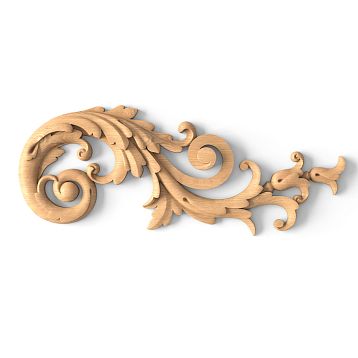
classic furniturediffers from modern minimalist furniture primarily by the presence of carving. Carving is three-dimensional decoration, carved from solid wood or made as separate overlays. Acanthus leaves, rosettes, rocaille scrolls, grape clusters, laurel wreaths, floral garlands—carving motifs originate in ancient architecture, pass through Renaissance, Baroque, Rococo, Classicism, Empire styles, and remain relevant in the 21st century.
A classic sideboard, 2.1 meters high and 1.8 meters wide, made of solid oak, features carved fronts: the central panel of each door is adorned with a carved overlay measuring 25×40 cm, depicting acanthus leaves framing a central rosette. The corners of the sideboard are decorated with carved pilasters (flat vertical projections imitating columns) with capitals featuring carved volutes (scrolls). The sideboard's cornice (the horizontal projection at the top) has a carved frieze—a continuous band of ornamentation with alternating motifs (acanthus + rosette + acanthus).
The depth of carving is critical for perception. Shallow carving with a depth of 3-5 mm creates a barely noticeable relief that is discernible upon close inspection but is lost from a distance of 3-4 meters. Medium carving with a depth of 8-12 mm creates an expressive relief visible from any distance, creates a play of light and shadow, and is enhanced by side lighting. Deep carving of 15-25 mm creates a sculptural relief perceived as a three-dimensional object, almost separating from the background.
For formal living room furniture, medium or deep carving is optimal: it should be visible, should make an impression, and should demonstrate the carver's skill and the item's cost (deep carving is labor-intensive, therefore expensive).
Our factory also produces:


Patina: The Nobility of Time
Patina is the artificial aging of furniture, creating the effect that the piece is one to two hundred years old. The classic patination technique: the furniture is painted in a base light color (ivory, light beige, white); after the base coat dries, a dark patina (brown, gray, greenish) is applied, rubbed into the recesses of the carving, into the gaps between boards, onto the edges, after which excess patina is wiped off the protruding parts. What remains: a light base tone on flat surfaces, dark patina in recesses, on edges, and in the carving.
Effect: The furniture looks as if it has stood in a palace hall for decades, with dust and time leaving traces in the recesses, while the protruding parts are polished by the touch of hands. Patina adds depth of color, creates visual complexity (not a flat, monochromatic color, but a multi-layered one with transitions from light to dark), and enhances the perception of carving (dark patina in the depth of the carving makes the relief more contrasting and expressive).
For a living room in the neoclassical style, furniture with light-toned patina is optimal: base color ivory, patina gray-brown. For a living room in the Baroque or Empire style, a more contrasting patina is possible: base color white, patina dark brown or even black (creates a dramatic contrast).
The cost of patination adds 15-25% to the price of the furniture: an oak sideboard without patina costs 180,000 rubles, the same sideboard with patina costs 207,000-225,000 rubles. Patination is manual work requiring experience, which explains the price increase.
Get Consultation
Gilding: The Radiance of Aristocracy
Gilding is the application of a thin layer of gold (gold leaf—sheets of gold fractions of a micron thick) or gold paint to individual furniture elements: carved overlays, moldings, legs, cornices. Gilding adds luxury, formality, creates a shine that attracts the eye.
The classic gold leaf gilding technique: a primer (levkas) is applied to the wooden surface, sanded to perfect smoothness, coated with a special adhesive (mordant), sheets of gold leaf (approximately 10×10 cm in size, 0.0001 mm thick) are laid onto the adhesive, literally sticking to it. After drying, the gold is polished with an agate stone to a mirror shine. A gilded surface does not tarnish for decades, retains its shine, and does not oxidize (pure gold is chemically inert).
An alternative to gold leaf is gold paint (acrylic paint with a metallic pigment imitating gold). Gold paint is cheaper (gold leaf gilding 15,000-35,000 rub/m², gold paint 2,500-6,000 rub/m²) but does not have the deep, noble shine that real gold provides. Gold paint is suitable for mid-price segment furniture (sideboard 150,000-250,000 rubles), gold leaf is for premium furniture (sideboard 350,000-750,000 rubles).
Gilding on furniture should be measured: not all furniture is gilded (that is vulgar), but only accents. For example, a solid oak sideboard with ivory patina: the carved overlays on the fronts are covered with gold leaf, the rest of the surface is patinated. Or: turned table legs covered in gold, the tabletop and apron (the horizontal plank connecting the legs) are patinated. Gold as an accent, not a dominant.
Materials: Oak as the Standard
Classical furniture is made from solid hardwoods: oak, beech, ash, walnut. Oak is the standard for classicism because it possesses hardness (3.7-3.9 on the Brinell scale), expressive texture (large pores, contrasting annual rings, medullary rays on a radial cut), resistance to deformation, and durability (oak furniture lasts for centuries if made correctly).
The color of oak varies from light golden (young oak) to dark brown (bog oak, aged in water for decades). For classical furniture, a medium-toned oak (honey, cognac) is often used, which, after patination, acquires a noble, complex color with transitions from light to dark.
Beech is an alternative to oak, slightly harder (3.8), but with a less expressive texture (small pores, uniform annual rings). The color of beech is pinkish-beige. Beech is suitable for furniture that will be painted with opaque paint (white, ivory), because the texture is hidden anyway.
Ash—hardness similar to oak (4.0-4.1), color lighter (white-gray, white-yellow), texture contrasting (alternating light and dark stripes). Ash is suitable for classical furniture where light wood with an expressive texture is needed.
Walnut (European, American black) — color dark brown with a purple or chocolate hue, texture with a wavy pattern. Walnut is more expensive than oak (wood is rarer, grows slower), used for exclusive premium segment furniture.
Polyurethane Molding: Architectural Shell for Palace Furniture
Ceiling Rosettes: The Center of the Composition
A ceiling rosette with a diameter of 100-150 cm and abundant ornamentation is a mandatory element of a palace interior. The rosette is installed in the center of the living room ceiling, frames the chandelier mounting point, creates a compositional center from which the visual energy of the space radiates.
The rosette's ornament should match the style of the furniture. If the furniture is in the neoclassical style (restrained proportions, moderate carving), a rosette with an ornament of acanthus leaves in two to three rows, concentric circles with beads and cavettos, radial rays. If the furniture is in the Baroque style (abundant carving, curvilinear forms, gilding), a rosette with abundant ornamentation: acanthus leaves in four to five rows, rocaille (scrolls in the form of shells), cherubs, garlands of flowers.
The rosette's diameter is determined by the room's area and ceiling height. For a living room of 30-40 m² with a ceiling of 2.7-3.0 meters, a rosette with a diameter of 100-120 cm is optimal. For a living room of 50-70 m² with a ceiling of 3.5+ meters, a rosette with a diameter of 130-150 cm is possible. A rosette that is too small gets lost on a large ceiling, one that is too large overwhelms the space in a small room.
Rosette coloring: white (classic solution, universal), gilding (full or partial—only the protruding parts of the ornament are covered in gold, recesses remain white, creating contrast), patina (the rosette is painted ivory with gray-brown patina in the recesses—rhymes with patinated furniture).
The chandelier under the rosette should be classic: multi-armed (5-12 arms) with crystal pendants, metal frame brass or bronze (polished or patinated), shades made of fabric or glass. The chandelier's size correlates with the rosette's size: the chandelier's diameter is approximately 60-70% of the rosette's diameter (if the rosette is 120 cm, the chandelier is 70-85 cm in diameter).
Wall Moldings: Frames for Paintings and Mirrors
Polyurethane moldings 60-100 mm wide create frames on the walls, inside which paintings, mirrors, wallpaper inserts, or simply a wall painted in a contrasting color are placed. The classic scheme: the wall is divided by moldings into several rectangular or square panels measuring 80×120 cm, 100×140 cm, arranged symmetrically.
In a living room with classical furniture, a scheme with four to six panels is optimal: two panels on the long wall behind the sofa (symmetrically relative to the wall's central axis), two panels on the opposite long wall, two panels on the short walls. The molding is painted white or in the main wall color (creates relief without color contrast). Inside the panels, the wall can be painted the same color (relief) or a contrasting one (dark gray inside the panels, light gray outside).
Inside the panels, paintings in classic frames (gilded baguettes, wide profiles) or mirrors in carved frames are placed. The molding frame and the painting's frame create a double framing, which enhances the formality and classical solemnity.
The molding profile should match the profile of the furniture cornices. If a buffet has a cornice with an ogee + torus profile, the moldings on the walls should have a similar profile (it can be slightly simpler, but stylistically related). This creates a unity of architectural language: the furniture and walls speak the same language of forms.
Ceiling cornices: the upper boundary of space
A polyurethane ceiling cornice 150-220 mm wide with a classic profile is installed around the perimeter of the living room at the junction of the wall and ceiling. The cornice profile in a palace interior should be complex: ogee (concave line) + torus (convex line) + dentils (a row of small rectangular projections imitating beam ends) + sometimes modillions (large carved brackets installed at 60-80 cm intervals, imitating cornice supports).
Dentils add rhythm: small repeating elements with a 30-40 mm pitch create visual vibration and enrich the perception of the cornice. Modillions add sculptural quality: each modillion is a mini-sculpture with carved ornamentation (acanthus leaves, volutes) that protrudes 10-15 cm from the cornice.
The cornice is painted white (classic) or with gilding: dentils and modillions are covered with gold paint or gold leaf, the rest of the cornice is white. Gilding the cornice rhymes with gilding on the furniture (if the buffet's carved overlays are gilded, the cornice's modillions are gilded — a connection through material and color).
The width of the cornice should be 30-50 mm greater than the width of the baseboard. If the baseboard is 140 mm, the cornice is 170-190 mm. This creates a hierarchy: the top of the composition (cornice) is slightly more massive than the bottom (baseboard), which is architecturally logical — the cornice crowns and completes.
Consoles and brackets: supports for mantel shelves
Palace interiors often feature fireplaces. The mantel shelf (a horizontal board 25-35 cm wide, projecting from the wall above the fireplace portal) rests on polyurethane consoles or brackets — decorative elements 40-60 cm high, 15-25 cm wide, with carved ornamentation (acanthus leaves, volutes, mascaron).
Consoles are installed on the sides of the fireplace portal (two consoles), and the mantel shelf is laid on them. Consoles serve a decorative function (in reality, the shelf is attached to the wall with metal brackets; the consoles bear no load), but they create the impression that a massive stone or wooden shelf rests on these carved elements.
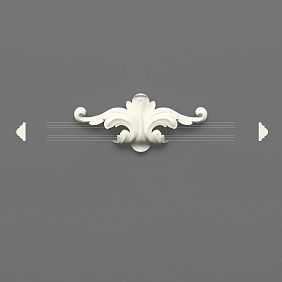
The ornament of the consoles should rhyme with the ornament of the ceiling rosette and the carving on the furniture. If the buffet has carved overlays with acanthus leaves, the fireplace consoles should also have acanthus leaves. Repeating the motif creates unity, a system where all elements are aware of each other.
Furniture handles: the finishing touch of a classic look
Carved wooden handles: a continuation of furniture carving
Furniture Handleson classic furniture — not a utilitarian element, but a continuation of the decorative system. A carved wooden handle 15-20 cm long, made of solid oak with ornamentation (acanthus leaves, scrolls, rosettes), is installed on buffet doors, dresser drawers, and cabinet doors.
The handle's ornament should repeat the ornament of the carving on the furniture fronts. If the buffet front has carved overlays with acanthus leaves, the handles should also have acanthus leaves. The size of the leaves may be smaller (on the handle, a leaf is 3-4 cm long; on the overlay, 8-10 cm), but the shape, style, and depth of carving are identical. This creates the effect that the handle is not a separate element but an organic part of the furniture, as if growing from the front.
The handle's finish corresponds to the furniture's finish. If the buffet is patinated (base color ivory, patina gray-brown), the handles are patinated the same way. If the buffet has gilding (carved overlays are gilded), the handles may be fully gilded or patinated with gilding on individual elements (acanthus leaves gilded, stems patinated).
The cost of a carved wooden oak handle is 2500-5500 rubles per piece, depending on length, carving complexity, and finish. For a buffet with six doors and drawers, six handles are needed, costing 15000-33000 rubles. This is 8-15% of the buffet's cost (200000-250000 rubles), but the visual effect is disproportionate to the cost: handles are what you touch, what you examine up close; the quality of the handles determines the impression of the entire furniture's quality.
Brass handles with wooden inserts: combined luxury
An alternative to fully wooden handles is combined handles: a brass base (bail, ring, knob) with a wooden insert in the center featuring carving. Brass creates the classic shine of a noble metal, wood creates a connection with the wooden furniture, and the carving on the wooden insert rhymes with the carving on the fronts.
A brass bail 128 mm long with two wooden overlays at the ends (oak overlays, carved, 35 mm in diameter) — a universal handle for classic furniture. The brass is patinated (creates an antique bronze effect), the wood is patinated to match the furniture. The cost of such a handle is 2800-4500 rubles per piece.
Brass rings 80-100 mm in diameter on a rosette (a round overlay 50-60 mm in diameter, from which the ring hangs) — a classic handle for buffet doors, cabinets. The rosette can be brass (polished or patinated) or carved wood. The ring creates a characteristic sound when opening the door (metal clinks against the metal rosette), adding tactile-auditory richness to the interaction with the furniture.
Handle fastening: an inconspicuous but important detail
The quality of handle fastening determines durability. The handle is attached to the furniture front with a through screw (passes through the front, enters the body of the handle from behind) or a threaded stud (screws into the handle from behind, passes through the front, secured with a nut inside). The stud is more reliable: the connection is rigid, the handle does not loosen even after thousands of open-close cycles.
The screw head or nut inside the furniture should be hidden: either under a decorative overlay or in a recess covered by a plug. Visible fastening reduces the impression, revealing budget execution.
Wooden baseboard: completing the look from below
Baseboard height: proportions of classic style
wooden skirting board purchase140-180 mm high, made of solid oak — an essential element of a palace interior. A high baseboard creates a visual base, weighs down the lower part of the room (architecturally correct: a building stands on a foundation, an interior stands on a high baseboard), and rhymes in scale with the wide ceiling cornice (if the cornice is 180 mm, the baseboard is 140-160 mm — proportions are coordinated).
For a living room with a ceiling height of 2.7-2.8 meters, a baseboard of 140-160 mm is optimal. For a living room with a ceiling height of 3.0-3.5 meters, a baseboard of 160-180 mm is possible. For palace interiors with ceilings of 3.5+ meters (country mansions, historical buildings), a baseboard of 200-220 mm is possible.
The baseboard profile should be classic: ogee (concave line) + torus (convex line) + straight shelf + sometimes decorative grooves. A simple rectangular baseboard without a profile is not suitable for a palace interior — it is visually primitive, does not create the play of light and shadow that a profiled baseboard creates.
Baseboard finish: matching the furniture or matching the floor
Two approaches to finishing a wooden baseboard in a classic interior:
Baseboard matching the floor tone: if the floor is natural oak parquet (brown), the baseboard is natural oiled oak (brown). The baseboard is perceived as an extension of the floor, visually increasing the floor area. A classic solution that works in 70% of cases.
Baseboard matching the furniture tone: if the furniture is patinated (base color ivory with a gray-brown patina), the baseboard is painted and patinated in the same way. The baseboard is perceived as part of the furniture system, linking individual furniture pieces (sideboard, chest of drawers, console) into a unified whole through a horizontal line along the room's perimeter. A bolder solution that works in palace interiors where demonstrating the unity of all elements is important.
Painting of a wooden baseboard is done manually: the baseboard is primed, painted with a base color in two coats with intermediate sanding, patinated (if patina is needed), and coated with a protective varnish (matte or satin, not glossy — gloss is inappropriate in classic style). The cost of painting with patination is 1200-1800 rubles/m.
Baseboard corners: miter cut at 45° or decorative elements
Internal corners (where the baseboard changes direction by 90° in a room corner) are finished in two ways:
Miter cut at 45°: two baseboards are cut at a 45° angle each, joined in the corner, forming a clean corner without gaps. Requires precision (the angle must be exactly 90°, the cut exactly 45°), but visually clean and professional.
Decorative corner elements: a ready-made corner element measuring 15×15 cm with an ornament (rosette, leaves) is installed in the corner, two baseboards approach this element without cutting. The corner element enhances decorativeness but adds costs (the cost of a corner element is 2500-4500 rubles per piece, for a room with four corners an additional 10000-18000 rubles).
For palace interiors, where the budget is not strictly limited, corner elements are preferable: they add luxury, demonstrate attention to detail, and create additional focal points for the eye.
Harmony of elements: unity of ornaments
Repetition of motif: acanthus as a leitmotif
The most effective way to create harmony between furniture and moldings is to repeat an ornamental motif. The acanthus leaf is a universal motif of classicism, used since antiquity. If the carved overlays on the sideboard depict acanthus leaves, the ceiling rosette should have acanthus leaves, wall moldings can have an acanthus frieze (a continuous band of acanthus leaves), fireplace consoles (if present) with acanthus leaves, wooden furniture handles with acanthus leaves.
Acanthus is repeated at different levels (ceiling, walls, furniture, handles), in different scales (on the rosette a leaf 20 cm long, on a handle a leaf 4 cm long), but stylistically identical. This creates a leitmotif, a musical theme that runs through the entire space, linking heterogeneous elements into a symphony.
Color coordination: white gold and patina
Color scheme of a palace interior with classic furniture:
Furniture: solid oak with patina (base color ivory, patina gray-brown), carved overlays are gilded (gold leaf or gold paint).
Moldings: ceiling rosette white with partial gilding (protruding parts of the ornament are gilded, recesses are white), cornice white with gilded modillions, wall moldings white.
Walls: painted in light beige or light gray (neutral background, not competing with furniture and moldings).
Baseboard: oak with patina (like furniture) or natural oak (like floor).
Floor: natural oak parquet (brown) or with light tinting (cognac, walnut).
Common denominator: white (moldings, walls) + gold (accents on furniture and moldings) + natural wood (furniture, baseboard, floor). Three colors, distributed as: white 40%, wood 40%, gold 20%. Balance creates harmony.
Scale and rhythm: from small to large
Ornaments must be coordinated in scale. Dentils on the cornice (small rectangles 30×15 mm with a pitch of 35 mm) — the smallest scale. Carved handles on furniture (length 15-20 cm, ornament occupies 10-12 cm) — medium scale. Carved overlays on sideboard fronts (size 25×40 cm) — large scale. Ceiling rosette (diameter 120 cm, ornament occupies the entire surface) — the largest scale.
Transition from small to large creates a hierarchy where each element knows its place. Dentils create a background rhythm (small, frequent, almost vibrating). Handles create medium-scale accents (two handles on each sideboard door — a repeating motif). Overlays on fronts create large accents (two overlays on two doors — symmetry). Ceiling rosette creates the main accent (one rosette, center of the composition, the largest element).
Frequently asked questions
How much does comprehensive finishing of a 35 m² living room with classic furniture and moldings cost?
Classic furniture: sideboard made of oak with carving and patina 220000 rubles, display cabinet with glass doors 185000 rubles, chest of drawers 95000 rubles, coffee table 68000 rubles. Total furniture 568000 rubles. Moldings: rosette diameter 110 cm 18500 rubles, cornice 180 mm with modillions, 24 meters = 24×1250 = 30000 rubles, moldings for four wall panels, 32 meters = 32×680 = 21760 rubles. Total moldings 70260 rubles. Wooden baseboard 150 mm made of oak, 24 meters = 24×1480 = 35520 rubles + painting with patination 24×1400 = 33600 rubles. Total baseboard 69120 rubles. Furniture handles wooden carved, 12 pieces = 12×3800 = 45600 rubles. Installation work: moldings 28000 rubles, baseboard 18000 rubles, handle installation 6000 rubles = 52000 rubles. Total turnkey: 568000 + 70260 + 69120 + 45600 + 52000 = 804980 rubles.
Can polyurethane moldings be used in a classic interior or is gypsum mandatory?
Yes, and even preferable for most projects. Modern polyurethane moldings are visually indistinguishable from gypsum after painting, but 8-10 times lighter (easier installation, less load on walls and ceiling), 3-5 times cheaper, moisture-resistant (gypsum fears moisture, polyurethane does not). Gypsum moldings make sense only for the restoration of historical interiors or exclusive projects where the budget is not limited.
How to choose the color of patina for furniture and baseboard?
The color of patina depends on the overall color scheme of the interior. For warm interiors (floor brown, walls beige) patina is brown or reddish-brown. For cold interiors (floor gray, walls light gray) patina is gray or gray-green. For neutral interiors (floor natural oak, walls white) patina is gray-brown (universal, combines with warm and cold).
Is gilding mandatory or can one manage with only patina?
Gilding is not mandatory but desirable for creating a genuine palace impression. Gold adds shine, luxury, and formality. If the budget is limited, you can manage with just patina, but then the interior will be restrained-classical, not palace-luxurious. A compromise: gilding only the accents (modillions on the cornice, carved overlays on the central piece of furniture - the sideboard).
What is the minimum ceiling height required for a palace interior?
Minimum 2.8 meters. With a ceiling lower than 2.8 meters, a wide cornice (180-200 mm) and a large rosette (110-120 cm) will feel oppressive, visually lowering an already low ceiling. Optimally 3.0-3.5 meters. Ideally 3.5+ meters (as in historical palaces).
How to care for carved furniture with patina and moldings?
Carved furniture is wiped with a dry soft cloth to remove dust once a week (dust accumulates in the recesses of the carving and needs to be removed). Once a year, the furniture can be wiped with a slightly damp cloth and a mild detergent (to remove grease stains on kitchen furniture). Patina and varnish protect the wood and do not require special care. Moldings are wiped for dust once a month. Every 10-15 years, repainting of the moldings is possible to refresh the color.
Conclusion: a palace is accessible to everyone who values classicism.
A palace interior is not the privilege of the aristocracy. A palace interior is the result of knowledge of classical canons, understanding of proportions, attention to detail, and the choice of the right materials and craftsmen. Classic solid oak furniture with carving, patina, and gilding creates a functional base: storage spaces (sideboard, chest of drawers, display cabinet), surfaces for placing items (table tops of tables, consoles). Polyurethane moldings create the architectural shell: they structure the ceiling with rosettes and cornices, structure the walls with moldings, create scale, rhythm, and ornamental richness. Wooden handles on the furniture continue the carving of the facades, linking the furniture with the moldings through the repetition of ornaments. A high wooden baseboard completes the composition from below, creates a visual base, and connects the floor and walls.
Harmony is achieved through repetition: acanthus leaves on the furniture carving, on the ceiling rosette, on the handles, on the consoles. Through color: white moldings, patinated furniture, gilded accents. Through proportions: a high 150 mm baseboard, a wide 180 mm cornice, a large 120 cm rosette - the scales are coordinated, creating a hierarchy from bottom to top.
A palace interior does not age because it relies on canons formed over centuries. Baroque, Rococo, Classicism, Empire - styles changed, but the basic principles (symmetry, ornament, hierarchy of elements, use of noble materials) remained. Modern technologies (polyurethane moldings instead of plaster, machine carving alongside manual) make palace interiors more accessible but do not simplify them - complexity, richness of details, and demands for quality remain.
The company STAVROS has been creating classic interiors for over two decades, where every element knows its place. Classic furniture made of solid oak, beech, ash - sideboards with carved facades and patina (from 185,000 rubles), display cabinets with glass doors and shelf lighting (from 165,000 rubles), chests of drawers with carved overlays and brass handles (from 85,000 rubles), extendable dining tables on turned legs (from 95,000 rubles), chairs with carved backs and upholstery in chenille or leather (from 28,000 rubles per piece). All furniture is manufactured in our own production from selected kiln-dried wood (moisture content 8-10%), which eliminates warping and cracking. Carving is performed on CNC machines with subsequent manual finishing by carvers, ensuring precision and detail. Patination and gilding are performed by masters with 15+ years of experience, guaranteeing a noble appearance, like antique furniture.
STAVROS polyurethane moldings - over 700 items of rosettes (diameter from 50 to 180 cm), cornices (width from 100 to 250 mm, with dentils, modillions, complex multi-layer profiles), moldings (width from 40 to 120 mm, smooth and with ornaments), consoles, brackets, overlays. Ornaments: acanthus leaves, rosettes, rocaille, garlands, geometric patterns - the entire arsenal of classicism from antiquity to Empire. Polyurethane density 280-320 kg/m³, ensuring sharp relief, strength, durability of 30-50 years. All products are primed white, ready for final painting (acrylic paint), patination, gilding. Cost 450-1800 rub/m depending on width, complexity of ornament.
Wooden baseboards made of solid oak, beech, ash - height from 100 to 220 mm, profiles from simple (ogee) to complex (ogee + bead + decorative grooves). Baseboard is planed, sanded, moisture content 8-10%, ready for installation and finishing (painting, patination, tinting, varnish, oil). Possibility of manufacturing baseboards to custom profiles (if the required one is not in the assortment). Cost 1200-2200 rub/m depending on wood species, height, complexity of profile.
Furniture handles made of solid wood - straps length from 96 to 220 mm, knobs diameter from 30 to 50 mm, rings on rosettes diameter from 70 to 110 mm. Turned, carved, with patina, with gilding, combined (wood + brass). Over 50 models for all classic styles. Cost 1800-5500 rub/piece depending on size, complexity of processing, finish.
STAVROS design bureau develops palace interior projects with 3D visualization. You see how the furniture combines with the moldings, how the ornaments repeat, how color links the elements. The project includes furniture layout with dimensions, layout of moldings on ceilings and walls indicating profiles and ornaments, selection of baseboard and handles, color scheme (base colors, patina, gilding), material calculation down to the piece, estimate with prices, step-by-step implementation plan. Project cost for a living room 30-50 m² - 45,000-75,000 rubles, which is deducted from the order value when placing an order for an amount from 600,000 rubles.
When ordering a set (furniture + moldings + baseboard + handles) for an amount from 600,000 rubles, STAVROS provides an 8% discount on all decorative elements (moldings + baseboard + handles). For orders from 1,000,000 rubles - a 10% discount plus free delivery across Russia plus a free project with 3D visualization. For orders from 1,500,000 rubles - a 12% discount plus free delivery plus a free project plus a 5% discount on installation work plus one year of free service maintenance (preventive maintenance, minor repairs). Savings 65,000-220,000 rubles.
STAVROS installation teams are specialists in classic interiors. Assembly and installation of furniture with precise adjustment of doors, drawers. Installation of polyurethane moldings on ceilings and walls with sealing of joints, painting, patination, gilding. Installation of wooden baseboards with mitering corners at 45° or installation of decorative corner elements, painting, patination. Installation of furniture handles with precise positioning, reliable fastening. Work across all of Russia, 3-year warranty on installation, 5-year warranty on products, 10-year warranty on furniture frames.
Choosing STAVROS, you get a partner in creating palace interiors, where classic furniture and moldings work together, creating spaces of eternal beauty. Build palaces. Surround yourself with the nobility of wood, the ornamental richness of moldings, the shine of gold. Live in interiors that do not age because they rely on canons tested over centuries. With STAVROS, it is accessible, high-quality, professional.