











































































Article Contents:
- Why choosing a floor baseboard is more important than it seems
- Three functions that are forgotten when choosing
- How baseboard affects the perception of interior
- Which baseboard is better to choose for the floor: breakdown by materials
- Wooden baseboard
- MDF Skirting Board
- Plastic baseboard
- Polyurethane skirting board
- Wooden baseboard or MDF: what to choose for the floor
- Comparison table: wood vs MDF
- When wood is definitely better
- When MDF is the right choice
- Which skirting board is more practical and durable for the floor
- Which skirting board to choose for the floor under laminate
- By material
- By color
- By height
- Which skirting board to choose for the floor under parquet and engineered board
- For block parquet and parquet board
- For engineered board
- For solid board
- Which skirting board to choose for the floor under quartz vinyl and tile
- For quartz vinyl
- For tile
- How to choose floor skirting board height
- Proportion rule: 1/30 of ceiling height
- Table by ceiling height
- Low skirting board: when justified
- High skirting board: when needed
- Wide profile as decorative accent
- How to choose floor skirting board color
- Three color selection strategies
- Contrasting skirting board
- Which skirting board to choose for light and dark floors
- Which skirting board to choose for floors in different rooms
- Living Room
- Bedroom
- Hallway and corridor
- Kitchen
- Children's room
- Office
- What to pair skirting boards with in interior design
- Skirting boards and moldings
- Baseboard and door casings
- Skirting boards and slatted panels
- Skirting boards and solid wood products
- Where to buy floor skirting boards: criteria for choosing the right supplier
- Geometry and stability
- Assortment systematics
- Manufacturer vs Intermediary
- How to choose beyond just photos
- Mistakes when choosing floor skirting boards: a practical list
- Mistake 1: Choosing based on price only
- Error 2: Profile too low
- Error 3: Ignoring connection with doors
- Error 4: Random color
- Error 5: Style and profile conflict
- Error 6: Lack of system
- Error 7: Mounting to floor, not wall
- Conclusion: which baseboard to choose for the floor — final router
- About the Company STAVROS
- Frequently asked questions: how to choose a baseboard for the floor

Before making a decision — let's be honest. Most people choose a baseboard last and based on one criterion: 'matches the color.' This is a fundamental mistake that later turns into irritation every time you enter the room and feel: something is off. You don't understand — what exactly. It's the baseboard. The wrong one. In the wrong place. The wrong size. Incorrect.
How to choose a baseboard for the floor is a question with precise, measurable answers. Not 'to taste,' not 'look it up online,' but specific criteria: material, height, profile, color, compatibility with flooring and room style. This is exactly what we'll break down — from the first parameter to the final purchase decision.
baseboard for floor— is not a minor detail of renovation. It is a horizontal element that works on several levels at once: it covers the joint between the floor and the wall, forms the lower contour of the room, and signals the quality of the entire finish — even when you're not thinking about it.
➡️ View floor skirting boards in the STAVROS catalog




Why choosing a floor skirting board is more important than it seems
There is a simple architectural principle: a room is perceived as whole or incomplete precisely by its details. The floor is a horizontal plane. The wall is vertical. The place where they meet is a line that everyone sees when they cross the threshold. And it is preciselybaseboardthat serves as the final 'signature' under the entire finish.




Three functions that are forgotten when choosing
First function — technical: the skirting board covers the expansion gap, which is technologically necessary between the floor covering and the wall. Without this gap, laminate, parquet, or quartz vinyl cannot freely expand with temperature and humidity fluctuations — this will inevitably lead to buckling. The skirting board conceals this gap and makes the junction aesthetically clean.
Second function — protective: the lower zone of the wall is the most vulnerable. It gets hit by furniture, vacuum cleaners, accidental impacts. A proper skirting board, 14–20 mm thick, absorbs these loads itself.
Third function — decorative: the skirting board ties the floor and walls into a unified visual system. It can be neutral and 'disappearing,' or it can be an expressive architectural accent — depending on the task. It is this function that determines exactly what the skirting board should be like in a specific room.
Our factory also produces:


How a skirting board affects the perception of an interior
A proper high skirting board in a spacious living room adds weight and prestige to the space. A skirting board that is too low in the same room leaves the lower zone 'empty'—the interior looks unfinished. A white skirting board on a dark floor with white walls makes the room cleaner and more modern. A dark skirting board matching the parquet, on the contrary, dissolves the boundary between the floor and the wall, visually expanding the space.
Each of these effects is not accidental—it is controllable. And that is precisely why the question 'which floor skirting board to choose' deserves as much attention as the choice of the flooring itself.
Get Consultation
Which skirting board is better to choose for the floor: a breakdown by materials
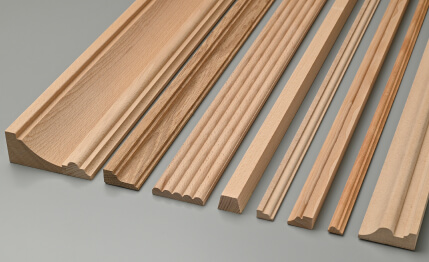
Four main options on the market—wood, MDF, plastic, polyurethane. Each has its own area of application, its entry price, and its 'ceiling' in terms of result quality.
Wooden skirting board
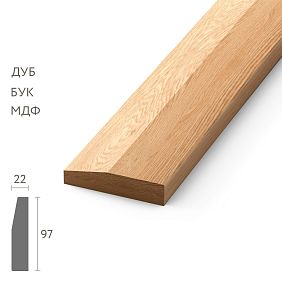
Wooden baseboard—is a product made from solid wood: oak, beech, pine, ash. Living texture, the warmth of natural material, restorability (sanding + repainting) and a service life of 20–30 years—these are the basic arguments in favor of wood.
When to choose a wooden skirting board:
-
parquet flooring or solid wood plank flooring made of natural wood—any other material here is simply inappropriate;
-
classical, neoclassical, eco- or organic interior style;
-
prestigious-level rooms—living rooms, studies, halls;
-
interior with solid wood doors and architraves.
Solid wood skirting board for floorsavailable in two finish options: pre-painted or primed 'for painting' — for those who require an exact color match to a specific color system.
MDF skirting board
MDF Skirting Board— a pressed wood fiberboard with high geometric stability. It does not react to humidity fluctuations as strongly as solid wood, has a perfect surface for painting, and costs less than natural wood.
MDF skirting board is the right choice in situations:
-
modern, minimalist, or Scandinavian interior with an emphasis on smooth surfaces;
-
budget is limited, but execution quality is important;
-
large volume of linear meters — with hundreds of meters, the price and quality stability of MDF wins;
-
laminate or quartz vinyl as the main floor covering.
Floor MDF skirting boardin white color — the best-selling solution on the market for a reason. It's a universal choice: white skirting board works with any wall color and most floor coverings.
Plastic skirting board
The cheapest and least durable option. After 5–7 years, the plastic yellows, joints separate, and the surface loses its appearance. Acceptable as a temporary solution or in utility rooms — storage areas, technical zones. In a residential interior, especially next to parquet or high-quality laminate, plastic skirting always looks like a downgrade in finishing level.
Polyurethane skirting board
Good moisture resistance, flexibility — can wrap around rounded surfaces, columns. Mid-price segment. Used primarily in modern interiors with non-standard architectural solutions and in damp rooms.
Wooden skirting board or MDF: what to choose for the floor
This is the main selective question — and the answer depends not on personal preferences, but on the specific parameters of your project.
Comparison table: wood vs MDF
| Parameter | Wooden skirting board | MDF skirting board |
|---|---|---|
| Material | Natural solid wood | Pressed fiberboard |
| Texture | Living, unique | Uniform, smooth |
| Strength | High | Good |
| Moisture resistance | During processing — high | Standard — average |
| Restoration | Sanding + repainting | Limited |
| Service life | 20–30+ years | 10–15 years |
| Price | Higher | Below |
| Painting | For any color or tone | Perfect surface |
| Style | Classic, natural | Modern, minimalism |
When wood is definitely better
If the room has parquet or solid wood flooring —with a classic profile creates a sense of solidity, reliability.is not an option but the norm. The mass, texture, and temperature of wood material next to a wooden floor is an organic quality that neither MDF nor especially plastic can replicate. In classic or country interiors, in a study with oak furniture — again wood, no alternatives.
When MDF is the right choice
In an apartment with laminate, white walls, and modern furniture —Floor MDF skirting boardin white works excellently. It has a perfectly smooth surface for painting, stable geometry along the entire length of the plank, and an affordable price for large volumes. For neutral interiors emphasizing clean lines — MDF completely meets the requirement.
Which baseboard is more practical and durable for flooring
More practical in everyday use — wooden: it can be repaired. More durable in neutral conditions — also wooden with proper coating. But in high humidity conditions without additional treatment, wood is less stable than MDF. Conclusion: in living spaces with standard climate — wood is prioritized; in bathrooms and kitchens — MDF with moisture-resistant coating or a special moisture-resistant option.
Which baseboard to choose for a floor under laminate
Laminate is the most common flooring in modern Russian apartments. And this is where mistakes with baseboards are most often made.
By material
Both wood and MDF are suitable for laminate. The choice depends on the overall level of finishing: if the laminate is class 33–34, with good texture and expensive decor —which wooden baseboard to choose for a floor in an apartment? The one that matches the laminate decor in shade and wood species. White MDF is a universal solution for most light and neutral laminates.
Regarding color
Three working strategies:
-
Matching the laminate tone — the lower boundary "disappears," the space seems wider;
-
White baseboard — creates a clear horizontal line, works well with white or light walls;
-
Matching the door casing color — consistency between doors and baseboard gives unity to the interior.
If the laminate is light — avoid sharply dark baseboard without a design rationale. It will read as an accident, not a solution.
By height
For standard apartments with ceilings 2.5–2.7 m high, an optimal skirting board height for laminate flooring is 60–80 mm. A concise straight profile (Euro skirting) is the best choice for a modern interior with laminate.
Which skirting board to choose for floors with parquet and engineered board
Parquet and engineered board are natural floor coverings that imply a corresponding level of all finishing.
For solid wood parquet and parquet board
The only correct solution iswith a classic profile creates a sense of solidity, reliability.made from the same wood species as the floor. Oak parquet — oak skirting. Ash — ash. This is not perfectionism, it's the logic of organicity: only matching the species guarantees that the textures 'speak' the same language and don't create visual dissonance.
The shade of the skirting board can be 1–2 tones darker or lighter than the floor — this is normal and even creates depth. But the wood species — only the same. For more details onwhich wooden skirting board to choose for the floorunder parquet in different conditions, a separate article by STAVROS explains.
For engineered board
Engineered wood flooring is a natural wood veneer on a multi-layer base. Visually, it is identical to parquet, and the principle for selecting skirting boards is the same. The rule of wood species applies. Height — from 70 mm and above, depending on the ceiling height.
For solid wood flooring
Solid wood flooring is the most prestigious wooden floor. HereSolid wood skirting board for floorsis mandatory. Placing MDF next to solid wood means intentionally lowering the level of finish. Solid wood to solid wood. This is not a matter of taste — it's a rule of consistency.
Which skirting board to choose for floors with quartz vinyl and tile
For quartz vinyl
Quartz vinyl is a modern, practical covering with a neutral or warm texture 'like wood' or 'like stone'. Both wooden skirting boards (in warm tones like wood) and MDF (white or neutral) work here. The emphasis should be on a concise, straight profile: quartz vinyl is a modern covering, and baroque reliefs next to it look like a stylistic conflict.
White skirting board with quartz vinyl in 'light oak' decor — one of the cleanest and most modern combinations. Simple, precise, without excess.
For tile
Tile is a special case. The area with tile is typically the kitchen, hallway, or bathroom. In a hallway with warm tile like stone and wooden doors — a wooden skirting board with moisture-resistant lacquer creates the right organic transition. In the bathroom — moisture-resistant MDF or ceramic skirting board.
Tile skirting height — from 60 to 80 mm. White or matching the tile. No complex profiles in bathrooms: function rules here, not decor.
How to choose floor skirting height
The question most often ignored when buying — and which later becomes the most noticeable mistake.
Proportion rule: 1/30 of ceiling height
This is a classic architectural rule that worked in the Baroque era and continues to work in modern interiors. Skirting height should be approximately 1/30 of the ceiling height.Choosing floor skirting height— it's not 'by eye', it's the mathematics of proportions.
Table by ceiling height
| Ceiling Height | Recommended skirting board height |
|---|---|
| Up to 2.5 m | 50–70 mm |
| 2.5–2.7 m | 70–90 mm |
| 2.7–3.0 m | 90–110 mm |
| Above 3.0 m | 110–150 mm and above |
Low skirting: when justified
A narrow skirting board 40–55 mm is a delicate geometry that 'doesn't get in the way'. Suitable for small rooms with ceilings up to 2.5 m, in a children's room, in a compact home office. The goal is to finish the perimeter without overloading the lower zone. If you ask 'which skirting board to choose for low ceilings' — the answer is always: low and concise.
High skirting board: when it is needed
Which high skirting board to choose— from 100 mm — is justified in spacious living rooms, halls, dining rooms, and representative spaces with ceilings from 2.8 m. A high skirting board doesn't just fill the lower zone — it creates an architectural 'base' for the room, giving it weight.
In a classic interior, a high skirting board with a figured profile is a mandatory element. Without it, the space looks 'lightweight' in a bad sense.
Wide profile as a decorative accent
Which wide skirting board to choose for the floor— this is a question not only of height but also of the profile's projection from the wall. A wide skirting board with rich relief becomes an independent decorative element — on par with wall molding. In a classic living room, this works powerfully. In a minimalist space — no.
How to choose the color of a floor skirting board
The second most frequent question after material — and the first in terms of the number of mistakes when choosing.
Three Color Selection Strategies
Strategy 1: Matching the Floor ToneHow to Choose a Baseboard to Match the Floor— simpler than it seems: if the baseboard is close in shade to the flooring, the lower boundary of the room 'disappears'. The floor and the lower zone of the wall are perceived as a single horizontal layer. The space appears wider — especially in small rooms.
Strategy 2: White. A white baseboard is the most popular solution in modern residential interiors. It works with any wall color, with any flooring — from light to dark. Creates a clear horizontal line that visually raises the ceiling. With white door casings — perfectly coordinated.
Strategy 3: Matching the Door ColorHow to Choose a Baseboard to Match the Doors— the defining principle for interiors where doors are a key accent. The casing and baseboard are the 'frame' of the space; they should belong to the same system. Dark walnut on the doors — baseboard in the same shade. White doors — white baseboard.
Contrasting baseboard
A dark baseboard on a light floor is a deliberate design technique that creates a 'frame' around the floor and accentuates the geometry of the room. It requires consistency: the contrast must be supported in other interior elements as well. If it's the only one in the space — it will look like a mistake.
Which Baseboard to Choose for Light and Dark Floors
Universal advice from professionals: a skirting board one shade lighter than the floor visually expands the space and softens the horizontal line. A skirting board one shade darker accentuates the lower zone and 'presses' the space towards the ground. In small rooms — the first option. In large ones — any is acceptable.
Which skirting board to choose for the floor in different rooms
Every room has its own task. One skirting board for the entire apartment is the correct strategy for cohesion, but with nuances.
Living Room
In the living room, the skirting board is constantly visible. This is the main space — here everything is 'read' and evaluated.Which skirting board to choose for the floor in the living room— unequivocally: tall, with an expressive profile. For a classic living room with parquet — solid wood with relief, from 100 mm. For a modern one with laminate or quartz vinyl — a concise straight profile, 80–100 mm, white or matching the tone.
Bedroom
The bedroom is a space of tranquility. Here the skirting board should be delicate: medium height 60–80 mm, neutral or warm shade. If in the bedroomRafter panelson the wall behind the headboard — the skirting board is selected to match the same system: the same wood species, the same shade. The verticals of the slats and the horizontal of the skirting board create an architectural rhythm that makes the bedroom structured and calm.
Hallway and corridor
Which skirting board to choose for the floor in the hallway— zones of maximum load. Here, the strength and moisture resistance of the coating are important: varnish or enamel with a high degree of protection. Height — 60–80 mm, straight profile, resistant to impacts and moisture. Wood with moisture-resistant varnish or MDF with appropriate treatment — both options are functional.
Kitchen
The kitchen is a space of moisture, grease, and mechanical stress. Here, a white MDF skirting board with a moisture-resistant coating is the most practical choice. Height 60–70 mm, straight or slightly rounded profile. Installation — with maximum adherence to the floor to prevent dirt accumulation underneath.
Children's room
In a child's room, the skirting board receives the most mechanical impacts.Which skirting board to choose for the floor in a child's room— durable, with a resistant coating. Wooden with varnish or MDF with a film coating. Height — 50–70 mm. Color — white or neutral, so as not to compete with the bright elements of the children's interior.
Office
The study — a space for concentration.Which skirting board to choose for the floor in a study— dark wood, from 80 to 100 mm. Oak, walnut — materials that create a sense of authority and solidity. In a study, a profiled shape is also appropriate — especially if the interior features wooden shelves, dark furniture, and parquet flooring.
How to match skirting boards in an interior
A skirting board chosen in isolation from the rest of the interior is a detail without context. An interior is assembled as a system. Let's break down how to correctly build this system.
Baseboard and Molding
Moldings for walls— these are horizontal and frame profiles that create architectural wall trim. In a classic interior, moldings decorate walls with 'panels' — rectangular frames with space inside. The baseboard in this system is the lower horizontal boundary.
Moldings for walls to buy— in the same place as the baseboard — is the correct strategy: profiles from the same line are coordinated in shape and scale. This eliminates random mismatches that immediately catch the eye in a finished interior.
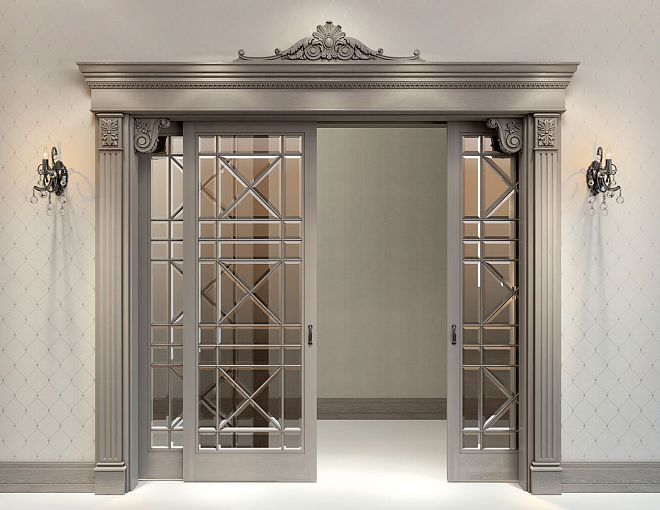
Skirting and door casings
Casing and baseboard are two elements that are read together. They should belong to the same stylistic range: both laconic or both with relief, both from the same wood species or both in white enamel. Mixing styles in this pair is the most common mistake in 'self-assembled' interiors.
Baseboard and slatted panels
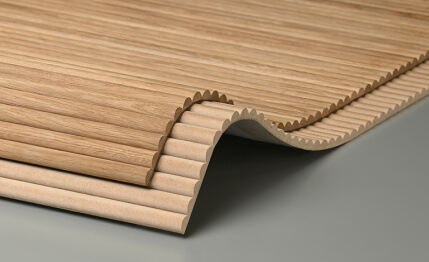
One of the strongest interior techniques is combining a wooden baseboard at the floor with plank panels on the walls. The horizontality of the baseboard and the verticality of the slats create an architectural rhythm that makes any space — from the living room to the hallway — structured and expensive-looking.
If the task is not just to close the floor joint, but to design the interior comprehensively — it's worth considering buy slatted panels in the same style as the baseboard. This is a solution that works both in classic and modern interiors — depending on the width of the slats and the shade of the wood species. slatted panels for walls from solid natural wood plus a baseboard from the same line — this is not just beautiful. It's a systematic approach to finishing that distinguishes a professional interior from a randomly assembled one.
In the living roomdecorative slatted panels behind the TV area and a wooden baseboard along the perimeter of the room in the same wood species — this is a visual story that doesn't need explaining. It speaks for itself. That's why Buy slatted panelsshould be done in advance — together with choosing the skirting board, to immediately select coordinated solutions.
Skirting board and solid wood products
Wide catalogof solid wood— skirting boards, cornices, balusters, architraves, panels — allows building a seamless natural wood system throughout the entire interior. When all trim elements are made from the same material and the same product line — the interior is perceived as designed, not assembled.
Where to buy floor skirting board: criteria for choosing the right supplier
A good skirting board is straight, without warping, with a consistent profile along its entire length. Checking this from a photo on the internet is impossible. Here's what to look for when choosing a supplier.
Geometry and stability
Buy floor skirting boardshould only be purchased where you can verify or where geometric accuracy of the strips is guaranteed. A crooked skirting board doesn't fit flush to the wall, creates gaps in corners, and requires a lot of sealant — which ultimately looks untidy.
Assortment systematics
The ideal supplier is one whose skirting boards are coordinated with moldings, cornices, and plank panels.Buy floor skirting boardin a system with architraves and other interior elements — it's a guarantee of stylistic unity without unnecessary searching and matching.
Manufacturer vs. intermediary
With a manufacturer — stable assortment, consistent batches, technical consultations. With an intermediary — dependence on availability and variable geometry across different batches.wooden skirting board purchasewith a manufacturer with their own catalog — it's a direct guarantee of quality for the entire service life.
How to choose not just by photo
View the profile in reality or via precise drawings indicating height and projection. Test compatibility with samples of flooring and architrave. Clarify the type of finish: varnish, oil, enamel, primed for painting — this affects the final appearance in a specific interior.
Mistakes when choosing floor skirting: a practical list
Over decades of practice, a clear list has accumulated — every mistake here is not theoretical, but from real interiors.
Mistake 1: Choosing based on price alone
Cheap skirting is a temporary solution. Plastic loses its shape after a few years. MDF without moisture-resistant coating swells in the hallway. Unvarnished wood darkens. The cost of skirting in the overall renovation estimate is small. Saving here is disproportionate to the loss in the quality of the final result.
Error 2: Profile too low
A 40 mm skirting board in a room with a 3 m ceiling is an 'invisible' skirting board. The lower zone of the wall remains visually empty. Always calculate the height from the ceiling — use the 1/30 rule.
Error 3: Ignoring the connection with doors
A dark door casing and a light skirting board — or vice versa — without design justification create a feeling of a 'patchwork' interior. Skirting boards and door casings should always be coordinated.
Error 4: Random color
A 'roughly similar' shade is not 'matching'. Two close but non-matching shades in one space are perceived as a mismatch. Either an exact match or a deliberate contrast.
Error 5: Conflict of style and profile
A Baroque relief skirting board in a Scandinavian apartment with white walls and birch furniture is an incompatibility that everyone notices. The skirting board profile should belong to the same visual language as the entire interior.
Error 6: Lack of system
Baseboards for floorsSkirting boards purchased separately from moldings, panels, and door casings in different places and without coordination of the profile create a 'random' interior. Choose within a system.
Error 7: Mounting to the floor, not to the wall
This is not a selection error, but a common installation mistake. The skirting board is attached to the wall, not to the floor — only this way the flooring (especially laminate and quartz vinyl) can move freely with changes in temperature and humidity.
Conclusion: which skirting board to choose for the floor — the final router
Three main scenarios, three clear answers.
First scenario: natural flooring, representative interior. Parquet, solid wood board, engineered board + classic or eco-style → definitelywith a classic profile creates a sense of solidity, reliability. solid wood of the corresponding species. Height — from 80 mm depending on ceilings. Profile — according to style.
Second scenario: modern apartment, laminate or quartz vinyl. Minimalism, Scandinavian style, contemporary →Floor MDF skirting board in white or neutral color with a straight profile. Height — 60–90 mm proportionally. Optimal: white enamel, European skirting.
Third scenario: complex interior with high requirements for details. Here the skirting board is only part of the system. It must be selected simultaneously withwall moldings, architraves, and slatted panels from the same product line. Only thenbuy slatted panelsin a coordinated decision — and the result in the interior will be systematic, expensive, and professional.
➡️ Buy floor skirting in the STAVROS catalog
About the company STAVROS
STAVROS is a Russian manufacturer of products made from natural solid wood for professional interior finishing. Wooden skirting boards, moldings, cornices, paneling, balusters, architraves — all made from natural wood, with geometry and coating quality control at every stage of production.
The STAVROS principle is a systematic approach to finishing. The company's catalog is structured so that all elements — from skirting board to cornice — are coordinated with each other in profile, wood species, and finish. This means: you are purchasing not a set of separate parts, but a ready-made interior trim system.
STAVROS works with private clients, designers and architects, construction and finishing companies throughout Russia. Stable availability, professional consultations on profile selection and combinations, experience in implementing large residential and commercial projects — this is the foundation on which the company's reputation in the market of natural interior solutions is built.
Frequently asked questions: how to choose floor skirting
Which skirting is better to choose for the floor — MDF or wood?
Depends on the flooring and style. For parquet and solid wood flooring — definitely wood. For laminate and quartz vinyl in a modern interior — MDF is quite sufficient. Wood is more durable and restorable; MDF is cheaper and more stable in geometry.
What height of skirting to choose for the floor?
Use the 1/30 rule of ceiling height. Ceilings 2.7 m → skirting ~90 mm. Ceilings 3 m → from 100 mm. Ceilings up to 2.5 m → 50–70 mm.
What color baseboard to choose for the floor?
Three working strategies: matching the floor (expands space), white (universal, modern), matching the doors (creates a unified system).
Which skirting board to choose for laminate?
MDF in white or matching the laminate decor are the most reliable options. Wooden — if the laminate is high-class and you want to elevate the finish level.
What baseboard to choose for the floor in an apartment with low ceilings?
Narrow, no higher than 60–65 mm. White or matching the walls — so the boundary 'disappears' and doesn't 'lower' the ceiling further.
Can the same baseboard be used in all rooms?
Yes, and it's the right strategy — it creates a sense of apartment integrity. A unified profile, material, and shade around the entire perimeter tie the space together.
Where is it better to buy floor baseboard?
From a manufacturer with a systematic catalog — where baseboards are coordinated with moldings, paneling, and door casings. This guarantees geometry stability, batch consistency, and the ability to select all finishes in a unified solution.
Is it necessary to match the skirting board with slatted panels?
Not necessary, but the effect with the right combination is significant. Recessed panels on the wall in the same species and shade as the wooden baseboard at the floor create a vertical-horizontal architectural rhythm — the interior becomes visually more expensive and structured.
Which baseboard to choose for a tile floor?
White MDF with moisture-resistant coating or wooden with varnish — depending on the room. In an entryway with wooden doors — wooden. In a bathroom — moisture-resistant MDF or ceramic.