Article Contents:
- Selection criteria: what's important to consider
- Budget: how much does baseboard cost for an apartment
- Room humidity: where each material will survive
- Interior style: which material is organic
- Solid wood baseboard: premium solution
- Wood species: oak, ash, pine
- Profiles: from simple to carved
- Finishing: oil, varnish, paint
- MDF baseboard: budget alternative
- What is MDF: technology and properties
- Advantages of MDF: smoothness, paintable, stability
- Disadvantages of MDF: not natural wood, afraid of water
- Polystyrene baseboard: lightweight and moisture-resistant
- What is polystyrene: material and technology
- Advantages of polystyrene: price, moisture resistance, lightness
- Disadvantages of polystyrene: ecology, flammability, plastic feel
- Comparison table: solid wood vs MDF vs polystyrene
- Wall molding: moldings as an addition
- Polyurethane moldings: architectural structure
- Creating panels: frames on walls
- Color scheme: baseboard + moldings + walls
- Frequently Asked Questions
- Conclusion: informed choice for your interior

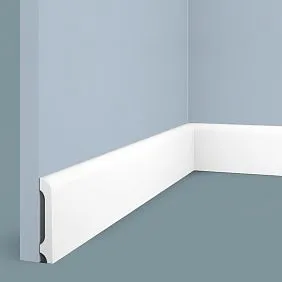
Wooden flooring in an apartment or house is a serious investment in quality of life. Oak parquet, solid ash plank, engineered board with a top layer of valuable wood species — these are expensive, durable, beautiful materials. And now the floor is laid, sanded, coated with oil or varnish, shining, smelling of wood, bringing joy. The final touch remains:What skirting board for wooden floorschoose so it doesn't ruin the harmony, but emphasizes, enhances, completes the composition? Solid wood baseboard (oak, ash, pine) — traditional solution, material rhymes with the floor, creates unity, but is expensive (1200-3500 rub/m).Which MDF baseboard— budget alternative, can be painted any color, smooth, even, costs 380-850 rub/m, but not wood (pressed wood fibers, no annual ring texture).MDF or polystyrene skirting board— a dilemma determined by budget, interior style, priority between ecology and price. Polystyrene is cheaper (220-550 rub/m), lightweight, moisture-resistant, but plastic (synthetic material, burns with toxic gas emission, environmentally questionable).Moldings made of polyurethaneon walls complement any type of baseboard, create architectural structure, divide walls into panels, rhyme with ceiling cornices. In this article, we compare three materials for floor baseboards across ten criteria (price, durability, ecology, appearance, installation, moisture resistance, repairability, weight, paintability, stylistic compatibility), show when each material is optimal, explain how to combine baseboard with wall molding to create comprehensive decor. Prepare to make an informed decision that will last decades.


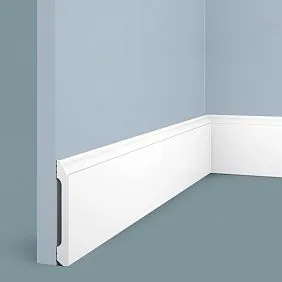
Selection criteria: what's important to consider




Budget: how much does baseboard cost for an apartment
Budget is the first filter that eliminates some options. A 60 m² apartment (standard two-room layout) has a wall perimeter of approximately 60-70 meters (calculated as the external perimeter of rooms plus internal walls). The cost of baseboard for such an apartment:
Polystyrene: 220-550 rub/m × 65 meters = 14,300-35,750 rub. The most budget-friendly option, fits even into minimal renovation.
MDF: 380-850 rub/m × 65 meters = 24,700-55,250 rub. Mid-range segment, accessible to most, optimal price-quality ratio.
Solid pine: 850-1,600 rub/m × 65 meters = 55,250-104,000 rub. Natural softwood, cheaper than hardwoods, but 2-3 times more expensive than MDF.
Solid oak: 1,800-3,200 rub/m × 65 meters = 117,000-208,000 rub. Premium segment, durable and prestigious material, but price is high.
The difference between polystyrene and solid oak is up to 180,000 rub just for baseboard. For some, this amount is negligible (renovation budget of 3-5 million, baseboard is a small fraction), for others it's critical (renovation budget of 500-800 thousand, oak baseboard consumes 20-25% of the budget, unreasonable). Important: baseboard is not an element to skimp on at the expense of quality (cheap baseboard will fall off in a year, ruining the impression of the entire renovation), but overpaying for material with characteristics excessive for a specific interior is also irrational.
Our factory also produces:
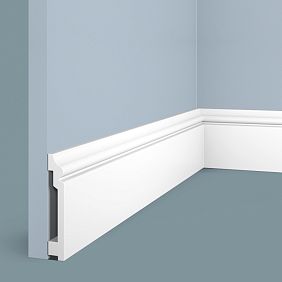
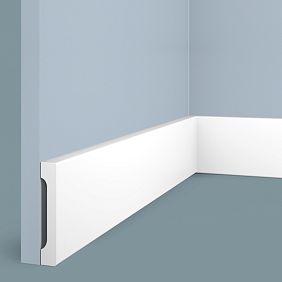
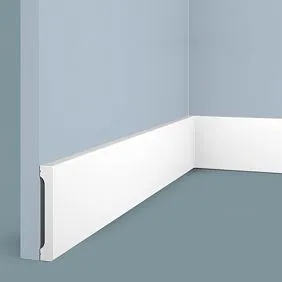


Room humidity: which material will survive where
Wood (solid) is hygroscopic: absorbs moisture from air at high humidity (60%+), swells; at low humidity (30-40%) releases moisture, dries out, cracks may appear. In dry rooms (living rooms, bedrooms, offices with normal humidity 40-55%) solid wood feels excellent, lasts decades without problems. In humid rooms (bathrooms with humidity 60-90%, kitchens with humidity 50-70%) solid wood is risky: requires oil impregnation or moisture-resistant varnish coating, even with protection may darken or deform over time. Exception: moisture-resistant species (larch, teak), but they're more expensive than oak and rare in baseboard assortments.
MDF is initially not water-resistant (compressed wood fibers with binder swell with prolonged water contact), but modern MDF with moisture-resistant coating (dense primer, paint, varnish form a barrier) holds up fine in kitchens. In bathrooms, MDF is not recommended (even moisture-resistant, with constant humidity 70-90% edges may swell if not sealed).
Polystyrene is absolutely moisture-resistant (plastic doesn't absorb water, doesn't swell, doesn't rot), suitable for bathrooms, kitchens, saunas (where wooden baseboard would warp in a year, polystyrene remains stable). Minus: flammable (releases toxic gases in fire, more dangerous than wood), environmentally questionable.
Get Consultation
Interior style: which material is organic
Classical interior (moldings, carved furniture, parquet, heavy curtains) requires solid wood baseboard. Solid oak in natural color (beige-brown under oil) or painted white enamel rhymes with parquet, creates traditional foundation. MDF in classic style is acceptable if painted flawlessly (white enamel, multiple layers, perfect smoothness), but experts and purists feel the difference (MDF lacks wood grain, even under paint is perceived differently). Polystyrene is inappropriate in classic style (plastic doesn't combine with nobility of wood and moldings).
Modern interior (minimalism, Scandinavian style, loft) tolerates MDF and polystyrene. Baseboard painted wall color (gray, white, black), material is secondary, form and color are important. MDF is optimal: smooth, paints perfectly, inexpensive. Polystyrene also works if budget is minimal. Solid wood in modern interior is used less frequently (if naturalness, ecology desired, then solid wood is appropriate, but should have simple profile without carving).
Eclectic interior (mix of styles, modern furniture + classical moldings, parquet + minimalist lighting) accepts any baseboard material, important that color and profile combine with other elements. MDF or painted solid wood — universal for eclecticism.
Solid wood baseboard: premium solution
Wood species: oak, ash, pine
Oak — premium segment standard. High hardness (density 650-720 kg/m³, doesn't dent from furniture impacts, feet, doesn't scratch easily), legendary durability (oak baseboard lasts 80-120 years without losing strength, outlives multiple generations of residents, multiple renovations), expressive beauty (large annual rings, dynamic grain, knots rare in high grades, color from light beige to dark brown depending on treatment). Price high: solid oak baseboard height 80-100 mm costs 1,800-3,200 rub/m (depends on wood grade, profile complexity, finish). Oak is heavy (linear meter of baseboard cross-section 100×20 mm weighs 1.3-1.6 kg), requires reliable fastening (screws, not just glue). Oak suits classical, traditional, eclectic interiors with wooden floors (oak parquet, solid oak plank flooring — baseboard from same wood creates material unity).
Ash — alternative to oak with light shade. Hardness close to oak (density 630-690 kg/m³), expressive grain (contrasting annual rings, clear pattern), color lighter than oak (light yellow, cream, grayish-beige — creates more airy interior). Price slightly lower than oak (1,500-2,800 rub/m). Ash less common (oak more popular in baseboard market), but professional suppliers offer. Ash suits interiors where floor is ash or light species (whitewashed oak, maple, birch), where light palette needed.
Pine — budget option among solid woods. Soft wood (density 480-520 kg/m³, scratches easily, dents from impacts), but lightweight (linear meter of baseboard weighs 0.8-1.0 kg, installation easier, can be glued without screws in dry rooms), inexpensive (850-1,600 rub/m). Color warm yellow-reddish (characteristic of conifers), grain calm (small annual rings, knots frequent, resin pockets occur). Pine suits interiors in country, chalet, Provence styles, for budget projects where wood needed but oak unavailable. Minus: pine less durable (30-50 years vs 80-120 for oak), darkens over time (acquires brownish tint under light exposure).
Profiles: from simple to carved
Simple rectangular profile with chamfer — minimalist solid wood. Baseboard has rectangular cross-section (height 60-100 mm, thickness 18-22 mm), one or two chamfers (beveled edges) soften transition, but no decoration. Suitable for modern interiors with wooden floors (loft, Scandinavian style, minimalism), where wood valued for naturalness, not decorativeness. Price lower than carved (by 15-25%), installation simpler.
Classical profile with torus — traditional form. Baseboard has convex element (torus, bead) along upper part, protruding 8-15 mm, creates volume, play of light and shadow. Torus can be simple (semicircular) or with fluting (grooves, beads). Suitable for classical, neoclassical, traditional interiors. Medium price (oak with torus 2,200-3,000 rub/m).
Carved profile with ornament — formal option. Baseboard decorated with carved elements (dentils, ionics, simplified acanthus leaves), carving done on CNC machines (precision, repeatability, cost lower than hand carving) or manually (exclusive, each element unique, expensive). Carved baseboards cost 3,500-7,500 rub/m, used in luxurious classical interiors (palace style, baroque).
Finish: oil, varnish, paint
Natural oil (linseed, tung) — eco-friendly finish emphasizing wood grain. Oil penetrates deep into wood (2-5 mm), impregnates fibers, creates hydrophobic layer (repels water, dirt), doesn't form surface film (wood breathes, regulates humidity). Natural color (oak light beige-brown, ash light yellow, pine reddish), grain visible in all details (annual rings, rays). Oil requires renewal every 3-5 years (apply new oil layer with brush, oil absorbs, refreshes color). Suitable for interiors where naturalness, tactile warmth of wood, ecology important.
Varnish (polyurethane, alkyd, acrylic) — protective film on wood surface. Varnish forms hard layer (thickness 50-150 microns) protecting wood from water, scratches, wear. Wood grain visible (varnish transparent or semi-transparent), but tactilely feels like varnish film (colder, harder). Varnish lasts 7-12 years without renewal, then may dull, develop microcracks, requires sanding and reapplication. Varnish comes matte (gloss 10-20%, calm surface, no glare), semi-matte (gloss 30-50%, slight sheen), glossy (gloss 70-90%, bright glare, formal). Suitable for interiors where coating durability, minimal maintenance important.
Paint (acrylic enamel, alkyd enamel) — completely hides wood grain, emphasis on color and form. Paint forms opaque film (thickness 80-200 microns), annual ring grain not visible, baseboard perceived as smooth colored element (white, gray, black, any RAL). Suitable for interiors where baseboard should blend with walls by color (baseboard and walls white, baseboard and walls gray), for eclectic interiors where wood painted non-traditional colors (blue, green, even black).
MDF baseboard: budget alternative
What is MDF: Technology and Properties
MDF (Medium Density Fiberboard) is a material made from wood fibers (woodworking waste, sawdust, and shavings are ground into fibers), compressed under high pressure and temperature with a binder (lignin—a natural polymer found in wood, which is released upon heating and binds the fibers, or synthetic resins in small amounts of 5-8%). The density of high-quality MDF for skirting boards is 750-870 kg/m³ (higher than pine at 480-520 kg/m³, close to oak at 650-720 kg/m³). Density ensures strength, stability (MDF does not warp, crack, or dry out like solid wood because the fibers are randomly oriented, compensating for stress), and ease of processing (it can be cut with a saw, milled, and sanded without chipping).
Which MDF baseboardWhat about ecology? Modern MDF of class E1 (European formaldehyde emission standard) emits no more formaldehyde than natural wood (wood also contains formaldehyde in microdoses; it is a natural substance). MDF of class E0 (zero emission) is even cleaner and is approved for children's rooms and medical facilities. Cheap MDF from Chinese production may have class E2 (increased emission, chemical odor, not recommended for residential premises), so it is important to check certificates.
Advantages of MDF: Smoothness, Paintability, Stability
Smooth surface—a key advantage of MDF over solid wood. Solid wood has open pores (wood is porous, fibers are visible under a magnifying glass even after sanding), which become apparent when painting (paint is absorbed unevenly into the pores, creating roughness, requiring multiple priming and sanding between layers). MDF has a dense, uniform surface without pores (fibers are compressed so tightly that there are no pores), primer and paint apply perfectly, two coats of paint provide flawless coverage without uneven tones, roughness, or base showing through. For skirting boards intended for painting (white, gray, colored), MDF is more optimal than solid wood: cheaper, easier to paint, and results are cleaner.
Dimensional stability—MDF does not warp, twist, or crack with fluctuations in humidity and temperature (within reasonable limits, 30-70% humidity, +5…+35°C temperature). Solid wood is a living material: in dry winter air (humidity 25-35% due to heating), wood releases moisture, shrinks by 0.2-0.5%, gaps may appear in skirting board joints; in humid summer air (humidity 60-70% after rains), wood absorbs moisture, expands, and the skirting board may press against corners or bend. MDF is stable: dimensional fluctuations are minimal (0.05-0.1%), and gaps in joints do not appear.
Ease of installation—MDF is lighter than solid oak (a linear meter of MDF skirting with a cross-section of 100×18 mm weighs 1.0-1.3 kg compared to 1.5-1.8 kg for oak), cuts easier (saw goes smoothly without effort, clean cut without chipping), and adheres firmly with liquid nails (if walls are even, glue is sufficient, no screws needed).
Disadvantages of MDF: Not solid wood, afraid of water
MDF is not solid wood. It lacks the texture of annual rings, the smell of wood, and the tactile warmth of wood. For some, this is insignificant (the skirting board is painted with white enamel, the texture is not visible anyway); for others, it is fundamental (desiring naturalness, ecology, and the philosophy of wood). If the skirting board is planned to be in a natural color under oil (to see the wood texture), MDF is not suitable—only solid wood.
MDF is afraid of prolonged contact with water. If an MDF skirting board is installed in a bathroom (humidity constantly 70-90%), or if it is regularly flooded with water (e.g., a pipe leak, water standing on the floor for several hours), MDF absorbs water, swells, deforms, and cannot be restored (the plank needs to be replaced). Moisture-resistant MDF (with hydrophobic impregnation, moisture-resistant primer, and paint) holds up better, but it is still risky in bathrooms. Solid wood with oil impregnation performs better in damp rooms (wood breathes, absorbs moisture, releases it if treated with oil, and does not rot). Polystyrene in bathrooms is trouble-free (plastic does not absorb water).
Polystyrene skirting board: Lightweight and moisture-resistant
What is polystyrene: Material and technology
Polystyrene is a synthetic polymer (plastic) obtained by polymerizing styrene (a monomer, a liquid substance). Expanded polystyrene (foam) is lightweight but fragile (used for ceiling cornices, cove skirting boards, but not for floor skirting boards that receive impacts). Extruded polystyrene (dense, smooth, stronger than foam) is used for floor skirting boards. Duropolymer is a trade name for high-density extruded polystyrene, impact-resistant, density 1100-1300 kg/m³ (higher than oak), but lightweight because the skirting thickness is less (10-15 mm compared to 18-22 mm for wood or MDF).
MDF or polystyrene skirting board— a question resolved by priorities. Polystyrene is cheaper than MDF (220-550 rub/m compared to 380-850 rub/m for MDF), lighter (a linear meter of skirting 80 mm high weighs 0.3-0.5 kg compared to 0.8-1.2 kg for MDF), and more moisture-resistant (absolutely does not absorb water, can be washed, installed in bathrooms without problems). But MDF is more eco-friendly (wood fibers + natural binder vs. synthetic plastic), paints better (paint adheres more firmly to MDF; on polystyrene, it may peel if the paint is incompatible with plastic), and is more pleasant to the touch (MDF feels warmer, polystyrene is cold plastic).
Advantages of polystyrene: Price, moisture resistance, lightness
Price—the main advantage of polystyrene. A polystyrene skirting board 80 mm high costs 220-400 rub/m (basic profiles without complex relief), skirting boards with decorative elements (imitation of molding, carving) 350-550 rub/m. For a 60 m² apartment (65 meters perimeter), the cost of polystyrene skirting is 14,300-35,750 rub (compared to 117,000-208,000 rub for solid oak, saving 100,000-170,000 rub). If the budget is strictly limited (cosmetic renovation, rental apartment, temporary housing), polystyrene is a rational choice.
Absolute moisture resistance—polystyrene does not absorb water (plastic is hydrophobic), does not swell, rot, or mold. Polystyrene skirting can be installed in bathrooms (where humidity is constantly 70-90%), saunas (where temperature is +60…+80°C and humidity is high), and kitchens (where floors are regularly washed with water, splashes hit the skirting). Solid wood and MDF are risky in these conditions; polystyrene is trouble-free.
Lightness—polystyrene weighs 3-5 times less than solid wood (linear meter of skirting 80 mm high: polystyrene 0.4 kg, MDF 1.0 kg, solid oak 1.5 kg). Installation is easier: glue holds the lightweight skirting firmly, no screws needed (saving time and labor). Transportation is easier: a pack of skirting boards 2 meters long (10 planks) weighs 8 kg (polystyrene) vs. 30 kg (oak), one person can carry it without a partner.
Disadvantages of polystyrene: Ecology, flammability, plastic feel
Polystyrene is a synthetic plastic, a product of petrochemistry. For some, this is insignificant (plastic is safe under normal use, certified for residential premises); for others, it is fundamental (philosophy of eco-interiors, where synthetic materials are minimized, wood and natural materials are prioritized). Polystyrene does not emit harmful substances at room temperature (18-25°C), but when heated above 80°C it begins to soften, above 200°C it melts, above 300°C it burns with the release of toxic gases (styrene, carbon monoxide). Fire hazard: if there is a fire in the apartment, polystyrene skirting increases smoke, toxicity of smoke is higher than from wood or MDF (wood also burns, but slower, smoke is less toxic). This is not critical for most (probability of fire is low), but for the paranoidly cautious or for facilities with increased fire safety requirements (kindergartens, hospitals, offices), polystyrene is not recommended.
Plastic visual and tactile feel—polystyrene looks and feels like plastic (cold, smooth, lightweight, dull sound when tapped). In classic, traditional interiors, plastic skirting is inappropriate (plastic does not rhyme with the nobility of wood, parquet, molding). In modern, minimalist interiors, the plastic feel is less noticeable (if the skirting is painted to match the wall color, the material is secondary).
Comparison table: Solid wood vs MDF vs polystyrene
| Criterion | Solid wood (oak) | MDF | Polystyrene |
|---|---|---|---|
| Price per linear meter | 1800-3200 rub | 380-850 rub | 220-550 rub |
| Durability | 80-120 years | 30-50 years | 20-40 years |
| Ecology | Natural wood, natural material | Wood fibers + binder, E1/E0 class eco-friendly | Synthetic plastic, petrochemical |
| Appearance | Annual ring texture, naturalness, prestige | Smooth surface, no texture, paints perfectly | Plastic, smooth, wood imitation possible but noticeable |
| Moisture resistance | Medium, requires oil or varnish, risky in bathrooms | Low, fears prolonged contact with water, not recommended for bathrooms | Absolute, does not absorb water, suitable for bathrooms, kitchens, saunas |
| Weight (1 linear meter, 100 mm height) | 1.5-1.8 kg | 1.0-1.3 kg | 0.4-0.6 kg |
| Installation | Screws mandatory (heavy), glue as supplement | Glue or screws (depends on wall evenness) | Glue sufficient (lightweight) |
| Paintability | Requires pore priming, several layers | Perfect for painting, smooth surface, two coats of paint sufficient | Paintable, but paint must be compatible with plastic |
| Repairability | Scratches can be sanded, baseboard repainted, lasts decades | Deep scratches not repairable (brown MDF base visible through paint), local plank replacement | Scratches noticeable (white plastic visible through paint), repair difficult, local replacement |
| Stylistic compatibility | Classic, tradition, eclectic (if solid wood natural color or painted) | Modern, minimalist interiors (painted), eclectic | Modern, budget interiors, temporary solutions |
| Fire safety | Burns slowly, smoke moderately toxic | Burns slower than polystyrene, smoke moderately toxic | Burns quickly, smoke highly toxic (styrene, carbon monoxide) |
Wall molding: moldings as an addition
Polyurethane moldings: architectural structure
Moldings made of polyurethaneWall moldings are horizontal strips 40-100 mm wide, installed at a height of 80-120 cm from the floor. They create frames (panels) on walls, divide walls into tiers, and add architectural expressiveness. Moldings rhyme with the floor skirting board (both are horizontal elements framing the space: skirting at the bottom, moldings in the middle, ceiling cornice at the top – a three-tier structure). Polyurethane moldings are lightweight (a linear meter of molding 80 mm wide weighs 0.5-0.7 kg), moisture-resistant (can be installed in bathrooms, kitchens), easy to install (glued with polyurethane adhesive, sets in 10-15 minutes), and paintable (with white acrylic paint or any color).
Moldings complement any type of skirting board – solid wood, MDF, polystyrene. If the skirting is natural wood (oak under oil, beige-brown), moldings are painted white (contrast of warm wood and cool white, a classic scheme). If the skirting is painted white MDF, moldings are also white (monochrome scheme, color unity, materials differ only in texture and placement). If the skirting is white polystyrene, moldings are white polyurethane (both synthetic materials, both white, stylistically compatible).
Creating panels: frames on walls
Molding panels are rectangular or square frames on walls, formed by four molding strips (two vertical, two horizontal), joined at corners at 45 degrees. Panels create wall structure (divide a flat wall into sections, each perceived as a separate panel), add rhythm (several same-sized panels arranged symmetrically create a rhythmic composition), and allow finishing variation (patterned wallpaper inside the panel, solid color outside, or vice versa).
Panel dimensions depend on room height and style. Classic interior (ceilings 2.8-3.2 meters): panels 1.0-1.4 meters high, 0.8-1.2 meters wide, placed 20-40 cm from the floor (panel bottom edge) to 120-180 cm (top edge). Modern interior (ceilings 2.5-2.7 meters): panels 0.8-1.0 meters high, 0.6-0.9 meters wide, placed 30-50 cm from the floor to 110-150 cm.
Number of panels on one wall: one large (if the wall is short, 2.5-3.0 meters, one panel centered), two-three medium (if the wall is long, 4.0-5.0 meters, two-three panels in a row), four-six small (if the wall is very long, 6+ meters, or for a multi-layered composition – two rows of panels, upper and lower).
Color scheme: skirting + moldings + walls
Contrast scheme: natural wood skirting (oak beige-brown), white moldings, light beige or cream walls. Warm skirting grounds the interior, cool white moldings create graphics, light walls – neutral background. Classic, works flawlessly.
Monochrome scheme: painted white MDF skirting, white moldings, white walls. Everything white, only the relief stands out (skirting and moldings protrude 15-20 mm from the wall, creating light and shadow play, but color is unified). Scheme for Scandinavian, minimalist interiors, where color is introduced by furniture, textiles, decor.
Modern gray scheme: painted gray MDF skirting (warm gray, cool gray, graphite – depends on overall interior palette), gray moldings (same shade as skirting), dark gray or graphite walls. Scheme relevant in 2024-2026, suitable for loft interiors, modern eclectic spaces.
Frequently asked questions
Can different skirting materials be combined in one apartment (e.g., solid wood in living room, MDF in bedrooms)?
Yes, combining is acceptable and even rational. In formal areas (living room, dining room, hallway – rooms guests see, where status and first impression matter) install solid wood skirting (oak, ash) natural or painted – creates prestige, durability. In private areas (bedrooms, children's rooms, study – rooms only you and family use) install MDF skirting (60-70% cheaper, but if painted well, visually indistinguishable from solid wood, especially if white). In technical areas (bathrooms, toilets, kitchen – rooms with high humidity) install polystyrene skirting (absolutely moisture-resistant, not afraid of water splashes, easy to clean). Important: if combining, skirting boards must be identical in height, profile, color (to visually read as a single element, though material differs). Make transitions between materials in doorways (room boundaries are natural, material change is less noticeable).
How to determine MDF quality when buying? What to look for?
Density: quality MDF for skirting has density 750-870 kg/m³ (indicated in certificate or label). Density below 700 kg/m³ – loose MDF (brittle, crumbles when cut, poorly holds screws). Density above 900 kg/m³ – excessively dense MDF (heavy, harder to cut, more expensive, impractical for skirting).
Formaldehyde emission class: E0 (zero emission, safe for children's rooms, allergy sufferers) or E1 (low emission, standard for living spaces). Class must be indicated in certificate. Do not buy MDF without certificate or with class E2 (high emission) (cheap Chinese MDF, smells chemical, harmful).
Surface: quality MDF has smooth, even surface without bumps, dents, scratches. Ends are dense, homogeneous, without delamination, voids. If MDF is primed (white primed), primer is applied evenly, without gaps, drips.
Geometry: skirting strip is straight, not warped (place strip on flat floor, see if it lies flat along entire length or has gaps). Ends are perpendicular to faces (check with square). Low-quality MDF may be crooked (stored in dampness, warped).
Should MDF or polystyrene skirting be painted if supplied white primed?
Primed skirting (MDF or polystyrene) is already coated with primer (white, ready for final painting), can be left as is (white primed), but final painting is recommended. Why? Primer is a base coat (protects MDF or polystyrene, creates foundation for paint), but not a finish. Primer is less wear-resistant than paint (wears faster, stains easier, primer is porous, absorbs dirt). Final paint (acrylic or alkyd enamel) creates a dense protective layer (50-100 microns thick), easier to clean, retains appearance longer, more abrasion-resistant. Paint after installation (skirting fixed to wall, corner joints filled with acrylic putty, putty sanded, skirting wiped of dust). Apply paint with 40-50 mm wide brush or roller (for long straight sections), two coats with 2-4 hour drying between coats. Any color: white (classic), gray (modern), colored (eclectic, accents).
What adhesive to use for installing MDF or polystyrene skirting?
Liquid nails (construction adhesive in 310 ml tubes, applied with caulking gun) – universal adhesive for MDF and polystyrene. Holds firmly on concrete, brick, plaster, drywall, painted walls. Sets in 15-30 minutes (skirting must be pressed to wall for 2-3 minutes, then holds itself), fully dries in 12-24 hours. Cost 220-550 rub/tube, one tube enough for 4-6 meters of skirting (depends on adhesive layer thickness). Brands: Moment Montazh, Titebond, Kraftool, Makroflex – all work similarly, choose by price and availability.
Polyurethane adhesive (special adhesive for moldings and skirting, in 310 ml tubes) – holds stronger than liquid nails, sets faster (in 5-10 minutes), but more expensive (380-650 rub/tube). Optimal for polystyrene (polyurethane and polystyrene are related polymers, adhesive holds excellently). Also suitable for MDF, but liquid nails are cheaper and sufficient.
Do not use: PVA glue (holds skirting weakly on wall, may fall off over time), construction foam (expands when drying, may push skirting from wall, excess foam protrudes unattractively, requires trimming).
Can a warm skirting (with heating element) be installed from MDF or solid wood?
Warm skirting is a heating system where a heating element (electric cable or hot water pipe) is built into a special skirting-box (usually aluminum or copper, 100-150 mm high, 30-40 mm deep). Skirting made of MDF or solid wood is not designed for built-in heating elements (wood and MDF are insulators, a heating element inside wooden skirting will heat the wood, not the room, low efficiency, risk of overheating and wood ignition). If you want warm skirting, buy specialized systems (aluminum box with heater inside, topped with decorative panel that can be painted to resemble wood or any color). Cost of warm skirting 2500-5500 rub/m (5-10 times more expensive than regular skirting), but it's a heating system, not just decor.
How to care for skirting: cleaning, renewing finish?
Solid wood skirting with oil finish: dust wiped with dry cloth or vacuum with soft attachment (once every week or two). Stains (spots, shoe marks) removed with damp cloth, slightly moistened with water and a drop of soap (not wet, to prevent water absorption). Oil finish renewed every 3-5 years (apply new coat of oil with brush, oil absorbs, refreshes color and protection).
Solid wood skirting with varnish finish: dust and stains removed with damp cloth. Varnish lasts 7-12 years, then dulls, develops micro-cracks, requires renewal (sanding old varnish with 180-220 grit sandpaper, applying new coat of varnish with brush or sprayer).
MDF or painted polystyrene skirting board: dust can be wiped off, stains can be washed with a damp cloth and soapy water. The paint lasts 8-15 years (depending on paint quality and operating conditions), after which it may yellow (white), requiring repainting (sanding old paint, priming, applying two new coats of paint).
Conclusion: a conscious choice for your interior
A skirting board is not just a utilitarian strip covering the joint between floor and wall. It is an architectural element that completes the floor composition, connects the floor with the walls, creates a frame that outlines the space.What skirting board for wooden floorsChoosing is a decision determined by budget, interior style, and personal priorities between naturalness and practicality.
Solid wood (oak, ash, pine) — the choice for those who value naturalness, durability, prestige, and are willing to pay a premium price (1800-3200 rub/m for oak) for a material that will last 80-120 years, survive several renovations, and preserve texture and beauty. Solid wood is optimal for classic, traditional interiors with wooden floors (parquet, solid board), where skirting and floor made from the same wood species create material unity.
MDF — the choice for those seeking a balance between quality and price (380-850 rub/m), who plan to paint the skirting board (white, gray, colored), who value a smooth surface, dimensional stability, and ease of installation. MDF is optimal for modern, minimalist, eclectic interiors, where the skirting is painted to match the wall color or in a contrasting color, where material is secondary, and form and color are important.Which MDF baseboardFor ecology — choose class E0 or E1 (safe for living spaces, no chemical odor).
Polystyrene — the choice for those with a minimal budget (220-550 rub/m), who install skirting in damp rooms (bathrooms, kitchens, saunas), who seek a lightweight material, easy to install.MDF or polystyrene skirting boardIf ecology and naturalness are important, choose MDF; if price and moisture resistance are critical, choose polystyrene. Polystyrene is optimal for budget renovations, temporary housing, rental apartments, technical rooms.
Moldings made of polyurethaneWall moldings complement skirting of any material, creating multi-level architecture (skirting at the bottom, moldings in the middle, ceiling cornice at the top — three horizontal lines divide walls into tiers, creating structure, rhythm, visual interest). Moldings are painted white (classic combination with natural wood skirting), wall color (monochrome scheme, only relief stands out), or gray (modern scheme for loft interiors, eclecticism).
Company STAVROS has been operating in the interior solutions market for over twenty-three years, offering a full range of skirting boards and moldings for comprehensive finishing. Solid wood skirting boards made of oak, ash, pine, larch — height from 60 to 180 mm (standard 80, 100, 120, 140 mm, custom sizes available), profiles from simple (rectangular cross-section with chamfer, minimalist) to classic (torus + bead + grooves) and carved (dentils, egg-and-dart, acanthus leaves), finish natural with oil (linseed, tung oil emphasizes texture, natural color), stained (gray, brown, wenge, black — stain changes shade while preserving texture), painted (white acrylic enamel, any RAL color — paint hides texture, accent on form). Cost 850-3200 rub/m depending on wood species (pine cheaper, oak more expensive), height, profile, finish.
MDF skirting boards — height from 60 to 140 mm (standard 80, 100, 120 mm), profiles from simple rectangular to classic with torus, supplied white primed (ready for final painting with acrylic paint) or unpainted (10-15% cheaper, require priming and painting yourself). MDF density 800-870 kg/m³ (high density ensures strength, stability, profile clarity), emission class E1 (low formaldehyde emission, safe for living spaces), production Russia or Europe (Germany, Belgium — stricter quality control than China). Cost 380-850 rub/m depending on height, profile, presence of primer.
Polystyrene and duropolymer skirting boards — height from 60 to 120 mm (standard 70, 80, 100 mm), profiles from simple smooth to decorative with imitation molding, color white (painted with acrylic paint). High-density duropolymer 1100-1300 kg/m³ (impact-resistant, does not crumble from accidental impacts), absolutely moisture-resistant (can be washed, installed in bathrooms without issues), lightweight (linear meter of skirting 80 mm high weighs 0.4-0.5 kg). Cost 220-550 rub/m depending on height and profile complexity.
Polyurethane moldings — over 100 profiles: width from 30 to 150 mm (narrow 30-50 mm for delicate decor, medium 60-100 mm for standard panels, wide 110-150 mm for large-scale compositions), profiles from smooth geometric (simple torus, rectangular cross-section — for modern interiors) to classic with ornaments (dentils, beads, egg-and-dart, acanthus leaves — for classic, neoclassical). Moldings supplied as planks 2.0-2.4 meters long, polyurethane from European manufacturers density 180-220 kg/m³ (high density ensures whiteness, strength, relief clarity), moisture-resistant (can be installed in bathrooms, kitchens), lightweight (linear meter of molding 80 mm wide weighs 0.5-0.7 kg, installed with adhesive without additional fasteners). Cost 320-1450 rub/m depending on width and profile complexity.
Comprehensive approach: STAVROS offers to select floor skirting (solid wood, MDF, or polystyrene), wall moldings, ceiling cornices so that all elements harmonize stylistically (unified style — classic, neoclassical, minimalism, eclecticism), color-wise (natural wood + white moldings, white skirting + white moldings, gray skirting + gray moldings), proportionally (skirting height, molding width, cornice sizes balanced). Designer consultations (element selection, material quantity calculation, layout schemes for wall moldings), technical support (installation instructions, adhesive and tool recommendations), quality guarantee (24 months for solid wood skirting, 18 months for MDF, 12 months for polystyrene, 36 months for moldings).
Choosing STAVROS means choosing quality tested by time, breadth of assortment (three types of skirting materials, hundreds of molding profiles), honest prices without markups, professional consultations. Create interiors where every element is in its place, every detail is thought out, every line guides the eye. With STAVROS, your floor is framed with dignity.