Article Contents:
- Decorative elements for a classic living room: classification and functions
- Ceiling elements
- Wall elements
- Floor elements
- Furniture elements
- How to choose decorative elements: criteria and priorities
- Criterion 1: Matching the furniture style
- Criterion 2: Room size and ceiling height
- Criterion 3: Color palette and finish
- Criterion 4: Functionality of the decor
- Essential decorative elements for a classic living room
- Ceiling cornice
- Wooden floor skirting board
- Ceiling rosette for chandelier
- Desirable decorative elements: enhancing the style
- Wall moldings: frames and panels
- Pilasters and half-columns: framing openings
- Decorative furniture overlays: enriching simple facades
- Excessive decorative elements: where to stop
- Signs of overload
- What to exclude or minimize
- Ready-made compositions: furniture + molding + skirting board
- Scheme 1: Small living room 18 m², ceiling 2.7 m (neoclassical)
- Scheme 2: Medium living room 30 m², ceiling 3.2 m (classicism)
- Scheme 3: Large living room 50 m², ceiling 3.8 m (baroque)
- Practical recommendations: how to avoid mistakes
- Create a 3D visualization before purchase
- Buy as a set from one manufacturer
- Start small, add gradually
- Consider lighting
- Frequently asked questions about decorative elements for a classic living room
- Where to find out which decorative element suits my living room specifically
- Is it possible to mix classic furniture and modern molding
- How to choose wooden floor skirting for a classic living room
- How much does polyurethane molding cost for a 25 m² living room
- Is it true that the area of decorative elements should not exceed a certain percentage
- How to care for molding and carved furniture
- Conclusion: classic is in the details, harmony is in moderation
- STAVROS: decorative elements for classic living rooms of any complexity

A living room in classic style. Imagine: a sofa with carved armrests, upholstered in noble Bordeaux-colored velour. A chest of drawers with gilded handles, on which stands an antique vase. A crystal chandelier, scattering light onto the parquet floor. Beautiful? Certainly. But add one extra decorative element (another ceiling rosette, three more wall moldings, another carved overlay on the cabinet) — and the harmony collapses. The interior turns into a museum storage room, where every item screams for attention, but together they create a cacophony.
Questionwhich decorative elementchoose for a living room withclassic furnitureandwith polyurethane moldings— is not about what is beautiful in itself. Every rosette, every molding, every carved furniture element is beautiful. The question is about balance: how much decor is enough to create luxury, but not turn the room into an overloaded theater?
There is a rule (unspoken, but effective):the area of decorative elements should not exceed15-20% of the room's surface area. If the ceiling is 25 m², the decor on it (rosettes, moldings, coffers) should be a maximum of 4-5 m². If the walls are 80 m², the decor (moldings, panels, frames) should be a maximum of 12-16 m². More — overload. Less — insufficient style expression.
How to apply this rule to a living room? Which decorative elements are mandatory (without them, classic is not classic), which are desirable (enhance the style), which are excessive (turn beauty into kitsch)? How to linkclassic furniture(sofas, chests of drawers, tables),polyurethane molding(cornices, rosettes, moldings) andwooden baseboardinto a single composition?
This article is a systematic guide. Not a list of beautiful elements (rosettes are beautiful, moldings are beautiful, carvings are beautiful), but a strategy for their selection and combination. We will analyze each element (what it does, where it is appropriate, how it affects perception), formulate selection criteria (when to add, when to stop), and show ready-made composition schemes (furniture + molding + skirting = harmony). By the end of the article, you will know not justwhich decorative elementwhat to buy, but also why, where, and in what quantity.






Decorative elements of a classic living room: classification and functions
Before choosing, let's understand what's what. Decorative elements of a classic living room are divided into four groups by location:




Ceiling Elements
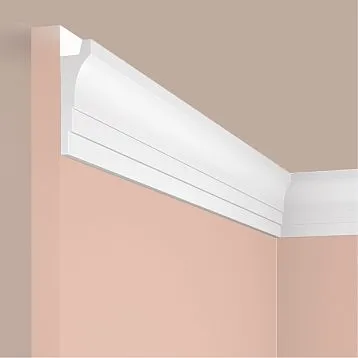
Ceiling cornices (ceiling skirting boards): Run along the perimeter of the room, covering the joint between the ceiling and wall. Width 8-20 cm, profile with ornament (egg-and-dart, beads, acanthus leaves) or simple (coves, scotias). Function: finish the ceiling (without a cornice, the ceiling hangs in the air; with a cornice, it is framed), hide joint irregularities, can hide LED strips (cornice lighting).
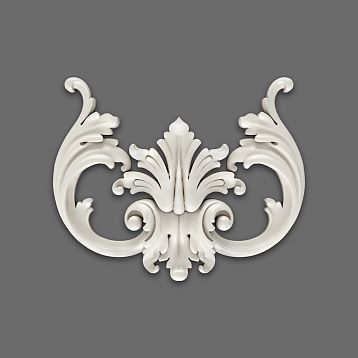
Rosettes: Round or polygonal elements with a diameter of 40-120 cm, glued to the ceiling at the chandelier mounting point. Ornament from simple (concentric circles) to complex (leaves, flowers, scrolls). Function: frame the chandelier (turn it from a utilitarian light fixture into a compositional center), accentuate the center of the ceiling.
Coffers (ceiling panels): The ceiling is divided by moldings into squares or rectangles (coffers), with a recess or relief inside. Function: structure the ceiling (instead of a flat surface — a multi-level composition), visually lower the height (if ceilings are too high, 4+ meters, coffers make the space more intimate).
Our factory also produces:





Wall elements
Moldings: Overlay strips width 3-15 cm, used on walls to create frames, panels, borders. Function: structure the wall (divide it into zones), create depth (frames made of moldings are pseudo-panels, creating an illusion of relief).
Pilasters and half-columns: Vertical elements (pilaster — a flat projection imitating a column; half-column — a three-dimensional projection), installed at the edges of doors, windows, mirrors, fireplaces. Function: frame openings (a door is not just a hole in the wall, but an architectural portal), add verticality (visually raise the ceiling).
Wall panels and medallions: Decorative compositions (plaster, polyurethane, wood) with relief (floral motifs, scenes, ornaments), hung on the wall like paintings. Function: accentuate a zone (wall behind the sofa, above the fireplace), add volume.
Get Consultation
Floor elements
Floor skirting boards: Cover the joint between the floor and wall, height 10-20 cm (classic standard), profile ornamented or simple. Material: wood (oak, ash, walnut), painted MDF, polyurethane. Function: finish the bottom of the wall (visually connect the floor and wall), hide irregularities, may have a cable channel (wires are hidden inside the skirting board).
Furniture elements
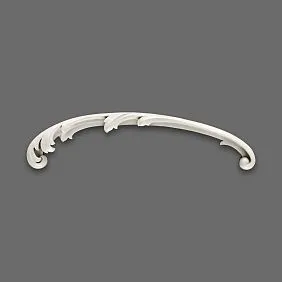
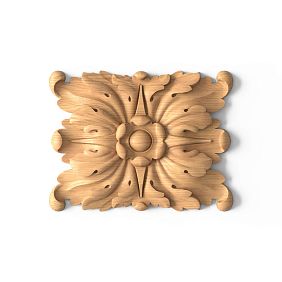
Carved overlays: Wooden or polyurethane elements (rosettes, cartouches, corner scrolls) that are glued onto furniture fronts, doors, and fireplace portals. Function: They enrich simple surfaces (a smooth cabinet door + a carved overlay = a decorative front).
Furniture handles: Bronze, brass, carved wooden. Shape: rings, brackets, ornamental knob handles. Function: utilitarian (to open doors, drawers) + decorative (the handle as a piece of furniture jewelry).
Furniture legs: Carved (balusters, cabrioles — curved legs), turned (on a lathe), with capitals (the upper part of the leg is widened, decorated with carving). Function: they support the furniture + decorate (the leg is not just a support, but a sculpture).
How to choose decorative elements: criteria and priorities
The question is not 'what is beautiful', but 'what is needed'. Everything is beautiful (if made with quality). What is needed — is determined by criteria.
Criterion 1: Matching the furniture style
Classic FurnitureFurniture can be different: Baroque (opulent, carved, gilded), Rococo (elegant, curvilinear, pastel colors), Classicism (strict, symmetrical, restrained decor), Empire (solemn, columns, military motifs — eagles, wreaths), Neoclassicism (lightened classicism, without excessive decor).
Matching rule: If the furniture is Baroque (a carved sofa with gilded armrests, opulent armchairs),Polyurethane moldingsthe molding should be Baroque (wide cornices 15-20 cm with ornament, rosettes 80-120 cm in diameter with complex relief). If the furniture is Classicism (a strict sofa with straight lines, minimal carving), the molding should be restrained (cornices 8-10 cm, simple profile, rosette 40-60 cm, geometric pattern).
Mistake: Baroque furniture + minimalist molding (narrow cornices, absence of rosettes) = dissonance (the furniture shouts, the walls are silent). Or restrained furniture + Baroque molding (huge rosettes, opulent cornices) = the walls shout, the furniture gets lost.
Criterion 2: Room size and ceiling height
Small living room (15-20 m², ceiling 2.7 meters): Decor should be restrained. Narrow cornices (6-8 cm), one small rosette (diameter 40-50 cm), thin wall moldings (3-5 cm), medium baseboards (12-14 cm). Large decor (wide cornices, huge rosettes, massive baseboards) will steal space (visually shrink the room, the ceiling will feel oppressive).
Medium living room (25-35 m², ceiling 3-3.2 meters): Medium decor. Cornices 10-12 cm, rosette 60-80 cm, moldings 5-8 cm, baseboards 14-16 cm. You can add wall moldings (create frames, panels), pilasters by the doors.
Large living room (40+ m², ceiling 3.5+ meters): Decor can be large-scale. Cornices 15-20 cm, rosette 100-120 cm (or several rosettes if the ceiling is very large), wide moldings 10-15 cm, tall baseboards 18-20 cm. Coffered ceilings are appropriate (they structure a huge ceiling). Pilasters, half-columns, wall panels — everything works (the room's scale allows it).
Proportion rule:the area of decorative elements should not exceed20% of the surface area. Ceiling 20 m² — decor (cornice + rosette) maximum 4 m². Cornice perimeter 18 m.l. × 0.1 m width = 1.8 m². Rosette diameter 60 cm = area 0.28 m². Total 2.08 m² — within the norm. If you add coffers (moldings another 10 m.l. × 0.08 m = 0.8 m²), total 2.88 m² — still normal. If you add a second rosette, a third, complex coffers — you'll exceed 4 m² — overload.
Criterion 3: Color scheme and finish
White on white:Polyurethane moldingswhite molding on a white ceiling/walls (monochrome). The molding is read through relief (light and shadow), not through color. Suitable for Neoclassicism, Classicism (strictness, purity).
Contrast: White molding on a colored ceiling/walls (light blue ceiling, white molding — clear, graphic contrast). Or gilded/silvered molding on a white/colored background (luxury, Baroque, Empire).
Patina: Molding with patina (dark coating in the recesses of the ornament, imitating aging). Patina is gray, brown, greenish (bronze oxidation). Suitable for interiors with antique furniture (patina creates the illusion that the molding has been here for a century).
Gilding: Molding with gilding (imitation gold leaf, applied to the protruding parts of the ornament). Full gilding (the entire molding is gold — Baroque, Rococo, palace luxury) or partial (only the tops of scrolls, leaves are gilded — elegant luxury, not ostentatious).
Harmony rule: The color/finish of the molding should resonate with the furniture. If the furniture has gilded elements (handles, carving is gold), the molding can be gilded (connection). If the furniture has no gold (natural wood, handles are patinated bronze), the molding should be white or with gray patina (gold in the molding would be excessive).
Criterion 4: Functionality of decor
Decor not only adorns but also solves problems.
Cornices: They hide an uneven joint between the ceiling and wall (if the walls are crooked, the ceiling is not perfectly level — the cornice will cover it), they hide LED strips (cornice lighting — light directed upwards, the ceiling is illuminated, visually higher).
Wall moldings: They hide wall defects (cracks, uneven painting — molding is glued on top, the problem is masked), they zone (frames made of moldings divide the wall into logical zones — one frame above the sofa, another by the door).
Baseboards: They hide the gap between the floor and wall (the floor is laid with a 10-15 mm gap from the wall for thermal expansion — the baseboard covers the gap), they hide wires (cable channel inside the baseboard).
Carved overlays on furniture: They hide simplicity (you bought a smooth, inexpensive MDF cabinet, glued on carved overlays — the cabinet looks like carved solid wood, cost half as much).
Rule: If decor solves a problem + adorns — take it. If it only adorns but creates new problems (dust collectors — complex carved elements collect dust, hard to clean; overload — the eye gets tired from an abundance of details) — think twice.
Essential decorative elements of a classic living room
There is a minimum without which classic does not look like classic.
Ceiling cornice
Essential. Without a cornice, the ceiling looks unfinished (a bare joint between the ceiling and wall is an aesthetic failure). The width of the cornice depends on the ceiling height: ceiling 2.7 m — cornice 6-8 cm, ceiling 3 m — cornice 10-12 cm, ceiling 3.5+ m — cornice 15-18 cm.
Profile selection: If the furniture is ornate (Baroque, Rococo) — a cornice with ornament (egg-and-dart, leaves, beads). If the furniture is restrained (Classicism, Neoclassicism) — a cornice with a simple profile (ogees, torus, without ornament).
Price: Polyurethane cornice 300-800 rubles/linear meter (depends on width, profile complexity). For a room with a perimeter of 20 m = 6-16 thousand for materials.
Wooden floor skirting board
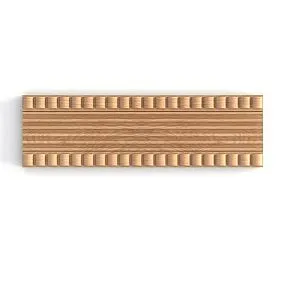
Essential.wooden baseboardIn a classic living room — not just a gap cover between floor and wall, but an architectural element. The height of a classic skirting board is 12-18 cm (higher than the standard 7-10 cm of Soviet apartments). Material: solid oak, ash, walnut (matching the parquet or contrasting). Profile: classic (ogees, torus, may have carved ornament).
Color: Matching the floor (light oak floor, light oak skirting board — unity), matching the furniture (dark walnut furniture, dark walnut skirting board — connection between furniture and floor), contrasting white (if the walls are white, white skirting board — a classic technique, visually expands the space).
Price: Oak skirting board height 120 mm — 600-1200 rubles per 2.5 m plank. For a room with a perimeter of 18 m (8 planks) = 5-10 thousand.
Ceiling rosette for chandelier
Desirable (the line between essential and desirable is thin). A chandelier in a classic living room is the central light fixture, often massive (crystal, multi-arm). The rosette frames the chandelier mounting point (instead of a bare ceiling with a protruding hook — a decorative composition). Rosette diameter: for a small room 40-60 cm, for a medium room 60-80 cm, for a large room 80-120 cm.
Ornament selection: Simple (concentric circles, rays — for Classicism), medium (leaves, stylized rosettes — for Neoclassicism), complex (scrolls, angels, flowers — for Baroque).
Price: Polyurethane rosette 1500-6000 rubles (depends on diameter, complexity).
Desirable decorative elements: enhancing the style
A living room with a cornice, skirting board, and rosette — basic classic. Add desirable elements — the classic style deepens.
Wall moldings: frames and panels
Moldings are used to create frames on walls (boiserie — paneling, originating from 17th-18th century French interiors). Frames can be empty (inside is the same paint as outside, molding as graphics) or filled (inside has contrasting paint, patterned wallpaper, fabric).
Placement: Symmetrically (on the wall behind the sofa two identical frames sized 100×150 cm, on either side of the fireplace two vertical frames 80×200 cm). Frames at a height of 80-180 cm from the floor (classic boiserie covers the lower part of the wall), or from floor to ceiling (modern boiserie covering the entire wall).
Molding width: For frames 5-8 cm (noticeable, but not dominant). Moldings narrower than 3-4 cm get lost (not accentuated enough), wider than 10 cm are overwhelming (the frame becomes heavy).
Price: Moldings 250-500 rubles/linear meter. For two frames 100×150 cm (perimeter of each 5 m, total 10 linear meters) = 2.5-5 thousand for materials + 3-5 thousand for installation.
Pilasters and half-columns: framing openings
Pilasters (flat vertical projections imitating columns) are installed at the edges of doors, windows, fireplaces. Height from floor to ceiling (or from floor to 2-2.5 meters, if ceilings are very high). Width 8-15 cm, relief (fluting — vertical grooves, capital — upper part with ornament, base — lower expanded part).
Effect: The door is not just a rectangular opening, but an architectural portal (pilasters frame it, above the door a cornice-pediment — triangular or arched — completes the composition). The room gains monumentality (even a small living room with pilasters seems more solemn).
Price: Polyurethane pilaster height 2.5 m — 3-8 thousand rubles (depends on width, relief complexity). A pair of pilasters for a door = 6-16 thousand.
Decorative overlays for furniture: enriching simple facades
Classic FurnitureCarved furniture is expensive (hand or CNC carving adds 30-70% to the cost). Alternative: furniture with smooth MDF facades + carved overlays made of solid wood or polyurethane, glued onto the facades. Overlays: rosettes (round, diameter 6-12 cm), cartouches (shields with scrolls, 10×15 cm), corner elements (scrolls, acanthus, 5×5 cm), central panels (large compositions, 20×30 cm).
Application: On cabinet doors, dresser drawers (center of the door — a rosette or cartouche), on a bed headboard (if there is a rest area in the living room), on a fireplace surround (framing the firebox).
Price: Wooden overlays 300-3000 rubles/piece (depends on size, carving complexity). For a dresser (4 doors, an overlay on each) = 1200-12000 rubles.
Excessive decorative elements: where to stop
There is a line beyond which decor transforms from embellishment into overload.
Signs of overload
Quantitative: More than 20% of surface area is decorative (ceiling 20 m² — decor 5+ m², walls 80 m² — decor 20+ m²). The eye gets tired (nowhere for the gaze to rest, everything is filled with patterns).
Qualitative: Decor is stylistically inconsistent (Baroque cornice + Neoclassical rosette + Art Deco moldings = uncontrolled eclecticism). Or decor of one style, but too many elements (three rosettes on the ceiling, coffers, cornices with ornament, moldings on all walls, pilasters at every door, overlays on all furniture fronts — the beauty of each element is lost in the crowd).
What to exclude or minimize
Coffers in a small room: If the ceiling is 2.7 m, room area is 15 m², coffers will steal height (visually the ceiling will lower to 2.5 m, will feel oppressive) and overload (the ceiling is broken into small squares — busyness instead of calm).
Multiple rosettes on the ceiling: One rosette — a central accent (under the chandelier). Two-three rosettes (under the chandelier + in ceiling corners) — too much (unless the room is huge, 50+ m² with several chandeliers/fixtures).
Moldings on all walls: If all four walls are covered with molding frames (classical boiserie, 10-15 frames per room), the room can become heavy (too many lines). Better: one-two walls with moldings (accent walls), the rest smooth (balance).
Pilasters at every door, window, mirror: If there are three doors, two windows, a large mirror in the room — and pilasters everywhere (10-12 pilasters per room), overload. It's enough to frame the main door (entrance to the living room) and, possibly, the fireplace (if present). Windows and mirrors can be left without pilasters (framed with moldings — lighter).
Ready-made compositions: furniture + molding + baseboard
Here are three schemes for living rooms of different sizes.
Scheme 1: Small living room 18 m², ceiling 2.7 m (Neoclassical)
Ceiling: White matte. Polyurethane cornice white, width 8 cm, simple profile (two ogees), around the room perimeter. One rosette, diameter 50 cm, geometric pattern (concentric circles), white, under the central chandelier.
Walls: Light gray smooth paint. On the wall behind the sofa, two vertical frames made of moldings (molding width 5 cm, white, frame size 80×120 cm), inside the frames the same gray paint (monochrome, moldings as graphics). Other walls smooth without moldings.
Floor: Light oak parquet, matte lacquer.wooden baseboardLight oak baseboard, height 12 cm, classic profile (ogee), around the room perimeter.
Furniture: Straight gray velour sofa, light oak wooden legs, minimal carving. Two armchairs, gray upholstery, light wood frame. Rectangular coffee table, glass tabletop, light wood carved legs (balusters). White matte MDF chest of drawers, patinated bronze handles, small wooden carved overlays on the chest doors (rosettes diameter 8 cm, 4 pieces).
Lighting: Crystal chandelier, 6 arms, under the ceiling rosette. Two sconces, on the sides of the mirror above the chest, classic style (bronze metal, matte glass shades).
Decor: Mirror above the chest in a white frame with ornament (frame width 8 cm). On the coffee table, a white ceramic vase, books. On the floor, a light gray rug, short pile, 2×2.5 meters.
Total decorative elements: Cornice (perimeter 17 m.l. × 0.08 m width = 1.36 m²), rosette (diameter 0.5 m, area 0.2 m²), moldings of two frames (perimeter 8 m.l. × 0.05 m = 0.4 m²), baseboard (perimeter 17 m.l. × 0.12 m = 2 m²), overlays on chest (4 pcs, area each 0.005 m² = 0.02 m²). Total decor: ceiling 1.56 m² (ceiling 18 m², decor 8.6% — normal), walls 0.4 m² (walls ~50 m², decor 0.8% — low, but the room is small, more would be overload), floor 2 m² (floor 18 m², decor 11% — normal).
Effect: Light elegance. The room is not overloaded (decor is dosed), but the classic style is readable (cornice, rosette, moldings, wooden baseboard, carved furniture elements). Light tones expand the space (the small room doesn't feel cramped).
Scheme 2: Medium living room 30 m², ceiling 3.2 m (Classicism)
Ceiling: White matte. Polyurethane cornice white, width 12 cm, profile with egg-and-dart (egg-shaped ornament), around the perimeter. One rosette, diameter 80 cm, relief rays + acanthus leaves, white, under the chandelier. On the ceiling, four moldings form a cross-shaped composition (from the rosette to the room corners, moldings width 6 cm, divide the ceiling into four sectors — simplified coffers).
Walls: Beige smooth paint. On the wall behind the sofa, three horizontal frames made of moldings (molding width 7 cm, white, frame size 120×80 cm), inside the frames damask-pattern wallpaper beige-gold (contrast). On the opposite wall (by the door), two vertical frames 100×180 cm, inside the same beige paint. The door is framed with pilasters (height 2.5 m, width 10 cm, white, fluting + capital with ornament), above the door a triangular pediment-cornice.
Floor: Medium-toned oak parquet, semi-matte lacquer. Wooden oak baseboard medium tone, height 16 cm, classic profile with carved ornament (leaves), around the perimeter.
Furniture: Three-seater sofa, velour upholstery beige, carved legs dark wood (walnut), armrests with carving (scrolls). Two armchairs, same upholstery, carved walnut frame. Oval coffee table, beige marble tabletop, carved walnut legs (cabriole). Tall chest of drawers (140 cm), solid walnut, fronts with carving (raised panels), bronze ring handles. Open shelving unit, solid walnut, 5 shelves, carved pilasters on the sides of the shelving.
Lighting: Multi-tiered crystal chandelier, 12 arms, under the rosette. Floor lamp by the armchair, classic style (carved wood stand, beige fabric shade). Table lamp on the chest, similar to the floor lamp.
Decor: Above the sofa, a large mirror in a gilded frame (frame width 12 cm, leaf relief). On the chest, an antique bronze table clock. On the floor, a Persian rug (floral pattern, beige-red-blue colors), 3×4 meters.
Total decor: Ceiling (cornice 2.3 m², rosette 0.5 m², cross moldings 1.2 m² = 4 m², ceiling 30 m², decor 13% — normal). Walls (moldings of five frames ~3 m², pilasters by door 0.5 m² = 3.5 m², walls ~85 m², decor 4% — low, but walls are mostly smooth beige, accent on furniture and ceiling). Floor (baseboard 2.8 m², floor 30 m², decor 9% — normal).
Effect: Noble classicism. The room is filled with decor (ornamented cornice, complex rosette, moldings on the ceiling and walls, pilasters, carved furniture), but not overloaded (each element is in its place, proportions are respected). The beige-gold palette creates warmth and luxury without pretentiousness.
Scheme 3: Large living room 50 m², ceiling 3.8 m (Baroque)
Ceiling: White matte with a slight pearl effect (paint with pearlescent pigment, light play). Polyurethane cornice, white with gilding, width 18 cm, complex profile (egg-and-dart, beads, acanthus leaves), around the perimeter. Central rosette, diameter 120 cm, complex relief (scrolls, angels, flowers), white with gilding (gold on protruding parts). Coffers: the ceiling is divided by moldings (width 10 cm, white with gilding) into 12 squares (3×4), inside each square a recess (visual depth), in the center of the recess a small rosette diameter 30 cm.
Walls: Silk-effect paint, light golden (paint with silk effect, soft glow). On all walls, boiserie: panels 180 cm high from the floor, framed by moldings (width 8 cm, white with gilding), inside the panels fabric (golden silk with embossing). Total 16 panels (4 on each wall). Doors (two in the room) are framed by half-columns (height 3 m, diameter 15 cm, white with gilding, fluting + Corinthian capitals with acanthus leaves), above the doors arched pediments with ornament.
Floor: Artistic oak parquet (herringbone pattern, perimeter border of dark walnut), glossy varnish. Wooden baseboard, dark walnut, height 20 cm, classic carved profile (leaves, scrolls), around the perimeter.
Furniture: Corner sofa, upholstery burgundy velour, frame carved solid wood with gilding (armrests, back, cabriole legs). Four armchairs, Baroque style (carved, gilded, burgundy upholstery). Round coffee table, tabletop white marble with veins, carved gilded legs (three curved, intertwined legs). Tall carved chest of drawers, solid walnut with gilding, facades with carved overlays (cartouches, rosettes), handles gilded bronze. Console against the wall, carved gilded, tabletop marble. Two-door display cabinet, carved gilded solid wood, behind glass shelves with decor (porcelain, figurines).
Lighting: Huge crystal chandelier, 24 arms, three tiers, under the central rosette. Six sconces (two on three walls), Baroque style (carved gilded brackets, crystal shades). Two floor lamps, carved gilded stands, shades golden fabric.
Decor: Above the sofa, a large painting in a gilded frame (classical landscape, 150×100 cm). On the console, a tabletop mirror in a gilded frame, tabletop gilded clock, bronze candelabra. On the floor, two rugs (Persian, complex floral pattern, 3×4 meters each, placed symmetrically). On the coffee table, an antique porcelain vase, an album with engravings in a leather binding.
Total decor: Ceiling (cornice 4.5 m², central rosette 1.1 m², coffer moldings 8 m², small rosettes 12 pcs 0.8 m² = 14.4 m², ceiling 50 m², decor 28.8% — OVERLOAD by standards, but Baroque allows it, it's a style of excess; however, in modern execution it's better to simplify — remove the small rosettes in the coffers, leave only the recesses, decor will decrease to 13.6 m², 27% — acceptable for Baroque). Walls (moldings 16 panels ~10 m², half-columns by doors 0.9 m² = 10.9 m², walls ~120 m², decor 9% — normal, although panels with fabric are visually heavier than smooth paint). Floor (baseboard 5 m², floor 50 m², decor 10% — normal).
Effect: Palatial luxury. The room is stunning (abundance of gold, carving, crystal), but if the area is 50 m² and ceilings are 3.8 m, the scale allows it. Each element (cornice, rosettes, coffers, boiserie, furniture) is luxurious, together they create a symphony of Baroque. Risk: kitsch (if the gilding is cheap, plastic imitating bronze, carving is crude). Baroque requires quality materials and execution — otherwise, instead of a palace, you get theatrical props.
Practical recommendations: how not to make mistakes
Create a 3D visualization before purchasing
Don't buy decorative elements intuitively (liked a rosette — bought it, liked a cornice — bought it). First, create a 3D model of the living room (programs like SketchUp, Planner 5D, Sweet Home 3D — free, intuitive). Arrange the furniture, add cornices, rosettes, moldings, baseboards. Look from all angles. See overload — remove the excess. See emptiness — add. Visualization saves money (won't buy extra) and nerves (won't have to redo).
Buy as a set from one manufacturer
Cornice from one factory, moldings from another, rosette from a third — risk: styles won't match (cornice Baroque, moldings Classicism, rosette Art Nouveau — dissonance), shades of white differ (one warm milky white, another cold bluish white — visible difference in daylight). Better: all Polyurethane moldings (cornices, moldings, rosettes, pilasters) from one manufacturer (STAVROS, for example) — stylistic unity, identical color, element compatibility guaranteed.
Start small, add gradually
Installed cornice, baseboard, rosette (mandatory minimum). Live with it for a month. See: enough (the room is harmonious) or too little (walls look empty, want moldings). Add moldings to one wall. Live another month. Evaluate. This way gradually (over a year or two) you'll bring the interior to perfection. Better than sticking everything on at once (cornices, coffers, moldings everywhere, pilasters, overlays) — and realizing in a month: overload, but money is spent, a pity to dismantle.
Consider lighting
Decorative elements (stucco, carving) are read through light and shadow (relief casts shadows, creating volume). If the lighting is flat (one ceiling fixture, diffuse light from above), the relief is lost (stucco looks flat, then why pay for a complex ornament). Multi-level lighting is needed: central chandelier (general light), sconces/floor lamps (side light — emphasizes wall stucco relief), directional spotlights (accentuate carved furniture, wall moldings).
Frequently asked questions about decorative elements in a classic living room
Where to find out, which decorative element suits my specific living room
Consult an interior designer (a specialist will assess the area, ceiling height, furniture style, color scheme, suggest an optimal set of elements). Or study analogs (Pinterest, Houzz, Instagram — search for living rooms of similar area and style, see what elements are used there, what works). Or use the 20% rule (the area of decorative elements should not exceed 20% of surface area — calculate, stop at 15-18%, reserve in case you add something later).
Can I mix classic furniture and modern stucco
Yes. Modern stucco (thin moldings 3-5 cm, geometric rosettes without ornament, simple profile cornices) + classic furniture (carved, with patina) = contemporary with classic accents (eclecticism, popular in the 2020s). But if the furniture is lush Baroque, the stucco should at least somewhat echo its spirit (not a minimalist 3 cm line, but at least 6-8 cm with slight relief).
How to choosewooden baseboard for a classic living room
Height: the higher the ceiling, the higher the baseboard (ceiling 2.7 m — baseboard 12-14 cm, ceiling 3.2 m — baseboard 16-18 cm, ceiling 3.8+ m — baseboard 18-20 cm). Material: solid wood (oak, ash, walnut — matching the parquet or contrasting). Profile: classic (ogees, torus, can be with carved ornament — leaves, scrolls, if the furniture is carved). Color: matching the floor (unity) or matching the furniture (connection between furniture and the bottom of the wall).
How much doesPolyurethane moldings for a 25 m² living room
Cornice (perimeter 20 m, width 10 cm, medium profile) 400 rubles/m = 8 thousand. Rosette (diameter 70 cm, medium complexity) 3 thousand. Mouldings for two wall frames (10 m, width 6 cm) 300 rubles/m = 3 thousand. Total materials 14 thousand. Installation (cornice 6 thousand, rosette 1.5 thousand, mouldings 3.5 thousand) = 11 thousand. Total 25 thousand rubles (stucco for living room 25 m² basic set). If adding pilasters (pair 6-16 thousand) + ceiling coffers (mouldings + labor 15-25 thousand), total 50-70 thousand.
Is it true thatthe area of decorative elements should not exceeda certain percentage
Yes. The 20% rule (decor maximum 15-20% of surface area) is empirical, based on perception. If there is more decor, the eye cannot process it (the gaze jumps from element to element, finds no rest, the person gets tired being in the room). Exception: Baroque, Rococo (styles of excess, where overload is part of the aesthetic, decor can be 25-30%). But even there is a limit: 40-50% decor is no longer an interior, but a theatrical set.
How to care for stucco and carved furniture
Polyurethane stucco: dust is wiped off with a soft cloth or vacuum with a brush attachment (every 2 weeks), stains (if any - splashes, fingerprints) are washed off with a damp sponge and mild detergent (dish soap), wiped dry. Painted stucco with washable paint (latex, acrylic) cleans easily. If stucco has gilding (imitation gold leaf), wipe carefully (do not rub hard, gold may wear off).
Carved furniture: dust in the recesses of the carving (soft brush or vacuum brush). Wood with oil finish: wipe with a damp cloth, renew oil every 2-3 years. Wood with varnish finish: wipe with a damp cloth, varnish lasts 5-10 years. Gilding (imitation gold leaf): do not get very wet, wipe with an almost dry cloth.
Conclusion: classic is in the details, harmony is in measure
Classic Furniture, Polyurethane moldings, wooden baseboard— the three pillars on which a classic living room rests. Furniture sets functionality and stylistic tone (Baroque, Classicism, Neoclassical). Stucco frames the space (cornices finish the ceiling, rosettes accent the center, mouldings structure the walls). Baseboard connects floor and walls (visually finishes the bottom of the room, creates unity).
But beauty is not in the quantity of elements (the best interior is not the one with more decor), but in their harmony. The questionwhich decorative elementto choose is a question of balance. Is a cornice and rosette enough, or are wall mouldings needed? Are pilasters needed by the doors, or is that overload? Is a 14 cm baseboard enough, or is 18 cm needed?
Answer: listen to the space. You added a cornice — the room is finished (ceiling is framed). You added a rosette — the chandelier gained context (doesn't hang in emptiness, but is integrated into the composition). You added mouldings to one wall — the wall came to life (structure, depth). Want to add mouldings to all walls? Stop. Look: is it too heavy? If in doubt — don't add (better under- than over-).
the area of decorative elements should not exceed15-20% — this is not a strict rule (not a law of physics), but a guideline. Calculate the decor in your living room. If 10% — perhaps too little (style is not expressed enough). If 18% — excellent (classic is readable, but not oppressive). If 25% — most likely, overload (try removing a couple of elements, see if it feels lighter).
Create interiors where every element is in its place. Where a cornice is not just a strip under the ceiling, but an architectural finish. Where a rosette is not just a circle, but a chandelier frame, turning it into a compositional center. Where mouldings are not just lines, but wall structure. Where a baseboard is not just a gap cover, but a connection between floor and wall. Where a carved overlay on furniture is not just decoration, but an accent that attracts the eye.
Classic requires attention to detail (every element is thought out), but also a sense of measure (every element is dosed). Baroque teaches: beauty is in excess (but even there is a limit). Classicism teaches: beauty is in strictness (but strictness does not mean emptiness). Neoclassical teaches: beauty is in balance (classical elements are present, but lightened, not overwhelming).
STAVROS: decorative elements for a classic living room of any complexity
Where to findpolyurethane molding(cornices, rosettes, mouldings, pilasters — 300+ models from simple to Baroque),wooden baseboard(solid oak, ash, walnut — height 10-20 cm, any profile),classic furniture(sofas, dressers, tables, shelving — custom-made any style Baroque/Classicism/Neoclassical)? Answer: STAVROS is a company creating comprehensive solutions for classic interiors.
Polyurethane stucco: Ceiling cornices (width 5-25 cm, profile simple/medium/complex, with ornament/without, white primed or painted any RAL). Rosettes (diameter 30-150 cm, ornament geometric/floral/Baroque, white/with gilding/with patina). Mouldings (width 3-15 cm, 300+ profiles, for frames/panels/boiserie). Pilasters and half-columns (height 1.5-3.5 meters, width 8-20 cm, fluted/smooth, capitals Ionic/Corinthian/Doric). Quality: high-resolution casting (details clear), density 420 kg/m³ (strength, doesn't break during installation), factory primer (ready for painting or glues white). Price 180-1500 rubles/element.
Wooden baseboard: Solid oak, ash, walnut. Height 100-200 mm (standard 120, 140, 160, 180 mm or custom). Profile classic (rounds, coves, carved ornament leaves/scrolls) or Scandinavian straight (if you want classic furniture + modern baseboard — eclectic). Finish: varnish (glossy/matte), oil (natural/tinted), enamel paint (white/colored). Plank length 2500-3000 mm. Price 600-1800 rubles/plank.
Classic furniture: Sofas (straight, corner, upholstery velvet/jacquard/leather, frame solid carved oak/walnut/beech, legs cabriole/baluster, armrests carved, style Baroque/Classicism/Neoclassical). Dressers and cabinets (solid wood or MDF with carved overlays, fronts paneled/carved, handles bronze/gilded, any size). Tables (dining oval/rectangular, tabletop solid wood/marble, legs carved; coffee tables round/oval/rectangular). Shelving and display cabinets (open shelves + closed sections behind glass, solid carved). Production 4-10 weeks (depends on carving complexity), warranty 2 years.
Living room design project: Don't knowwhich decorative elementto choose? STAVROS designers will create a project: room analysis (area, ceiling height, lighting), style selection (Baroque/Classicism/Neoclassical — depending on your preferences), furniture selection (sofa, armchairs, tables, cabinets — layout, sizes), stucco selection (cornice width, rosette diameter, mouldings where and how many, pilasters needed or not), baseboard selection (height, profile, color), decor calculation (calculatearea of decorative elements, check if it exceeds 20%), color scheme (wall paint, furniture upholstery, stucco color, baseboard — all in harmony), 3D visualization (photorealistic images of the future living room from different angles). Service is paid (20-40 thousand for a room project), cost is deducted when ordering materials and furniture from 250 thousand.
Turnkey installation: Stucco is glued (corners at 45 degrees, joints puttied, sanded, painted — perfect lines). Baseboard is installed (corners cut, fastened with glue/screws, joints invisible). Furniture is delivered, assembled, installed (sofas, tables, cabinets in their places, stable, adjusted). Work warranty 2 years (if something comes unglued, loosens — we will redo it for free).
Honest prices: Cornice 10 cm width medium profile — 420 rubles/m. Rosette 70 cm diameter — 3200 rubles. Moulding 6 cm width — 310 rubles/m. Baseboard oak 140 mm — 850 rubles/plank. Classic three-seater sofa — from 85 thousand. Carved dresser — from 60 thousand. This is not cheap (quality costs money), but honest (prices correspond to materials, manual work, durability).
Create living rooms where classic is not museum-like (not a reconstruction of an 18th-century palace), but alive (classical elements adapted to modern life — comfortable furniture, practical materials, washable surfaces). WherePolyurethane moldingsit doesn't imitate plaster (though visually indistinguishable), but surpasses it (lighter, more moisture-resistant, cheaper). Wherewooden baseboardit's not just tradition (though classic requires wood), but a logical choice (natural, durable, repairable). WhereClassic Furnitureit's not an antique (though the style is antique), but modern production (quality materials, reliable hardware, warranty).
Trust STAVROS — a company for which classic is not copying the past, but rethinking it. Your living room deserves to be not just beautiful (beautiful interiors are on every website), but harmonious (where every element is thoughtful, measured, connected to others). And STAVROS will create it. From the first cornice to the last carved handle.