












































































Article Contents:
- The Anatomy of Choice: Understanding Before Buying
- Stylistic Identity
- Molding Typology: Form and Function
- Framing Compositions
- Material Base: Why Polyurethane
- Technological Advantages
- Selection Criteria: From General to Specific
- Technical specifications
- Design Techniques: How to Use Molding
- Accentuating Elements
- Installing Molding: From Preparation to Finishing
- Cutting technique
- Adhesive Compounds: The Foundation of Reliability
- Alternative mounting methods
- Final Finishing: From Joints to Painting
- Painting techniques
- Calculating Quantity: Precision Saves Budget
- Additional elements
- Common Mistakes
- Compositional Errors
- Maintenance and operation
- Repair and Renewal

Walls define the character of a space. But what turns an ordinary surface into a work of art? Molding. These elegant strips, framing, dividing, and decorating, are capable of transforming the most mundane interior.Buy polyurethane wall moldingsToday means gaining access to technology that combines the beauty of classical moldings with the practicality of modern materials. This solution is for those who understand: details create atmosphere, and the right decor becomes the foundation of style.
Polyurethane has revolutionized the world of architectural decoration. What once required the work of skilled sculptors, weeks of labor, and significant costs is now accessible to everyone.Polyurethane moldingIt weighs significantly less than plaster molding, installs faster, is resistant to moisture and temperature fluctuations. Visually, it is indistinguishable from traditional materials. Clear lines, expressive relief, flawless geometry — all this is preserved, but without the drawbacks of heavy plaster or fragile wood.



The Anatomy of Choice: Understanding Before Buying
Choosingof polyurethane moldingsIt begins not with a catalog, but with understanding your own space. Ceiling height dictates the scale of decoration. In a room with 2.5-meter ceilings, wide, heavy moldings will create a sense of pressure, visually 'eating' the height. Here, simple profiles up to 8 cm wide are appropriate. In spaces with 3-meter ceilings and higher, you can afford more expressive elements up to 10-15 cm and beyond.
The area of the room also affects the choice. In a compact room, a complex reliefpolyurethane moldingwill overload the space, fragmenting it. Conversely, spacious halls require more active decoration capable of structuring large wall surfaces. Here, wide moldings with pronounced relief are appropriate, creating rhythm and scale.
The lighting of the room determines the character of the relief. In rooms with bright natural light, relief moldings create expressive play of light and shadow, revealing the full beauty of the profile. In rooms with limited lighting or predominant artificial light, smoother profiles are better, as they do not create excessive shadows that may appear as dirty spots.




Stylistic Identity
Classic interiorrequires appropriatefor wall decorationHere, moldings with traditional ornaments are appropriate: egg-and-dart, Ionic, meander, acanthus leaves. Symmetry, proportionality, clear hierarchy of elements — the foundation of classical composition.wall moldingPolyurethane allows recreating the luxury of palace interiors without astronomical costs.
Neoclassicism softens the rigidity of traditional forms, adapting them to modern life. Moldings retain recognizable classical profiles but are simplified, stripped of excessive ornamentation. What remains is an elegant outline, readable proportions, noble restraint.Buy polyurethane wall moldingsIn neoclassical style — it means achieving a balance between tradition and modernity.
Modern interiors — minimalism, Scandinavian style, loft — also use moldings, but differently. Here, simple geometric profiles are relevant: rectangular, trapezoidal, with minimal relief.Polyurethane moldingIt becomes not decoration, but a tool for structuring space. Clear lines delineate zones, create rhythm, add architectural expressiveness.
Art Deco requires a special approach. Geometry, symmetry, luxury — these are its characteristics. Moldings here can be either minimalist or richly decorated, but always with clear lines and strict symmetry. Characteristic are stepped profiles, zigzags, solar motifs.polyurethane moldingIn art deco style, it creates an atmosphere of glamour and sophistication.
Our factory also produces:


Molding typology: form and function
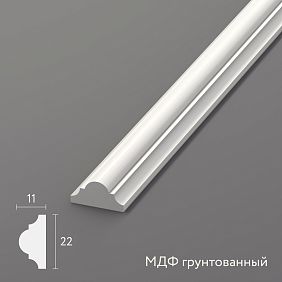
Wall moldings are divided into categories by location and purpose.CorniceThis is molding at the junction of wall and ceiling. It visually completes the room, creating a smooth transition between vertical and horizontal planes. Wide cornices with complex profiles are characteristic of high-ceilinged classical-style rooms. Narrow, minimalist ones are suitable for modern interiors with low ceilings.
Polyurethane baseboards frame the lower part of the wall, covering the joint with the floor. They are not only decorative but also functional: they protect the lower part of the wall from mechanical damage and conceal gaps caused by thermal expansion of flooring. Tall baseboards (10–15 cm) create a sense of solidity and are suitable for classical interiors. Low ones (5–7 cm) are for modern minimalist spaces.
Wall moldings, or friezes, are placed horizontally in the middle of the wall. They divide the wall into two parts, allowing different finishing materials or colors to be used above and below the molding. A classic approach is the boiserie panels, where the lower part of the wall is clad with wood or its imitation, and the upper part is painted or covered with wallpaper.Wall decorationMoldings of this type add architectural complexity.
Get Consultation
Framing compositions
Vertical and horizontal moldings are used to create framing compositions on walls. They frame sections of the wall, turning them into panels. Inside the frames, there may be contrasting paint, patterned wallpaper, textile upholstery, or artistic painting.wall moldingIn the form of frames, it creates a rhythmic structure, especially effective in sequences of rooms or long corridors.
The size and proportions of frames follow certain rules. Tall, narrow frames visually elongate the room, suitable for rooms with low ceilings. Wide horizontal frames expand the space, appropriate for narrow rooms. Square or nearly square frames are universal, creating a sense of stability and harmony.
The number of frames on a wall is determined by its area. On a small wall, one or two large frames are sufficient. A large wall can accommodate three to four frames, arranged symmetrically. It is important to maintain equal distances between frames and from frames to corners and other architectural elements.Polyurethane moldingIt allows creating complex compositions due to ease of processing and installation.
Corner elements — special details for decorating internal and external corners. They eliminate the need to cut moldings at 45 degrees, which requires precision and experience. Ready-made corner elements fit perfectly with straight sections of molding, creating flawless joints. For classical interiors, decorative corner elements with rosettes, cartouches, and botanical motifs are produced.
Material base: why polyurethane
Polyurethane is a polymer obtained as a result of a chemical reaction between polyols and isocyanates. For architectural decoration, high-density foamed polyurethane is used. It combines lightness with strength, flexibility with shape stability.Buy polyurethane wall moldingsIt means obtaining a material that does not rot, does not suffer from mold, does not fear insects.
Water resistance — a key advantage of polyurethane. It does not absorb water, does not swell, does not deform upon contact with moisture. This makes polyurethane molding ideal for bathrooms, kitchens, pools, saunas. In rooms with high humidity, gypsum molding deteriorates, wooden molding warps.Moldings made of polyurethaneIt retains an impeccable appearance for decades.
Temperature stability allows using polyurethane decor in rooms with any climate control. From the cold of basements to the warmth of fireplace rooms, from air-conditioned offices to unheated country homes — the material does not lose its properties. It does not crack from cold, does not melt from heat, does not change its geometry with temperature fluctuations.
Technological advantages
Ease of processing — a key characteristic for installation.Polyurethane moldingIt can be cut with a fine-toothed hacksaw or a circular saw. No special tools, expensive equipment, or professional skills are required. The accuracy of the cut determines the quality of joints, but it is easy to achieve even with minimal experience.
Light weight simplifies transportation, storage, and installation. One person can easily lift and hold a three-meter molding profile during gluing. No assistants, safety devices, or additional fasteners are required.wall moldingPolyurethane does not exert load on building structures, which is critical for old houses with weakened walls.
The flexibility of some polyurethane molding models allows them to conform to curved surfaces. Arches, columns, bay windows, rounded walls — all can be decorated with special flexible moldings. They bend to the required radius without heating, special preparation, or risk of breakage.polyurethane moldingA flexible type opens up possibilities for complex architectural solutions.
The ability to paint is another advantage. Polyurethane accepts any paint: acrylic, latex, alkyd. You can create any color, from classic white to bright accent tones. Patination, gilding, silvering — all these techniques are applicable to polyurethane molding.Buy polyurethane wall moldingsWhite color for painting — a universal solution for any project.
Selection criteria: from general to specific
Profile width is the first selection parameter. Narrow moldings (3-5 cm) create delicate lines, suitable for minimalist interiors and small rooms. Medium (6-10 cm) — the most universal category, working in most interiors. Wide (over 10 cm) — for spacious rooms with high ceilings, classic interiors, where expressive decoration is required.
Relief depth determines the expressiveness of the profile. Flat or nearly flat moldings create graphic lines, suitable for modern interiors. Medium relief (up to 2 cm) provides play of light and shadow without overloading the space. Deep relief (over 2 cm) is characteristic of classic styles, creating luxurious molding with pronounced plasticity.
Ornament complexity varies from smooth profiles to rich carving.Polyurethane moldingProfiles with simple design (grooves, channels, bevels) are universal and not tied to a specific style. Moldings with ornament (leaves, flowers, geometric patterns) require stylistic harmony with the entire interior. In eclectic spaces, they become expressive accents.
Technical Specifications
Material density affects strength and durability. Quality polyurethane for architectural decoration has a density of 200-250 kg/m³. Lighter material may be brittle and prone to shrinkage over time. Too dense material becomes heavy, losing its advantage over plaster.Moldings made of polyurethaneOptimal density combines lightness with sufficient strength.
Relief clarity indicates production quality. On a good molding, all ornament elements are sharp, without blurred details, pits, or bubbles. The surface is smooth, uniform, without visible grain. Profile geometry is maintained along the entire length of the strip — no thickening, thinning, or warping.wall moldingLow-quality items reveal themselves through surface defects.
Standard plank length is 2-2.4 meters. This is the optimal size for transportation and installation. Longer planks are harder to transport and install alone. Shorter planks increase the number of joints, complicating the work. When calculating quantities, remember that each corner requires about 20 cm of length for trimming at a 45-degree angle.
The base color is usually white or close to it. This is a universal base for any further finishing. Some manufacturers offer moldings with factory-applied colored coatings, but this limits options.Buy polyurethane wall moldingsWhite color is preferable — you can paint them any desired shade to match a specific project.
Design techniques: how to use moldings
Vertical wall division — a classic technique that adds height to a room. Vertical moldings are installed from floor to ceiling or from baseboard to cornice at equal intervals. This creates a rhythmic structure, especially effective when alternating colors or textures between moldings.Wall decorationVertical elements visually raise the ceiling.
Horizontal division, conversely, expands space. One horizontal molding at 70-90 cm from the floor divides the wall into two zones. The lower, darker or differently finished zone creates a sense of solid foundation. The upper, lighter zone appears lighter and higher. This technique is characteristic of classic interiors but works in modern spaces with appropriate profile selection.
Rectangular frames made ofpolyurethane moldingplaced symmetrically, transform a plain wall into an architectural element. Inside the frames, the finish may match the outside, but the molding’s relief creates play of light and shadow. Or contrasting finish — different color, wallpaper, fabric.
Accentuating elements
Framing door and window openingswith polyurethane moldingadds significance to them. Even a simple modern door framed with classic molding gains nobility. Windows framed with polyurethane molding become architectural accents of the facade or interior. This technique is especially effective in rooms with multiple doors or windows — it creates a rhythm of similarly finished openings.
Niches and alcoves are highlighted with moldings around their perimeter. This emphasizes their function, transforming wall recesses into full architectural elements. Inside the niche, there may be contrasting paint, lighting, shelves, or artworks.wall moldingA frame around the niche draws attention to its contents.
Fireplace portals are traditionally decorated with molded ornamentation. Polyurethane moldings and decorative elements allow creating a portal of any complexity — from strict classical to lavish baroque. It is important to observe proportions: moldings must correspond to the size of the fireplace and room. Too modest decoration for a large fireplace in a spacious hall will be unnoticed. Excessive decoration on a small fireplace will look ridiculous.
The TV zone is often framed with moldings. This visually integrates the technology into the interior, making it not an alien element, but part of the architectural composition.Buy polyurethane wall moldingsA practical solution for such decoration, allowing to hide wires and create an aesthetic composition.
Molding Installation: From Preparation to Finishing
Surface preparation is critical for quality installation. The wall must be flat, clean, and dry. Old paint, wallpaper, or whitewash that is peeling off must be completely removed. Irregularities exceeding 2-3 mm per meter should be leveled with putty.Molding InstallationOn an unprepared surface, this will lead to peeling, gaps, and warping.
Priming is mandatory, especially on porous bases such as plaster or drywall. Primer strengthens the surface, reduces absorption, and improves adhesive bond of the glue. Use an acrylic deep-penetration primer. After the first layer dries (usually 2-4 hours), apply the second layer.Polyurethane moldingMolding can be glued only onto a fully dried and primed surface.
Marking is the stage that determines the result. For horizontal moldings, use a level, preferably laser, to draw an ideally straight line around the entire perimeter of the room. For vertical moldings, use a plumb bob or the same laser level in vertical mode. Framed compositions require especially careful marking: calculate the sizes of the frames, their quantity, distances between them, and to the corners.
Cutting technique
Cutting at an angle is the most critical operation. To connect moldings at corners, they are cut at 45 degrees. The ideal tool is a miter saw with a rotating table and angle limiter. It ensures precise cuts, smooth cut surfaces, and identical angles on all parts. In the absence of a miter saw, use a miter box — a device with slots for fixed angles, into which the molding is inserted and cut with a hacksaw.
It is important to correctly orient the molding during cutting.CorniceWhen using a miter box, place the molding upside down — ceiling side down into the bottom of the box, wall side into the side wall. This ensures the correct cutting angle, which will result in a tight fit upon installation. Baseboard is cut in the opposite manner. Confusion in orientation is a common mistake among beginners, leading to gaps at corners.
Straight cuts for joining moldings along their length are made strictly perpendicular. Even a slight deviation from 90 degrees will create visible gaps or overlaps. After cutting, the ends are sanded with fine sandpaper to remove burrs and irregularities.polyurethane moldingWith perfectly flat ends, they join without gaps.
A trial fit before gluing is mandatory. The molding is placed onto the installation site without glue, checking alignment with the marking, tightness of fit, and quality of corner joints. If deviations exist, they are corrected by additional trimming or adjusting the marking. Only after ensuring perfect alignment can glue be applied.
Adhesive compositions: the basis of reliability
Installation glue is specially developed for polyurethane molding. It ensures strong bonding with various bases: plaster, drywall, concrete, wood, painted surfaces. Quality glue has a thick consistency, does not drip from vertical surfaces, sets in 30-60 seconds, and fully cures in 24 hours.Molding InstallationReliable and long-lasting on such glue.
Glue is applied to the back sideof the polyurethane moldingin a zigzag or intermittent line along the mounting surfaces. Do not apply a thick continuous layer — excess will squeeze out upon pressing and must be removed. A strip of 5-7 mm thickness with 10-15 cm intervals is sufficient. When pressing the molding against the wall, the glue will spread, filling all space between the molding and the base.
Joint glue — a special composition for bonding molding ends together. It sets faster than installation glue and has higher shear strength. Apply a thin layer to both ends to be joined. When joining moldings, the glue should protrude around the entire joint perimeter — this indicates a tight fit and sufficient glue amount.Buy polyurethane wall moldingsBetter with a kit of special glues.
Alternative mounting methods
Liquid nails — a popular alternative to specialized glue. They are universal, accessible, and provide sufficient bonding strength. However, their setting time is longer, requiring more prolonged fixation of the molding during installation. For heavy, wide moldings, additional temporary fasteners — finish nails or screws — may be required, which are removed after the glue dries.
Acrylic sealant works both as glue and as a joint filler. For light moldings of narrow width, its strength is sufficient. Advantage — the ability to immediately fill joints with the same compound. Disadvantage — lower strength compared to specialized glues.wall moldingOn acrylic sealant, suitable for lightly loaded zones.
Mechanical fastening with screws or finish nails is used as an addition to glue or as the primary method on difficult bases. On concrete walls, painted surfaces with oil-based paints, where adhesive bond of glue may be insufficient, mechanical fastening is mandatory. Screw heads are pressed into the molding body, holes are filled with putty. After painting, the fasteners become invisible.
Combined method — glue plus temporary mechanical fastening — gives the best result forcrown moldingsand other wide moldings. The adhesive ensures a strong bond across the entire mounting surface. Fasteners hold the molding in place until the adhesive fully dries, preventing it from sliding due to its own weight. After drying, fasteners can be left in place for added security or removed.
Final finishing: from joints to painting
Sealing joints — a mandatory step after installation. Even with perfectly mitered corners, microgaps remain and must be filled. Use acrylic sealant or special putty. Sealant is applied with a caulking gun in a thin bead along the joint, then smoothed with a wet finger or rubber spatula. Excess is immediately wiped away with a damp cloth.Polyurethane moldingWith joints filled with white sealant, it appears monolithic.
Filling holes from fasteners is done after the sealant in joints has dried. Use acrylic putty, applied with a rubber spatula, slightly pressed into the hole, with excess removed. After drying (usually 2–4 hours), the surface is sanded with fine sandpaper until completely smooth. Properly filled holes are completely invisible after painting.
Priming before painting is necessary for even paint absorption. Polyurethane has a smooth surface with low absorbency. Without primer, paint may lay unevenly, creating spots. Acrylic primer is applied with a brush or roller in one coat and dries in 1–2 hours.polyurethane moldingPrimed before painting, it is painted evenly from the first coat.
Painting with a brush is suitable for small elements and hard-to-reach areas. Choose a brush with soft yet resilient bristles that won’t leave streaks. Apply paint in thin layers, carefully blending each one.
Painting in one color matching the wall — the most common option.Wall decorationMoldings of the same color create a textured surface, play of light and shadow, while the space remains visually unified. Paint is applied with a brush for complex relief areas and with a roller for smooth surfaces. Usually, two coats are required for even coverage.
Contrasting paint makes moldings a striking accent. White moldings on colored walls — a classic solution that highlights architecture. Dark moldings on light walls create graphic lines, sharp edges, and a modern aesthetic. Colored moldings — a bold choice for creative interiors, children’s rooms, eclectic spaces.wall moldingContrasting color becomes an active design element.
Patina creates an effect of noble antiquity. On a base color (usually light), patina (dark paint or special compound) is applied and rubbed into the recesses of the relief. This creates an effect of long-term use, with dirt and dust accumulating in the recesses. In reality, this is an artistic technique that adds depth and character.Classic interiorWith patinated moldings, it looks especially authentic.
Gilding and silvering — luxurious techniques for palace interiors. Use special paints with metallic pigment or gold leaf (imitation of gold leaf). Applied with a brush to raised parts of the relief, creating the impression of precious metal.Buy polyurethane wall moldingsGilding — a reasonable alternative to real plaster moldings with gold leaf, providing a similar visual effect at a reasonable cost.
Quantity calculation: accuracy saves budget
Measuring the room — the first step in calculation. With a tape measure, all walls where moldings are planned to be installed are measured. For ceilingcrown moldingsthe room’s perimeter is measured. For baseboards — the same perimeter minus door opening width. For framed compositions, each frame is measured, and results are summed. Record all measurements — they will be needed for accurate calculation.
Corner angles are critical. For each internal or external angle, approximately 15–20 cm of molding length is needed when mitered at 45 degrees. In a rectangular room with four corners, this is 60–80 cm — nearly half a standard strip. For complex rooms with many angles, niches, and protrusions, material consumption increases.Polyurethane moldingIt is better to purchase 10–15% extra for mitering and possible errors.
Standard strip length is considered in quantity calculation. If the room’s perimeter is 20 meters and the strip length is 2 meters, theoretically 10 strips are needed. But considering losses from mitering corners, 11–12 strips are actually required. For framed compositions, calculation is more complex: each frame requires four pieces, each with two mitered ends.Moldings made of polyurethaneFor complex projects, it is better to calculate with an assistant or consultant.
Additional elements
Corner pieces, if using pre-made, are calculated individually — by the number of corners in the room. Each internal corner requires an internal corner piece, each external corner — an external one. This simplifies installation, eliminates complex mitering, but increases cost.polyurethane moldingWith pre-made corner pieces — a choice for those who value time and guaranteed results.
Outlets, brackets, decorative inserts are calculated according to the design plan. An outlet is usually one per room, centered on the ceiling if a central chandelier is planned. Brackets — paired elements for symmetrical compositions. Decorative inserts are placed at key points — centered on walls, above doorways, at frame corners.wall moldingWith additional decor, it requires thoughtful composition.
Adhesive and consumables are calculated based on bonding area. A standard 300 ml tube of mounting adhesive covers approximately 3–4 meters of medium-sized molding. For a room with a 20-meter perimeter, 6–7 tubes of mounting adhesive plus 1–2 tubes of joint sealant are needed. Sealant for joint filling — 1–2 cartridges per room. Primer and paint are calculated based on the surface area of the moldings.
Common mistakes
Installation on an unprepared surface — the main cause of molding detachment. Dust, oily stains, peeling paint prevent adhesive from bonding with the substrate. Within several weeks or monthsPolyurethane moldingIt starts to detach from the wall. Correction requires dismantling, cleaning, and re-adhering. It's simpler to properly prepare the surface right away.
Inaccurate trimming of corners creates visible gaps. Even a deviation of 1-2 degrees creates a gap of several millimeters, especially noticeable on wide moldings. Using a blunt tool results in jagged edges that do not fit tightly.Molding InstallationRequires a sharp saw with fine teeth and a precise miter or circular saw.
Insufficient fixation during gluing is a common problem with wide cornices. While the glue is still wet, the molding, under its own weight, slides down and detaches from the wall. Result — gaps, uneven lines, delamination. It is necessary to hold the molding pressed against the wall for at least a minute, preferably using temporary mechanical fixation with finishing nails or screws.
Compositional mistakes
Mismatch of molding scale to room size spoils the impression. A wide, massiveCornicein a room with 2.5-meter ceilings visually presses down, stealing height. A thin molding in a spacious hall with 3.5-meter ceilings disappears, looking short. The rule is simple: the higher and more spacious the room, the more expressive the decoration can be.
Stylistic mismatch creates dissonance. Classical moldings with floral ornaments in a minimalist loft look ridiculous. Strict geometric profiles in a baroque interior — too austere.Buy polyurethane wall moldingsmust match the overall interior style; otherwise, even a quality installation won't save the result.
Excessive decoration overloads the space. Moldings on all walls, ceiling cornices, baseboards, framed compositions, additional decorative elements — all together create a museum or theater-like impression. In a residential interior, restraint is important.Wall decorationMoldings should be used sparingly, accenting rather than overpowering.
Asymmetry where symmetry should be cuts the eye. Framed compositions, decorative elements above openings, vertical moldings require precise symmetry relative to the central axis. A deviation of several centimeters is noticeable and perceived as an error, even if everything else is executed perfectly.wall moldingIn classical interiors, symmetry is especially demanding.
Care and Maintenance
Regular dry cleaning is the foundation of care for polyurethane moldings. A soft cloth or feather duster removes dust from the surface and from the recesses of the relief. Frequency depends on the room's dustiness, but usually once a week is sufficient.Polyurethane moldingDoes not absorb dust; it is easily removed without leaving traces.
Wet cleaning is permissible but with restrictions. A slightly damp cloth without excess water, soft non-abrasive cleaning agents. Solvents, acetone, aggressive chemicals must not be used — they may damage the molding surface or paint. After wet cleaning, it is advisable to dry the surface thoroughly with a clean cloth.Moldings made of polyurethaneTolerate wet cleaning without consequences if these rules are followed.
Painted moldings require careful cleaning. Fresh paint (until fully cured, which takes about a month) is vulnerable to mechanical impacts. After full drying, quality paint forms a durable coating that withstands regular cleaning. If the paint is chipped or scratched, local touch-up solves the problem.polyurethane moldingCan be repainted multiple times.
Repair and Renewal
Minor damage — chips, scratches, dents — are filled with acrylic putty. It is applied with a rubber spatula, filling the defect, then sanded with fine-grit sandpaper after drying. The repaired area is primed and painted to match the rest of the surface. With quality execution, the repair is practically invisible.Buy polyurethane wall moldingsMore cost-effective than plaster, and also because they are easier to repair.
Detachment from the wall is corrected by re-adhering. The detached section is carefully separated from the wall, old glue is removed, surfaces are cleaned and degreased. Fresh glue is applied, the molding is pressed and fixed until dry. If detachment occurred due to poor base preparation, additional mechanical fixation with screws may be required.Classic interiorWith stucco, requires periodic inspection and timely repair.
О


