Article Contents:
- Philosophy of premium pricing in the furniture industry
- Reconsidering the concept of "expensive"
- Emotional drivers of high-value sales
- Strategic principles of premium positioning
- Creating an atmosphere of exclusivity
- Presentation through history and craftsmanship
- Sales techniques in the premium segment
- Consultative approach versus aggressive sales
- Working with objections from high-budget clients
- Techniques for Increasing Average Transaction Value
- Specifics of selling different categories of premium furniture
- Luxury soft furniture: comfort as luxury
- Premium-grade cabinetry: status in the details
- Luxury kitchens: the heart of a prestigious home
- Psychology of pricing in the premium segment
- Anchoring effect in price presentation
- Techniques for justifying high prices
- Creating a premium service system
- Personalizing the customer experience
- VIP programs and privileges
- Marketing strategies for premium positioning
- Exclusive promotional channels
- Content strategy for the premium segment
- Managing a premium furniture business
- Staff selection and training for working with VIP clients
- Quality control systems and service standards
- Technology in premium furniture sales
- Digital tools for VIP clients
- Automating processes without losing personalization
- Regional Features of the Premium Market
- Moscow Premium Segment: Features and Opportunities
- Regional Centers: Development Potential
- Trends in the Premium Furniture Market
- Ecological Value as Premium
- Technological Integration in Premium Furniture
- Conclusion
- Frequently Asked Questions
Is there a secret formula for that,sell furniture at a premiumand yet still have a queue of grateful buyers? After thirty years in the furniture industry, I discovered a remarkable truth: people are willing to pay high prices not for furniture per se, but for the emotions, status, confidence in the future, and sense of exclusivity that this furniture provides.
In a world where mass production has flooded the market with identical solutions, buyers with means seek more than just functionality. They invest in history, craftsmanship, and the opportunity to feel special. Understanding this psychology is the key to transforming ordinary trade into the art of creating premium value.
What distinguishes furniture costing a million rubles from an item costing one hundred thousand? Not always materials or manufacturing complexity. Most often — the seller’s ability to create the right story, atmosphere, and sense of uniqueness at the moment of purchase.


Philosophy of Premium Pricing in the Furniture Industry




Reevaluating the Concept of 'Expensive'
The first misconception of novice sellers is to view a high price as an obstacle to sales. In the premium segment, it’s the opposite: price becomes proof of value. A customer willing to spend a significant amount on furniture seeks not savings, but an investment in quality of life.
A buyer of premium furniture is not purchasing a sofa — they are acquiring the centerpiece of future family evenings, a venue for important business meetings, a symbol of achieved success.What new-generation furniture is made of — a question customers must receive comprehensive answers to. Eco-friendliness, durability, ease of care — specific advantages speak louder than abstract 'innovation'.Premium quality — is not merely technical information, but a story about masters who selected each board, traditions passed down from generation to generation.
The psychology of premium buyers differs fundamentally from that of the mass segment. Here, entirely different motivations and decision triggers operate.
Our factory also produces:


Emotional Drivers of High-Value Purchases
Status positioning plays a key role in premium sales. Expensive furniture becomes a way to demonstrate success, refined taste, belonging to a certain social circle. The seller’s task is to delicately highlight these aspects, without descending into overt flattery.
The fear of making the wrong choice paradoxically works in favor of expensive decisions. The client prefers to overpay but be certain of quality, rather than save money and later regret. This fear must be transformed into confidence through demonstrating expertise and reliability.
The desire for uniqueness motivates willingness to pay more for exclusive solutions. Limited editions, personalized modifications, the opportunity to participate in the creation process — all of this justifies the high cost in the buyer’s eyes.
Get Consultation
Strategic Principles of Premium Positioning
Creating an Atmosphere of Exclusivity
The retail space for premium furniture must fundamentally differ from a mass furniture store. Here, every detail contributes to creating a sense of exclusivity.
Individual consultations replace mass service. The client receives a personal consultant who studies their needs, lifestyle, interior specifics. This is not a salesperson — it’s a design advisor capable of offering a comprehensive vision of the space.
Display zones are created as finished interiors, not as sample warehouses.Unique InteriorsThey are born from understanding how furniture interacts with space, lighting, decorative elements.
Time for decision-making is provided without pressure. Premium clients do not tolerate haste or aggressive sales techniques. On the contrary, the seller’s willingness to wait and consult increases trust in the offer.
Presentation Through History and Craftsmanship
Every piece of premium furniture should have its own story. Not a technical description of materials, but a narrative about how the item was created, what traditions it embodies, and which masters worked on its making.
Demonstrating the manufacturing process adds value in the buyer’s eyes. Photos of the workshop, videos of handcrafted woodwork, stories about the time invested in creating each detail — all of this justifies the high cost.
Certificates and awards confirm the manufacturer's status. Participation in prestigious exhibitions, recognition by the professional community, and ecological certifications are documentary proof of premium quality.
Sales techniques in the premium segment
Consultative approach versus aggressive sales
In the premium segment, aggressive sales techniques are not just ineffective — they are counterproductive. High-paying clients expect respectful treatment and expert advice, not pressure.
Needs assessment becomes a central element of the sales process. It is necessary to determine not only functional requirements but also emotional expectations, stylistic preferences, and lifestyle specifics of the client.
An educational component is present in every interaction. The client must learn about the advantages of different materials, construction specifics, and principles of furniture care. Knowledge increases confidence in the purchase.
Handling objections from high-budget clients
Objections from premium clients differ qualitatively from those in the mass segment. Here, "too expensive" is rarely voiced literally. More often, doubts arise about the appropriateness of this particular choice.
"I need to compare with other options" — a natural reaction of a responsible buyer. Do not hinder comparison, but help with it. Provide comparison criteria and highlight the unique advantages of your offer.
"I'm not sure this will fit the interior" — resolved through professional visualization. 3D modeling, augmented reality, designer services — investments that pay off through increased conversion.
"I want to consult with my family" — requires creating conditions for group decision-making. Flexible consultation hours, possibility of repeat visits, provision of materials for home study.
Techniques to increase average order value
Upselling occurs naturally in the premium segment if the presentation of value is properly structured.
A comprehensive approach implies offering not individual items, but complete interior solutions.where to buy decorBecomes not an isolated question, but part of a unified concept for space arrangement.
Exclusive options add individuality to standard models. Unique hardware, non-standard sizes, personalized engraving — details that justify significant additional payment.
Additional services are integrated into the overall offer. Design project, author supervision, after-sales service — services that increase the order value and enhance loyalty.
Specifics of selling different categories of premium furniture
Luxury upholstered furniture: comfort as luxury
Selling expensive upholstered furniture requires a special approach, where comfort combines with the prestige of materials and exclusivity of execution.
Testing becomes a ritual. The client must not just sit in the chair — they must feel every nuance of seating, understand ergonomics, and evaluate material quality tactilely. Testing time is not limited.
Upholstery materials are presented through the prism of status and durability. Italian top-grain leather, exclusive fabrics from leading designers, innovative materials with unique properties — each option has its own story of value.
Transformation mechanisms are demonstrated as examples of engineering excellence. Smooth operation, quietness, durability — technical characteristics are presented through the prism of user comfort.
Premium-grade cabinetry: status in the details
Expensive cabinetry is sold not through functionality, but through details visible only upon careful examination.
Internal mechanisms of cabinets become a source of pride. Velvet trays for jewelry, cedar sections for clothing, automatic lighting systems — each detail emphasizes the status of the product.
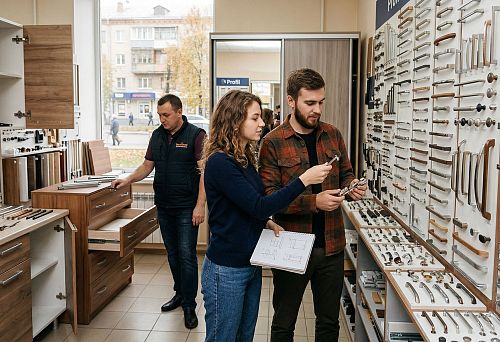
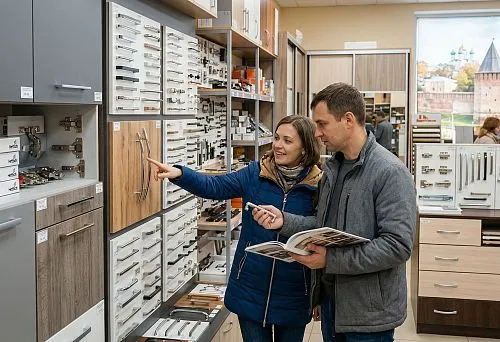
Hardware is presented as jewelry work. Austrian guides with soft-close systems, Italian hinges with lifetime warranty, exclusive handles made of noble metals — technical superiority becomes a sales argument.
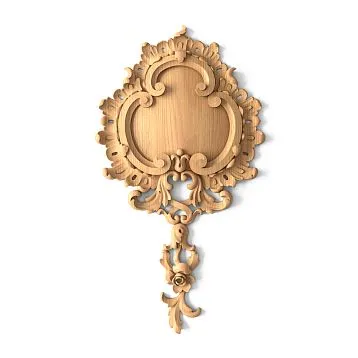
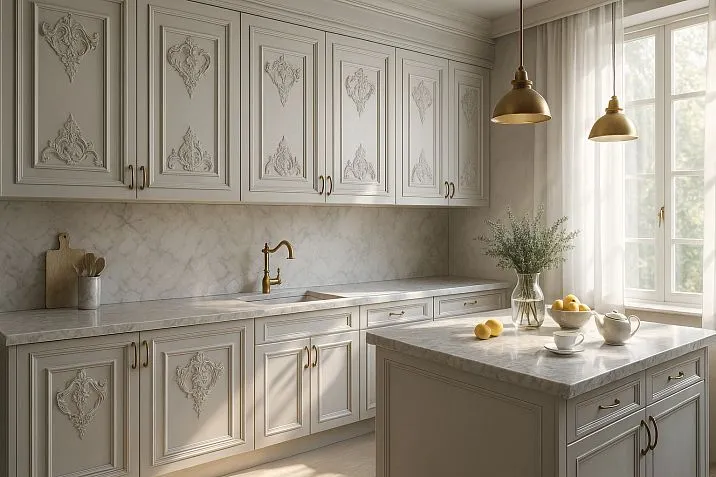
Finishing and decoration draw attention to craftsmanship.where to buy moldings for decorationPremium-level — a question resolved through demonstrating exclusive collections with handcrafted details.
Luxury Kitchens: The Heart of a Prestigious Home
Premium kitchens are a special segment where functionality must combine with flawless aesthetics and status.
Ergonomics is presented as the science of the ideal kitchen. Every distance is calculated, every movement is optimized, every detail serves user convenience. This is not just furniture — it is a tool for creating culinary masterpieces.
Materials are selected on the principle of "the best of the best." Natural stone for countertops, solid exotic wood for facades, exclusive hardware — each element justifies the high cost.
Technology integration transforms the kitchen into a smart space. Built-in ventilation systems, touch control panels, automatic opening mechanisms — technological solutions become part of the premium offering.
Pricing psychology in the premium segment
The anchoring effect in price presentation
Correct price presentation can significantly influence the perception of the value of the offering.
Start your presentation with the most expensive models. This creates a price anchor, making less expensive options appear more accessible while maintaining the perception of premium quality.
Compare with similar products, not with budget alternatives. Show how your offering at one million differs from competitors' at 1.5 million, not from mass-market options at 300,000.
Break down the cost into components. Instead of "sofa for 500,000," say "Italian leather — 200,000, exclusive hardware — 150,000, handcrafted by master artisans — 100,000, design and development — 50,000." Such detail helps understand the justification of the price.
Techniques for justifying high pricing
Long-term savings work even in the premium segment. Furniture costing one million rubles, lasting 30 years, is cheaper than a series of budget replacements every 5-7 years.
Uniqueness and exclusivity justify any markup. Limited editions, original designs, personalized modifications — factors that make high pricing not just acceptable, but logical.
Investment component is relevant for antique and designer furniture. Works by renowned masters or rare pieces may appreciate in value, turning the purchase into an investment.
Creating a premium service system
Personalizing the customer experience
In the premium segment, standard service is unacceptable. Every client must feel special from the very first moment of contact.
A personal manager accompanies the client through all stages — from initial consultation to after-sales service. This creates a sense of exclusivity and guarantees a high level of service.
An individual work schedule adapts to the client’s availability. Consultations outside regular hours, home visits, special presentations — flexibility that is valued in the premium segment.
Exclusive services are not available to mass-market clients. Personal designers, decorator services,where to buy moldingsexclusive collections — offerings that underscore the buyer’s status.
VIP programs and privileges
Premium segment clients must receive special privileges that support their loyalty.
Club programs create a sense of belonging to an elite community. Exclusive product presentations, special events, exclusive offers — tools for retaining clients.
Priority service is evident in all aspects of interaction. Priority production of orders, priority delivery, urgent warranty service — privileges valued more than money.
Personal discounts are not given as concessions, but as signs of special attention. Discounts on subsequent purchases, special pricing on related services, complimentary services — ways to maintain relationships.
Marketing strategies for premium positioning
Exclusive promotional channels
Premium furniture requires special promotional channels that match the status of the target audience.
Specialized design exhibitions and showrooms create the right environment for presenting premium products. Participation in prestigious furniture exhibitions, design weeks, exclusive showcases builds brand image.
Partnership with interior designers opens access to high-level projects. Architecture firms working with luxury real estate become sources of quality clients.
Referral marketing works especially effectively in the premium segment. A satisfied client can bring an entire network of contacts from their social circle.
Content strategy for the premium segment
Content for the premium audience must differ in depth and expertise.
Educational materials increase brand expertise. Articles about how,sell furniture at a premium, stories of creating exclusive collections, guides on choosing premium materials — content that is valued by the target audience.
High-quality visual content is a mandatory requirement. Professional photography, video presentations, virtual tours must match the level of the presented product.
Success stories and case studies of completed projects demonstrate the brand's capabilities. Photos of finished interiors, reviews from satisfied clients, stories of creating unique items — content that sells better than any advertising.
Managing a premium furniture business
Selection and training of staff to work with VIP clients
Staff at a premium showroom must match the level of the presented product.
Professional competence includes not only knowledge of the product, but also understanding of design trends, characteristics of different interior styles, and psychology of premium clients.
Service culture is formed through systematic training. Etiquette for communicating with VIP clients, techniques for presenting expensive products, handling objections from high-budget audiences — skills requiring special preparation.
Motivational programs should stimulate not only sales volume but also service quality. Bonuses for positive client reviews, awards for long-term relationships, profit-sharing — tools to motivate the professional team.
Quality control systems and service standards
Premium business does not allow for accidents or oversights.
Quality standards must be fixed and strictly observed. Response time to requests, quality of presentation materials, level of after-sales service — each aspect is regulated.
Feedback systems allow timely identification and resolution of problems. Regular client surveys, analysis of complaints, monitoring of online reputation — tools for controlling service quality.
Continuous process improvement is the key to maintaining competitive positions. Analysis of best practices, implementing innovations in service, training staff on new standards — elements of the quality management system.
Technology in premium furniture sales
Digital tools for VIP clients
Technology should serve to create an exclusive experience, not replace personal communication.
Augmented reality allows the client to see how furniture will look in their interior. Professional AR applications with high-quality visualization create a wow effect and increase confidence in purchase.
3D room modeling helps create an ideal design project. Detailed work on each interior element, ability to experiment with different options — technologies valued by premium clients.
Personal mobile apps for loyal clients create additional value. Access to exclusive collections, personalized offers, purchase history — features highlighting VIP client status.
Process automation without loss of personalization
Technology should free up staff time for working with clients, not replace human communication.
High-level CRM systems accumulate all client information — from style preferences to purchase history. This allows every company employee to provide personalized service.
Automated notification systems inform clients about order readiness, new arrivals, and special offers. But all communications should appear as personal messages.
Analytics systems help identify trends and client preferences. Understanding which products are in demand and which services are most valued allows optimizing the offering.
Regional Characteristics of the Premium Market
Moscow Premium Segment: Features and Opportunities
Moscow concentrates the majority of the Russian premium furniture market.
The high density of affluent clients creates a competitive environment, but also opens up significant opportunities. It is important to find your niche and clearly position your differentiation from competitors.
Features of the Moscow client — high service requirements, intolerance to delays, expectation of personalized service. Service standards must meet international levels.
The logistical capabilities of the capital allow for implementing complex projects in short timeframes. Fast delivery, professional assembly, prompt issue resolution — competitive advantages of the Moscow market.
Regional Centers: Development Potential
Major regional centers demonstrate growing demand for premium furniture.
Saint Petersburg, Yekaterinburg, Novosibirsk, Krasnodar form significant segments of affluent clients. Less competition compared to Moscow creates opportunities for growth.
Regional specificity requires adapting approaches. Local preferences in styles, climatic conditions, cultural traditions — factors that must be considered in positioning.
Logistical challenges of regional markets require special solutions. Organization of delivery, service support, staff training — aspects requiring additional investment.
Trends in the Premium Furniture Market
Ecological Value as Premium
Modern affluent buyers are increasingly paying attention to the ecological aspects of products.
Certified materials are no longer just an option, but a mandatory requirement. FSC-certified wood, eco-friendly lacquers and adhesives, recycled materials — factors influencing the choice.
Production carbon footprint is considered by ecologically conscious buyers. Local production, minimizing transportation costs, using renewable energy — aspects that can become competitive advantages.
Waste management and recycling programs create additional value for environmentally responsible clients. Take-back programs, restoration of antique items, upcycling — directions opening new opportunities.
Technological Integration in Premium Furniture
Smart technologies are penetrating the furniture industry, creating new product categories.
Built-in electronics transform furniture into high-tech devices. Wireless charging in tables, voice-controlled lighting systems, climate control in cabinets — technologies justifying premium pricing.
Integration with smart home systems creates additional value. Furniture interacting with the overall home automation system — a trend that will gain momentum.
Personalization through technology opens new opportunities for the premium segment. Furniture adapting to individual user needs — the future of the premium market.
Conclusion
The art ofsell furniture at a premiumIt lies in the ability to create and present value that significantly exceeds the product's functional characteristics. It is the art of working with emotions, status, dreams, and aspirations of buyers.
Successful work in the premium segment requires fundamentally different thinking compared to mass sales. Here, it is not turnover speed, but depth of relationships with each client. Not sales volume, but service quality. Not process standardization, but individualization of every interaction.
Modern technologies open new opportunities for creating a unique customer experience, but do not replace the human factor. In the premium segment, people buy from people, trust professionals, value expertise and attention to detail.
Where to buy wooden wall decor planksPremium level is not just about the product, but about finding a partner in creating an exclusive interior. Each decorative element must correspond to the overall concept of premium quality and exclusivity.
The future of the premium furniture market belongs to those who can seamlessly combine traditional craftsmanship with innovative technologies, mass efficiency with individualized approaches, commercial success with social responsibility.
STAVROS embodies the philosophy of premium quality in every aspect of its activity. Our approach is based on a deep understanding that affluent clients invest not just in furniture, but in quality of life, status, and the opportunity to surround themselves with beauty.
We create not just interior items, but works of art that serve for generations. Every STAVROS product carries a piece of the masters' soul, traditions of quality, and a pursuit of perfection. This allows us not just to sell furniture at a premium, but to build long-term relationships with clients based on mutual respect and trust.
Frequently asked questions
Why Premium Furniture Costs Much More Than Ordinary Furniture?
The high cost of premium furniture is due to several factors: use of exclusive materials (solid wood of valuable species, top-grain natural leather, designer fabrics), handcrafted work by highly skilled artisans, unique design, limited production, extended warranties, and premium service. The client pays not only for functionality but also for status, exclusivity, and longevity.
How to justify to the client the need to pay more for expensive furniture?
Focus on the long-term value of the investment. Premium furniture serves for decades, maintaining its original appearance and functionality. Break down the cost over its lifespan — a $500,000 sofa lasting 25 years costs $55 per day. Emphasize exclusivity, status, and the possibility of passing it down as a family heirloom.
What mistakes are most commonly made when selling expensive furniture?
Main mistakes: attempting to "push" the sale using aggressive techniques; comparing with budget alternatives instead of showcasing uniqueness; insufficient consultant expertise; neglecting service details; standardized service instead of personalized approach; inability to create an atmosphere of exclusivity and prestige.
Should discounts be offered on premium furniture?
Direct discounts may devalue the perception of the product's premium quality. Better to use other tools: complimentary services (free design project), upgrades (material improvements without extra cost), exclusive privileges (priority service), trade-in programs. If a discount is necessary, present it as an exclusive offer for VIP clients or as an investment in long-term relationships.
How to work with clients who want to haggle?
In the premium segment, haggling is viewed negatively. Shift the focus from price to value: explain in detail what constitutes the cost, demonstrate unique advantages, offer additional options. If the client insists on lowering the price, propose alternatives: changing the configuration, materials, or production timeline.
What technologies are most effective for selling expensive furniture?
Key technologies: AR visualization for "trying out" furniture in the client's interior; 3D configurators for creating personalized solutions; VR tours of the production facility to demonstrate manufacturing quality; professional CRM for managing relationships with VIP clients; process automation systems without losing a personalized approach. It is important that technologies complement, rather than replace, human interaction in the premium segment.