





























































Article Contents:
- Before picking up a drill: what you need to understand about slatted panel construction
- Types of slatted panel constructions: three fundamental schemes
- Type A: Panel on MDF base, flush against the wall
- Type B: Panel on wooden batten framework
- Type C: Modular slatted panel
- Tools for installing slatted panels: complete list
- Wall preparation: the stage you cannot skip
- Wall diagnostics
- Priming
- Marking
- Methods for attaching the load-bearing base to the wall: four methods
- Method 1: Through-wall screw anchor (mechanical)
- Method 2: Mounting adhesive + perimeter anchors
- Method 3: Wooden batten framework
- Method 4: Metal profile PN/PS 60×27 mm
- How to attach slatted panels to the wall: methods for fixing slats
- Method 1: D3 PVA adhesive + painter's tape (for MDF slats on MDF base)
- Method 2: Finish nails at an angle (toenailing)
- Method 3: Hidden stainless steel clips
- Method 4: Countersunk screw + wooden plug
- Method 5: Mounting adhesive "liquid nails" (for lightweight PVC and thin MDF battens)
- Installing batten panels yourself: complete step-by-step instructions
- Step 1. Material acclimatization
- Step 2. Wall preparation
- Step 3. Marking
- Step 4. Mounting the support system
- Step 5. Mounting the starter strip
- Step 6. Installing the first batten
- Step 7. Installing subsequent battens
- Step 8. Trimming edge battens
- Step 9. Finishing strip
- Step 10. Final finishing
- Mounting features for different room types
- Living Room: Accent Wall
- Hallway: humidity and mechanical load
- Kitchen: dining table area
- Bathroom: extreme humidity
- Ceiling
- Mounting slatted panels from different materials: method table
- Typical mistakes when installing slatted panels: learn from others' experience
- Wall finishing with slatted panels: decorative completion nuances
- DIY slatted panels vs professional installation: when to choose what
- FAQ: Most Common Questions About Installing Slatted Panels
- About the Company STAVROS

The question 'how to attach slatted panels to a wall' is one of the most popular queries among those undertaking a modern renovation. And this is no surprise: a slatted wall today is not a privilege of expensive design studios, but a quite achievable result for anyone willing to approach the matter thoroughly. The word 'thoroughly' is key here. Because the difference between a slatted wall that will last twenty years and look as if it was done by a professional, and one that will start warping in six months, is not a difference in money, but in knowledge of the technology.
This article is a complete, practically oriented guide. There is no fluff or general phrases here. Only specifics: tools, fastening methods, step-by-step sequence, error analysis, and technical parameters for each type of material. Read carefully — and your slatted wall will turn out exactly as you envisioned it.
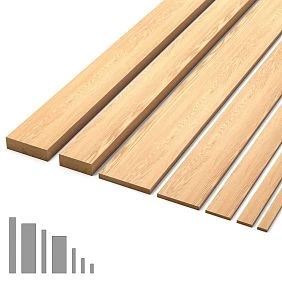
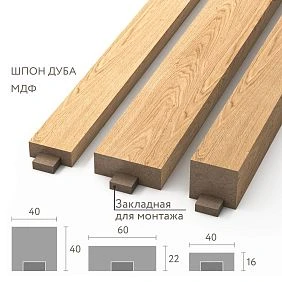
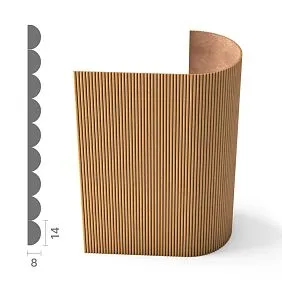
Before picking up a drill: what you need to understand about the structure of a slatted panel
Most installation mistakesslatted wall panelsare made even before picking up a tool. The reason is a lack of understanding of what exactly is being attached to the wall and how the structure is arranged internally.
A slatted panel is a system consisting of two levels. First level: the load-bearing base — a sheet of MDF, plywood, or a frame of battens/metal profiles, which is attached directly to the wall and creates a flat supporting plane. Second level: the slats themselves — decorative elements that are fixed to the load-bearing base with a specified gap.
Understanding this two-level logic immediately answers many questions. The wall may be uneven — the load-bearing base compensates for this. The slats may have different weights — the load-bearing base distributes the load evenly. The slats can be replaced without dismantling the entire structure — if the load-bearing base is preserved.
Exactly thereforeinstallation of slatted panelsis not 'nailing slats to a wall,' but creating an architectural structure with a clear hierarchy of elements.



Types of slatted panel structures: three fundamental schemes
Before answering the question of how to attach slatted panels to a wall, you need to determine the type of construction. There are three types—and each has its own technology.
Our factory also produces:



Type A: Panel on an MDF base, flush against the wall
The MDF base (8–12 mm thick) is attached directly to the wall. The slats are factory-glued to the base or are glued and nailed during installation. The entire structure protrudes 20–35 mm from the wall (base thickness + slat height).
Advantages: minimal space consumption, quick installation, simple layout. Limitations: requires a sufficiently flat wall—a deviation of more than 5–7 mm per linear meter causes issues with base adhesion.
Get Consultation
Type B: Panel on a wooden batten frame
Vertical or horizontal 40×50 mm battens are attached to the wall with a spacing of 400–600 mm. Slats are attached to the frame via a load-bearing base or directly. Ventilation gap between the wall and the structure—40–60 mm.
Advantages: allows for leveling significant wall irregularities (up to 30–50 mm); creates a ventilation gap, critical for exterior walls and wet rooms; possibility of running utilities behind the structure. Limitations: consumes more space, requires precise leveling of the frame.
Type C: Modular slatted panel
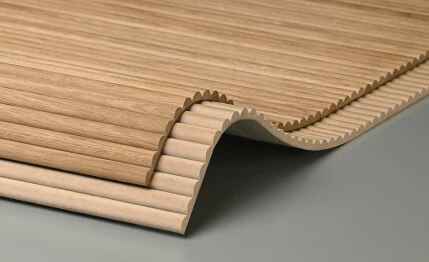
slatted modular wall panel— a factory module with slats already assembled on a load-bearing base. Installed as a single block of a given size (standard formats: 600×2400 mm, 600×2700 mm, 600×2800 mm). Mounting—to a frame or to a flat wall with adhesive and perimeter anchor fixation.
Advantages: installation speed 2–3 times faster than piece-by-piece; perfect factory precision of gaps between slats; simplified logistics. Application: commercial projects with large areas, apartments with non-standard ceiling heights.
Tools for Installing Slat Panels: Complete List
Professional installation is, first and foremost, about having the right tools. No matter how much you want it, you won't get a perfectly straight wall without a laser level. Without a miter saw, you won't achieve a clean, chip-free cut. Here is the complete list of what you'll need.
Essential tools:
-
Laser level (self-leveling, 360°) – for aligning the battens and the supporting base
-
Miter saw or hand saw with a 90° square – for precise cross-cutting of slats
-
Drill/driver with a set of bits for concrete, wood, metal
-
5-meter tape measure, construction pencil
-
3M 2090 painter's tape or equivalent – for securing slats during gluing
-
Caulking gun (for adhesive sealant and liquid nails)
-
Hammer, nail set (for finish nails)
-
Spacing template – a piece of slat equal in width to the gap, for maintaining equal spacing between slats without constant measuring
Recommended tools:
-
Finish nail gun - speeds up installation by 3-4 times
-
Router with groove cutter - for cutting grooves for clips in the side edge of the slat
-
Electric planer - for adjusting slat thickness with minor batch variations
-
Angle grinder with 125 mm disc - for trimming metal profile battens
Wall preparation: a step that cannot be skipped
Any experienced craftsman will say: installation doesn't start with the first slat, but with assessing and preparing the wall. This is where 70% of the final quality is determined.
Wall diagnostics
Assess the wall by three parameters:
Flatness: apply a long 2.0 m straightedge or stretch a string. Allowable deviation for MDF substrate installation is no more than 5 mm over 2 m. For batten installation - no flatness restrictions.
Surface condition: presence of crumbling plaster, peeling paint, mold and mildew traces. All unstable material must be removed. Mold must be treated with antiseptic with 24-48 hour exposure before applying primer.
Base type: concrete, brick, drywall, foam and aerated concrete blocks. The base type determines the choice of anchor and screw length.
Priming
After cleaning — prime the wall with a penetrating primer. For concrete and cement bases — deep penetration primer (Knauf Tiefengrund or equivalent). For drywall — specialized drywall primer. Drying time — 2–4 hours.
Priming is not a formality. It strengthens the surface, reduces moisture absorption, and ensures reliable adhesion of the mounting adhesive to the base when using the adhesive mounting method.
Marking
Marking — the most intellectual stage of installation. Here it is determined:
-
The lower horizontal line of the structure (along the top edge of the baseboard or from the finished floor)
-
The upper horizontal line (to the ceiling, cornice, or molding)
-
The vertical outer boundaries of the panel
-
The position of the vertical battens or supporting base
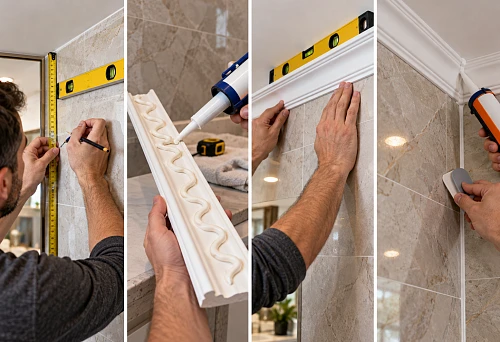
A laser level is indispensable. Lines drawn with a pencil along the laser beam create a reference grid that prevents misalignment. Checking for squareness: diagonals must be equal with an accuracy of ±2 mm.
Methods for attaching the supporting base to the wall: four methods
Method 1: Through-wall screw anchor (mechanical)
The most reliable and universal method. Algorithm:
-
Drill 6 mm diameter holes in the MDF base or plywood sheet with 400–500 mm spacing around the perimeter + 1–2 points in the center per linear meter
-
Countersink holes for screw countersunk head
-
Place base against wall, transfer points through holes to wall (center punch or long drill bit)
-
Set aside base, drill holes in wall for anchor: for concrete/brick — hammer drill, 8 mm concrete drill bit, 60 mm depth; for drywall — 8×40 mm butterfly anchor
-
Insert anchors, place base, screw in 4×60 mm screws — until tight fit, but don't over-tighten MDF
Screw heads sink 1–2 mm below MDF surface — will later be covered by battens or filled with putty
Method 2: Mounting adhesive + perimeter anchors
Combined method for flat walls:
-
Apply mounting adhesive (Moment Montazh, Tytan Fix or equivalent) to the back surface of the MDF base in zigzag strips with a spacing of 150–200 mm
-
Place the base against the wall, align it with the markings
-
Press firmly for 30–60 seconds, secure with painter's tape if necessary
-
Additionally secure with 4–6 dowels around the perimeter (control fastening)
-
The adhesive reaches full strength in 24 hours
The adhesive ensures uniform adhesion across the entire area — eliminates "drumming" when tapped. This is especially important forslatted panels in the interior, where a cavity is hidden behind each slat: without full adhesion of the base, the sound from an accidental impact is hollow and unpleasant.
Method 3: Wooden batten framework
For walls with level differences exceeding 7 mm or when a ventilation gap is required:
-
Mark vertical lines for the framework on the wall with a spacing of 400–600 mm (for horizontal slats — horizontal lines with the same spacing)
-
Drill holes for dowels along vertical lines with a spacing of 400–500 mm
-
Set the first batten precisely according to the laser level (vertical or horizontal), secure with 6×80–100 mm dowel screws
-
Set the remaining battens in the same plane as the first — check by stretching a cord between the outermost ones or applying a straightedge across
-
Plywood shims under the batten compensate for local wall depressions
Batten — only antiseptic-treated. Especially critical for high-humidity areas: hallways, bathrooms, country houses.
Method 4: Metal profile PN/PS 60×27 mm
For commercial facilities, wet areas, and projects with high requirements for flatness and durability:
-
Along the markings, fix the PN-profile (guide) around the perimeter — horizontally along the floor and ceiling, vertically along the outer posts
-
Insert the PS-profile (stud) into the guides with a spacing of 400–600 mm
-
Align the studs in a single plane, secure to the wall with vernier hangers at 600 mm spacing
-
Connect the PS-profile to the PN with 3.5×9 mm metal self-tapping screws (bugle-head screws)
Metal frame — maximum surface flatness, complete independence from wall curvature, minimal susceptibility to deformation due to humidity changes
How to attach slatted panels to the wall: methods for fixing slats
Now we've reached the purpose of this whole endeavor. The load-bearing base is installed and leveled. Next — the slats. And here, professionals have several working methods. Each with its own advantages, limitations, and area of application.
Method 1: D3 PVA glue + painter's tape (for MDF slats on an MDF base)
This is the classic factory method for assembling panels on a horizontal surface — a workbench or floor — with subsequent installation of the finished panel on the wall.
Step-by-step technology:
-
Place the MDF base face up on a flat horizontal surface
-
Mark the axial lines of each slat with a pencil — guides for precise positioning
-
Prepare a spacer template: a piece of slat with a width equal to the required gap
-
Apply PVA D3 in a thin, even layer to the back surface of the first batten — with a brush along the entire length
-
Place the batten on the base according to the markings, press evenly along the entire length for 30–60 seconds
-
Secure with painter's tape across the batten at 200–250 mm intervals — the tape holds the batten until dry
-
Place the spacing template against the first batten, install the second one. Repeat
-
After gluing all battens — leave the panel horizontally for 24 hours
PVA D3 is a waterproof polyvinyl acetate. Important: specifically D3, not ordinary stationery PVA. D3 provides a joint resistant to periodic moisture and temperature fluctuations.
Method 2: Finish nails at an angle (toenailing)
Hidden mechanical fastening for wooden battens directly onto the lathing or load-bearing base.
A finish nail 1.2×40 mm or 1.4×50 mm is driven through the side edge of the batten into the load-bearing surface at a 45–60° angle. The head is countersunk with a nail set below the batten surface — the hole is filled with wood filler or a wax pencil to match the tone.
Technology:
-
Install the batten according to the markings, maintain the gap with the spacing template
-
Secure with a temporary clamp or painter's tape
-
Mark the nail entry point on the side edge of the batten with a punch
-
Drive the nail with a hammer at an angle—first two strikes carefully, without shifting the batten
-
Sink the head with a nail set
-
Nail spacing: 400–500 mm along the length of the batten
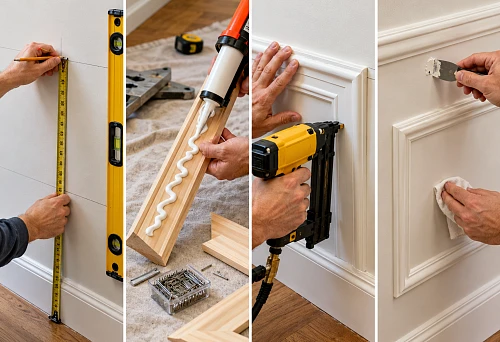
A brad nailer with 1.2×40 mm finish nails is a professional tool that speeds up this process by 3–4 times. For volumes from 15–20 m², renting or buying is definitely justified.
Method 3: Hidden stainless steel clips
The most elegant and technologically advanced method for fixing wooden battens. A clip is a spring metal clamp inserted into a groove on the side edge of the batten and secured with a screw to the load-bearing surface.
Requirements: battens must have a milled groove on the side edge (depth 4 mm, width 3 mm)—either factory-made or created on-site with a router.
Technology:
-
Install the first batten against the starter strip, align it
-
Insert the clip into the groove on the inner (facing the next slat) side edge
-
Secure the clip with a 3×16 mm screw to the supporting base — do not overtighten the screw, the clip should remain springy
-
Place the next slat — the clip's spring tongue enters the groove of the second slat, securing it
-
Maintain the gap using a template, secure with the next clip on the other side
Advantage of the clip: completely hidden fastening (front surface — without a single hole) + ability to remove individual slats without damaging the structure. This is valuable when replacing a damaged slat or running utilities behind the panel.
Method 4: Countersunk head screw + wooden plug
Exposed mechanical fastening — for rustic, loft, or country style, where fastening points are part of the aesthetic.
Screw 3.5×40–50 mm through the front surface of the slat at a right angle into the supporting base. The hole for the head is countersunk. After fastening — a wooden plug made of the same material, glued with PVA, is cut flush with a chisel.
Forwooden slat panelsSolid wood in rustic style — plugs made of the same species matching the slats are almost invisible.
Method 5: Mounting adhesive "liquid nails" (for lightweight PVC and thin MDF slats)
For lightweight decorative battens weighing up to 1.5–2 kg/m — polyurethane or acrylic-based mounting adhesive (Moment Montazh, Tytan Fix, Soudal) without additional mechanical fasteners.
Condition: the wall must be level (deviation no more than 3 mm/m²), dry, and primed.
Adhesive is applied to the back surface of the batten in dots or short strips every 200–300 mm. The batten is placed against the surface, pressed for 30–60 seconds, and if necessary, held with painter's tape until it sets. Full load can be applied after 24 hours.
Do not use the adhesive method for heavy solid wood battens 18 mm thick or more — risk of detachment under vibrational loads.
Installing batten panels yourself: complete step-by-step guide
Putting it all together. Step-by-step technologyinstallation of slatted panelsfor DIY installation.
Step 1. Material acclimatization
This is a mandatory zero step that most people ignore — and then wonder why the battens warp.
-
MDF panels: unpacked, in vertical or horizontal position — 48–72 hours in the installation room
-
Solid wood battens: horizontally laid with spacers — 5–7 days at 18–22°C and room humidity
During this time, the material reaches equilibrium moisture content with the room's microclimate and will no longer change geometry after installation.
Step 2. Wall preparation
-
Remove unstable elements (crumbling plaster, peeling paint)
-
If mold is present — apply antiseptic, exposure 24 hours
-
Priming with penetrating primer, drying 2–4 hours
Step 3. Marking
-
Use a laser level to mark the horizontal line of the bottom edge of the structure (or the top edge of the baseboard)
-
Mark the horizontal line of the top edge
-
Mark the vertical outer boundaries
-
For the battens: mark lines for vertical battens/studs with a spacing of 400–600 mm
Step 4. Installation of the load-bearing system
Select a method (battens, MDF base, metal profile) according to the wall condition and room type. Check for a single plane with a laser level. Secure with dowels.
Step 5. Installation of the starter strip
The starter strip — an L-shaped or T-shaped profile made of MDF or aluminum — is fixed along the bottom edge of the structure (or along the vertical edge) strictly level. This is the 'zero point' from which the slats will start. If the starter strip is crooked — all slats will be crooked.
Step 6. Installation of the first slat
The first slat is the most critical. Align it strictly vertically (if the slats are vertical) or horizontally, press it against the starter strip, and secure it using the chosen method (cleat, finishing nail, adhesive).
Check the vertical (or horizontal) with a level — twice. Before proceeding further.
Step 7. Installation of subsequent slats
A spacer template (a piece of slat of the required width) is placed against the already fixed slat, the next slat is applied to the template — the gap is automatically maintained.
Periodically (every 5–7 battens) check the vertical alignment with a level. Wooden battens may shift sideways by millimeters during installation — correct on the go before a critical misalignment accumulates.
Step 8. Trimming the edge battens
Edge battens typically require width trimming to fit the remaining space. Marking: measure the distance from the last full batten to the edge of the structure, subtract the gap. Cut with a miter saw or jigsaw — cleanly, without chips. Prime the cut and touch up to match the finish tone.
Step 9. Finishing trim
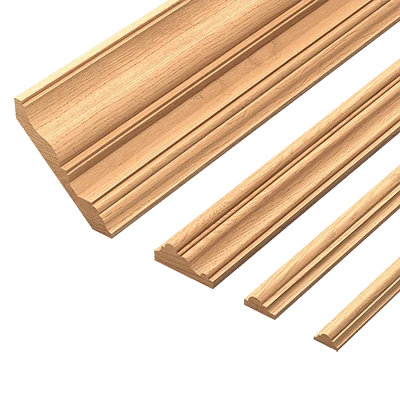
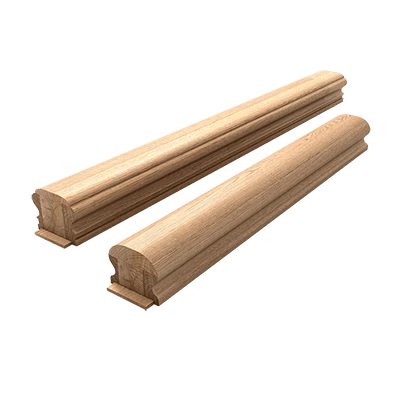
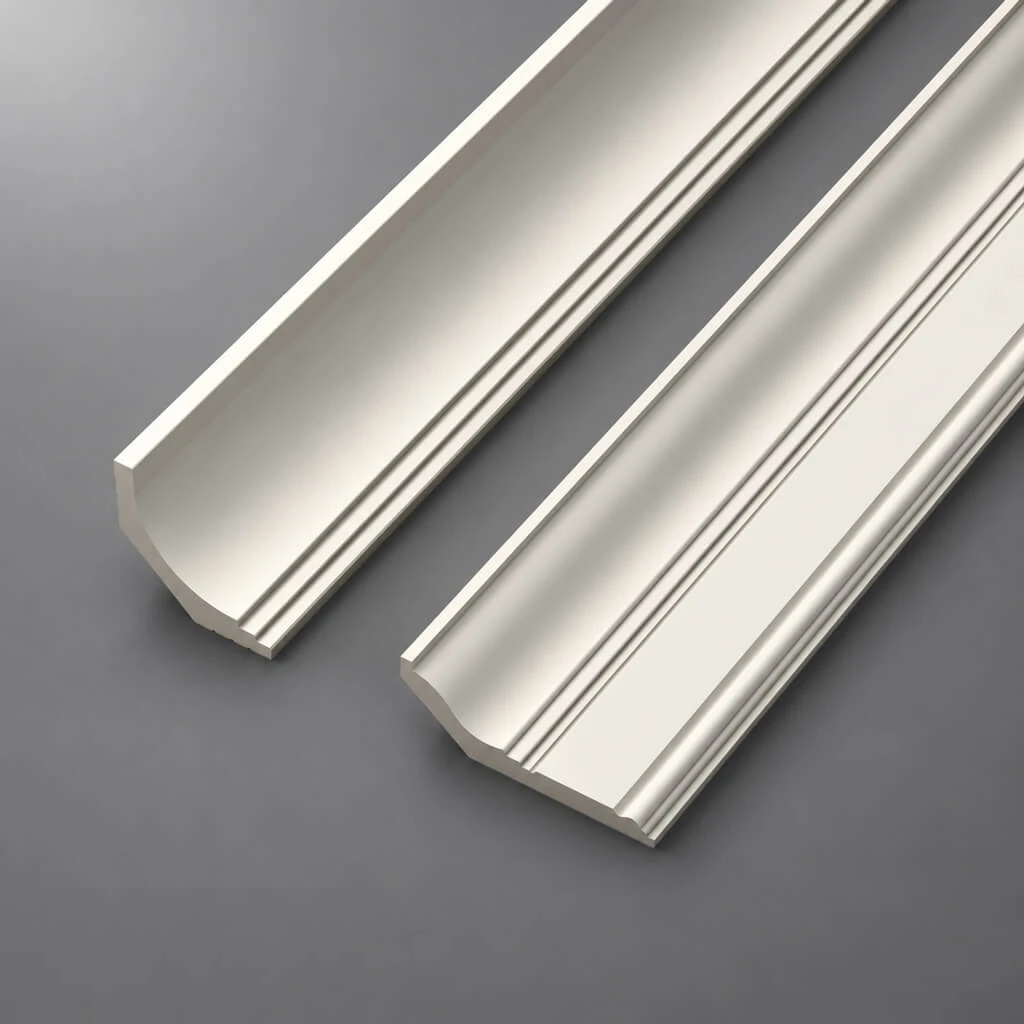
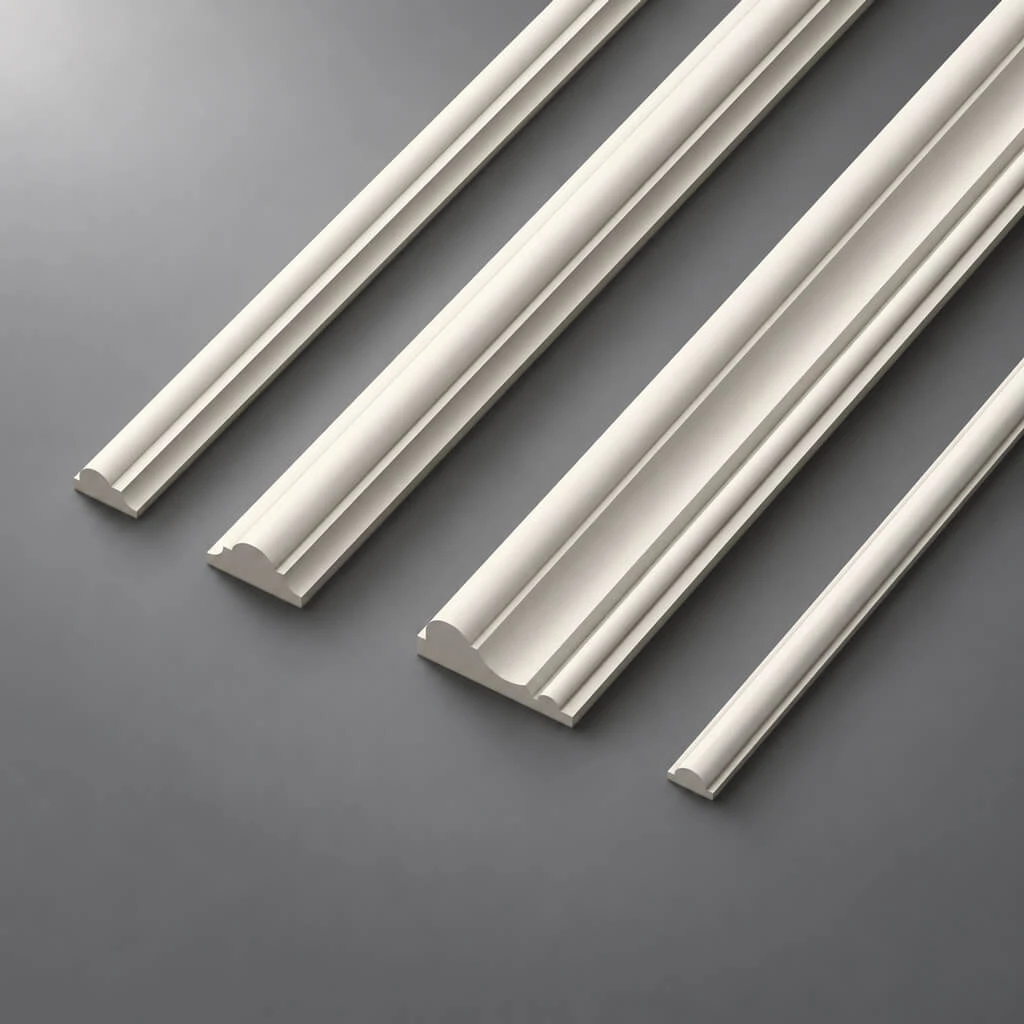
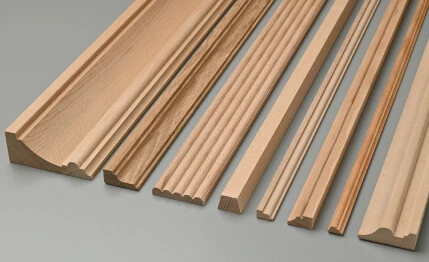
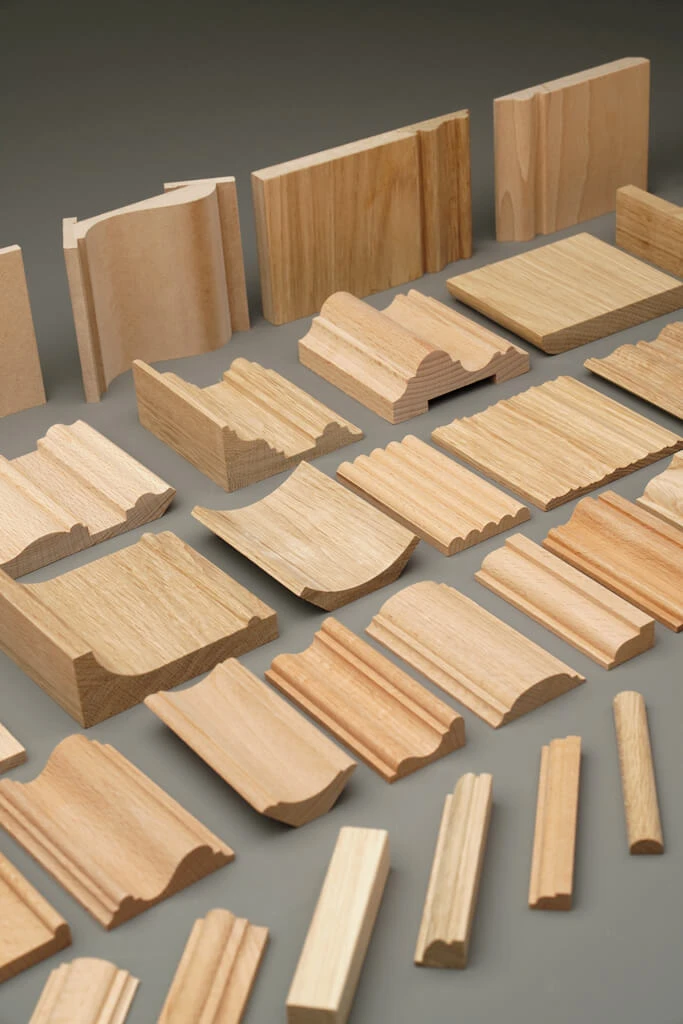
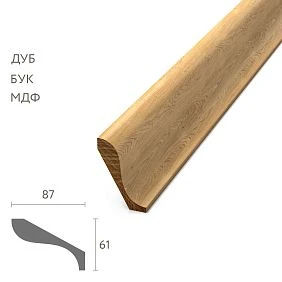
Along the top edge of the structure (or along the extreme vertical sides) — the finishing trim covers the end cut of the battens and the supporting base. Fromsolid wood trim: molding, ceiling skirting, cornice — matching the battens or in contrast.
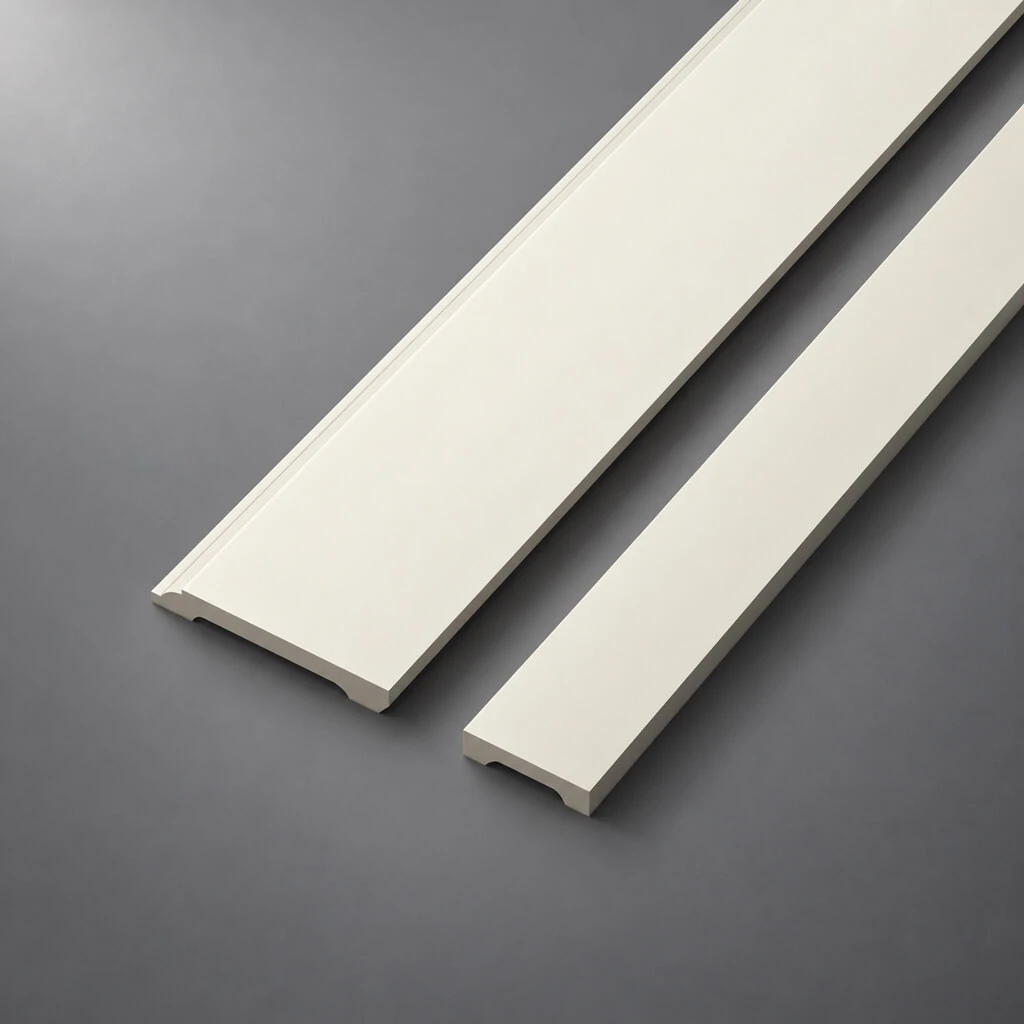
Floor skirting made from the same material as the battens — covers the bottom end of the structure and the gap between the bottom rail and the floor. For wooden batten walls — wooden skirting from the same wood species.
Step 10. Final finishing
Fill all recessed fastener points with putty. Treat the end cuts of the battens with wax or a touch-up pencil matching the finish color. Touch up damaged areas if necessary.
DIY slatted panelis ready. The result depends on precision, patience, and following the sequence — and nothing else.
Mounting features for different room types
Living room: accent wall
Slatted panels in interior designLiving room — typically, an accent wall behind the sofa or TV. Interior wall, normal load. Adhesive or adhesive-mechanical mounting of the substrate is allowed. For integrating LED lighting behind the slats — a 20–30 mm ventilation gap behind the load-bearing substrate is mandatory for heat dissipation.
Hallway: humidity and mechanical load
The hallway receives 'impacts' from outerwear, bags, shoes. Only mechanical fastening — dowel-screw. Load-bearing substrate — moisture-resistant MR MDF or moisture-resistant plywood. Slats — made of hardwood or moisture-resistant MDF with two-component varnish.
Kitchen: dining table area
Slatted panels in the kitchen— in the dining area, not in the backsplash zone (there — splashes, steam, grease). Standard installation, but fasteners — stainless steel, slat coating — two-component polyurethane or UV varnish with protection against grease stains.
Bathroom: extreme humidity
Forced ventilation — condition No. 1. Ventilation gap behind the structure — minimum 20 mm. Load-bearing substrate — metal profile (not wood, not MDF). Slats — only thermowood or WPC. All ends and joints — silicone-based sealant.
Ceiling
Batten panels for ceilings— a separate task. Load-bearing frame — metal profile on vernier hangers fixed to the ceiling with anchor dowels. The weight of the structure per anchor should not exceed 15–20 kg — when calculating loads, apply a double safety factor. For small panels up to 0.5 m² — mounting adhesive + 'umbrella' dowels into the ceiling.
Mounting slatted panels from different materials: table of methods
| Panel material | Weight (kg/m²) | Recommended fastening method | Additionally |
|---|---|---|---|
| MDF (slats on MDF base) | 8–14 | Screw anchor + adhesive | Countersinking for screws is mandatory |
| Wood (solid 16–20 mm) | 10–16 | Cleat or finishing nail | Expansion gap for expansion |
| Thin wood (12–14 mm) | 7–11 | Cleat or glue+dowels | Acclimatization 7 days |
| WPC (wood-polymer composite) | 12–18 | Cleat or screw with plug | Compensation 3 mm/m when heated |
| PVC (thin slats) | 3–6 | Glue + finishing nails | Only flat wall |
| Aluminum | 8–12 | Cleat or rivet | Dielectric spacer |
| Modular panel (MDF) | 10–16 | Screw anchor around the perimeter | Alignment of module seams |
Common mistakes when installing slatted panels: learn from others' experience
Mistakes when installing slatted panels are divided into two types: those that are visible immediately, and those that appear after 6–18 months. The latter are much more unpleasant.
Mistake 1: Skipped acclimatization.
Result 2–4 weeks after installation: solid wood slats warp, gaps become uneven, some slats are "pushed out" of the structure. Solution: only dismantling and reinstallation after proper acclimatization.
Error 2: Flatness of the supporting base not verified.
Result: waves on the surface of the slatted wall, visible under side lighting. Under evening light — unevenness is visible even with a difference of 1.5–2 mm. Solution: shims under the batten in recessed points, checking with a 2 m straightedge.
Mistake 3: Compensation gaps for wood were not observed.
Solid wood expands across the grain when humidity increases. Slats 80 mm wide without compensation, with a 5% increase in humidity, will push each other out or form a "hump." Solution: a compensation gap of 1.5–2 mm on each side of the slat (fills during expansion, does not become exposed during drying).
Error 4: First batten not installed level.
This error multiplies across the entire plane. A 2 mm deviation on the first batten becomes 10–12 mm by the last one. Solution: check the first batten twice before proceeding.
Error 5: Incorrect adhesive for MDF battens.
Regular PVA (not D3) or non-specific construction adhesive provides insufficient bond strength for MDF batten to MDF substrate. With periodic humidity changes, battens begin to 'lift'. Use only PVA D3 or two-component PU adhesive.
Error 6: Standard fasteners in the bathroom.
Galvanized screws and regular wooden blocks in the bathroom lead to complete fastener degradation and block darkening from mold within 3–5 years. Use only stainless steel fasteners, metal profiles, or antiseptic-treated blocks with multiple layers.
Error 7: MDF batten ends not sealed.
MDF end grain absorbs moisture much more actively than the face surface. Unsealed ends at the bottom of the structure are the starting point for degradation. Silicone sealant on ends at floor level is mandatory.
Wall finishing with batten panels: nuances of decorative completion
Wall finishing with slatted panelsis completed with several elements that transform 'nailed battens' into a finished interior product.
Floor skirting board. Solid wood skirting board with a height of 60–100 mm, matching the color of the slats — covers the bottom end of the structure and the gap at the floor. Mounting: finishing nails + adhesive, without visible screws.
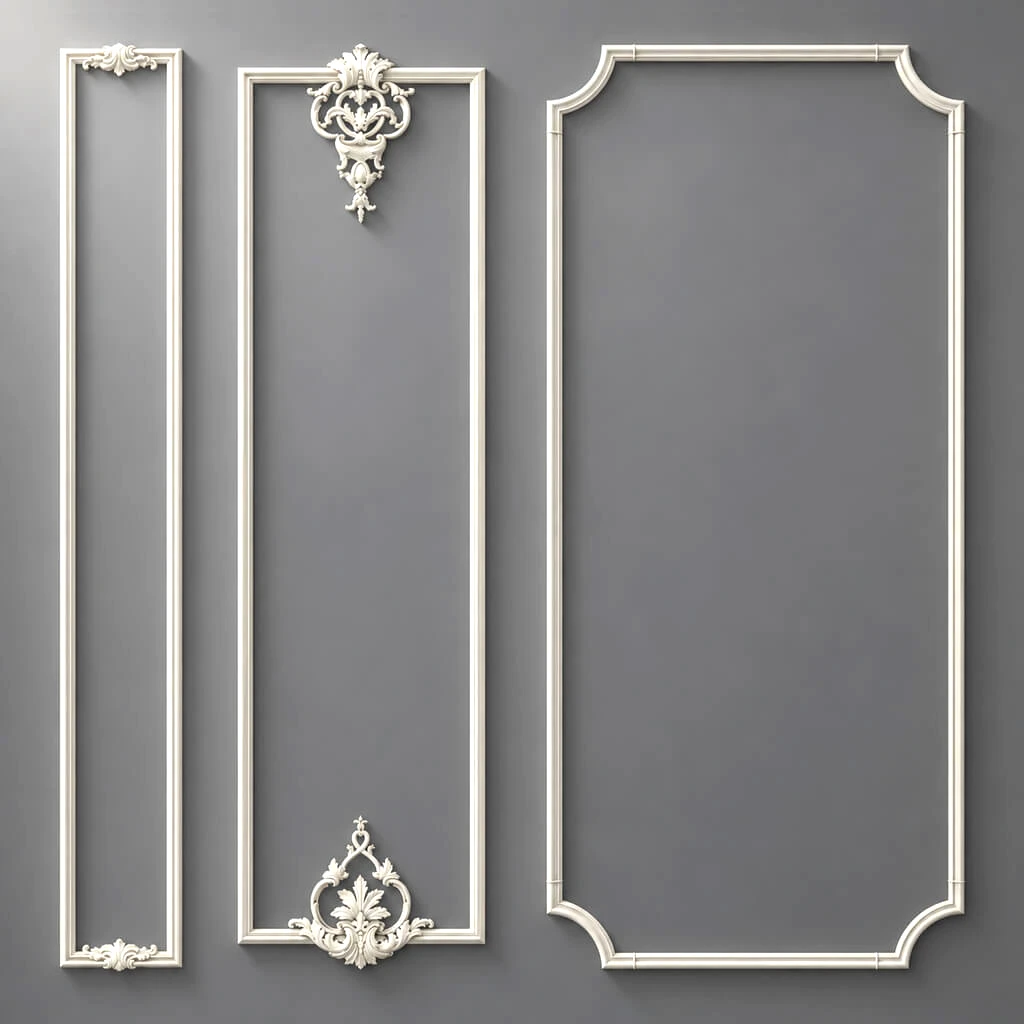
Molding or ceiling cornice. Made fromsolid wood trim— top framing of the structure. Covers the top end and the joint between the slatted wall and the ceiling. Profile: classic (rounded), modern (straight bevel), or straight (square).
End caps for edge slats. Cover the side cut of the edge slats and the supporting base. Made from the same material as the slats, width — according to the actual thickness of the structure's end.
Lighting. For integrating LED strips behind the slats: the strip is mounted on the supporting base before installing the slats in areas not covered by the slats. The wire is routed through a technical hole in the supporting base. Transformer — behind the structure or in a special niche.
Slatted panels DIY vs professional installation: when to choose what
| Parameter | DIY | Professional installation |
|---|---|---|
| Installation cost | 0 (tools only) | 1500–4000 rub./m² |
| Installation time for 10 m² | 2–3 days | 4–8 hours |
| Quality on first attempt | Average (learn as you go) | High |
| Warranty | No | 1–3 years |
| Complex solutions (arches, niches) | Difficult | No restrictions |
| Process control | Full | Indirect |
Optimal strategy: a simple accent wall of 8–12 m² in the living room can be installed independently after thoroughly studying the technology. Fullwall finishing with slatted panelsmultiple rooms, ceilings, bathrooms, commercial facilities — entrust to professionals.
FAQ: the most common questions about installing slatted panels
Do I need to plaster the wall before installing slatted panels?
When installing on a frame — no, plastering is not needed. The frame compensates for any unevenness. When installing MDF base directly against the wall — the permissible deviation is 5 mm/m². For greater deviation — either leveling plaster or a frame.
Can slatted panels be glued directly onto wallpaper?
No. Wallpaper is an unstable base: it may peel off along with the panels after a few months. The wallpaper must be removed, and the wall primed.
How to maintain an even gap between slats?
A spacer template — a piece of slat with a width equal to the desired gap. It is placed against the already fixed slat, and the new slat is applied to the template. Fast, precise, without constant measurements.
How to attach slatted panels to a drywall wall?
On drywall — only through the studs of the metal profile (with a spacing of no more than 400 mm for slatted structures). Butterfly anchors into the drywall body — only for lightweight decorative slats weighing up to 5 kg/m². For heavy wooden slats, access to the profile stud is mandatory.
Is a ventilation gap needed behind the slatted structure?
For interior walls under normal conditions — not mandatory. For exterior walls — mandatory (risk of condensation). For wet rooms (bathroom, hallway) — a minimum of 15–20 mm is mandatory. For structures with LED lighting — mandatory for heat dissipation.
How are MDF slatted panels for painting attached?
The same as regular ones — with a dowel-screw to a load-bearing base or on a batten. After installation: sanding joints with putty, priming, painting in 2 coats of matte acrylic paint.paintable slatted wall panelsThey require particularly thorough surface preparation before painting — matte paint mercilessly reveals all flaws.
What to do if one slat is damaged after installation?
With the adhesive method: heat with a construction hairdryer (softens the glue), carefully remove with a spatula, clean the base, glue a new slat. With the clip method: remove the slat by pulling 'toward yourself' — the clip will release. Replace the slat. This is precisely why craftsmen love clip installation.
How to calculate the number of slats?
Formula: Number of slats = wall width / (slat width + gap width). Result — number of slats for one full-height row. Multiply by the number of rows for horizontal layout or calculate linear meters for vertical layout. Add 10–15% for cutting and defects.
Can you installacoustic slat panelsindependently?
Yes. An acoustic panel differs from a regular one only by the presence of an absorbing layer (felt, acoustic foam) behind the slats. The base installation is identical. The absorbing layer is attached to the supporting base before installing the slats — with a stapler or foam adhesive.
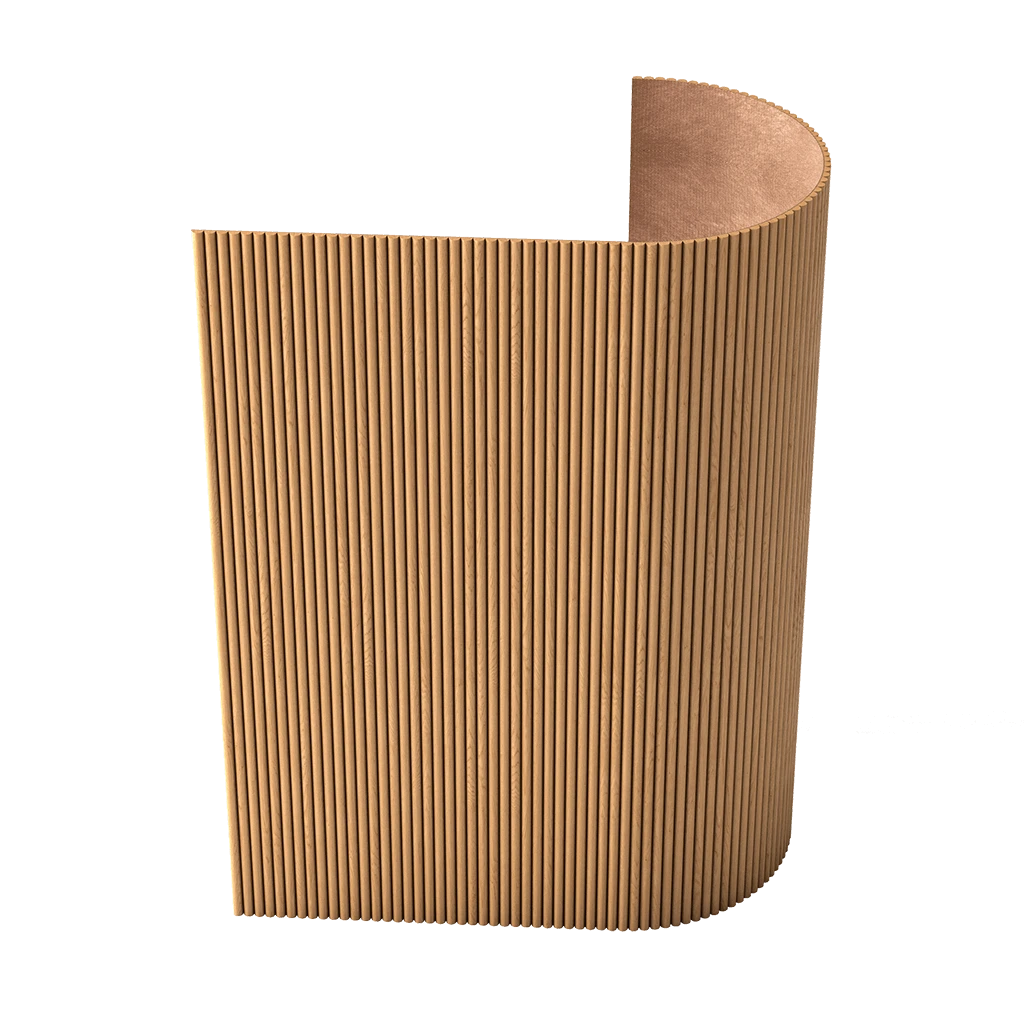
How to finishsoft slat panelson curved surfaces?
A flexible panel bends to the radius specified by the manufacturer (usually from 300 mm). Fastening: adhesive + finishing nails spaced 200–300 mm apart to hold the shape until the adhesive sets.
About the company STAVROS
Installation begins with the right material. If the panel is geometrically unstable, the slats are cut inaccurately, and the coating is applied haphazardly — no professional installation will yield a good result. That is why choosing the right supplier is critically important.
STAVROS is a Russian manufacturer of architectural wooden elements for interiors with a full production cycle. Own chamber drying, CNC processing, laboratory control of humidity and geometry. Each batch comes with documentation: declaration of conformity, emission class, technical specifications.
For your project in the STAVROS catalog:Slatted wall panelsmade of wood and MDF;slatted modular wall panelfor quick installation;soft slat panelsfor curved surfaces;Wooden slat panelsmade from oak and ash with oil finish;slatted MDF panelmoisture-resistant MR class;Slatted Façade Panelsfor exterior;Pogonazh iz massiva— moldings, cornices, baseboards for final framing;decorative slatted panelsfor DIY projects.
STAVROS supplies material with technical documentation and installation recommendations. Professional consultation on choosing the type of fastening, wood species, and coating — free of charge. Material you can trust. Installation worth doing once.