Article Contents:
- Oak as a premium-class material: physics and aesthetics
- Density and mechanical strength
- Dimensional stability: shrinkage coefficient
- Texture: aesthetics of contrasts
- Color Palette: From Gold to Chocolate
- Typology of oak skirting boards: profiles and styles
- Rectangular minimalist skirting boards 80-120 mm
- Figurative classic skirting boards 100-160 mm
- Tall architectural skirting boards 140-180 mm
- Skirting boards with metal inserts
- Interior oak batten: typology and application
- Standard battens 20×40 - 30×50 mm
- Thick architectural battens 40×60 - 50×70 mm
- Thin decorative battens 15×30 - 20×40 mm
- Figurative and sculptural battens
- Oak finishing treatment: protection and aesthetics
- Oil coating: naturalness and tactility
- Varnish Coating: Durability and Shine
- Coloring: color experiments
- Brushing and patination
- Company STAVROS: the quality standard for oak interior systems

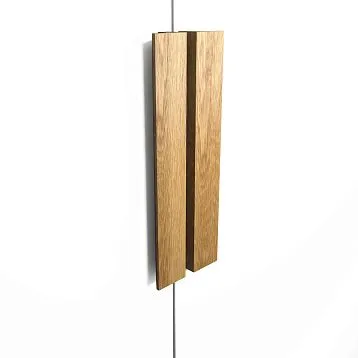
Why does oak remain the absolute standard of premium quality in wooden finishing, despite the abundance of alternative materials and species? The answer lies not in fashion or marketing, but in the unique combination of physical properties, aesthetic qualities, and cultural associations. Interior skirting board andInterior oak plank— these are not just finishing elements, but a long-term investment in the status of a space, its durability, and visual expressiveness. In 2026, when the market is oversaturated with imitations, composites, and budget solutions, natural oak becomes a marker of genuine quality, distinguishing a premium interior from a mass-market one. A density of 650-750 kg/m³ provides mechanical strength comparable to tropical species. An expressive texture with contrasting annual rings and medullary rays creates a visual depth unattainable for homogeneous materials. A service life of 80-120 years turns oak finishing into a family heritage that outlives generations. How to choose quality oak material? Which profiles are optimal for various styles? How does finishing treatment affect durability and aesthetics? We delve into the details of a professional approach to premium finishing.


Oak as a premium-class material: physics and aesthetics
Oak's dominance in premium finishing is no accident. It is the result of the evolutionary selection of a species that withstands extreme loads in nature — wind, snow, and temperature. The strongest survive, forming wood of exceptional density and stability.




Density and mechanical strength
The average density of European oak (Quercus robur) in a dry state is 690-720 kg/m³, which is 1.1-1.15 times higher than beech and 1.4-1.5 times higher than pine. This means that a unit volume of oak wood contains more cell walls, more lignin and cellulose — the main structural components.
Hardness according to Brinell — 3.7-4.0 kN for radial cut, 3.4-3.8 kN for tangential cut. For comparison: beech — 3.8 kN, ash — 4.1 kN, birch — 3.0 kN, pine — 2.2 kN. Oak is in the upper range of European species, second only to ash while excelling in other parameters.
The practical significance of high hardness is resistance to mechanical damage.Interior baseboardOak skirting board does not deform from accidental impact with furniture, does not get dents from contact with shoes, and does not scratch during cleaning. Over decades of use, an oak skirting board retains its original geometry.
Vertical oak battens with a cross-section of 30×50 mm and a length of 2.8 meters do not sag under their own weight and maintain strict verticality. For high rooms of 3.5-4.0 meters, this is critical — battens made from softer species sag, warp, and lose geometric clarity.
Our factory also produces:


Dimensional stability: shrinkage coefficient
Wood is a hygroscopic material that changes dimensions with fluctuations in humidity. The shrinkage coefficient is a critical parameter for finishing materials. Oak has one of the lowest coefficients among European species.
Radial shrinkage (in the direction from the center to the bark) — 4.0-4.5% when moisture changes from 30% (freshly cut wood) to 0% (absolutely dry). Tangential shrinkage (along the direction of annual rings) — 7.5-8.5%. For comparison: beech — 5.8% radial, 11.8% tangential. Oak is 30-40% more stable.
Practical significance: an oak baseboard 100 mm wide will change its width by 1.2-1.5 mm with a seasonal humidity change of 5% (typical for an apartment with central heating). This is imperceptible, does not create gaps, and does not compromise aesthetics. A beech baseboard of the same width will change by 2.0-2.5 mm — this is already noticeable, and gaps in the corners are possible.
Oak slats with a 30 mm cross-section will change by 0.4-0.5 mm — completely imperceptible. A system of multiple vertical slats deforms uniformly, maintaining visual regularity. Slats made from less stable wood species may deform unevenly, creating visual chaos.
Get Consultation
Texture: the aesthetics of contrasts
Oak is a ring-porous wood species — the spring wood, formed at the beginning of the growing season, contains large vessels for intensive sap flow. The summer wood is dense, with small vessels. This creates a contrasting pattern of annual rings — light spring zones alternate with dark summer ones.
On a radial cut (a plane passing through the center of the trunk), medullary rays are visible—light dashed elements crossing the annual rings perpendicularly. This is a unique feature of oak, creating the characteristic 'mirror' effect—shimmering light spots against the main color background.
On a tangential cut (a plane tangent to the annual rings), the pattern is different — parabolic bands creating a picturesque picture. Each board is unique — nature does not repeat itself in details.
For interior baseboards and slats, radial or semi-radial cuts are preferable — the texture is more orderly, dimensional stability is maximal, and medullary rays create a noble sheen. Tangential cuts are more decorative but less stable — shrinkage is higher, and deformations are possible.
Color Palette: From Gold to Chocolate
The natural color of oak wood varies depending on the tree's age, growing conditions, and part of the trunk. The sapwood (peripheral part of the trunk) is light — from light cream to golden yellow. The heartwood (central part) is darker — from light brown to dark brown with a reddish tint.
For interior elements, heartwood is primarily used — it is denser, more stable, and more expressive in color. Light sapwood is less durable, susceptible to fungal infections, and visually less noble.
The possibility of staining expands the palette to infinity. Water- or alcohol-based stains penetrate the porous structure of oak, coloring it from within. Shades range from gray (imitating bog oak) to black (wenge), from reddish (mahogany) to olive.
Staining emphasizes the texture — large spring pores absorb more pigment, becoming darker. Dense summer wood absorbs less, remaining lighter. The contrast is enhanced, and the texture becomes more expressive.
Typology of oak baseboards: profiles and styles
The variety of oak baseboard profiles allows for solving any design task — from strict minimalism to opulent classicism.
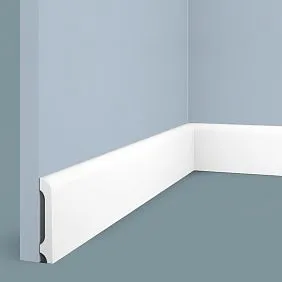
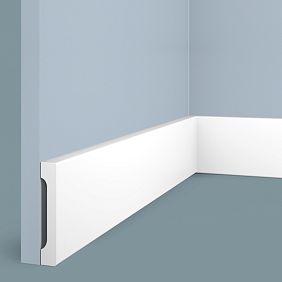
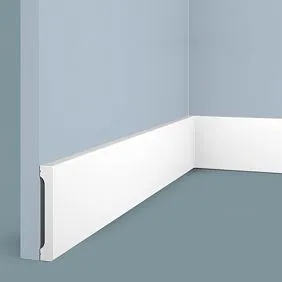
Rectangular minimalist baseboards 80-120 mm
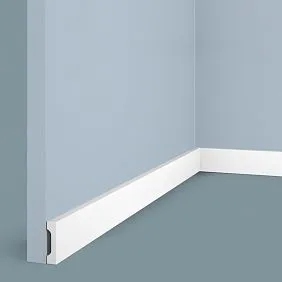
The simplest form — a rectangular cross-section with minimal edge rounding of 2-3 mm radius for safety. Thickness 18-25 mm, height 80-120 mm. Decorative elements are absent — form follows function.
An oak minimalist baseboard — the embodiment of the 'less is more' philosophy. The material speaks for itself — expressive texture, noble color, tactile warmth of natural wood. Additional decoration is excessive, distracting from the material essence.
Production is extremely rational — sawing oak boards into slats of a given width, milling rounded edges, sanding with P180-P240 abrasive. Three operations, minimal waste, high productivity. Cost is 30-40% lower than complex profiles.
Application — minimalist interiors, Scandinavian style, modern classic. A rectangular oak baseboard 100×20 mm, painted with white enamel, is a classic of Scandinavian design. Natural golden oak with oil finish — eco-style. Stained graphite — industrial minimalism.
Price of a 100 mm oak minimalist baseboard — 1200-1600 rub/linear meter depending on wood grade. Grade A (no knots, uniform texture) — upper range. Grade AB (small sound knots allowed) — lower range.
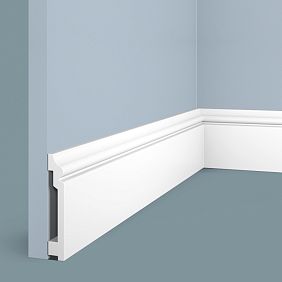
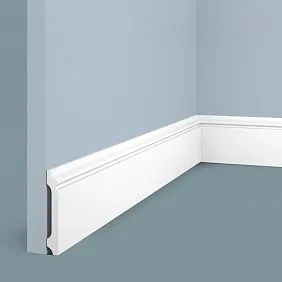
Shaped classic baseboards 100-160 mm
Baseboards with complex profiles featuring a cove (radius transition to the wall), a torus (protruding lower part), decorative grooves — a legacy of classical architecture adapted to interior scale.
A classic oak profile creates a connection with the historical tradition of using this species in palace and manor interiors. Oak is the material of royal residences, aristocratic mansions, and old libraries. By choosing a classic oak baseboard, you continue this tradition.
Production is complex — milling a multi-stage profile requires special tools, precise setup of CNC machines. Each transition, each cove must be executed cleanly, with perfect smoothness. The hardness of oak creates additional difficulties — tools dull faster, requiring frequent sharpening.
Final sanding of relief surfaces is labor-intensive — manual finishing with abrasive sponges that follow the profile shape is required. Processing time per linear meter — 15-20 minutes versus 5-7 minutes for a rectangular profile.
Application — neoclassical interiors, English classic, American traditionalism. A 140 mm shaped oak baseboard with pronounced coves and a torus, stained dark walnut — the foundation of an English study. Light whitewashed oak with a subtle profile — French neoclassicism.
Price of a 120-140 mm classic oak baseboard — 2000-2800 rub/linear meter depending on profile complexity. Multi-stage profiles with carved elements reach 3500-4500 rub/linear meter — the level of custom production.
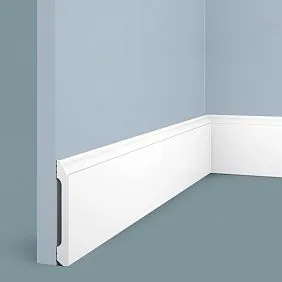
Tall architectural baseboards 140-180 mm
Monumental baseboards that visually dominate the lower part of the composition. A height of 140-180 mm turns the baseboard into an architectural element, proportionate to door portals, fireplace portals, and built-in cabinets.
A tall oak baseboard creates a sense of solidity, of the space's fundamentality. Walls visually 'grow' from a powerful plinth. The room is perceived as more spacious, taller, and more impressive. The psychological effect of monumentality is an important aspect of premium interiors.
Structurally, tall baseboards require reliable fastening. The weight per linear meter of a 160×25 mm oak baseboard is about 2.5-3.0 kg. Adhesive alone is insufficient — additional mechanical fastening with finishing nails or hidden clips at 400-500 mm intervals is necessary.
Walls must be strong enough to support a massive baseboard. Drywall partitions on a metal frame require reinforcement—wooden mounting blocks in the area where the baseboard is installed. Brick and concrete walls hold oak baseboards without any issues.
Application—prestigious interiors, halls, lobbies, libraries, executive offices. A 160 mm oak architectural baseboard, stained to resemble aged oak (gray-brown), is the foundation of a respectable office. Light golden oak with wax—a classic hall.
The price of tall oak baseboards 160-180 mm is 2500-3800 rubles per linear meter, depending on the profile. Simple rectangular ones are in the lower range, complex shaped ones are in the upper range.
Baseboards with metal inserts
A modern trend is combining natural oak with metal decorative inserts. An aluminum profile embedded in the top part of the baseboard creates a linear accent that reflects light. A brass strip adds warmth and nobility. Stainless steel adds industrial rigor.
The production of combined baseboards is more complex—precise milling of a groove for the metal profile is required, and the profile is attached with adhesive or mechanically. Metal and wood have different coefficients of thermal expansion—compensation gaps must be provided.
The visual effect is impressive—the contrast between natural wood and industrial metal creates a modern aesthetic unattainable by traditional methods. An oak baseboard with an aluminum insert is the visual formula for a premium modern interior in 2026.
Application—premium modern interiors, top management offices, designer apartments. Dark wenge oak with a polished aluminum insert—a minimalist office. Natural light oak with a matte brass insert—modern classic.
The price of combined baseboards with metal is 3000-4500 rubles per linear meter, depending on the type of metal. Aluminum is more affordable, brass is more expensive, stainless steel is in the mid-range.
Oak interior slats: typology and application
Vertical oak slats are a tool for creating spatial structure, visual depth, and interplay of light and shadow.
Standard slats 20×40 - 30×50 mm
A universal cross-section for most interior tasks. 25×40 mm slats create a noticeable but not dominant relief on the wall. A 25 mm projection forms shadows deep enough for a visual effect but not critical for room dimensions.
Oak slats of this cross-section have sufficient rigidity for vertical installation up to 3.0 meters in height without sagging. The weight per linear meter of a 25×40 mm oak slat is about 0.7 kg. When attached to guides with a 1000 mm spacing, the load on the fasteners is minimal, and there is no deformation.
The oak texture on standard cross-section slats is clearly visible—the sufficient width of the face surface (40 mm) allows the pattern of annual rings and medullary rays to be seen. Each slat is unique, creating visual diversity in a regular structure.
Application—accent walls in living rooms, bedrooms, offices, zoning partitions, decorative panels. 25×40 mm oak slats with 100-120 mm spacing, coated with natural oil—a classic of modern eco-interior. Stained black with 80 mm spacing—minimalism.
The price of 25×40 mm grade A oak slats is 500-700 rubles per linear meter, grade AB is 400-550 rubles per linear meter. For a 4×2.7 m accent wall with 120 mm spacing, about 70 linear meters are required—costs 28-49 thousand rubles for slats alone.
Thick architectural slats 40×60 - 50×70 mm
A massive cross-section for creating a pronounced three-dimensional relief. 50×70 mm slats protrude 50 mm from the wall, creating deep shadows between elements. Visual impact is maximized—the wall turns into a sculptural object with distinct plasticity.
Oak slats of this cross-section are heavy structures. The weight per linear meter of a 50×70 mm slat is about 2.5 kg. A square meter of slatted wall with 120 mm spacing weighs 30-35 kg. A reinforced frame is required—50×70 mm battens, 8×80 mm anchors, a solid base (brick, concrete, reinforced drywall).
The oak texture on thick slats is perceived as monumental. The wide face surface (70 mm) showcases the pattern in all its glory. The play of light on the relief surface, especially with side lighting, creates a picturesque picture of changing shadows.
Application—spacious rooms with a height of 3.0 meters or more, where massive slats do not overwhelm the space. Living rooms in country houses, lobbies, top management offices. 50×70 mm oak architectural slats, brushed and coated with oil and wax—premium loft.
The price of thick 50×70 mm grade A oak slats is 900-1300 rubles per linear meter, grade AB is 750-1000 rubles per linear meter. For a 4×2.7 m wall, the cost for slats is 52-91 thousand rubles. Plus a reinforced frame—8-12 thousand. Total 60-103 thousand for materials.
Thin decorative slats 15×30 - 20×40 mm
A minimal cross-section for creating visual structure without significant projection. 20×40 mm slats protrude only 20 mm—practically do not affect room dimensions. Suitable for small spaces where massive slats would create visual crowding.
Thin oak slats are mounted directly on the wall without a frame—attached with mounting adhesive. The weight per linear meter of a 20×40 mm slat is about 0.55 kg. High-quality polyurethane adhesive holds firmly; removal without damaging the wall is difficult but possible.
The oak texture on thin slats is limited—the narrow face surface (40 mm) shows fragments of the pattern. But with proper material selection featuring expressive texture, the effect remains. Radial cut with medullary rays creates a noble sheen even on a narrow surface.
Application—small rooms where visual structure is important with minimal intrusion into space. Bedrooms, children's rooms, offices in standard apartments. 20×40 mm thin oak slats, painted with white enamel, with wide 150 mm spacing—Scandinavian minimalism.
The price of thin 20×40 mm grade A oak slats is 400-550 rubles per linear meter, grade AB is 320-450 rubles per linear meter. For a 4×2.7 m wall with 120 mm spacing—costs 22-38 thousand rubles for slats.
Shaped and sculptural slats
Slats with complex cross-sections—with flutes (vertical grooves), bevels, roundings, chamfers—create additional visual complexity. Produced by milling on CNC machines according to custom profiles.
Oak shaped slats are custom products for exclusive projects. Each profile is developed individually, programmed, and tested. The minimum batch for development cost recovery is 100-150 linear meters. For large-scale projects—country residences, representative offices—this is acceptable.
The texture of oak on profiled battens is perceived as particularly expressive—the relief of the profile creates additional plays of light and shadow, emphasizing the wood grain. Flutes running along the fibers enhance the impression of verticality.
Application — classic and neoclassical interiors of the highest level. Oak battens with flutes, imitating classical columns, are the foundation of a neoclassical hall. Battens with bevels and chamfers are a modern interpretation of classicism.
The price of shaped oak battens is individual — from 1500 to 5000 rubles per linear meter depending on the complexity of the profile. CNC program development — 15-30 thousand rubles, amortized over the batch volume.
Oak finishing: protection and aesthetics
Proper finishing determines the durability of oak elements and their aesthetic qualities.
Oil finish: naturalness and tactility
Natural oils—linseed, tung, modified formulations—penetrate deeply into the porous structure of oak, creating protection from within. The oil does not form a surface film; the wood retains its ability to 'breathe'—absorbing and releasing moisture depending on conditions.
The aesthetic effect of oil is emphasizing the texture without altering the natural color. Large spring pores, absorbing oil, darken and become richer. Dense summer wood absorbs less, remaining lighter. The texture contrast is enhanced, and the grain becomes more expressive.
The tactility of an oiled surface is superb — smooth, warm, silky. Contact with natural wood treated with natural oil creates psychological comfort, a connection with nature. For ecologically oriented interiors, this is an important aspect.
The durability of an oil finish is 3-5 years under intensive use. After this, renewal is required — wiping the surface with fresh oil. The operation is simple, can be done independently in a couple of hours. Old oil is absorbed, new oil is added — layers accumulate, protection strengthens.
Recommended oils for oak — Danish oil (a blend of linseed and tung oil with resin additives), hard wax-oil (oil with microcrystalline waxes), oil with polymerization accelerator (dries in 12 hours instead of 24-48). Application by brush or rag, excess wiped off, air drying.
Varnish coating: durability and shine
Polyurethane or acrylic varnishes form a durable film on the oak surface, isolating the wood from external influences. Moisture, dirt, scratches do not penetrate to the wood — the varnish takes all the impact.
The aesthetic effect of varnish is altering the surface sheen from absolutely matte (5-10 gloss units) to high-gloss (80-90 units). Glossy varnish emphasizes the texture maximally, creates visual depth, a 'wet' effect. Matte varnish preserves naturalness, close to untreated wood.
For oak interior elements, matte or semi-matte varnish (20-40 gloss units) is recommended — a balance between protection and naturalness. Glossy varnish on oak is perceived as excessively decorative, losing the material's noble restraint.
The durability of a varnish finish is 8-12 years under intensive use. Renewal is more complex than with oil — light sanding with P220 abrasive is required, dust removal, application of a fresh coat of varnish. The operation is labor-intensive, performed by professionals.
Recommended varnishes for oak — two-component polyurethane (maximum strength, abrasion resistance), acrylic-polyurethane (more eco-friendly, sufficiently strong), water-dispersed acrylic (eco-friendly, but less durable). Application by spraying in 2-3 coats with intermediate drying of 4-6 hours.
Painting: color experiments
Pigmented paints and enamels conceal the oak texture, creating a uniform color. Used when the material is not important, but the form and color of the element are. The oak base provides strength and stability, the paint provides the desired color.
For interior oak elements, painting is used sparingly — the natural texture is too valuable, hiding it with paint is wasteful. But for certain design tasks, painting is justified — white oak battens in Scandinavian interiors, black in minimalism, colored in eclecticism.
Preparing oak for painting includes filling large pores with putty or pore-filling primer. Without this, the porous texture will show through the paint, creating surface unevenness. After pore filling — sanding, priming, painting in 2-3 coats.
Recommended paints for oak — polyurethane enamels (maximum strength, abrasion resistance), water-based acrylic enamels (eco-friendly, sufficiently strong). Colors — standard or by RAL. Application by spraying for uniformity.
Brushing and patination
Brushing — mechanical removal of soft spring fibers with a stiff metal brush. Hard summer fibers remain, forming a relief surface. The texture becomes tactile, voluminous.
Oak is ideal for brushing due to its contrasting ring-porous structure. Soft spring pores are easily removed, hard summer layers remain, creating a pronounced relief depth of 0.5-1.5 mm. The visual and tactile effect is impressive.
Patination — applying a contrasting pigment (patina) to a brushed surface followed by wiping off excess. Pigment remains in the recesses, emphasizing the relief. The effect is that of aged wood, having lived for decades.
Application of brushed oak elements — interiors in loft, industrial, vintage, country styles. Brushed oak baseboard with black patina — the foundation of loft. With white patina — Provence. Without patina under oil — natural eco-style.
The cost of brushing increases the price by 40-60% — a labor-intensive operation requiring special equipment. Brushed oak baseboard 100 mm — 1800-2400 rubles per linear meter versus 1200-1600 rubles per linear meter for smooth.
Company STAVROS: the benchmark for quality oak interior systems
Company STAVROS is a Russian manufacturer of premium wooden interior elements since 2002. Specialization —Baseboardsandsolid oak battenspremium quality for premium-class objects.
The catalog features over 25 profiles of oak skirting boards with heights from 80 to 180 mm and 20 types of oak battens with cross-sections from 20×40 to 50×70 mm. All elements are manufactured from selected European oak (Quercus robur) of premium and first grade from environmentally clean regions of Russia with optimal growing conditions.
Quality control begins with wood selection. Purchasing from verified suppliers, visual inspection of each board, rejection of material with rot, cracks, large dead knots, signs of fungal damage. Only wood meeting premium-class standards is accepted.
Chamber drying to 8-12% moisture content is performed in modern drying chambers with microprocessor control. The mode is gentle — temperature does not exceed 60°C, humidity is reduced gradually, preventing cracking and deformation. Drying duration is 3-4 weeks depending on initial moisture and material thickness.
After drying, the wood is stabilized for 7-10 days under normal conditions — temperature 18-22°C, humidity 50-60%. Internal stresses that arose during drying relax, the material gains stability. Only after stabilization is the wood sent to production.
Production facilities are equipped with European CNC equipment — processing accuracy ±0.1 mm. Profile milling is performed with carbide tools, ensuring clean cutting without chipping. Each operation is controlled — geometry, surface smoothness, absence of defects.
Final sanding with P180-P240 abrasive creates a mirror-smooth surface. For brushed elements — treatment with metal brushes followed by fine sanding. Each product undergoes visual inspection before packaging.
Finishing options: natural wood without coating (for customer painting), oiled with Danish oil, coated with hard wax-oil, varnished with matte polyurethane varnish, brushed with or without patina, painted in basic colors (white, black, gray) or custom RAL.
Own warehouses in Moscow and St. Petersburg with an area of 1500 m² ensure constant availability of popular profiles and grades. The warehouse program includes oak skirting boards 80, 100, 120 mm and battens 25×40, 30×50 mm grades A and AB in natural and oiled finishes. Same-day shipment for warehouse items.
Delivery across Russia by reliable transport companies. For Moscow and St. Petersburg — own logistics, next-day delivery. Packaging — shrink film, protective corners, rigid pallets, preventing damage during transportation.
Delivery across Russia via reliable transport companies. For Moscow and St. Petersburg—own logistics, next-day delivery. Packaging—shrink wrap, protective corners, rigid pallets, preventing damage during transportation.
Consulting support includes assistance in selecting optimal profiles, calculating required quantities considering waste for trimming, recommendations for finishing and installation. Experienced sales department specialists know the specifics of working with oak, will help avoid typical mistakes.
For designers and architects — a professional partnership program. Individual commercial terms, priority production, technical project support, free delivery of samples for customer approval.
Over 4000 premium objects implemented over 23 years — country residences, luxury apartments, representative offices, fine dining restaurants, boutique hotels. The portfolio includes projects with oak finishes from classical to ultra-modern. Accumulated experience guarantees quality recommendations.
Showrooms are open for visits. The exhibition includes all profiles of oak skirting boards and battens in full size with various finishing options. You can compare grades A and AB, evaluate the difference between oil and varnish, test brushed surfaces tactilely.
By choosing STAVROS oak elements, you choose premium quality, proven by thousands of objects. Material that will serve for generations, preserving beauty and functionality. An investment in the status of an interior, its durability, visual expressiveness.
Create a premium interior with oak skirting boards and battens from STAVROS! Noble texture, exceptional strength, century-long durability. Call toll-free 8 (800) 555-46-75 — specialists will consult, help select optimal profiles, calculate material quantities, place an order with delivery!