Article Contents:
- Moldings: architecture on wall surfaces
- History of moldings: from palaces to modernity
- Profile types: from simple to complex
- Application of moldings: function and aesthetics
- Balusters: vertical rhythm and safety
- Anatomy of balusters
- Baluster Styles: From Classic to Modern
- Baluster spacing: density and rhythm
- Round trim: the softness of the cylinder
- Handrails: function above all
- Decorative rods and rails
- Round-section balusters
- Wooden baseboard: the finishing touch
- Height and Profile
- Material and color
- Choosing wood species for interior decor
- Oak: the standard of strength
- Ash: Strength and Lightness
- Beech: European Tradition
- Pine: affordability and lightness
- Larch: resistance to moisture
- Manufacturing and processing: from blank to product
- Drying: foundation of stability
- Milling and turning
- Sanding: The Path to Smoothness
- Finish: protection and beauty
- Style integration: how to incorporate wooden decor
- Classic Interior
- Neoclassicism
- Scandinavian Style
- Minimalism
- Loft and Industrial Style
- Installation of wooden decor: technology and nuances
- Surface Preparation
- Methods for attaching moldings
- Angle cutting
- Final processing of joints
- Care for wooden decor
- Regular Cleaning
- Recoating
- Climate Control
- Where to buy quality interior decor
- Supplier selection criteria
- Answers to popular questions
- Can wooden decor be used in damp areas?
- Why is wooden decor better than polyurethane?
- Which wood species is best for moldings?
- Should wooden decor be painted or left natural?
- How long does wooden decor last?
- Can wooden decor be installed independently?
- Conclusion: when details create a masterpiece

Why do some interiors leave a lasting impression while others pass by consciousness like empty scenery? The secret lies in the details. Not in expensive furniture or trendy wallpaper, but in those seemingly unnoticeable elements that create volume, rhythm, and character of the space.wooden interior decor— is the language architecture speaks when words become unnecessary. Moldings draw lines on walls, balusters set the vertical rhythm for staircases, round trim adds softness and tactility. And when all these elements are assembled together by a skilled hand, what emerges is not just a room, but a space with soul, history, and mood.
Wood is a living, honest, noble material. It breathes, changes over time, develops a patina, becomes part of the home's history. Artificial analogs — plastic, polyurethane, MDF — can mimic the form but will never replicate the character of natural wood. When you run your hand over an oak molding, you feel the warmth and texture of the material. When you ascend a staircase holding a wooden handrail, you sense its smoothness and solidity. This is a tangible experience that creates a connection between a person and the space.Home interior decor— made from natural wood is not just decoration, but a philosophy of life that values naturalness, durability, and connection with nature.


Moldings: architecture on wall surfaces
What is molding? In the simplest definition, it is a strip that protrudes above the surface of a wall or ceiling. But behind this simplicity lies a huge variety of shapes, profiles, sizes, and functions.Wooden moldingstransform a flat wall into an architectural object, create relief, play of light and shadow, divide space into zones, frame doors and windows, and conceal material joints.




History of Moldings: From Palaces to Modernity
Moldings originated from classical architecture, where they were an integral part of the decoration of columns, cornices, and friezes. In Baroque and Rococo, moldings reached the peak of decorativeness—most complex profiles with scrolls, rosettes, and acanthus leaves. Classicism simplified the forms, leaving geometric rigor and proportionality. Art Nouveau added flowing lines and asymmetry.
Today, moldings are experiencing a renaissance, but in a new capacity. ContemporaryStylish interior decoruses moldings not as an element of historical stylization, but as a tool for organizing space. Simple profiles, minimalist lines, laconic forms—moldings have become part of modern architecture, not just classical.
Our factory also produces:


Profile types: from simple to complex
Flat molding is the simplest option: a rectangular strip without relief. Its function is purely architectural—to create a border, a line, to divide a plane. Width from 20 to 100 millimeters, thickness 8–15 millimeters. Such molding is good for modern minimalist interiors, where geometry is important, not decorativeness.
Beveled molding is a flat strip with edges beveled at a 45-degree angle. The bevel creates a soft play of light, adds volume without excessive decorativeness. Width 30–80 millimeters. A universal option, suitable for both classical and modern interiors.
Profiled molding is a strip with complex relief: coves, beads, shelves. The profile can be symmetrical or asymmetrical, with one or several protrusions. Width 40–150 millimeters. Such moldings are characteristic of classical interiors, where richness of detail and play of light on the relief are required.
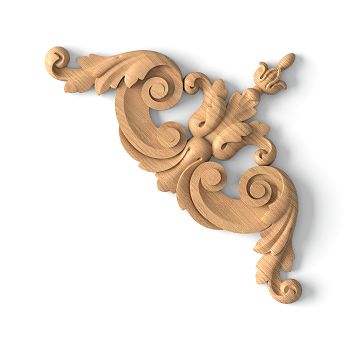
Carved molding is a strip with hand or machine carving: floral ornaments, geometric patterns, stylized motifs. The carving can be bas-relief or three-dimensional. This is the most decorative and expensive type of molding, used in elite interiors where every detail must be a work of art.
Get Consultation
Application of Moldings: Function and Aesthetics
Moldings work on several levels simultaneously. Functionally, they conceal joints between different materials, mask wall irregularities, serve as a base for hidden lighting, and protect corners from damage. Aesthetically, they create rhythm, proportions, scale, and transform a wall from a flat surface into an architectural object.
Ceiling cornices are moldings that run along the perimeter of a room at the junction of the wall and ceiling. They visually complete the space, creating a smooth transition from the vertical of the walls to the horizontal of the ceiling. A wide cornice (100–200 millimeters) makes the ceiling visually lower but adds monumentality. A narrow cornice (30–50 millimeters) delicately emphasizes the boundary without consuming height.
Wall panels are compositions of moldings on walls, creating frames, rectangles, geometric patterns. This is a classic technique that came from French boiserie. Panels divide a high wall into proportional parts, add relief, and create visual interest. Inside the frames, there can be a different material, color, patterned wallpaper—the molding organizes this diversity into a unified composition.
Framing doors and windows—moldings around openings emphasize their significance, creating an architectural frame. Wide framing (casings 80–120 millimeters wide) makes the opening visually larger, more ceremonial. Narrow framing (40–60 millimeters) delicately highlights the boundary without overloading the space.
Horizontal wall division—a molding at a height of 90–120 centimeters from the floor divides the wall into two zones: lower (panel) and upper (field). This is a classic technique that visually lowers the ceiling height and makes the space more intimate and cozy. Below the molding, the wall can be painted a darker color, wallpapered, or paneled. Above—lighter finishing.
Balusters: Vertical Rhythm and Safety
Wooden balustersare vertical posts that fill the space between stair treads and the handrail, between terrace or balcony levels. Their function is twofold: to ensure safety, preventing falls, and to create a decorative rhythm, visual lightness or massiveness of the railing.
Baluster anatomy
A classic turned baluster consists of three parts: base, body (shaft), and top (capital). The base is the lower part by which the baluster is attached to the tread or subrail. It usually has a cylindrical or square shape, often with a decorative flare. The body is the middle part that carries the decorative load: here turned elements are placed—vases, balls, collars, flutes. The capital is the upper part by which the baluster is attached to the handrail. It is often symmetrical to the base.
The height of a baluster is determined by the distance from the tread to the handrail minus the thickness of the handrail. The standard height of a stair railing is 900 millimeters, so the height of the baluster (excluding fasteners) will be 840–850 millimeters. The cross-section of a baluster is from 40 to 80 millimeters. Thin balusters (40–50 millimeters) create a sense of lightness and airiness. Thick balusters (70–80 millimeters)—massiveness and reliability.
Baluster styles: from classic to modern
Classic turned balusters are symmetrical forms with smooth transitions, rounded elements, rhythmic repeats. Main elements: balls, vases, truncated cones, cylinders, collars. A classic baluster is read as a scaled-down column with all characteristic architectural details.
Carved wooden balustersare individual pieces where the turned form is complemented by hand or machine carving. Floral ornaments wind around the baluster shaft, geometric patterns create relief bands, and figured elements turn the baluster into a miniature sculpture. Carved balusters are a sign of an elite interior where every detail is unique.
Flat balusters are cut from a board 30–40 millimeters thick. The contour can be rectangular, figured, with cutouts and curves. Flat balusters are often used in country, Provence, and Scandinavian styles. They are less decorative than turned ones but create a more graphic, modern look.
Modern minimalist balusters are simple forms without decorative excesses. Square or rectangular posts with a cross-section of 40 by 40 millimeters, sometimes with light bevels on the edges. Round cylindrical posts with a diameter of 30–40 millimeters. Metal balusters combined with a wooden handrail. Minimalism in balusters is an emphasis on material and geometry, not on decoration.
Baluster Spacing: Density and Rhythm
The number of balusters per tread determines the visual density of the railing. One baluster per tread is the minimum option, creating a sparse structure. Two balusters per tread is the classic option, providing sufficient safety and harmonious rhythm. Three balusters per tread is a dense filling, characteristic of grand staircases and interiors with high ceilings.
An important safety rule: the distance between balusters should not exceed 120 millimeters, so that a child cannot put their head through. This is a regulatory requirement that must be observed during design.
Round millwork: the softness of the cylinder
Round wooden balustersare cylindrical elements of various diameters that are used as stair handrails, rods, rails, and decorative elements. A round cross-section is ergonomic for the hand, visually lighter than a rectangular one, and creates soft, smooth shadows.
Handrails: function first and foremost
A stair handrail is not just a decorative element, but a crucial safety feature. It should be comfortable to grip, smooth, sturdy, and securely fastened. The optimal handrail diameter is 50–60 millimeters. This is a size that an adult hand can confidently grasp without straining. A smaller diameter (40 millimeters) is suitable for children's stairs, while a larger one (70 millimeters) is used in grand interiors to create a monumental feel.
The handrail must be absolutely smooth—this is the result of careful sanding with abrasives of increasing grit and high-quality finishing. Any roughness, splinter, or unevenness will be felt by the hand and cause discomfort. The handrail coating should be matte or semi-matte—glossy varnish is slippery and unsafe.
Decorative rods and battens
Round molding with a diameter of 20–40 millimeters is used to create slatted partitions, decorative panels, hangers, and cornices. Vertical round battens with uniform spacing create a semi-transparent wall that divides space without isolating it. Horizontal rods on an entryway wall serve as a hanger—a simple, functional, and aesthetic solution.
Round battens are visually lighter than rectangular ones of the same mass. Light smoothly wraps around the cylindrical surface, creating soft gradient shadows without sharp boundaries. This property makes round molding a good choice for interiors where visual airiness is desired.
Round balusters
An alternative to turned balusters is simple cylindrical balusters made from round molding with a diameter of 30–50 millimeters. They lack decoration but create a clean, modern look. Such balusters are good for minimalist, Scandinavian, and eco-friendly interiors, where simplicity of form and honesty of material are valued.
Round balusters can be uniform along their entire length or have slight thickenings at the base and capital to improve fastening. The surface must be perfectly smooth, without knots or cracks—any defect on a cylinder is more visible than on a flat or shaped surface.
Wooden baseboard: the finishing touch
Wooden baseboard—an element that is often underestimated, considered purely utilitarian. But it is the baseboard that completes the space, creates a smooth transition from wall to floor, conceals technical gaps, and protects the lower part of the wall from damage.
Height and profile
The height of the baseboard is determined by the proportions of the room and the interior style. A low baseboard (40–60 millimeters) creates a delicate, unobtrusive frame. A medium one (70–100 millimeters) is a classic option for most interiors. A high one (120–200 millimeters) is characteristic of rooms with high ceilings, classic and neoclassical interiors.
The baseboard profile can be a simple rectangular shape with a chamfer or a complex profiled one with coves and beads. The profile should match the style of other moldings in the interior—if ceiling cornices have a complex profile, the baseboard should also be profiled.
Material and color
The baseboard can be made from the same wood species as the floor, creating material unity. Or it can be contrasting—for example, a dark baseboard against a light floor or a light one against a dark floor. The baseboard can be painted to match the wall color, visually blending with them and making the wall appear taller. Or painted in a contrasting color, creating a clear boundary.
For wet areas (kitchens, bathrooms), it is better to choose baseboards made from moisture-resistant species—oak, larch—or additionally protected with water-repellent compounds.
Choosing wood species for interior decor
The wood species determines the durability, appearance, cost, and behavior of the product during use.
Oak: the standard of strength
Oak is the most popular material forinterior decor. A density of 700–900 kilograms per cubic meter ensures high hardness and wear resistance. An oak molding or baluster will last for decades without visible wear. Oak's texture is expressive—large pores, radial rays, a noble grain pattern. The color ranges from light honey to dark brown; when stained, oak acquires noble shades from gray to almost black.
Oak responds well to various types of treatment: staining, brushing, toning, patination. Brushed oak with emphasized texture creates an aged, vintage effect. Tinted gray—a modern Scandinavian aesthetic.
Ash: Strength and lightness
Ash is similar to oak in mechanical properties but has a lighter shade and less contrasting texture. Ash fibers are long and straight, making the wood elastic and resistant to dynamic loads. Ash is good for elements under stress—balusters, handrails, steps.
The natural color of ash ranges from light yellow to creamy with a slight pinkish hue. The texture is discernible but not as contrasting as oak. Ash takes stains well, accepting both light and dark shades.
Beech: European tradition
Beech is a traditional material for furniture and decor in Europe. Its density is comparable to oak, with a fine-pored, uniform texture. The color ranges from pinkish to light brown. Beech is easy to work with, turn, mill, and after steaming, it bends well—an important property for making curved elements, radius moldings.
A critical nuance: beech is hygroscopic and reacts strongly to changes in humidity. Beech decor requires stable operating conditions—air humidity of 40–60 percent, without sharp fluctuations. In rooms with unstable climates, beech can warp.
Pine: affordability and lightness
Pine is the most accessible material. Soft, light, easy to work with. For decor, higher-grade pine is used—without knots, resin pockets, or blue stain. Pine molding or baseboard is significantly cheaper than oak but has lower hardness and wear resistance. For ceiling cornices, wall moldings where there is no mechanical impact, pine is a reasonable choice.
Pine requires mandatory protective treatment—impregnation, priming, painting. Without protection, the wood quickly darkens and becomes soiled. Pine painted with enamel is visually indistinguishable from more expensive species—only the quality of processing matters.
Larch: resistance to moisture
Larch is a coniferous species with a density close to oak. It contains natural resins that make the wood resistant to rot, moisture, and insects. Larch hardens over time, gaining strength. The color ranges from yellowish to reddish-brown, with an expressive texture.
Larch is ideal for decor in wet areas, for exterior elements (facade moldings, terrace decor). Processing is more complex than pine but easier than oak. The price is mid-range between pine and oak.
Manufacturing and processing: from blank to product
Qualityinterior decoris determined not only by the wood species but also by the manufacturing technology.
Drying: the foundation of stability
Wood must be dried to a moisture content of 8–12 percent. This is the equilibrium moisture content for heated indoor conditions. If under-dried wood (moisture content 15–20 percent) is used, products will dry out, crack, and warp after installation. If over-dried (moisture content 5–6 percent) — they will absorb moisture and swell.
Drying is performed in special chambers under controlled temperature and humidity. The process takes from several days to several weeks depending on the wood species and material thickness.
Milling and turning
Molding profiles are created on milling machines using cutters of the appropriate shape. Milling is performed in several passes to obtain a clean surface without tear-outs. For complex profiles, multi-spindle machines are used, allowing the relief to be formed in a single pass.
Balusters are turned on wood lathes. A workpiece of square or round cross-section is secured in the machine, turned to a cylinder, and then decorative elements are formed using cutting tools. For serial production, copy lathes working from a template are used.
Sanding: the path to smoothness
After milling or turning, products are sanded with abrasives of increasing grit. Initial sanding with 80–100 grit removes rough tool marks. Intermediate sanding with 120–150 grit evens the surface. Final sanding with 180–240 grit creates a smoothness ready for coating.
Sanding is performed by machine and by hand. Complex profiles, carved elements, and internal corners are sanded only by hand — this is a labor-intensive process requiring skill.
Finish: Protection and Beauty
The final finish protects the wood from moisture, dirt, mechanical damage, enhances the grain, and changes the color. Main types of finishes:
Oil penetrates deeply into the wood, enhances the grain, leaves a matte surface that is pleasant to the touch. Oil requires regular renewal but is easily restored. Ideal for handrails where tactility is important.
Varnish creates a durable protective film. Polyurethane varnishes provide maximum wear resistance. Varnish can be matte, semi-matte, or glossy. For decor, matte or semi-matte is better — it doesn't create glare and looks more natural.
Enamel creates an opaque colored coating that completely hides the wood grain. Enamel is used when a specific color is needed — white, gray, black, any other. Enamel coating is practical, easy to clean, and resistant to dirt.
Wax creates a silky surface with a soft sheen. Wax is used over oil or as a standalone finish. Protective properties are moderate, but aesthetics and tactility are maximal.
Style Integration: How to Incorporate Wooden Decor
Wooden Molding Typesare so diverse that elements can be selected for any style — from strict classic to radical minimalism.
Classic interior
Classic requires symmetry, proportionality, and decorativeness. Moldings with complex profiles, wide ceiling cornices, wall panels with framed compositions. Turned balusters with vases and balls. Wide baseboards 100–150 millimeters high. Color — natural wood of valuable species or painted white, cream, ivory.
Classical decor is symmetrical: if there are panels on one wall, there should also be panels on the opposite wall. Moldings are arranged in clear geometric compositions where the proportions of the golden ratio are important.
Neoclassicism
Neoclassicism takes the principles of classicism but simplifies forms, making them more laconic. Moldings with simple profiles, without excessive decorativeness. Balusters are turned but with a minimal number of elements. Color is often light — white, light gray, beige. Emphasis on proportions and rhythm, not on carving and ornament.
Scandinavian style
Scandinavian style loves natural wood of light species — pine, ash, light oak. Moldings are simple, often painted white with the wood grain visible through the paint. Balusters of round cross-section or square with chamfers. Baseboard is low, 60–80 millimeters. All elements are laconic, without decorative excess.
ScandinavianStylish interior decorworks to create a light, airy, calm space where wood is present as a connection to nature.
Minimalism
Minimalism uses moldings as architectural elements, not decor. Flat strips, painted the same color as the walls, creating relief without color contrast. The number of lines is minimal. Balusters — simple posts of square or round cross-section. Baseboard — narrow, inconspicuous. Color is monochrome — white, gray, black.
Loft and industrial style
Loft combines rough industrial surfaces (concrete, brick, metal) with the warmth of natural wood. Moldings are used minimally — only where functionally necessary. Balusters can be wooden combined with metal posts. Handrails made of round molding on metal brackets. Wood is often dark, with emphasized grain, sometimes with an aged effect.
Installation of Wooden Decor: Technology and Nuances
The quality of installation is no less important than the quality of the products themselves.
Surface preparation
Walls must be level, dry, and strong. Irregularities exceeding 2–3 millimeters per linear meter must be leveled with plaster or filler. Damp walls will cause wooden decor to warp. Weak plaster will not provide secure fastening.
Methods for Fastening Moldings
Adhesive mounting is suitable for light moldings (up to 15 millimeters thick, up to 80 millimeters wide) on level, strong surfaces. Polyurethane adhesives or liquid nails are used. Adhesive is applied in a thin layer to the back of the molding, the molding is pressed against the wall, and secured with painter's tape during setting (6–12 hours).
Mechanical fastening is used for heavy moldings, ceiling cornices, elements under load. The molding is fastened with finish nails (headless) or screws, which are countersunk and filled. For ceiling cornices, fastening is performed simultaneously to the wall and ceiling.
Combined fastening — adhesive plus mechanical fasteners — provides maximum reliability.
Cutting Angles
Molding joints in corners are cut at a 45-degree angle (miter cut). A miter saw or miter box is used for precise cutting. Even a half-degree deviation will create a visible gap. After cutting, the ends are manually adjusted with fine sandpaper for a tight fit.
Internal and external corners are cut differently: for an internal corner, both moldings are cut at a 45-degree angle with the short end against the wall; for an external corner, the short end is on the outside. For non-perpendicular angles (not 90 degrees), the cutting angle is calculated individually.
Final processing of joints
After installation, joints and fastening points are filled with acrylic wood putty. After drying, they are sanded with fine sandpaper. If the moldings are painted, the putty will be painted over and become invisible. If left in their natural color, wood-tone putty is used, or the joints are filled with wax of a suitable shade.
Care for wooden decor
Proper care extends the life of products and preserves their beauty.
Regular cleaning
Dust is removed with a dry soft cloth, an anti-static duster, or a vacuum with a soft brush. Wet cleaning is permissible with a well-wrung cloth, without excessive moisture. Neutral cleaning agents can be used for painted surfaces.
Recoating
Oil finishes require periodic renewal—every 1–3 years depending on the intensity of use. Oil is applied in a thin layer, rubbed in, and excess is removed. This restores protective properties and refreshes the appearance.
Varnished and painted surfaces do not require regular renewal, but if scratches or wear appear, they can be locally sanded and recoated.
Climate control
Wood reacts to air humidity. Optimal humidity is 40–60 percent. At lower humidity, wood dries out and cracks may appear. At higher humidity, it swells, and deformations are possible. Using humidifiers in winter and dehumidifiers in summer maintains a stable climate.
Where to buy quality interior decor
Choosing a supplier is a critical moment.Interior Decor ShopThey should offer a wide range, guarantee quality, and provide service.
Supplier selection criteria
Range: the manufacturer or store should offer a variety of profiles, sizes, and wood species. The option to choose between ready-made standard products and custom manufacturing.
Quality: products should be made from properly dried wood, without defects (knots, cracks, blue stain), with high-quality surface treatment. The geometry of profiles should be precise, without deviations.
Service: consultation on selection, assistance in calculating material quantity, installation recommendations. Possibility of delivery, warranty obligations.
Price: the balance of price and quality. Too low a price often indicates low-quality material or processing. A reasonable price reflects the real cost of a quality product.
Answers to Popular Questions
Can wooden decor be used in damp rooms?
Yes, but with limitations. For bathrooms and kitchens, choose moisture-resistant species (oak, larch) or products with additional moisture protection (water-resistant varnishes, impregnations). Avoid direct contact with water. Ensure good ventilation.
How is wood decor better than polyurethane?
Wood is a natural material, eco-friendly, pleasant to the touch, with a unique texture. Wood decor can be restored—sanded, repainted. Polyurethane is cheaper, easier to install, moisture-resistant, but artificial, cold to the touch, and requires replacement if damaged.
What type of wood is best for moldings?
For painting, pine or beech are better—uniform structure, paint applies evenly. For natural color—oak or ash, expressive texture. For wet rooms—oak or larch. For budget projects—pine. For premium projects—oak.
Should wood decor be painted or left natural?
Depends on the interior style and wood species. Natural wood works well in classic, Scandinavian, eco-friendly interiors. Painted—in neoclassical, Provence, minimalist styles. Pine is almost always painted; oak and ash are often left natural.
How long does wood decor last?
With proper treatment and care—decades. Oak elements last 50 years or more. Pine—20–30 years. Service life depends on the species, quality of finish, and operating conditions. Wood decor can be restored, extending its service life almost indefinitely.
Can wood decor be installed independently?
Yes, if you have basic tool skills. Simple moldings, baseboards—not difficult. Complex elements (balusters, handrails, carved details) are better entrusted to professionals. The main thing is precision in cutting angles and reliability of fastening.
Conclusion: when details create a masterpiece
You enter a house. The first impression is a sense of completeness, thoughtfulness, quality. You can't immediately pinpoint why, but the space works, everything is in its place, everything is harmonious. And the secret is in the details: moldings set the rhythm for walls, balusters guide the eye upward along the staircase, a round handrail glides smoothly under the palm, a baseboard delicately completes the transition from wall to floor.wooden interior decorIt doesn't shout about itself, but without it, the interior would be empty, unfinished, soulless.
Wood is a material that connects a person with nature, even when they are in a city apartment on the twentieth floor. The texture, smell, and warmth of wood create an atmosphere that cannot be achieved with artificial materials. And whenHome interior decorit is made from natural wood, quality processed, and skillfully installed—it transforms a room into a space where you want to live.
For 23 years, STAVROS has been creating wooden decor that becomes part of the finest interiors. From classic carved moldings to modern minimalist profiles, from turned balusters for grand staircases to round trim for slatted partitions — STAVROS offers a solution for any style and budget. Each product undergoes strict quality control, is made from properly dried wood, processed on modern equipment, while preserving the traditions of carpentry craftsmanship.
When you choose decor from STAVROS, you get not just planks and posts, but elements that will create the character of your home. Elements that will last for decades, won't lose their shape, won't crack, won't warp. Elements that can be restored, updated, repainted — and they will look like new. This is an investment in quality, in durability, in beauty that never goes out of style.
STAVROS works with designers, architects, construction companies, and private clients across Russia. A wide stock program allows shipping standard items on the day of request. Custom production is completed within agreed timeframes without delays. Delivery is organized to any region, from a single piece to entire pallets. This is a service valued by professionals and trusted by private clients.
When details come together to create a masterpiece, it's always backed by the quality of each element. And STAVROS guarantees this quality — in every molding, in every baluster, in every meter of round trim. Because creating beauty is not just a business, it's a calling.