Article Contents:
- Philosophy of Modern Interior Design
- Psychology of space perception
- Technological Features of MDF Panel Production
- Preparation of Wood Raw Material
- Panel Formation and Pressing
- Final Processing and Calibration
- Classification of Interior Panels by Structural Features
- Profile Variants
- Size Range
- Decorative Finishes and Final Solutions
- Coating finishes
- Laminated Finishes
- Natural Wood Veneering
- Design Techniques for Interior Use
- Creating accent walls
- Zoning of open spaces
- Ceiling decoration
- Integration with lighting systems
- Hidden Lighting
- Spot lighting
- Acoustic Properties of Panel Structures
- Sound Absorption and Diffusion
- Resonance Absorption
- Environmental Aspects and Certification
- Formaldehyde Emission Classes
- Certification and quality standards
- Installation and fastening systems
- Hidden mounting systems
- Adhesive joints
- Care and Maintenance of Panel Structures
- Regular Cleaning
- Protection against damage
- Local repair
- Trends and innovations
- Digital technologies in design
- Smart materials
- Biomaterials and sustainable development
- Economic aspects of application
- Comparative cost analysis
- Long-Term Savings
- Application in Various Types of Spaces
- Residential interiors
- Commercial spaces
- Public buildings
- Conclusion
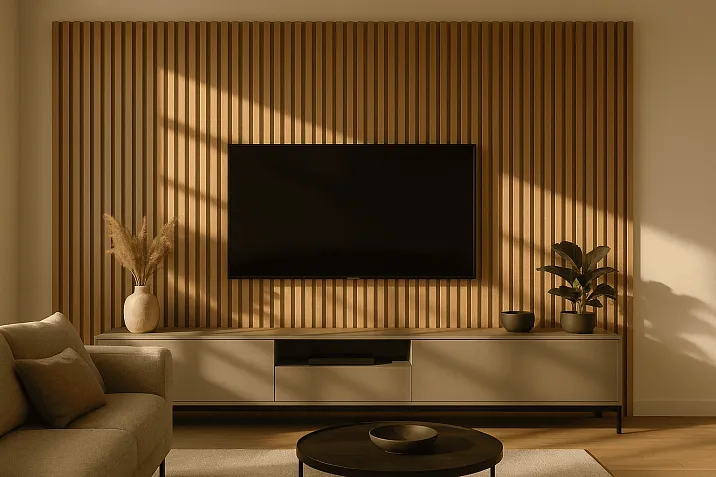
Imagine a material capable of transforming an ordinary room into a stylish designer studio within hours. A material that combines the nobility of natural wood, the practicality of modern technologies, and limitless creative expression. This is precisely the unique properties that MDF Interior Strip an innovative solution rapidly gaining recognition among professional designers and homeowners worldwide.
Modern interior design is undergoing a true evolution. The days of plain, uniform walls and standard finishing materials are behind us. Today, focus is on textures, volume, play of light and shadow — elements that create a lively, dynamic space. And it is precisely here that MDF interior panels reveal their potential most vividly.


Philosophy of Modern Interior Design
What makes a space truly alive and attractive? The secret lies in details that create visual depth and tactile sensations. Even the most high-quality flat surfaces cannot evoke an emotional response. The human eye instinctively seeks irregularities, transitions, contrasts — all that makes the surrounding environment interesting to perceive.
It is precisely these needs that panel structures satisfy, creating rhythmic compositions that change their appearance depending on lighting and viewing angle. Vertical panels visually increase ceiling height, horizontal ones expand space, and diagonal solutions create a dynamic, modern image of the room.




Psychology of space perception
Scientific research confirms the influence of textured surfaces on a person's psycho-emotional state. Rhythmic repeating elements create a sense of stability and order, while their volume adds liveliness and energy to the interior. This explains the growing popularity of panel solutions in residential interiors, office spaces, and public buildings.
The material from which the panels are made plays an especially important role. MDF possesses a unique combination of properties: it is dense enough to create sharp geometric forms, yet retains the warmth and naturalness characteristic of wood materials. This duality allows creating interiors that simultaneously appear modern and cozy.
Our factory also produces:


Technological Features of MDF Panel Production
The quality of MDF interior panels directly depends on the production technology and raw materials used. Modern production includes several critically important stages, each affecting the final product characteristics.
Get Consultation
Preparation of Wood Raw Material
The process begins with careful selection of wood. Coniferous species — pine, spruce, fir — are predominantly used, providing optimal strength-to-workability ratio. The wood undergoes multi-stage cleaning from bark, metal inclusions, and other foreign materials.
Grinding is performed in several stages with gradual reduction of particle size. The final fraction must be uniform, ensuring even structure of the future panel and absence of internal stresses.
Panel formation and pressing
Prepared wood fibers are mixed with binding resins in strictly controlled proportions. Modern technologies use urea-formaldehyde resins with minimal free formaldehyde content, ensuring the ecological safety of the product.
Panel formation occurs under controlled humidity and temperature. Even distribution of material across the panel area is critically important for achieving uniform mechanical properties. Pressing is performed at 180-200°C under a pressure of 25-40 kgf/cm².
Final processing and calibration
After pressing, the panel undergoes a cooling and conditioning cycle to stabilize internal stresses. Calibration ensures geometric dimensions with a tolerance of ±0.3 mm, which is critically important for subsequent processing.
Sanding is performed using abrasive belts of varying grit sizes, gradually transitioning to finishing grits. A well-sanded surface is the foundation for any type of decorative finish.
Classification of interior MDF rails by structural features
The diversity of modern interior solutions requires corresponding variety in elements. MDF rails are classified by multiple parameters, each influencing the area of application and visual effect.
Profile variations
Rectangular profiles remain the most universal solution due to their ease of installation and ability to create clear geometric compositions. Standard size ranges include thicknesses from 8 to 40 mm and heights from 20 to 100 mm, allowing selection of the optimal variant for any room scale.
Beveled rails create a softer visual effect due to the smooth transition of light and shadow. The bevel angle varies from 15 to 45 degrees, with sharper angles producing more dramatic lighting effects.
Oval profiles add organic and natural qualities to interiors. Such rails are especially effective in Scandinavian and eco-interiors, where connection with natural forms is important.
Complex decorative profiles with grooves, protrusions, and combined shapes allow for unique decorative effects. Modern CNC routers enable the realization of virtually any design concept.
Size Range
Miniature rails with thicknesses of 6-12 mm are suitable for creating thin decorative accents and working in limited spaces. They do not visually overwhelm the interior but provide the necessary texture.
Medium sizes (15-25 mm thick) represent the ideal middle ground, suitable for most interior tasks. Such rails are sufficiently noticeable to create a striking effect, yet do not dominate other interior elements.
Large rails (30-50 mm and above) are used to create large-scale compositions in spacious rooms. They can dramatically alter the perception of space and become the main decorative accent.
Decorative finishes and final solutions
Appearance MDF rail for interior use Much is determined by the type of decorative finish. Modern technologies offer a wide range of solutions for any design task.
Coating finishes
Primed rails for painting offer maximum freedom in choosing color solutions. Quality primer ensures ideal paint adhesion and uniform coverage. The ability to tint to any color according to RAL, NCS catalogs or custom samples makes this option universal for any design concept.
Enamel finishes provide higher resistance to mechanical impacts and moisture. Glossy enamels create a modern, technological look; semi-matte finishes offer a calmer, more noble appearance; matte finishes provide the most natural and cozy feel.
Water-based acrylic paints are environmentally safe and have no strong odor, which is important when working in residential spaces. They dry quickly and allow painting even at low temperatures.
Laminated finishes
Laminating with melamine films allows for highly realistic imitation of various wood species. Modern films not only replicate the color and grain of wood but also its tactile properties, creating the sensation of natural material.
Imitations of premium wood species — oak, ash, walnut, wenge — are especially popular. Quality lamination ensures high resistance to abrasion, UV exposure, and moisture.
Solid-color laminated finishes offer a wide palette of colors and textures — from deep matte black to pure white with various gloss levels. Metallic finishes create a futuristic look and especially stand out under modern LED lighting.
Natural wood veneer
Veneered rails represent a premium product segment, where an MDF core is covered with a thin layer of natural wood. This solution combines the dimensional stability of MDF with the unique beauty of natural wood.
For veneering, both traditional species (oak, beech, ash) and exotic (zebrano, palisander, ebony) are used. Each plank is unique due to the natural wood grain pattern.
Final processing of veneered rails includes multi-layer lacquering with intermediate sanding, ensuring a perfectly smooth surface and highlighting the beauty of the wood grain.
Design techniques for interior use
A designer's skill is demonstrated by the ability to transform simple elements into expressive compositions. MDF interior slats offer rich opportunities for creative self-expression.
Creating accent walls
An accent wall made of slats instantly transforms any room, creating a focal point and adding depth to the interior. Vertical slat placement visually increases ceiling height, which is especially important in standard apartments with ceilings of 2.5–2.7 meters.
Horizontal compositions, on the contrary, expand space, making narrow rooms more proportionate. Alternating wide and narrow slats creates a rhythmic pattern that adds dynamism and interest to the wall.
Diagonal placement is a technique for bold design solutions. Such compositions create a sense of movement and energy, but require careful planning and high craftsmanship.
Zoning of open spaces
In modern studio apartments and open-plan offices, there is a need to visually separate functional zones without constructing permanent partitions. Slatted partitions perfectly handle this task.
Semi-transparent vertical slat structures with gaps between them preserve the feeling of a single space, yet clearly define zone boundaries. By varying the density of slat placement, one can regulate the privacy level of each zone.
Mobile slatted partitions on rollers allow transforming space according to current needs. Such solutions are especially popular in multifunctional rooms and coworking spaces.
Ceiling decoration
Slatted ceilings create a cozy, enveloping atmosphere and effectively conceal engineering utilities. The direction of the slats affects the perception of space: longitudinal placement elongates the room, while transverse placement widens it.
Multi-level ceiling structures with slats of varying heights create volumetric compositions that become true works of architectural art. Built-in lighting between levels adds drama and highlights the geometry of the structure.
Integration with Lighting Systems
Modern interiors are unthinkable without thoughtful lighting design. MDF Interior Strip They open up unique opportunities for creating integrated lighting solutions.
Concealed Backlighting
Placing LED strips between slats creates soft, diffused lighting that highlights material texture and creates a cozy atmosphere. Such backlighting looks especially effective on walls, creating a play of light and shadow.
The color temperature of lighting dramatically affects the perception of the interior. Warm light (2700–3000K) creates a homey, cozy atmosphere, neutral white (4000K) suits work areas, while cool white (5000–6500K) is used to create a modern, technological look.
RGB lighting allows changing the color of illumination depending on mood or time of day. Smart control systems can automatically adjust brightness and color temperature throughout the day.
Spot lighting
Embedded slat spotlights create directional lighting to highlight individual interior items or functional zones. This solution is especially effective in galleries, exhibition spaces, and home collections.
Rotatable spotlights allow adjusting the direction of light, adapting illumination to changing needs. Dimming enables creating various lighting scenarios for different times of day and activities.
Acoustic properties of slatted structures
In addition to decorative functions, slatted structures influence the acoustic properties of a room. Properly designed systems can significantly improve acoustic comfort.
Sound absorption and diffusion
The uneven surface of slatted structures effectively diffuses sound waves, preventing standing waves and echoes. This is especially important in large rooms with hard reflective surfaces.
Filling the space between slats with sound-absorbing materials — mineral wool, acoustic foam, or specialized acoustic panels — creates an effective sound absorption system. The sound absorption coefficient of such structures can reach 0.85–0.95 in the speech frequency range.
Resonant absorption
Properly calculated air cavities behind slatted structures can function as resonant absorbers, effectively suppressing specific frequencies. This principle is widely used in concert halls, recording studios, and home theaters.
Different cavity depths allow creating broadband absorbers effective across a wide frequency range. Combining with perforated panels further expands the operational range.
Ecological aspects and certification
Environmental safety issues are becoming increasingly important when selecting finishing materials. High-quality MDF slats meet the strictest ecological standards.
Formaldehyde emission classes
Modern manufacturing technologies allow creating MDF panels with E0.5 and even E0 emission classes, meaning virtually no formaldehyde emissions. Such materials are safe for use even in children's rooms and medical facilities.
Using alternative binders — MDI (diphenylmethane diisocyanate) or natural protein-based adhesives — completely eliminates formaldehyde presence in the product. Such technologies are currently used sparingly due to higher costs, but their adoption is growing.
Certification and quality standards
European standards EN 622-5 and EN 13986 set strict requirements for the quality and safety of wood-based panels. FSC certification guarantees that the wood originates from responsibly managed forests.
Russian standards GOST 32289-2013 and GOST 4598-2018 regulate technical requirements and testing methods for MDF panels, ensuring product compliance with established safety and quality norms.
Mounting and fastening systems
The quality of installation directly affects the durability and appearance of slat systems. Modern fastening systems provide secure fixation with minimal impact on the decorative surface.
Hidden mounting systems
Climber systems allow mounting slats without visible fasteners. Special clamps are mounted on the load-bearing structure, and slats snap into them via slots on the backside. This system enables disassembly without damaging the material.
Magnetic mounting systems use neodymium magnets embedded in slats and metal plates on the wall. This method ensures the fastest possible installation and disassembly, but is limited by load-bearing capacity.
Adhesive Joints
Modern polyurethane and MS-polymer adhesives provide high adhesion to most construction materials. The elasticity of the cured adhesive compensates for thermal deformations, preventing joint cracking.
Double-sided mounting tapes based on acrylic foam are suitable for mounting lightweight rails on flat surfaces. They provide instant fixation and can be removed without damaging the base if necessary.
Maintenance and operation of slat systems
Durability and preservation of appearance MDF rail for interior use depend largely on proper care and adherence to operating conditions.
Regular cleaning
Smooth surfaces of well-processed slats easily clean dust and dirt. Regular cleaning requires only dry or slightly damp soft cloth. Abrasive materials or aggressive chemical agents are not permitted.
Special attention should be paid to grooves between slats, where dust may accumulate. A narrow vacuum cleaner attachment or special brushes help effectively clean hard-to-reach areas.
Protection from Damage
MDF is sensitive to mechanical impacts, so avoid sharp object strikes. During transport and installation, slats must be protected from damage using special protective pads or packaging materials.
Room humidity should not exceed 65%, and temperature should be within 18-25°C. Sudden temperature and humidity fluctuations may cause material deformation.
Local repair
Minor scratches and chips on painted surfaces can be repaired with matching paint. For laminated surfaces, use wax pencils or special repair compounds.
In case of significant damage, individual slats can be replaced without dismantling the entire structure, which is a key advantage of modular systems.
Trends and Innovations
The decorative materials industry continuously evolves, offering new solutions and technologies. Analyzing current trends allows forecasting the development directions of interior slat markets.
Digital Technologies in Design
3D printing enables creation of slats with complex geometric shapes impossible to achieve using traditional methods. Parametric design allows creating unique compositions tailored to specific spaces.
Digital printing on MDF surfaces allows applying any images and patterns with photographic quality. This opens limitless possibilities for interior personalization.
Smart Materials
Integrating electronic components into slat structures creates a new class of interactive decorative materials. Embedded sensors can monitor microclimate parameters, respond to human presence, or change color or lighting intensity.
Thermochromic coatings change color depending on temperature, creating dynamic visual effects. Photochromic materials react to light intensity, automatically adapting to natural daylight changes throughout the day.
Biomaterials and sustainable development
Advancements in waste recycling technologies allow creating MDF from secondary raw materials without loss of quality. Using fast-growing wood species and agricultural waste reduces pressure on forest resources.
Biodegradable binders based on natural polymers gradually replace synthetic resins, making products fully eco-friendly at all life cycle stages.
Economic Aspects of Application
The economic efficiency of using MDF interior slats includes not only the initial material cost but also long-term benefits from their operation.
Cost comparison
Compared to natural wood, MDF slats offer 40-70% cost savings with comparable visual effect. Dimensional stability and absence of natural defects reduce waste during installation.
Ease of processing and installation significantly reduces labor costs, which is especially important for large-scale projects. The ability to machine-process large batches ensures high quality consistency.
Long-term savings
Resistance to deformation and dimensional stability ensure long service life without repair or replacement. With proper use, MDF slat systems can last for decades.
The possibility of partial disassembly and material reuse during renovations or repairs further increases economic efficiency. Modular structures allow easy adaptation to changing needs.
Application in various types of rooms
Versatility MDF rail for interior use allows its use in various types of rooms, from residential apartments to public buildings.
Residential Interiors
In bedrooms, slat headboards create a cozy, enveloping atmosphere and can integrate reading lighting systems. Vertical compositions behind the headboard visually increase ceiling height and add dynamism to the interior.
Living rooms gain expressive accent walls that can serve as a backdrop for TVs, fireplaces, or artwork. Slat partitions help zone open spaces, separating relaxation areas from workspaces or dining areas.
In children's rooms, rails create a safe and eco-friendly environment. The ability to easily change the color scheme allows adapting the interior to the growing needs of the child.
Commercial spaces
Office interiors use rail structures for zoning open-space, creating meeting areas, and decorating reception areas. Integration with lighting and air conditioning systems ensures comfortable working conditions.
Restaurants and cafes use rails to create a cozy atmosphere and acoustic comfort. Different color schemes help establish a specific mood and highlight the establishment's concept.
Retail spaces use rail structures to create attractive display windows and zone commercial areas. The modularity of the system allows easy reconfiguration to suit different collections and seasonal promotions.
Public Buildings
In educational institutions, rails create a comfortable acoustic environment and help zone multifunctional spaces. The ecological safety of the material is especially important in kindergartens and schools.
Medical facilities value the ease of cleaning and disinfecting smooth surfaces. The ability to create a calm, soothing atmosphere contributes to patients' psychological comfort.
Conclusion
MDF interior rail is a unique combination of aesthetic, functional, and economic advantages, making it one of the most promising materials for modern interior design. Its versatility, from creating accent walls to complex spatial compositions, opens boundless opportunities for creative self-expression.
Technological sophistication of modern production ensures high quality and stable material characteristics, while the variety of decorative finishes allows implementing any design concepts. Ecological safety and compliance with international standards make MDF rails suitable for use in any type of space.
Ease of installation and maintenance, combined with durability and modifiability, ensures high economic efficiency throughout the product's lifecycle. Integration with modern lighting and "smart home" technologies opens new horizons of functionality.
Continuous development of production technologies and emergence of new decorative solutions guarantee that MDF interior rails will remain relevant and in demand for the next decades. Their ability to adapt to changing design trends and technical requirements makes them a reliable choice for professionals and enthusiasts of beautiful interiors.
MDF Interior Strip It is not just a decorative material, but a tool for creating spaces that inspire, are comfortable, and functional. In a world where interior design becomes an increasingly important aspect of quality of life, such materials play a key role in shaping the human living environment.
STAVROS, as a leading manufacturer of high-quality wooden products, continuously improves the production technologies of MDF interior rails. Years of experience and deep understanding of market needs allow STAVROS to offer solutions that meet the most demanding requirements of designers and architects. Strict quality control at all production stages and use of only premium materials guarantee that every STAVROS product will become a reliable foundation for creating outstanding interiors.