Article Contents:
- What Lies Behind the Acronym MDF
- Scientific Approach to Understanding the Material
- Why MDF Outperforms Its Alternatives
- Types of Interior Panels: Variety of Shapes and Sizes
- Standard Profiles and Their Purpose
- Specialized Profiles for Specific Tasks
- Length as a Critical Parameter
- Decorative Possibilities: From Classic to Avant-Garde
- Natural wood tones
- Modern Color Solutions
- Textured Finishes
- Technical Specifications: Detailed Analysis
- Strength Properties
- Dimensional stability
- Ecological safety
- Areas of Application: From Residential Spaces to Commercial Objects
- Residential interiors
- Commercial spaces
- Specialized Objects
- Production Technologies: From Raw Materials to Finished Product
- Raw Material Preparation
- Molding and Pressing
- Mechanical processing
- Selection criteria: what to pay attention to when buying
- Visual Quality Assessment
- Documentary Quality Certification
- Manufacturer's Reputation
- Calculating Requirements: Planning Purchase
- Measuring the Space
- Accounting for Technological Losses
- Economic optimization
- Installation and Mounting: Professional Secrets
- Preparation stage
- Fastening systems
- Joint Processing
- Maintenance and Operation: Preserving Original Appearance
- Regular maintenance
- Repairing damage
- Prevention of Damage
- Innovative Solutions: Looking Toward the Future
- Smart materials
- Functional additives
- Economic Aspects: Investment Analysis
- Material Costs
- Hidden Costs
- Long-Term Economic Efficiency
- Regional market characteristics
- Moscow region
- Regional centers
- Conclusion
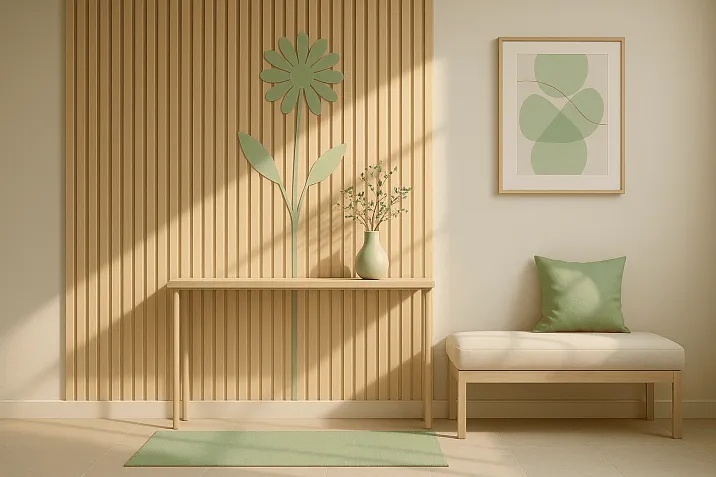
Modern interior design presents us with challenges that a decade ago seemed impossible to solve. How to create a space that is simultaneously functional, aesthetically pleasing, and economically justified? The answer lies in the proper selection of finishing materials, and here interior MDF panel buy which is worth buying from trusted suppliers, becomes a key solution.
Why have interior MDF panels become so popular among professionals and enthusiasts? It’s not only due to their versatility, but also because of the unique balance of quality and affordability they offer to modern consumers.


What Lies Behind the Acronym MDF




Scientific Approach to Understanding the Material
Medium Density Fiberboard – this is the full form of the abbreviation MDF, behind which lies a revolutionary wood processing technology. Unlike familiar particleboard or plywood, MDF is produced using a completely different technology that allows achieving unique material properties.
The process begins with grinding wood into micron-sized fibers. These fibers are treated with steam at a temperature of 100-130°C, which activates natural binding substances contained in the wood. Then, synthetic resins are added in minimal amounts – only 6-8% of the total mass.
Our factory also produces:


Why MDF surpasses its analogs
The density of the finished material is 600-850 kg/m³, providing an optimal balance of strength and workability. Unlike particleboard, where wood particles are randomly oriented, in MDF fibers are distributed more evenly, giving the material isotropic properties.
The moisture resistance of MDF exceeds that of particleboard by 2-3 times due to its denser structure and quality of binders. This allows using MDF interior planks even in rooms with high humidity without the risk of deformation or damage.
Get Consultation
Types of interior rails: variety of shapes and sizes
Standard profiles and their purpose
Rectangular rails remain the most popular type due to their versatility. Standard sizes range from 10×20 mm to 50×100 mm, allowing to solve tasks of various scales – from delicate decoration to creating large-scale architectural elements.
Square profiles 20×20, 30×30, 40×40 mm are ideal for creating geometrically correct compositions. Their symmetry allows using rails in any orientation without losing visual effect.
Specialized profiles for special tasks
Half-round rails create soft, organic shapes and are often used for framing openings or creating smooth transitions between different surfaces. Their radius of curvature is calculated based on the rail width using the formula R = W/2, where W is the rail width.
Patterned profiles with more complex geometry open up boundless creative possibilities. Wavy, toothed, stepped – each type creates its own unique visual effect and tactile sensation.
Length as a critical parameter
The standard length of MDF interior rails is 2400-3000 mm, which corresponds to the height of most rooms. However, rails can be manufactured to any required length up to 6000 mm without joints, which is especially important for large-scale projects.
When planning a purchase, it is important to consider the waste factor, which is 5-10% depending on the complexity of the room's geometry and the way the rails are laid out.
Decorative possibilities: from classic to avant-garde
Natural wood tones
One of the main advantages of quality MDF interior rails is the ability to imitate almost any type of wood. Modern printing technologies allow not only reproducing color and pattern, but also the characteristic texture of various species.
Oak remains a classic choice due to its distinct texture and noble tone. The imitation of oak wood on MDF reaches such a level of realism that it can only be distinguished from natural material by tactile contact.
Walnut, wenge, teak – each species has its own distinctive features, which modern manufacturers reproduce with remarkable accuracy. At the same time, the cost remains significantly lower than that of natural analogs.
Modern Color Solutions
Monochromatic finishes open up new possibilities for integrating rails into modern interior concepts. White, gray, black rails become not just decorative material, but architectural elements that shape space.
Metallic tones – gold, silver, bronze, copper – give interiors a luxurious look without corresponding expenses. Special pigments create the effect of real metal with characteristic gloss and depth of color.
Textured finishes
Matte surfaces create a sense of calm and elegance, not distracting attention with reflections and glares. Such finishes are especially suitable for bedrooms and relaxation zones, where a relaxing atmosphere is important.
Glossy surfaces, on the contrary, add dynamism and visually enlarge space due to light reflection. However, they require more careful maintenance and may show fingerprints.
Technical characteristics: detailed analysis
Strength properties
The bending strength of quality MDF interior rails is 25-30 MPa, comparable to the characteristics of coniferous wood species. The modulus of elasticity reaches 2500-3000 MPa, ensuring sufficient rigidity of structures.
An important parameter is the internal fiber bond, which should be no less than 0.55 MPa. This indicator determines the material's resistance to delamination and pulling out of fasteners.
Dimensional stability
The swelling coefficient in thickness should not exceed 12% after 24 hours of immersion in water. Quality MDF interior planks show significantly better results – 5-8%, ensuring dimensional stability under various climatic conditions.
Linear expansion due to a 1% change in humidity is only 0.02-0.03%, which is 10 times less than that of natural wood. This is critically important for long elements, where even minor deformations can disrupt the geometry of the entire structure.
Ecological safety
Formaldehyde emission from quality planks does not exceed 0.05 mg/m³ of air, corresponding to class E0 – the strictest ecological standard. For comparison, natural wood has a natural formaldehyde emission level of 0.02-0.04 mg/m³.
The absence of heavy metals, phenols, and other toxic substances is confirmed by appropriate certificates. This allows the material to be used in children’s facilities and medical facilities.
Areas of application: from residential spaces to commercial facilities
Residential Interiors
in apartments and private homes MDF interior planks find the most diverse applications. Accent walls in living rooms create a focal point, drawing attention and structuring the space.
In bedrooms, planks are often used to create headboards. Vertical placement visually increases ceiling height, while horizontal placement expands the space. Combining different orientations creates dynamic geometric compositions.
Children’s rooms impose special requirements for material safety. MDF planks with rounded edges and eco-friendly coatings are ideal for such spaces. Bright colors stimulate children’s imagination, while natural tones promote peaceful sleep.
Commercial spaces
Office spaces require materials combining elegance with practicality. Interior MDF planks allow creating sophisticated interiors without significant costs. They are easy to maintain, which is important under intensive use.
Restaurants and cafes use planks for zoning and creating a cozy atmosphere. Different sizes and colors allow distinguishing zones for various purposes – from intimate corners to common areas.
Shopping centers use planks for navigation and branding. Color coding helps visitors orient themselves in the space, while brand colors enhance brand recognition.
Specialized facilities
Medical facilities value the hygiene of MDF and the ease of disinfecting surfaces. Light tones create a sense of cleanliness and sterility, while rounded profiles eliminate hazardous sharp edges.
Educational facilities use planks not only for decoration but also as functional elements – guides for suspended equipment, bases for information boards, components of interactive educational systems.
Production technologies: from raw material to finished product
Raw material preparation
The quality of finished interior MDF planks largely depends on the raw material preparation stage. Wood undergoes careful sorting with removal of metal inclusions, bark, and rotten areas. The moisture content of the raw material should not exceed 12%.
Defibration – the process of separating wood into fibers – occurs at a temperature of 170-180°C and pressure of 0.7-0.8 MPa. These conditions activate natural lignin, which becomes an additional binding component.
Molding and pressing
Modern presses operate at a pressure of 25-40 MPa and temperature of 200-220°C. Pressing time depends on the thickness of the panel and is 2-4 minutes per millimeter of thickness. Strict adherence to regimes is critically important for achieving a uniform structure.
Cooling occurs under controlled conditions to prevent internal stresses. Cooling rate should not exceed 10-15°C per minute; otherwise, cracking or warping of panels may occur.
Mechanical processing
Calibration ensures precise dimensions of finished planks with tolerances of ±0.1 mm in thickness and ±0.5 mm in width. Modern CNC calibration and sanding machines allow maintaining dimensional stability throughout the entire batch.
Profiling milling requires special tools made of hard alloys. Cutting speed for MDF is 60-80 m/min with feed rate of 15-25 m/min. Properly selected modes ensure surface finish Ra 1.6-3.2 μm.
Selection criteria: what to pay attention to when purchasing
Visual quality assessment
The surface of quality interior MDF planks should be uniform without visible inclusions, spots, or color changes. The material structure at the ends should be dense, without delamination or voids.
The geometry of the planks is checked using a metal ruler or level. Deviations from straightness must not exceed 0.2% of the plank's length. Angles must be clearly defined without chips or rounding.
Documentary confirmation of quality
The certificate of conformity must include information on physical and mechanical properties, formaldehyde emissions, and fire safety. Test protocols from accredited laboratories confirm the declared characteristics.
The batch quality passport contains specific data on the manufactured product — production date, raw materials used, technological regimes, and incoming inspection results.
Manufacturer's reputation
The manufacturer's experience in the market is an important indicator of reliability. Companies with long-standing histories have refined technological processes and stable product quality.
The presence of an in-house quality control laboratory indicates a serious approach to production. Modern analytical equipment allows monitoring all critical product parameters.
Material requirement calculation: procurement planning
Room measurements
Accurate room measurements are the foundation for correct material requirement calculation. All measurements should be taken at three points for each dimension, using the arithmetic mean value.
The plank layout scheme must consider not only aesthetic but also technological aspects. The direction of fibers in MDF should align with the direction of maximum loads to ensure structural strength.
Accounting for technological losses
The material reserve coefficient depends on the complexity of the room's configuration and the installers' experience. For simple rectangular rooms, a reserve of 5-7% is sufficient; for complex configurations, up to 15% is required.
When purchasing MDF rail for interior use it is necessary to consider the possibility of purchasing additional material from the same batch. Minor color differences between different batches may be noticeable under bright lighting.
Economic optimization
Wholesale discounts begin at orders of 100-200 linear meters, depending on the manufacturer. Combining orders with neighbors or colleagues can result in significant savings.
Transportation costs constitute a significant portion of the total cost for small orders. Planning delivery together with other construction materials allows optimizing logistics expenses.
Installation and mounting: professional secrets
Preparation stage
Material acclimatization in the installation room must last at least 48 hours. During this time, MDF reaches equilibrium humidity, preventing deformation after installation.
The base must be flat with deviations no more than 2 mm per meter. Irregularities are compensated with shims or leveling compounds. The base's moisture content must not exceed 4%.
Fastening systems
Self-tapping screws remain the most reliable fastening method. The pre-drilled hole diameter should be 0.8-0.9 times the screw diameter to prevent MDF cracking.
Adhesive joints are used on perfectly flat surfaces. Polyurethane adhesives provide strong and elastic joints, compensating for thermal deformations.
Hidden fastening using clamps allows creating surfaces without visible fasteners. This system is especially effective for creating monolithic compositions.
Joint treatment
End joints require precise fitting with a gap no more than 0.5 mm. Using a fine-toothed circular saw ensures a clean cut without chipping.
Corner joints are made at a 45° angle, followed by fitting on-site. A quality joint should be practically invisible even upon close inspection.
Maintenance and operation: preserving the original appearance
Regular Maintenance
Weekly dry vacuuming with a soft brush attachment removes the majority of dirt. A bristle attachment may leave micro-scratches on glossy surfaces.
Wet cleaning is performed using a slightly damp microfiber cloth without abrasive agents. Any remaining moisture should be immediately removed to prevent material swelling.
Repairing damage
Minor scratches on painted surfaces are removed using matching color touch-up pencils. Deep damage requires local spackling and repainting.
Chips on ends are filled with special wax pencils or acrylic sealants. After drying, the surface is sanded with fine-grit sandpaper.
Damage Prevention
Protective inserts in high-impact areas extend the lifespan of rails. Transparent polyurethane films are virtually invisible and effectively protect against mechanical damage.
Controlling air humidity within 45-65% prevents deformation and cracking. Using humidifiers in winter and dehumidifiers in summer maintains an optimal microclimate.
Innovative Solutions: Looking to the Future
Smart Materials
Integrating LED elements transforms ordinary rails into lighting system components. RGB lighting allows creating dynamic light compositions that adapt to time of day or mood.
Thermochromic coatings change color depending on temperature, creating living, responsive surfaces. Such solutions are especially effective in public spaces.
Functional Additives
Antibacterial properties are achieved by incorporating silver nanoparticles into coatings. Such surfaces suppress the growth of pathogenic microorganisms without using chemical disinfectants.
Photocatalytic additives based on titanium dioxide purify air from harmful impurities under light exposure. This technology is especially relevant in urban areas with high pollution levels.
Economic Aspects: Investment Analysis
Cost of materials
The price of quality interior MDF rails varies from 80 to 300 rubles per linear meter depending on size, coating type, and manufacturer. Exclusive profiles with artistic finishing may cost significantly more.
Comparison with alternative materials shows MDF’s advantage in terms of cost-effectiveness. Natural wood costs 2-5 times more for comparable aesthetic qualities.
Hidden Costs
Installation cost accounts for 30-50% of material cost when hiring professionals. DIY installation requires purchasing or renting specialized tools.
Preparation work — wall leveling, priming, marking — may require additional investments amounting to 20-40% of the rail cost.
Long-Term Cost-Effectiveness
The service life of quality interior MDF rails is 15-20 years under proper usage conditions. Depreciation is 5-7% annually, significantly lower than many alternative solutions.
The ability to refresh the surface by repainting allows radically changing the interior without dismantling the structure. Renewal cost is 15-25% of initial expenses.
Regional Market Characteristics
Moscow Region
The capital market is characterized by high quality requirements and a wide product range. Both domestic and imported manufacturers with various price positioning are represented.
Moscow’s logistical advantages ensure fast delivery and the ability to work with small batches. A developed network of construction hypermarkets offers a wide selection interior MDF profile boards of different manufacturers.
Regional Centers
In regional centers, products from domestic manufacturers with optimal cost-effectiveness ratio prevail. Delivery times may be 1-2 weeks depending on distance from production bases.
Local construction companies often offer comprehensive services — from material selection to full installation. This can be advantageous for comprehensive reconstruction projects.
Conclusion
Traveling into the world of interior MDF rails opens up boundless opportunities for creativity and self-expression. This remarkable material combines the best qualities of natural wood with the advantages of modern manufacturing technologies.
Technical perfection of MDF is manifested in its stability, strength, and durability. Ecological safety makes it suitable for any room, including children’s rooms and medical facilities. The variety of decorative coatings allows realizing any designer fantasies.
Economic Efficiency interior MDF rail which is worth buying from reliable suppliers, is not only reflected in affordable pricing but also in long-term operational prospects. Minimal maintenance costs and the possibility of renewal make this material an exceptionally cost-effective investment.
Ease of installation opens opportunities for DIY work, further reducing overall project costs. The result does not fall short of professional work if technological requirements and recommendations are followed.
The versatility of application makes MDF interior planks popular in various projects — from modest decoration of an urban apartment to large-scale commercial interiors. Everyone will find a solution that suits their needs and possibilities.
Innovative technologies continue to expand the functionality of the material. Smart coatings, integrated electronics, special additives — all of this is already available to consumers today and defines the industry's development direction in the coming years.
Choosing the right supplier becomes the guarantee of successful project implementation. Company reputation, product quality, and service level — these factors are crucial for achieving the desired result.
STAVROS, with years of experience in the decorative materials market, is an example of reliability and professionalism. Strict quality control at every stage, from raw material procurement to delivery of finished products, ensures compliance with the highest standards. A wide assortment, flexible pricing policy, and individual approach to each client make STAVROS the preferred choice for professionals and private consumers who value quality and reliability.