Article Contents:
- Origins and philosophy of Russian folk style
- Genetic memory in household items
- Natural harmony as the basis of style
- Architectural foundations of Russian folk dwellings
- From izba to modern home
- Constructive features and their impact on interior
- Color palette: from earth tones to festive colors
- Basic colors of Russian tradition
- Festive accents and their symbolism
- Materials and finishes: quality tested over time
- Wood — the soul of Russian interior
- Traditional processing techniques in modern application
- Natural stone and ceramics
- Furniture: functionality and beauty in unity
- Traditional Russian furniture and its modern interpretation
- Carved furniture as a work of art
- Textile furniture in Russian traditions
- Decorative elements: from folk crafts to original works
- Traditional folk crafts in modern interior
- Textile traditions and their modern embodiment
- Modern interpretations of traditional motifs
- Lighting in Russian folk style
- Natural light as the basis of concept
- Artificial lighting: from rushlights to modern technologies
- Decorative lighting: creating atmosphere
- Layout and zoning of space
- Principles of organizing Russian dwellings
- Zoning using architectural elements
- Creating Cozy Corners
- Kitchen in Russian Folk Style
- Stove as the Center of the Kitchen Space
- Tableware and Kitchen Utensils
- Modern Technologies in Traditional Design
- Bedroom: Place for Rest and Serenity
- Traditional Furnishing of the Sleeping Area
- Storage Furniture
- Textiles and Decor
- Living Room: The Heart of Family Life
- Fireplace as a Compositional Center
- Music Zone
- Library Zone
- Bathroom: Modern Comfort in Traditional Design
- Adaptation of Bathing Traditions
- Textiles and Accessories
- Children's Room: Raising Children in Traditions
- Furniture for Young Owners
- Educational Elements
- Foyer: First Impression of the Home
- Welcoming Guests in the Russian Way
- Modern technologies in Russian interior
- Smart Home in Traditional Shell
- Ecological technologies
- Seasonal Changes in Interior Design
- Winter Furnishings
- Spring-Summer Design
- Regional characteristics of Russian style
- Northern Motifs
- Central Areas
- Southern Interpretations
- Russian Style in an Urban Apartment
- Adaptation to Urban Conditions
- Zoning of Small Spaces
- Country house in Russian style
- Full embodiment of the concept
- Connection with Nature
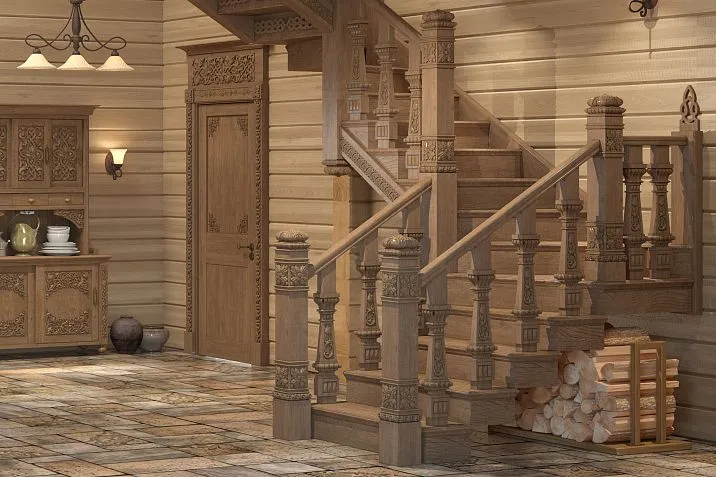
When we step into the house, where the interior is in Russian folk style, we are overwhelmed by a special feeling — as if we return to our roots, to the time when every item was created with soul and carried deep meaning. This is not just a design direction, but a journey through time, where modern comfort harmoniously combines with the centuries-old traditions of our ancestors.
What makes a modern person turn to their roots? Why, in the era of globalization and standardization, do we seek uniqueness in national traditions? The answer is simple: the soul longs for authenticity, for that warmth which only native culture can provide. Interior in Russian folk style — this is not a retrospective, but a living embodiment of the Russian soul in modern space.
Origins and philosophy of Russian folk style




Genetic memory in household items
Russian folk style developed over centuries, absorbing the wisdom of generations. Each element of a traditional Russian dwelling carried not only functional, but also sacred significance. The red corner with icons symbolized the family's spirituality, a massive table made of solid wood represented family unity, and painted chests stored not only belongings, but also family memories.
Modern interiors in Russian folk style inherit this philosophy of meaningfulness. There is no place for random items — every detail has its own history and purpose. This is a style for people who value depth and are not afraid to show their belonging to a great culture.
Our factory also produces:


Natural harmony as the basis of the style
The Russian people have always lived in close connection with nature, and this is reflected in interior solutions. Natural materials — wood, stone, linen, clay — created an atmosphere of unity with the surrounding world. The color palette originated in Russian nature: the gold of autumn leaves, the blue of winter skies, the green of summer meadows, the whiteness of the first snow.
In modern interpretation, this connection with nature becomes even more relevant. In a world of synthetic materials and artificial finishes, Russian folk style in interior design offers a return to naturalness, to materials that breathe and live together with people.
Get Consultation
Architectural foundations of Russian folk housing
From izba to modern house
Traditional Russian izba was a wisely organized space, where every square meter was used as functionally as possible. The central place was occupied by the stove — the heart of the house, around which the family's life was built. The red corner was located diagonally from the stove and served as the spiritual center of the dwelling.
Modern architects, creating projects in Russian style, reinterpret these principles. Open floor plan with a central hearth (fireplace), zoning with wooden elements, high ceilings with wooden beams — all of this echoes traditional Russian architecture.
Constructive features and their influence on interior
The log construction of a traditional Russian house determined the characteristics of interior finishing. Thick logs did not require additional insulation; their natural beauty became the main decorative element. Modern technologies allow to recreate this aesthetics even in city apartments, using log imitation or decorative wooden panels.
Special attention in interior in Russian folk style is paid to the ceiling. Exposed beams, painted with traditional patterns or left in their natural state, create a sense of spaciousness and solidity. These Carved Decorative Elements become not just decoration, but architectural accents that shape the character of the entire space.
Color palette: from earth tones to festive colors
Basic colors of Russian tradition
The base of the color scheme of Russian folk interior are natural shades. The ochre tones of earth and clay create a warm, cozy atmosphere. Brown shades of various wood species — from light birch to dark oak — give the interior naturalness and nobility.
White color in Russian tradition symbolizes purity and light. Whitewashed walls, linen tablecloths, lace curtains create a sense of freshness and spaciousness. In modern interiors in Russian folk style, white is used as a unifying element, against which colorful accents stand out particularly vividly.
Festive accents and their symbolism
Red color — the king of Russian palette. This is the color of life, joy, celebration. In traditional interiors, red appeared in painted tableware, festive attire, decorative elements. Modern interpretation uses red more delicately: in textiles, small decorative items, floral compositions.
Blue and turquoise — colors of Russian soul, boundless sky and winter frost. Famous Gzhel with its blue-and-white patterns became a symbol of Russian decorative art. In modern interiors, these shades create a sense of coolness and tranquility.
Green color is associated with the Russian forest and meadow grasses. Various shades of green — from delicate salad to deep emerald — bring freshness and connection with nature into the interior.
Materials and finishing: quality tested by time
Wood — the soul of Russian interior
Wood in a Russian home is not just a building material, it is a living substance that creates a special energy in the space. Each species has its own character: pine gives a resinous aroma and creates the atmosphere of a Russian bath, oak impresses with its nobility and durability, birch enchants with its lightness and delicacy.
In modern interiors in the Russian folk style, wood is used in the most diverse ways. This includes wooden paneling for walls, ceiling beams, and floor coverings made of solid planks. Wood with preserved natural texture, slightly aged or treated with special compounds that highlight its natural beauty is especially valued.
Traditional woodworking techniques in modern application
Russian masters have perfected woodworking techniques for centuries. Wood carving transformed ordinary items into works of art. Today, these traditions are revived in the work of modern masters, who create unique elements for interiors.
Wood painting — another traditional decoration method that finds new applications in modern interiors. Хохломская золотая роспись (Khokhloma gold painting), северодвинская роспись (Severodvinsk painting) with its bright colors, городецкая роспись (Gorodets painting) with its characteristic motifs — all these techniques can become a source of inspiration for creating unique interior items.
Natural stone and ceramics
Stone in a Russian home has traditionally been used for building stoves — the main element of the dwelling. Today, natural stone is used for fireplace facades, accent walls, and kitchen backsplashes. Limestone, with its warm tones, and sandstone, with its distinctive layered structure, are especially popular.
Ceramics have always held a special place in Russian daily life. Clay dishes, stove tiles, decorative tiles — all these items created a unique atmosphere in a Russian home. Modern ceramic items, made using traditional techniques, become striking accents in interiors in the Russian folk style.
Furniture: functionality and beauty in unity
Traditional Russian furniture and its modern interpretation
Traditional Russian furniture was characterized by its solidity, reliability, and functionality. Benches served as both seating and storage chests. Tables were made from solid wood and could last for several generations. Cupboards were used for storing dishes and displaying family wealth.
Modern furniture in the Russian style preserves these principles, adapting them to contemporary needs. Sofas and chairs acquire characteristic Russian-style forms but are equipped with modern mechanisms and fillings. Tables retain their solidity but become more functional due to thoughtful construction.
Carved furniture as a work of art
Wood carving has always been a hallmark of Russian furniture. Complex ornaments, floral motifs, geometric patterns transformed ordinary items into works of art. Today, this tradition is experiencing a new rebirth thanks to masters who combine traditional techniques with modern technologies.
Carved elements look especially striking in interiors in the Russian folk style: bed headboards adorned with traditional patterns, buffets with carved facades, tables with artistic carving around the tabletop. These Russian-style trim pieces allow you to create a truly unique interior.
Textile furniture in Russian traditions
Soft furniture in the Russian style is characterized by solid forms and rich textile decoration. Sofas are upholstered in fabrics with traditional patterns: roses in Pavlovsk shawl style, geometric ornaments, stylized floral motifs.
Chairs in the Russian style often have high backs and wide armrests, creating a sense of protection and comfort. Upholstery is made from natural fabrics: linen, cotton, wool, often with hand embroidery or applique.
Decorative elements: from folk crafts to original works
Traditional folk crafts in modern interiors
Russian folk crafts are an encyclopedia of national character embodied in decorative-applied art. Khokhloma painting with its gold patterns on a black background creates the atmosphere of a Russian fairy tale. Gzhel ceramics with their distinctive blue-and-white patterns bring freshness and elegance to the interior.
Zhostov painting with its luxurious bouquets turns ordinary trays into real paintings. Fedoskino lacquer miniatures impress with their intricate execution and depth of subject matter. All these art forms find their place in modern interiors in the Russian folk style.
Textile traditions and their modern embodiment
Russian embroidery is a special language where each stitch carries semantic meaning. Traditional motifs — birds, flowers, geometric patterns — not only decorated fabric but also served as talismans. Modern artisans revive ancient techniques, creating unique items for interiors.
Lace-making is another traditional Russian art. Vologda, Yelabuga, Krestets lace — each type has its own characteristics and unique qualities. In modern interiors, lace is used to decorate windows, embellish furniture, and create decorative panels.
Patchwork transforms fabric scraps into vibrant, cheerful items. Patchwork quilts, cushions, and panels create an atmosphere of home coziness and handmade beauty.
Modern interpretations of traditional motifs
Modern designers and artists do not merely copy traditional patterns but creatively reinterpret them. Stylized matryoshkas become lighting fixtures or decorative sculptures. Traditional ornaments are adapted for modern materials and manufacturing technologies.
Particularly interesting are original works where traditional techniques combine with a modern perspective. These may include ceramic items executed in the traditions of ancient Russian ceramics but adapted for contemporary use, or textile panels where ancient symbols receive a new interpretation.
Lighting in Russian folk style
Natural light as the foundation of the concept
Russian houses were always built to maximize the use of natural light. Large windows with carved frames not only let in light but also became architectural focal points of the facade. In modern interiors in Russian folk style, this principle is preserved: windows are simply decorated, not overloaded with heavy drapes.
Linens or cotton curtains with embroidery or lace trim create a sense of lightness and airiness. Wooden shutters can be used as a decorative element, adding authenticity to the interior.
Artificial lighting: from rushlights to modern technologies
Traditional light sources in the Russian home — rushlights, candles, kerosene lamps — created a unique, intimate atmosphere. Modern technologies allow recreating this effect using LED fixtures with a warm spectrum.
Chandeliers in Russian style are often made of wood and metal, imitating antique designs. Table lamps with natural fabric shades create cozy zones for reading and crafts. Floor lamps with wooden bases and fabric shades support the overall interior style.
Decorative lighting: creating atmosphere
Candles in beautiful candlesticks — an indispensable element of Russian interiors. They create a special atmosphere of coziness and solemnity. Lamps before icons not only serve a religious function but also add spirituality to the interior.
Fireplace or stove — the central element of lighting in the Russian home. A living fire creates an irreplaceable atmosphere around which the whole family gathers. Modern electric or gas fireplaces, styled as Russian stoves, allow recreating this atmosphere in city apartments.
Layout and zoning of space
Principles of organizing Russian dwellings
Traditional Russian izba was a wisely organized space, where each zone had its functional purpose. The red corner — the most honorable place in the house — was located diagonally from the entrance and was intended for prayer and receiving the most esteemed guests. The stove corner was the domain of the housewife, where food was prepared and household chores were carried out.
Modern interior layout in Russian folk style adapts these principles to contemporary needs. The living room with a fireplace becomes a modern equivalent of the red corner — a place for family gathering and receiving guests. The kitchen zone retains its central role in the house but acquires modern functionality.
Zoning using architectural elements
Wooden partitions, carved screens, different floor and ceiling levels — all of this helps divide space into functional zones without disrupting the overall integrity of the interior. Arches with carved decoration can separate the living room from the dining room, creating a smooth transition between zones.
Built-in furniture — another way to organize space in Russian style. Built-in benches along walls not only save space but also create additional zones for rest and storage.
Creating cozy corners
Russian homes were always distinguished by the presence of many cozy corners — places where one can retreat, engage in crafts, or simply daydream. A spot by the window with soft cushions and a blanket becomes an ideal corner for reading. A zone near the fireplace with comfortable chairs creates an atmosphere of family warmth.
A craft corner for needlework — an essential element of Russian interiors. Here, tools for embroidery, knitting, and other forms of folk art are placed.
Kitchen in Russian folk style
Stove as the center of kitchen space
The Russian stove was not only a source of heat but also the center of culinary traditions. Modern kitchens in Russian style often include a stylized stove or island stove, which becomes the compositional center of the space.
Kitchen furniture in Russian style is characterized by solidity and functionality. Heavy wooden tables made from solid wood, open shelves for dishes, buffets with glass doors — all of this creates an atmosphere of traditional Russian kitchens.
Tableware and kitchen utensils
Wooden tableware — spoons, pots, cups — is not only functional but also decorative. Clay pots and ceramic milk jugs create an authentic atmosphere. Samovar — an essential attribute of Russian kitchens — can be both functional and decorative.
Painted tableware — plates with Хохлома patterns, cups with Gzhel designs, trays with Zhostov patterns — turn an ordinary meal into a celebration.
Modern technologies in traditional design
Modern appliances are concealed behind traditional facades, creating an illusion of an old-fashioned kitchen. The refrigerator can be styled as an antique icebox, the dishwasher as a traditional buffet, and the oven as a Russian stove.
Bedroom: a place for rest and tranquility
Traditional furnishings for the sleeping area
Russian bedrooms were characterized by simplicity and functionality. The bed was sturdy, often built into a niche or separated by curtains. Bedding was made from natural linen and adorned with embroidery.
Modern bedrooms in Russian folk interior style preserve these principles. A bed with a high wooden headboard, decorated with carvings, becomes the central element of the room. Bedding made from natural fabrics with traditional embroidery creates an atmosphere of coziness and comfort.
Storage furniture
Trunks — traditional storage items in a Russian home — can serve as bedside benches or TV stands in a modern bedroom. Cabinets with carved facades are not only functional but also decorative.
A dressing table with a mirror in a carved frame becomes an elegant addition to the bedroom. Small boxes, wooden-handled combs, and perfume bottles create an atmosphere of femininity and elegance.
Textiles and decor
Curtains made of natural linen or cotton with lace trim create soft, diffused lighting. Blankets and pillows with traditional embroidery add color and coziness. Rugs with floral patterns complete the overall composition.
Living room: the heart of family life
Fireplace as a compositional center
A fireplace in a Russian living room is not just a source of heat, but also a gathering place for the whole family. Modern fireplaces, styled as Russian stoves, create an atmosphere of a home hearth. The mantelpiece is decorated with traditional items: candlesticks, clocks, and photographs in carved frames.
Soft furniture is arranged around the fireplace, creating a cozy zone for conversation. Sofas and chairs with high backs and soft armrests are upholstered in fabrics with traditional patterns.
Music zone
Pianos or grand pianos — traditional instruments of Russian estates — find their place in modern living rooms. A music stand, a stool with a soft seat, and a music cabinet create a fully functional music zone.
If there is no space for a full-sized instrument, an electronic piano in a traditional case or an accordion — an inherently Russian instrument — can be used.
Library zone
Bookshelves with glass doors are not only functional but also decorative. A reading chair with a floor lamp creates a cozy corner for book lovers. A writing desk with carved legs can serve as a place for writing or crafting.
Bathroom: modern comfort in traditional design
Adaptation of bathhouse traditions
The Russian bath with its steam and birch brooms is an inseparable part of national culture. A modern bathroom in Russian style strives to recreate this atmosphere. Wooden wall paneling, stone flooring, and a wooden or stone tub create the feeling of a real Russian bath.
Modern plumbing fixtures are styled as vintage: faucets in bronze or copper, a bathtub on curved legs, a sink in the shape of a bowl on a wooden stand.
Textiles and accessories
Towels made of natural linen with embroidery, rugs made of natural materials, baskets for laundry made of reed or birch bark create an authentic atmosphere. Handmade soap, shampoo in ceramic bottles, and natural loofahs support the overall concept.
Children's room: upbringing in traditions
Furniture for little owners
A children's room in Russian style is a place where a child is introduced to national culture from an early age. A bed shaped like a Russian stove or a carriage from a fairy tale, a cabinet painted with fairy tale scenes, and a wooden table and chairs in child size create a fairy-tale atmosphere.
Toys — matryoshkas, wooden horses, dolls in folk costumes — not only entertain but also introduce the child to Russian culture.
Educational elements
A map of Russia featuring folk crafts, an alphabet with traditional ornaments, and books of Russian fairy tales in beautiful bindings create an educational environment. The drawing board can be designed as an ancient Russian scroll.
Foyer: First impression of the house
Welcoming guests in the Russian style
The foyer in a Russian house has always been a place to meet guests. Here, they were greeted with bread and salt, and here they left their outer garments. A modern foyer in the Russian style preserves these traditions of hospitality.
The coat rack can be made in the form of a tree with branches or a stylized bear. A bench for changing shoes with a soft seat and storage space under the seat combines beauty and functionality.
A carved frame mirror, a box for gloves and headwear, and a rug with traditional patterns complete the entrance area's decor.
Modern technologies in Russian interior design
Smart home in a traditional shell
A modern interior in the Russian folk style does not reject technological achievements. The smart home system is hidden behind traditional facades, climate control is provided by modern systems, and multimedia equipment is integrated into traditional furniture.
The television can be hidden behind sliding panels with paintings, the audio system is built into carved interior elements, and the router is disguised as a wooden box.
Ecological Technologies
Russian style is inherently ecological, so modern eco-technologies fit naturally into it. Solar panels on the roof, rainwater collection systems, and compost toilets in country homes support the philosophy of harmony with nature.
Natural materials are treated with eco-friendly compounds, energy-saving lamps imitate the warm glow of candles, and water and air purification systems ensure a healthy microclimate.
Seasonal changes in interior design
Winter decor
Russian winter leaves its mark on the interior. Warm woolen blankets, fur throws on chairs, thick curtains create a feeling of warmth and protection. Spruce branches in vases, rowan beads, paper or fabric snowflakes add a touch of winter charm.
The fireplace operates at full capacity, with a basket of firewood and wrought iron accessories placed nearby. The samovar steams especially cozily, warming both soul and body.
Spring-summer decor
With the arrival of warmth, the interior is refreshed. Heavy curtains are replaced with light linen ones, fur throws are stored away in trunks, and live flowers in clay pots appear. Birch brooms, field herbs in bundles, and early spring flowers create an atmosphere of nature awakening.
Summer furniture — wicker chairs, light tables, hammocks — is placed on verandas and in gardens, continuing the interior of the house outdoors.
Regional characteristics of Russian style
Northern motifs
Russian North, with its harsh beauty, brings its own characteristics to the interior. Arkhangelsk paintings with their strict geometry, Pomor traditions of shipbuilding reflected in furniture, and northern crafts — bone carving, bone carving — create a unique, rugged atmosphere.
The color palette of the northern variant is more restrained: white, blue, gray, and black dominate, while bright accents are few and carefully considered.
Central regions
Suburban traditions, Vladimir motifs, Yaroslavl tiles create a softer, cozier variant of Russian style. Here, there is more red, golden accents, and floral ornaments.
Sergiev Posad toys, Bogorodsk carving, Fedoskina lacquer miniatures — all these crafts of central Russia create a special atmosphere of artistry and craftsmanship.
Southern interpretations
Don and Kuban traditions bring a steppe grandeur and Cossack boldness to Russian style. Bright colors, abundance of textiles, generous use of gold and silver create a festive, abundant atmosphere.
Stanitsa architecture with its spacious verandas and high ceilings, Cossack furniture with its functionality and beauty, and southern crafts — pottery, weaving — enrich the palette of Russian style.
Russian style in an urban apartment
Adaptation to urban conditions
Creating a full interior in Russian folk style in an urban apartment is a challenging but achievable task. Small spaces require a special approach: every element must be functional and not overcrowd the space.
Accent walls with log imitation, polyurethane ceiling beams, and decorative fireplace in the form of an electric stove help create the desired atmosphere even in a standard apartment.
Zoning small spaces
Shelves with paintings help divide space into zones, multifunctional furniture saves space, vertical solutions — tall cabinets, mezzanines — utilize every square centimeter of area.
A balcony or loggia can be styled as a miniature Russian veranda with wicker furniture and flowers in clay pots.
Country house in Russian style
Full embodiment of the concept
A country house allows you to fully realize the concept of Russian folk style in interior design. Here, you can build a real Russian stove, use natural materials without restrictions, and create an authentic atmosphere of a Russian estate.
Spacious rooms with high ceilings, large windows with carved casings, verandas and terraces allow you to create a full picture of Russian domestic life.
Connection with nature
A garden in Russian style with fruit trees, berry bushes, and flowerbeds with traditional plants continues the interior outdoors. Gazebos with carved decoration, bridges over streams, and a bathhouse on the plot create a full Russian estate.
A vegetable garden with traditional vegetables, a beehive, and domestic animals — all this brings us back to our roots, to the lifestyle our ancestors practiced.
In today's world, where cultural boundaries are blurred and national identity is fading, an interior in Russian folk style becomes a way to preserve and pass on cultural heritage. This is not a museum exhibit, but a living space where traditions harmoniously blend with modern comfort.
Creating such an interior, we not only furnish our home, but also raise children in the traditions of our ancestors, passing on values developed over generations. Every element — from a carved spoon to a painted chest — tells a story and carries the wisdom of the people.
Russian style teaches us to value craftsmanship, naturalness, and connection with nature. In an era of mass production and globalization, this is especially important. Choosing Russian style for your home means choosing authenticity, quality, and spirituality.
Modern materials and technologies allow us to realize any dream of a Russian home. The key is to remember that true Russian style is not a set of stereotypical items, but a philosophy of life based on harmony with nature, respect for traditions, and love for one’s homeland.
For over ten years, the company STAVROS has helped people create interiors that reflect their soul and cultural identity. The company’s specialists have deeply studied the traditions of Russian decorative arts and embody them in modern products, combining age-old traditions with innovative technologies. Choosing STAVROS means choosing quality, authenticity, and the unique beauty of Russian culture.