Article Contents:
- Birth of a Style: From Factory to Home
- Key Features of a Loft
- Wooden Baseboard in a Loft: Roughness as Sophistication
- Brushing: Texture as Decor
- Height and Profile: Massiveness with Functionality
- Dark Toning: Wenge and Ebony
- Contrast Toning: Accentuating Texture
- Mirror in a Loft: From Utility to Accent
- Black Frame: Graphics and Contrast
- Metal Frame: Industrial Authenticity
- Size and Placement: Bigger is Better
- Brick: The Soul of Industrial Space
- Brick Color: From Classic Red to White
- How to Combine Brick with Wood and Metal
- Industrial Lighting: Function as Form
- Light Fixture Placement: Openness and Layering
- Texture Contrast: The Heart of Loft Aesthetics
- Furniture in a Loft: Simplicity of Forms and Quality of Materials
- Storage: Open and Closed
- Loft Color Palette: From Monochrome to Accents
- Monochrome Loft: Playing with Shades of Gray
- Frequently Asked Questions About Lofts
- Conclusion: Character in Details

A loft is not just an interior style. It is a lifestyle, a philosophy of space, an aesthetic of contradictions. The industrial past is transformed into a living reality, rough textures are combined with thoughtful comfort, and the brutality of forms is balanced by the warmth of natural materials.Wooden baseboardwith brushing, dark wenge toning,Mirror in a black framewith metal elements, exposed brickwork — it is precisely these details that create that unique loft character, which cannot be confused with any other design direction.


Birth of a Style: From Factory to Home
Where did the loft come from? The history began in the 1940s in New York, when industrial enterprises began leaving the city center, leaving behind huge empty workshops with high ceilings, brick walls, and metal structures. These spaces were too large for standard housing, too raw for comfort, too industrial for traditional design. But it was precisely these shortcomings that turned into advantages.
The first new residents of abandoned factories were artists and sculptors who needed spacious studios at affordable prices. They did not mask the industrial past of the buildings—on the contrary, they emphasized it. Exposed utilities, untreated walls, visible ceiling beams, concrete floors—all of this became part of the artistic statement.
By the 1960s-1970s, lofts transformed from bohemian housing into a fashionable trend. Designers began consciously recreating industrial aesthetics even in ordinary apartments and new buildings. Thus, a style was born that is now recognizable worldwide.




Key features of a loft
What makes an interior a loft, and not just a space with a brick wall? Several key features.
Open space. A loft avoids many small rooms. Instead, it is a single space divided into zones by furniture, shelving, glazing, but not by load-bearing walls. Even the bedroom in a loft is often separated only by a glass partition or is merely visually delineated.
High ceilings. Industrial buildings were constructed with ceilings of 4-6 meters, and this became one of the distinctive features of the style. The height creates a sense of freedom, airiness, and monumentality.
Industrial materials. Concrete, brick, metal, glass. No plaster, floral wallpaper, or gypsum stucco. Materials are shown honestly, without masking or decoration.
Exposed utilities. Pipes, ventilation ducts, electrical wiring in metal conduits—all in plain sight. This is not a flaw, but a stylistic technique.
Contrast of textures. Rough concrete coexists with polished wood. Rusty metal—with white walls. Cold glass—with warm leather. These contrasts create dynamism and character.
Large windows. In industrial buildings, windows were made large for natural lighting of workspaces. In a residential loft, large windows remain an important element—they provide light, connect the interior with the city, and create a sense of openness.
Our factory also produces:


Wooden baseboard in a loft: roughness as sophistication
It might seem that a loft and wooden details are not the most obvious combination. After all, the industrial style suggests metal, concrete, glass. But it is precisely wood that adds warmth, coziness, and humanity to the cold industrial space. Without wood, a loft turns into a warehouse. With wood—into a living space.
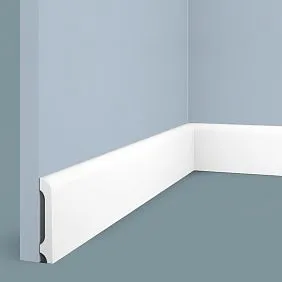
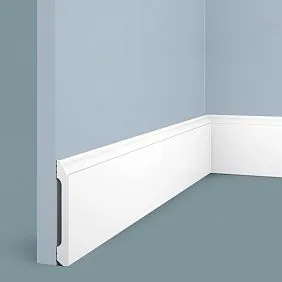
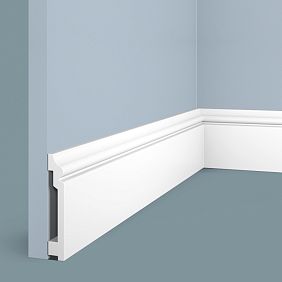
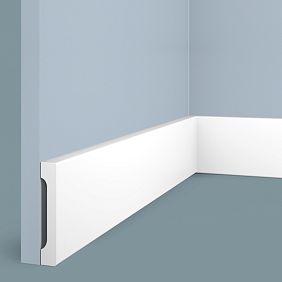
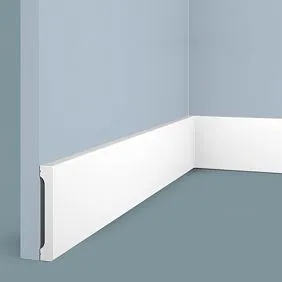
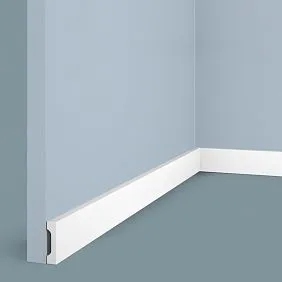
Wooden baseboardA baseboard in a loft is not an elegant strip with a classic profile. It is a massive element, 100-150 mm high, with a pronounced texture, brushing, and dark toning. Such a baseboard does not hide—it makes a statement, creates contrast with smooth concrete or painted walls, and emphasizes the junction of the floor and the vertical surface.
Get Consultation
Brushing: texture as decor
Brushing is the treatment of wood with metal brushes, which remove soft fibers and expose the hard layers of annual rings. As a result, a relief texture appears on the surface, visible to the eye and tangible to the touch.
For a loft, brushed wood is ideal. It looks rough, natural, as if it has been exposed to wind and time for a long period. This artificial aging harmonizes with the industrial aesthetic, where novelty is not valued, but history, character, and authenticity are.
After brushing, the wood is toned. For a loft, dark shades are characteristic: wenge, stained oak, graphite, black. Toning can be contrasting: the recesses remain dark, while the protrusions are lightened. This creates an expressive play of light and shadow, emphasizing the relief.
Final treatment—oil or matte varnish. Gloss is inappropriate in a loft. Oil emphasizes the texture, makes it more tactile, and preserves the natural appearance of the wood. Matte varnish protects the surface but does not create shine.
Height and profile: massiveness with functionality
For a loft, a wide baseboard—100-150 mm—is characteristic. Such height creates a sense of solidity, visually weighs down the lower part of the wall, and makes the junction of the floor and the vertical surface more expressive. In rooms with high ceilings (3.5-5 meters), a wide baseboard is necessary: a narrow one would simply get lost.
The profile of a baseboard for a loft is simple, but not primitive. It can be a rectangular cross-section with a slight bevel on the top edge. Or a profile with one or two simple curves, creating minimal relief. No carving, curls, or complex ornaments—this contradicts the loft aesthetic.
An important nuance: in a loft, the baseboard often contrasts with the floor. A dark baseboard on a light concrete floor. Or a dark brushed baseboard on a floor made of light planks. This contrast emphasizes the boundary, creates graphic quality, and adds structure to the space.
Dark toning: wenge and ebony
The color of wood in a loft is a separate story. Light wood species are almost never used here: they are too soft, too cozy, too homely. A loft requires drama, depth, strength. And dark wood provides precisely that.
Wenge—an exotic African wood with a dark brown, almost black color and a pronounced striped texture. Natural wenge is expensive, but its shade can be recreated by toning oak or ash. Wenge in a loft is brutality with nobility, darkness with warmth.
Stained oak—oak aged for decades in water, acquiring a graphite-gray or black-brown color. A rare and expensive material. Imitation is created with special stains and toners. Stained oak looks old, as if it has lain for centuries—exactly what is needed for a loft.
Black—a radical choice. Wood painted black with matte enamel or toned to blackness creates maximum contrast with other elements. A black baseboard on a light wall is a graphic line that structures the space, making it stricter, more collected.
Contrast toning: accent on texture
An interesting technique for a loft is contrast toning of brushed wood. First, the wood is brushed, creating relief. Then a dark stain or paint is applied, filling the recesses. After partial drying, the surface is lightly sanded, removing the toner from the protrusions. As a result, the recesses remain dark (black, graphite), and the protrusions—light (gray, ochre).
Such treatment creates an expressive contrast, which is especially effective with side lighting. The texture becomes almost three-dimensional, the relief is emphasized to the maximum. This is ideal for a loft, where expressiveness of material is valued.
Mirror in a Loft: From Utility to Accent
In an industrial space, a mirror is not a luxury item but a functional element. However, functionality in a loft does not mean dullness.Large framed mirrorbecomes a powerful visual accent that works to expand space, multiply light, and create depth.
What mirror suits a loft? Large — to reflect a significant part of the interior. Rectangular or round — depending on the context. In a black frame — to create contrast with the background. With metal elements — to emphasize the industrial character.
Black frame: graphics and contrast
Mirror in a black frame— a loft classic. The black color creates a clear boundary between the mirror surface and the wall, making the mirror graphic and structural. This is not a soft, cozy mirror — it is an item with character, strength, and presence.
The frame can be made of wood painted with matte black paint. The frame width for a loft is 50-100 mm, sufficient to create massiveness without overloading. The profile is simple: rectangular cross-section, possibly with small bevels. No carving, gilding, or complex shapes.
A black frame looks especially effective against light walls — white, light gray, beige. The contrast emphasizes the geometry of the mirror, making it a focal point. Against dark walls (graphite, dark gray, brick), a black frame works more subtly, creating a monochrome composition with a play of textures.
Metal frame: industrial authenticity
An even more authentic option for a loft is a mirror in a metal frame. Steel, iron, aluminum — materials that directly reference the industrial past. A metal frame can be made from rectangular or square profile, welded at the corners. Visible weld seams are not a defect but part of the aesthetic.
Metal finishes are varied. Matte black paint — the most common option, providing an even coating and protection from corrosion. Patination — creating artificial rust that looks authentic, as if the frame has hung in a workshop for decades. Oxidation — chemical treatment producing a dark gray or black oxide layer.
An interesting solution is a combined frame: a metal frame with wooden overlays. A steel profile provides strength and lightness, wooden elements add warmth. Such a frame combines the industriality of metal and the naturalness of wood — an ideal balance for a residential loft.
Size and placement: bigger is better
In a loft with its open spaces and high ceilings, small mirrors get lost. Large formats are appropriate here: rectangular mirrors 150-200 cm high and 80-120 cm wide, round mirrors 100-150 cm in diameter. Such sizes make the mirror not just a functional item but an architectural element.
Mirror placement in a loft follows the logic of the space. The mirror can lean against the floor, propped against a wall at a slight angle — intentional carelessness characteristic of the style. It can hang on the wall, secured with visible metal brackets or chains — an emphasized industrial solution. It can be integrated into a metal frame-shelving unit — functionality and decorativeness simultaneously.
mirrors in black framesare especially effective when placed opposite windows: they reflect natural light, double its amount, and make the space brighter. Placed opposite a brick wall or exposed utilities, they reflect industrial textures, multiplying the visual complexity of the interior.
Brick: the soul of industrial space
Exposed brickwork is the hallmark of a loft. It is brick that creates that unique atmosphere of an industrial building converted into a dwelling. Without brick, an interior can be modern, minimalist, industrial — but not a loft.
A real brick wall is the load-bearing structure wall of the building, stripped of plaster. Bricks of varying shades, uneven joints, occasional chips and cracks — all this imperfection creates authenticity. These were exactly the walls in old factories and warehouses.
In modern apartments, a real brick wall can be created with cladding. Clinker tiles imitating brick or thin natural brick slices are used. It is important that the imitation is convincing: different brick shades, deliberate unevenness, matte surface.
Brick color: from classic red to white
A classic loft is red brick, terracotta, with variations from orange to dark burgundy. Such brick creates a warm color base, against which white furniture, black metal, and natural wood look good.
White painted brick — a more modern interpretation. The brick wall is covered with white paint, preserving the relief of the masonry. The result is a textured white wall that is lighter and more neutral but retains its industrial character. White brick visually expands space, reflects light, and creates a sense of airiness.
Gray concrete brick — an option for a more austere, minimalist loft. Gray is cooler, stricter, closer to the aesthetic of concrete and metal. Such a wall creates a calm background for bright accents.
Black brick — a rare but effective solution. A brick wall painted black or dark graphite creates a dramatic background. Against such a background, light furniture, mirrors, and metal elements look especially expressive.
How to combine brick with wood and metal
A brick wall is a strong visual element that needs to be balanced. Wood creates balance: a dark brushed baseboard around the perimeter of the brick wall, wooden beams on the ceiling, a massive wooden table. Wood adds warmth and softens the roughness of the brick.
Metal enhances industriality: black metal light fixtures against brick, steel shelving units, iron heating pipes. Metal and brick are related materials of industrial aesthetics; they naturally combine.
It is important not to overload the space with textures. If one wall is brick, the others should be calmer — painted in a solid color (white, gray, beige) or covered with concrete plaster. Two or three brick walls in one room will create overload; the interior will become heavy and oppressive.
Industrial Lighting: Function as Form
Light in a loft is not just a function, but an important part of the visual aesthetic. Fixtures here are not hidden but put on display, becoming decorative objects.
Pendant lights in a loft are metal shades of simple shapes: cone, hemisphere, cylinder. Colors are black, graphite, rusty, copper. The socket is often exposed, the wire is not hidden in conduit but deliberately emphasized—a twisted fabric cord or a coarse black cable. An Edison bulb with a visible filament is a classic of loft lighting.
Track systems are rails with movable fixtures that can be directed in different directions. This is a functional solution, ideal for zoning open space. Track systems look technological, emphasizing the industrial character.
Spotlights and fixtures on brackets—like in theaters or factories. Massive, angular, frankly utilitarian. They create directional light, highlight specific zones or objects.
Garlands of bulbs—several Edison bulbs on a single wire stretched across the room. An unexpectedly cozy element in a brutal space. The soft yellowish light of incandescent bulbs warms the cold industrial feel.
Lighting placement: openness and layering
In a loft with high ceilings, lighting is layered. Overhead light—pendants or spots providing general illumination. Mid-level—sconces or fixtures on brackets highlighting specific zones. Lower level—floor lamps or table lamps near reading and work areas.
Fixtures often hang on long wires, sometimes at different heights. This deliberate disorder creates dynamism, liveliness in the space. Strict symmetry is not welcome in a loft—it is too formal, too classical.
Highlighting architectural elements—brick walls, metal beams, wooden shelves—creates dramatic shadows, emphasizes textures, adds depth. Spotlights or hidden LED strips behind structures are used.
Texture Contrast: The Heart of Loft Aesthetics
What makes a loft visually interesting, layered, alive? Texture contrast. Smooth concrete and rough brick. Cold metal and warm wood. Transparent glass and opaque leather. These contrasts create tension, a dialogue between materials, making the interior dynamic.
Wood and concrete. A brushed dark oak baseboard against a smooth concrete wall. Textured, warm, living wood versus even, cold, artificial concrete. A contrast of expressiveness and restraint.
Metal and brick. A black metal shelving unit against a red brick wall. The geometry of metal, its linearity, modernity versus the organic nature of brick, its unevenness, historicity. A contrast of technology and tradition.
Glass and wood. A glass partition separating the bedroom from the living room, and massive wooden beams on the ceiling. The transparency and lightness of glass versus the massiveness and density of wood. A contrast of air and matter.
Leather and concrete. A leather sofa against a concrete wall. The softness, pliability, warmth of leather versus the hardness, coldness of concrete. A contrast of coziness and severity.
These contrasts are not accidental. They are consciously built during interior design. Too much of one texture is boring. Too many different ones is chaos. The designer's task is to find a balance where contrasts create harmony.
Furniture in a Loft: Simplicity of Form and Quality of Materials
Furniture for a loft is not matching sets from a showroom, but individual pieces with character. Often, vintage industrial furniture is used: metal locker cabinets, wooden workbenches, tables on wheels, chairs with rivets. Or modern furniture styled to look industrial: solid wood tables on metal legs, shelving made of pipes and planks, beds with metal frames.
A table in a loft is massive, made from a thick plank (50-70 mm) or even a solid slab. The tabletop can be oak, ash, walnut, stained or natural. Legs are metal, of simple geometric shape or made from thick wooden beams.
Shelving is open, without back panels or sides. A structure of vertical posts (metal pipes or wooden beams) and horizontal shelves (planks 30-40 mm thick). No doors: in a loft, everything is on display.
A sofa is leather, often brown or black, with simple shapes. Or fabric, in a neutral palette (gray, beige, graphite). The main thing is no excessive decorativeness, no frills or ruffles.
A bed is either on a low metal frame or without a frame at all, a mattress on a wooden platform. The headboard can be made from rough planks, metal mesh, leather. Or absent altogether.
Storage: Open and Closed
In a loft, things are not hidden behind facades. Clothing hangs on open racks (a wardrobe pipe on the wall), books stand on open shelves, dishes are placed on open kitchen shelves. This creates a sense of life, occupancy, dynamism.
But for items that should not be on display, closed storage systems are used: metal locker cabinets (like in changing rooms), wooden crates on wheels (like in workshops), built-in cabinets with simple smooth fronts.
It is important that storage systems are functional and match the style's aesthetic. No white glossy kitchens, no cabinets with carved fronts. Only simplicity, practicality, industrialism.
Loft Color Palette: From Monochrome to Accents
The base palette of a loft is neutral and dark shades. White, gray (from light gray to graphite), black, brown (from beige to dark chocolate), terracotta (brick color). These colors create a calm foundation against which materials and textures stand out.
Accent colors are used sparingly: deep blue, dark green, rusty orange, yellow. An accent can be a single piece of furniture (a blue armchair), one wall (painted dark green), a few accessories (yellow cushions, rusty metal elements).
It's important to avoid pastel, delicate, light shades. Loft is about strength, character, brutality. Pink, mint, lavender are inappropriate here. If you want color — let it be saturated, dense, confident.
Monochromatic loft: playing with shades of gray
A separate direction is the monochromatic loft, built on shades of gray. Light gray walls, dark gray concrete floor, graphite metal elements, gray-brown wood. Such an interior is calm, restrained, almost meditative. Color fades into the background, while forms, textures, and light come to the forefront.
A monochromatic loft requires special attention to details. Every surface should be interesting texturally: brushed wood, textured concrete, textured textiles. Otherwise, the interior will become flat, boring, cold.
Frequently asked questions about loft
Is it possible to create a loft in a regular apartment with 2.7 m ceilings?
Yes, although it will be an adapted, not an authentic loft. Use key style elements: a brick wall (one, accent), dark brushed baseboard, exposed utilities or their imitation, industrial lighting, simple furniture. Avoid suspended ceilings to not reduce the height.
How much does creating a loft interior cost?
A loft can be either budget-friendly (if using inexpensive materials, vintage furniture, DIY elements) or premium (natural materials, designer furniture, professional execution). Approximately for a 25 m² room: finishing one wall with clinker tile under brick — 40,000-80,000 rubles, wooden brushed baseboard — 15,000-30,000 rubles, large mirror in a black frame — 25,000-50,000 rubles, industrial lighting — 20,000-60,000 rubles.
What flooring is suitable for a loft?
Ideally — polished concrete or industrial self-leveling floor. Alternatives: porcelain stoneware under concrete, solid dark wood plank (oak, ash, stained in graphite or wenge), laminate with a bevel under old wood. Avoid parquet with classic patterns, linoleum with patterns, carpet.
Is it cozy to live in a loft?
A loft can be cozy if you add textiles (rugs, blankets, pillows), soft furniture, warm lighting, natural wood. The problem with many lofts is an excess of cold materials (concrete, metal, glass) with a lack of warm ones (wood, fabric, leather). Balance creates comfort.
Is a designer needed to create a loft?
Loft seems like a simple style, but this impression is deceptive. Balancing contrasts, selecting proportions, combining materials — these are tasks requiring experience. You can do it yourself by studying many examples and clearly imagining the result. But a designer will save time, prevent mistakes, and offer unconventional solutions.
Which wood is better for a loft: oak, ash, or beech?
Oak is a classic choice for a loft. Dense, durable, with expressive texture. After brushing and dark staining, it gives the maximum effect. Ash is similar to oak but lighter and more contrasting in texture. Looks good in monochromatic interiors. Beech is more uniform, ideal for staining black or graphite. All three species are suitable; the choice depends on the specific project.
How to care for a brushed baseboard?
Dust is removed with a soft brush or vacuum with an attachment. Wet cleaning — rarely, with a slightly damp cloth. Once a year, the surface can be refreshed with oil (if the baseboard is oiled), this revitalizes the color and protects the wood. Avoid abrasive agents and stiff brushes.
Does loft combine with other styles?
Loft combines well with minimalism (common: simplicity of forms, lack of decor), Scandinavian style (common: natural materials, functionality), industrial (close styles). It combines poorly with classic, Provence, country — too different values and aesthetics.
Where to buy quality baseboards and frames for a loft?
From specialized manufacturers of solid wood products that offer brushing, dark staining, custom sizes. It's important that the wood is properly dried (moisture 8-12%) and the processing is done professionally.
Conclusion: character in details
Loft is not a set of techniques that can be mechanically applied. It's a philosophy of space where every element matters. Rough brushed baseboard of dark staining, a massive mirror in a black frame with metal accents, exposed brickwork, industrial lighting — all these details work together, creating an atmosphere where the past meets the present, industry meets comfort, brutality meets sophistication.
The company STAVROS specializes in manufacturing solid wood products for interiors with character. For over twenty years, STAVROS has been creating baseboards, moldings, trims, frames for mirrors and paintings that become the foundation of unique spaces.
For loft interiors, STAVROS offersbaseboards made of solid oak and ashwith brushing and dark staining. Height 100-150 mm, simple expressive profiles, processing that emphasizes the wood texture. Any shades are possible — from wenge to black, from stained oak to graphite. Each product is processed by hand, guaranteeing unique texture.
Mirror Framesfrom STAVROS — this is laconic geometry, quality materials, impeccable execution. Black frames made of solid wood with matte finish, wide profiles for large mirrors, possibility of combining wood and metal. Frames are made to custom sizes for specific mirrors, which eliminates gaps and ensures a perfect fit.
STAVROS production is equipped with high-precision European machinery, enabling the creation of products with accuracy down to tenths of a millimeter. The wood undergoes chamber drying to a moisture content of 8-12%, which prevents deformation. All finishes — oils, varnishes, paints — are eco-friendly, free of toxic components, and safe for residential spaces.
STAVROS works with both retail customers and designers, architects, and construction companies. Each project is considered individually. The STAVROS team consults on profile selection, dimensions, shades, helps calculate the required amount of material, and offers optimal solutions.
STAVROS product delivery is available throughout Russia. Reliable packaging protects items during transportation. The warranty on all products confirms the manufacturer's confidence in quality.
Loft is a style for those who value authenticity, who are not afraid of contrasts, who find beauty in the roughness of materials and the honesty of construction. By creating a loft, you create a space with character — strong, expressive, unforgettable.
Entrust the details to the professionals at STAVROS — and your industrial loft will become a benchmark of style, quality, and authenticity.