Article Contents:
- Wooden coving: more than just ceiling skirting
- Coving materials: why wood wins
- Coving profiles: from simplicity to luxury
- Wooden architrave: a frame for openings and beyond
- Architrave functions: practicality and aesthetics
- Carved wooden architraves: reviving tradition
- Architraves and coving: how to unify them
- Round wooden handrail: ergonomics and tradition
- Handrail diameter: why 50 millimeters became the standard
- Round molding: structural variations
- Bent handrails: the art of smooth transitions
- Unity of three elements: how to assemble an ensemble
- Strategy one: unity of wood species and color
- Second strategy: contrasting accents
- Third strategy: profile rhyme
- Technical aspects of installation
- Coving installation: glue or nails?
- Architrave installation: concealed or exposed fasteners
- Handrail installation: safety above all
- Wood species: choosing according to the task
- Oak: nobility and durability
- Beech: Plasticity and Uniformity
- Pine: Budget Option with Caveats
- Finishes: protection and aesthetics
- Varnish: durability and shine
- Oil: naturalness and tactility
- Enamel: color and style
- Interior styles: how to select elements
- Classic style
- Scandinavian Style
- Modern style
- Loft
- Maintenance and Durability
- Regular Cleaning
- Recoating
- Room microclimate
- Frequently Asked Questions
- Conclusion: create harmony with STAVROS

What connects wooden coving under the ceiling, architraves around doors, and round handrails on stairs? The common logic of space—unity of material, color, texture. These three elements may seem disparate, but in reality, they form a powerful tool for shaping style: from bottom to top, from stair railings to ceiling skirting, they set the rhythm and character for the entire house. When you undertake renovation or construction, you rarely think about the interconnection of details. And in vain. It's no coincidence that interior designers insist: there are no small details.wooden cornice, framing the ceiling,Wooden trim around doors anda round wooden handrail on the stairs—they are all participants in the same orchestra, and if one is off-key, the overall impression collapses.
Let's break it down in detail: what wooden coving is, what carved architraves are like, why round molding became the ergonomic standard, and most importantly—how to assemble these three elements into a single ensemble worthy of the best interiors.




Wooden coving: more than just ceiling skirting
Many confuse coving with ordinary skirting boards—thinking they're the same thing, just installed in different places. But that's an oversimplification.wooden cornice— these are profiled strips that mask the joint between the wall and ceiling, creating a smooth transition. Their shape—a concave arc or a complex multi-step profile—is not accidental: it is designed to 'soften' the right angle, making the intersection of planes invisible, elegant, rather than crude and technical.
In classical architecture, coving served another role—visually 'raising' the ceiling, creating an illusion of height. The profile of the coving casts shadows and highlights that play under natural and artificial lighting. This play of light transforms a simple strip into an architectural detail that shapes the mood of a room. If a room seems squat or gloomy, the cause may not be so much a low ceiling as the absence of coving or its incorrect selection.




Materials for coving: why wood wins
The modern market offers coving made of polystyrene, polyurethane, plaster, and MDF. The cheapest are polystyrene ones—lightweight, easy to install, but fragile, susceptible to mechanical damage, and yellow over time. Polyurethane ones are stronger, can be painted, and imitate stucco, but the plasticity of the material is still 'readable'—it looks unnatural. Plaster coving is closer to classic, but heavy, requires professional installation, and is afraid of moisture.
But buy wooden coving— is the choice of those who value authenticity. Wood carries organic matter, a natural texture that cannot be faked with synthetics. An oak coving with pronounced annual rings, a beech one with a uniform fine-pored structure—each has its own 'soul'. When light falls on a wooden coving, it does not slide over plastic but penetrates the wood, reflects off the fibers, creating a lively play of shades. This is especially noticeable when using oil finishes, which do not create a glossy film but emphasize the naturalness of the material.
Moreover, wooden coving is a long-term investment. Oak lasts 50-70 years without losing its properties, beech—30-40 years. Yes, the cost is 5-7 times higher than plastic, but considering that polystyrene coving will need to be replaced every 7-10 years (yellowing, chips, loss of shape), the economics change. Wooden coving can be restored: lightly sanded, the finish renewed—and it looks like new again.
Our factory also produces:


Coving profiles: from simplicity to luxury
The simplest form of coving is a quarter-circle with a diameter of 20-40 millimeters. A concise arc that gently smooths the corner without drawing attention. Such coving suits minimalist, Scandinavian interiors where restraint is valued. Installed around the ceiling perimeter, they create a soft boundary between wall and ceiling, nothing more.
Complex profiled coving is already a statement of style. The profile can include several steps: a concave cove, a convex torus, a beveled chamfer, another cove. The alternation of elements creates rich chiaroscuro, enhances volume. Such coving is characteristic of classical styles—Empire, Baroque, Victorian. Here, wide coving with a height of 80-120 millimeters is appropriate, occupying a noticeable part of the wall and ceiling, turning into an independent decorative element.
Carved coving is the pinnacle of craftsmanship. A relief ornament is applied to the surface of the coving: plant swirls, geometric meanders, stylized acanthus leaves. Carving is done on a CNC milling machine (for serial products) or by hand (for exclusive ones). Carved wooden coving turns into a work of decorative and applied art, attracts the eye, creates a sense of richness and handcraft. The cost of carved coving can exceed that of simple ones by 5-10 times, but the effect is worth it.
Get Consultation
Wooden architrave: a frame for an opening and more
If coving works on the periphery of vision (we rarely notice the ceiling), then Wooden casingis in the focus of attention every day. Door and window openings are places we constantly pass through, where the gaze falls upon entering a room. The architrave frames the opening, hides the technological gap between the frame and the wall, but most importantly—it sets the style.
Functions of architraves: practicality and aesthetics
The first function is masking the installation seam. When a door frame is installed, a gap of 10-20 millimeters remains between it and the wall, which is filled with expanding foam. The foam hardens, excess is cut off, but the cut looks untidy. The architrave covers this seam, giving the opening a finished look.
The second function is protecting the corner. Door opening corners are the most vulnerable spots: furniture is bumped against them, vacuum cleaners hit them, shoes scratch them. The architrave takes the impact, preserving the wall finish. This is especially important if the walls are wallpapered or painted—the architrave is easier to replace or restore than re-wallpapering the entire wall.
The third function is decorative. The architrave creates a frame around the door, emphasizes its significance, integrates it into the interior. A wide architrave of 100-120 millimeters gives the opening monumentality, a narrow one of 60-70 millimeters—delicacy. A carved architrave turns the door into an art object, a simple one—maintains neutrality.
Carved wooden architraves: reviving tradition
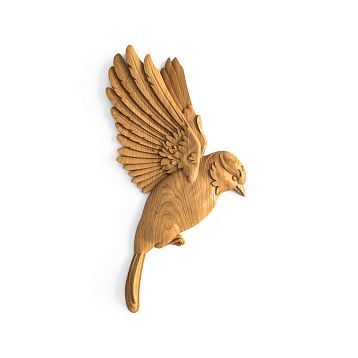
wooden carved moldingsare associated primarily with Russian wooden architecture—izbas, terems, estates. Traditional fretwork created lace-like patterns that served not only as decoration but also as a protective charm. Solar signs, stylized birds, plant ornaments—each element carried meaning.
Modern carved architraves for interiors are predominantly three-dimensional (relief) carving, not fretwork. The relief protrudes 5-15 millimeters above the background, creating a play of light and shadow. Motifs can be classical (acanthus leaves, grapevines, rosettes) or stylized under Art Nouveau, Art Deco. Carving is done on CNC milling machines, allowing for high precision and repeatability of the pattern.
Carved architraves require careful attention to the overall style of the interior. In a minimalist apartment, they will look alien, but in a classic mansion where stucco cornices, carved furniture, and chandeliers are used, carved architraves will find their place. It is important that the carving on the architraves echoes the carving on other elements—for example, on staircase balusters, on furniture fronts. This creates stylistic unity.
Architraves and coving: how to unify them
When both Wooden trimand wooden coving are present in one room, it is important to ensure their stylistic and color harmony. Imagine: the ceiling is framed by a simple smooth coving made of light beech, and on the doors—massive carved architraves made of dark oak. The dissonance is obvious.
The ideal option is to order both coving and architraves from one manufacturer, from the same wood species, with the same toning and finish. If the coving is made of oak and finished with oil in a 'dark walnut' shade, the architraves should be the same. If the coving has a figured profile with tori and coves, the architraves should also have a profiled shape, not be flat. Repeating profiles, textures, and shades around the entire perimeter of the room creates a visual rhyme—the eye finds familiar elements and delights in the order.
Another approach is contrast while maintaining material unity. For example, coving and architraves are made from the same wood species (oak), but the coving is painted white, and the architraves retain the natural wood tone. The contrast highlights the openings, makes them accents, but the overall 'wooden' quality preserves integrity. The main thing is not to mix different species (oak and beech) without a clear concept, otherwise a sense of randomness will arise.
Wooden round handrail: ergonomics and tradition
If coving and architraves are elements of passive perception (we look but don't touch), then a round wooden handrail— an object of tactile contact. We grasp it with our palm, lean on it when ascending and descending, feel the smoothness of the polish and the warmth of the wood. The round shape of the handrail is not a tribute to fashion, but the result of centuries of evolution: it is the cylindrical cross-section that provides the most comfortable and secure grip.
Handrail diameter: why 50 millimeters became the standard
Standard diameterof round handrail— 50 millimeters. Where does this number come from? From anthropometry. The average palm circumference of an adult is 180-220 millimeters. With a handrail diameter of 50 millimeters, the circumference is approximately 157 millimeters. This means that when grasping, the fingers close with a slight overlap (10-20 millimeters), creating a secure lock. The grip becomes confident, the hand does not tire, and the hand muscles are not overstrained.
If the diameter is smaller — 40 millimeters — one has to squeeze the fingers harder, the grip becomes tense, and with prolonged holding (for example, an elderly person slowly climbing stairs) the hand quickly tires. If the diameter is larger — 60-70 millimeters — the fingers do not close, the grip weakens, and the hand may slip. This is especially dangerous for children and people with small palms — they simply cannot fully grasp a thick handrail.
Alternative diameters also exist: 45 millimeters (for children's stairs and people with small hands), 55-60 millimeters (for large people, athletes). But 50 millimeters is the golden mean, suitable for 95% of the adult population.
Round molding: design options
Round balusteris manufactured in two ways: from solid wood and by finger-jointing. A solid wood handrail is turned from a single piece of wood on a lathe. Advantages: continuous grain along the entire length, maximum strength, absence of glue seams. Disadvantages: length limitation (usually up to 2.5-3.0 meters), risk of cracking due to humidity fluctuations (a long solid piece has internal stresses), high cost (requires a high-quality blank without knots).
A finger-jointed handrail is assembled from short lamellas (30-60 centimeters), glued end-to-end with a finger joint. Advantages: length is not limited (a handrail of 5-7 meters can be made), geometric stability (short lamellas have no internal stresses, do not crack), more uniform color (lamellas of similar shade are selected). Disadvantages: visible joints between lamellas (although after tinting or painting they become less noticeable).
For beech handrails, theRound beech balustradefinger-jointed construction is often used. Beech is a dense, fine-pored wood that, after gluing, yields an almost monolithic material. Thanks to the homogeneous structure of beech, the joints between lamellas are almost invisible even on natural wood without tinting. Moreover, beech bends well after steaming, which allows for the manufacture of bent sections of handrails for turning stairs.
Bent handrails: the art of smooth transitions
A straight handrail is the simplest case. But most stairs have turns: L-shaped, U-shaped, spiral. How to connect two straight sections of handrail at a turn? You can make a 90-degree angular connection, but this creates discomfort: the hand sliding along the handrail "stumbles" at the corner, the movement is interrupted. The correct solution is a bent element that smoothly rounds the turn.
Bent handrails are manufactured by bent lamination. Thin lamellas (3-5 millimeters) are glued together in a form curved to a specified radius. After the glue dries, the blank is removed from the form and processed on a lathe to a round cross-section of 50 millimeters. The result is a handrail with a constant bend — the radius of curvature is the same along the entire length of the element.
The minimum bending radius depends on the wood species. For oak — 600 millimeters (a smaller radius leads to the rupture of lamellas on the outer side of the bend). For beech, thanks to high plasticity after steaming, the minimum is 400 millimeters. This allows for creating steeper turns, spiral stairs with a small diameter. The cost of bent elements is 50-100% higher than straight ones, but for a quality staircase they are necessary.
Unity of three elements: how to assemble an ensemble
Now imagine that your house has a staircase, interior doors, and high ceilings. How to link cornices, architraves, and handrails into a single system? Here are a few strategies.
Strategy one: unity of wood species and color
The simplest and most foolproof path is to choose one wood species for all three elements and finish them with the same coating. For example, everything made of oak, tinted with a "medium walnut" stain, coated with matte polyurethane varnish. Cornices under the ceiling, architraves on the doors, handrail on the staircase — all in the same shade, with the same texture. This creates a calm, harmonious space where details do not compete but complement each other.
Important: order all elements from one manufacturer within a single order. Wood, even from the same species, can vary in shade depending on the batch, place of growth, and sawing method. If you buy cornices today, and architraves six months later, the shades may not match — one grayer, the other yellower. Within a single order, the manufacturer will select wood from the same batch, ensuring color identity.
Second strategy: contrasting accents
A bolder option is to highlight one of the elements with color. For example, cornices and architraves are white (painted with enamel), and the handrail is natural oak with oil finish. The white color of cornices and architraves creates a neutral background, visually expands the space, and the natural oak handrail becomes a warm accent that is pleasant to grasp. Tactile contact with wood is valued — you want the handrail to be wooden, not painted.
Another contrast option — dark cornices and architraves (wenge, dark walnut), light handrail (whitewashed oak, light beech). But this is risky: dark cornices under the ceiling can visually "lower" it, make the room gloomier. Such a solution is appropriate in rooms with very high ceilings (3.5+ meters), where a dark cornice "gathers" the space, making it cozier.
Third strategy: profile rhyme
Even if you use different species or colors, you can create unity through the repetition of profiles. For example, a cornice has a profile with a convex bead and a concave cove. Architraves are made with the same profile — bead and cove. The handrail is round, but its base (where it attaches to the balusters) can have a decorative element — a bead, repeating the bead on the cornice. This profile rhyme creates a visual connection between the elements.
Or a carved theme: if cornices are decorated with a carved ornament (acanthus leaves), architraves also have carving with the same motifs, and on the staircase posts (not on the handrails, of course, but on the supporting newel posts) there can be carving repeating the same style. Repeating decorative motifs link the space, create a sense of thoughtfulness, of an author's design.
Technical aspects of installation
Beauty and style are important, but without proper installation, even the highest quality products will lose their appearance. Let's consider the installation features of each element.
Cornice installation: glue or nails?
Wooden cornices can be fastened in two ways: with glue and with mechanical fasteners. The adhesive method — the cornice is glued to the wall and ceiling with polyurethane glue or liquid nails. Advantages: no visible fasteners, speed (apply glue, press, fix). Disadvantages: impossibility of removal without damaging the cornice, requires a perfectly flat wall and ceiling surface.
Mechanical fasteners — the cornice is screwed to the wall with screws or nailed with finishing nails. Advantages: reliability, possibility of removal, does not require perfect flatness (the cornice can be pulled tight to an uneven wall). Disadvantages: visible fastener heads (they need to be puttied and painted over), more time for installation.
Hybrid method — a combination of glue and fasteners. The cornice is coated with glue and additionally fixed with finishing nails or screws with a countersunk head. After the glue sets (after 24 hours), the fasteners can even be removed (if nails were used), the holes filled with wood putty, and painted. The glue will hold the cornice, and the fasteners served only as temporary fixation.
Cornice corners are cut at a 45-degree angle on a miter saw. Cutting accuracy is critical: a 0.5-millimeter gap on an external corner will be noticeable. Internal corners are less critical — a small gap can be filled with sealant or putty. After installation, cornices are sanded (if there are joints), primed, and coated with a finish — varnish, oil, or paint.
Door Casing Installation: Concealed or Exposed Fastening
Casings are attached to the door frame or the wall. The classic method uses 40-50 mm long finish nails, driven in at a slight angle. The nail heads are countersunk with a nail set, and the holes are filled with putty and painted. The advantage is reliability; the disadvantage is labor intensity and the risk of splitting the casing when driving the nail (especially near the edge).
A modern method uses liquid nails or adhesive foam. The casing is coated with adhesive, pressed against the frame, and secured with painter's tape for 24 hours until the adhesive sets. The advantage is the absence of visible fasteners and speed. The disadvantage is the difficulty of removal (when replacing the door, the casings will likely need to be broken).
There are also specialized systems: telescopic casings with grooves that fit onto protrusions on the frame without visible fasteners. This is a premium solution requiring precise fitting, but the result is aesthetically flawless.
Casing corners are also cut at a 45-degree angle (for a framed door surround) or at a 90-degree angle (if the casing is installed only on the sides and top, without forming a frame). Carved casings require special care when cutting—the relief ornament must align at the corner joint, otherwise a visual break will occur.
Handrail Installation: Safety First
A staircase handrail is an element that bears significant load (up to 100 kilograms of vertical weight when leaning, up to 50 kilograms of horizontal force when grabbing suddenly). Therefore, the fastening must be reliable.
The handrail is installed on balusters or attached to the wall with brackets. In the first case, balusters are mortised into the steps and secured with dowels or screws, and the handrail is placed over the balusters from above and fixed with adhesive or concealed screws. In the second case, brackets are attached to the wall with dowels (into concrete, brick) or powerful screws (into wood), and the handrail is placed into the bracket grooves and secured.
The standard installation height for a handrail is 900 millimeters from the step level (measured vertically from the front edge of the step to the top of the handrail). This is the optimal height for an average-height adult. For children's staircases, an additional handrail is sometimes installed at a height of 600-700 millimeters.
Curved sections of the handrail are joined to straight ones with adhesive and concealed dowels. The joint is sanded to complete smoothness—a hand sliding along the handrail should not feel the transition. If a finish (varnish, oil) is used, it is applied after final installation and sanding of all joints to ensure the surface is perfectly smooth and uniform in color.
Wood Species: Choosing for the Task
The choice of wood species for coving, casings, and handrails depends on budget, interior style, and operating conditions.
Oak: nobility and durability
Oak is the king among species for decorative elements. Density 700-800 kg/m³, Brinell hardness 3.7-4.0, expressive grain with clear annual rings and medullary rays. Oak coving, casings, and handrails last 50-70 years without losing their properties. Oak tolerates humidity fluctuations well, does not crack, does not warp (with proper drying).
Oak color varies from light golden to dark brown depending on origin (Slavonian oak is lighter, Caucasian oak is darker). Oak takes stains excellently—any shade from light walnut to black wenge can be achieved, while the grain is preserved and becomes even more expressive.
Oak's disadvantage is price. Oak products are 30-50% more expensive than beech, and 2-3 times more expensive than pine. But considering the total cost of ownership over the entire service life, oak is more economical: it does not require replacement and can be restored multiple times.
Beech: plasticity and uniformity
Beech—density 620-680 kg/m³, strong, but less expressive visually: the wood is uniform, fine-pored, with a pinkish or creamy hue. There are no bright annual rings, no medullary rays—the surface is calm, neutral. This is a plus for painting with enamel: a beech coving or casing under white paint looks perfect, the grain does not show through.
Beech's main advantage is plasticity. After steaming, beech bends easily, which is ideal for making curved handrails, arched coving, and curvilinear casings. The minimum bending radius for beech is 400 millimeters, for oak—600 millimeters.
Beech's disadvantage is sensitivity to humidity. Swelling coefficient is 0.40% per 1% humidity change compared to 0.25-0.30% for oak. In spaces with unstable climate (a dacha without constant heating, regions with strong seasonal fluctuations), beech products may deform. In a city apartment with central heating, beech performs flawlessly.
Pine: A Budget Option with Caveats
Pine is the most affordable species. Density 450-500 kg/m³, soft, easy to work with. Pine coving and casings are 2-3 times cheaper than oak. But there are nuances. Pine is resinous—resin secretion can continue for years, resin can seep through the finish, creating sticky spots. Pine is soft—it scratches easily, dents from impacts. Wear marks quickly appear on a pine handrail.
Pine is suitable for country, rustic-style interiors where a slight roughness and naturalness of the material is part of the concept. For a city apartment, especially for a classic or modern style, it's better to choose beech or oak.
Finishes: protection and aesthetics
The finish coating protects the wood from moisture, dirt, mechanical damage, and also affects visual perception.
Varnish: strength and gloss
Polyurethane varnish is the most durable coating. It creates a hard film on the surface that withstands abrasion, washing, and impacts. For staircase handrails, which have daily contact with hands, polyurethane varnish is optimal. The level of gloss varies: glossy (80-90 units), semi-matte (40-50 units), matte (5-10 units).
Glossy varnish emphasizes the wood grain, creates a wet-look effect, but it shows the slightest scratches and fingerprints. Matte varnish looks more natural, scratches are less noticeable, but the wood appears slightly less expressive. Semi-matte is the golden mean.
Water-based varnish is an eco-friendly alternative. It is odorless, dries quickly (2-4 hours between coats), and does not yellow over time. But it is less durable than polyurethane. Suitable for coving, casings (where there is no intensive contact); for handrails, polyurethane is better.
Oil: naturalness and tactile feel
Oil penetrates the wood, does not create a surface film. The finish looks absolutely natural, emphasizes the grain, and is pleasant to the touch. An oil finish is ideal for handrails—the hand slides softly, the warmth of the wood is felt, there is no plastic-like sensation as with a thick layer of varnish.
Oil's disadvantage is less protection and the need for regular renewal. Oil gradually wears away, especially in areas of intensive contact. A handrail coated with oil requires renewal every 1-2 years (simply apply a new coat of oil, possibly with light sanding beforehand). Coving and casings coated with oil are renewed less frequently—every 3-5 years.
Oil comes in clear (preserves the natural wood color, slightly deepens the shade) and tinted (oil with pigment, allows changing the wood color while preserving the grain). Tinted oil is an alternative to stain and varnish, two in one.
Enamel: Color and Style
Enamel coating completely hides the wood grain, creating a smooth colored surface. Enamel is used when a specific color is needed (white, gray, pastel tones) and grain visibility is not important. White coving and casings are classics of Scandinavian style, Provence, shabby chic.
For enamel, it's better to use beech or MDF—species with a uniform, fine-pored structure. Oak under enamel loses its main advantage (the grain), while the open pores of oak can show through the paint, creating roughness. For oak, a special technique is needed—pores are filled with pore filler, then primer, then several coats of enamel with intermediate sanding. This is expensive and labor-intensive.
Enamel comes in glossy, semi-matte, and matte finishes. For classic interiors, semi-matte enamel with a slight sheen is often used—it looks noble and not flashy. For modern interiors—matte enamel, creating a velvety surface.
Interior styles: how to choose elements
Different styles require different approaches to choosing coving, architraves, and handrails.
Classic style
Classic style loves symmetry, proportions, and richness of detail. Coving—wide (80-120 millimeters), shaped, with several profile steps. Architraves—carved or profiled, with capitals (widening at the top). Handrails—made of oak, possibly with decorative elements on newel posts.
Color—natural oak (medium and dark tones) or white (enamel-painted coving and architraves combined with a natural handrail). Finish—semi-matte varnish or oil for natural wood, semi-matte enamel for painted elements.
Scandinavian style
Scandinavian style values simplicity, light tones, and naturalness. Coving—simple, quarter-circle or rounded profile, 40-60 millimeters high. Architraves—smooth, rectangular cross-section, without carving. Handrails—round, 50 millimeters in diameter.
Color—white (enamel-painted) or light wood (whitewashed oak, light beech). Finish—matte white enamel or colorless oil/wax for natural wood.
Modern style
Modern interiors lean towards minimalism, clean lines, and hidden fastenings. Coving—narrow (30-50 millimeters), laconic, sometimes absent altogether (ceiling and walls join without framing). Architraves—hidden (telescopic) or narrow flat ones. Handrails—round or square, with minimal decoration.
Color—contrasting combinations (white coving and architraves, dark handrail) or monochrome (everything in one color, e.g., dark gray). Finish—matte varnish or matte enamel.
Loft
Loft style is a combination of rough industrial materials (concrete, brick, metal) with wood. Coving—may be absent or deliberately simple, roughly processed. Architraves—wide, made of solid timber, preserving natural irregularities. Handrails—round, made of oak, with minimal processing (brushing to emphasize texture, oil finish).
Color—natural dark oak, possibly charred (thermally treated) elements with a black-brown hue. Finish—oil or wax, emphasizing naturalness.
Care and longevity
Proper care extends the life of wooden elements for decades.
Regular cleaning
Weekly—dry wiping with a soft cloth or vacuuming with a soft brush. Dust, especially on relief coving and carved architraves, gets trapped in recesses, making the product look untidy. Regular dry cleaning prevents accumulation.
Monthly—damp wiping with a well-wrung cloth. For varnished surfaces, special furniture products can be used; for oiled surfaces—a slightly damp cloth without chemicals. The main thing is to avoid excessive wetting; water should not stand on the wood.
Recoating
Varnished surfaces—can be refreshed every 5-7 years. Lightly sand with P320-400 abrasive (removing the top layer of varnish), apply a new layer of varnish. This refreshes the appearance and restores shine.
Oil finishes—apply a new layer of oil every 1-3 years (depending on intensity of use). The surface is lightly sanded with fine abrasive, cleaned, and oil is applied. Handrails, which are constantly in contact with hands, require more frequent refreshing (every 1-2 years), coving and architraves less often (every 3-5 years).
Enamel finishes—the most durable in terms of maintenance. High-quality enamel lasts 10-15 years without refreshing. Then it can be repainted—lightly sand and apply a new layer of enamel.
Room microclimate
Wooden products are sensitive to humidity and temperature. Optimal conditions: temperature 18-24°C, humidity 45-65%. At humidity below 40% (in winter with heating), wood dries out, cracks may appear. At humidity above 70% (in bathrooms, kitchens without ventilation), wood swells, deformations may occur.
To maintain humidity in winter, use air humidifiers. In high-humidity rooms (bathrooms), it is better to use oak (more moisture-resistant) and be sure to apply a high-quality varnish finish (oil does not provide sufficient protection in damp rooms).
Frequently asked questions
What is the difference between coving and ceiling skirting?
Essentially, they are synonyms. Coving is an older, architectural term. Ceiling skirting is a household term. Coving usually refers to products with a complex profile, concave shape, while skirting refers to any strip covering the joint between the ceiling and wall.
Can wooden coving be used in a bathroom?
Yes, but with caveats. Choose oak (the most moisture-resistant species), be sure to apply polyurethane varnish in 3-4 layers, ensure good bathroom ventilation. Wooden coving is not used in steam rooms (too high humidity), but in a regular bathroom with an extractor fan—it is possible.
What diameter handrail to choose for a child’s staircase?
For children aged 3-7, a diameter of 40-45 millimeters is optimal—smaller than standard, fitting a child's palm. For children over 7, the standard 50 millimeters is suitable. Two handrails can be installed at different heights: a lower one (height 600-700 millimeters, diameter 40-45 millimeters) for toddlers, and an upper one (height 900 millimeters, diameter 50 millimeters) for adults.
How to care for carved casings?
Carving accumulates dust in recesses. Use a soft brush or vacuum with a furniture attachment for regular cleaning. Once a month, you can wipe with a damp cloth, wrung out almost dry. Do not use abrasive products—they can damage delicate carving elements.
Can oak and beech be combined in one interior?
Yes, but carefully. Oak and beech differ in texture and shade. If you plan to combine them, use staining to even out the color. For example, stain beech to match oak, and after varnishing, the difference will be minimal. Or use contrast deliberately: light beech (coving, architraves) and dark oak (handrails).
How much does wooden coving cost compared to polyurethane coving?
Wooden coving is 3-5 times more expensive. Polyurethane coving 80 millimeters wide costs 200-400 rubles per linear meter, wooden beech coving—800-1200 rubles, oak—1200-2000 rubles. But wooden coving lasts 30-50 years, polyurethane—10-15 years, and cannot be restored.
Is it necessary to refresh the finish on coving if it just hangs under the ceiling and no one touches it?
Even without contact, the finish gradually ages due to ultraviolet light (fading), dust (clogging pores), and temperature fluctuations. Varnish finish may become dull. It is recommended to refresh it every 7-10 years to maintain aesthetics.
Which manufacturer offers a complete set of covings, architraves, and handrails from a single batch of wood?
The company STAVROS specializes in producing a full range of decorative elements from solid wood. By purchasing covings, architraves, and handrails from STAVROS in a single order, you guarantee that all products are made from wood of the same batch, with identical shade and processing quality.
Conclusion: create harmony with STAVROS
Interior is a symphony of details, where every instrument matters.wooden cornice under the ceiling,Wooden trimat the doors,a round wooden handrailon the staircase — these three elements connect the space, create stylistic unity, and turn a collection of rooms into a cohesive home.
The company STAVROS, with half a century of experience in manufacturing solid wood millwork, offers a complete range of solutions for your interior. Modern