












































































Article Contents:
- Functional architecture of railing systems
- Handrails: the main element of safety
- Balusters: vertical fall protection
- Support posts: the foundation of reliability
- Engineering requirements and calculated loads
- Static Loads
- Dynamic Impacts
- Temperature effects
- Material science of staircase railings
- Hardwood species
- Exotic species
- Glued constructions
- Precision manufacturing technologies
- Wood preparation
- Mechanical processing
- Connections and assembly
- Fastening systems: the unseen foundation of reliability
- Hidden fasteners
- Adjustable Connections
- Anti-corrosion protection
- Regulatory and legal basis for design
- Russian construction standards
- European standards
- Fire Safety Requirements
- Innovative solutions in railing systems
- Intelligent systems
- Composite materials
- Biomimetic solutions
- Installation and operation of railing systems
- Preparatory work
- Installation technology
- Final finishing
- Quality control and acceptance tests
- Visual inspection
- Load testing
- Durability tests
- Maintenance and repair
- Periodic Inspections
- Preventive maintenance
- Repair of damage
- Technology Development Prospects
- Nanotechnology in finishing
- Biotechnologies
- Additive technologies
- STAVROS: engineering excellence in every detail
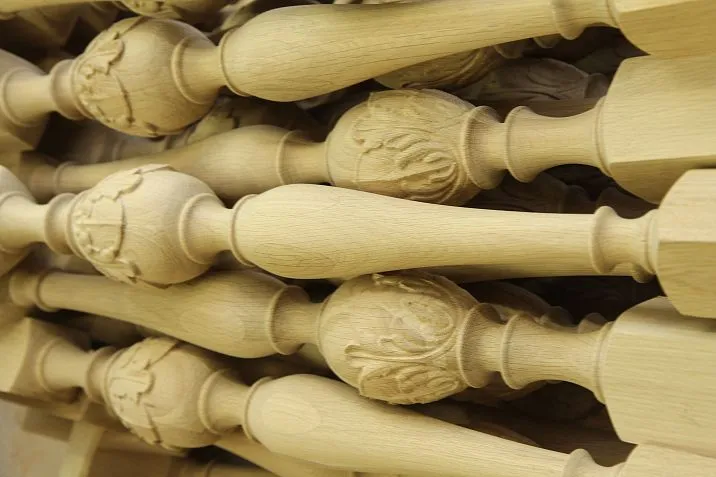
Human safety on stairs depends on many factors, but the key role is played by the quality and reliability of railing structures. Staircase railing hardware — it is not just a set of decorative elements, but a complex engineering system, each component of which is designed for specific loads and performs a strictly defined protective function.
Injury statistics are merciless: every year thousands of people suffer injuries on stairs, and a significant part of these incidents are related to malfunction or improper installation of railing elements. Loose balusters, unreliable handrails, poor-quality fasteners — all this turns stairs from a means of comfortable movement into a source of increased danger.
The modern staircase railing industry offers revolutionary solutions that fundamentally change the perception of safety and functionality. Innovative materials, precision manufacturing technologies, scientifically based load calculation methods — all this allows creating railings that not only protect but also become true works of architectural art.


Functional architecture of railing systems
A professional approach to designing staircase railings begins with understanding the functional purpose of each system element. This is not decoration, but a vital structure operating under extreme daily load conditions.




Handrails: the main element of safety
A handrail is the first line of defense against falls. It is instinctively grasped by the hand in the moment of losing balance. Engineering calculations show that a handrail must withstand a horizontal load of up to 100 kg per linear meter without deformation or failure.
Handrail ergonomics is critically important for safety. The optimal diameter of a round handrail is 40–50 mm — this size ensures the most secure and comfortable grip for an adult hand. For rectangular handrails, the optimal dimensions are 50×30 mm with mandatory rounding of sharp edges with a radius of no less than 3 mm.
The handrail material must have special properties: it should not be slippery, should not heat up in the sun, and should not cool down in freezing temperatures to uncomfortable levels for touch. Hardwood such as oak, beech, and ash perfectly meets these requirements, providing pleasant tactile sensations under any conditions.
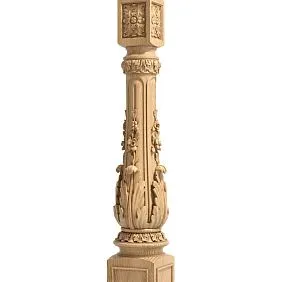
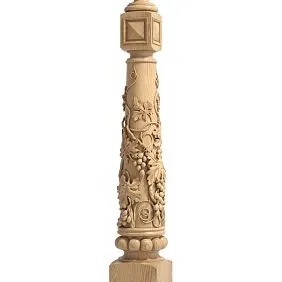
Our factory also produces:



Balusters: vertical protection against falling
Balusters perform a dual function — load-bearing and protective. They must withstand lateral loads while simultaneously preventing a person from slipping through the railing. Building codes strictly regulate the spacing between balusters — no more than 120 mm center-to-center, which eliminates the possibility of a child slipping through.
The lower baluster mounting is the most heavily loaded joint in the entire railing system. Here, the main stresses from lateral loads are concentrated. Modern mounting systems use metal anchors embedded into the tread or special brackets ensuring a completely rigid connection.
Upper mounting to the handrail also requires special attention. Traditional pegged joints are supplemented with adhesives and mechanical fasteners, ensuring an unbreakable connection even under extreme loads.
Get Consultation
Support posts: the foundation of reliability
Support posts (newels) — structural elements of the railing that bear the main loads and transfer them to the load-bearing structures of the staircase. The cross-section of support posts significantly exceeds that of balusters — typical dimensions are 100×100 mm or 120×120 mm for wooden elements.
Support posts are mounted to the staircase structure via metal embedded elements, ensuring a connection strength of at least 1000 kg tensile. This is critically important, as in an emergency situation, the entire load may concentrate on a single support post.
Engineering requirements and calculated loads
Design Staircase railing hardware is based on strict engineering calculations, taking into account all possible types of loading.
Static loads
The normative horizontal load on the handrail is 0.8 kN/m (80 kg/m) for residential buildings and 1.5 kN/m (150 kg/m) for public buildings. This load must be supported without residual deformation with a safety factor of at least 1.5.
The vertical load on the handrail is taken as 0.4 kN/m (40 kg/m) — this accounts for the possibility of a person leaning on the handrail from above. The concentrated load at any point on the handrail must not exceed 1.0 kN (100 kg).
Dynamic impacts
Staircase railings are constantly subjected to dynamic loads from pedestrian movement. The dynamic coefficient for pedestrian loads is taken as 1.4, meaning that calculated loads are increased by 40% compared to static loads.
Impact loads are especially dangerous, occurring when a person falls onto the railing. Modern standards require testing railings with a 50 kg bag dropped from a height of 1.2 m. The railing must withstand such an impact without damaging load-bearing elements.
Thermal impacts
Thermal deformations can create significant stresses in railing elements, especially when different materials are used. The linear expansion coefficient of wood across the grain is 3–6×10⁻⁵ 1/°C, which at a temperature difference of 50°C can result in deformation of up to 3 mm per meter of length.
The railing construction must provide for compensation of thermal deformations through movable joints or by using materials with similar expansion coefficients.
Material science of staircase railings
Material selection for staircase railings is determined by a complex set of requirements: strength, durability, aesthetics, environmental friendliness, and economic efficiency.
Hardwood species
Oak remains the benchmark material for staircase railings due to its unique combination of strength, beauty, and durability. The density of oak wood is 650–750 kg/m³, providing high mechanical properties: bending strength up to 120 MPa, modulus of elasticity 13 GPa.
Tannins present in oak wood provide natural protection against biological damage. Properly dried and treated oak can serve for centuries without losing its functional properties.
Beech is attractive for its uniform structure and ability to be precisely machined. The density of beech wood is 680–720 kg/m³, comparable to oak, but beech is less resistant to moisture and requires additional protective treatment.
Ash demonstrates an excellent combination of strength and toughness, which is especially important for elements subjected to impact loads. The contrasting texture of ash makes it popular in modern interiors.
Exotic species
Species such as merbau, teak, and wenge have unique properties — high density, natural biostability, and exceptional decorative qualities. However, their use is limited by high cost and difficulty of processing.
Thermally modified wood deserves special attention — a material processed at 160–220°C in a steam environment. Such treatment significantly improves dimensional stability and biostability while maintaining environmental friendliness.
Glued constructions
Glued wood surpasses solid wood in many parameters. The lamination technology allows eliminating internal stresses, obtaining elements of large cross-sections, and using lower-grade wood for inner layers.
Modern polyurethane or melamine-formaldehyde based adhesives provide joint strength exceeding the strength of the wood itself. This enables creating reliable load-bearing structures from glued wood.
Precision manufacturing technologies
Modern production of stair railings is a high-tech process requiring precise equipment and strict adherence to technological regulations.
Wood Preparation
The quality of finished products is established during the raw material preparation stage. Wood must be dried to a moisture content of 8±2% in specialized drying chambers with controlled regimes. This prevents deformation and cracking during operation.
Material sorting is performed based on strength characteristics using non-destructive testing methods. Ultrasonic flaw detection allows identifying internal wood defects invisible during visual inspection.
Mechanical processing
Profile milling is performed on CNC machines ensuring processing accuracy of ±0.1 mm. Using diamond tools allows achieving high-quality surfaces without subsequent grinding.
Turning baluster processing requires special operator skill and precise equipment setup. Modern CNC turning centers can reproduce complex profiles with identical accuracy.
Connections and Assembly
Dowel connections remain the primary type of connection for wooden elements of stair railings. Modern technologies allow manufacturing dowels and mortises with accuracy of ±0.05 mm, ensuring tight fit without gaps.
Connections are glued under pressure using special presses. Holding time under pressure depends on the adhesive type and ranges from 30 minutes to 24 hours for different formulations.
Fastening Systems: The Invisible Foundation of Reliability
The reliability of stair railings critically depends on the quality of fasteners and their correct installation. Modern fastening systems provide not only strength but also aesthetic connections.
Hidden Fastening
Hidden fastening systems allow achieving an ideal railing appearance without visible fasteners. Metal anchors are embedded into the wooden element body and provide connection strength up to 1500 kg tensile force.
Systems with stainless steel threaded rods are especially effective, allowing adjustment of connection tension and enabling disassembly of elements without damage if needed.
Adjustable Connections
Modern fastening systems provide the possibility of adjusting element positions during installation. This is especially important when installing railings on existing staircases, where geometry may deviate from the design.
Adjustable supports allow compensating for foundation irregularities up to ±10 mm without using shims or pads. This ensures ideal railing geometry and even load distribution.
Anti-Corrosion Protection
Metal fastening elements must have reliable corrosion protection. Hot-dip galvanization provides durability up to 50 years under normal operating conditions. For particularly critical applications, AISI 304 or AISI 316 stainless steel is used.
Regulatory and Legal Basis for Design
Staircase components must comply with requirements of multiple regulatory documents governing the safety of building structures.
Russian Construction Codes
SP 54.13330.2016 "Residential Multi-Apartment Buildings" establishes basic requirements for stair railings in residential buildings. Railing height must be at least 1.2 m, and gaps between elements — no more than 0.12 m.
SP 1.13130.2020 "Fire Protection Systems. Evacuation Routes and Exits" regulates requirements for evacuation staircases, including railing parameters.
GOST 23120-2016 "Winder Stairs, Platforms, and Steel Railings" contains technical requirements for metal elements of staircase structures, many of which are applicable to wooden railings as well.
European standards
EN 1991-1-1 (Eurocode 1) defines design loads for structural constructions. The normative horizontal load on railings is 1.0 kN/m for residential buildings and 3.0 kN/m for public buildings.
EN 1995-1-1 (Eurocode 5) contains rules for calculating wooden structures, including methods for determining load-bearing capacity of connections and joints.
Fire safety requirements
Wooden elements of stair railings must be treated with fire-retardant compositions providing a flammability class no higher than G1 (slightly flammable). Modern impregnations based on phosphorus-nitrogen compounds do not alter the appearance of wood and do not emit toxic substances.
Innovative solutions in railing design
Modern technologies open new opportunities for creating stair railings with unique properties and functionality.
Intelligent Systems
Integrating electronic components into stair railings allows creating "smart" security systems. Presence sensors automatically turn on lighting when a person approaches the stairs. Tilt sensors monitor the railing's geometry and signal the need for maintenance.
Wireless monitoring systems allow real-time control of stair structure conditions. Accelerometers and strain gauges transmit information about loads and vibrations to the building's central control panel.
Composite materials
Modern composites based on natural fibers combine the strength of traditional materials with new shaping possibilities. Linen and jute fibers in a polymer matrix provide high mechanical properties while being fully eco-friendly.
Carbon fiber elements allow creating railings of record strength with minimal weight. The modulus of elasticity of carbon fiber reaches 500 GPa — 40 times higher than that of wood.
Biomimetic solutions
Studying natural structures inspires engineers to create fundamentally new railing designs. The bamboo structure served as the basis for developing hollow elements with variable cross-sections, ensuring optimal strength-to-weight ratio.
Mesh structures replicating plant leaf architecture allow creating railings with maximum stiffness while using minimal material.
Installation and operation of railing systems
The quality of stair railing installation is no less important than the quality of the elements themselves. Even the most advanced designs may prove unreliable if installation technology is violated.
Preparatory Work
Precise geodetic marking is the foundation of quality installation. Modern laser instruments allow marking with an error less than 1 mm. All support points must be checked instrumentally and documented.
Foundation quality control includes checking the strength of stair and platform materials. Anchor pull-out strength must be at least 1000 kg for railing support elements.
Installation technology
Railing installation begins with setting support posts at key points — at the start and end of the stair run, at turns and landings. Post verticality is controlled with a level to ±1 mm accuracy per meter of height.
Handrail installation requires special precision — deviations from straightness must not exceed 2 mm over 3 meters of length. Handrail joints must be practically invisible — gap no more than 0.5 mm.
Balusters are installed with uniform spacing, calculated so that the clear distance does not exceed 120 mm. The verticality of each baluster is individually controlled.
Final finishing
After completion of installation, all railing elements must be thoroughly cleaned of contaminants and prepared for application of protective-decorative coatings. Sanding is performed with abrasives of increasing fineness — from P150 to P320.
Coatings are applied under controlled conditions at a temperature of 18–22°C and relative air humidity of 45–65%. Each layer must be fully dry before applying the next.
Quality control and acceptance tests
Finished stair railings must undergo a comprehensive set of tests verifying their compliance with design requirements and regulatory documents.
Visual inspection
Visual inspection allows identifying visible defects: cracks, chips, surface irregularities, coating defects. Special attention is paid to the quality of joints and connections — they must be practically invisible.
Geometric control includes checking dimensions, angles, deviations from vertical and horizontal. Precision measuring instruments with error not exceeding 0.1 mm are used.
Load tests
Static tests are conducted by applying standard loads to the handrail at the most unfavorable points. The load is held for 10 minutes, after which residual deformations are checked.
Dynamic tests simulate impact loads using standardized weights. The railing must withstand impact without damaging load-bearing elements and without residual deformations exceeding 5 mm.
Durability tests
Cyclic tests simulate long-term use of railings. A variable load at 1 Hz frequency is applied to the handrail for 100,000 cycles. The appearance of cracks or weakening of connections is not permitted.
Maintenance and repair
Stair railings require regular maintenance to ensure safety and aesthetics.
Periodic inspections
Visual inspections must be conducted at least once every six months. Special attention is paid to the condition of connections — play is not permitted. All identified defects must be immediately remedied.
Instrumental inspections using specialized equipment are conducted annually or as needed. Ultrasonic testing allows for early detection of internal wood defects.
Preventive work
Tightening threaded connections is performed according to the established schedule using torque wrenches. The tightening torque must comply with technical requirements for each type of connection.
Protective coatings are renewed as needed — typically every 3–5 years depending on operating conditions. Before applying a new coating, the surface must be cleaned of old coating and degreased.
Minor scratches and scuffs are removed by local sanding and coating. Serious damage may require replacement of the affected area.
Minor damage — scratches, chips, discoloration — is repaired by local treatment without dismantling elements. Serious defects may require replacement of individual railing components.
When replacing components, it is necessary to ensure full compatibility of new parts with old ones in terms of dimensions, material, and method of attachment. All work must be performed by qualified specialists.
Technology development prospects
The industry of stair railings continues to actively develop, offering innovative solutions to enhance safety, functionality, and aesthetics.
Nanotechnology in finishing
Nanostructured coatings provide self-cleaning surfaces, antibacterial protection, and improved wear resistance. Titanium dioxide nanoparticles create a photocatalytic effect that breaks down organic contaminants under light exposure.
Nanocrystalline cellulose enables the creation of transparent coatings with unique mechanical properties. Tensile strength can reach 500 MPa while maintaining flexibility.
Biotechnology
Genetically modified wood with specified properties is a reality of the near future. It is possible to create tree species with increased density, improved biostability, and specified color and texture.
Biodegradable composites based on plant fibers and biopolymers provide full ecological safety while maintaining high performance characteristics.
Additive technologies
3D printing with wood composites opens opportunities for creating elements of complex geometry unattainable by traditional machining methods. Gradient structures with variable density ensure optimal material distribution.
Multi-material printing allows creating elements with different properties in different zones — rigid areas for load-bearing and soft areas for tactile comfort.
STAVROS: engineering excellence in every detail
In the world of stair railings, there are manufacturers and there are engineering companies. STAVROS belongs to the second category — here, each element is considered not as a product, but as part of a complex engineering system where human safety is the top priority.
The philosophy of STAVROS is based on a deep understanding that Staircase railing hardware — it is not just a set of beautiful details, but a vital protective system. Each element undergoes a complex cycle of engineering calculations, taking into account all possible loads, impacts, and operating conditions.
The STAVROS production facility represents a modern engineering-technology complex, where high-precision equipment operates under the control of experienced specialists. Each operation is performed with precision, and every element undergoes multi-level quality control.
STAVROS’s Research and Development department continuously works on improving designs, studying new materials, and developing innovative technologies. Collaboration with leading scientific centers enables the implementation of the most advanced scientific and technical achievements.
The company pays special attention to fastening systems — invisible but critically important safety elements. Its own design office develops unique solutions that ensure maximum reliability while maintaining flawless aesthetics.
STAVROS’s quality control system has no analogs in the industry. Each element undergoes strength tests, each connection is checked for reliability, and every surface is inspected for compliance with technical requirements.
By choosing STAVROS, you are investing in safety, reliability, and longevity. This is the choice of professionals who understand the true value of human life and do not compromise on safety. This is a partnership with an engineering team for whom every project is a challenge to create something better than before.


