Article Contents:
- Philosophy of Wood: Understanding the Material as the Foundation of Choice
- Character of Different Species: From Plump Pine to Proud Oak
- Wood Movement: Accounting for Natural Processes
- Grain Direction: The Vector of Strength
- Anatomy of Staircase Hardware: Every Element Matters
- Load-Bearing Elements: The Foundation of Foundations
- Guardrail Structures: Beauty and Safety
- Decorative Elements: Details That Create Style
- Technological Solutions: Innovations Serving Tradition
- Hidden Fasteners: Aesthetics Without Compromise
- Hybrid Solutions: The Best from Different Worlds
- Protective Technologies: Extending the Life of Wood
- Bio-tech: Organic forms of the future
- Classic Solutions: Time-Tested
- Modern Directions: A New Perspective on Wood
- Ethnic Styles: The Character of Different Cultures
- Production Process: From Sketch to Finished Product
- Raw material selection and preparation
- Technological Operations
- Quality Control
- Installation and Mounting: Where Theory Meets Practice
- Preparation stage
- Installation Technology
- Finishing Work
- Operation and Maintenance: Preserving Beauty for Years
- Daily care
- Preventive maintenance
- Repair and restoration
- STAVROS: Where Woodworking Traditions Meet Modern Technologies
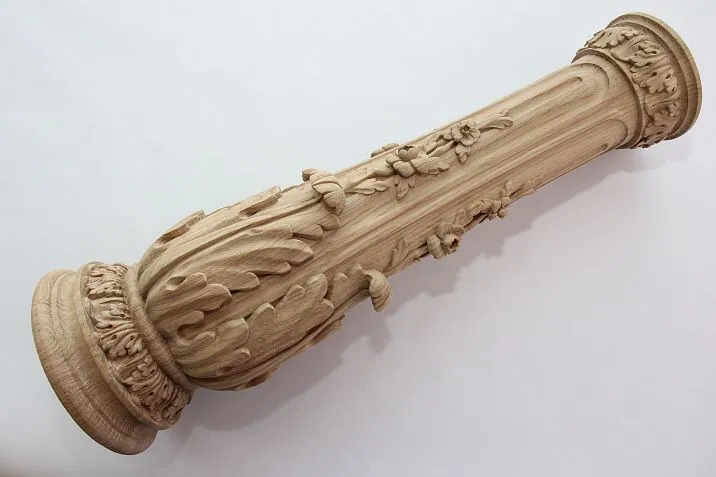
Every great staircase begins with a dream. A dream of a home where every detail breathes quality, where every step is filled with confidence for tomorrow. And at the heart of this dream lies an understanding of a simple truth: wooden staircase hardware — it is not simply a set of fastening elements and decorative details. It is the soul of the structure, its character, its individuality.
Have you ever wondered why some staircases inspire awe and a desire to climb them, while others leave us indifferent? The secret lies in the details — in how precisely each baluster is selected, how harmoniously handrails blend with steps, and what exact shade the fastening elements have. This is an art where technical knowledge merges with aesthetic sensibility, creating works capable of serving generations.
Wooden staircases are a choice for those who understand the value of natural materials, who are unwilling to compromise on ecological soundness and beauty. But wood is a living material, requiring a special approach to selecting hardware. Here, it is not enough to simply take the cheapest fasteners and hope for the best. Here, every element must work in harmony with the wood, taking into account its natural movements, breathing, and changes over time.


Philosophy of Wood: Understanding the Material as the Foundation of Choice
Working with wooden staircases requires a deep understanding of the nature of the material itself. Wood is not static — it lives, reacts to changes in temperature and humidity, and has its own preferences regarding processing and joining methods. Solid Wood Items for staircase structures — it is an entire science, where each species dictates its own rules of play.




Character of Different Species: From Plump Pine to Proud Oak
Coniferous species, especially pine and spruce, can be called "democratic" materials. They are easy to process, glue well, and tolerate minor technological errors. The resinous nature of these species creates natural protection against moisture and pests, which is especially important for stair constructions.
But every coin has its flip side. Soft coniferous wood requires special attention when selecting fasteners. Ordinary screws may loosen over time, causing creaks and gaps. Here, special solutions are needed — anchor bolts, glued joints, spreader anchors.
Hardwood species are a completely different story. Oak, beech, and ash require respectful treatment of their nature. High density and hardness make mechanical processing more complex, but the result is worth it. Joints in hardwoods become incredibly strong and durable.
Larch deserves special attention — a coniferous species with hardwood characteristics. Its density reaches 650-700 kg/m³, comparable to oak, yet retaining all the advantages of coniferous species. Larch is not afraid of moisture, does not rot, and has a beautiful, expressive grain.
Our factory also produces:



Wood Movement: Accounting for Natural Processes
Wood is never absolutely stable. It constantly "breathes," changing its dimensions depending on the humidity of the surrounding air. The swelling coefficient across the grain may reach 0.3% per 1% change in humidity. This means that a 200 mm wide board may change its size by 2-3 mm within normal humidity fluctuations.
Proper wooden staircase hardware must account for these movements. Rigid joints may lead to wood cracking or deformation of the entire structure. Compensatory elements are required, allowing wood to freely change dimensions without compromising structural integrity.
Get Consultation
Grain Direction: Vector of Strength
Wood is an anisotropic material, meaning its properties vary depending on direction. Strength along the grain may be 20-30 times higher than across it. This is critically important when designing furniture joint nodes.
For example, a screw driven along the grain holds significantly worse than across it. Therefore, for end joints, special fasteners — confirmers, eccentric clamps, dowels with glue — are used.
Anatomy of Staircase Hardware: Each Element Matters
A modern wooden staircase is a complex engineering system where dozens of different elements work in perfect synchrony. Understanding the function of each component helps make the right choice and avoid costly mistakes.
Load-Bearing Elements: The Foundation of the Foundation
Brackets and supports — these are the hidden heroes of staircase construction. They bear the main load and transfer it to the building's load-bearing structures. Modern steel brackets are made from high-strength steel with anti-corrosion coating. Metal thickness should be at least 4 mm for residential staircases and 6 mm for public buildings.
Adjustable supports deserve special attention, allowing compensation for construction inaccuracies. The adjustment range is usually ±15 mm, which is sufficient for most situations. Such supports greatly simplify installation and allow achieving the ideal geometry of the staircase.
Riser connection systems vary from simple steel angles to complex engineering joints with three-plane adjustment capability. The choice of system depends on the type of staircase, loads, and architectural requirements.
Guardrail Structures: Beauty and Safety
Balusters are the most noticeable elements of staircase guardrails, defining their character and style. Wooden balusters can be made from solid stock or glued laminated timber. Solid stock provides a unique texture but may have limitations in size and stability. Glued balusters are free of internal stresses and can be manufactured in larger sizes.
Modern technologies allow creating balusters of any complexity — from simple cylindrical to highly intricate carved compositions. CNC machines reproduce profiles with accuracy down to tenths of a millimeter, ensuring identical elements within each batch.
Handrails must combine ergonomics with aesthetics. The optimal diameter for a round handrail is 40-50 mm — this size ensures the most comfortable grip for an adult's hand. Rectangular handrails have dimensions of 50×30 mm or 60×40 mm with mandatory rounding of sharp edges.
Handrail attachment to balusters is a critical joint requiring special attention. Traditional mortise-and-tenon joints are supplemented with modern fastening systems ensuring absolute reliability.
Decorative Elements: Details That Create Style
Rosettes, caps, and plugs — these small elements play a huge role in forming the overall impression of the staircase. They must perfectly match in color, texture, and style with the main structural elements.
Modern technologies allow creating decorative elements with simulated hand-carved patterns, patina, and various textures. Laser engraving opens possibilities for creating unique ornaments and inscriptions.
Corner elements solve the problem of handrail joints at various angles. Ready-made corner elements greatly simplify installation and guarantee perfect joint quality.
Technological Solutions: Innovations Serving Traditions
The modern industry offers numerous innovative solutions that significantly improve the characteristics of traditional wooden staircases without compromising their aesthetics and eco-friendliness.
Hidden Fastening: Aesthetics Without Compromise
Hidden fastening systems have revolutionized the appearance of wooden staircases. Now it is possible to achieve perfectly clean surfaces without any visible fastening elements. Special stainless steel anchors are embedded into wooden elements and provide joint strength up to 2000 kg tensile force.
Eccentric fasteners allow creating disassemblable connections with precise adjustment capability. This is especially important for staircases that may require dismantling during repair or reconstruction.
Adhesive joints using modern polyurethane compounds provide strength exceeding that of the wood itself. The setting time for such adhesives is 10–15 minutes, allowing adjustment of element positions during assembly.
Hybrid solutions: the best of different worlds
Combining wood with metal opens new possibilities for designers. Metal load-bearing elements provide strength and durability, while wooden cladding offers beauty and eco-friendliness. Such constructions are especially popular in modern interiors.
Fiber-based composite materials combine the naturalness of wood with the practicality of modern materials. They are resistant to rot, require no special maintenance, yet retain the warmth and texture of natural material.
Protective technologies: extending the life of wood
Modern protective compounds have fundamentally changed the perception of the longevity of wooden structures. Nanosilver-based antiseptics provide protection against biological damage at the molecular level. Such treatment retains effectiveness for decades.
New-generation fire-retardant impregnations do not alter the appearance of wood but significantly enhance its fire safety. Modern compounds can raise the fire hazard class of wood from G4 to G1.
Hydrophobic coatings create an invisible barrier protecting wood from moisture without impairing its ability to 'breathe'. The effect is similar to that of natural resins, but more stable and long-lasting.
Stylistic Directions: From Classicism to Avant-Garde
Staircase Components and Elements must match the overall interior style. The modern industry offers solutions for all design directions — from strict classicism to bold avant-garde.
Classic solutions: time-tested
Traditional European classicism requires strict adherence to proportions and use of proven materials. Oak balusters with a classic profile, massive handrails from premium species, bronze hardware with patina — all of this creates the atmosphere of an old mansion.
Russian style prefers simpler forms with an emphasis on the naturalness of the material. Pine and larch elements with minimal processing, forged details, wood carving — characteristic features of this direction.
English style is distinguished by restrained elegance. Dark wood species — walnut, mahogany, rosewood — combined with brass hardware create an atmosphere of respectability and tradition.
Modern directions: a new perspective on wood
Scandinavian style values simplicity and functionality. Light wood species — birch, beech, maple — with natural grain, minimal decoration, maximum practicality. Hardware is finished in light tones — white metal, matte chrome, light bronze.
Loft style combines the roughness of industrial materials with the warmth of wood. Weathered wooden elements with black metal hardware create a contrast that is a hallmark of this direction.
High-tech allows the use of wood, but in combination with modern materials — glass, polished metal, composites. Wooden elements have clear geometric forms without unnecessary decoration.
Ethnic styles: the character of different cultures
Japanese minimalist style requires exceptional material quality with maximum simplicity of form. Elements made from solid wood of premium species with ideal surface finish, hidden fasteners, absence of unnecessary details.
American country style prefers massive elements made from local wood species. Oak, walnut, maple with pronounced grain, deliberately rough processing, imitation of handcrafted work.
Mediterranean style combines European traditions with Eastern flair. Light wood species with warm tones, decorative elements with plant motifs, brass and bronze hardware.
Production process: from sketch to finished product
Creating quality Hardware for wooden staircases — a complex technological process requiring high specialist qualifications and strict adherence to technological regulations.
Raw material selection and preparation
The quality of finished products is 70% determined by the quality of the raw material. Wood selection is carried out according to multiple criteria — species, tree age, growing conditions, harvesting time, storage method.
Ideal wood for staircase hardware should have a dense, uniform structure, minimal knots, correct grain direction. Moisture content should not exceed 12% for coniferous species and 10% for hardwoods.
Material sorting is done not only visually but also using modern equipment. Ultrasonic flaw detectors identify internal defects, moisture meters control uniform drying, X-ray installations detect hidden defects.
Technological operations
Cutting is performed on high-precision equipment, taking into account the direction of fibers and the location of defects. Modern cutting lines optimize material usage, minimizing waste.
Mechanical processing includes multiple operations — milling profiles, turning balusters, surface grinding. Each operation is performed on specialized CNC equipment.
Assembly of complex elements requires special precision and care. Joining parts is done under pressure using special presses. Holding time is strictly regulated for each type of adhesive and wood species.
Quality control
The multi-level quality control system includes inspection at every stage of production. Incoming raw material inspection, in-process technological control, and final inspection of finished products — all ensure compliance with the highest standards.
Statistical control methods allow monitoring the stability of technological processes and timely detection of deviations. The database contains information about each item, ensuring full traceability of the product.
Installation and mounting: where theory meets practice
Even the highest-quality hardware can be damaged by improper installation. Installing wooden stair structures requires high qualification and strict adherence to technology.
Preparation stage
Design begins with precise measurement of the room and analysis of existing structures. Modern laser distance meters allow measurements accurate to the millimeter. All data is entered into specialized software for staircase design.
Material acclimatization is a mandatory procedure. All wooden elements must remain in the installation room for at least 72 hours to equalize moisture. Violating this requirement may lead to deformation after installation.
Tool preparation includes checking the accuracy of settings, sharpening cutting elements, calibrating measuring instruments. Quality tools are half the success in carpentry work.
Installation Technology
Installation begins with mounting load-bearing elements — stringers, treads, support posts. Their position is controlled by laser instruments and must match the project with accuracy ±2 mm.
Installing steps requires special care. Each step must be strictly horizontal, and the distances between them must be equal. Modern mounting systems allow adjusting the position of the step even after fixation.
Installing guardrail structures is the most responsible part of the work in terms of safety. Each baluster must withstand normative loads, and the distances between them must not exceed 120 mm center-to-center.
Finishing work
After completion of installation, all elements undergo finishing treatment. Minor defects are corrected, joints are adjusted, surfaces are prepared for coating application.
Applying protective-decorative coatings requires adherence to certain conditions — air temperature should be within 18-22°C, humidity — no more than 60%. Each coating layer must be fully dry before applying the next one.
Operation and maintenance: preserving beauty for a long time
Proper operation and maintenance of wooden stair structures are the key to their longevity and preservation of their original appearance.
Daily care
Regular dry cleaning prevents dust and dirt accumulation. Use soft cloths or special anti-static wipes. Abrasive materials may damage the protective coating.
Wet cleaning is performed using special wood surface cleaners. Ordinary cleaning agents may contain aggressive components that damage protective coatings.
Control of the room's microclimate is critically important for wooden structures. Optimal temperature — 18-22°C, humidity — 45-55%. Sudden changes in these parameters may cause deformation.
Preventive maintenance
Monthly inspections allow identifying problems at an early stage. Special attention is paid to the condition of fastening elements — loosening of threaded connections may lead to squeaks and play.
Fastener tightening is performed using torque wrenches. Excessive force may damage threads or wood, insufficient force — will not ensure reliable connection.
Protective coatings are renewed as needed — typically every 3-5 years. Modern coatings allow renewing the protective layer without full surface sanding.
Repair and restoration
Minor damage — scratches, chips, discoloration — is repaired using local methods without dismantling elements. Special repair compounds allow restoring damaged areas almost invisibly.
Serious damage may require replacing individual elements. Quality hardware allows replacing damaged parts without disassembling the entire structure.
Restoration of historical staircases requires a special approach using traditional materials and technologies. Modern diagnostic methods allow accurately determining the condition of structures and selecting the optimal restoration strategy.
STAVROS: where traditional woodworking meets modern technologies
In the world of staircase hardware production, there are manufacturers, suppliers, and true masters, for whom each item is a work of art. STAVROS belongs to the last category, combining centuries-old Russian woodworking traditions with the most advanced modern technologies.
STAVROS's philosophy is built on deep respect for wood as a living material, requiring special understanding and gentle handling. Each wood species has its own character, specific properties, and processing requirements. And STAVROS masters know these secrets, passed down from generation to generation.
The company's production base is a unique symbiosis of traditional carpentry workshops and high-tech production lines. Here, alongside antique workbenches, CNC machines operate, where the expertise of master woodworkers is complemented by the precision of modern technologies.
STAVROS's R&D department continuously works on improving wood processing technologies, studying new protective compounds, and developing innovative fastening systems. Collaboration with leading scientific centers enables the implementation of the most advanced achievements in materials science and technology.
STAVROS's quality control system exceeds the strictest international standards. Each element Hardware for wooden staircases undergoes multiple inspections — from moisture control of the raw material to the final assessment of the finished product's appearance.
STAVROS's service department is a team of professionals ready to support clients at every stage of project implementation. From initial consultation on selecting optimal materials to post-sales service — each client receives personalized attention and qualified assistance.
Choosing STAVROS means choosing not just a hardware supplier, but a reliable partner in creating a staircase that will become a decoration of your home for many decades. This is an investment in quality, beauty, and safety — values that never go out of style.